
[In 1976 when I was seventeen, I traveled to Europe with a group of fellow high school students. I wrote the essay European Tour 101 in 2023. This essay was published in Tales of Travel by the University of Minnesota-Duluth. I’m publishing it to my blog in five parts.]

In the spring of 1976 when I was seventeen, I brought home a brochure from my German class that showcased a thirty-day trip to six European cities in five countries. I had studied high school German for two years and middle and high school Spanish for five years, and Austria and Spain were two of the countries we would visit. I had no illusions about my ability to chat in German or Spanish with the locals, but I longed to visit Europe. I gave the brochure to my mother, who after reading it told me I could go. There was never a discussion of “maybe” or “we’ll see.” The trip cost around $1,400 in 1976, a lot of money for my parents who were on the lower end of the middle-class ladder.
Mother never said it in so many words, but she believed in learning about other cultures. She had encouraged me to study a foreign language. While I was in high school, she signed up to host foreign exchange students for Milwaukee Week. During this time, exchange students from all over Wisconsin spent a week in Milwaukee. I enjoyed meeting the exchange students, learning about their countries, and showing them around my city.
I’m over sixty now, but I remember my only trip to Europe with fondness because it was a good time, it influenced my life in a positive way, and it was educational on many levels. The life lessons I learned in Europe stand out to me because my European experiences are stored in my brain on a thirty-day shelf between two bookends—the touchdown in Madrid on one side and the departure from London four weeks later on the other side. The memories lean on one another, easy to access and tapping one wakes up its neighbor.
Lesson One: Travel without a Hangover
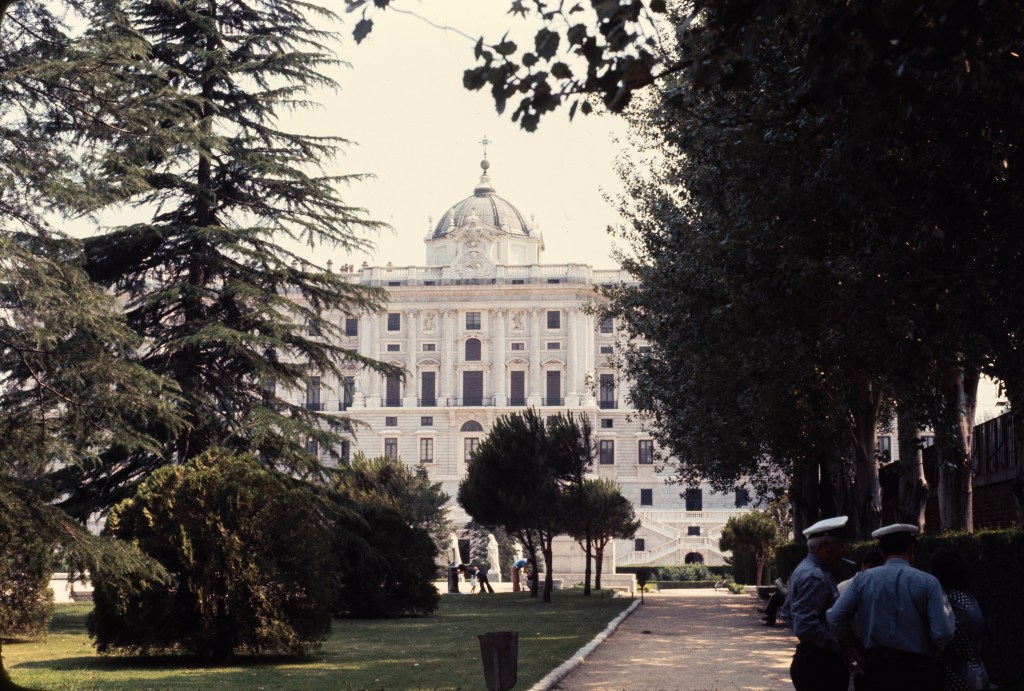

The first lesson I learned was don’t be hungover as a tourist. A pounding headache and an unsure stomach turned out to be poor companions while touring Madrid’s architectural marvels on my second day in Spain. The day before at lunch, I split a small bottle of white wine with a friend, and at supper we split a small bottle of red wine. I never drank in the States because I was seventeen, but in Europe I wasn’t breaking the law, so I decided to embrace the whole experience, which is why I tried white wine at lunch and red at supper. In the evening a group of us went dancing. While disco music and colorful lights pulsated around the nightclub, and we danced with Spanish teenagers, I drank two screwdrivers because that is what my friends were drinking.
The next morning, a chaperone banged on our door, rousting us for breakfast. Startled, I sat upright in a finger’s snap. My head lagged behind, pounding as it tried to keep up with my body. Most of the day I had a throbbing headache. I didn’t throw up but the possibility was a nagging pest. Thousands of miles from home and only seventeen, I decided to experience Europe without hangovers, so if I drank at all, I limited myself to no more than one or two drinks in a day. I carried the lesson back home with me and even after I turned eighteen and could legally drink, I never forgot about my second day in Madrid.
Don’t be hungover in life.
Lesson Two: Even Muscle-Bound Bulls Have Feelings
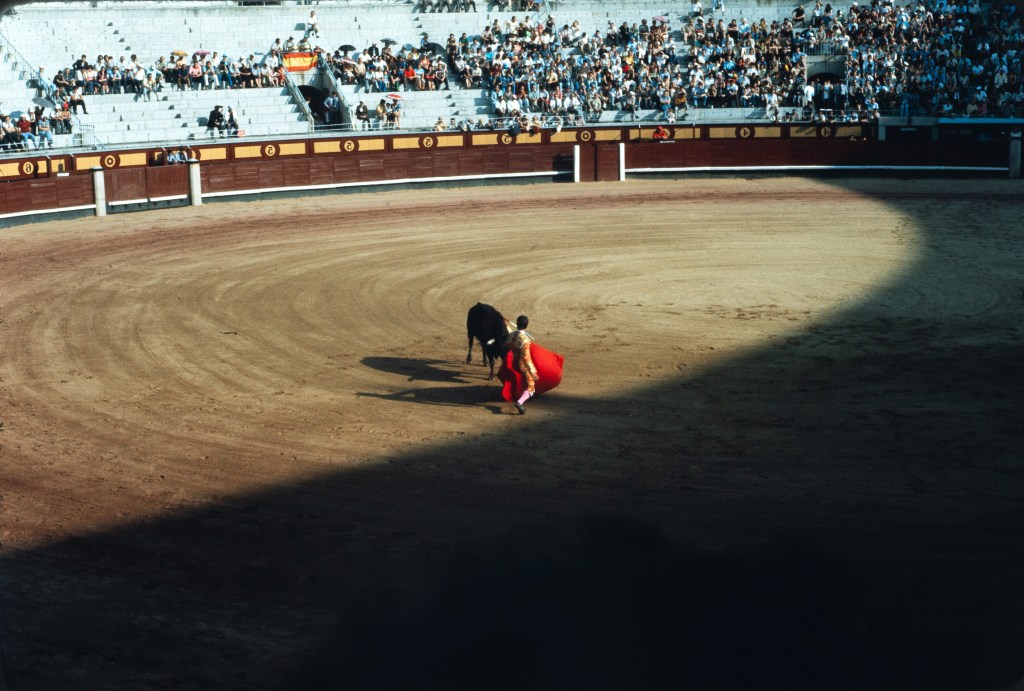
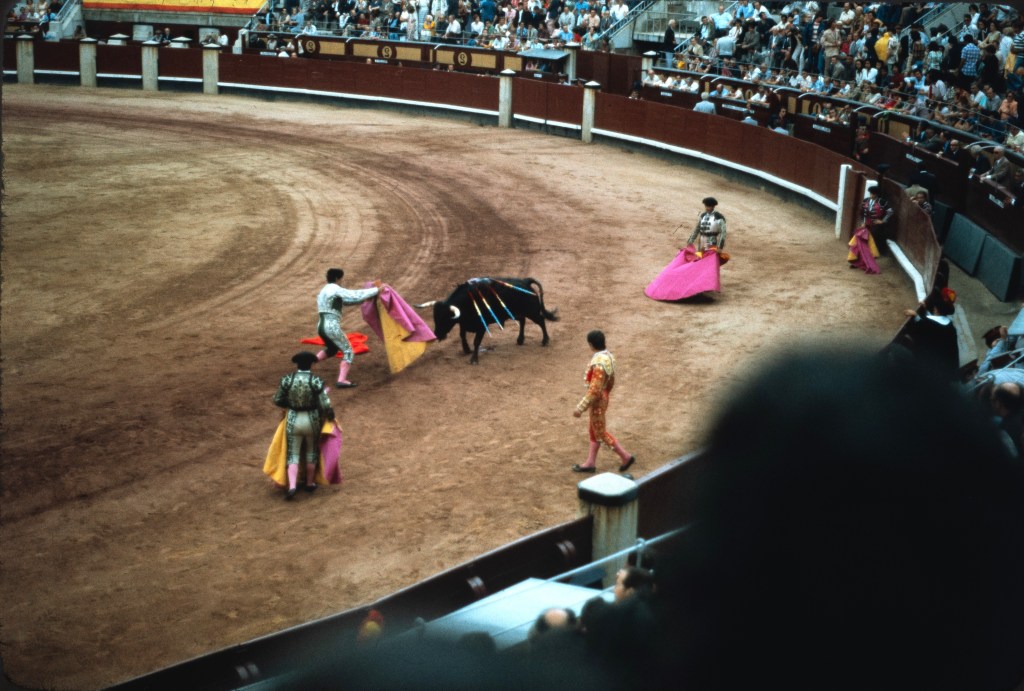
In Madrid we went to a bullfight. Attendance was optional because even though bullfights were part of the Spanish culture, the pretense of masculinity and bravado they symbolized had begun to dissipate as more people spoke against the cruelty suffered by the bulls. I decided to go because it was a Spanish tradition. I don’t remember if the bull died, but the matador didn’t. The stadium, crouching under the Mediterranean sun, became a cauldron of heat. I didn’t like hot weather, and I was sorry I had come. Why would anyone sit in the scorching sun to watch a choreographed drama between a sidestepping matador dressed like a golden baroque candlestick swirling a red cape and an incensed bull snorting like a diesel engine?
We had been told it was a nuanced battle, steeped in meaning. Clearly, I didn’t get it because that afternoon I decided if the object was to kill the bull, it was a show of pointless machismo. I sympathized with the bull, who unlike the matador or me, had been given no choice about where it wanted to be on that blistering afternoon. I concluded that any competition, legal or not, that humiliated or sacrificed animals in the name of amusement was wrong. But I couldn’t throw stones because I knew Americans had their dog fights and rooster fights and probably other types of fights.
As an adult, while watching cartoons with my children, I discovered Ferdinand the Bull, a Disney animated short that won an Oscar in 1938. Ferdinand wouldn’t fight. He wanted only to smell flowers. He so enraged the bullfighters they simply took him back to his green fields filled with flowers. Ferdinand was a consummate pacifist.
Don’t go to bullfights or dog fights or rooster fights.
Lesson Three: If You Don’t Know the Language, Don’t Insult Those Who Do
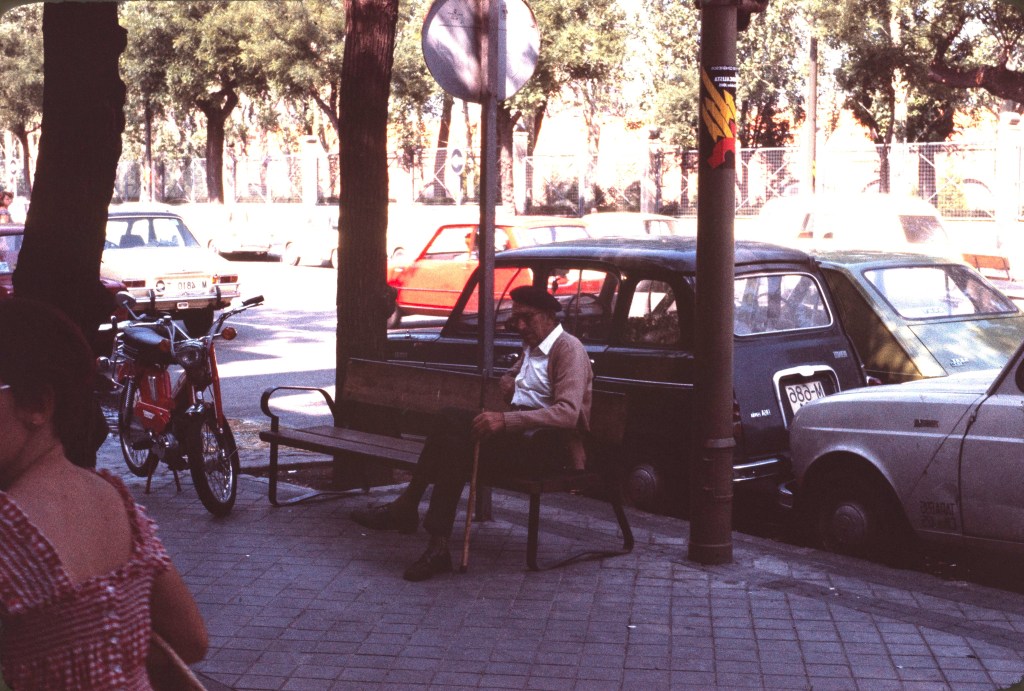
Mr. Z., who had been my freshman history teacher came on the trip as a chaperone. He was passionate about history, which I had liked about him. But he had a condescending manner that he dressed up as humor, often unsuccessfully, and that I didn’t like. His manner of off-handed superiority almost got him thrown out of a restaurant in Madrid. Tom and Gene, teachers from a neighboring high school, who were seasoned chaperones, often took us to restaurants that catered to locals instead of tourists. The food was usually excellent and the prices reasonable. But this meant staff at the restaurants rarely spoke proficient English. However, between Tom and Gene, we always had someone who could speak Spanish, Italian, German, or French, someone who could help with the pesetas, liras, shillings, or francs.

At this particular lunch, after listening to Tom speak Spanish with the waiter, Mr. Z., who probably suffered from a bit of insecurity after being shown up by a multi-lingual, seasoned traveler, declared, “It’s easy to speak Spanish. You just add an o or an a to the English word. So, soup is soupa.” Not quite, but no one corrected him. During the lunch, Mr. Z. needed butter for his rolls, but instead of asking Tom to talk to the waiter, he decided to ask the waiter directly. Applying his theory about the simplicity of the Spanish language to the word butter, he waived the waiter over, looked at him, and uttered a word that came out sounding like the Spanish word burro, meaning donkey. The waiter’s face went red, and his words, rapid and angry, crashed like falling rocks, frightening Mr. Z., who at least had the good sense to stop talking and look nervous.
Tom, fluent in Spanish, straightened out the mess. Understanding the arrogant American hadn’t meant to call him a donkey, soothed the waiter a bit, but Mr. Z.’s insult to the Spanish language still rankled him. To Mr. Z.’s credit for the rest of the trip, he didn’t try to speak Spanish or any other foreign language, but he should have known better. He had been to the same pre-trip meetings the rest of us had been to. We had been told that many Europeans looked down on Americans who expected everyone to speak English, yet couldn’t be bothered to learn another language themselves. Perhaps Mr. Z. wanted to soothe his bruised ego, or maybe he wanted to be funny, but either way he failed.
Don’t show off at the expense of other people.
[Coming soon: European Tour 101 – Part 2, Italy]
 Writing Near the Lake
Wow 36 days! Love the stories, I bet you have many more to tell.
LikeLiked by 1 person
So great you could do this at a young age.
LikeLiked by 1 person
That’s funny about Mr. Z calling the waiter a donkey when all he wanted was butter! Love the photos of the people that you captured. That must have been quite the trip. I’m glad your parents sprung for it.
LikeLiked by 1 person
Mr. Z. has passed away, not too long ago. I still didn’t want to use his last name because he was truly embarrassed about what he had done. He was a good teacher who cared about history and his students. But he had a sense of humor that wasn’t always appreciated! I have fond memories of him. He is one of the people I split a bottle of wine with on my first day in Madrid.
LikeLike
Look at you . . . drinking with the teacher! 🙂
LikeLiked by 1 person
Yeah, but it really wasn’t like that. In Spain our whole group could legally drink. About eight of us, including two chaperones, went to lunch together. Everyone ordered wine, but no one had more than two glasses. I don’t even remember feeling the effects of the wine that much. I think it was lower alcohol content. I happened to agree to split a small bottle with my former teacher because we both wanted the same kind. In the end, I don’t think it was the wine at lunch or dinner that did me in — it was those two screwdrivers at the disco! And I don’t really remember feeling those as I drank them because I was dancing so much!
LikeLiked by 1 person
At only seventeen years old learning two very different languages is quite a talent.
LikeLiked by 1 person