Two days after Earth Day, my grandkids come for a visit.
“What are we going to do today?” asks nine-year-old Evan. It’s often the first thing out of his mouth once he exits his mother’s car.
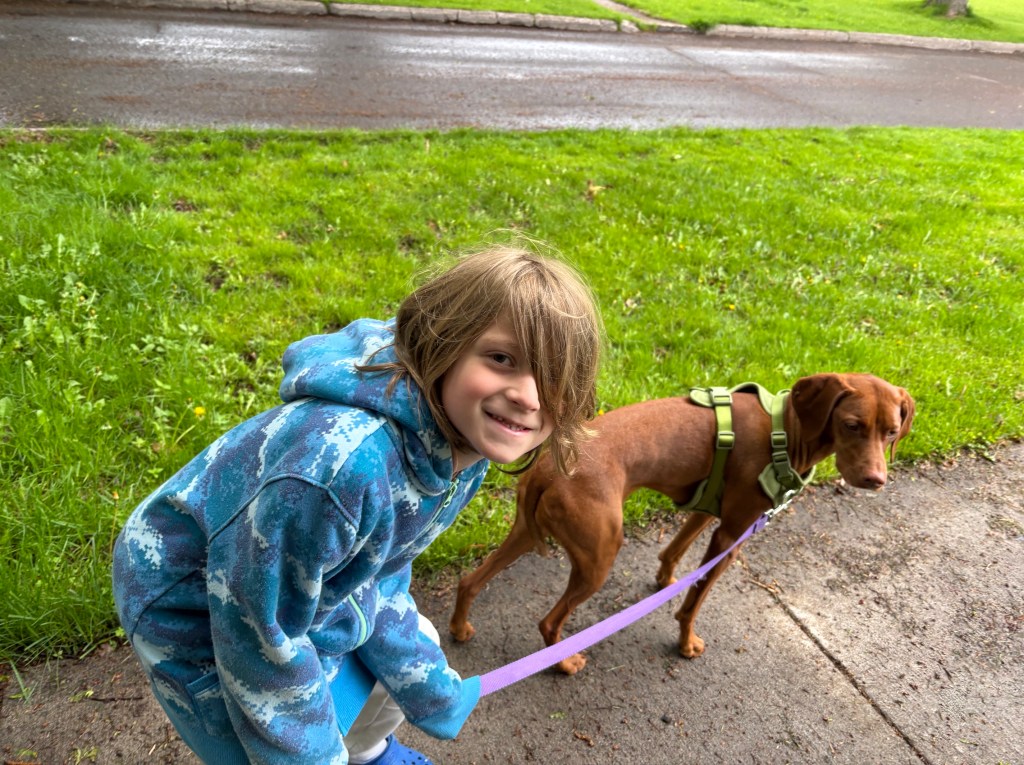
I tell him we’ll take Nellie, my grand-dog, for a walk. She’s come because she’s having a day with Nana too. “Depending on whether or not it keeps raining,” I say, “we might go to the mall or the library or some parks, and I have new art supplies.”
While the weather decides what to do, I make breakfast and feed the grandkids. The sun comes out, and the rain on the streets evaporates. I decide taking Nellie for a morning walk is the best way to start the day. And this morning’s walk will include picking up garbage, which until recently was covered with snow. My grandkids and I have been taking springtime pick-up-the-garbage walks for nearly a decade.
Inspired by Lady Bird Johnson and Keep America Beautiful commercials, my sisters and I picked up garbage when we were young. We were particularly moved by the commercial with a Native American man who after seeing litter everywhere turns to the camera to reveal a single tear sliding down his cheek. Inspired, we pulled our red wagon loaded with a garbage bag up and down our country road and picked up trash. We never found much because our road wasn’t much traveled, but I remember the sense of purpose we felt, helping Keep America Beautiful.
After breakfast my grandkids and I gather three grabbers, which we will use to pluck bottles, cans, straws, food wrappers, and snippets of paper and plastic from the ground. I outfit Nellie with her harness and leash, and the grandkids decide who gets to walk her first. The other three grandkids clutch grabbers. I’m in charge of the small plastic grocery bags we will use for the garbage.
Like birds slowly walking across the ground while searching for worms and insects, my grandkids and I look for bits of trash. Some of it, like brightly colored cans or empty candy wrappers, is easy to spot. Others like pieces of clear plastic or weathered cigarette butts are harder to find.
On our way back, we spot the mother lode — copious pieces of a car’s bumper and grill scattered on the grassy corner near an intersection. Someone lost a part of their car’s front end during the winter, and plows pushing snow onto the boulevard pummeled it. My grandkids and I become fixated. It’s a moment of compulsion, of not giving up, of lifting each shred from the ground. I help by holding the bag open and searching for more bits of plastic. When I was young my parents’ cars sported steel bumpers and grills, the kind that dented or bent in an accident but didn’t shatter. After we’re satisfied we’ve found all the broken bits of car, we move on. But I’m certain there are pieces still lurking under blades of grass.
We have nearly three plastic grocery bags of garbage.
We’re another block or two along our route when I hear something behind me. I turn to find a man following us. He wears a white baseball cap, a light-colored T-shirt, and a pair of faded blue jeans. He calls to us, “Hey, are you picking up garbage?”
“Yes,” I say. My grandkids and I stop walking. We all turn and look at him.
The man, who appears to be about forty, walks up to me. His hand is partially closed around a piece of paper money, but I can see it’s a twenty. At first, he speaks only to me. “That’s really great! Thank you for doing that.” He hands me the twenty. “Buy the kids a treat,” he says. Then he tells my grandkids they’re doing a great job.
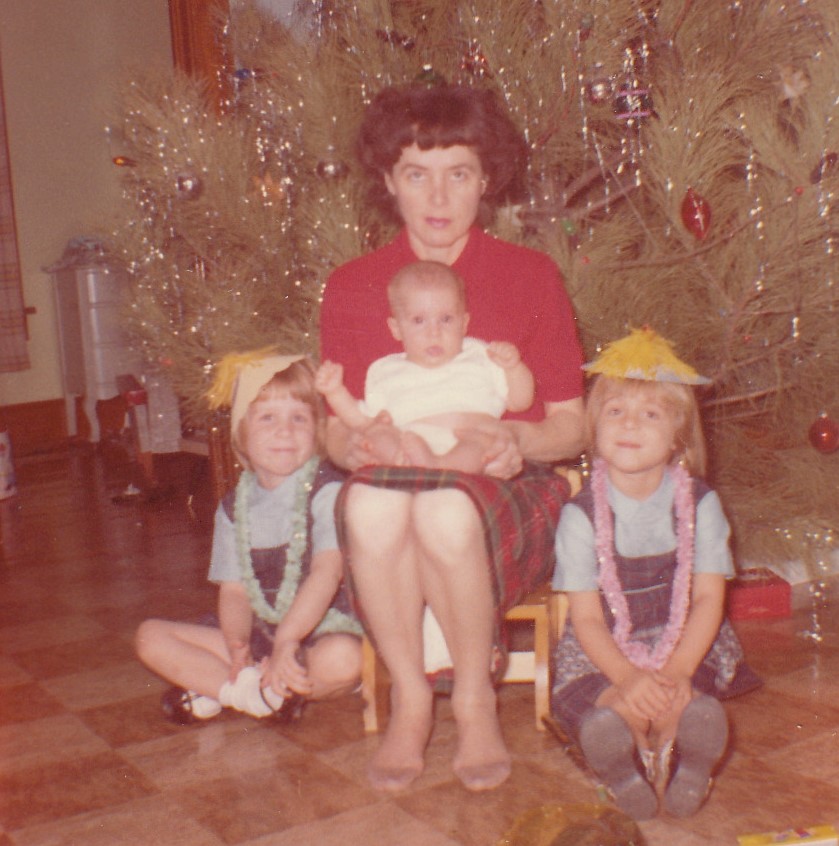
My first instinct is to thank him and refuse the money. To tell him it’s kind of him, but not necessary. My nana Kitty’s words echo in my mind, “You don’t always have to get paid for everything.” This is something I heard her say many times, to me, to my siblings, to my cousins. Not because any of us were asking her for money. It was just one of those things she said if circumstances presented itself. She was always doling out wisdom to us, like “Silence speaks volumes” or “Never trust a man who doesn’t like animals” or “The early bird gets the worm.”
I never asked my nana to elaborate about what she meant when she said, “You don’t always have to get paid for everything.” Did she mean we should sometimes work at our job for free? Did she mean we should donate our labor to charitable causes? Did she mean our labor should be gifted to family and friends? Over the years, I’ve done all of these things. Sometimes I wish I could ask her exactly what she meant, but she’s long gone. I think of her maxim about not getting paid for everything a lot. Perhaps that’s because I’m a writer and don’t get paid for most things I write.
When I was sixteen, I worked at an all-you-can-eat buffet. I worked eight-hour shifts on Saturday and Sunday. It was hard work. My coworkers and I set up the buffet, tended to the diners, then broke down the buffet after we closed. In the dining room, I took orders for coffee, tea, and soda and delivered them to customers. I cleared empty plates. And when a customer wanted seconds, I often went back up to the buffet line for them because most of the customers were old. A sign at the entrance to the buffet line clearly stated, No Tipping. As a minor, I should’ve been making $1.68 an hour. Instead, I was paid $1.07. When I asked my fellow workers why we weren’t paid the minimum wage, they told me it was because the manager classified us as workers who made tips. Yet, the sign boldly stated, No Tipping. And our customers, except for a couple of rebels, faithfully followed that instruction. During the couple of months that I worked at that restaurant I made thirty cents in tips — a nickel from one customer and a quarter from another.
One day I approached the manager and asked why we weren’t being paid the correct minimum wage. I didn’t like working for less than I was due. It wasn’t a matter of “not getting paid for everything.” The boss took advantage of us. He offered me a ten-cent raise. I told him that wasn’t good enough and gave him two-weeks’ notice. I got a job cleaning rooms at a small hotel. I didn’t like the job, but I was paid the correct wage. I missed my coworkers at the restaurant, and the diners, who were usually kind. I worked alone at the hotel, and at ten o’clock at night when my shift ended, I walked through a dimly lit parking lot with my car keys in my hand, holding them so each key protruded outward between my fingers. I never had to worry about leaving the restaurant alone in the dark.
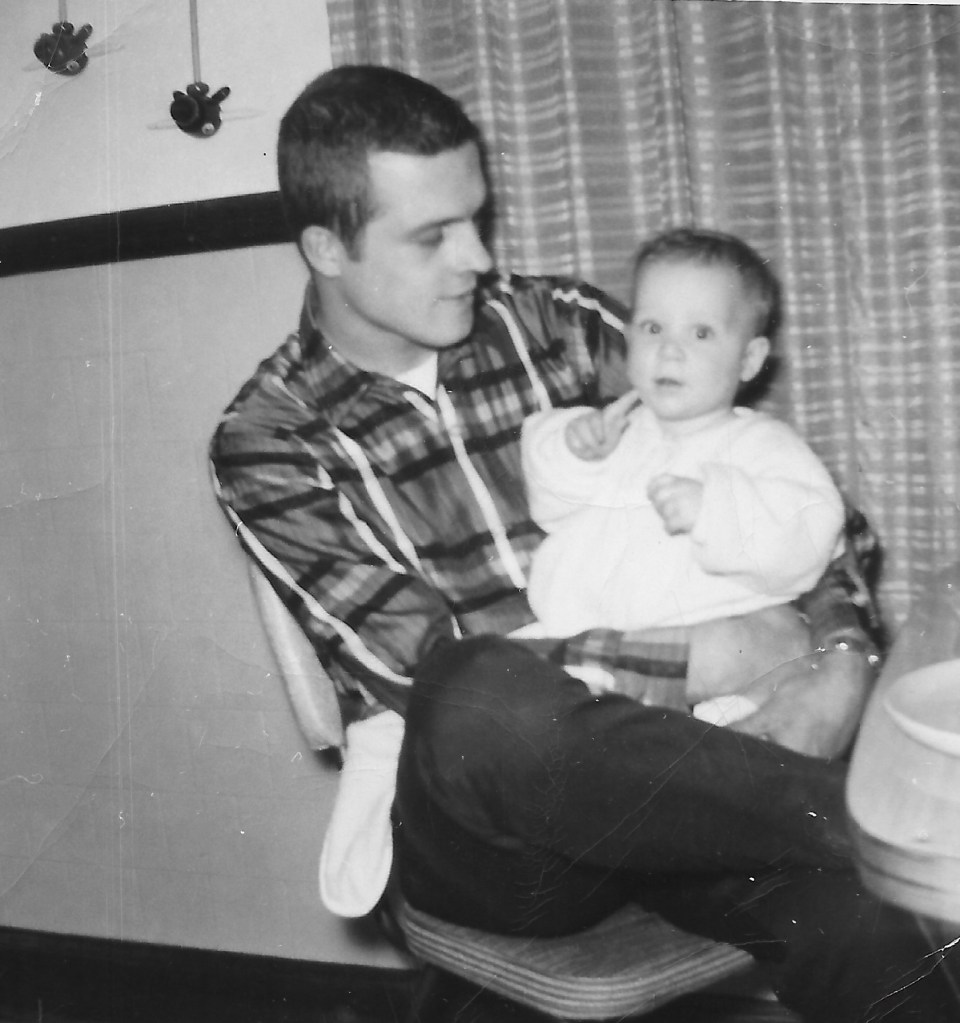
“Please, take this,” the man repeats. For a moment, as if we’ve been captured in a photo, the man and I stand across from each other, his hand stretched toward me, my hands at my side. I see my father with paper money folded in his hand, extending it to the woman who fostered dogs to help with expenses or to the man who was a caretaker for an old windmill built in 1905 to mill grains. I see my father stuff bills in donation boxes at museums even after he’d paid for admission. It made my father feel good to do his part. For a moment it’s my father who is standing in front of me handing me a twenty-dollar bill and saying, “Buy the kids a treat.”
Nana was right — we don’t need to get paid for everything. But at this moment, I need to be gracious, not proud. It’s not easy for me to do, but I reach for the twenty and slip it in my pocket. “Thank you so much,” I say. “I’m taking my grandkids for ice cream today. We appreciate this.” My grandkids thank him too.
The man smiles then turns toward home. We’ve made his day.


Picking up trash is a wonderful thing to teach your grandkids, and I think that by accepting the money, you allowed this man to feel a part of it.
LikeLiked by 1 person
Doing the Lord’s work. 🙂
LikeLiked by 1 person
Many lessons in your story for all sizes. Rewards come in many shapes. Thank you for sharing another heart warming adventure with your grandkids.
LikeLiked by 1 person
Thank you!
LikeLike
Another flower blooming in your garden of experiences with your grandkids, Vickie. Then, you show us the seeds of your past and how they interconnect. Time is love with your grandkids. Thank you again for sharing.
LikeLiked by 1 person
Loved every bit of this 🙂 And you were right to take the man’s money. He wanted to do it; it made him feel good to show his appreciation, I’m sure. I struggle with accepting monetary kindness sometimes, too, but I have to remind myself how I feel when offering the same thing to someone.
Also, god love your grandmother for sitting in that tiny chair! I’d never get up again!
LikeLiked by 1 person
Thanks, Lynn. I agree with you. If I would’ve refused that man’s money, I would’ve hurt his feelings. Accepting the kindness of other is a gift in itself.
My nana Kitty was amazing in many ways.
LikeLike
Always a pleasure reading about the adventures of you and your grandkids.
LikeLiked by 1 person
Thank you!
LikeLike
Thanks, Janice. I hope you’re doing well. I always love reading about your family, too.
LikeLike