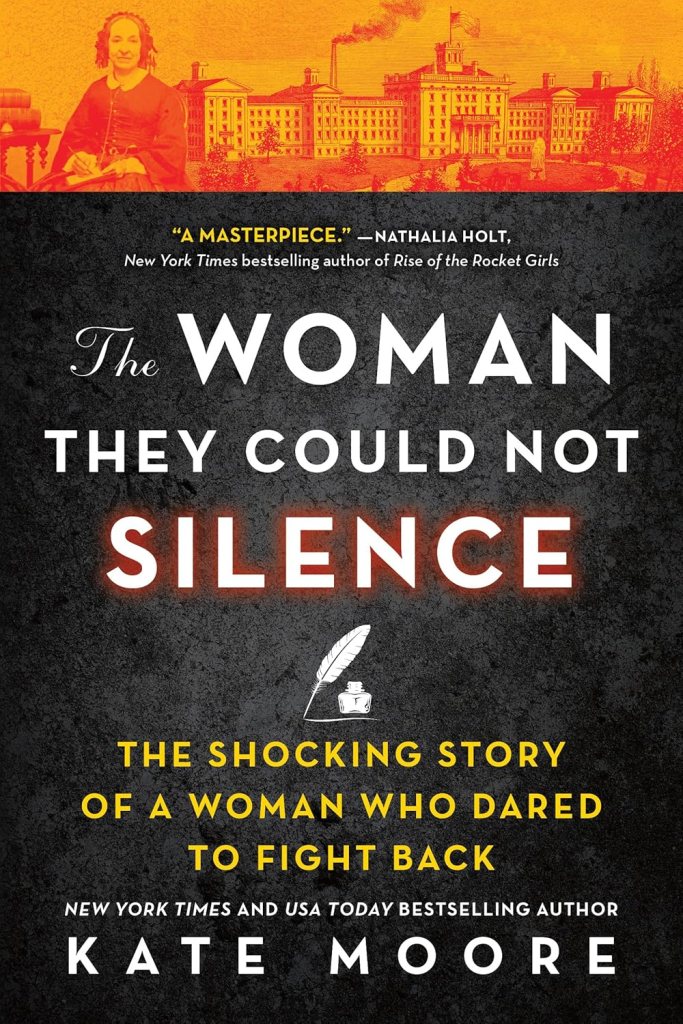
Book Reviews of My Latest Reading Accomplishments, Part 6 of 6: Where Rivers Part: A Story of My Mother’s Life

[To read Part 1, click here. To read Part 2, click here. To read Part 3, click here. To read Part 4, click here. To read Part 5, click here.]

Why is this book important?

Because reading books like Where Rivers Part by Kao Kalia Yang, reminds us that we are all people, that we have a shared humanity, and that understanding and kindness should always be the most important things. It warns us that war and dictators take a devastating toll on that humanity.

Why did I read this book?

Where Rivers Part is the One Book Northland 2025 selection for the area where I live, so I decided to buy Yang’s book and read it. Yang came to the Northland to talk about her book, and I’m sorry I missed a chance to hear her speak in person. But I did listen to Kerri Miller from Minnesota Public Radio interview Yang. You can listen here: Big Books & Bold Ideas.

What is this book about?

Where Rivers Part is really two stories bound together. First, it’s the story of Tswb, an ordinary Hmong girl, who is born in 1961 to parents living in the lush mountainous region of Laos. Everything in Tswb’s life is plentiful: her large extended family, the love that nurtures her, and the bountiful food that nourishes her. She attends school and excels; she wants to be a teacher. She experiences the loss of her beloved father. She grows up and falls in love. Leaving her mother and family behind, she begins a new life with her husband, Npis, and his family. She has children. She experiences the ups and downs of marriage and parenthood and aging.

But the story of Tswb’s ordinary life is overshadowed by another story: the war in Vietnam, which escalates as she grows up. Laos and Vietnam share a border that is 1,343 miles long, and after the U.S. pulls out of Vietnam, the communists enter Laos to hunt down and kill Hmong people as traitors because many of them helped the U.S. during the war. Tswb is a young teenager when her family leaves their mountain village home and hides in the jungle. At seventeen Tswb falls in love with Npis, a young Hmong man who comes from another village, and she marries him. As is the custom, she leaves her family and becomes part of Npis’s family. They continue to hide in the jungles of Laos from the Vietnamese soldiers. Finally, because the Vietnamese are closing in, Npis’s family decides to escape to Thailand, where they live in a refugee camp before immigrating to America.

In the United States, Tswb and Npis work jobs that take a toll on their bodies. They live in neighborhoods that are dangerous, in homes that are dilapidated and filled with lead and mold. They face racism and discrimination because they are Hmong and immigrants, but they work hard to improve their lives and to give their children a brighter future.

What makes this book so good?

Yang’s writing is beautiful, compelling, and detailed. As the story shifts from place to place, Yang brings the lush mountain village of her mother’s youth and the dense jungles of her mother’s teen years to life. She captures the hopelessness, filth, and stagnation of the refugee camp in Thailand. And once her family has immigrated to the U.S., Yang captures the hope, fear, joy, and frustration as her parents move from home to home and from job to job, inching their way up the ladder of the American dream.

When Yang asked her mother if she could write the story of her remarkable life, her mother replied that she didn’t think her story was remarkable, and that no one would be interested in reading about her life. I imagine that is because Tswb’s life was filled with many people who lived lives similar to hers. Lives interrupted by war, time spent in refugee camps, separations from family, and emigration from their homelands. But to Yang, her mother’s story is extraordinary. And readers will agree, the story of Tswb’s life is a story worth telling.

From the standpoint of craft . . . Yang’s book uses an interesting point of view.

Yang’s book is a biography of her mother’s life. However, Yang has written her mother’s biography in the form of a first-person point of view memoir. So, when we read Yang’s book, we must remember that she has adopted her mother’s voice and she is telling the story as if she were her mother. In the prologue of her book, Yang carefully explains how and why she has done this. If you like to skip prologues, this is one you should not gloss over.

Yang tried to write the story of her mother’s life in third-person point of view like a biography, and she tried to write it in second-person point of view. Both of those attempts felt awkward to her. Yang kept returning to the idea of using first-person point of view because as strange as it seemed to write her mother’s life story that way, Yang believed it worked. She wanted her mother’s “strong and certain voice” to rise up off the page. And it does.

There’s probably a general rule against this technique, but like so many writing rules, there comes a time when it’s okay to break one. It works for Yang for several reasons. First, before she began the book, she was intimately familiar with her mother’s way of speaking and her stories. Second, Yang’s mother was an enthusiastic participant in the telling of her story. Third, as Yang wrote the book, she spent hours and hours interviewing her mother. Finally, Yang had her mother read the finished draft for accuracy.

And so, I took a leap of faith with Yang. After I turned the last page of the prologue, I put aside the idea of Yang as the narrator. As I began the first chapter in the book, I listened to Tswb tell her story through her daughter. For the first few pages, it was a little disorienting, but I quickly found myself immersed in Tswb’s life. Yang’s book is wonderful and her bold move works. I can’t imagine Yang writing her mother’s story in any other way.

Book Reviews of My Latest Reading Accomplishments, Part 5 of 6: American Canopy: Trees, Forests, and the Making of a Nation by Eric Rutkow

[To read Part 1, click here. To read Part 2, click here. To read Part 3, click here. To read Part 4, click here.]

American Canopy by Eric Rutkow takes a unique look at a slice of United States history by focusing on its relationship with its immense forests. When settlers first arrived in North America, forests covered more than half of what would eventually be the forty-eight contiguous states. Rutkow notes that in the United States people will find giant sequoias, the largest trees in the world; coastal redwoods, the tallest trees in the world; bristlecone pines, the oldest trees in the world; and the biggest single living organism in the world, a stand of quaking aspens in Utah.

When the first settlers arrived on the Eastern shores of the New World, they encountered dark, dense forests. Settlers viewed the forests as something to be cleared to make way for farms and towns and as a resource to be used in trade and manufacturing. And with so many extensive forests, people and lumber companies cut down trees as if the supply was endless.

Rutkow’s book is a comprehensive, chronological history of America’s forests and how those forests played an integral role in the building of a nation. Rutkow’s history covers how trees were used to build ships, trains, railroad tracks, and airplanes until other materials like steel and aluminum were developed. And while some new technologies meant a decreased demand for wood, other innovations called for an increased demand. He covers the lumber industry’s devastating impact on forests and the growing movements to save forests in order to protect water and air quality and to mitigate climate change. Readers meet lumber barons, conservation advocates, politicians, botanists, environmentalists, naturalists, and entrepreneurs, among others.

Why I loved this book . . .

It’s well-organized, well-written, and interesting. I learned so much about the history of our forests. I liked this book so much that I bought Eric Rutkow’s book The Longest Line on the Map: The United States, the Pan-American Highway, and the Quest to Link the Americas. But most importantly, at this moment in history when some of our political leaders have turned their backs on our national parks and forests, and hope to sell public lands to private industries, Rutkow’s book informs us why our national parks and forests are vital to our well-being and the health of our planet.

Book Reviews of My Latest Reading Accomplishments, Part 4 of 6: The Bookshop by Penelope Fitzgerald

[To read Part 1, click here. To read Part 2, click here. To read Part 3, click here.]

The Bookshop by Penelope Fitzgerald, 1978

In 1959, Hardborough is a quiet English village on an island between the sea and a river. It’s a town steadily losing bits of itself as the years go by — its sources of income, its land to erosion, its youth to the cities. It’s a town where everyone is intimate with everyone else’s business. If you sneeze over breakfast, by noon people all around town will have asked, “Do you have a cold or is it hay fever?”

Florence Green, a childless widow nearing middle age, decides to open a bookshop. For ten years she has lived in Hardborough. Over the years, she has carefully measured the words and actions of her neighbors against an imaginary yardstick representing the progress of her acceptance in the community. She believes her fellow townspeople will shop in her store.

Florence obtains a loan from the bank and purchases a property referred to as Old House, which has stood empty for many years and is rumored to be haunted. Florence converts the first floor into a bookstore, and having given up her flat, she lives on the second floor.

For the first time, Florence is invited to a party at the Stead by Mrs. Gamart, a woman of status and means in Hardborough. Mrs. Gamart smiles and chats with Florence, appearing to approve of her bookshop. Mrs. Gamart, with all the glib banter of a cobra offering to watch over a nest of eggs, claims she wants to help Florence. However, what Mrs. Gamart really wants is Old House because she wishes to turn it into an arts center. She suggests to Florence that the soon-to-be-empty wet fish shop would be a better place for a bookstore.

But Florence doesn’t want to sell. She has legal title to Old House, which comes with a rumbling ghost, and who doesn’t want a ghost in their bookstore? Especially one that while noisy at times is always standoffish. Although Florence has legal title, Mrs. Gamart has money, status, and connections to influential people. As Florence hires a clerk, stocks the shelves, and wrestles with the question of whether or not to sell Vladimir Nabokov’s new controversial novel Lolita in her store, Mrs. Gamart calls on her connections and forges a devious plan to obtain Old House for an arts center.

It was short-listed for the Booker Prize.

Why I loved this book . . .

The Bookshop is a slim novel that reads like a long literary short story. I love these types of novels, strung together like a pearl necklace with graduated beads. The early scenes start out small, then expand like the pearls in the necklace: perfectly shaped and incrementally growing in size — until the largest moment of the story hangs like the largest pearl in the luminous strand. And at that moment, a truth about people and life resonates. These are the kind of novels that play in my mind for months and years to come.

Book Reviews of My Latest Reading Accomplishments, Part 3 of 6: The Death of an Irish Politician and The Death of an Irish Consul by Bartholomew Gill

[To read Part 1, click here. To read Part 2, click here.]

The Death of an Irish Politician and The Death of an Irish Consul by Bartholomew Gill

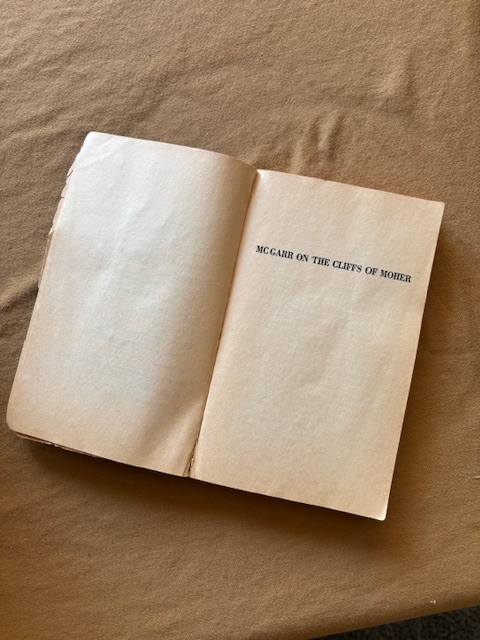
Book 1 and Book 2. The three books I bought are pocket books. When I toss one in my Mary Poppins purse, it nearly disappears!

Recently, someone in something I read suggested that Bartholomew Gill’s Peter McGarr police detective mysteries set in Ireland were a wonderful read, so I looked them up. Bartholomew Gill was the nom-de-plume of Mark C. McGarrity (1943-2002), an Irish-American crime and mystery novelist. McGarrity’s first Peter McGarr mystery was published in 1977 and set in Dublin, Ireland. The summary mentioned something about a crime at a marina, a beautiful woman, an ambitious politician, the Irish Republican Army, and the conflict between the British and the Irish over Northern Ireland. I came of age in the 1970s during some of the worst violence in Ireland, I’m part Irish, and I like police detective mysteries, so I bought the first three books in the series from ThriftBooks. I’ve read the first two.

When Gill’s series begins, his fictional character Peter McGarr, has recently returned from continental Europe to accept the coveted position of chief inspector of detectives with the Dublin police department. McGarr, known for his leadership, brilliance, cunning, and successful arrest rate, has had an exemplary career with INTERPOL before returning to Ireland. The officers under his command respect him. He’s clever, likable, and incorruptible.

I enjoyed Gill’s first two McGarr books. CID McGarr is an interesting character. He doesn’t come across as deeply flawed or deeply troubled by demons of the past. He’s usually a half step ahead of the criminals, and he can smell when something is rotten in Denmark. Gill doesn’t spend a lot of time in McGarr’s head, so readers don’t get a lot of that internality that often comes with detectives in newer stories. (Which, depending on one’s preference, could be good or bad.) What readers do get are interesting plots, conspiracies, double and triple crosses, great dialogue, and wry humor. The novels mix murder, politics, and business together, exploring themes of political corruption, corporate greed, and personal ambition. (Some things in this world never change.)

McGarr’s wife, who is about fifteen years his junior, is a good cook. She’s also bright and loves to discuss his cases with him, but she’s had a minor role so far. There are no women detectives in the first two books. Women who appear in the novels are of the femme fatale variety. It’s the 1970s, and it’s a man’s world. There is a lot of drinking in these two books. Not the hard-hitting-sit-at-the-bar-until-you-pass-out-on-it kind, but rather the steady-throughout-the-day-as-you-go kind. CID McGarr rarely turns down a drink — doesn’t matter if he’s on duty or not. The police station has beer on hand for the detectives and the suspects. Although, officers prudently strive to keep the suspects from getting drunk to avoid having their statements tossed by the courts as unreliable. Sometimes at night when I read one of these books, I was afraid I’d wake up in the morning with a hangover!

I liked these books. They were an easy read and interesting — a nice escape at the end of my day. I’ll read the third one soon. If I like that one, which I hope I will, I’ll buy the next two or three because I’m intrigued to see if Gill’s character changes over time. Does his wife stay with him? (A brief moment in the second book gave me pause.) Does he have to curtail his drinking or get sober? (McGarr mentions a line in the sand, which if he crosses, would mean he’s an alcoholic. But has he ever heard the phrase functioning alcoholic?) Will past demons surface?

Gill’s last McGarr mystery was published in 2002. By that time, I would hope to meet women detectives in his novels. I would think that drinking on the job is forbidden and that suspects aren’t offered anything stronger than water during an interrogation. I would expect to find that McGarr has changed as a person. Of course, all this depends on whether or not Gill continued to set his novels in the 1970s and 80s, or if he sets them in the times in which he wrote them. I’ll keep you posted.

Book Reviews of My Latest Reading Accomplishments, Part 2 of 6: I Cheerfully Refuse by Leif Enger

[To read Part 1, click here.]

I Cheerfully Refuse by Leif Enger, 2024

The title of this book works on so many levels and in so many ways.

Somewhere in the near future, perhaps twenty or thirty years from now, Leif Enger’s novel takes readers on a journey of magical-dystopian realism along the shores of Lake Superior and out into its waters. His main character Rainy has a happy life. He loves his wife, Lark, who runs a bookstore inside of a bakery shop. He loves to read and to play his bass guitar in a band with his buddies. He has inherited Flower, a small sailboat, which he works to restore because he fancies himself a bit of a sailor.

But readers soon realize that something is wrong with the world in which Rainy lives. Books have nearly disappeared and reading is frowned upon. The climate has changed, and Lake Superior has warmed, creating powerful storms. Lawlessness, mostly unchecked, lurks in places once considered safe. Ominous medicine ships anchored near the shores, seek to cure the youth by breaking their willful behavior and bending their thoughts in a manner deemed acceptable by the wealthy Astronauts, who wish to mold them into compliant, cheaply-paid laborers.

When Kellen, a young man, arrives in town, Rainy and Lark allow him to live in their attic. Kellen himself is not trouble, but trouble is following him. And when that trouble arrives, he is a man called Werryck, leaving Rainy no choice but to flee in his sailboat upon the tempestuous waters of Lake Superior.

Enger’s tale is spellbinding. His lyrical prose hovers above the dark underbelly of a society that has come undone. We experience a world of natural beauty and serenity along Minnesota’s North Shore. Yet, we know something is profoundly wrong because we can feel the pulsating evil that lives beneath Enger’s exquisite prose. Enger doesn’t dwell on how the world in which Rainy lives fell apart. Instead, as we follow Rainy on his journey, Enger trusts us to ponder those possibilities.

From the standpoint of craft . . .

I admire Leif Enger’s rich prose. He uses language to create imagery and metaphors that are fresh, but never out of place or over the top. His descriptions of Lake Superior, the weather, sailing, and playing a bass guitar add realism to his story. Lake Superior and its weather become a character in his novel. His story is tightly woven: A throw-away remark, or an infectious smile, or a benign action may seem to have been randomly tossed into the story, but later I would realize it was a telling moment, making me feel like I’m a smart reader.

Several people who read Enger’s book before I did would say they loved the book, but it was dark. And here is where Enger’s writing shines. Some of his themes are dark, but others are hopeful. Some of what happens in the story is sad and scary, but he tells the story in a way that gives his readers a reason to hope. Enger knows what to tell in a story, what to hint at, and what to leave to a reader’s imagination. If you’re a writer looking for a mentor book with a story told as a hero’s journey, this is a great book to read.

Book Reviews of My Latest Reading Accomplishments, Part 1 of 6: Girl with a Pearl Earring by Tracy Chevalier

I’ve been reading a lot. Every time I finished one of the books in this six-part review, I thought, “This was wonderful. I should post about it on my blog.” But, dear fellow readers, did I? No. Instead I read another book. However, these books, now stacked next to my computer, kept harrumphing at me, like when my restless grandchildren who’ve been so good finally run out of patience while waiting for me to take them to the park. And so, I placated the books by telling them I would write a short review for each of them. But things got out of hand, and the two- to three-hundred-word reviews I’d envisioned grew and grew. And try as I might, I couldn’t bring myself to cut any words because I loved the books. So I’m posting the reviews in six parts, in alphabetical order by author’s last name.

If you can’t own the painting, read the book!

Girl with a Pearl Earring by Tracy Chevalier, 1999

Seventeen-year-old Griet is hired out by her parents as a domestic servant to the household of Johannes Vermeer. From the first pages of the novel, it’s clear that something, although unspoken, has transpired between Griet and Vermeer. Griet’s acceptance in the artist’s home is mixed. She is Protestant and the Vermeers are Catholic. She is distrusted and disliked by Vermeer’s wife, one of his daughters, and the head domestic servant. Life is difficult for Griet until one day when Vermeer insists that she be the only person allowed to clean his studio. A choice his mother-in-law completely supports. Vermeer soon relies on Griet to mix his paints, and he occasionally seeks her advice when setting his scenes.

Tracy Chevalier has written a historical novel as exquisite as Johannes Vermeer’s famous painting for which the book is named. Set in the 1660s in Delft, Netherlands, Chevalier portrays the life and paintings of Vermeer as accurately as she can because not much is known about Vermeer. Girl with a Pearl Earring is considered his masterpiece, but the girl in the painting is a mystery. Chevalier’s prose is as artfully chosen and applied to the page just as Vermeer’s brilliant colors and brushstrokes were applied to his canvases. Her novel paints a captivating fictional story about how Vermeer came to paint the girl.

From the standpoint of craft . . .

As a writer I admire Chevalier’s book for the historical details that make the late 17th Century Netherlands come to life. She puts us in the streets and marketplaces of Delft. She takes us inside Vermeer’s home, and gives us a first-row seat to the domestic life of a financially insecure upper-class family and their servants, with all their petty jealousies, passions, kindnesses, and cruelties. Additionally, Chevalier’s novel is worth studying for the great sense simmering tension she creates between Vermeer and Griet.

Just for Something Different — Cranberry Pistachio Shortbread Cookies

Cooling down

Yesterday I made cranberry pistachio shortbread cookies. The kind of cookies my grandma Olive would’ve made to serve at a ladies’ luncheon. (Although, her cookies would’ve have contained dates because dried cranberries weren’t available until the 1980s.) Her luncheon would’ve been written up on the society page of the local paper. The kind of write-up they don’t do anymore, unless it’s about someone famous. It would’ve sounded something like this:

On Wednesday, May 6, Mrs. George Youngquist entertained the Presbyterian Women at a luncheon in her home. [Back in the day, a married woman’s first name was rarely mentioned in an article.] She served a variety of finger sandwiches, potato salad, and coleslaw, along with fruit punch. For dessert she served a variety of cookies, including her well-loved date-pistachio shortbread cookies, accompanied by coffee. In attendance were the group’s president, Mrs. Frank Smith; the secretary, Mrs. Grover Bost; and the treasurer, Mrs. Elmer Connors, along with nine other members. No church business was conducted. Mrs. Youngquist said, “The gathering was held to celebrate spring and to give the ladies a chance to visit with one another.

As a child and for most of my adult life, had I been at that luncheon, I would’ve passed on the date cookies, no matter how well loved they were. I would’ve looked for a chocolate chip, peanut butter, or sugar cookie. But I’m of a certain age now, and I like to try new things, occasionally. (But in a crazy paradox, I’m not big on change.) So, a couple of months ago when I saw this recipe, along with a picture of the cranberry pistachio shortbread cookies, I decided I needed to bake them. After all, I do like cranberries and pistachios and shortbread.

I bought the dried cranberries and the shelled pistachios shortly after I came across the recipe, which was a couple of months ago. Yesterday I decided I needed to stop procrastinating and bake the cookies. It was a perfect day for baking. I spent most of the day writing, so baking cookies would get me off my backside. And it rained and stormed most of the day, ideal baking weather.

The production line

Why did it take me a couple of months to try the recipe? Fear of messing it up — because I’d never made this kind of cookie before. But once I started mixing, chilling, then later baking, I discovered this simple recipe produces scrumptious cookies that look sophisticated, like the kind served at a luncheon or with high tea.

The two sticks of butter used in the recipe make the cookies melt in my mouth, releasing bursts of cranberry and orange, making my mouth tingle. They pair well with coffee. However, I will have to find someone to share them with because my husband doesn’t like cranberries. He did try one, but he didn’t like it. I just couldn’t possibly eat all these cookies by myself.

What did I like about this recipe? It was easy! The cookies turned out so well that I fancied myself as a TV chef. The dough is rolled into a log before chilling, which makes it easy to slice the cookies for baking. Other recipes, like this one, call for the dough to be chilled in a ball then rolled out on a flat surface before using a round cookie cutter. But the log method is easier and less messy. Also, the log method keeps the baker from overhandling the dough. Best of all, I felt like I was in the kitchen baking with my grandma Olive.

What would I change? I’d use chopped walnuts or pecans instead of pistachios, which are harder than pecans and walnuts. Because when I had to slice the cookie dough, the chopped pistachios were difficult to cut through. I could use dried cherries because my husband likes those, but he doesn’t like walnuts or pecans. I could eliminate the nuts, but they add a savory taste.

My one goof? I only had a small orange. Having never zested an orange before, I had no idea how many it would take to make a tablespoon of zest. I ended up with 1/2 tablespoon, and while I can still taste the orange, I can’t help but wonder what the cookies would taste like if I’d used a whole tablespoon.

Here’s the recipe I used. Happy baking!

McLean & Eakin Booksellers: Another One of My Favorite Bookstores

McLean & Eakin Booksellers (Lake Street Entrance) is conveniently located next to a coffee and sandwich shop. April 2025

McLean & Eakin Booksellers is located in downtown Petoskey, Michigan, on Lake Street, in what is referred to as the Gaslight District. It’s been a shopping district for over one hundred years. Many of the old gas lamp posts, while now electrified, still remain.

The view from the front of the store, April 2025

McLean & Eakin was established thirty-three years ago in 1992 and has remained in the same family. It’s located in the G & A Building, built in 1907. The initials stand for Guleserian and Altoonjian, two Armenian immigrants who ran a Persian Bazaar on the first floor of the building and rented the second floor to the Petoskey Normal and Business College. It’s fun to imagine all of the people who shopped for goods that would have come from the Middle East and Asia. Perhaps they bought a Persian rug, or a piece of ornate furniture, or an exquisite painting. Over the years other businesses came and went, including a women’s clothing store during the 1950s and 1960s.

“Hey,” I thought, “I’m reading that book!”

A couple of days ago when I walked into the store, I Cheerfully Refuse by Leif Enger, a book I’m currently reading, welcomed me. At the checkout counter, I discovered a display dedicated to Enger’s novels and an announcement that he would be appearing at an author event in Petoskey. The clerk told me that the owner of McLean & Eakin is a huge Leif Enger fan. I own all of Enger’s novels, so I bought The Frozen River by Ariel Lawhon, which is supposed to be a wonderful historical novel. The story, inspired by a real midwife’s diary, takes place in Maine in 1789.

Leif Enger will be doing an author event in Petoskey on April 23, 2025.

From the outside one might expect McLean & Eakin to be quite small, but it’s two stories, so customers will find plenty of titles. The main entrance is on Lake Street, but if you go around the block to the back of the building, you’ll find another entrance, also at street level but one story lower. The G & A Building, like many structures in Petoskey, was built into a hill.

The staff is always friendly and helpful. On more than one occasion, I’ve watched a clerk function as a human algorithm: A customer feeds the clerk titles of books they’ve enjoyed, and the clerk starts suggesting other books they might like.

McLean & Eakin offers a rewards program, and even though I live over nine hours away, I joined. At first I resisted because I lived so far away. But as I traveled to Petoskey more frequently, and as every trip included at least one visit to the bookstore, I signed up. There is no fee to join the rewards program, and I realized it was financially foolish not to belong. For every $100 dollars I spend, I receive a ten-dollar coupon. On this trip to the bookstore, I earned my third coupon since enrolling in their rewards program.

In addition to books, customers can shop for greeting cards, stationery, writing journals, puzzles, games, candles, stickers, coffee mugs, socks, and other miscellaneous items. At the back of the store on the main level is a charming children’s section.

At one time people could walk into the Persian Bazaar and take home a piece of a faraway world. Today people can walk into McLean & Eakin, buy a book, and read themselves into another world. After I finish I Cheerfully Refuse, which has taken me forward in time to northeastern Minnesota along Lake Superior, I will read The Frozen River, which will take me back to 1789 in Maine.

An Afternoon at the Opera with Puccini’s La Bohème

La Bohème

I went to see a live opera because it was on my list of things to do. (In case you’re wondering, I signed up for Medicare a few months before going to my first opera.) I had such a good time that I want to share some thoughts about my experience, but first I should point out my shortcomings as an opera critic.

I have no training in opera.

I don’t understand opera’s conventions. (Other than there is a lot of singing, which crescendos into an epic climax of either joyful or tragic proportions at the end of the opera.)

The Jenny Lind biography I read as a fourth or fifth grader.

My exposure to opera as a child consisted of two events. One, in fourth grade I read a biography about Jenny Lind, an opera singer known as the Swedish Nightingale. This didn’t encourage me to learn more about opera. Instead, I just fancied myself to be the next Jenny Lind. I would sit by my second-story bedroom window and sing out into the neighborhood (with what I considered to be a lovely operatic voice) because that is what Lind did as a child. People passing by Lind’s window listened to her beautiful singing, and one passerby discovered her talent and helped her down the path to stardom. Only Mr. Geise’s cows across the road heard me sing, and none of them mooed about my talent.

Two, when I was about twelve, I saw Beverly Sills, a talented soprano, perform on Johnny Carson’s Tonight Show. I loved her voice and her flowing red hair. When Carson interviewed her, I fell for her wit and laughter. Over a handful of years, I saw Sills make appearances on various talk shows during the 1970s, but I never saw her in an opera. She was a gifted and well-respected opera singer, but it was the talk-show circuit that made her a household name and gave her celebrity status. Even people who knew nothing about opera, like me, usually knew who Sills was.

So, anything I say about my La Bohème experience isn’t intended to resemble a critique or a review. Also, I truly loved my debut at the opera, so my comments come from a place of affection, even if they sound cheeky.

I chose La Bohème to be my first opera because that’s what the Lyric Opera of the North performed this year. It’s a famous opera, so I’d heard of it. It’s the opera that Ronnie Cammareri (Nicholas Cage) takes Loretta Castorini (Cher) to see in Moonstruck. Ronnie knew what he was doing — Loretta loved the opera. And, this is where Loretta falls in love with Ronnie.

Because La Bohème is written in Italian, I read a synopsis of the libretto before attending the opera. While reading about La Bohème, I came across some unflattering critiques of Puccini’s opera — calling his musical composition simplistic, lacking in complexity, yada, yada, yada. For a moment, I wondered if I should wait to see a different opera. Then I remembered all the beautiful singing and music in Moonstruck’s La Bohème scene. I also learned that La Bohème has been performed over 1,000 times at the Met. So, not the first time critics have panned something that people love anyway. Besides, what would I know about the musical composition of an opera.

So, here’s what I loved about my first opera:

  1. I loved that the set design evoked a shabby-chic slice of Paris with a romanticized version of poverty, you know, without the half-starved rats, the rubbish in the streets, and the ever-present layer of grime. The rich jewel-toned costumes complimented the pastel-colored sets, like a well-chosen pair of earrings and necklace elevates an evening gown. After all, gritty reality is overrated. When we know that in the end a lovely young woman will die a tragic death while in the arms of her lover, we want some beauty along the way.
  2. I loved that on a long, narrow screen above the stage, an English translation of the Italian libretto scrolled by as the singers trilled, vibratoed, bel cantoed, and otherwise sang their way through scenes of comedy, anger, and tragedy. The subtitles provided a line-by-line translation. Without it, I would’ve missed out on so much of the story. I thought this was unique to the venue I attended, but a friend of mine said when she saw an opera in Michigan there were subtitles.
  3. I loved that the melodramatic, over-the-top, corny libretto sounded brilliant when sung in Italian. More than once, as I read the English translation, I thought, “As a writer, I could never get away with such sappy, syrupy, trite dialogue.” (Perhaps my characters should speak Italian.)
  4. I loved that although the pageantry on the stage was gorgeous, it was upstaged by operatic voices so strong, crisp, and clear, producing sounds so bewitching that I couldn’t believe they flowed from human voice boxes.
  5. I loved the magnificent, glorious, wrenching tragedy of it all. How can anyone hear Mimi ask, “Will my hands never be warm again?” and not shed a tear? (Charles Dickens would’ve loved to have written that line.)
  6. I loved that at the end of the opera, as Mimi reclines upon her couch in her freezing apartment, dying of tuberculosis, she sings her heart out with Rodolfo, the love of her life, reminiscing about their time together. Having read a book about dreaded plagues, which included a chapter about tuberculosis, the incongruity of performing an operatic finale when one would be coughing up blood and gasping for air, stuck me as darkly humorous. But I kicked the cold, hard reality from my mind, and I let Mimi and Rodolfo’s final moment together carry me away.

After the performers took their final bows, I left the theater knowing I would definitely see another opera. A few months later, I went to see La Serva Padrona, a light-hearted intermezzo by Giovanni Battista Pergolesi, which was translated into a modern English version by Steve Solkela. I loved everything about it.

In the movie Pretty Woman, Edward Lewis (Richard Gere) takes Vivian Ward (Julia Roberts) to see her first opera, La traviata by Giuseppe Verdi. Before the performance begins, it’s apparent that Edward hopes Vivian will love opera as much as he does. As the final song ends and Violetta dies in the arms of her lover (of course), Edward looks at Vivian and sees her eyes have pooled with tears and her face is filled with rapture. At this moment, Edward realizes Vivan has a depth beyond his stereotype of hookers. He has fallen in love with Vivan, he just doesn’t know it yet.

When another woman asks Vivan if she enjoyed the opera, Vivian answers, “Oh, it was so good I almost peed my pants.” Vivan, like me, doesn’t know how to talk about the conventions of opera, but she knows what she likes.

Book Review: Realm of Ice and Sky: Triumph, Tragedy, and History’s Greatest Arctic Rescue by Buddy Levy

St. Martin’s Press, 2024

Its belly wounded, the Italia hangs in the air, brooding over a group of explorers who stand on the frozen, barren Arctic snow. The sun flames between the sky and the ice, perhaps a promise, perhaps an omen. The cover art compelled me to buy the book.

The title, Realm of Ice and Sky, invited me to enter a world ruled by those two endless and formidable expanses and to meet the men who risked their lives, their money, and their reputations in search of fame and glory and discovery as they vied for the North Pole and a place in history.

The subtitle, Triumph, Tragedy, and History’s Greatest Arctic Rescue, promised me a shipwreck story of sorts, and I love nonfiction books about shipwrecks.

Each night I would sit on my cushy couch with a patchwork quilt over my legs and enter the realm of ice and sky. I followed the adventures of Walter Wellman, Roald Amundsen, and Umberto Nobile, who were all driven by an inner desire to venture into a dangerous and largely unknown world, reaching for a sense of immortality.

While Levy’s book isn’t a biography, he does delve into the lives of Wellman, Amundsen, and Nobile just enough to give readers a glimpse of who those men were and what inspired them to leave the comforts of civilization and venture into the hostile and largely unexplored regions of the Arctic. Wellman, Amundsen, and Nobile were all talented, knowledgeable explorers, who, when it arrived, faced adversity and danger with calmness and bravery.

But Levy refrains from portraying these men simply as heroic figures because, although they could be heroic, they also had their faults. In the early 1900s, Polar explorers were a small, tightly-knit group who looked out for one another. However, they could also be aroused by petty jealousies that sometimes became public disputes, which their fans eagerly followed in the newspapers and radio broadcasts of the day.

The beauty of Levy’s book goes far beyond its cover. Levy’s talent for clear descriptive writing lets readers easily imagine the enormity of the airships, marvel at their mechanical intricacies, and hold their breath as the crews battle against the unpredictable Arctic weather of ice, snow, rain, hail, and gale-force winds. Readers can picture the magnificent views from the top of the world: the midnight sun, the blindingly-white snow, and the changing hues of the ice floes and water.

Levy, an award-winning author, deftly weaves together the stories of explorers who conquered the earth’s last frontier, the rise of airships, and the dawn of the golden age of radio. Starting with Wellman, explorers could send messages via radio transmissions to the outside world, giving almost real-time updates of their progress, which then appeared in newspapers and radio broadcasts, feeding a public who hungered for the thrilling news of the Arctic explorations. It’s been almost a hundred years since the airship Italia flew over the North Pole, but stories of daring explorers still fascinate us, especially when told in the capable hands of an author like Buddy Levy. [For more about Levy and his work, click here.]

In addition to a well-written and well-researched story, readers will appreciate the book’s extras. Maps at the beginning of the book track the different flights and give readers a better understanding of the geography of the North Pole and Arctic Circle. The table of contents and index make it easy to find information. At the end of the book, there is a glossary of airship and aviation terms, a list of each expedition and the crew members who participated, and a bibliography. Sixteen pages of wonderful photographs are also included.

I liked this book so much that I plan to read two other books by Levy: Empire of Ice and Stone: The Disastrous and Heroic Voyage of the Karluk and River of Darkness: Francisco Orellana and the Deadly First Voyage Through the Amazon.

__________________________________________________________

A short story suggestion:

“Love and Hydrogen” by Jim Shepard

Shepard’s historical short story takes place in May 1937 aboard the Hindenburg while on its doomed flight from Frankfurt, Germany, to Lakehurst, New Jersey. Among the ninety-seven people aboard the airship are two male crew members who are in love with each other. It’s a powerful story, written with a lyrical heaviness that foreshadows both the impending explosion of the Hindenburg, and the looming disaster of World War II.

Some extra thoughts:

Until I saw this book, I had no idea that dirigibles had been used in Arctic explorations. I knew only two things about these airships. One, that the Hindenburg had exploded in Lakehurst, New Jersey, in 1937, killing thirty-six people. In my high school history class, we watched the newsreel footage of the explosion and fire, while we heard the radio reporter’s poignant utterance, “Oh, the humanity” as the burning airship crashed on the ground. My second experience with airships was watching the Goodyear Blimp fly above arenas in order to provide overhead coverage of sporting events.

After reading Realm of Ice and Sky, I did a little research on dirigibles. Below is a YouTube video about the USS Akron disaster, which had seventy-three fatalities compared to the Hindenburg‘s thirty-six. It’s about ten minutes long and very interesting. [Footage of the Hindenburg disaster is easy to find on YouTube.]