Anne of Green Gables, the Play

Playbill from Anne of Green Gables adapted for the stage by Peter DeLaurier

On Sunday I took my fourteen-year-old grandchild to see a play based on the children’s novel Anne of Green Gables by L. M. Montgomery.

Montgomery’s novel about a determined, outspoken, red-headed orphan is one of my favorites. I’ve read it twice.

I went to see the play for two reasons: first, to meet up with my old fictional friend Anne Shirley of Avonlea, Prince Edward Island, and, second to introduce my grandchild to Anne’s story. Judging by the large crowd of people at the play, who ranged from senior citizens to young children, Anne Shirley is still loved by old friends and still being introduced to new friends.

Montgomery wrote Anne of Green Gables in 1905. At first her book was rejected by publishers. Montgomery set her novel aside for a while, but in 1907 she sent it to L.C. Page in Boston. It was accepted and published in 1908. Within five months she sold over 19,000 copies, and it was reprinted numerous times in its first year. Since its publication over fifty million copies have been sold, and it has been translated into over thirty-six languages.

What makes the novel so popular and timeless? Most definitely, it’s the main character, Anne Shirley, who wins our hearts. Set in the late 1800s, we meet Anne when she is eleven years old. She is an orphan who has lived in both foster homes and the orphanage. Her life changes when Marilla Cuthbert and her brother Matthew Cuthbert decide they need someone to help the aging Matthew with his farm chores. Marilla writes to the orphanage to request a boy be sent to them, but there is a mix up, and Anne is sent instead.

Anne has been an orphan since she was a baby. She longs for a family and a home to call her own. She has red hair and freckles, and she believes this makes her ugly. She is outspoken, talkative, and a daydreamer. In a time when girls were to be ladylike and sweet, her candid manner is labeled impertinent and disgraceful. At first Marilla is adamant that Anne should be returned to the orphanage, but Matthew doesn’t agree. Anne’s spirit touches him, and he convinces Marilla to give Anne a chance.

Why have readers for over a hundred years loved Anne of Green Gables? Because Anne wants what we all want — a home, a family, and to be loved for who she is. She doesn’t want people to make fun of her red hair and freckles. She doesn’t want people to silence her outgoing personality or tell her daydreaming is frivolous. We cheer for Anne. She is our hero, not because she is always good or perfect, but because she is so human. When she makes mistakes, she learns from them while remaining true to herself. Anne’s willingness to be true to who she is as she grows up, changes the people around her, and they become more accepting and open minded.

Over a hundred years after its publication, Montgomery’s story still invites readers to be compassionate and accepting of people’s differences. Furthermore, without moralizing, her novel delivers this message with humor; tenderness; and richly drawn characters, such as the unforgettable, irrepressible Anne Shirley.

The play I saw on Sunday was wonderful. The actor who played Anne Shirley was outstanding. She captured the essence of Anne and brought her to life on stage. The supporting cast were also excellent; after all, there are no small parts. The play was creatively staged on a well-designed set, and the costumes were charming. (I found myself wishing I could wear some of them!) The play remained true to Montgomery’s story, and I loved being able to say to myself over and over, “Yes, I remember that from the book!”

Best of all, my fourteen-year-old grandchild loved the play. Teenage years can be difficult. Young people can be filled with self-doubt and feel as though everyone is judging them as they work to discover who they are and what they want out of life. The characters in Anne of Green Gables remind us that acceptance, kindness, and love are timeless and important for both the young and old. This message feels even more important today. In a world where some people want to divide us, we need to remember we are more alike than different. To forget this is to put our humanity at risk.

The Answer to August Tenth’s Question: It’s a Tussock Moth Caterpillar (And a Connection to a Kate Moore Book)

On August 10, I posted a picture of a caterpillar that looked like it had been assembled by a young child with a vivid imagination.

One reader said that it looked like a wet Tussock Moth caterpillar. At first, I thought the word wet was part of the caterpillar’s name. Then I realized I’d been hosing dirt off the lower part of my house’s foundation. The caterpillar rested about five feet up, but the mist from the hose gave it a shower, making it look even more fanciful than when it’s dry. A few days later, another reader also identified the caterpillar as a Tussock Moth. (There are about thirty different varieties of Tussock Moths.)

To watch a video about White-Marked Tussock caterpillars and moths, click here. Note: In this video the Tussock caterpillar is crawling on a person’s finger and hand. Because the caterpillars release toxins to discourage being eaten by predators, humans handling the caterpillars could experience itching and burning after touching them. I’d say it’s best not to touch. To learn more about Tussock Moths and see a picture of an adult version, click here.

Tussock caterpillars eat the leaves of a wide variety of trees, bushes, and other plants. They have voracious appetites, sometimes leaving trees bare. Although I’m sure no one wants to see the leaves on their trees disappear, people need to keep in mind that because Tussock Moths are native to their North American habitats, they are part of a balanced ecosystem. So, Mother Nature has an answer for Tussock Moths when they become too numerous — a virus outbreak among the species causes their numbers to drop, and that gives trees a chance to recover. However, some trees will die or be weakened and become more susceptible to other diseases and pests. As part of their ecosystem, Tussock Moths also face predation from native species found in their habitat: some birds, insects, bats, and small animals will eat Tussock Moths in their various stages of development.

While some types of trees can better withstand hungry Tussock caterpillars, other trees, especially conifers, are more susceptible to destruction. If you notice the leaves disappearing off your deciduous or coniferous trees, it might be wise to seek advice from several reliable sources.

On a literary bent, and because I often make connections to things I’ve read . . .

While watching the video on White-Marked Tussock Moths, I learned female White-Marked moths are either wingless or nearly wingless, as are most Tussock Moth species. They will never take flight. The male will find them, mate with them, then fly away to mate with other females. The female will lay her eggs and die shortly after. That’s it. She will never experience flight. Now, I know Mother Nature has specific ways of providing for the continued survival of each species, and I know I’m anthropomorphizing the White-Marked Tussock Moth, but I felt for the female moth who would never fly.

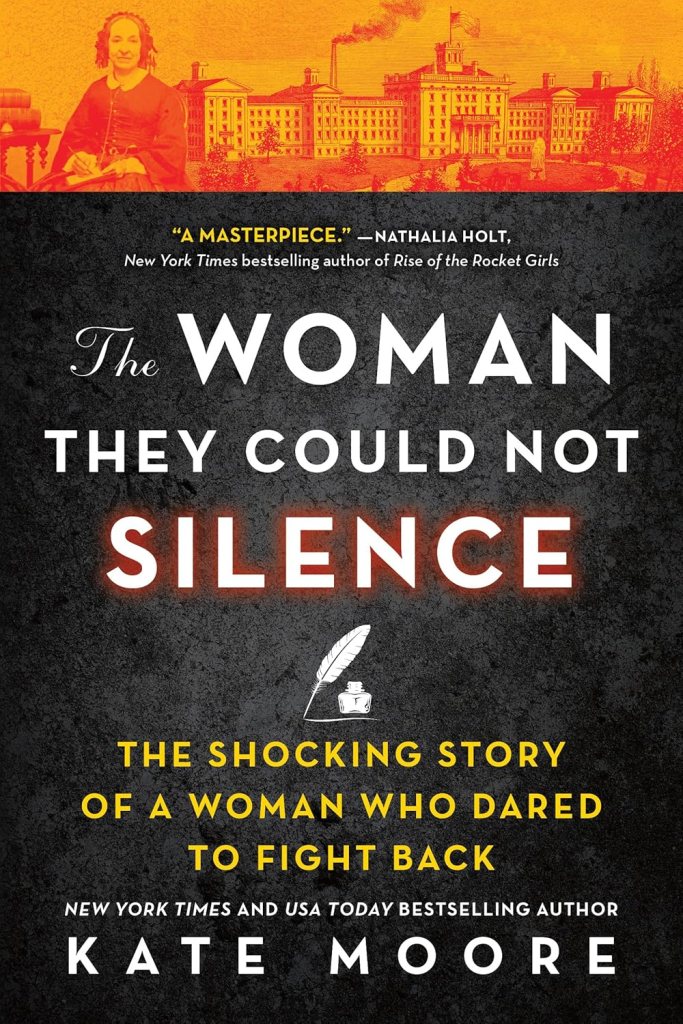
As I watched this video, I immediately thought about Kate Moore’s nonfiction book The Woman They Could Not Silence: The Shocking Story of a Woman Who Dared to Fight Back. In her book, Moore tells the story of Elizabeth Packard who is married to Theophilus Packard, a minister, and the mother of five children. It’s 1860, and after twenty-one years of marriage and being told what to think and say, Elizabeth dares to spread her wings and fly. A deeply devout woman, she begins to question some of her husband’s church’s teachings. She writes essays about her doubts and concerns. Theophilus tells her to stop, but she won’t because she believes she is a separate person from her husband and entitled to her own thoughts and opinions.

Outraged, Theophilus has Elizabeth declared insane and committed to the Illinois State Hospital in Jacksonville, Illinois. Shockingly, because Elizabeth is his wife, and because the state of Illinois allowed it, Theophilus is able to have her locked up simply on his say-so. After Elizabeth is placed in the state hospital, she discovers she isn’t the only married woman to have been declared insane by a husband who wanted his wife out of the way. Ironically, if Elizabeth and the other women had been single, it would have taken a jury of six people to agree they should be committed.

Through Elizabeth Packard’s powerful story set in the second half of the 1800s, Kate Moore explores the second-class status of women, the abysmal conditions in state hospitals, and the arrogant doctors and medical staff who professed to be experts in psychology, but who truly did great harm to the people they should have protected. Moore also talks about the people who, along with Elizabeth, worked tirelessly to change attitudes and laws to give women more rights and to reform state hospitals.

I’m just going to say it — Hey, Mother Nature, how about giving the female Tussock Moth wings?

Something Published: Duluth Monarch Buddies: Helping Monarchs One Waystation at a Time

My article “Duluth Monarch Buddies: Helping Monarchs One Waystation at a Time” appears in the June issue of Northern Wilds. To read my article, click here, and turn to page 22.

I’m particularly proud of this article because it focuses on pollinators, such as monarchs and bees. With the current threat to our national forests and programs designed to protect our environment, there are ways we as individuals can help make Earth a better place. Plant a pollinator garden, ditch the use of pesticides, plant a tree, learn about the natural world around you, and connect with organizations like Duluth Monarch Buddies to learn how you can be a power of one in the protection of our planet.

Northern Wilds also published my short article “Capt’n J’s Mini Golf: A Treasure Chest of Fun on Barker’s Island.” To read my article, click here, and turn to page 7.

Just for Something Different — Cranberry Pistachio Shortbread Cookies

Cooling down

Yesterday I made cranberry pistachio shortbread cookies. The kind of cookies my grandma Olive would’ve made to serve at a ladies’ luncheon. (Although, her cookies would’ve have contained dates because dried cranberries weren’t available until the 1980s.) Her luncheon would’ve been written up on the society page of the local paper. The kind of write-up they don’t do anymore, unless it’s about someone famous. It would’ve sounded something like this:

On Wednesday, May 6, Mrs. George Youngquist entertained the Presbyterian Women at a luncheon in her home. [Back in the day, a married woman’s first name was rarely mentioned in an article.] She served a variety of finger sandwiches, potato salad, and coleslaw, along with fruit punch. For dessert she served a variety of cookies, including her well-loved date-pistachio shortbread cookies, accompanied by coffee. In attendance were the group’s president, Mrs. Frank Smith; the secretary, Mrs. Grover Bost; and the treasurer, Mrs. Elmer Connors, along with nine other members. No church business was conducted. Mrs. Youngquist said, “The gathering was held to celebrate spring and to give the ladies a chance to visit with one another.

As a child and for most of my adult life, had I been at that luncheon, I would’ve passed on the date cookies, no matter how well loved they were. I would’ve looked for a chocolate chip, peanut butter, or sugar cookie. But I’m of a certain age now, and I like to try new things, occasionally. (But in a crazy paradox, I’m not big on change.) So, a couple of months ago when I saw this recipe, along with a picture of the cranberry pistachio shortbread cookies, I decided I needed to bake them. After all, I do like cranberries and pistachios and shortbread.

I bought the dried cranberries and the shelled pistachios shortly after I came across the recipe, which was a couple of months ago. Yesterday I decided I needed to stop procrastinating and bake the cookies. It was a perfect day for baking. I spent most of the day writing, so baking cookies would get me off my backside. And it rained and stormed most of the day, ideal baking weather.

The production line

Why did it take me a couple of months to try the recipe? Fear of messing it up — because I’d never made this kind of cookie before. But once I started mixing, chilling, then later baking, I discovered this simple recipe produces scrumptious cookies that look sophisticated, like the kind served at a luncheon or with high tea.

The two sticks of butter used in the recipe make the cookies melt in my mouth, releasing bursts of cranberry and orange, making my mouth tingle. They pair well with coffee. However, I will have to find someone to share them with because my husband doesn’t like cranberries. He did try one, but he didn’t like it. I just couldn’t possibly eat all these cookies by myself.

What did I like about this recipe? It was easy! The cookies turned out so well that I fancied myself as a TV chef. The dough is rolled into a log before chilling, which makes it easy to slice the cookies for baking. Other recipes, like this one, call for the dough to be chilled in a ball then rolled out on a flat surface before using a round cookie cutter. But the log method is easier and less messy. Also, the log method keeps the baker from overhandling the dough. Best of all, I felt like I was in the kitchen baking with my grandma Olive.

What would I change? I’d use chopped walnuts or pecans instead of pistachios, which are harder than pecans and walnuts. Because when I had to slice the cookie dough, the chopped pistachios were difficult to cut through. I could use dried cherries because my husband likes those, but he doesn’t like walnuts or pecans. I could eliminate the nuts, but they add a savory taste.

My one goof? I only had a small orange. Having never zested an orange before, I had no idea how many it would take to make a tablespoon of zest. I ended up with 1/2 tablespoon, and while I can still taste the orange, I can’t help but wonder what the cookies would taste like if I’d used a whole tablespoon.

Here’s the recipe I used. Happy baking!

Foxes & Fireflies, My Hometown Bookstore, Is The Perfect Place to Shop for Valentine’s Day!

Always some refreshments available Foxes & Fireflies

Bookstores are great because they have books (the best), but many bookstores have a lot of other cool stuff. Bookmarks, jewelry, socks, toys, gadgets, stationery, journals, games, bookmarks, ornaments, pins, coffee mugs, jigsaw puzzles, stickers, candles, stuffed animals, chocolates.

So, if you’re looking for a perfect Valentine’s gift for someone special, and you’re looking for something unique, try a bookstore, even if your someone special isn’t a reader.

If your Valentine is a reader and you know what book they want – good deal, buy a book. If your Valentine is a reader and you don’t know what book they want – buy a gift certificate. If you want to step up your Valentine’s Day game, add another gift to the book or the gift certificate. Scroll for ideas!

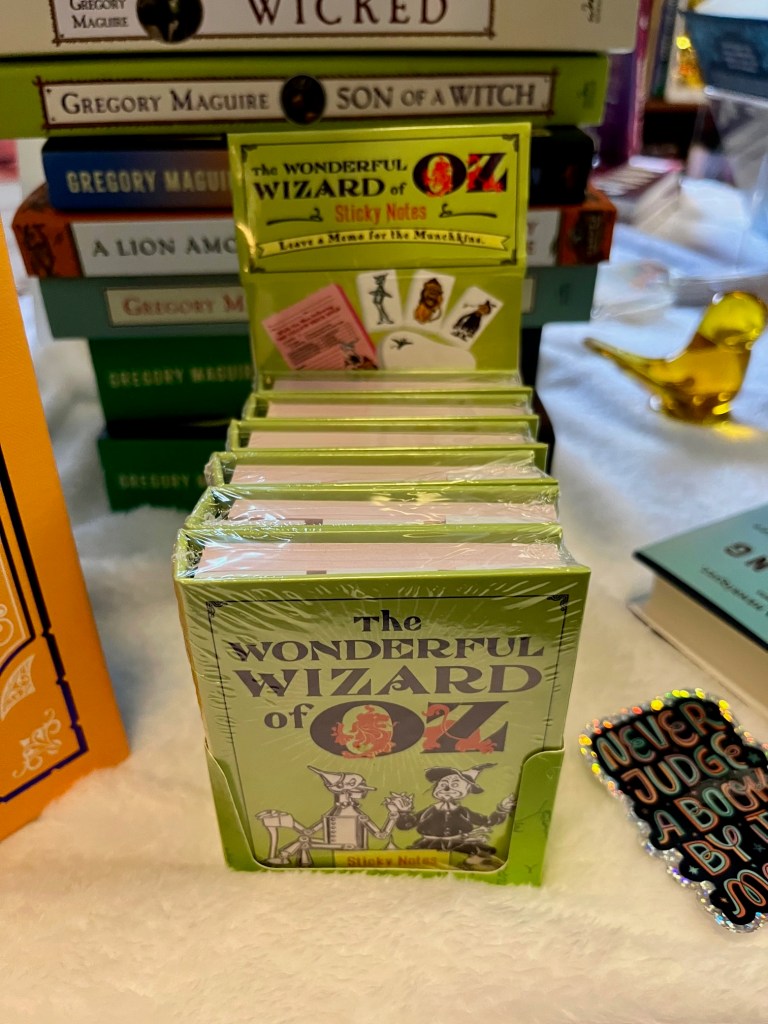
Does your Valentine love sticky notes? Do they love to use them to mark their favorite passages in books? Do they still enjoy a trip down the yellow brick road? This palm-sized book of Wizard of Oz sticky notes is sure to please both good and bad witches!
Little Valentines would love one of these 3-D printed creatures. Their moving parts make them good fidget toys.

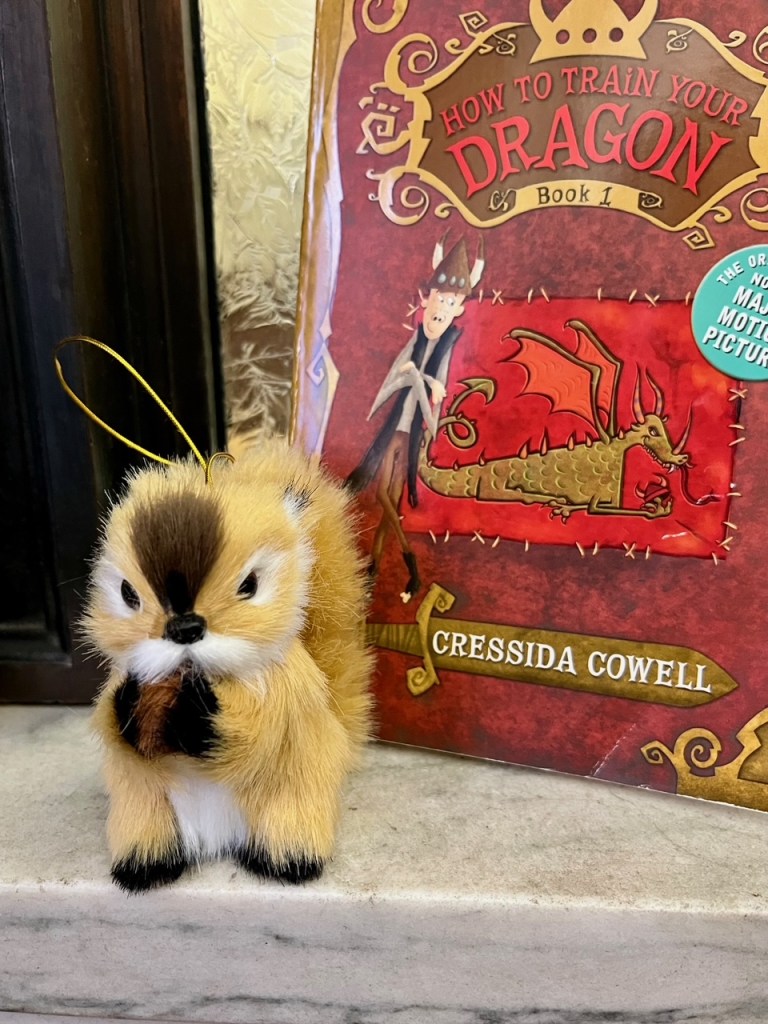
A chipmunk ornament
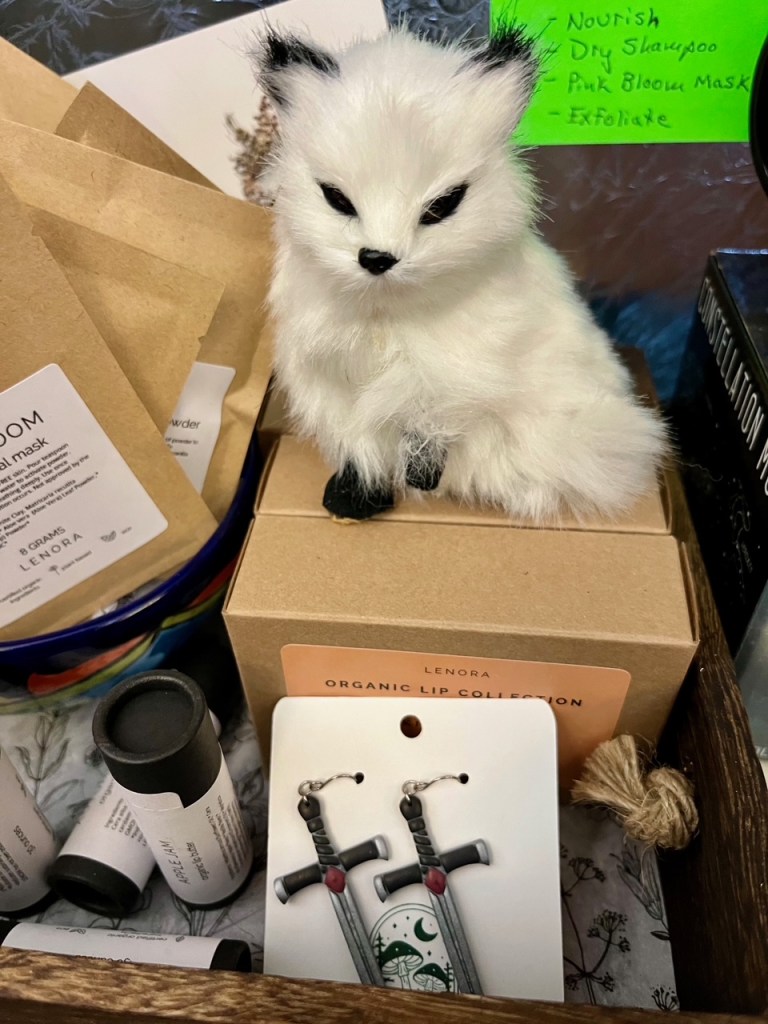
An Arctic fox ornament
A small fox figure guarding lip balm, facial masks, and earrings
An earnest fox figure, seems to say, “Just keep reading. No need to get up and cook or do the dishes.” As your browse for books, look for the squirrels, foxes, and chipmunks. They are for sale. They make wonderful reading buddies.
These sweet dioramas can be found throughout the store. Does your Valentine like to build models? Kits are available for purchase.
The Foxes & Fireflies mascot is the perfect teddy fox for young Valentines who like to snuggle with a friend during story time.
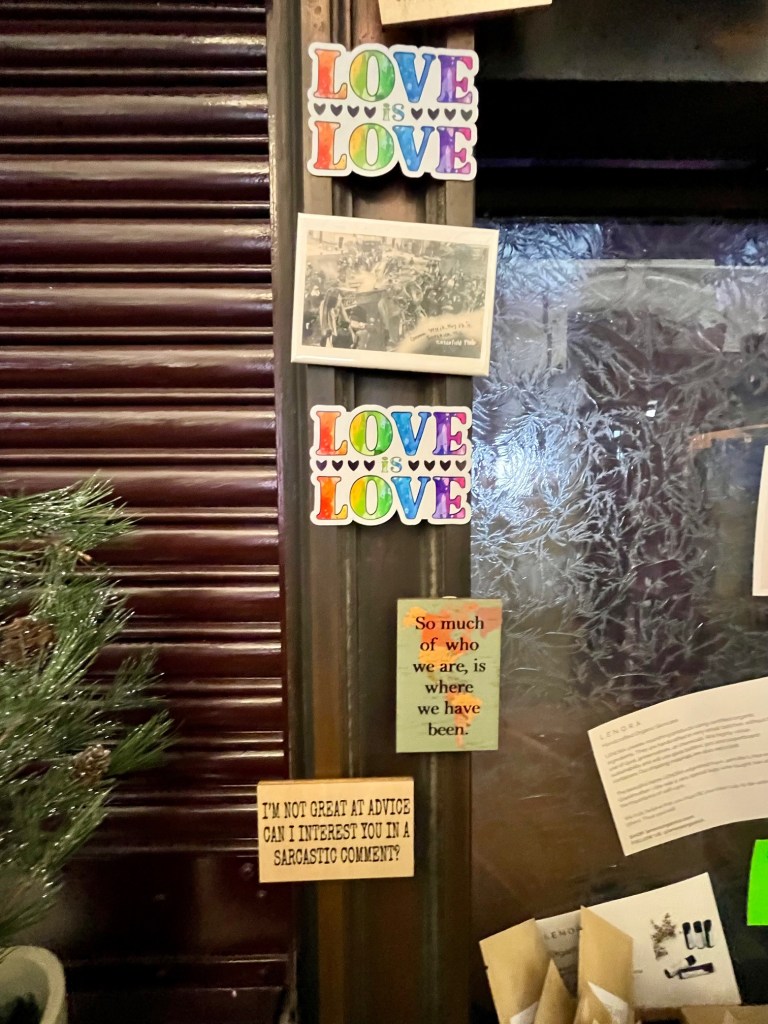
Throughout the store, magnets are on display for sale. Find the words that capture your Valentine’s personality.
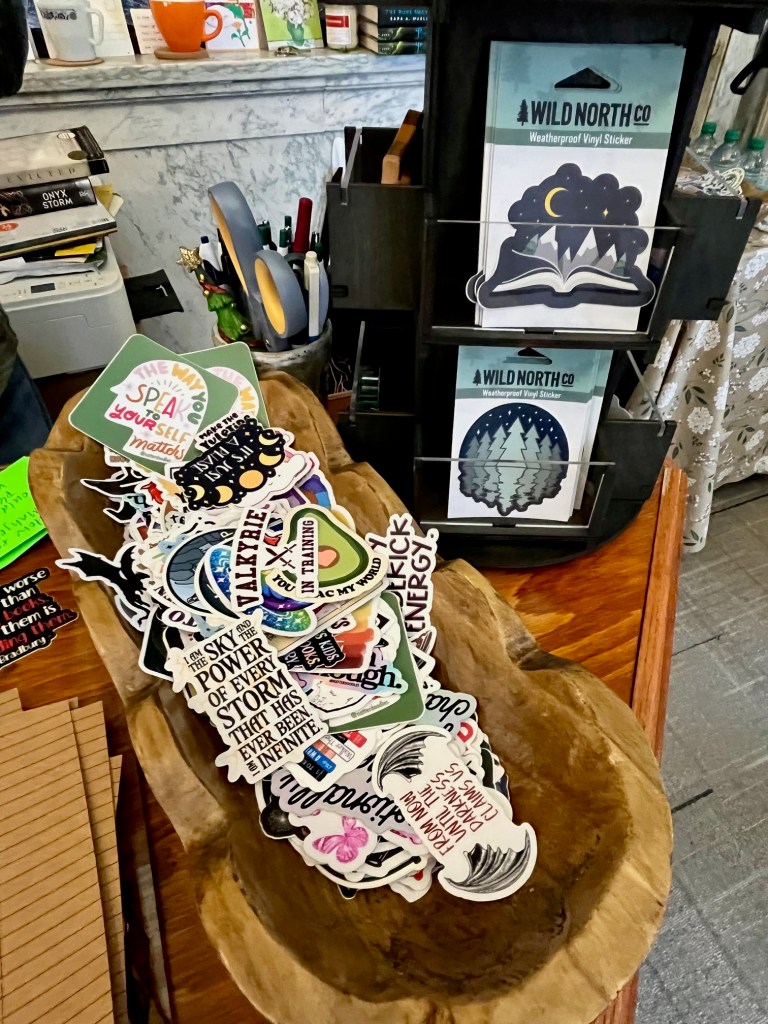
Stickers! Think of these like the Valentines we gave each other in elementary school. People like to put these on travel mugs and computers. I like to put mine on the inside of my writing journals.
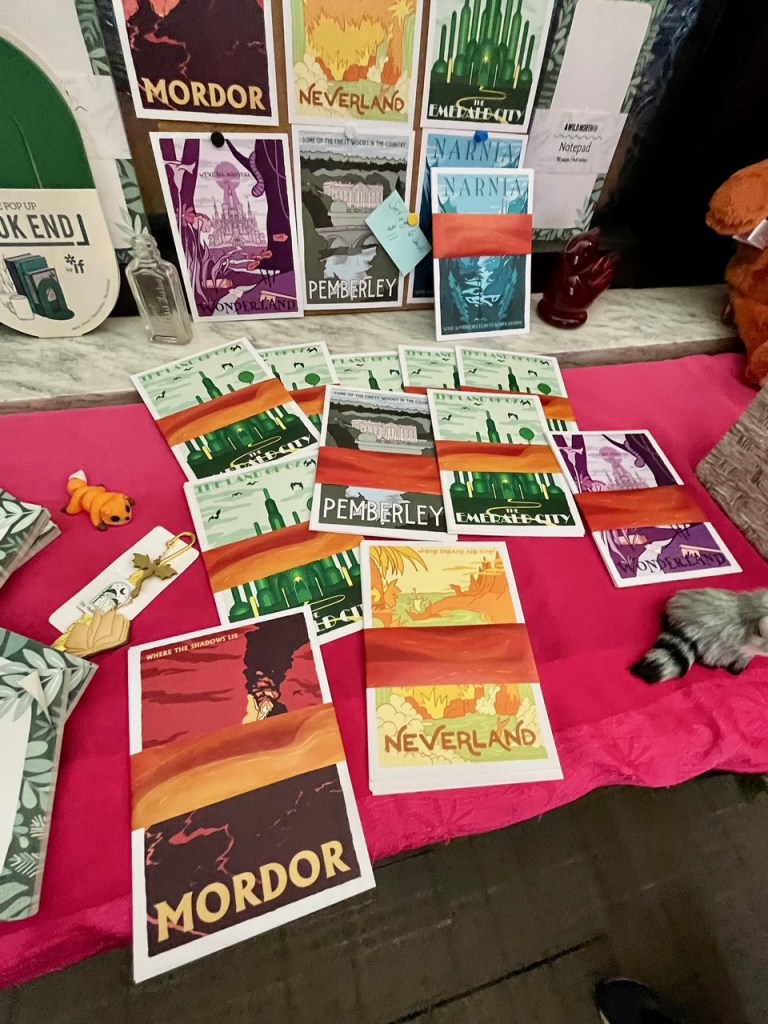
Postcards from your Valentine’s favorite fictional worlds.
Stationery, journals, calendars, and a few Valentine cards. I found the perfect Valentine’s Day card for my husband!
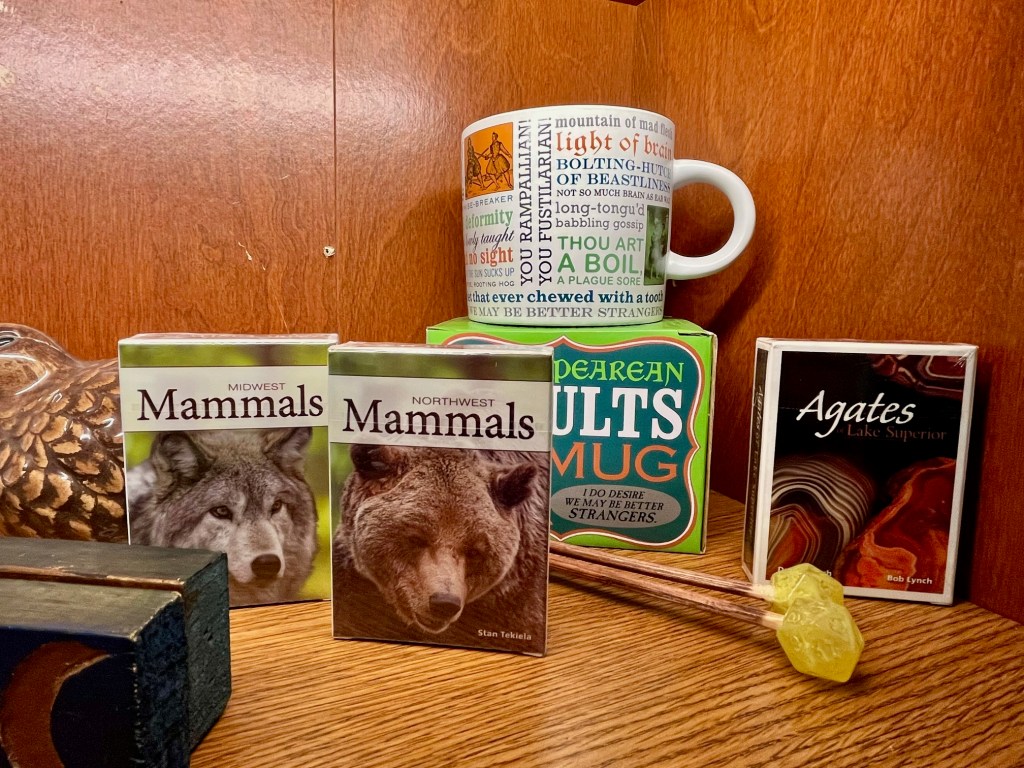
Playing cards and coffee cups. Note, the coffee mug features Shakespearean insults. Should you have a lover’s spat — you can trade first-rate barbs by the bard.
Jigsaw puzzles and crystal hearts
Reading journals formatted for your Valentine reader to record the books they read
Plush and soft, great accessories to go with a book from the children’s section
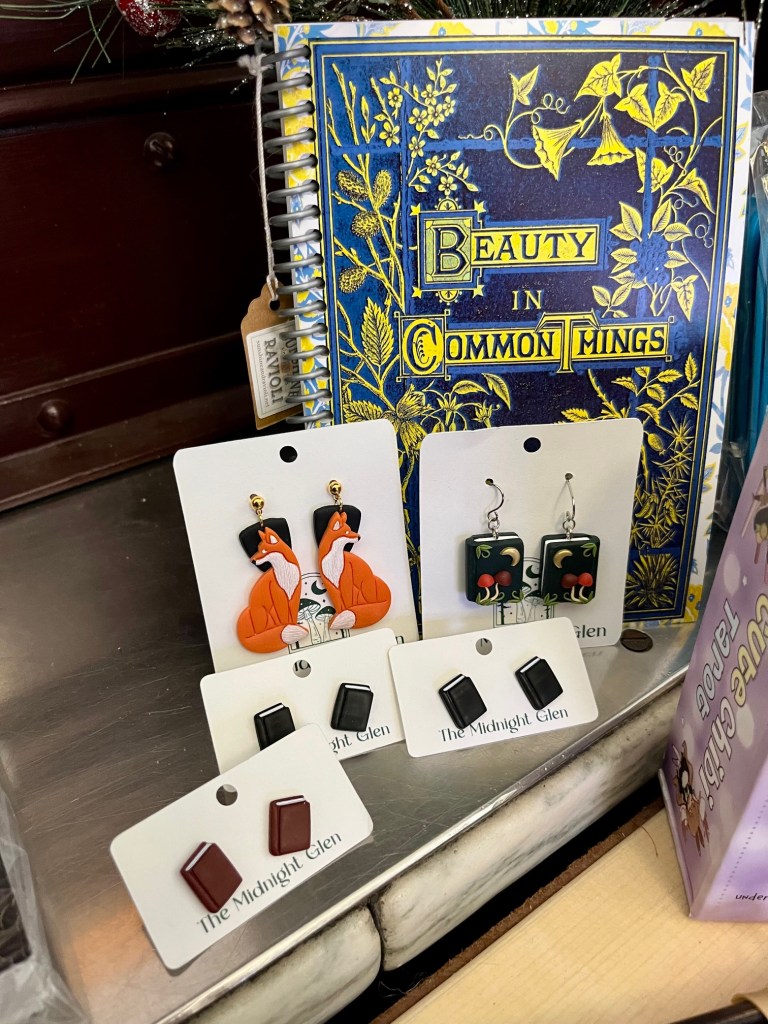
Earrings
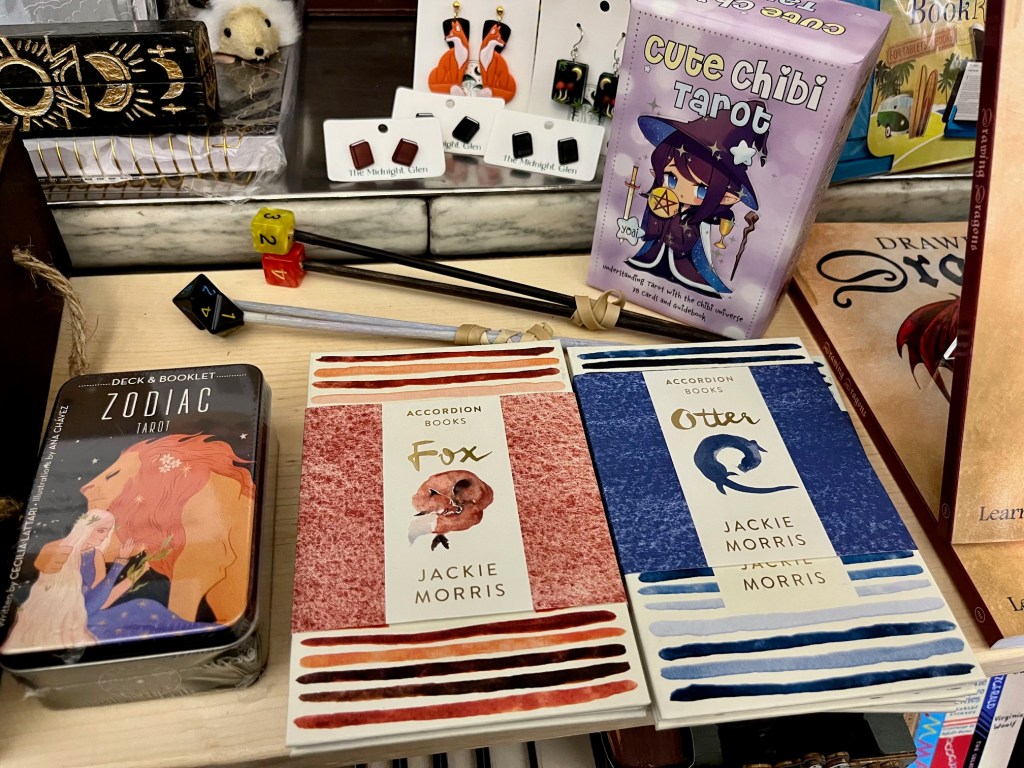
Tarot cards and accordion books
Wooden journals and candles in a jar
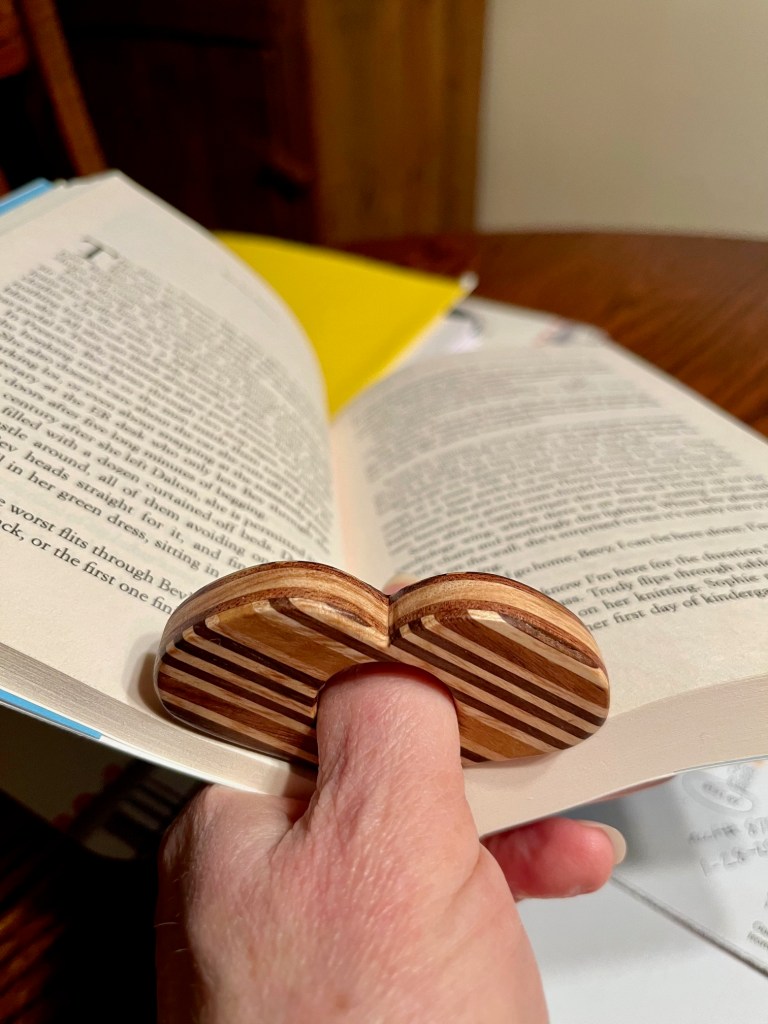
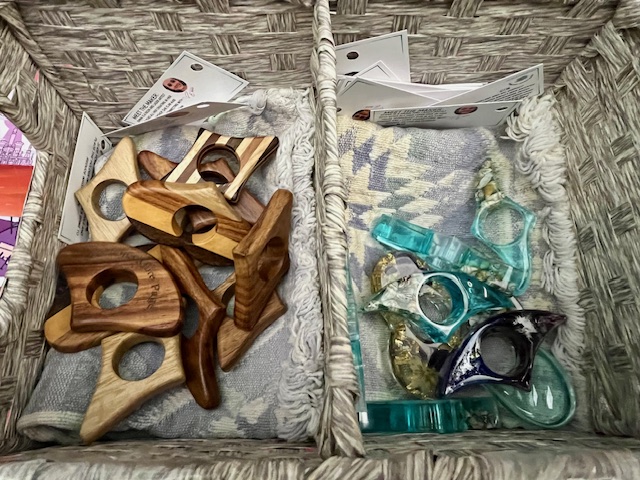
A great gadget that lets
your Valentine read with one hand
comes in wooden and acrylic designs
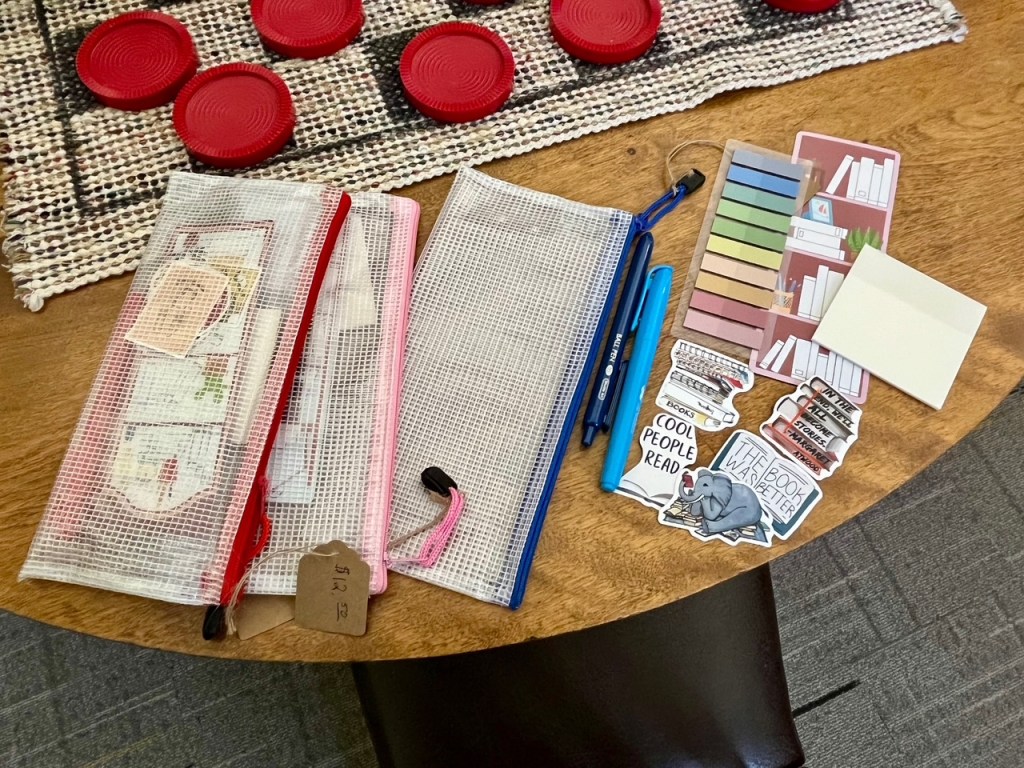
Pencil cases filled with stickers, sticky notes, tabs, a bookmark, a pen, and a highlighter
Wooden keychains and earrings

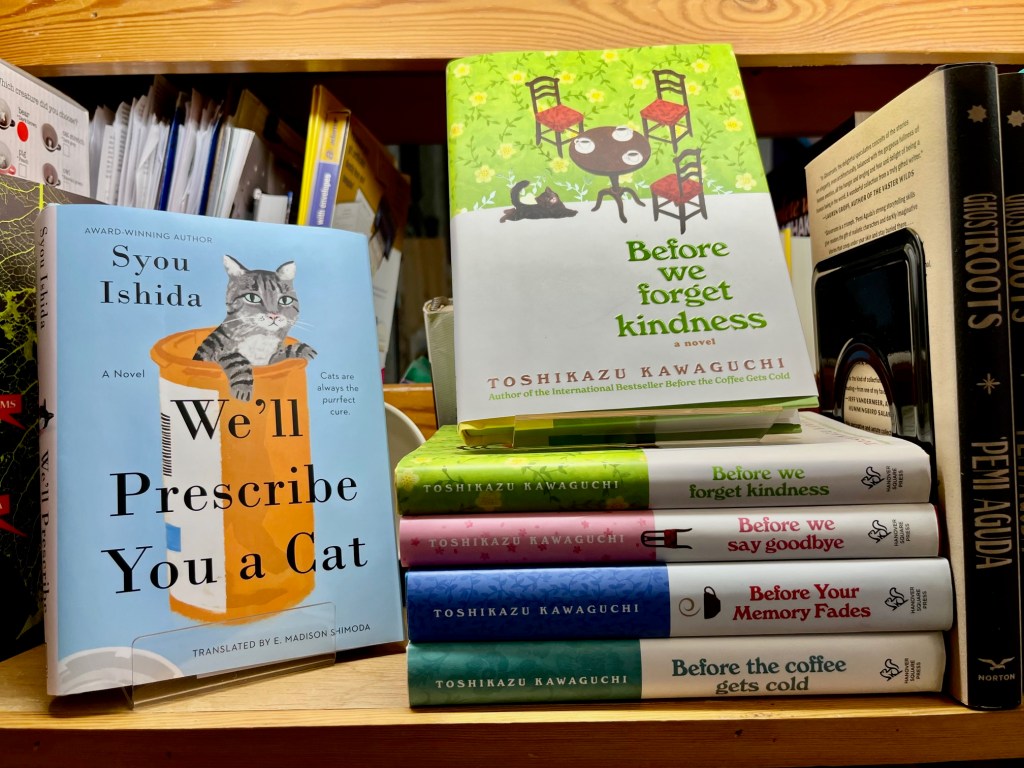
And books! I read Before the Coffee Gets Gold, and loved it. These cozy Japanese novels take readers away to quiet worlds filled with a bit of magical realism. I’ve got my eye on We’ll Prescribe You a Cat.

Apostle Island Booksellers: A Bayfield, Wisconsin, Bookstore, Part I

Apostle Island Booksellers: A Store with a beautiful cover, and a stunning interior
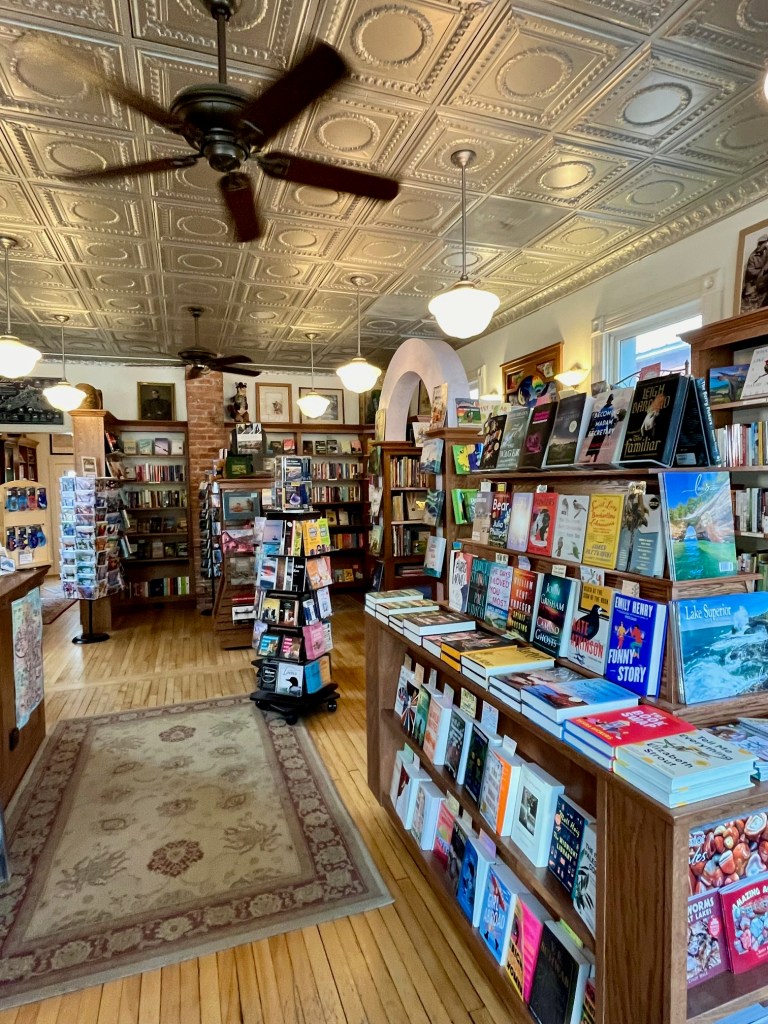
The view after walking in the front door

Bayfield, Wisconsin, has two wonderful bookstores: Apostle Island Booksellers and Honest Dog Books. Every time I visit Bayfield, I visit both places. I will talk about Apostle Island Booksellers in this blog, and Honest Dog Books in an upcoming blog.

Apostle Island Booksellers is small but gorgeous, and stocked with a wonderful selection of books. Walking through the front door, transports me back in time, into a warm and cozy and other-worldly space. A creamy-white tin ceiling with old-fashioned lights — the kind that bring old schoolhouses and libraries to mind — hangs over the natural-colored wood floors. Windows trimmed in decorative molding, wooden shelves, brick accents, and an old area rug catch my eye. But it’s the colorful covers of books that win over, and I look for something to take home with me.

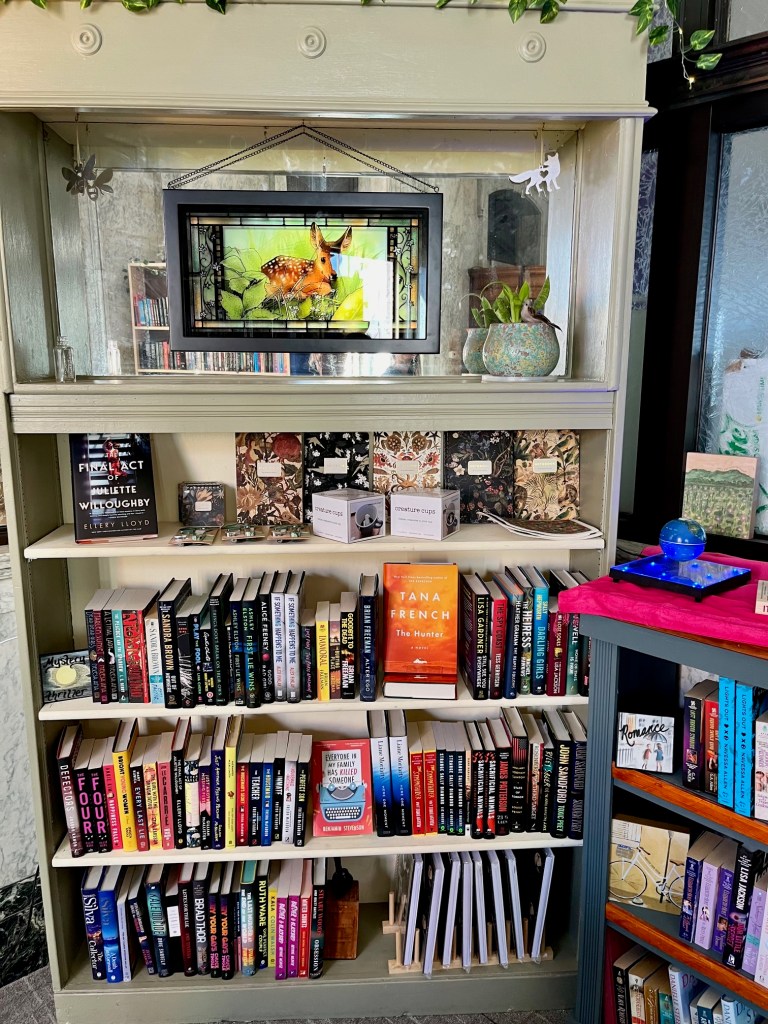
A romantic corner, the perfect place to fall in love with a book.

I walk around the front part of the bookstore, then head for the small back room tucked away like a treasure. As I go, my eyes scan titles and cover art. Along the hallway and in the back room, more books are displayed, making use of every available place to shelve a book. I’m happy to see the room around the corner is unchanged. It has what every bookstore should have: a place for a reader to sit and read a few pages of a book, to see if it’s a good fit.

I think I’ve made up my mind about which book I will buy, but I finish looking around the store before I pluck Slaughterhouse Five by Kurt Vonnegut from its spot on the shelf. My nephew suggested I read it, and I’ve also read that it’s one of Vonnegut’s best.

I discover another book, The Shipping News by Annie Proulx, and snap a picture of its cover. The synopsis intrigues me, but I will think about this book. I might borrow it from the library, or buy it at another bookstore, or buy it from Apostle Island Booksellers the next time I’m in town. Like other book lovers, I wish I could buy all the books that catch my fancy, but I’m limited by the coins in my purse and the space in my home. And my mind becomes uneasy if my To-Be-Read piles mushroom too quickly on the flat surfaces in my home.

While I pay for my book, the clerk and I strike up a conversation about British literature. We are both huge fans and discover that in our early years, we read almost nothing else but British literature. Her love of British authors started with Shakespeare when she was in ninth grade. My love started with Sir Arthur Conan Doyle’s Sherlock Holmes stories when I was in seventh grade.

I slip my new book into my large purse, and head to Honest Bog Books. I have one more book to buy.

Yes! Foxes and Fireflies Booksellers Opens in Superior, Wisconsin

Maria Lockwood greets customers with a big smile and the enthusiasm of one book lover to another.

MY TOWN HAS A NEW BOOKSTORE! And I’m shouting with joy. Maria Lockwood opened Foxes and Fireflies Booksellers on August 31. For the time being, her bookstore will be open on Saturdays and Sundays from 10:00 to 5:00, and some occasional evenings. During the week Maria works as a journalist for the Superior Telegram. That’s a lot of dedication to the printed word.

Since visiting the store this morning, I’ve been walking around in a state of happiness. The last bookstore in Superior closed down seventeen years ago. It was a well-loved, successful bookstore, but the owners wanted to retire. And when they locked their doors for the last time, they left behind many bereft bibliophiles.

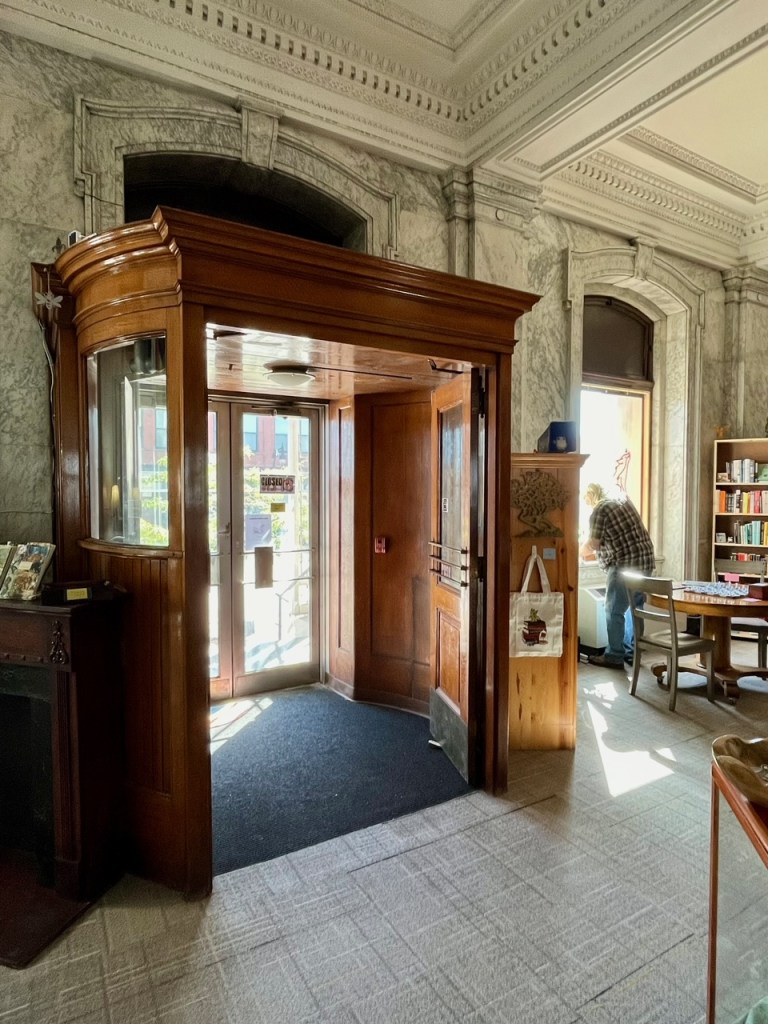
Flooded with light and surrounded by marble, large windows, and wood trim, Foxes and Fireflies invites readers to come in and browse.

But now we have a new bookstore. Foxes and Fireflies is currently located in the old post office building in Superior. It’s in a business incubator space — a place where Lockwood’s bookstore can grow and gain a clientele before she relocates to another, larger space.

On the other side of this cozy space, kids and young adults will find a selection of YA and children’s books.

Lockwood’s bookstore has several places to sit, where a reader can peruse the first pages of a book, trying on a story to see if it will be a good fit. There are kid-friendly spaces with puzzles, some games, and children’s books. I have two grandchildren with birthdays in September and October. They love books, and I plan to take them to the bookstore. They will find the store as magical as I do.

Lockwood has created a warm, inviting space that makes me feel at home while I hang out with books waiting to become my new friends. While most of the books are new, customers can also find some gently loved used books for sale. Besides books, she stocks some beautiful journals, coffee cups, and dish towels, among some other fun objects like stickers.

Today I bought two journals, one decorated with sea creatures and the other with owls; a dish towel scrawled with Shakespearean insults; and the novel North Woods by Daniel Mason.

I’m thankful to have a bookstore in my town. In a couple of years, one of the two bridges connecting Superior and Duluth will close down while the bridge is being rebuilt. It’s hard to know how that will impact travel to Duluth, but I’m guessing it will be a challenge. There are three independent bookstores and one big-box bookstore in Duluth, but when that bridge closes down, driving to them won’t be convenient.

I would rather buy books than clothes or jewelry or dinners out. I would rather read than watch TV. At the end of every day, I ask myself, “Shall I watch something on Netflix or BritBox or shall I read?” Ninety-six percent of the time I choose to read and let the stories play in my head.

When I travel, I love to visit small independent bookstores. Perhaps I’ve been to a bookstore in your town or will visit one in the future. If you come through my town on a weekend, visit Foxes and Fireflies at 1401 Tower Avenue, Superior, Wisconsin. There is plenty of parking on the side street or behind the building.

Get thee to an indie bookstore, or as Shakespeare said, “Fie on thee, jolt-head.” (I’m going to have fun with my new dish towel.)

Book Launch of Gravedigger’s Daughter: Growing Up Rural by Debra Raye King

Last night Debra Raye King held a book launch for her memoir, Gravedigger’s Daughter: Growing Up Rural, at the Jim Dan Hill Library on the University of Wisconsin-Superior’s campus. King’s book was published by The WWA Press (Wisconsin Writers Association).

It’s the first book launch I have ever attended, and it was amazing. The space was cozy, warmly lit, and serene. A flickering fire rambled in the fireplace. Cookies and goodies, mostly baked by King, waited for attendees. The recipes for the cookies can be found at the back of King’s book. (At the end of the evening, King gave us baggies and invited us to take home leftover homemade cookies!)

King read from her memoir, and answered questions about her book asked by the host Mark Liebaert. King was a beautiful reader, and Liebaert was a gracious host. The audience and I laughed at the book’s touches of humor, and we nodded in empathy at the moments of poignancy.

Before I left the book launch, I bought a copy of King’s book and asked her to sign it for me. The WWA Press did an outstanding job with the book’s presentation. It feels substantial in my hands. The font type and size are easy on the eyes. It’s not a large-print book, but it’s not a tiny-print book either. Goldilocks would declare it just right.

Last night’s weather was cold, rainy, and windy, a perfect evening to be inside at King’s book launch enjoying snippets from a fine memoir while among fellow readers and writers. I’m looking forward to reading more of King’s memoir.

Dear Minnesota: The Story of Yost Yost

[This article was originally published in May 2021 by Minnesota PBS on their website Moving Lives Minnesota: Stories of Origin and Immigration.]

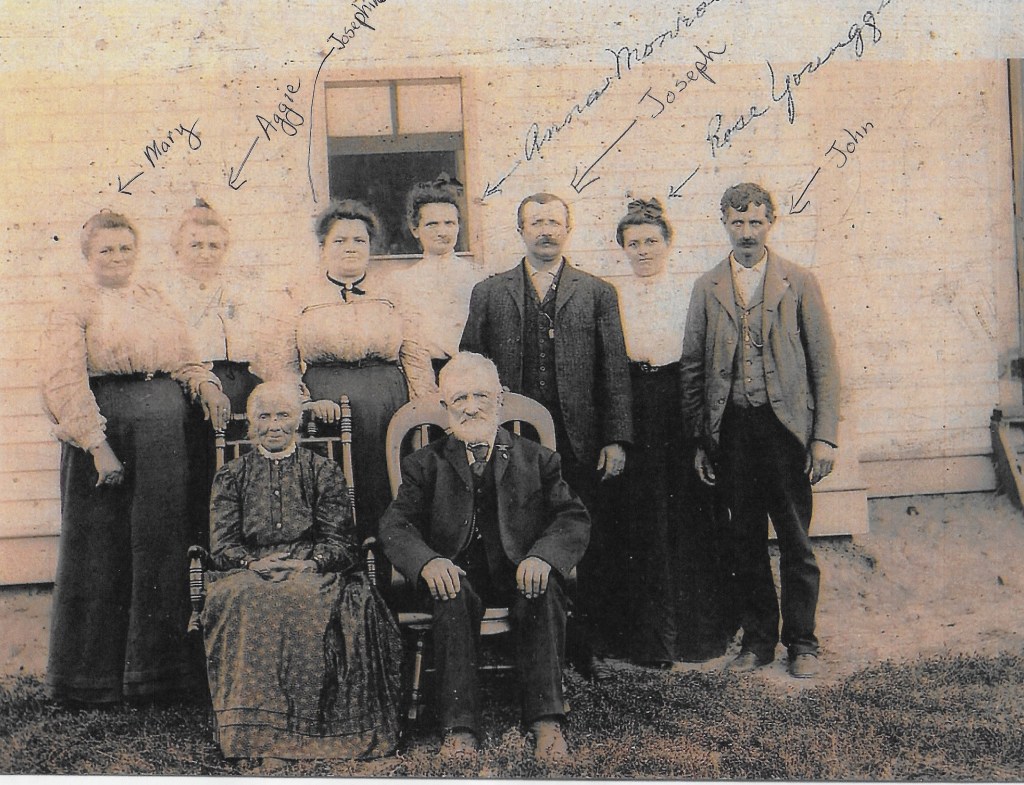
Yost Yost, my great-great-grandfather, was born in Nottwil, Switzerland, on November 19, 1829. At the time his double name was a common practice by Swiss parents. Yost’s father, Jacob Yost, was a nail maker and taught his son the trade. Yost, too, made nails before emigrating in 1854. But after he arrived in America and settled in Rochester, New York, he became a blacksmith.

Seated: Agatha and Yost Yost; Standing left to right: Mary,
Aggie, Josephine, Anna, Joseph, Rose, and John

On July 16, 1855, Yost married Agatha Gassman in Rochester, New York. She’d arrived in New York City in January 1855. She was born in Switzerland, but her birth year is a mystery. It has been listed as 1820, 1823, 1825, and 1827. I can only guess why so many different birth years appear on documents clearly referring to the Agatha Gassman who married Yost Yost. Perhaps vanity tempted her to misrepresent her age. Perhaps others made mistakes and recorded her birth year incorrectly.

In the fall of 1856, the availability of land enticed Yost and Agatha to move to Columbus, Minnesota. Yost used his blacksmithing skills during the winter of 1856-57 to support himself and Agatha, pregnant with their first child, Maria, born in April 1857. They had six more children: Josephine, Joseph, John, Agatha, Anna, and Rose.

In the spring of 1857, Yost and Agatha attained land and built a log house. They were successful farmers, and their farm grew to 440 acres. They ground their own flour, sewed their own clothes, and made their own tallow candles. According to family lore, when they bought their first kerosene lamp, they proclaimed it was “real progress.” In spring and fall, Yost walked from Columbus to St. Paul, a distance of 50 miles, to buy supplies they couldn’t produce. After a road was built, he drove a wagon to make the trip.

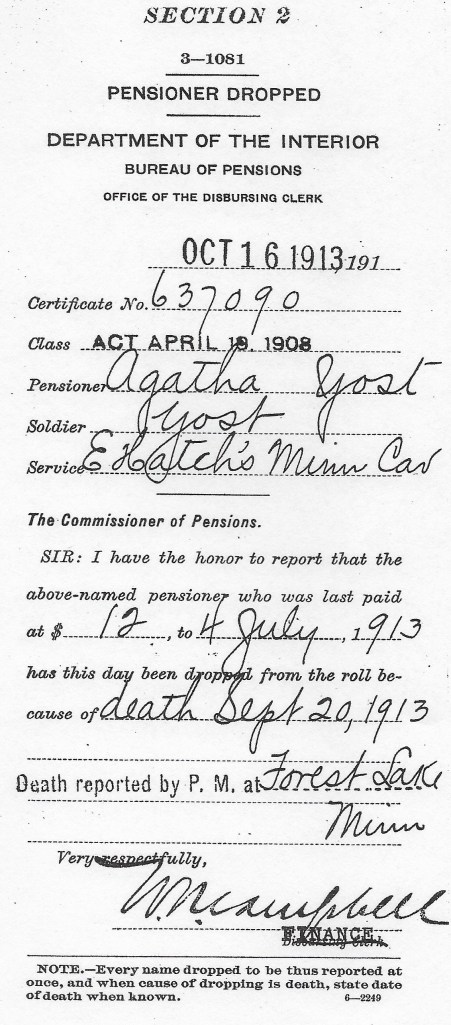
In August 1864, Yost, 34, enlisted in the Minnesota Cavalry, Hatch’s Battalion, Company E, serving until his honorable discharge in May 1866. I wonder how Agatha coped on a farm with five children, ages 1 to 7, while he served in the military. But he was granted at least one furlough during his enlistment. He was stationed on the Dakota-Minnesota frontier about 50 miles northwest of Mankato. According to a family history written by his grandson Fred, Yost “stopped a cannonball with his leg.” However, Yost’s military records tell a different story. In 1886, Yost applied for an invalid pension because of an injury he received near Fort Ridgely in June 1865. While out on patrol, his horse threw him, and he injured his back. It never completely healed, and as he aged, he developed rheumatism in his spine. How did an injury from tumbling off a horse become a story about being hit by a cannonball? Perhaps Yost was trying to impress his grandchildren. Perhaps once, when asked why he limped, he joked about getting hit by a cannonball, and that became the story.

While living in Columbus, Yost served as a town clerk, a justice of the peace, and a supervisor. The Compendium of History and Biography of Central and Northern Minnesota by George Ogle and Company, published in 1904, states, “Yost has resided in Anoka county for nearly half a century, and he has formed a wide acquaintance and is held in the highest esteem as an agriculturist and worthy citizen.” Yost became a naturalized citizen of the United States on March 23, 1897.

As Yost aged, his back injury made farming difficult. He retired, and his sons, John and Joseph, ran the farm. Yost died on November 3, 1906, just short of his 77th birthday. Agatha died on September 20, 1913. They’re buried at St. Joseph’s Catholic Cemetery in Wyoming, Minnesota.

[More Moving Lives posts written by other writers can be read at Moving Lives Minnesota: Stories of Origin and Immigration.]

Come Again Now

[“Come Again Now” was published Minnesota’s PBS Stations on their webpage Moving Lives Minnesota: Stories of Origin and Immigration on April 17, 2021.]

FRANK AND ROSE MEET

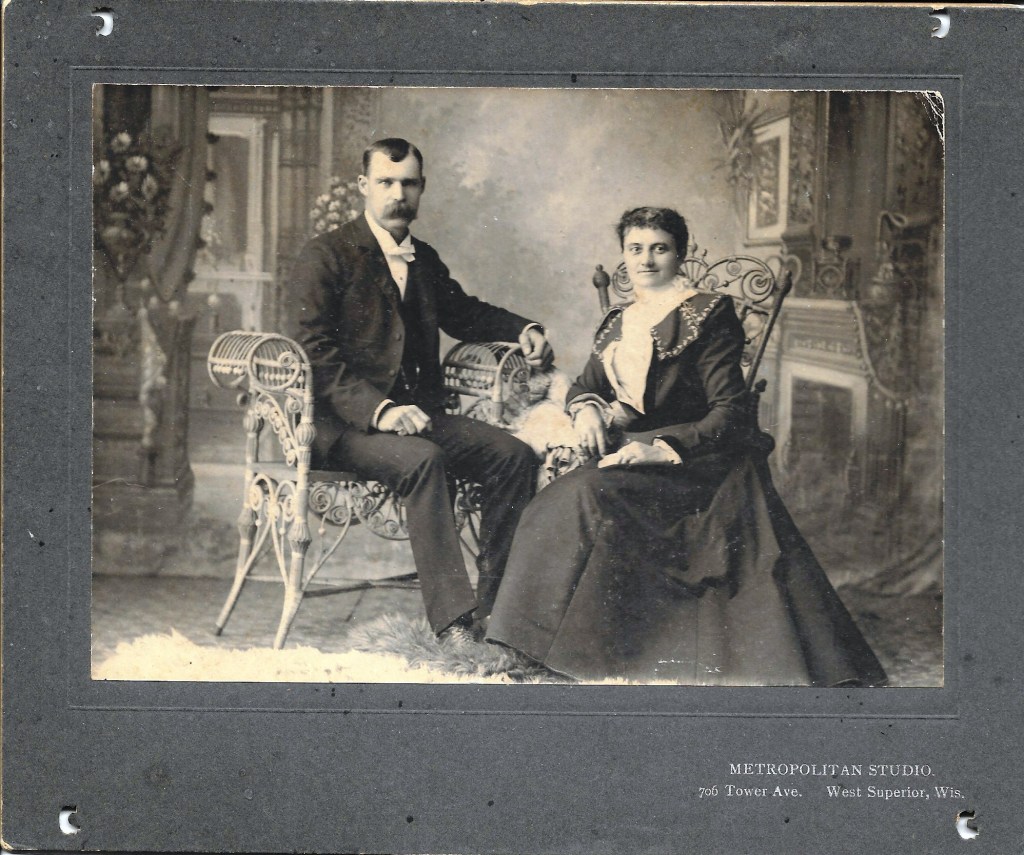
Frank and Rose Youngquist, wedding photo, September 1898

            About 1892, Frank Youngquist left Stillwater to work as a blacksmith in Gordon for Musser-Sauntry, a logging company with interests in Minnesota and Wisconsin. In 1897, Rose Yost left her parents’ farm in Columbus, Minnesota, to work at the Smith Hotel in Gordon, owned by her sister and brother-in-law, Aggie and Jim Smith.

            Frank, 32, handsome, brown-haired, and blue-eyed, met Rose, 29, pretty, dark-haired, and brown-eyed, at the Smith Hotel where he lived. They fell in love and married on September 21, 1898, in Hennepin County, which gave them an opportunity to visit family in Minnesota before returning to Gordon.

FRANK’S MINNESOTA CONNECTION

            Before Frank’s and Rose’s lives intersected in Gordon, they grew up 32 miles from each other in Minnesota. Frank’s father, Johan Youngquist, came from Sweden to Minnesota in 1868, and settled in the Stillwater area. A year later Johan’s wife, Eva, arrived with their four young children, including 2-year-old Frank. They would have four more children.

            Johan’s family probably emigrated because of economic hardships. Sweden’s rapid population growth in the 1800s diminished job opportunities and caused farmland shortages. Crop failures in 1868 and 1869 deepened economic woes, pushing more Swedes to seek opportunity in America. After reading letters from family, who spoke highly of their lives in Minnesota, many Swedes chose to settle there.

            Johan, Eva, and their children prospered as laborers, farmers, blacksmiths, lumberjacks, and business people. The railroads and lumber industry provided plenty of opportunities for immigrants. Five of Frank’s seven siblings spent most of their lives in Minnesota, and his parents lived there until they died.

ROSE’S MINNESOTA CONNECTION

            Rose’s parents, Yost Yost and Agatha Gassman, emigrated from Switzerland around 1854. Yost and Agatha, both Catholic, might have left Switzerland because of religious unrest during the 1800s. Yost lived in the Canton of Lucerne, which became embroiled in religious tensions between Catholics and Protestants after the Jesuits, reinstated by Pope Pius VII in 1814, returned to Switzerland.

            Yost and Agatha married in Rochester, New York, in 1855. A year or two later, they moved to Columbus, Minnesota, to homestead 160 acres. They raised seven children, all born on their farm. One son became an engineer for the Great Northern Railway, working on the mail train out of St. Paul. The other son ran the farm when Yost retired. Their five daughters all married, but only one remained in Minnesota. Yost served as a town clerk and justice of the peace in Columbus. From 1864 to 1866, he served in the Minnesota Cavalry, Hatch’s Battalion, Company E, and was stationed on the Dakota-Minnesota frontier. He and Agatha are buried in St. Joseph’s Catholic Cemetery in Wyoming, Minnesota.

TRAGEDY STRIKES

            In 1910, after twelve years of marriage and four children, Frank and Rose, still living in Gordon, died a month apart, Frank, 44, on October 18, and Rose, 41, on November 17.

            Frank lingered four months before dying of tuberculosis. He wished to be buried in Stillwater at the Fairview Cemetery with his father and two brothers. Frank had lived over half his life in Minnesota, and his mother and some family members still resided there. After Rose died from heart failure, she was buried next to Frank. Their children, George, 11, Elmer, 9, Leslie, 8, and Lola, 4, stayed in Gordon. Aggie and Jim Smith, Rose’s family, looked after them.

GEORGE’S COMFORTING TRADITION

George Youngquist with his wife Olive and Frank, their first child, circa 1940

            Perhaps because of a mysterious, debilitating illness George had when he was about 1½, he was close to his parents. The illness left him unable to walk, so his father forged railings in his blacksmith shop and attached them to the walls of their home. Encouraged by his parents, George pulled himself up and held the railings. He regained strength and learned to walk again. However, as a young schoolboy, his illness left him unable to run and play with other children. To entertain George, Frank taught him blacksmithing skills after school. George cherished the time with his father. Thirty-some years later, a doctor told George that he had had polio.

            From the 1930s until 1979, because George never forgot his parents’ love and kindness, he drove 120 miles from Gordon to Fairview Cemetery in Stillwater, Minnesota, to visit their graves either on or near every Memorial Day. By the time George and his family arrived, any Memorial Day services were over. But in the hushed cemetery with spring unfurling, George remembered his parents.

            Whenever George had company, he always bid farewell to his visitors by saying, “Come again now.” Perhaps, each year when he left the cemetery, he imagined his parents telling him, “Come again now.” And he did until he lost his eyesight in the winter of 1979, two-and-a-half years before he passed away just shy of his 82nd birthday.

[More Moving Lives posts written by other writers can be read at Moving Lives Minnesota: Stories of Origin and Immigration.]