Book Review: Ellie’s Pursuit of the Mighty Fitz by Mckenzie Lee Williams and illustrated by Alayna Maria

Published in hard cover, Williams’s book is durable and easy to wipe clean, making it perfect for young hands.

What is this book about?

It’s the day before spring break at Great Lakes Grade School. All of Ellie’s fifth grade classmates have travel plans. Her best friend, Mike, is going to London with his family to see Big Ben. Ellie worries her friends will return after spring break with wonderful objects and stories for their last fifth-grade show-and-tell, and she will have nothing to share because she isn’t going anywhere. She hopes her father will surprise her with a last-minute trip. But, Ellie’s only surprise is that Grandma Gigi is spending the week because her father has to go on a business trip.

While riding home after school with her father, Ellie hears Gordon Lightfoot’s song “The Wreck of the Edmund Fitzgerald” for the first time. After listening to the song, she has lots of questions about the Fitzgerald. Later she talks to Grandma Gigi about the Fitz and her recently deceased Grandpa Loren, who also sailed the Great Lakes, and even knew some of the sailors from the Fitzgerald. Ellie and her grandma decide to drive from Superior, Wisconsin, to the Great Lakes Shipwreck Museum on Whitefish Point in Michigan. They want to see the bronze bell from the Fitzgerald and to learn more about the ship and its sinking. Perhaps Ellie will have something special to share at her last show-and-tell as a fifth grader.

What makes this book special?

Delightfully written by Mckenzie Lee Williams and beautifully illustrated by Alayna Maria, this chapter book will appeal to children ages eight to twelve years old. I really enjoyed this story, and I read it in one evening. Ellie, the main character and narrator, captured my heart. She is enthusiastic, adventurous, curious, and kind. She loves learning and writing in her journal, and if you’re a writer, you’ve got to love a journal-toting character. Told with tenderness and gentle humor, this chapter book explores themes of disappointment, grief, remembrance, and resilience. Young readers will enjoy taking a road trip with Ellie and Grandma Gigi. Along the way they will learn about the Edmund Fitzgerald, the Great Lakes, and the enduring power of love. Now, I want to visit the Great Lakes Shipwreck Museum on Whitefish Point.

A special note about the author, Mckenzie Lee Williams . . .

Mckenzie Lee Williams died in a motorcycle accident in June 2024. She was twenty-three years old, a recent college graduate, and a writer. She was inspired to write Ellie’s Pursuit of the Mighty Fitzgerald when she worked at a bookstore. Customers would inquire about books regarding the Fitz for children, but there was little available. So, Williams decided to write a chapter book. After her death, her mother discovered Williams’s draft of Ellie’s Pursuit. With love and dedication, Williams’s family and friends edited and illustrated her manuscript. Like the bronze bell from the Fitzgerald, Williams’s book is a symbol of spirit, dedication, and love.

I never met Williams but she and I both had work published in the 2024 Nemadji Review at the University of Wisconsin-Superior. I was saddened when I heard about her death. Ellie’s Pursuit of the Mighty Fitzgerald is a lasting tribute to Williams and her talents as a writer.

[Ellie’s Pursuit of the Might Fitz, Mckenzie’s Mommy Publishing, October 2025, is available through Amazon and the National Museum of the Great Lakes.]

Book Reviews from My To-Be-Read Pile

Haunted by my staggering To-Be-Read pile of books, I’ve been on a bigger reading kick than usual, so I’ve read lots of enjoyable books lately. As I finished each of the books that I review here, I would tell myself I should write a book review. But as soon as I had free time, I hooked up with another book from my T-B-R pile. So, I’m going to write some quick reviews of my recent reads.

Close to a Flame by Colleen Alles (Cornerstone Press, 2025) Colleen Alles is a Michigan writer, which is fitting since I read many of her short stories while visiting my mother in Petoskey, Michigan. Alles’s stories capture the ordinary lives of women as they move through life’s ups and downs. Her stories are often a nod to the importance, strength, and lasting endurance of friendships between women. Six of the stories in her collection follow two characters named Miriam and Jamie. I love how these M & J stories are interspersed throughout the collection. We meet M & J in Alles’s first story “Restoring Notre-Dame” while they are in college. They remain life-long friends. We are treated to their stories as they date, marry, have children, and move into middle age. In Alles’s final story “Christ at Heart’s Door,” Jamie has gone to stay with her aging mother for a week. Miriam is back home, but she’s only a phone call away. Alles’s six M & J stories create a wonderful story arc of their own. Besides the M & J stories, my other favorites were “Loggerhead,” “Cusping,” “Whisper Moment,” and “In Tandem.” These stories connected with me, three of them for their subtle humor and one for its undercurrent of horror. Even though I finished her book over a month ago, many of Alles’s stories have followed me around, especially “Christ at Heart’s Door.” Alles’s book was a well-deserved NIEA Finalist (National Indie Excellence Awards).

The Gales of November: The Untold Story of the Edmund Fitzgeraldby John U. Bacon (Liveright Publishing Corporation, a division of W. W. Norton & Company, Inc. 2025) John U. Bacon’s nonfiction book The Gales of November, released in 2025, coincides with the fiftieth anniversary of the sinking of the Edmund Fitzgerald. Even though I was sixteen when the Fitzgerald sank, and I waited with thousands of people hoping there would be survivors, I’d never read a book about the Fitzgerald‘s sinking until I read The Gales of November. When it sank, I was living in Milwaukee, where the Northwestern Mutual Life Insurance Company, owners of the Fitz, is still located. Two years later I moved near Superior where the Fitz had taken on her last load of taconite a day before her sinking. In the early 1980s, I worked at President’s bar, mentioned several times in Bacon’s book. Over the years, I heard many stories about what might have happened to the Fitz. Some from my great-uncle, others from sailors who sailed the Great Lakes, including a couple of sailors who were on the Arthur M. Anderson the night the Fitz sunk. There were no survivors or captain’s logs to corroborate any of the stories. And while I’d read some articles about the Fitz over the years, I’d never read a book about its sinking. Then I read Cait Z’s blog review about Bacon’s book that stated,“This is excellent! What it isn’t is an exploitation of a disaster.” (Click on the quote to read Cait Z’s review.) I went to my local bookstore that day and bought the book. The Gales of November is everything Cait Z. said it would be. Readers learn about the Great Lakes, shipbuilding, the taconite industry, the life of sailors, the weather, a few other shipwrecks, and the families left behind after the Fitz‘s sinking. Bacon’s book is written with care and respect. I waited fifty years to read a book about the Edmund Fitzgerald and I’m glad I did. First, after fifty years and some underwater exploration, experts have more information about the Fitz‘s sinking. Second, I learned so much about the Great Lakes and the shipping industry. Finally, Bacon’s book — well written and well researched — is excellent. And everyone I’ve talked to who has read it agrees.

Montana Matrimonial News by Candace Simar (North Star Press, 2025) Candace Simar’s most recent novel is a group of connected stories about men and women who have come to live in the Dakota Territory as homesteaders in the 1880s. Simar paints a realistic picture of the harsh and lonely lives homesteaders lead as they farm their homesteads for the five years needed to claim the land as their own. Men and sometimes women advertise in the Montana Matrimonial News for a bride or groom. The novel starts with Digger and his brother George, who have been homesteading their claims for four long years, and they wonder if they have the fortitude to make it through their fifth year. They are desperately lonely and wish to marry. In other chapters we meet widowers and widows, some with children. We meet an unwed mother. We meet a pair of sisters who are homesteading separate claims. We meet two Civil War veterans who drink to quash the horrors of the war. And we meet Dr. Gamla, the thread who ties the stories together. She has a way of knowing who needs her medical services without being told. She offers cures for both the physically and emotionally wounded with her well-known catch phrase, “My cures work if you can stand them.” Candace Simar has written a richly detailed historical novel with vibrant, well-developed, distinctive characters who nearly walk off the pages. Her descriptive writing talents took me back to the 1880s in the Dakota Territory to the days of sod houses, prairie thunderstorms and blizzards, and waving oceans of prairie grasses. Her stories came to life in my head. [Note: I read most of Simar’s novel after receiving my COVID shot, which always makes me feel awful for a couple of days. Having her book to read was a soothing balm, making me forget about my discomfort.]

Beginnings: The Homeward Journey of Donovan Manypenny by Thomas D. Peacock (Holy Cow! Press, 2018) Donovan Manypenny, an Ojibwe from Red Cliff, Wisconsin, has had some tragedy and some joy in his life. He’s had some bad luck and some good luck. Left an orphan by his mother’s death, his grandparents have taken him into their home. They are kind and loving, but when Donovan is ten, first his grandmother dies, then his grandfather. Bad luck and good luck continue to follow Donovan for a brief time, with good luck and joy winning out. But Donovan ends up living over a thousand miles away from his Ojibwe people of Red Cliff. With the first sentence of his story, he tells us, “For over forty years I forgot I was native, Anishinaabe Ojibwe . . . .” In Massachusetts he has been content with his life as a teacher, happy in his marriage, and proud of his daughter. Then his daughter pleads with him to attend a Native American event combining Native storytelling and crafts. Something awakens in Donovan and he begins his homeward journey, taking his time along the way to visit places important to his Ojibwe people. Beautifully written, Thomas Peacock’s slender novel is a quiet, contemplative meditation on the meaning of belonging and family and of coming home to the place you were eventually meant to be.

Book Review: Blooming Hollyhocks: Tales of Joy During Hard Times by Naomi Helen Yaeger

Version 1.0.0

Naomi Helen Yaeger, in a delightfully engaging biography, tells the story of her mother Janette Yaeger (née Minehart) who grew up in Avoca, Minnesota. Yaeger spent hours interviewing her mother before her mother died. In her book, Yaeger lovingly recounts the stories of Janette and her siblings, parents, and extended family. Most of the book concentrates on Janette’s life from toddlerhood through young adulthood. However, toward the end of the book, Yaeger summarizes the key highlights of Janette’s and her family’s lives as they moved through adulthood. I’m glad Yaeger did this because after reading about the early lives of Janette and her family, I wanted to know what happened to them as adults.

Yaeger’s book invites readers into a bygone era. We learn about the history, culture, and lives of ordinary people who lived through the depression, WWII, and the Korean War. We read about their daily joys, disappointments, and sorrows. Usually, the history we are taught in school focuses on major events and well-known people. But I find the daily lives of people and how they lived while major historical events happened around them fascinating. And I learned a few things that I didn’t know before reading the book.

As I read Blooming Hollyhocks, I laughed and I cried. I felt connected to my own relatives who grew up in the same era as Yaeger’s. And I remembered the stories they had told me, often similar to the stories Janette Yaeger shared with her daughter Naomi. As I finished Yaeger’s book and closed it for the last time, I was already missing the Mineharts, their relatives, and their friends.

[When I attended Naomi Yaeger’s book launch, someone mentioned that Yaeger’s book would make a great present. After finishing her book, I wholeheartedly agree. If you know someone who lived through this time or grew up listening to the stories of relatives who lived through this time, I believe they would enjoy Yaeger’s book as much as I did.]

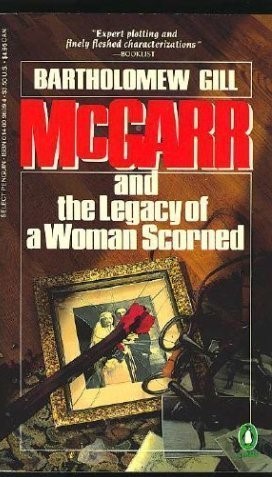
Review of Two Books: Say Nothing: A True Story of Murder and Memory in Northern Ireland by Patrick Radden Keefe (2018) & McGarr and the Method of Descartes by Bartholomew Gill (1984)

Say Nothing by Patrick Radden Keefe is nonfiction. Published in 2018, it tells the story of The Troubles in Northern Ireland between Catholics and Protestants during the 1970s, and its aftermath during the 1980s through the early 2000s.

McGarr and the Method of Descartes by Bartholomew Gill is fiction. Published in 1984, it tells the story of Detective Chief Inspector Peter McGarr who strives to prevent the assassination of a Loyalist Protestant he loathes in order to prevent yet another cycle of violence between Catholics and Irish Protestants.

Both books tell stories involving the Irish Republican Army, the British Army, the Loyalist and Catholic paramilitaries, the informants, and the civilians who are swept up into tragic violence. In both books people are blown up, shot, executed, arrested, imprisoned, tortured, beaten, and burned out of their homes. Gill’s book is fiction, but it mirrors much of what happens in the real world of Keefe’s book.

I started out reading both books at the same time, sometimes reading a bit of each in a day, and other times reading them every other day. I’ve done this before with books. However, I stopped toggling back and forth after I repeated an episode from Gill’s fictional story to someone as if it had been a real episode from Keefe’s book. But in a sense it was real because the episode in Gill’s book was a fictionalized account of numerous real events that Keefe reported about in his book. Switch names and change some of the fictionalized details, and Gill’s event would be real. Gill captures the realism of the events and the emotional trauma that Keefe so deftly writes about in his nonfiction book.

Say Nothing by Patrick Radden Keefe

Keefe’s book starts with the kidnapping and murder of thirty-eight-year-old Jean McConville, a widow and mother of ten children ranging in age from twenty to six. The IRA accuses McConville of being an informant for the British Army in Belfast, Northern Ireland. Without a trial of any sort, she was abducted from her home in Belfast, driven across the border into the Republic of Ireland, shot to death, then buried in an unmarked, secret grave.

Keefe’s book is highly engaging, well organized, and clearly written — important because he covers a slice of history that is complex and involves dozens of key people. He uses McConville’s abduction as a starting point to tell the story of The Troubles in Northern Ireland, but Say Nothing covers more than McConville’s disappearance and murder. As readers learn about The Troubles during the 1970s, Keefe leaves them with an understanding of the history behind The Troubles, the trauma caused by the conflict, and the negotiated peace that somehow feels tenuous.

I read Say Nothing on the advice of a nonfiction writer, Rachel Hanel, whom I admire. She recently reread and recommended it in her newsletter, stating, “It’s still my favorite nonfiction book of the past 10 years.” Keefe’s book was made into a limited TV series that can be watched on HULU. I have not watched it, but other people have told me it’s very good.

McGarr and the Method of Descartes by Bartholomew Gill

During the investigation of a murder, DCI Peter McGarr and his investigators uncover a plot to assassinate Ian Paisley, a bigoted, loud-spoken, but charismatic Protestant minister beloved by many Irish Protestants. (By the way, Ian Paisley was a real person who was all these things.) McGarr abhors Paisley, but he also detests the IRA, the British Army, all paramilitary groups, and anyone else who conspires to use violence in order to push Ireland and Northern Ireland back into the nightmarish times of The Troubles during the 1970s. Racing against the clock and up against a group of formidable foes steeped in a long tradition of deception and intimidation, McGarr and his team work to prevent Paisley’s assassination.

I read McGarr and the Method of Descartes because I liked the first five books in Gill’s series, which he published from the late 1970s through the early 2000s. I’m intrigued to see how Gill’s characters and stories will evolve in the series. I want to learn more about Noreen, and McGarr’s past, and if women are going to become an integral part of the police force. In Gill’s sixth book McGarr’s wife, Noreen, has a minuscule role, unlike the fifth book where she has her own story arc. But after a debate with McGarr and a sleepless night, she delivers the best lines in the book to her husband before he leaves their house to try and stop Paisley’s assassination.

The female computer expert, Ruth Bresnahan, is back in her biggest role since she joined the squad. The men on McGarr’s team know she is smart and rarely wrong, and they are intimidated by her. But McGarr isn’t bothered by her smarts. He respects her intelligence, doggedness, and energy. He believes in a way she is “worth two of any of the men on the staff.” He has her read into the case and takes time to mentor her. She plays a key part in helping McGarr and the team as they attempt to save Paisley’s life.

Bartholomew Gill’s sixth Peter McGarr book is excellent. It is his darkest story yet. But The Troubles in Northern Ireland was a dark time. I’m glad I read most of Keefe’s nonfiction book along with Gill’s novel. The talents of each writer made me appreciate the other’s book. Reading Keefe’s book gave me a great appreciation for the world Gill developed while fictionalizing actual events in Ireland that were barely dry behind the ears. On the flip side, Gill’s book gave me a great appreciation for Keefe’s ability to capture the human emotion and the tragic toll The Troubles wreaked upon generations of Irish people, both Protestant and Catholic.

A point both books make . . .

Colonialism and imperialism inflict a lasting impact on people who have been subjected to outsiders invading their lands and stripping their rights. The trauma of the oppressed and the entitlement of the oppressors are passed down from generation to generation.

On one side, children of the conquered sit at the knees of their parents and grandparents and learn about the atrocities their people have endured and the acts of heroic resistance they have performed.

On the other side, children of the conquerors sit at the knees of their parents and grandparents and learn about their superiority over other people and their imperial destiny.

Conditions become untenable, things fall apart. Childhoods vanish. Neighborhoods sunder. People die.

Anne of Green Gables, the Play

Playbill from Anne of Green Gables adapted for the stage by Peter DeLaurier

On Sunday I took my fourteen-year-old grandchild to see a play based on the children’s novel Anne of Green Gables by L. M. Montgomery.

Montgomery’s novel about a determined, outspoken, red-headed orphan is one of my favorites. I’ve read it twice.

I went to see the play for two reasons: first, to meet up with my old fictional friend Anne Shirley of Avonlea, Prince Edward Island, and, second to introduce my grandchild to Anne’s story. Judging by the large crowd of people at the play, who ranged from senior citizens to young children, Anne Shirley is still loved by old friends and still being introduced to new friends.

Montgomery wrote Anne of Green Gables in 1905. At first her book was rejected by publishers. Montgomery set her novel aside for a while, but in 1907 she sent it to L.C. Page in Boston. It was accepted and published in 1908. Within five months she sold over 19,000 copies, and it was reprinted numerous times in its first year. Since its publication over fifty million copies have been sold, and it has been translated into over thirty-six languages.

What makes the novel so popular and timeless? Most definitely, it’s the main character, Anne Shirley, who wins our hearts. Set in the late 1800s, we meet Anne when she is eleven years old. She is an orphan who has lived in both foster homes and the orphanage. Her life changes when Marilla Cuthbert and her brother Matthew Cuthbert decide they need someone to help the aging Matthew with his farm chores. Marilla writes to the orphanage to request a boy be sent to them, but there is a mix up, and Anne is sent instead.

Anne has been an orphan since she was a baby. She longs for a family and a home to call her own. She has red hair and freckles, and she believes this makes her ugly. She is outspoken, talkative, and a daydreamer. In a time when girls were to be ladylike and sweet, her candid manner is labeled impertinent and disgraceful. At first Marilla is adamant that Anne should be returned to the orphanage, but Matthew doesn’t agree. Anne’s spirit touches him, and he convinces Marilla to give Anne a chance.

Why have readers for over a hundred years loved Anne of Green Gables? Because Anne wants what we all want — a home, a family, and to be loved for who she is. She doesn’t want people to make fun of her red hair and freckles. She doesn’t want people to silence her outgoing personality or tell her daydreaming is frivolous. We cheer for Anne. She is our hero, not because she is always good or perfect, but because she is so human. When she makes mistakes, she learns from them while remaining true to herself. Anne’s willingness to be true to who she is as she grows up, changes the people around her, and they become more accepting and open minded.

Over a hundred years after its publication, Montgomery’s story still invites readers to be compassionate and accepting of people’s differences. Furthermore, without moralizing, her novel delivers this message with humor; tenderness; and richly drawn characters, such as the unforgettable, irrepressible Anne Shirley.

The play I saw on Sunday was wonderful. The actor who played Anne Shirley was outstanding. She captured the essence of Anne and brought her to life on stage. The supporting cast were also excellent; after all, there are no small parts. The play was creatively staged on a well-designed set, and the costumes were charming. (I found myself wishing I could wear some of them!) The play remained true to Montgomery’s story, and I loved being able to say to myself over and over, “Yes, I remember that from the book!”

Best of all, my fourteen-year-old grandchild loved the play. Teenage years can be difficult. Young people can be filled with self-doubt and feel as though everyone is judging them as they work to discover who they are and what they want out of life. The characters in Anne of Green Gables remind us that acceptance, kindness, and love are timeless and important for both the young and old. This message feels even more important today. In a world where some people want to divide us, we need to remember we are more alike than different. To forget this is to put our humanity at risk.

Book Review: McGarr and the P. M. of Belgrave Square by Bartholomew Gill (First Published in the United States by Viking Press, 1983)

I’m back with another update on my quest to read all of the Peter McGarr mysteries by Bartholomew Gill. I just finished McGarr and the P.M. of Belgrave Square, Bartholomew Gill’s fifth Peter McGarr mystery. And I know I said this about Bartholomew’s fourth book, but his fifth book is now my favorite of the series.

What is this book about?

A dead body lies in a water-filled ditch for most of a day. It’s inconceivable to DCI Peter McGarr that the woman in the house overlooking the ditch failed to noticed the dead man. Furthermore, McGarr reckons she must have witnessed the murder.

The dead man is William Craig, an antiques dealer and business man, who until that morning had lived with his wife in the house with the view of the watery ditch.

McGarr quickly gathers a list of suspects: the wife, the son, the business partner, the gardener, the maid, a member of the Irish Republican Army, a former Nazi collaborator. Given the method of the murder, it appears personal. Curiously, considering the many valuable antiques in Craig’s shop, the only item is missing is a valuable painting.

The P.M. of Belgrave Square is a dog (not the Prime Minister), who has retired from the police force. P.M. lives next door to McGarr, and of course they’re friends. In many ways the dog is a canine version of McGarr.

Thoughts about story and character development in Gill’s mystery series . . .

For four books, I wanted to know more about DCI McGarr’s wife, Noreen. I wanted her to do more than cook a few meals for McGarr, drive him around occasionally, and look stunning in clothes that showcase her ginger-colored hair and green eyes. I wonder if Gill ever received fan mail from readers asking for more Noreen because in this book, she has her own story arc, something missing in the first four books. In the earlier books, Noreen was nice enough, but now she’s interesting.

There are still no female detectives. And the female temp with the competent computer skills, who I really liked, is absent from this book, but I hope she still works for the department. There is only one scene at the police station in this book, so it makes sense we don’t see her.

In Gill’s first five books, we learn a lot about the murder suspects and what makes them tick, but not so much about the detectives who investigate them. It’s nice to have interesting suspects with convoluted psyches and complicated motives. But I’ve been raised on police detective stories that also focus on the investigators and what makes them tick. We get a bit more of that in McGarr and the P.M. of Belgrave Square, as Gill gives us some insight into McGarr’s life through Noreen’s perspective on their marriage.

Turns out Noreen is concerned about Peter’s drinking and his smoking. Throughout the first four books, she seemed oblivious to his bad habits. There are cracks in McGarr’s facade, hints that something from his past has left scars, and Noreen is terrified about his willingness to put himself in harm’s way. His position as a DCI means he should be off the streets and at a desk, but Peter likes to be in the thick of an investigation. She believes he has a death wish. I wonder if she will make it as a cop’s wife.

The Irish Republican Army is back. Insinuations of IRA involvement always complicate McGarr’s murder investigations. He seeks justice for the victim or victims at hand, but Special Branch, or some other investigative entity, often wants to bury IRA involvement, either because they simply don’t want to deal with it or because they are deep into an investigation and don’t want their cover blown. McGarr doesn’t give a farthing for either reason — he solves the case in front of him. If that means rattling the IRA or interfering in an ongoing Special Branch investigation, so be it.

Gill’s Peter McGarr mysteries are dark. Set mostly in Ireland, I can’t imagine they would ever be endorsed by an Irish tourism board. McGarr’s Ireland is a land of dismal weather and stormy seas with only brief bouts of sunshine. McGarr’s Dublin is a city of coal dust, simmering class resentments, and political intrigue.

I wonder if I weren’t interested in seeing how Gill develops his characters over the series, if I would still be reading these books. But I think the answer is yes. The novels have just the right amount of darkness. The writing is good. I like the dialogue. The stories are interesting. The books are quick reads. And the pocket book size feels so comfortable in my hands. After I finished this book, I ordered Gill’s next three mysteries from Thrift Books. So, like Noreen is still sticking with Peter McGarr, I’m still sticking with Bartholomew Gill.

[To read my reviews of the first four Peter McGarr mysteries, click here for books one and two and here for book three and here for book four.]

Book Review: Death of an Irish Tradition by Bartholomew Gill (Originally Published as McGarr at the Dublin Horse Show, Charles Scribner’s Sons, 1979)

I’m back with an update on my quest to read all of the Peter McGarr mysteries by Bartholomew Gill. I just finished The Death of an Irish Tradition, Bartholomew Gill’s fourth Peter McGarr mystery. So far, this one is my favorite. (And I really liked the first three.)

What is this book about?

It’s 1979, maybe a year earlier, in Dublin, Ireland. A sixty-five-year-old woman is murdered, starting a concentric ripple that encompasses the Irish Republican Army, one of McGarr’s childhood friends, a priest, a young and gifted pianist, a young drug addict, and a landed gentleman. Over the years, among these people, hate, greed, lust, revenge, snobbery, envy, jealousy, bigotry, and secrecy have combined and simmered like a Dublin coddle left to stew in a hot oven. But unlike the coddle stew, which can be pulled from the heat before burning in its own juices, there is no reprieve from the emotions that consume the characters in Gill’s fourth novel. Peter McGarr and his constabulary must sort through the tangled lives and motives of the characters, hoping to solve one murder and attempting to prevent others. The story culminates at the Dublin Horse Show, a long-standing tradition with ties to the hated British aristocracy and their rule of Ireland, which has left it a divided country.

Why did I like this book?

I love the dialogue. Gill knows when to let his characters speak and when to have them shut up. Sometimes what’s left unsaid resounds like a clap of thunder before a battering storm arrives. I find Gill’s characters interesting. And while his stories are far from rosy, I like to think that all officers everywhere, represented by the likes of McGarr and his constabulary, are doing their best to provide justice. Gill’s mysteries aren’t cozy, but they’re also not graphically violent, which I know is a relative statement depending on one’s view about what is and isn’t too violent. If it helps, I don’t like drawn out visceral violence, but I also don’t like overly cozy mysteries. I’d place Gill’s books in the middle of the visceral-to-cozy scale. (But that’s relative too.)

The murders in Gill’s books don’t always directly involve members of the Irish Republican Army; nevertheless, the IRA’s presence and its role in The Troubles of the 1960s and 70s form an undertow in Gill’s novels, whether in the background or the forefront. The IRA is shrouded in secrecy and so woven into the fabric of Irish life that McGarr approaches each murder as if it could be connected to the IRA and The Troubles in Northern Ireland, which also spills into the Republic of Ireland. It’s mostly an unspoken theme, but when reading McGarr’s books, I’m struck by the deep and lasting damage that imperialism and colonialism inflict on societies.

I think, in part, I’m intrigued by Gill’s novels because I remember the turmoil in which his stories are set. During the 1970s, I was a pre-teen and teenager, and I watched the violence in Northern Ireland play out on the TV news. I read about it in Time and Newsweek, which came to our house in the mail. I remember the bombs and the deaths of children, women, and men, along with the deaths of British Army and Irish Republican Army members. Reporters talked about Irish Catholics, Irish Protestants, self-rule, spies and traitors, and the English who’d lived for generations in Belfast but identified as British instead of Irish. When I was seventeen, I traveled to London and read signs on buses and the Underground, cautioning people not to touch unattended packages and to immediately report them to the conductor. The IRA had been setting off bombs in England. At the time, I thought the violence would never end because each death brought about a retribution.

Reading Gill’s novels has sparked my curiosity, and I want to learn more about the time of The Troubles. While reading The Death of an Irish Tradition, I received Rachael Hanel’s latest newsletter. [Hanel is a wonderful nonfiction author. To read about her and her books, click here.] Hanel recently spent time in Belfast, and she recommended some books covering The Troubles. I want to read at least one of these books before I read the next Peter McGarr mystery:

  1. The Raptures, a novel, by Jan Carson
  2. Say Nothing: A True Story of Murder and Memory in Northern Ireland by Patrick Radden Keefe
  3. Four Shots in the Night: A True Story of Spies, Murder, and Justice in Northern Ireland by Henry Hemming

More thoughts about Gill’s books from a standpoint of craft . . .

Part of my interest in Gill’s mysteries is to see if and how he will develop his characters and their storylines as his series progresses. I hope Gill will present a broader view of his detectives that includes more of their personal lives. I appreciate a writer whose crime-solving characters develop and change throughout a series of books. To me it’s as important as a good plot. It becomes the mystery of a detective’s life set within the mystery of the crime.

You might remember I mentioned there was so much drinking in Gill’s first three books that I worried I’d wake up with a hangover. I questioned how Peter McGarr could even function, let alone solve crimes, considering the amounts of whiskey and beer he drank. In this book, while McGarr hasn’t come close to being a teetotaler, he drinks less. I wonder if Gill came under criticism from readers about his portrayal of the Irish as heavy drinkers.

There are still no female detectives. However, a woman has been hired as an office temp, and unlike the detectives, she knows her way around the new-fangled computers, which are starting to be used by police departments to access databases to help them gather pertinent information to assist in solving crimes. None of the male police officers in the department are interested in learning the new technology, but they all appreciate the new woman’s computer skills and her ability to quickly supply them with useful information.

McGarr’s wife, Noreen, is back, but her role in this story is small, like in the previous books. Noreen has one telling scene that gives readers a hint as to McGarr’s feelings for his petite, intelligent, beautiful, feisty wife. And I want more Noreen in the stories.

[To read my reviews of the first three Peter McGarr mysteries, click here for books one and two and here for book three.]

[For a Dublin Coddle recipe, click here. This stew has a cameo appearance in the book.]

[If you’re interested in the tangled story of the Irish and the British, I recommend the following novels: Trinity by Leon Uris, published in 1976, and In This Bright Future: A DC Smith Investigation, published in 2021. While these have mostly fictional characters and some fictionalized story lines, there is a lot of history in both of them. I read Trinity, a sweeping epic work that follows the Irish-British conflict during the late 1800s and early 1900s. I read it in the early 1990s, and some of its characters still haunt me. About a year ago, I listened to In This Bright Future. It’s an engaging story that takes the aging DC Smith back to Belfast, compelling him to solve a decades’ old mystery, while reliving his days in the British Army when he was stationed in Belfast and working undercover to infiltrate the Irish Republican Army. By the way, I recommend any of Grainger’s DC Smith mysteries. Also, Exodus and Armageddon by Uris are excellent.]

[I love it when I’m reading one book, and it makes me think of another book. For example, I’m listening to Jeeves and the Wedding Bells: An Homage to P. G. Wodehouse by Sebastian Faulks, which is set in England. At one point a character refers to another character as being judged like a horse at an Irish Horse Show — in other words: scrupulously and critically. I smiled because after reading Gill’s The Death of an Irish Tradition, I understood the reference on a deeper level.]

Happy reading!

Book Review: McGarr on the Cliffs of Moher by Bartholomew Gill (Also published as The Death of an Irish Lass), Charles Scribner’s Sons, 1978

Penguin Books edition, 1982. I love the pocketbook edition. It’s been well loved over the last forty-three years. Sometimes as I read it, bits of the aged cover flaked away, and I imagined all the other hands that held this book.

I’m back with a quick review of the third mystery in the Peter McGarr series by Bartholomew Gill. I said I’d keep you updated about how Gill’s series progresses. [To read my thoughts about Gill’s first two novels, click here.]

McGarr on the Cliffs of Moher debuted forty-seven years ago. I believe it’s out of print because Amazon sells only used copies. I bought well-worn copies of Gill’s first three books from ThriftBooks. In my review of Gill’s first two McGarr mysteries, I said if I liked the third book, I would buy a couple more. Well, when I finished reading The Cliffs of Moher, I bought Gill’s fourth and fifth mysteries, once again from ThriftBooks.

What’s McGarr on the Cliffs of Moher about?

Shortly after traveling from America to visit her parents in Ireland, May Quirk is found dead in a pasture near the Cliffs of Moher. She has been run through the chest with a pitchfork. May was born and raised in Ireland, but shortly after becoming a young woman, she left Ireland for New York City, partly to follow a young man whom she loved and partly to seek opportunity and adventures not available to her in Ireland. In New York her romance with the young man falters, but they remain friendly. May finds success as a well-respected journalist.

CID Peter McGarr has a list of suspects, each with a motivation worthy of murderous intent. Did the man she originally left Ireland with kill her in a jealous rage? He had returned to Ireland about the same time she did. Did the country farmer down the road from her parents kill her? The farmer has been obsessed with May for years, believing God intended them to be together. Did the man who discovered May’s body in the field kill her? He doesn’t seem to have a motive, but he was so drunk on the night of May’s murder he can’t remember passing out next to her body. Did someone in the Irish Republican Army have her killed? If threatened, the IRA is capable of swift and cruel violence. Did May’s current lover, who is married, kill her? He wanted to marry her, but he’s an Irish Catholic with a passel of children, and May seemed uninterested in becoming anyone’s wife.

Why did I like this book?

It’s a page-turner. Once I start reading one of Gill’s books, I don’t want to put it down. The dialogue is snappy, with just the right amount of levity. I like the rivulets of sarcasm permeating McGarr’s conversations with suspects or other people who try to get in the way of his investigation. So far Gill’s books have interesting plots, and I’m kept guessing about whodunit. Finally, McGarr’s books are quick reads with well-written prose that often sparkles, but they don’t require deep thought on my part. And for this reason, while I enjoy them, they don’t rank as high as some other detective series that I have read.

Back to my thoughts about Gill’s books from a standpoint of craft . . .

You might remember I mentioned there was so much drinking in Gill’s first two books that I often felt like I’d wake up with a hangover in the morning. The consumption of alcohol in this book surpasses anything found in the previous two, partly because a lot of scenes are set in pubs in Ireland and New York. I don’t know how some of the characters can drink so much and still walk, talk, and think, let alone commit crimes or try to solve them. I have moved beyond the idea I might be vicariously hungover in the morning to seriously thinking I might need a vicarious twelve-step program after reading the series. I wonder if McGarr can keep up his pace of drinking throughout the series.

I’m still waiting for McGarr to have some sort of crisis of the soul. We don’t learn much about him in this book either. It’s mentioned again that he grew up in poverty, but that doesn’t seem to have affected him in any visible way. But where does all that drinking come from? Is Gill perpetuating a stereotype about the Irish love of whiskey and beer? In Gill’s stories there is a fine — but uncommented upon — line between McGarr and other characters, some of whom seem to be able to drink without getting drunk, and others who cannot hold their liquor. McGarr is one of the characters who can hold his liquor and solve crimes.

I’m waiting to see if female detectives will become part of the Irish constabulary landscape. However, it’s still the 1970s in McGarr’s world, and it’s a male dominated society.

McGarr’s marriage is another curiosity. His wife, Noreen, is twenty-one years younger than him. He married late in life because he considered himself a confirmed bachelor. In this book we learn why he married, but I’ll let you discover the reason for his marriage. It’s tossed in as a single sentence, but the sentence is striking and not easily missed. I always like to discover these little gems in a story for myself, rather than being told. The McGarr marriage could become an interesting side story. There are many ways Gill could play it.

The pages have mellowed into a yellow brown. It’s hard to imagine they were ever white.

So, I bought the next two books because I’m still curious to see if and how Gill develops his characters. In the meantime, his crime mysteries are entertaining reads just as they are.

Book Reviews of My Latest Reading Accomplishments, Part 6 of 6: Where Rivers Part: A Story of My Mother’s Life

[To read Part 1, click here. To read Part 2, click here. To read Part 3, click here. To read Part 4, click here. To read Part 5, click here.]

Why is this book important?

Because reading books like Where Rivers Part by Kao Kalia Yang, reminds us that we are all people, that we have a shared humanity, and that understanding and kindness should always be the most important things. It warns us that war and dictators take a devastating toll on that humanity.

Why did I read this book?

Where Rivers Part is the One Book Northland 2025 selection for the area where I live, so I decided to buy Yang’s book and read it. Yang came to the Northland to talk about her book, and I’m sorry I missed a chance to hear her speak in person. But I did listen to Kerri Miller from Minnesota Public Radio interview Yang. You can listen here: Big Books & Bold Ideas.

What is this book about?

Where Rivers Part is really two stories bound together. First, it’s the story of Tswb, an ordinary Hmong girl, who is born in 1961 to parents living in the lush mountainous region of Laos. Everything in Tswb’s life is plentiful: her large extended family, the love that nurtures her, and the bountiful food that nourishes her. She attends school and excels; she wants to be a teacher. She experiences the loss of her beloved father. She grows up and falls in love. Leaving her mother and family behind, she begins a new life with her husband, Npis, and his family. She has children. She experiences the ups and downs of marriage and parenthood and aging.

But the story of Tswb’s ordinary life is overshadowed by another story: the war in Vietnam, which escalates as she grows up. Laos and Vietnam share a border that is 1,343 miles long, and after the U.S. pulls out of Vietnam, the communists enter Laos to hunt down and kill Hmong people as traitors because many of them helped the U.S. during the war. Tswb is a young teenager when her family leaves their mountain village home and hides in the jungle. At seventeen Tswb falls in love with Npis, a young Hmong man who comes from another village, and she marries him. As is the custom, she leaves her family and becomes part of Npis’s family. They continue to hide in the jungles of Laos from the Vietnamese soldiers. Finally, because the Vietnamese are closing in, Npis’s family decides to escape to Thailand, where they live in a refugee camp before immigrating to America.

In the United States, Tswb and Npis work jobs that take a toll on their bodies. They live in neighborhoods that are dangerous, in homes that are dilapidated and filled with lead and mold. They face racism and discrimination because they are Hmong and immigrants, but they work hard to improve their lives and to give their children a brighter future.

What makes this book so good?

Yang’s writing is beautiful, compelling, and detailed. As the story shifts from place to place, Yang brings the lush mountain village of her mother’s youth and the dense jungles of her mother’s teen years to life. She captures the hopelessness, filth, and stagnation of the refugee camp in Thailand. And once her family has immigrated to the U.S., Yang captures the hope, fear, joy, and frustration as her parents move from home to home and from job to job, inching their way up the ladder of the American dream.

When Yang asked her mother if she could write the story of her remarkable life, her mother replied that she didn’t think her story was remarkable, and that no one would be interested in reading about her life. I imagine that is because Tswb’s life was filled with many people who lived lives similar to hers. Lives interrupted by war, time spent in refugee camps, separations from family, and emigration from their homelands. But to Yang, her mother’s story is extraordinary. And readers will agree, the story of Tswb’s life is a story worth telling.

From the standpoint of craft . . . Yang’s book uses an interesting point of view.

Yang’s book is a biography of her mother’s life. However, Yang has written her mother’s biography in the form of a first-person point of view memoir. So, when we read Yang’s book, we must remember that she has adopted her mother’s voice and she is telling the story as if she were her mother. In the prologue of her book, Yang carefully explains how and why she has done this. If you like to skip prologues, this is one you should not gloss over.

Yang tried to write the story of her mother’s life in third-person point of view like a biography, and she tried to write it in second-person point of view. Both of those attempts felt awkward to her. Yang kept returning to the idea of using first-person point of view because as strange as it seemed to write her mother’s life story that way, Yang believed it worked. She wanted her mother’s “strong and certain voice” to rise up off the page. And it does.

There’s probably a general rule against this technique, but like so many writing rules, there comes a time when it’s okay to break one. It works for Yang for several reasons. First, before she began the book, she was intimately familiar with her mother’s way of speaking and her stories. Second, Yang’s mother was an enthusiastic participant in the telling of her story. Third, as Yang wrote the book, she spent hours and hours interviewing her mother. Finally, Yang had her mother read the finished draft for accuracy.

And so, I took a leap of faith with Yang. After I turned the last page of the prologue, I put aside the idea of Yang as the narrator. As I began the first chapter in the book, I listened to Tswb tell her story through her daughter. For the first few pages, it was a little disorienting, but I quickly found myself immersed in Tswb’s life. Yang’s book is wonderful and her bold move works. I can’t imagine Yang writing her mother’s story in any other way.

Book Reviews of My Latest Reading Accomplishments, Part 5 of 6: American Canopy: Trees, Forests, and the Making of a Nation by Eric Rutkow

[To read Part 1, click here. To read Part 2, click here. To read Part 3, click here. To read Part 4, click here.]

American Canopy by Eric Rutkow takes a unique look at a slice of United States history by focusing on its relationship with its immense forests. When settlers first arrived in North America, forests covered more than half of what would eventually be the forty-eight contiguous states. Rutkow notes that in the United States people will find giant sequoias, the largest trees in the world; coastal redwoods, the tallest trees in the world; bristlecone pines, the oldest trees in the world; and the biggest single living organism in the world, a stand of quaking aspens in Utah.

When the first settlers arrived on the Eastern shores of the New World, they encountered dark, dense forests. Settlers viewed the forests as something to be cleared to make way for farms and towns and as a resource to be used in trade and manufacturing. And with so many extensive forests, people and lumber companies cut down trees as if the supply was endless.

Rutkow’s book is a comprehensive, chronological history of America’s forests and how those forests played an integral role in the building of a nation. Rutkow’s history covers how trees were used to build ships, trains, railroad tracks, and airplanes until other materials like steel and aluminum were developed. And while some new technologies meant a decreased demand for wood, other innovations called for an increased demand. He covers the lumber industry’s devastating impact on forests and the growing movements to save forests in order to protect water and air quality and to mitigate climate change. Readers meet lumber barons, conservation advocates, politicians, botanists, environmentalists, naturalists, and entrepreneurs, among others.

Why I loved this book . . .

It’s well-organized, well-written, and interesting. I learned so much about the history of our forests. I liked this book so much that I bought Eric Rutkow’s book The Longest Line on the Map: The United States, the Pan-American Highway, and the Quest to Link the Americas. But most importantly, at this moment in history when some of our political leaders have turned their backs on our national parks and forests, and hope to sell public lands to private industries, Rutkow’s book informs us why our national parks and forests are vital to our well-being and the health of our planet.