Book Review: Rin Tin Tin: The Life and the Legend by Susan Orlean

[I’ve read many good books in the past few months. I’m going to review some of them in a series of blog posts. So, if you’re looking for a summer read, maybe you’ll find a book to enjoy in one of my book review posts.]
Why did I read this book?

I bought Rin Tin Tin: The Life and the Legend in 2011 after listening to an interview of Susan Orlean on Minnesota Public Radio. (Click on the blue font to hear her talk about the book. She gives a good interview.)

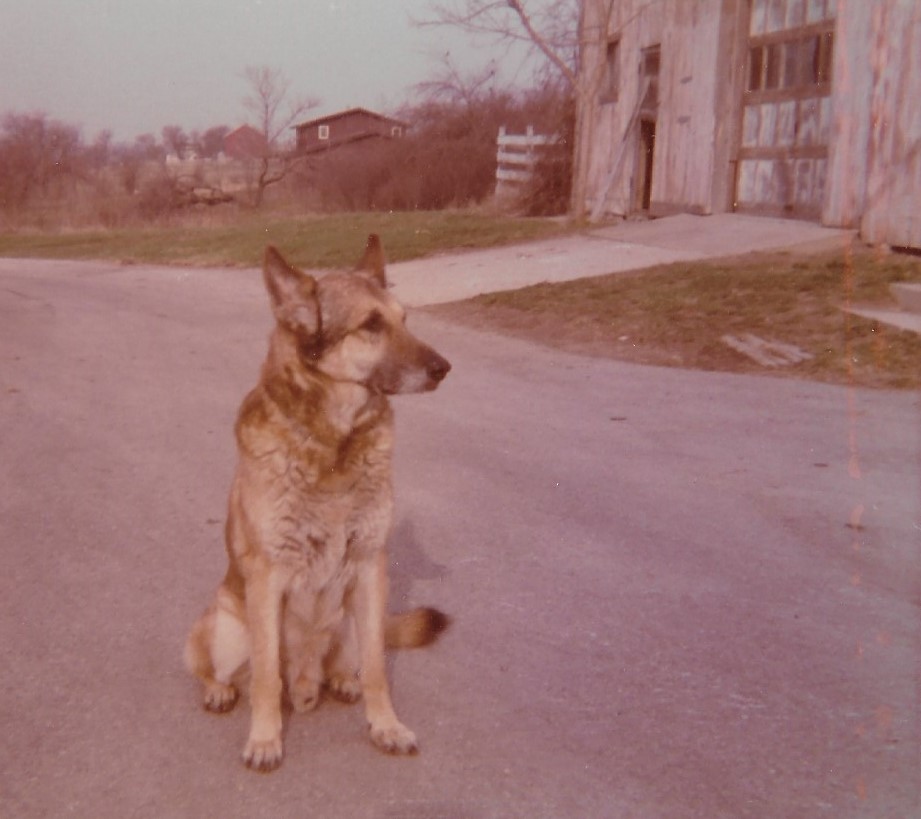
I’d never seen a Rin Tin Tin movie or TV show, but I’d heard of the famous Rin Tin Tin because he was often referenced in popular culture. Rin Tin Tin’s story appealed to me for two reasons. One, I like reading about the movie industry, especially the history of its beginnings. And two, I grew up with a German Shepherd named Fritz, who was intelligent and kind, and at times heroic. Our Fritz could’ve been the Rin Tin Tin of the silver screen.

Sad to say it took twelve years before I lifted the book off my to-be-read pile of books. Sad because Susan Orlean’s book is a fascinating combination of three stories.

What is this book about?

It’s the story of a man and his love for an extraordinary dog. Orlean’s book follows the life of Lee Duncan who rescues Rin Tin Tin, a German Shepherd puppy, from a bombed out kennel in France during WWI. In a way Rin Tin Tin rescues Duncan, too, because Duncan, who had a tough childhood, is a wounded soul. Duncan brings Rinty, as the dog was sometimes called, home to America. With Duncan’s care and training, Rin Tin Tin becomes a Hollywood superstar during the silent film era. After Rin Tin Tin dies, Duncan continues to work with other German Shepherds who acted in movies and the television show The Adventures of Rin Tin Tin.

It’s the story of canine and human actors; animal trainers; and Hollywood executives and producers; many of whom become famous and rich (and sometimes bankrupt then rich again then broke again) during the early days of Hollywood and television. Orlean delves into the behind-the-scenes pitches, ideas, deals, and strategies that created and promoted the Rin Tin Tin movies, TV shows, and actors.

It’s the story of Orlean’s fascination, research, and commitment to the story of Rin Tin Tin. She is old enough to remember watching the TV show The Adventures of Rin Tin Tin with her older siblings and loving Rin Tin Tin. But she was only four years old during the last season of the show and remembers nothing about the show itself. She writes about the fascination she and her siblings had with a small Rin Tin Tin toy her grandfather kept on his desk, out of their reach. She remembers the day when, while researching another story, she came across the name Rin Tin Tin, which brought back a flood of memories and emotions about the famous German Shepherd from her childhood. In her book Orlean writes about why she wrote this book, how she did the research, and how the book changed her.

What makes this book memorable?

Orlean is an outstanding journalist, which shows in her dedication to research and her passion for accuracy. Hollywood moguls, however, are in the business of creating legends, and they often spin legendary stories, which light up our imaginations but may have little or no truth to them. Orlean worked to track down the veracity of the many stories that had been handed down about the people and animals in her book. When she can’t find facts to either corroborate or refute a story, she lets readers know. As a reader, I appreciate Orlean’s extra effort to get at the truth, rather than repeating information that may not be true.

It took Orlean ten years to research and write Rin Tin Tin. She was granted access to the vast collection of documents saved by Lee Duncan and other people featured in the story. She interviewed as many people as she could who were connected to the story of Duncan and Rinty. Some of her research included traveling to the places she wrote about, like movie and TV locations where Rin Tin Tin films were shot, and Paris where Rin Tin Tin is supposedly buried in an elegant, verdant pet cemetery.

When Orlean writes about people in her books, she does so in a fair and balanced way, making them neither heroes nor villains. This is something about Orlean’s writing I came to appreciate when I read The Library Book (2018). [I read this nonfiction book a couple of years ago. It would make another excellent summer read.]

I grew up with a German Shepherd. Fritz was born in 1958, and I was born in 1959. After reading Orlean’s book about Rin Tin Tin, I asked my mother why she and my father decided to get a German Shepherd. I wondered because my mother was born in 1940, so too young to have seen the Rin Tin Tin movies. And when The Adventures of Rin Tin Tin ran on TV, she was a teenager, so too old to care about a kid’s show. Without a moment’s hesitation, she answered, “Because they were very smart dogs.” That made sense because Rin Tin Tin’s TV escapades made German Shepherds very popular in the 1950s. So my mother, who didn’t watch Rin Tin Tin as an actor, would’ve heard about the breed’s intelligence and loyalty. And while some German Shepherds have aggressive natures, many like Fritz, are loving and kind.

Orlean’s artful weaving of the stories of Duncan and Rinty, the early days of Hollywood, and her journey to uncover the mystique of Rin Tin Tin makes for an engaging narrative.

[Link to the silent film Clash of the Wolves starring Rin Tin Tin. Link to full-length movie The Return of Rin Tin Tin (1947) with Robert Blake. Episodes of The Adventures of Rin Tin Tin can be found on YouTube, also.]

What I’m Reading This Week: Marv Taking Charge: A Story of Bold Love and Courage by Lois Hoitenga Roelofs

Why am I reading this book?

I follow Lois Roelofs’ blog: Write Along with Me, Blogging as a Retired Nurse. Lois is a wonderful writer, and I enjoy reading her blog. When I started following her blog, she was already a widow, having lost her husband, Marv Roelofs. I also knew she was writing a book because she would occasionally blog about the book’s progress. When her book was published in the spring of 2023, I wanted to read it because I knew it would be well written and because Marv’s story about how he chose to live with his terminal diagnosis is an important one. I’m over half way through Marv Taking Charge, and it is a well-written, informative, and touching story.

What is this book about?

In January 2018, while vacationing in Arizona, Marv receives a call from his pulmonologist, who tells him he has lung cancer, small cell, the very aggressive type. The doctor explains to Marv that he needs to start chemo right away. Marv answers, “I’m not interested in treatment,” then hands the phone to his wife, Lois, who is a nurse.

The doctor makes it clear to Lois that Marv’s cancer is terminal, but that he must start chemo right away in order to have a chance of more time. Marv doesn’t change his mind, and he and Lois continue their vacation in Arizona. When they return home, Marv is enrolled in hospice care. Then he and Lois set about living their lives. They visit family and friends, and they do the everyday activities they’ve always enjoyed. Marv has a lot of good days, but Lois also writes about the difficult times.

Why is this book important?

Many people, like Marv, will learn they have a terminal illness, and they will face decisions about how they want to live the rest of their lives. Currently, most terminally ill cancer patients are treated with chemo and radiation, not because treatment will provide a cure, but because it may extend their lives a few months. However, those extra months often come with a decreased quality of life because chemo and radiation are harsh treatments with potentially severe side effects. Marv chose quality of life over quantity, then he and Lois made the best of the days they had left together.

Cancer is talked about with words like fight and battle, and patients are described as courageous. However, Lois, agreeing with Atul Gwande, who wrote Being Mortal, says terminally ill patients should be asked what is important to them.

Marv’s answer to that question was to live out his days without the side effects of medical treatments that were not going to save his life.

[Lois Hoitenga Roelofs book Marv Taking Charge is available here.]

Book Review: Finding the Bones by Nikki Kallio

[Note: Kallio’s book is being released in February 2023, by Cornerstone Press.]

Open Finding the Bones by Nikki Kallio and buckle up because you’re in for a spellbinding, scary, stomach-dropping, heart-in-your-throat roller coaster ride through nine short stories and a novella, some written in the genres of science fiction, gothic, and speculative. I read Kallio’s page-turning collection in one day.

But ride that roller coaster in slow motion because Kallio’s stories are written with a wonderful literary flare, breaking the boundaries of genre labels. So read deeply and slowly, savor Kallio’s use of language. Study her characters, listen to their conversations, and read their thoughts. Look around at the worlds her characters inhabit, yet find yourself reminded of your own familiar world.

Some of Kallio’s stories launch us into other worlds: outer space, a haunted house, and an Earth where the sun is dangerous. Others are set in the ordinary homes of ordinary people who face extraordinary events. Her stories explore themes of death, isolation, aging, belonging, trauma, and displacement. And while Kallio’s stories transported me far away from my living room couch, they also connected me to what it means to be human during times of tragedy, mental health issues, or environmental devastation.

For example, “Shadow” and “Disappearing” explore grief and loss from different angles, helping readers understand that grief is a deep and complex emotion. “Disappearing,” one of my favorite stories, explores loss from a child’s viewpoint after his mother has gone missing, disrupting the notion that children don’t experience grief like adults do.

In “Geography Lessons” a father and daughter are traveling through space to another planet because Earth has been destroyed, but only a fraction of the population is chosen for the trip. As the former earthlings hurtled through space, I thought about migrants in our world who leave their homes because they are no longer safe, bringing with them only memories and perhaps a few trinkets. Family ties are broken, cultural heritage is fractured, and children drift between two worlds.

Kallio’s collection of short stories ends with The Fledgling, an eighty-three-page novella. It’s a powerful, tightly woven dystopian story with richly drawn characters navigating life on Earth after exposure to the sun becomes dangerous. Her novella is the pitch-perfect crescendo to the end of an amazing collection of stories.

Kallio’s stories entertain, but she also creates empathy for characters and in turn her characters enhance our ability to understand our fellow human beings. Years ago I was told that short stories are meant to be read more than once, and Kallio’s collection invites us to visit again.

Publication Date: February 2023, Cornerstone Press, Stevens Point, WI

[This book review written by me was originally published on the Wisconsin Writers Association Book Review page.]

Book Review: The Net Beneath Us by Carol Dunbar

Why did I read this book?

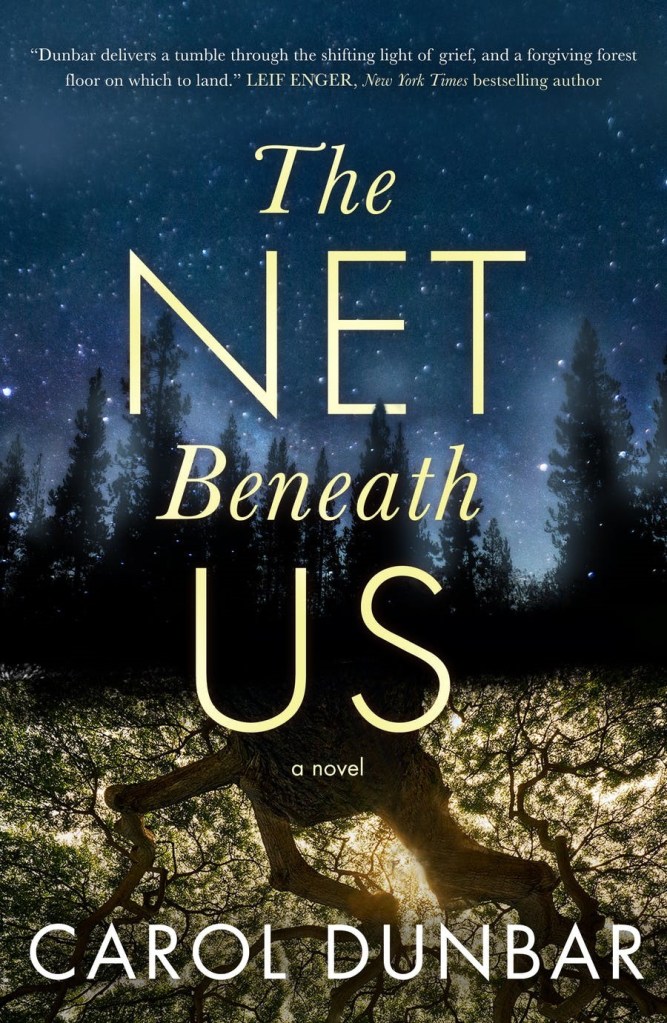
Carol Dunbar lives in northwest Wisconsin like I do. We live in separate towns, but they are close enough for me to be excited because an author near me has been published by a New York publisher. Also, in May 2022, Dunbar spoke at our local writers’ association. She was a warm-hearted and engaging speaker. After the meeting, I preordered her novel, The Net Beneath Us. And while you should never judge a book by its cover, the artwork on Dunbar’s book is stunning, and I have to admit that also influenced me.

What’s this book about?

Elsa lives with her husband, Silas Arnasson, and their two children, Hester, a first grader, and Finn, a toddler, in rural northern Wisconsin. They live in the basement of their future house, which they continue to build as time and money allow. Life in the woods is challenging. Weather and wildlife present difficulties as they build, haul water, and maintain a generator for electricity. But Elsa and Silas are partners, working together to achieve their dreams. They are happy and very much in love. Then everything changes.

Silas has a devastating logging accident. Elsa is determined to keep her family warm and safe during the approaching winter in a home without running water, central heat, or electricity, a home without Silas to help. Shrouded in grief, she isolates herself and her children from family and friends. She rebuffs help from Silas’s family, believing they already see her as incompetent and because they had envisioned another type of woman for Silas.

What makes this book memorable?

People experience loss uniquely, making it hard to understand each other’s grief. Family members overwhelmed by their own sorrow, struggle to comfort each other. Dunbar’s use of multiple points of view allows us to experience, firsthand, the heartache of Elsa, Hester, and Ethan and Luvera, Silas’s uncle and aunt. Additionally, Dunbar’s novel explores our need for self-acceptance and acceptance by others; and our wish to belong to a place, the land, a community.

Loss and grief are somber themes and make for heavy reading. But Dunbar’s use of beautiful imagery, sustained metaphor, and lyrical prose gives us hope as she guides us through a heartbreaking story, transporting us with her exquisite writing through darkness to a place of better understanding of both her characters and ourselves.

Sinclair Lewis said, “People read fiction for emotion—not information.” With The Net Beneath Us, Dunbar underscores the power of fiction as she draws us into an emotional story of loss, grief, forgiveness, and understanding, immersing us in a world of human nature that nonfiction cannot match. And, even though Dunbar’s story is fiction, it rings with truth.

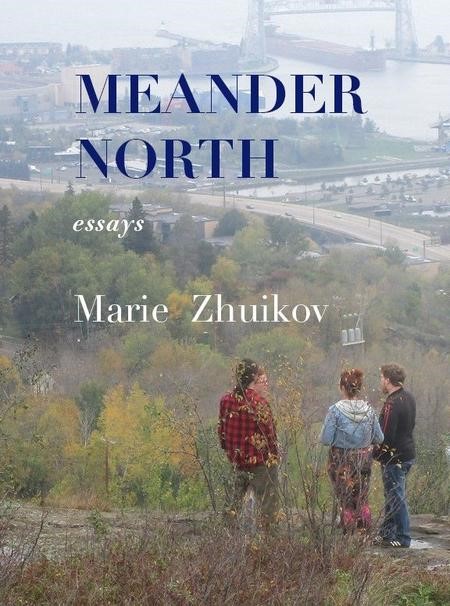
Book Review: Meander North by Marie Zhuikov

[Meander North can be preordered through Itasca Books. It’s currently available at Zenith Bookstore, and will be available in other bookstores November 21.]

Marie Zhuikov’s newest book, Meander North, is a collection of essays, many from her blog Marie’s Meanderings, which she started writing in 2013. I look forward to each new post by Zhuikov, so when I had a chance to read Meander North, I was excited. Zhuikov selected some of her favorite blogs, then added essays, some of which have appeared in other publications.

Many of Zhuikov’s selections are about getting outdoors and enjoying nature. In her humorous essay “How X-C Ski Starvation Can Lead to Impaired Judgment,” she writes about one of her first cross-country skiing adventures of the season: “I . . . desperately needed to do something to break out of my winter slothfulness and raise my heart rate above seventy beats per minute.” Even though a mist turns into raindrops, Zhuikov slips on her skis and heads out on the icy trails. With caution and strategic moves, she completes her first cross-country ski of the season, and while she does, we hold our breath, admire her tenacity, and think about some of our own foolish escapades.

Zhuikov’s essays about her adventures are so enjoyable because they’re relatable. Her love of the outdoors and her ability to maneuver through nature shines through in her writing. But she is with us, inviting us along, never making us feel left behind. She makes us believe we can get out in nature and be adventurous too. That we can lower ourselves into a canoe or a whitewater raft, or that we can stand along a river and learn to fly fish.

Zhuikov’s essays connect with us because she is not afraid to let us peek at the moments when her life doesn’t go smoothly. Sometimes the outcomes are humorous, like in her story “Just Your Average Winter’s Day Walk and Squirrel Attack” about a walk with her wonderful eighty-pound dog, Buddy, that turns into a comedy of misadventures. Other times the outcomes are poignant, like in “An Evening Dog Walk” about a romance that didn’t work out. Occasionally, she shares heartbreak, like in “The Lake, It Is Said, Never Gives Up Her Dead.”

Zhuikov rounds out her collection of nature essays with an eclectic selection of entertaining and informative writings that cover a wide range of topics. Some cover Zhuikov’s adventures as a citizen of Duluth, such as, “Marie Versus the Post Office” and “My Neighborhood Rezoning Zombie Apocalypse Saga.” Other heart-warming essays like “I Saw Three Ships on Christmas Day” or “Kissing in the Coat Room in First Grade” are about her family or youth. She wraps up her book with a section titled Bookish Adventures where we get a taste of Zhuikov’s life as a writer and a reader, and where she introduces us to the wonderful poet Louis Jenkins.

Winter is coming so grab a copy of Marie Zhuikov’s Meander North, curl up in a cozy chair with a glass or mug filled with your favorite beverage, and start by reading “Cold as a Cage,” the first essay in her collection. And for those of you who live through winter every year, nod in agreement and laugh hopelessly as you read: “The cold defines our movements. Northern Minnesotans walk with shoulders hunched and hands in pockets, limiting our time outside to the bare minimum for the task at hand.” But know that you are a survivor because you are inside where it’s warm, ready to smile and laugh and shed a few tears as you join Zhuikov on her meanders through life.

[Follow Marie Zhuikov’s blog at Marie’s Meanderings. Check out her author’s page and learn about her other books and writing. Attend the Meander North book launch at Zenith Bookstore on Thursday, November 17, 2022, at 7:00 pm CST. Preorder Meander North at Itasca Books.]

Book Review: Calling for a Blanket Dance by Oscar Hokeah

Why did I read this book?

While returning home from running errands, I listened to only ten minutes of Kerri Miller’s fifty-minute interview with Oscar Hokeah on Minnesota Public Radio, but that was long enough to be intrigued by Hokeah and his novel Calling for a Blanket Dance. When I arrived home, I ordered the book from my library through the inter-library loan program. Because a library book has a “use by date,” Hokeah’s novel landed on the pinnacle of my reading pile; and its rising to the top–like delicious cream–was richly deserved.

What is this book about?

The story focuses on Ever Geimausaddle, who is Native American and Mexican. Each chapter in the book is narrated by one of his relatives, and the last chapter is narrated by Ever. Through these family members, we watch Ever struggle as a child and an adult, and we learn about his extended family and their place in his life.

In the first chapter, Ever’s grandmother Lena Stoop introduces us to him when he is six months old. Ever and his parents, Everardo and Turtle, are returning to the United States from Mexico when they are stopped by three Mexican policemen who severely beat his father and rob his parents. Throughout the attack, Ever’s mother tries to keep him from waking. She doesn’t want him to witness the violence, but he wakes up and sees the brutality and rage.

Lena travels to a border town in Texas to pick up her daughter, son-in-law, and Ever, returning them to Oklahoma. Lena tells her daughter that she is concerned about what Ever saw. Even though he won’t remember the episode, their Native American culture teaches that babies and young children shouldn’t be exposed to violence: “They could be witched. Their spirit forever altered. A witching was almost incurable.” Lena’s daughter snaps at her mother, calling her superstitious, but then she falls silent because she, too, is worried about what her baby boy saw.

Ever’s father suffers permanent physical and emotional damage from the beating, but Ever’s mother, with the help of relatives, strives to keep her family intact. However, the memory of violence that Ever’s family experienced can’t seem to be conquered or at least forced to retreat.

What makes this book memorable?

Every time I had to put Hokeah’s novel down, I looked forward to the moment I could pick it up again. Through his masterful prose and skillful use of twelve different narrators, the reader comes to understand Ever and his family: their pain and disappointments, their hopes and dreams, their failures and successes, and their capacity for love and forgiveness.

Hokeah incorporates themes of poverty, inter-generational trauma, discrimination, marginalization, and redemption throughout the story the way an artist uses exquisite but understated brush strokes to make a painting come alive–strokes so subtle, yet so integral to the work of art, that without them, the picture would be flat and lifeless. Hokeah’s landscape of story, theme, and narration make Calling for a Blanket Dance a richly constructed novel, drawing readers in and holding them until the last page.

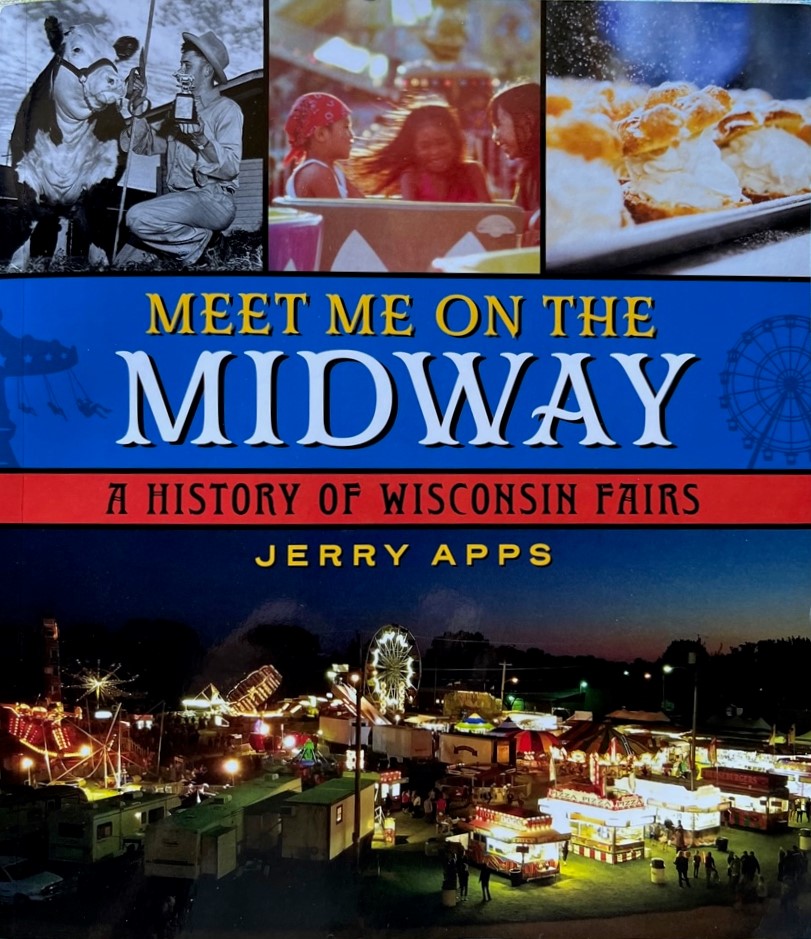
Book Review: Meet Me on the Midway: A History of Wisconsin Fairs by Jerry Apps

Published by Wisconsin Historical Society Press, Nonfiction history, 264 pages

Reviewed by Victoria Lynn Smith

Meet Me on the Midway: A History of Wisconsin Fairs by Jerry Apps presents an engaging and informative history of Wisconsin’s state and county fairs. His book focuses on the stories of agricultural societies, county extension agents, fair organizers, judges, volunteers, exhibitors, workers, and 4-H and Future Farmers of America members. Because Apps never forgets that history is the story of people, he pulls readers into the fascinating behind-the-scenes world of state and county fairs. Readers will also appreciate the generous servings of photographs, which are as delectable as fair food and as eye catching as the midway.

To read the rest of this book review click here: Wisconsin Writers Association–Book Reviews.

Book Review: The Audacity of Goats (Book Two) by J. F. Riordan

Why Did I Read This Book?

I read The Audacity of Goats because I read North of the Tension Line, the first book in J. F. Riordan’s series, and loved it. If you want to read my review of the first book, click here. If you think you might like to read the first book in Riordan’s series, you may want to stop reading this because some of the information will be spoilers for the first book.

What’s this book about?

Audacity, defined as boldness, daring, courage, bravery, and fearlessness. All the characteristics people need for every day life, like how to manage a long-distance romance, how to get along with a spouse, how to fit in, how to stand your ground, how to deal with unreasonable neighbors, how to win a local election, how to tell a lie if it’s for the greater good, how to let your child grow into adulthood, how to takedown a corrupt politician, how to master a difficult pose in yoga.

In addition to its share of fog and snow, Washington Island in Door County, Wisconsin, becomes shrouded in mystery. Blood-curdling screams shred the night. At first, Islanders who hear the shrieks worry someone is being hurt, but no bleeding bodies, alive or dead, are found. Some Islanders think it’s bored youth having fun, some think it’s ghosts, others think a crazed person is hiding on the Island. Curious but rather unfazed, the Islanders carry on. They’re more concerned about long winters and the upcoming local election.

Fiona Campbell reluctantly decides to run for town chairman against her conniving, nasty neighbor, Stella DeRosiers. Inhabitants who were born on the Island mostly admire Fiona but consider her an outsider. Conversely, Islanders detest Stella, but she’s one of them. Jim, the local DNR officer, is crazy about Fiona, but she’s in a relationship with Pete, whose work takes him to dangerous parts of the world.

Roger and Elizabeth return from their Italian honeymoon, and Roger worries about how to be a good husband. The Angel Joshua, advises Roger to join his yoga class, so he can get in touch with his feminine side and improve his relationship with Elizabeth. Never one to do things halfway, Roger embraces the whole downward-dog-savasana-namaste yoga scene.

Pali, full-time ferry captain and part-time poet, thinks his writing muse had departed. Not being able to write steeps him in moodiness. He contemplates giving up poetry so he can be a good husband, father, and captain, instead of a melancholy shadow in his own life.

Ten-year-old Ben, Pali and Nika’s son, has a secret he can’t share with adults because he knows they won’t understand. Ben has been taught that lying, breaking rules, and shirking one’s honor are wrong. But he’s facing circumstances that aren’t colored in black and white, so he bends his moral code.

What makes this book memorable?

Book Two is a second date that goes as well or better than an exciting first date. Riordan’s cast of memorable characters are back along with a few new ones, and their daily walks through the pages of life provide plenty of laughs, groans, gasps, and an occasional misty eye.

Riordan deftly portrays ten-year-old Ben’s coming-of-age dilemma. His predicament takes me back to my childhood and the struggle between the clarity youth and the murkiness of growing up. When Emily Martin, a new character, shows up on the page, I have fun rolling my eyes and thinking, “Oh, please, Emily, do you hear yourself?” right along with the Islanders.

The stakes for the characters in this book are small when compared to a thriller where the hero is striving to save the world, but Riordan’s use of structure and point of view create suspense around the ordinary, making The Audacity of Goats both a page turner and a meditation at the same time, all while making us smile and laugh.

What’s next?

I’ll read Book Three, Robert’s Rules of Order, followed by Book Four, A Small Earnest Question. I’m savoring these books, sipping them like a rare wine. When I finish them, I’ll miss Riordan’s captivating characters, finely woven stories, and lilting humor. However, I’m cheered because I recently learned that Book Five, Throwing Bears for George will be released on July 25, 2022.

Book Review: North of the Tension Line (Book One) by J. F. Riordan

Why did I read this book?

I listened to J. F. Riordan speak about her North of the Tension Line series via Zoom. A Small Ernest Question, the fourth book in the series, came out in August 2020, so like many authors who had books coming out during the pandemic lockdown, Riordan needed to promote her book in a new way. Instead of visiting bookstores to meet potential readers, she used Zoom to speak to them.

By the end of her talk, I had three good reasons for buying all four books in the series. One: She has a German Shepherd. I grew up with a German Shepherd—he was the smartest dog I have ever known. Two: Her stories are set in Door County, with much of the action occurring on Washington Island. When I was twelve, my father, who was a private pilot, flew our family to Washington Island for their annual Fly-In Fish Boil. And I love a good fish boil. Three: Someone in the Zoom audience said to Riordan, “You must love all this extra time to write during the lockdown.” Riordan replied, “It’s much harder to write.” She explained that being out in the world among people inspired her writing. I felt a kinship with her because I was having a hard time writing too. Her words comforted me. So, without dipping a big toe in the water to test it, I dove in and bought her books.

What is this book about?

In North of the Tension Line, Fiona Campbell, a freelance writer, has moved from Chicago to Ephraim, Wisconsin, on the Door County peninsula. Her best friend Elisabeth Wright owns an art gallery there and a lovable German Shepherd named Rocco. Roger Mason, a former physicist, owns the coffee shop in Ephraim. His lack of social finesse and his disinterest in fancy coffee drinks makes him an unlikely coffee shop owner. Elisabeth and Roger seem to like one another, but his inability to show romantic feelings makes him an unlikely partner. Fiona meets an interesting man at a wedding in Chicago, but their encounter is only a brief conversation. At least Fiona and Elisabeth have Rocco.

The women enjoy taking day trips with Rocco to Washington Island via the ferry. Fiona loves the Island but cannot imagine living there. Then she accepts a dare to spend the winter in a house that she buys on a whim. Winters are long and lonely after the tourists leave, but winter becomes the least of Fiona’s problems. Roger, worried she will be lonely, gives her a goat named Robert that is part Satan, part Einstein. Her neighbors on the Island mistakenly believe she is a hooker. A critter is living in the walls of her house. And Stella, her nearest neighbor, loathes her. But Fiona makes friends, takes care of her goat, writes articles, works on her home, and discovers the local DNR officer has feelings for her.

What makes this book memorable?

Riordan creates main characters who are charming, amusing, and intriguing. They hope and dream, taking small risks and big leaps of faith while life throws them small curves and the occasional hairpin turn. Riordan uses gentle humor, keen observation, and tightly woven story arcs to create a tale that captivates but never dips to the level of a soap opera. Her minor characters also delight. Pali, the ferryboat captain who is inspired by a ghost, writes poetry. Stella who is nasty to the insides of her bones, hates everyone. Piggy, a small dog, fiercely defends its stretch of road with a fierceness that would make Cujo shudder. Mike and Terry, regulars at Roger’s coffee shop, patiently bear witness to Roger’s shifts in behavior.

Riordan captures the flavor of small-town life. Everyone knows everyone, and people with quirks or infuriating habits cannot be avoided. People know what their neighbors are up to before the neighbors themselves even know. They know alliances will be strong and grudges will be nursed. And while they might tolerate an outsider, they will only humor a foolish outsider.

Who might like this book?

This book is about people, their individual stories, and how those stories intertwine with the stories of their friends and neighbors. If you like a book that pulls you down a gentle river with occasional rapids, a book that allows you to admire the unfolding scenery along the banks of the water without worrying about too many rough currents, climb into a canoe and travel through Riordan’s North of the Tension Line.

What’s next?

I’m currently reading The Audacity of Goats, the second book in Riordan’s series, and so far, I am loving the trip.

The Year of Ice by Brian Malloy: A Book Review

Why did I read this book?

I serve on the board of a local writing organization, and at the end of March, Brian Malloy was our featured author. I hosted the program, so I read The Year of Ice. I’m glad I volunteered to host because I loved Malloy’s book.

What is the book about?

The Year of Ice, published in 2002, is a coming-of-age story set in 1978. An arctic-like winter has descended on Minnesota’s Twin Cities where Kevin Doyle, a high school senior, is undecided about his future. He’s angry with his mother who died almost two years ago when her car slid off an ice-covered road and plunged into the Mississippi River. He and his father, Patrick, tiptoe around her death, but Kevin is his father’s protector. He foils widows and divorcées who show up at their door with casseroles and desserts for Patrick, who isn’t interested in dating. Then Kevin learns a secret about his parents’ marriage, and his threadbare relationship with his father unravels.

Kevin has his own secret. At 6’2” and 185 pounds, he’s good looking and muscular. Girls swoon over him, but he’s in love with Jon Thompson, a handsome classmate. Kevin can’t tell Jon how he feels; he can’t tell anyone he’s gay. He knows people like him, but they like him as the tall, handsome, charming Kevin, a straight young man with a sense of humor and a measure of kindness.

Kevin hides the fact he’s gay by embracing an “alpha dog” routine and kicking butt if any of his male peers challenge his alpha status. When Jon gets mouthy during a football game, Kevin slaps him on the side of the head, telling us, “[I]f I smack him, nobody will guess that I want to pick him up and kiss him really hard, right on the lips. And . . . he’s got to be reminded that I’m tougher than he is. Wolves do this all the time to keep order in the pack. I’m the alpha; he’s the beta.” Kevin attempts to keep order in his life, but everything is changing.

What is noteworthy about the story?

Malloy’s masterful use of present-tense, first-person narrative hooked me on the first page and held me until the end. I read the book in less than two days. Malloy creates a complex, engaging character who comes to life. Kevin reminds me of the teenagers I went to high school with—myself included. He’s moody and funny and a smart ass, and he hides his problems and feelings. He makes some mistakes, but I like him and empathize with him as he copes with his dysfunctional family, his unrequited love for Jon, and the girlfriend he doesn’t desire. Malloy’s supporting characters are unique and fully developed and, in addition to being part of Kevin’s world, have their own intriguing story arcs.

The Year of Ice won an Alex Award in 2003. Awarded by the American Library Association, this award is given every year to ten books that were written for adults but appeal to young adult audiences between twelve and eighteen years of age.

Why is this book important?

Malloy’s book is a classic coming of age story where the main character happens to be gay. Blatant discrimination and hateful behavior toward the LBGTQ community has increased the in last several years. Some people lobby to ban books like Malloy’s from school libraries, but the need to stand up for books like The Year of Ice is important. All young people need to see themselves in the world around them and to know that someone speaks to their experiences. It’s why coming of age stories are so important to us, often at any stage of our lives. Kevin Doyle shares his ups and downs and his hopes and disappointments with us, and we care about him. We want him to find his way, be true to who he is, and to have a good life.