Book Review: Get Well Soon: History’s Worst Plagues and the Heroes Who Fought Them by Jennifer Wright

In the midst of a pandemic, I’ve been reading about pandemics. How depressing, you think! Not really. It’s more comforting than you might imagine. Most of the pandemics I’ve read about were worse than COVID-19, and I don’t say that to make light of COVID. It’s killed many people, caused long-term health issues, and disrupted lives and the economy, but it can’t compare to the Black Death or the Great Influenza of 1918.

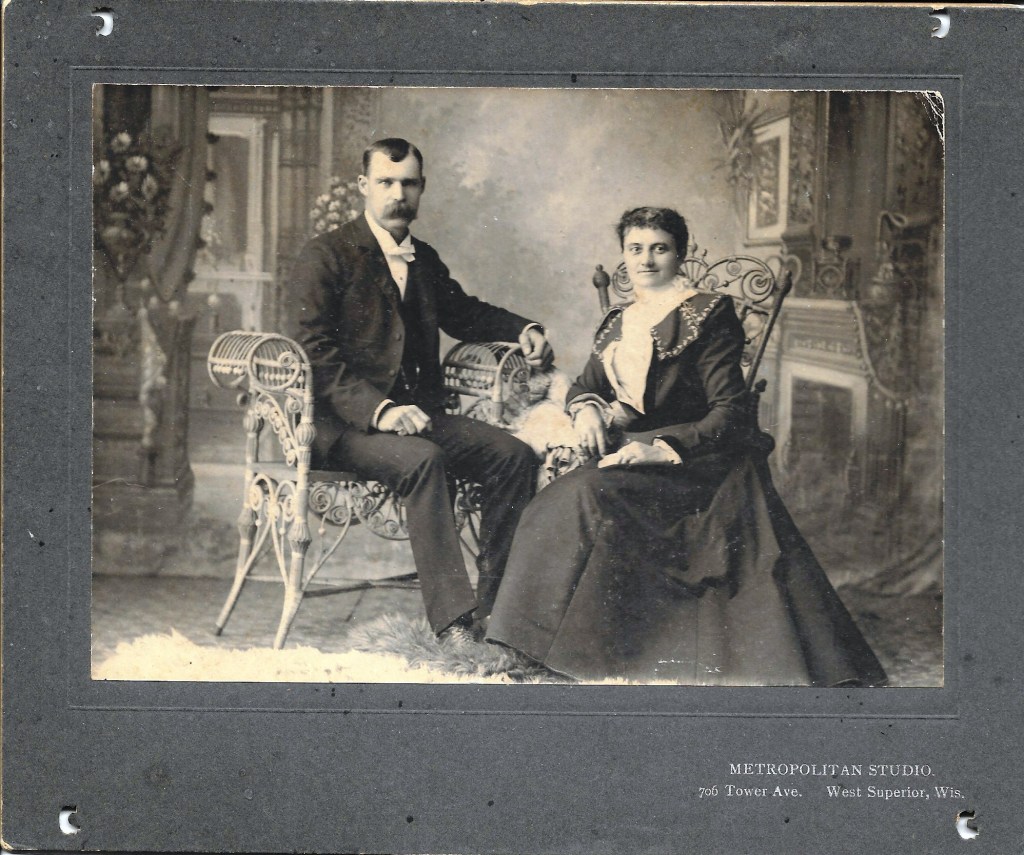
My great-grandfather Frank died of TB in 1910.

Get Well Soon: History’s Worst Plagues and the Heroes Who Fought Them by Jennifer Wright is a well-written sampling of killer pandemics. Her book covers the Antonine, bubonic, and dancing plagues, plus smallpox, syphilis, tuberculosis, cholera, leprosy, typhoid, the Spanish flu (Great Influenza of 1918), encephalitis lethargica, lobotomies, and polio. She describes the diseases and how they killed people, but doesn’t dwell on the grotesque. Instead, she focuses on the development of medical treatments and the people who worked to end plagues and pandemics. She writes with a gentle humor that helps readers digest what is a formidable list of population-depleting diseases. Fortunately, most of them have been mitigated by cures, treatments, or vaccines.

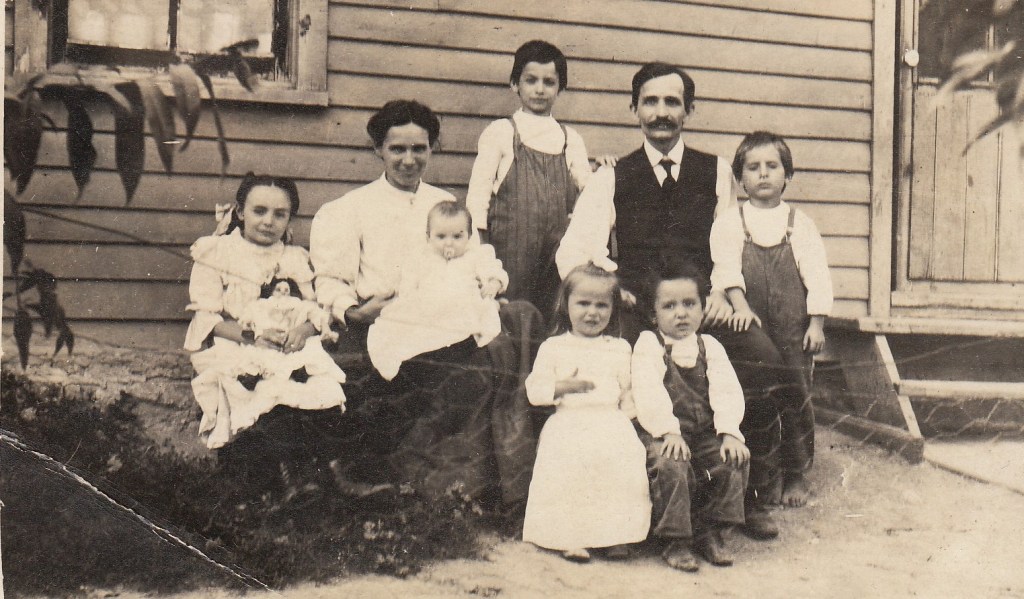
My great-grandfather Joseph, in the vest and tie, died of typhoid fever in 1922.

Wright’s book provides historical perspective. The bubonic plague killed quickly and painfully, wiping out tens of millions of people in the 14th Century. Worldwide death estimates from the Great Influenza of 1918 range between 25 million and 100 million (p. 197). It, too, killed quickly, especially people in their twenties. And horrifically, smallpox wiped out entire civilizations in the New World. Those statistics provide some comfort when compared to COVID statistics. Modern medicine is another comfort. Medical scientists have been able to develop working vaccines and helpful medicines in a short time to help combat COVID deaths.

Also, the historical details Wright’s book provides can—strangely enough—be a soothing balm. Some of what people are doing and saying about COVID seems tame in comparison to behavior during past pandemics. Some suggested “preventatives” against the bubonic plague were to eat crushed emeralds, live in a sewer, avoid bad smells, place chopped onions in your house, drink your urine, and don’t look at sick people (Wright p. 29-30). Among the many bizarre and useless cures for the bubonic plague were bloodletting and poultices made with feces (p. 40). Often prescribed treatments made people suffer more. In defense of people from the past, medical science wasn’t as advanced as it is today, and people were desperate during frightening times, like they sometimes are today.

Wright’s chapter on tuberculosis was scary. I was in the camp of people who thought that tuberculosis was mostly a disease of the past. It’s not. Tuberculosis kills 1.3 million (Wright, p. 125) to 1.5 million (CDC) lives a year. Most of the cases of TB occur in countries outside of wealthy nations like the United States. But mutations in the TB bacteria make it more resistant to drugs, and when people with TB travel, they spread the disease. “Recent models show that unless we scale up efforts to address this growing threat, the number of people dying from drug-resistant TB will nearly double every 5 years” (CDC). There’s also the wise adage: Those who do not learn from history are doomed to repeat it. We need to pay attention.

In her epilogue, Wright discusses the AIDS epidemic. She didn’t give AIDS its own chapter because she feels there are people who lived through the AIDS epidemic who could tell the story better than she can. However, she wrote eight pages about AIDS, explaining how the epidemic was mishandled and how prejudice against gays made the epidemic worse. I believe she could tell the story of AIDS and make it as engaging and enlightening as the other epidemics she wrote about. And if she did, I would read that book.

Kekekabic by Eric Chandler

Reviewed by Victoria Lynn Smith (This review was originally posted on Nov. 27, 2022.)

[To pre-order Chandler’s book click here: Finishing Line Press.]

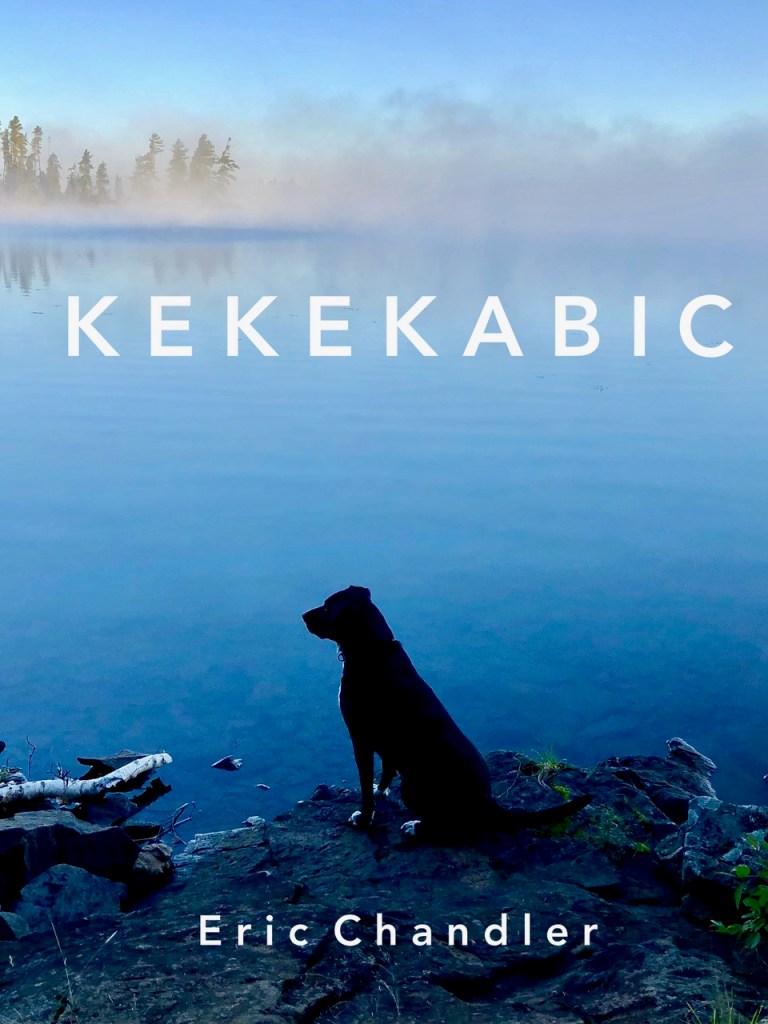
Leo at Parent Lake in the BWCA

Kekekabic, Eric Chandler’s second book of poetry, will be released May 20, 2022. Prepublication sales for the book will run from January 18, 2022, through March 25, 2022. Chandler is the author of Hugging This Rock: Poems of Earth & Sky, Love & War (2017). He has won the Col. Darron L. Wright Award for poetry three times. His writing has been published in numerous journals and magazines.

Kekekabic combines prose and haiku in a poetry form called haibun. In 2018, Chandler wrote a poem after each of his workouts. His goal was “to pay attention to the world” during his workouts in the wilderness, in Duluth, and on the road as an airline pilot. In his introduction he states, “It’s a loss if skiing through the woods is just a workout. All these miles moving over the earth under my own power have meaning.” Chandler’s poems invite us to move over the world with him and share the meaning he finds as he runs, hikes, and cross-country skis.

On the cover of Kekekabic, Chandler’s dog, Leo, sits on the shore of Parent Lake in the serenity of the Boundary Waters Canoe Area (BWCA). Leo invites us to open the cover, read the poems, and reflect along with his hiking companion about being outside in nature. Chandler shares his wisdom about the outdoors in a haiku:

I think more people

should go outside. I think they’d

be much happier.

This resonates with me because on a bad day if I go outside, my spirits lift. Reading Chandler’s poems lifts my spirits too. Nature is an important theme in Kekekabic, and Chandler poems nudge us to go outside.

Chandler’s imagery appeals to the senses. About one of his runs, he writes, “The wind stacked the pack ice up at the fond du lac. The yellow sun sends a yellow stripe across the open water and it hits the shelf of ice and disperses. Brilliant sparkles randomly dot the expanse as the shards reflect the sun.” After a day on the Kekekabic trail, he writes, “Tail-slapping beavers sounded like full-grown men jumping into the lake.” Chandler’s poetic imagery will linger in our minds long after we close his book.

Leo joined Chandler on the five-day hike in the BWCA along the Kekekabic Trail. Chandler wrote a haibun for each day of the hike. The haiku he wrote on the fifth day—

The sound of peace is

my dog snoring on a rock

on a wild lakeshore

—mixes the wonder of nature and the joy of sharing it with family, which includes his dog. He writes of his daughter’s first time on cross-country skis: “I felt like my heart would explode due to an overload of blue kick wax joy, gliding through the trees in silence.” In another haibun Chandler recounts a run along Lake Superior with his son. They find a teddy bear on the path, and his son turns around and races back to where they had just run from to return the teddy bear to a child. Chandler’s poems remind us that small, quiet moments spent in nature with family are special.

Chandler studied the Japanese poet, Bashō, to learn about haibun. He quotes Bashō: “People often say that the greatest pleasures of traveling are finding a sage hidden behind the weeds or treasures hidden in trash, gold among discarded pottery.” In haibun that reflect Chandler’s workouts in large cities, he has taken Bashō’s words to heart—finding the sage, the treasures, and the gold among the grittiness and complexities of urban settings.

Some of Chandler’s haibun explore the theme of urban settings and nature colliding. In Fort Lauderdale as he runs, he notes “That crisp thread between the light blue of the sky and the dark blue of the water” in the distance. But as he observes the sky and water, he runs “Past the cigarette smokers. Past the marijuana smokers. Past the guy lifting dumbbells while he stands at the seawall, looking at the ocean while his car speakers thump.” He continues running down to the water where he concludes, “I got a moment’s peace and then found my way back to my room through the noise.”

Chandler’s poems written after running in cities, combine the beauty of nature and cityscapes with a harsher reality of urban landscapes, a comparison that invites us to think about people and nature as “reaching toward” one another. He writes, “Downwind now, I was struck that the world of man and the world of nature kind of reach toward one another at the border. The palm trees grow out of the sidewalk and the beach chairs cover the sand.”

In his haibun poems, Chandler encourages us to move through life with meditation and awareness. He encourages us to take journeys with family, friends, and our dogs, but also to take some journeys by ourselves. His poems inspire us to go outside and move through our world.

[For more information about Eric Chandler and his writing, click HERE to view his website, SHMOTOWN. Kekekabic will be available for prepublication sales at Finishing Line Press starting January 18, 2022, through March 25, 2022.]

What’s Next on My Reading List?

[Bloganuary wants to know. It’s the WordPress blog prompt for January 18, 2022. Click on blue lettering to connect to websites about the books, authors, and events mentioned.]

My non-writing desk

“What are you reading?” is one of my favorite questions. It gives me permission to talk about the books I’m reading and soon-to-be-read books that I have stacked on my non-writing desk, which functions as an extension of the nearby bookshelf. And, I love to hear about what other people are reading. It’s a good way to add more books to the stack on the desk.

I’m going to cheat a bit and answer this question two ways. First, I’ll discuss what I’m currently reading. Both books are my reward at the end of the day. I read the nonfiction book in front of the TV, so I don’t have to watch it. I like to sit in the family room with my husband in the evening, but our TV-watching tastes are not aligned. I read the fiction book in bed before I go to sleep. Second, I’ll discuss some books on my to-be-read list.

My current nonfiction read is Wicked River: The Mississippi When It Last Ran Wild by Lee Sandlin (2010). This is a beautifully written nonfiction book about the Mississippi River. The story starts in the 1700s, and I’m currently reading about events and life along the river in the 1800s. The Mississippi River, the star of the story, is complex and evolving, with a wide emotional range. The stories of the people who lived along the river and worked on the river are compelling too, but the Mississippi steals the show. I like this book because Sandlin’s writing is excellent and well researched. I’m learning so much about the river and how it worked and currently works as part of a large ecosystem throughout the middle of the United States. Unfortunately, I’m learning about how people have damaged that ecosystem. When I’m finished with Wicked River, it will have a permanent home on one of my many bookshelves.

My current fiction read is Saving the Scot by Jennifer Trethewey. It’s Book 4 in her Highlanders of Balforss series. I’ve read the other three books: Tying the Scot, Betting the Scot, and Forgetting the Scot. These books make me swoon, laugh, and cry, and I hold my breath during the engaging, suspenseful action scenes. Before I read these books, I hadn’t read a romance novel in over twenty years, and even then, I could count the ones I’d read on one hand. Trethewey’s books are different. True her characters are beautiful and handsome and brave and have fast-paced adventures on their way to true love. But her characters have human flaws and problems that make them endearing and relatable. And yes, the male characters do save the female characters. BUT the female characters save the male characters too. The females are intelligent, clever, resourceful, and brave, and they’re nobody’s doormat. The supporting characters are fully developed people, each with distinct personalities, who add to the enjoyment of Trethewey’s books. As a writer, I admire the storytelling and dialogue in these books. Her books entertain me and inspire me to be a better writer. After I die, my children will have to decide what to do with these books because I’m not giving them away.

Here are some books on my to-be-read list. I have lots of books that fit this category, but I’m going to limit my list to books that I plan to read in the very near future.

  1. We Were Never Here by Andrea Bartz. This book is first on my list because I checked it out from the library. It made my list because I heard the writer speak at a virtual Author Chat sponsored by Honest Dog Books. (Click here to view upcoming Author Chats, which you can listen to from home.) Bartz is originally from Milwaukee, and so am I. Her book was a Reece Witherspoon pick for August 2021. (I also read the Peter Ash series by Nick Petrie. I have one of his books in my stack. He’s a Milwaukee native too.)
  2. My Father’s Keep: A Journey of Forgiveness through the Himalaya by Ed Abell. This book made my list because I’ve met the author, I like reading books that combine adventure with self-discovery, and I had a difficult relationship with my father.
  3. Write Away: One Novelist’s Approach to Fiction and the Writing Life by Elizabeth George. I’m not a novelist, but I believe I can learn from George’s writing advice. This book made the list because I love George’s mystery series featuring Thomas Lynley. They are beautifully written: literary, suspenseful, and full of characters I care about.
  4. Lab Girl by Hope Jahren. Science is interesting, and I like memoir. I had a college professor who wanted to turn me into a biology major because I was so fascinated by my Intro to Biology course. I didn’t bite because I knew it would’ve been a mistake–the math would’ve doomed me. But I love reading about science, medicine, nature, and biology.
  5. Maggie Brown & Others by Peter Orner. This is a collection of short stories, a format that’s always appealed to me. I also write them, so I like to read short stories by other writers. I heard Orner talk at the Harbor Springs Festival of the Book in the fall of 2020. The festival is normally held in Harbor Springs, Michigan, but it was virtual in 2020. I like short story collections because I can read a story or two, read something else, and then read another story or two.

I’ll stop here because I need to go read something!

My writing desk

Kekekabic by Eric Chandler

Reviewed by Victoria Lynn Smith (This review was originally posted on Nov. 27, 2022.)

[To pre-order Chandler’s book click here: Finishing Line Press.]

Leo at Parent Lake in the BWCA

Kekekabic, Eric Chandler’s second book of poetry, will be released May 20, 2022. Prepublication sales for the book will run from January 18, 2022, through March 25, 2022. Chandler is the author of Hugging This Rock: Poems of Earth & Sky, Love & War (2017). He has won the Col. Darron L. Wright Award for poetry three times. His writing has been published in numerous journals and magazines.

Kekekabic combines prose and haiku in a poetry form called haibun. In 2018, Chandler wrote a poem after each of his workouts. His goal was “to pay attention to the world” during his workouts in the wilderness, in Duluth, and on the road as an airline pilot. In his introduction he states, “It’s a loss if skiing through the woods is just a workout. All these miles moving over the earth under my own power have meaning.” Chandler’s poems invite us to move over the world with him and share the meaning he finds as he runs, hikes, and cross-country skis.

On the cover of Kekekabic, Chandler’s dog, Leo, sits on the shore of Parent Lake in the serenity of the Boundary Waters Canoe Area (BWCA). Leo invites us to open the cover, read the poems, and reflect along with his hiking companion about being outside in nature. Chandler shares his wisdom about the outdoors in a haiku:

I think more people

should go outside. I think they’d

be much happier.

This resonates with me because on a bad day if I go outside, my spirits lift. Reading Chandler’s poems lifts my spirits too. Nature is an important theme in Kekekabic, and Chandler poems nudge us to go outside.

Chandler’s imagery appeals to the senses. About one of his runs, he writes, “The wind stacked the pack ice up at the fond du lac. The yellow sun sends a yellow stripe across the open water and it hits the shelf of ice and disperses. Brilliant sparkles randomly dot the expanse as the shards reflect the sun.” After a day on the Kekekabic trail, he writes, “Tail-slapping beavers sounded like full-grown men jumping into the lake.” Chandler’s poetic imagery will linger in our minds long after we close his book.

Leo joined Chandler on the five-day hike in the BWCA along the Kekekabic Trail. Chandler wrote a haibun for each day of the hike. The haiku he wrote on the fifth day—

The sound of peace is

my dog snoring on a rock

on a wild lakeshore

—mixes the wonder of nature and the joy of sharing it with family, which includes his dog. He writes of his daughter’s first time on cross-country skis: “I felt like my heart would explode due to an overload of blue kick wax joy, gliding through the trees in silence.” In another haibun Chandler recounts a run along Lake Superior with his son. They find a teddy bear on the path, and his son turns around and races back to where they had just run from to return the teddy bear to a child. Chandler’s poems remind us that small, quiet moments spent in nature with family are special.

Chandler studied the Japanese poet, Bashō, to learn about haibun. He quotes Bashō: “People often say that the greatest pleasures of traveling are finding a sage hidden behind the weeds or treasures hidden in trash, gold among discarded pottery.” In haibun that reflect Chandler’s workouts in large cities, he has taken Bashō’s words to heart—finding the sage, the treasures, and the gold among the grittiness and complexities of urban settings.

Some of Chandler’s haibun explore the theme of urban settings and nature colliding. In Fort Lauderdale as he runs, he notes “That crisp thread between the light blue of the sky and the dark blue of the water” in the distance. But as he observes the sky and water, he runs “Past the cigarette smokers. Past the marijuana smokers. Past the guy lifting dumbbells while he stands at the seawall, looking at the ocean while his car speakers thump.” He continues running down to the water where he concludes, “I got a moment’s peace and then found my way back to my room through the noise.”

Chandler’s poems written after running in cities, combine the beauty of nature and cityscapes with a harsher reality of urban landscapes, a comparison that invites us to think about people and nature as “reaching toward” one another. He writes, “Downwind now, I was struck that the world of man and the world of nature kind of reach toward one another at the border. The palm trees grow out of the sidewalk and the beach chairs cover the sand.”

In his haibun poems, Chandler encourages us to move through life with meditation and awareness. He encourages us to take journeys with family, friends, and our dogs, but also to take some journeys by ourselves. His poems inspire us to go outside and move through our world.

[For more information about Eric Chandler and his writing, click HERE to view his website, SHMOTOWN. Kekekabic will be available for prepublication sales at Finishing Line Press starting January 18, 2022, through March 25, 2022.]