Ziva’s Moving Slowly, but She’s Doing Better

Ziva, cooling her toes in Lake Michigan, September 2023

Yesterday, after her rough morning, Ziva had a slightly better afternoon. She still slept most of the time, but when she did get up, she moved better, slowly and cautiously, but better.

I’ve become an expert at watching Ziva’s movements and her gait. I’ve been doing it for five or six years now. We walk a lot, so I’m able to note how she moves from day to day, week to week, and month to month. In 2017, I read Being Mortal: Medicine and What Matters in the End by Dr. Atul Gawande. He wrote that if doctors know what they are looking at, they can tell a lot about an older person by the way he or she walks. When I worked at a bookstore, medical students sometimes came in with a list of suggested reading (beyond medical texts) given to them by a professor. I always suggested they add Gawande’s Being Mortal to their stack because it deals with aging and death, topics about which they would receive little exposure to in medical school. They usually bought the book because I was able to convince them that geriatric and end-of-life concerns were going to figure in their practice — regardless of their medical specialties. And so, I watch Ziva’s gait and movements. I note the changes over time, and I can describe them to the vet in a manner that impresses her and helps her to treat Ziva. I did the same with Cabela, Ziva’s sister, as she aged.

When my husband and I came home from the grocery store yesterday afternoon, Ziva met us at the door and wagged her tail. I realized how much I take her incessant tail wagging for granted. We made a big fuss over her swirling tail and gave her a treat. It might sound like Ziva gets a lot of treats, and she does. Most days she eats her breakfast and supper too, as long as we doctor it up with good stuff (eggs, boiled chicken, a bit of canned food), what my husband likes to call “frosting.” Ziva isn’t overweight. Rather when we go to the vet’s, I hold my breath and hope she hasn’t lost another half-pound. When she weighs the same as she did the last time, I joyfully exhale.

Around three o’clock, while she appeared to be sound asleep, I whispered to my husband that I was going for a walk. Unbeknownst to me, while I got ready, Ziva got up, walked to the back door, and waited for me. (There is nothing wrong with her hearing or her ability to look like she’s in a deep sleep when she’s actually keeping tabs on her people.) She looked at me with big pleading eyes — the ones that say: You’re surely not going without me?

In the morning we’d agreed that Ziva should have lots of rest. No car rides, no walks, no extended outside time. But she stood at the back door, telling she felt better and wanted to walk. I worried she might tweak her injury if she stumbled. But I kept my comments to myself because she didn’t want to hear about my fears. She had her own. And even though she was hurting, she wanted some say in how she was going to get better. In that moment, I weighed her need for a small outing against the chances she might aggravate her injury. I decided her emotional well-being was important to her healing.

When I was nineteen and living with my grandparents, I got very sick. I was on bed rest for two weeks. Finally, I started to feel better. I wanted to do something other than lay in bed. I hadn’t been out of the house since coming home from the hospital, but I was weak. I called my mother, and I started crying as I explained how I felt. She told me to get out of the house for a bit, that if I felt like going out, it was a sign I was getting better. I called my girlfriend, who said that she and her boyfriend were going to a softball game, and they would come and pick me up, take me to the game, then bring me home. My grandmother and I had a big argument about my going out. Of course, she was worried about me. But I didn’t back down. I finally told her, “I called my mother this morning, and she told me I could go out for a bit.” I felt so much better when I returned home a couple of hours later; although, I did need a nap. My grandmother, noting my happy face, said, “It was so nice of your friends to take you out and bring you back.” I believe she was also relieved I hadn’t overdone it.

While I grabbed Ziva’s harness and fastened it around her, I thought about my grandmother and our argument. I explained the rules to Ziva. We would walk down through the grass instead of down the stairs, and our walk would be slow and short. We walked less than one city block, but Ziva went to the bathroom and sniffed a few of her favorite spots along the way. When I announced it was time to go home, she happily turned around. After we got home, she curled up for a big nap, but she had enjoyed herself. After her nap, she wasn’t any worse for the walk, but she didn’t want her after-dinner walk.

This morning Ziva is moving a little faster and with more confidence, but still carefully. And her tail wagging, while not back to normal, tells me her pain has eased a bit.

Ziva’s Is Nursing an Injury, and I Don’t Want to Walk Without Her

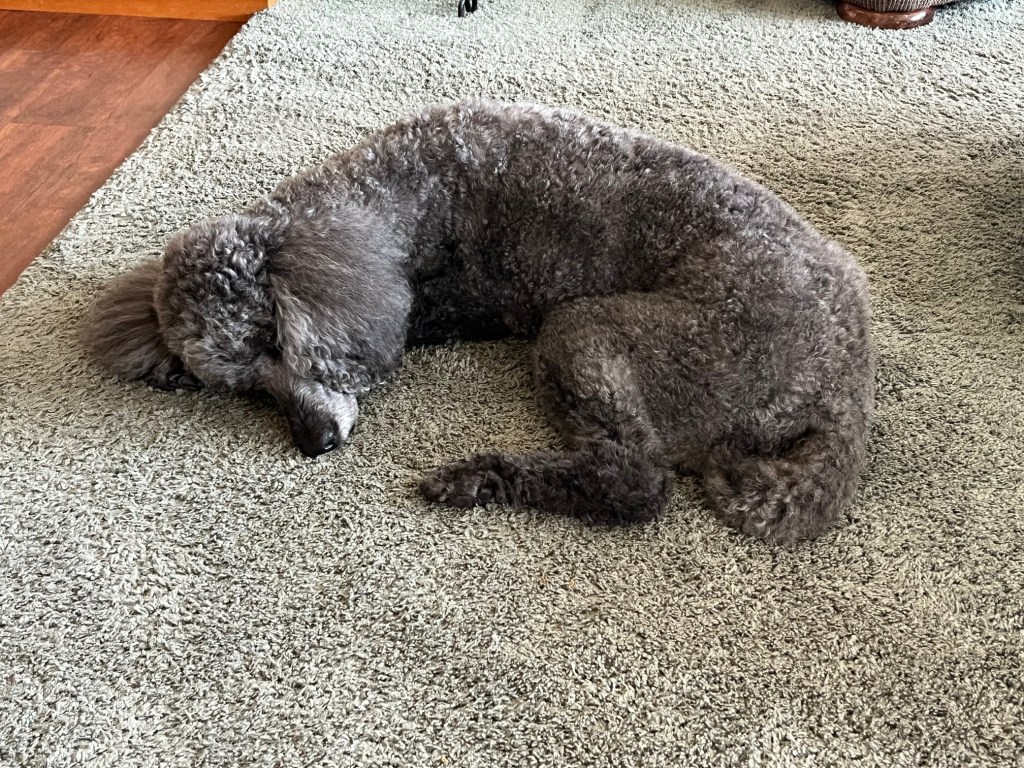
Ziva, resting this morning

A little over a week ago, my dog, Ziva, slipped on the wooden stairs that run along the side of my house. She didn’t just lose her footing, she fell down. When she got back up, she could hardly put any weight on her back left leg. She’s thirteen and a half years old, so injuries are disconcerting.

At the time Ziva fell, we were headed out for a walk with my four grandkids. I thought I’d have to carry Ziva back in the house, but after she took a few steps, her leg worked better, but walking wasn’t easy for her. I figured we’d just walk across the road and let her tinkle, then go back home. But the more she walked, the better her leg worked. She resisted my efforts to turn around and go home, making it clear she wanted to keep walking, just like an athlete shaking off a momentary ache before getting back in the game. We completed our short walk, and Ziva did well for the rest of the day.

Then on Sunday, she must have done something that tweaked her injury. She likes to prance and dance around when she’s excited, especially if she’s outside and we’re getting ready to go for a ride or if she sees a dog walking down the street. She was a little gimpy Sunday evening, but not too bad, and she still insisted we go for her after-dinner walk. When she woke up on Monday, she was back to her old self.

But on Monday afternoon, she tweaked her injury again, probably getting out of the van. Because not long after her ride to the post office with us, she once again struggled to walk around. She was obviously in pain. She ate supper, but she wanted nothing to do with her after-dinner walk. At first I thought she wanted to walk because she stood by the back door. So, I put her leash on, and we walked onto the back deck. But she refused to move more than a few feet beyond the back door. We went back in the house, and she stood in front of the microwave and looked up at her treat dish. Her message to me: I walked a few feet, now I want my treats. Happy that she had an appetite, and that she still enjoyed bossing me around, I gave her a half dozen small crunchy treats. After she realized she wasn’t going to get anymore, she went to sleep on her bed in the family room, where she stayed for the rest of the night.

Tuesday morning when Ziva woke up, she was her cheery, tail-wagging self. Her walking was back to normal, and she was interested in breakfast and her morning walk.

But Tuesday afternoon after prancing and dancing in the yard, Ziva reinjured herself. And this time was worse than the other times. She was in pain. She struggled to walk. Anytime she got up from the floor, she stood still for a couple of minutes, as if waiting to see if she could trust her leg to move forward and keep her upright. She wouldn’t wag her tail.

I called the vet’s office, and because there was a cancellation, I was able to get Ziva an appointment for Thursday morning. I couldn’t believe our good luck. It’s so hard to get a short-notice appointment at my vet’s because they have so many patients and not enough staff. A pet has to be in dire condition, and Ziva’s injury doesn’t meet that standard. Even the emergency veterinary hospital, which is open nights and weekends, wouldn’t want me to bring her in because they wouldn’t consider her critically ill. They would tell me she could be seen by her regular vet. And her regular vet would tell me that I could take her to the ER vet hospital when it opened. It’s a classic Catch-22 moment when this happens. So much so that it gives me pause about getting another dog.

On Tuesday night after her supper, Ziva never asked for a walk or her post-walk treats. After I took her outside to go to the bathroom, she climbed into her large, cushy bed on the family room floor and went to sleep. Throughout the afternoon and evening, she never once wagged her tail. I was glad she had eaten supper and that she drank water, but I wanted to see her poofy tail twirl in the adorable circles it makes when she wags it.

I tried to walk without Ziva. I walked down to the road and started to go left, but that’s usually the way Ziva and I go, which made me sad. Then I discovered I had my T-shirt on inside out, which distressed me. I wondered if anyone would notice because I knew if I went inside the house to turn it right-side out, I wouldn’t come back outside. I decided to walk the other direction, but I couldn’t do that either. I was too sad without Ziva. There are times I have walked without her, but that’s because it was too hot for her or because she was taking a big nap and I didn’t want to wake her. This time was different because she wasn’t able to come with me. I went back inside and turned my T-shirt right-side out. I picked up a book and sat down on the couch. While reading, I kept looking up to watch Ziva as she slept, hoping she was healing.

This morning Ziva was only slightly better. In pain and not trusting her leg, she walked slowly. But before she went outside to the bathroom, she wagged her tail and asked for a treat. My husband and I both gave a small cheer while Ziva ate her treats.

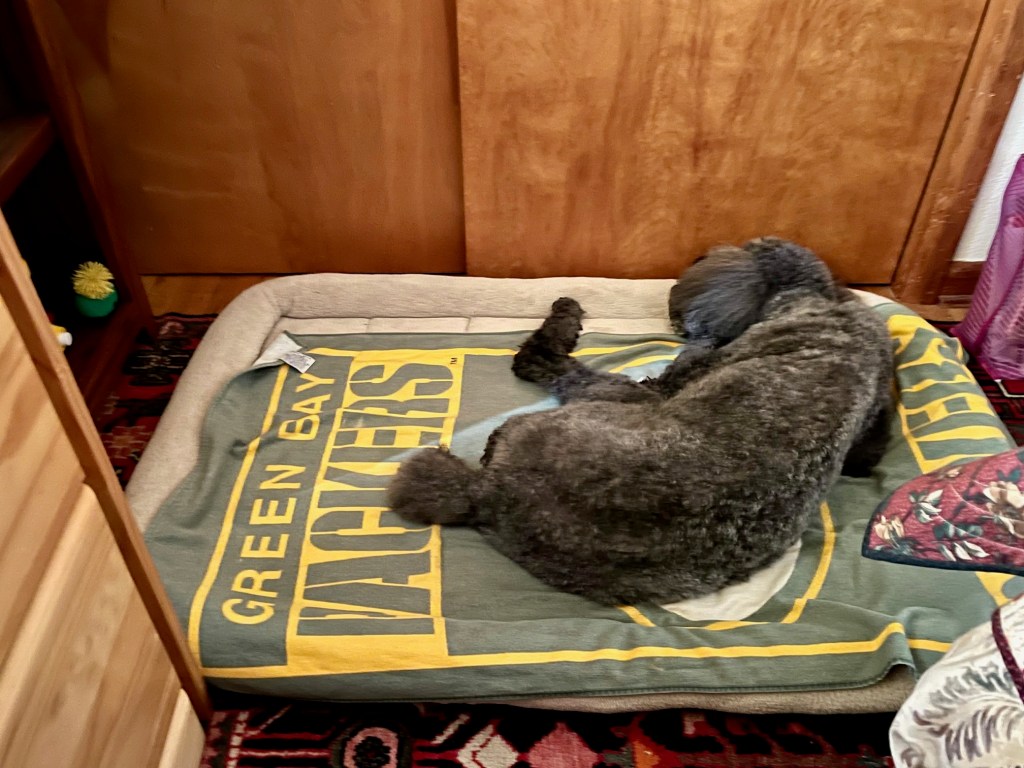
Today there will be no walks or car rides. Ziva won’t go outside unless someone is with her to make sure there is no prancing and dancing. After we see the vet tomorrow, we’ll know more, but continued rest will probably be part of the treatment. We are keeping an eye on her. She can hop up on the couch or the stuffed chair, but when she wants to get down, she looks to one of us for help. As I finish writing this, she is sleeping on her bed in my office. She often joins me when I write. She is a mama’s girl. And she is my Ziva Baby.

Ziva, sleeping and hopefully healing

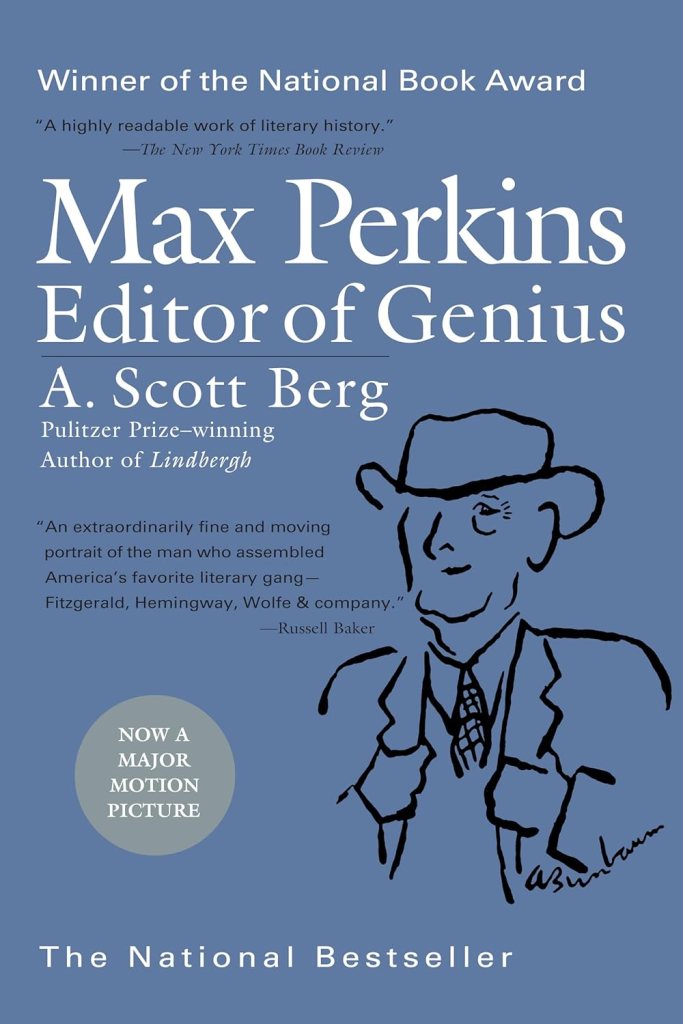
When a Friend Asks You, Repeatedly, to Read Max Perkins: Editor of Genius by A. Scott Berg

I love the title of this book because it plays two ways. When I decided to reread the book, I bought my own copy.

The first time I read Max Perkins: Editor of Genius, I did so because in the spring of 2019 my writing friend Milan suggested that I read it. He said it was a wonderful book. Then he kept following up with the question, “Have you read Max Perkins: Editor of Genius yet?” I felt bad when I had to admit that once again I hadn’t. So, in late fall I borrowed the book from the library and started reading it.

I did indeed love the book, but I never got the chance to talk about it with Milan.

Milan and I met through our local writers’ association, to which we both belonged. Before COVID the association held a gathering once a month at a local coffee house. As a person who was new to the world of writing, it was a great place for me to be in 2019. Not only did I receive lots of good advice, but it was a joy to be with fellow writers.

Every month the usual cast of writers, like me, showed up, and others came when they could. Milan came often. His enthusiasm for being with writers showed in his kindness, his warm smile, and easy laughter. He loved to talk about ideas, writing, social issues, education, and even his pickup truck when I wanted advice about trucks. Born in France, Milan had immigrated to the United States with his mother when he was a young teenager. He had written a fascinating memoir, Ma’s Dictionary: Straddling the Social Class Divide, about his life. He had a book deal with a French publisher, so at the time I met him he was translating his memoir into French, his native language.

Milan and me at the coffee house on a Saturday morning, 2019

Milan became my mentor. He asked to read my short stories, and he gave me encouraging feedback via email, which often arrived at three or four in the morning because that is the time of day when he worked on translating his memoir into French. It was always fun to wake up in the morning and find an email from him. Even nicer — he asked me for feedback on an essay he was writing.

The second week of December in 2019 was the last time I heard from Milan. I had sent him feedback on his essay, but he didn’t respond. Over the next couple of weeks, I sent two more emails but received no answer. That wasn’t like Milan. I figured maybe he had traveled to France for the holidays or maybe he had lots of company. I tried not to think about the fact he might be seriously ill or that perhaps he had died. I had never met any of Milan’s family, and other than email, I had no way to contact him.

On January 14, 2020, I sent Milan another email but again received no response. I started checking the online obituaries every few days. Perhaps that sounds morbid, but if Milan had died, I wanted to know. In March his obituary posted. He had died on March 6, 2020, at the age of 78. I’m assuming because of the time lapse between his last email to me and his death that he’d become seriously ill before he died.

I had known Milan for almost a year. We saw each other about once a month at the coffee house gatherings. And I had attended a couple of community outreach discussion groups he had facilitated regarding his memoir and the social issues it touched upon. After reading about his passing, I was so sad. I’d lost a friend, a fellow writer, and a mentor. Milan had once said that he loved to visit with me because I could talk about ideas. It was such a nice compliment. Talking about ideas was also one of the reasons I enjoyed his company so much.

I finished reading Max Perkins: Editor of Genius shortly before Milan died, but we would never talk about the book. I would never know why he liked it so much or why he kept insisting I should read it. Instead, the book became an unfinished conversation between Milan and me.

I recently reread the book about Max Perkins. My second reading of the book was prodded by a conversation with someone about a well-known writer (who was five years old when Perkins died) and his strained relationship with his editor. At the heart of the conversation was the question: How much can an editor intercede in a piece of writing before a line is crossed and the work becomes not just the writer’s but rather almost a collaboration? This conversation reminded me of the working relationship Thomas Wolfe had with his editor Max Perkins.

Because A. Scott Berg had access to hundreds of letters between Wolfe and Perkins, he was able to write about their often-tumultuous writer-editor relationship. In his book, Berg details the massive manuscripts Wolfe presented to Perkins, and Perkins’s long hours of work with Wolfe to pare them down into manageable books. (Perkins always stated that any suggestions he made to Wolfe were always subjected to Wolfe’s complete approval.)

Berg also included the opinions of some literary critics who believed Wolfe should be able to revise his own work from a rough draft into a cohesive and readable novel without extensive help from an editor. And because Wolfe couldn’t seem to do that, the critics had questions about his overall abilities as a novelist. Eventually, this caused a rift between Wolfe and Perkins, with Wolfe leaving Scribner’s for another publishing house and a new editor. Wolfe wanted to prove the critics wrong.

It’s commendable that Berg never takes sides on either the question of Wolfe’s writing ability posed by literary critics or Perkins’s role in readying Wolfe’s work for publication. Instead, Berg presents Wolfe’s and Perkins’s letters, the accolades and criticisms by others, and the events of Wolfe’s leaving Scribner’s without interjecting his own point of view. It’s up to the reader to form an opinion. I’m sure Milan would have liked to discuss Wolfe and Perkins.

I can’t say for certain what else Milan may have liked to discuss, but I’m sure there would have been lots. Berg’s book is well researched and well written. He does an excellent job of presenting information about Perkins and the many writers Perkins worked with, such as F. Scott Fitzgerald, Ernest Hemingway, Thomas Wolfe, Nancy Hale, Marjorie Kinnan Rawlings, Taylor Caldwell, and other fine writers of the 1920s through the 1940s, many of whom are still well known today.

I wish I would have read Berg’s book when Milan first suggested it to me. We would have liked talking about Max Perkins and the many writers he worked with during his editing career. I miss Milan, and I miss the conversations we never had.

_____________________________________________________________

[In 2016, A. Scott Berg’s book was made into a movie called Genius. I haven’t seen the movie, but it has some A-list actors in it. I don’t always like seeing movies based on factual events because Hollywood favors dramatic scenes over reality, but I might make an exception and watch this movie because it appears to stick to the facts better than some biographical dramas. However, overall critics panned the movie, so maybe I won’t. For information on the movie’s historical accuracy, click on Genius: History vs. Hollywood. For a synopsis of reviews by movie critics, click on Genius (2016 film).]

Playing Chess with My Grandson

I taught my ten-year-old grandson Michael to play chess about six months ago. We sat at my kitchen table and played lots of games. I won them all. It never crossed my mind to let him win. I enjoyed feeling like a Grandmaster chess player, even if I was beating a ten-year-old child who’d never played before. Chess is a tough game. If he was going to learn to play, he needed to pay attention to the whole board and think beyond his current move, something I knew he would eventually do better than I ever could.

But a Grandmaster I’m not. I liked chess as a child, but I stopped playing when I was about thirteen. I was no good at the game because I could never think beyond a couple of moves. I never learned the higher-level strategies. I never thought or talked about the board in terms of numbers and letters. When I played against my sister or neighborhood friends, I won occasionally, but as I got older, my game didn’t mature, and I lost a lot of games. For me chess was no longer fun. I hung up my pieces and moved on.

So, when I sat at the kitchen table six months ago, beating my grandson in game after game, I enjoyed it because I knew it wouldn’t last. He is good at puzzles and games. He can read diagrams and build three-dimensional objects from many types of building sets. He can skip the directions and design his own creations. He watches YouTube videos to learn how to do things.

My grandson is eleven now. He has been playing chess with friends and watching friends play chess. He has learned some strategies. He thinks about his moves before he makes them. He thinks two or three moves ahead. I’ve started playing chess with him again.

We play in the front living room. He sets the chess board up on the coffee table and pulls up the ottoman. I sit opposite him on the couch.

Words between us are few. Chess is a quiet game. We watch each other contemplate moves. We think about our next moves. We work on seeing the whole board. There is no room for small talk. Sometimes one of my younger grandsons will come up to us and start talking. I put my hand up and say, “Michael and I are playing chess, and it takes all of our concentration. We can’t talk and think about the game at the same time.” They stop mid-sentence and back away, but in five minutes or less, one of them will forget and try to talk to us again.

My chess-playing grandson and I are evenly matched, for now. Our games last around twenty minutes. It’s a coin toss as to who will win. I give the game my all, but I don’t care if I win or lose because the victories are never lopsided. But I suspect in another year or two, my grandson will have upped his game again. My only strategy against him might be that I have no strategy, thereby creating chaos on the board.

My favorite part of playing chess with my grandson is the quiet camaraderie we share as we stare at the pieces and the board, each of us trying our best to win. And with four grandkids in the house, it gives me the perfect excuse to be left in peace and quiet for twenty minutes in the afternoon. I tell the other grandkids that barring an emergency, I’m not to be disturbed. And if they try, I hold up my hand and repeat, “Michael and I are playing chess.”

Memories don’t always have to be filled with words.

Between the Covers, a Bookstore in Harbor Springs, Michigan

Between the Covers, Harbor Springs, Michigan

Between the Covers is a charming bookstore in Harbor Springs, Michigan. A quaint summer resort town, it harkens back to the days when wealthy and moderately wealthy men put their families on trains and sent them to Petoskey, Harbor Springs, Charlevoix, and surrounding towns in order to escape the scorching heat and noxious smells found in urban areas such as Detroit and Chicago, keeping them safe from the dank, rancid city air. The men joined their families during vacations or for long weekends.

The trains that shuttled families back and forth have disappeared. And the numerous resorts which once existed have dwindled, replaced by individual homes and cabins. But families still flock to the towns in the northern part of Lower Michigan, which nestle along Lake Michigan, Lake Walloon, Lake Charlevoix, and many other sparkling lakes and rivers. My mother lives in Petoskey, and I love to visit her. When I do, I trek through my favorite towns, always visiting my favorite bookstores, one of which is Between the Covers.

There’s a lot to like about Between the Covers. It’s clever name. The elegant off-white brick building. The large storefront windows. The knowledgeable and friendly staff.

And their colorful edges
The journals I bought

Inside the store exposed rosy-brown brick walls give the interior a warm glow. Colorful books, like tasty pieces of bright candy, wait to be purchased and savored. There are beautiful selections of cards and stationery. A large selection of lovely journals invites writers to take one home and fill its pages with musings. As a writer, journals, like books, call to me, and just as I have books I will probably never read, I have journals I will probably never use. On my recent visit to Between the Covers, I bought three journals (but one is for a friend), a box of owl-themed stationery, and two books.

I bought a mystery for my mother and James by Percival Everett for me. I finished reading James yesterday. I loved the book. Before I read it, I listened to Huckleberry Finn. I’d already read it five times, the first when I was in middle school, the last time when I was in my forties. I wondered if my opinion of Mark Twain’s novel would be diminished by the years gone by, but it was not. I was struck once again by the biting satire Twain dishes up, mocking the ignorance and arrogance of whites and their participation in slavery and the institutionalized racism which perpetuated slavery and which continues to perpetuate discrimination.

I like to buy books from wonderful independent bookstores when I’m on vacation. The books become tangible memories of place, people, and good times, especially when I love the stories that live between their covers.

.

Short Story Club Idea for Writers or Nonwriters Who Love Literature

Delicious coffee cake paired with a cherry blossom latte from our favorite coffee shop. Note the wonderful cherry in the cup.

During COVID, I joined a book club at the library. We met in the evening once a month on Zoom instead of the library. It was the first and only book club I’ve ever belonged to, and it was perfect for the times. Because lockdowns meant I couldn’t work, I had extra time on my hands. I tried to write, but I was too anxious to produce much of anything. But I could read, so I looked forward to each Zoom gathering and the chance to meet with fellow readers who also loved to discuss books. At the end of each discussion, it was nice to “leave the meeting” and not have to get in my car and drive home. Best of all, I felt that reading and discussing books would help me grow as a writer, even if I couldn’t write. Later, I would hear other writers talk about their struggles to write during COVID. But when the lockdowns ended and the book club returned to meeting at the library, I dropped out.

I missed talking about books with fellow readers, but I also wanted something that was more focused, tailored to me as a short story writer. Then, I read an article by an essayist who said she and a couple of her fellow essayists liked to read the same essays written by well-known writers and discuss them. They looked at tense, point of view, structure, pacing, use of literary devices, and anything else they wanted to discuss. I attended writing webinars where instructors used mentor texts to model whatever writing technique they were teaching. I came up with an idea: Why not a short story club? One that would focus on the writer’s use of all the literary techniques in a writer’s toolbox.

So, I talked to a friend of mine who used to teach AP English. Because I knew he loved to discuss literature and because he was a busy guy, I figured he’d love the idea of a short story club. He did.

We take turns choosing a short story and meet up every five to six weeks at a local coffeehouse. We discuss anything and everything about the writer’s techniques. I learn a lot and my hope is that I will become a better short story writer. (Maybe I should call this my Coffeehouse MFA.) I know that much of what we discuss will end up in my writer’s toolbox, perhaps to be incorporated in some manner in one of my future stories. My friend hopes to write when he retires, so he is adding to his toolbox too.

If you want to form your own short story club, here are some ideas to get you started:

  • Take turns picking the short story. Be adventurous. Cover different time periods and genres and cultures. If someone ends up not liking a story, at least it’s not a whole book.
  • Read the story at least twice. I read a story a few weeks before we meet up, then again a day or two before our meeting.
  • Make a paper copy of the story so you can annotate, highlight, and underline. (My colored erasable ink pens get a workout!)
  • Meet up at a local coffeehouse, so no one has to worry about hosting (or cleaning his or her house or baking the treats).
  • Make time to visit before and after you discuss the short story. It’s fun to catch up with friends.
  • Depending on the size of your group, allow an hour to an hour and a half.
  • My short story club consists of two people, but you can go bigger.

Short stories we’ve read so far:

“Sonny’s Blues” by James Baldwin, “Virgin Violeta” by Katherine Anne Porter, “The Third Thing That Killed My Father Off” by Raymond Carver, “The Wilderness” by Ray Bradbury, “Tomorrow in Shanghai” by May-Lee Chai, “A Trifle from Life” by Anton Chekhov, and “Warpath” by Jeffrey Masuda.

***

My two favorite books from my book club days:

A five-star book

Red at the Bone by Jacqueline Woodson. Shortened synopsis from Amazon: As the book opens in 2001, it is the evening of sixteen-year-old Melody’s coming of age ceremony in her grandparents’ Brooklyn brownstone. . . . But the event is not without poignancy. Sixteen years earlier, that very dress [now worn by Melody] was measured and sewn for a different wearer: Melody’s mother, for her own ceremony — a celebration that ultimately never took place. Unfurling the history of Melody’s family – reaching back to the Tulsa race massacre in 1921 — to show how they all arrived at this moment, Woodson considers not just their ambitions and successes but also the costs, the tolls they’ve paid for striving to overcome expectations and escape the pull of history.

For an informative podcast (and to wonder, Why isn’t this taught in school?) listen to Blindspot’s Tulsa Burning. Listen to the podcast first. If you understand the horror of what happened in Tulsa, you will have a greater appreciation for Woodson’s powerful novel.

Also, a five-star book

It Takes One to Know One by Isla Dewar. My reading of this book was a happy, very happy accident. The book I was supposed to read was It Takes One to Know One by Susan Isaacs, which is a crime thriller. I didn’t make note of the author’s name, so when I ordered the book, I bought the wrong one — a wonderful mistake.

I loved Dewar’s take on the title. Her book is downright funny, even though the humor sometimes comes from a place of sadness and longing. The book is not a crime novel, but there are some small mysteries that need unraveling. Dewar is a Scottish novelist, and authors from the British Isles do the type of humor I like so well. Perhaps living on small islands in very changeable weather, and being surrounded by eerie and unearthly beautiful landscapes, and being subjected to numerous invasions and attempted invasions since the Roman Empire, makes one cultivate a sly, irreverent sense of humor in order to appear unflappable.

My son, who rarely reads fiction, read this book and laughed out loud. My daughter-in-law also loved it.

Listening to Oliver Twist While Driving across the Upper Peninsula of Michigan, and Other Thoughts about Charles Dickens

I listened to this recording. Flo Gibson did an excellent job.

I recently drove to Petoskey, Michigan, to see my mother, then five days later drove back again. I always listen to books on CD when I drive to my mother’s. I visit my local library and check out more books on CD than I will need for the round-trip ride because on rare occasions, I start listening to a book and either I don’t like it or I don’t like the reader’s voice. Because I specifically wanted to listen to Oliver Twist, I played that first. I liked the reader’s voice, which was a perfect pairing for such a tale as Oliver’s story. And, I liked the Dickens novel well enough, so I kept listening.

During my twenties I read mostly British literature written before 1900 — Dickens, Daniel Defoe, George Elliot, Thomas Hardy, Jane Austen, William Makepeace Thackeray, Sir Arthur Conan Doyle, and the Bronte sisters, among others. I like to refer to that as my “early Brit-lit phase.”

Oliver Twist has many of the elements found in the Dickens novels that I so enjoyed when I read them in my twenties. The secondary characters are interesting, quirky, and sometimes so delightfully nasty that I truly enjoy their downfall. The plot threads are complex and engaging — twisting, turning, separating then rejoining, surprising me, yet making me sigh, “But of course!” There are the Dickensian themes of poverty, cruelty, and snobbery. The heroes have to rise above their circumstances, like poverty or the sins of others, which they are blamed for and held in contempt for, even though they’ve had no part in the events that have befallen them. And, of course, there are the good-natured, kindly characters who help along the way. But in Oliver Twist, the good, especially the women, are portrayed as sainted angels upon the earth — too good to walk upon the lowly soil. But thankfully, for the long-suffering Oliver, it’s beneficial they do because they are able to discern in Oliver all that is noble and good and become his staunch allies. (I guess one sainted person can always recognize another.)

I didn’t, however, like Dickens’ portrayal of Fagin, the criminal ringleader. Fagin is Jewish, and Dickens hammers that point over and over again, continually referring to Fagin as the Jew, rarely using his name Fagin. It wasn’t necessary to describe the character as Jewish because Fagin’s religious or ethnic background has no bearing on the story. It’s a racist stereotype.

On the other hand, Dickens’ novels often exposed the wretched conditions faced by the poor. I was struck by the theme of poverty in Oliver Twist and how relevant it is today. Characters could be arrested for sleeping in doorways. Adults and children in the workhouses and poorhouses were overworked, underfed, and mistreated by the people who ran those “charitable” institutions. The poor were labeled lazy and stupid, and believed to be one step away from a life of crime. By creating one narrative — that all poor people were undeserving — society could dismiss the poor with one wave of its hand and justify their mistreatment. With his fiction, Dickens spoke on behalf of the poor and forced Victorian society to face a harsh truth. But sadly, we haven’t come far. As I listened to Oliver Twist, it struck me that those same prejudices and stereotypes are still being repeated — this time about the poor and homeless in our current society.

I’ve read eight of Charles Dickens’ novels, and the one I rank as his best is Great Expectations, which was serialized from 1860 to 1861 in a weekly publication. The story of Pip and his rise and fall lacks the full-on sentimental mush found in Oliver Twist (although a bit of sentimentality can be found). Pip is a much more complex character, whose desires and dreams get in the way of his own happiness and cause heartache to those he loves. Pip’s growth as a person and his final realization and acceptance of his faults is a much more nuanced and mature story than Oliver Twist, which was written and serialized from 1837 to 1839. I’ve read Great Expectations twice, and I’ve listened to it three times. Each time I revisit the novel, my appreciation for the genius of Great Expectations grows. I think Dickens was truly at the height of his story-telling prowess when he penned Pip’s story. I plan to read more of Dickens’ novels, so if I change my mind, I’ll blog about it.

Others choose A Tale of Two Cities as Dickens’ best, but not me. I tried reading that novel twice in my twenties and didn’t finish it either time. A few years ago, I started listening to it on tape. I thought I might appreciate it more as an older adult. Nope. I was ready to stop less than halfway through because my aging hadn’t improved the novel. But my son called one night when I was out walking my dogs, listening to A Tale of Two Cities. Turns out he didn’t like the novel either, but he read the whole book anyway. “Well,” I told him, “if you can take it, I can take it too.” And I finished listening to it. But I didn’t grow to like it. A couple of years ago I started reading The Old Curiosity Shop, but I couldn’t finish it. Partly because the character Daniel Quilp is the most evil and vile character I’ve ever come across in a book. (Granted I don’t read horror books or stories with serial killers.) And partly because I couldn’t stand the unrelenting suffering Little Nell faces.

But Dickens is one of my favorite authors. He is a master of dialogue, irony, humor, satire, social commentary, melodrama, metaphor, and characterization. His memorable characters spring to life from the pages of his books. This, along with his delectable plots and vibrant dialogue, makes his stories perfect for dramatization as miniseries and movies.

I also like The Pickwick Papers, David Copperfield, Hard Times, and A Christmas Carol, which I read or watch every Christmas. In a month or so, I want to listen to David Copperfield, which I read about forty years ago, because I have a copy of Demon Copperhead by Barbara Kingsolver on my to-be-read pile. I loved David Copperfield when I first read it. But I wonder — after reading it again — if I will I rank it with Oliver Twist or Great Expectations or somewhere in between.

***

If you’re a writer . . . you might want to read some Dickens to appreciate his characterization and dialogue. When it comes to creating characters, especially secondary ones, Dickens’ motto could be “Go bold or go home!” Characters like Uriah Heep (a bad guy) and John Wemmick (a good guy) capture the imaginations of readers. Reading Uriah Heep’s dialogue makes my skin crawl.

Dickens’ dialogue can be satirical, duplicitous, menacing, sentimental, comical, and heartfelt. Every time I read Great Expectations, I marvel at how Dickens distinguishes between Wemmick’s office and home personas. Wemmick’s transformation by degrees as he leaves his employer’s office and walks home is mesmerizing. Wemmick’s mannerisms, opinions, and especially his way of speaking undergo a radical change. Wemmick knows he must be one man at work, but that he can be another man at home.

Photograph as a Collection of Stories

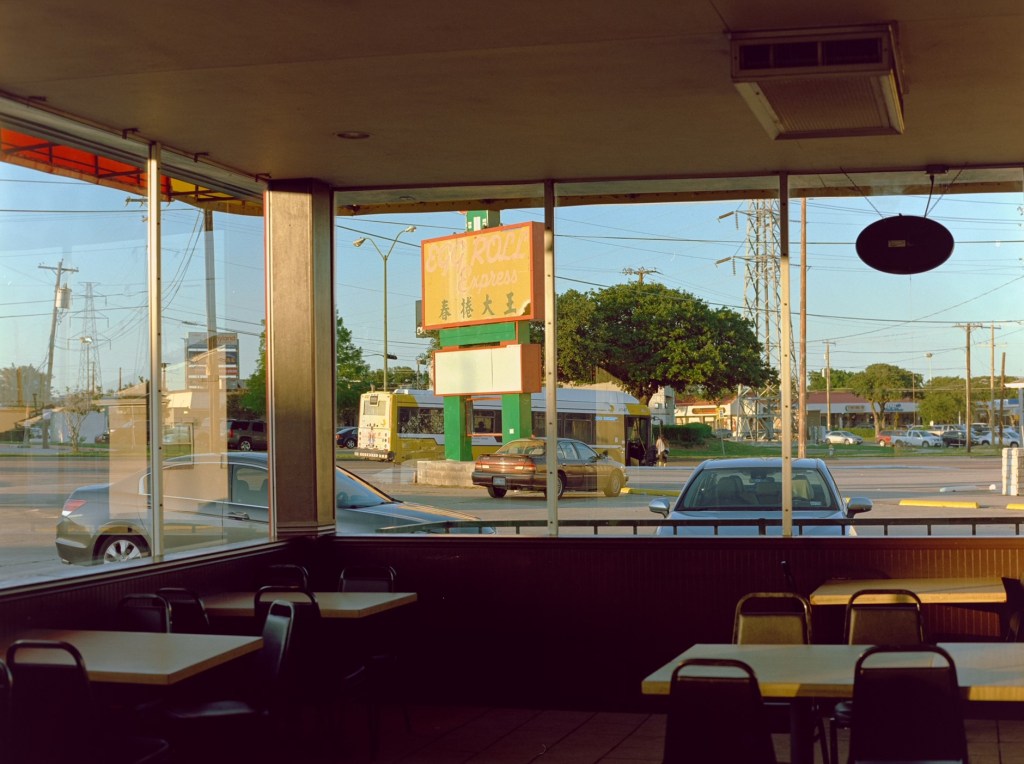
Photo: Max Youngquist, 2024
Instagram @maxyoungquist

My nephew took this picture. He said that at first he wasn’t very impressed with the photo, but after looking at it for a while, he started to think it wasn’t bad.

I fell in love with his photo from the moment I saw it. “This photo,” I told him, “is full of stories.”

Some photos capture the beauty of a bird on the wing, or a sunset over an ocean, or a flower in the breeze, or a Japanese tea set at rest on an oak table. Those photos can be works of art, and we love them for their composition, study of light, and subject matter, but they are not a story in themselves, though they may evoke one.

My nephew’s photo is a story — even more than that — it’s a collection of stories. “This” I said, “is the kind of a picture a photojournalist takes because he or she is telling a story about a place or event or people.” Then I told him about all the stories I saw in the photo.

My nephew is a wonderful photographer. I love his work. I love to listen to him talk about his digital and film cameras. He develops both black-and-white and color film. He speaks of camera settings, film speeds, and film brands. Focus, depth of field, and lighting. And I understand enough of it because I took art photography and photojournalism classes in college, enough of them to minor in photography, if I’d only been willing to take an art history class. I loved photography, but not enough to make it a passion or career. Today my camera phone is all I need. But my nephew’s eyes are lens, always framing a shot. He has developing fluid coursing through his veins. And like a true artist, he experiments.

And with this photo, he has inspired me. I’m composing a story set inside of this moment he captured.

Photograph as a collection of stories.
Tales about inside and outside, darkness and light, illumination and shadow. Stories of three cars pointed toward different journeys, a bus releasing and corralling commuters. Glassed reflections recounting illusions, faded signs whispering of past triumphs and failures.

Photo by Max Youngquist

[Max asked me to write a blurb about his photo to post on Instagram. What I wrote is in the photo’s caption. You can see Max’s work on Instagram @maxyoungquist]

A Morning at Sax-Zim Bog in with the Grandkids

The John C. Gale Boardwalk, part of the Taiga Boardwalk built in autumn 2023

Last week I took my four grandkids to the Sax-Zim Bog in Toivola, Minnesota, appropriately located on Owl Avenue. (It’s a good place to see northern owls.) The drive from my house was one hour and four minutes. (Thank you, GPS.) The grandkids brought library books and their adventure bags, which are filled with postcards, maps, compasses, binoculars, auto bingo, bird books, and other adventuresome stuff. We weren’t one minute from my house when the three youngest grandkids took up an intense game of auto bingo, searching for cows, horses, ambulances, no parking signs, and billboards. However, by the time we were far enough out of the city to see cows and horses, the bingo game had blown over.

Of course, there is always one grandkid who wants to know: How far? How many more miles? Are we halfway there yet? Have you ever been here before?

We arrived at the bog’s parking lot about eleven o’clock. It was 52 degrees and sunny, with a slight breeze — perfect weather for walking through an old bog. But we were glad we’d worn sweatshirts over our T-shirts.

The Sax-Zim Welcome Center was closed, but we met a volunteer coming out of the building who looked like part of an illustration from a Jan Brett book. He kindly answered my questions about the trails because we wanted to walk on the new Taiga Boardwalk built last autumn.

Grandkids on the Taiga Boardwalk

Shortly after we started down the trail, a loud clattering commenced. I wondered, “What kind of bird is that?” Then I discovered two chattering squirrels chasing each other up and down tree trunks and across fallen logs at breakneck speeds like a pair of NASCAR racers. “Those are fox squirrels,” Michael, 10, said. “My grandma has them at her house.” His other grandparents live in rural central Minnesota. But, according to a post on the Friends of Sax-Zim Bog Facebook page, we most likely saw Red Squirrels. They are highly territorial, and one of them probably invaded the other’s space, which would explain their loud scolding sounds and serious chasing behavior. Whether fox squirrels or red squirrels, they were fun to watch.

As we walked through the bog’s forest, I thought about The Hidden Life of Trees by Peter Wohlleben, a book I recently finished reading. I learned a lot about trees and forests. True forests are diverse and interconnected in an amazing cycle of life and death, filled with competitiveness and cooperation, and home to a large variety of insects, animals, and other plants. Forests grown for harvesting are nothing of the sort.

Walking along the trails of the bog, we saw different species of trees. New trees, only inches tall, grew under the branches of old trees. Unless the old tree dies, most, or perhaps all, of the baby trees we saw won’t make it to adulthood. Some standing trees looked nearly dead, waiting for their turn to fall to the forest floor. Tree trunks that had already fallen lay on the ground in different stages of decay, providing habitat for other creatures.

Steeped in tranquility, the breathless silence of the bog held no traffic or city noise. No planes droned overhead. Occasionally, the peaceful quiet was accompanied by the chirps and calls of birds and squirrels, which like the silence, belonged to the forest.

The Taiga Boardwalk loop is short, but it’s not meant for serious hiking. It’s a trail where visitors take their time, stopping to look for birds and animals who are masters at blending into the forest. When we finished the Taiga trail, we weren’t ready to leave the bog, so we walked a different, smaller loop. We still didn’t wanted to leave, so we walked the Taiga again.

On our second trip around the Taiga trail, Evan, 7, got down on his hands and knees, peered through the slats on the boardwalk, and said, “I see why they built this. There is water down there.” I’d told them the boardwalk was built to help keep people’s feet dry.

Charlie points at the common redpoll on the cover of his trail map. He said he just saw one, and he might have. Before we left the bog, another volunteer told us a redpoll had been spotted that morning.

We didn’t see any owls, but in addition to the red (or fox) squirrels, we saw chickadees, and Clara,12, spotted a black-back woodpecker.

After we finished walking the trails, my youngest grandson Charlie, 5, gave me a hug. “Do you know why I gave you a hug?” he asked. He didn’t wait for an answer. “I gave you a hug because you brought me to this bog.” I think Charlie felt what I felt: a pervasive peacefulness. As I walked through the bog, I felt a sense of increasing serenity. In The Hidden Life of Trees, the author mentions studies that show people have reduced stress levels after walking through old-growth forests. I have no data to prove that is what happened to me, but I certainly felt calmer than when I’d arrived.

Holding our trail maps, Sax-Zim Bog calendars, and warm memories, we got in the van and buckled up. I was about to start the engine when Clara pointed out her window and said, “There’s a butterfly in the parking lot.”

The butterfly, a Compton Tortoiseshell, sunning itself before the pickup entered the lot.

Having recently finished reading Bicycling with Butterflies by Sara Dykman, I had to get out of the van and have a look. As I was snapping pictures of the butterfly, which wasn’t moving much, a red pickup truck pulled into the lot. The only open space for the truck to park happened to be where the butterfly was resting, and the driver wouldn’t have been able to see it. Squashed butterfly, I thought. I walked toward it, and it fluttered a few feet, but in the wrong direction. Coming from another angle, I walked toward it again, and it flew another few feet, but this time it landed out of harm’s way.

The red truck parked without crushing the butterfly. Perhaps it wouldn’t have needed me to save it. Maybe it wouldn’t have been run over, and it would have flown away from the truck instead of into it. But I’m glad I didn’t leave the butterfly’s destiny to fate.

The grandkids and I left the bog and headed back to the city. As I drove down the county roads, they flipped through their calendars, enjoying pictures of the beautiful wildlife who make their homes, for at least part of the year, at the Sax-Zim Bog.