The Answer to August Tenth’s Question: It’s a Tussock Moth Caterpillar (And a Connection to a Kate Moore Book)

On August 10, I posted a picture of a caterpillar that looked like it had been assembled by a young child with a vivid imagination.

One reader said that it looked like a wet Tussock Moth caterpillar. At first, I thought the word wet was part of the caterpillar’s name. Then I realized I’d been hosing dirt off the lower part of my house’s foundation. The caterpillar rested about five feet up, but the mist from the hose gave it a shower, making it look even more fanciful than when it’s dry. A few days later, another reader also identified the caterpillar as a Tussock Moth. (There are about thirty different varieties of Tussock Moths.)

To watch a video about White-Marked Tussock caterpillars and moths, click here. Note: In this video the Tussock caterpillar is crawling on a person’s finger and hand. Because the caterpillars release toxins to discourage being eaten by predators, humans handling the caterpillars could experience itching and burning after touching them. I’d say it’s best not to touch. To learn more about Tussock Moths and see a picture of an adult version, click here.

Tussock caterpillars eat the leaves of a wide variety of trees, bushes, and other plants. They have voracious appetites, sometimes leaving trees bare. Although I’m sure no one wants to see the leaves on their trees disappear, people need to keep in mind that because Tussock Moths are native to their North American habitats, they are part of a balanced ecosystem. So, Mother Nature has an answer for Tussock Moths when they become too numerous — a virus outbreak among the species causes their numbers to drop, and that gives trees a chance to recover. However, some trees will die or be weakened and become more susceptible to other diseases and pests. As part of their ecosystem, Tussock Moths also face predation from native species found in their habitat: some birds, insects, bats, and small animals will eat Tussock Moths in their various stages of development.

While some types of trees can better withstand hungry Tussock caterpillars, other trees, especially conifers, are more susceptible to destruction. If you notice the leaves disappearing off your deciduous or coniferous trees, it might be wise to seek advice from several reliable sources.

On a literary bent, and because I often make connections to things I’ve read . . .
While watching the video on White-Marked Tussock Moths, I learned female White-Marked moths are either wingless or nearly wingless, as are most Tussock Moth species. They will never take flight. The male will find them, mate with them, then fly away to mate with other females. The female will lay her eggs and die shortly after. That’s it. She will never experience flight. Now, I know Mother Nature has specific ways of providing for the continued survival of each species, and I know I’m anthropomorphizing the White-Marked Tussock Moth, but I felt for the female moth who would never fly.

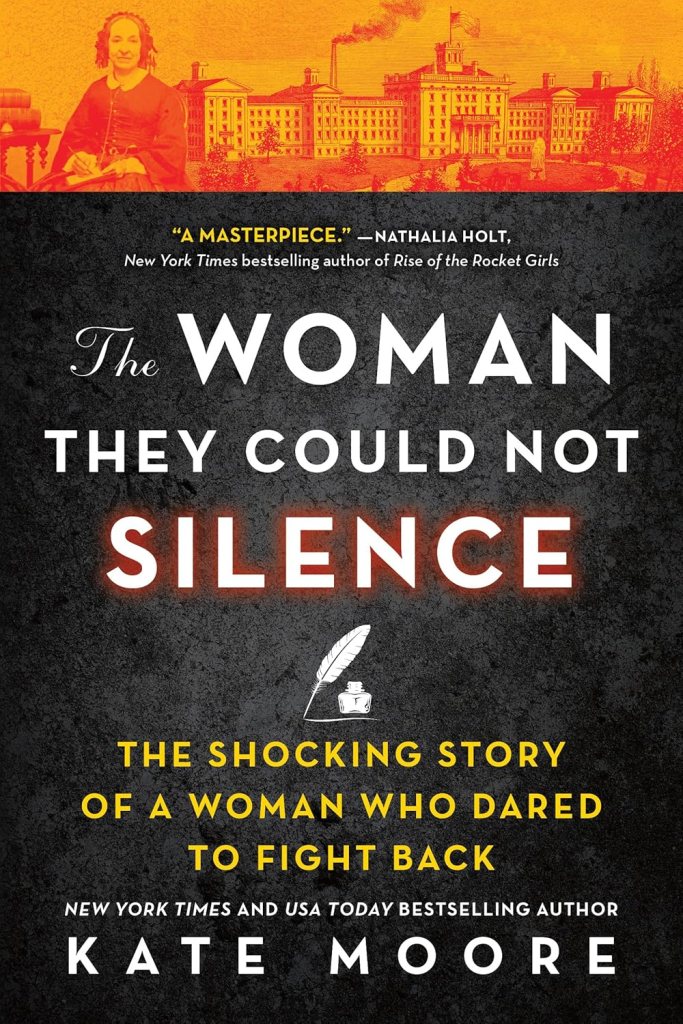
As I watched this video, I immediately thought about Kate Moore’s nonfiction book The Woman They Could Not Silence: The Shocking Story of a Woman Who Dared to Fight Back. In her book, Moore tells the story of Elizabeth Packard who is married to Theophilus Packard, a minister, and the mother of five children. It’s 1860, and after twenty-one years of marriage and being told what to think and say, Elizabeth dares to spread her wings and fly. A deeply devout woman, she begins to question some of her husband’s church’s teachings. She writes essays about her doubts and concerns. Theophilus tells her to stop, but she won’t because she believes she is a separate person from her husband and entitled to her own thoughts and opinions.

Outraged, Theophilus has Elizabeth declared insane and committed to the Illinois State Hospital in Jacksonville, Illinois. Shockingly, because Elizabeth is his wife, and because the state of Illinois allowed it, Theophilus is able to have her locked up simply on his say-so. After Elizabeth is placed in the state hospital, she discovers she isn’t the only married woman to have been declared insane by a husband who wanted his wife out of the way. Ironically, if Elizabeth and the other women had been single, it would have taken a jury of six people to agree they should be committed.

Through Elizabeth Packard’s powerful story set in the second half of the 1800s, Kate Moore explores the second-class status of women, the abysmal conditions in state hospitals, and the arrogant doctors and medical staff who professed to be experts in psychology, but who truly did great harm to the people they should have protected. Moore also talks about the people who, along with Elizabeth, worked tirelessly to change attitudes and laws to give women more rights and to reform state hospitals.

I’m just going to say it — Hey, Mother Nature, how about giving the female Tussock Moth wings?

Stumped by Nature. Can You Help?

Dear Readers,

Yesterday I was outside perusing my newly refreshed gardens, which surround the front, side, and back of my house, daydreaming about what types of perennials I could plant to attract more pollinators.

Nature is amazing! Note: the black spot to the lower left of the caterpillar is a stain on my siding.

While thinking about milkweed, wild geraniums, wild columbine, and plants whose names I’ve yet to learn, something on the siding caught my eye. It was a caterpillar — like nothing I’d ever seen before.

Adhering to my policy of not touching insects or critters, for both their safety and mine, I left it alone. But I did run back into my house to grab my camera, which also doubles as my phone. I snapped a few pictures, and submitted one of them to my iNaturalist app. The results were simply stated as “unknown.”

To me the caterpillar looks like something one of my young grandkids would engineer out of odd pieces of Legos or draw and color on a blank sheet of paper, producing something otherworldly and fantastical, but in no way realistic.

So, I am asking if any of my readers knows what type of caterpillar this is and what it turns into.

Thanks!

Something Published: Duluth Monarch Buddies: Helping Monarchs One Waystation at a Time

My article “Duluth Monarch Buddies: Helping Monarchs One Waystation at a Time” appears in the June issue of Northern Wilds. To read my article, click here, and turn to page 22.

I’m particularly proud of this article because it focuses on pollinators, such as monarchs and bees. With the current threat to our national forests and programs designed to protect our environment, there are ways we as individuals can help make Earth a better place. Plant a pollinator garden, ditch the use of pesticides, plant a tree, learn about the natural world around you, and connect with organizations like Duluth Monarch Buddies to learn how you can be a power of one in the protection of our planet.

Northern Wilds also published my short article “Capt’n J’s Mini Golf: A Treasure Chest of Fun on Barker’s Island.” To read my article, click here, and turn to page 7.

It’s National Moth Week

So I’m reposting my blog about the American Dagger moth which originally posted September 24, 2021. In addition to being an important part of the food chain, moths are important pollinators too. To read more about why they should be respected and protected read: Bees Get the Glory, But Moths Are Also Key Pollinators, Study Says

To read about my discovery of an American Dagger Caterpillar in my front yard, click below.

And may the moths have a great week!

Mayflies: A repost from August 2021

I’m reposting this blog about Mayflies because it continues to be read. Last summer and this summer it has received occasional views from people in North America, Europe, and Asia. Perhaps it’s just bots finding the article, but I like to think that an actual person has searched “mayflies” and found my blog. I enjoy writing about backyard nature, and I’m often inspired by the animals, insects, and plants I find in my yard or as I walk down my city streets. It’s my hope that if people understand the importance of the critters and plant life in their yards, they will skip the pesticides and chemicals used to make the “perfect lawn.”

Michigan Monarch Prepares for Migration to Mexico

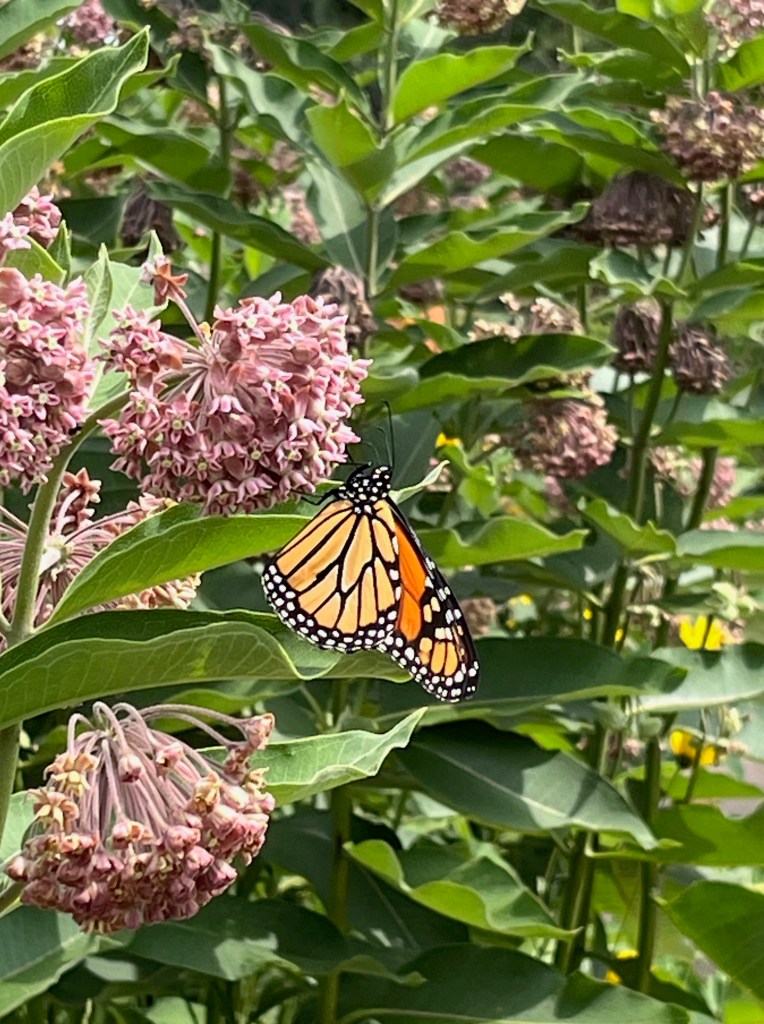
Feeding monarch, October 8, 2022
My camera phone captured a brighter color, but to my naked eyes, the monarch wings were very dark brown.

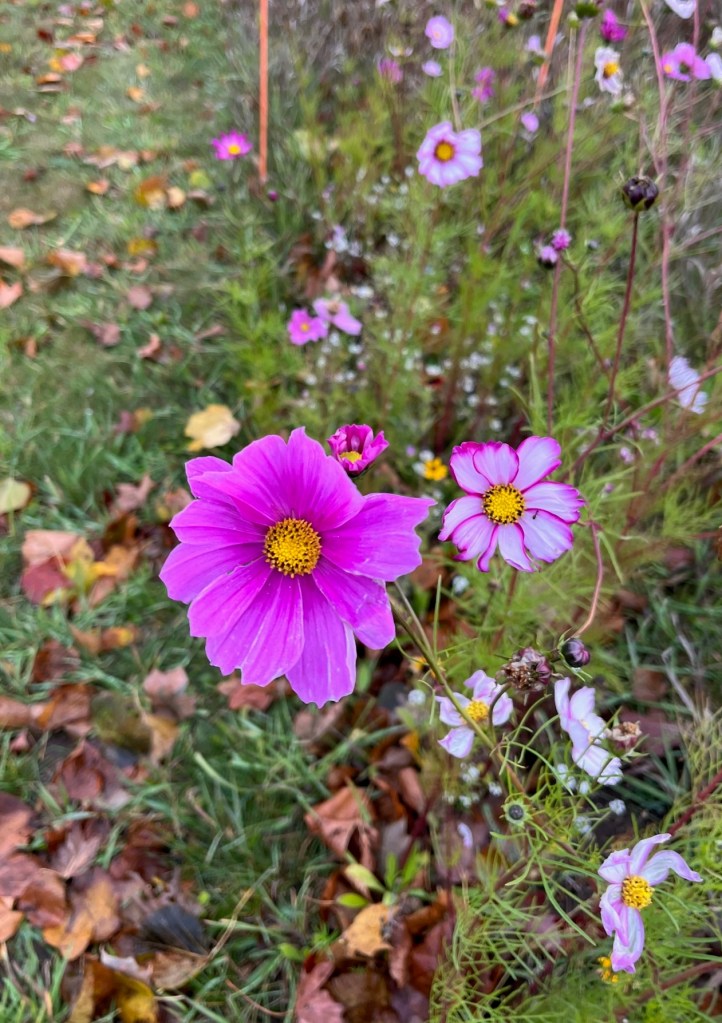
On a cold, windy morning in early October while walking in Petoskey, Michigan, I spotted a monarch butterfly tucked inside a pink garden cosmos, also known as a Mexican aster. As I neared the flower, the monarch ignored me, letting me sidle up while snapping photos with my camera phone. I had never seen a butterfly behave this way. Normally, they flit away before I get within a few feet.

I wondered about the motionless monarch. Was it dead but held in place by its feet? The bottom segments of a butterfly’s legs are called tarsi, plural for tarsus, and they are used to grip leaves and flowers and to taste potential food. If the butterfly was dead, would rigor mortis cause the tarsi to adhere to the flower? And was the nearly dark-brown color on the ventral side of its wings also a sign of death? (Nature show idea: Insect CSI—because there is a CSI for everything.) After some research, I learned that at the end of its life, a butterfly’s colors fade and its wings often look tattered. This butterfly was neither pale nor shabby. Perhaps the overcast sky made the tightly closed wings appear darker.

My next theory involved the weather. Was the monarch using the flower as shelter from the sharp winds and biting cold? It was 38 degrees with 20-mph winds. If I hadn’t been wearing my stocking cap, mittens, and winter coat, I might have nudged the butterfly and crawled inside the flower next to it. However, if the butterfly wanted shelter, the nearby bushes, trees, and tall grasses would have provided better sanctuaries. Monarchs like to hide under drooping foliage, in hollow trees, at the bottom of tall grasses, or underneath rocky outcroppings.

Finally, I wondered if the monarch was guzzling nectar for its upcoming flight to Mexico. Back home the squirrels in my yard were stashing food, digging tiny holes in the lawn to bury tasty tidbits and pilfering sunflower seeds from my birdfeeders, competing with chickadees, nuthatches, goldfinches, and cardinals—all bulking up for winter. I sympathized. The onset of cold weather changes my appetite. I want to ditch salads and veggies and eat hot soups accompanied by slices of a crusty flax-and-sunflower-seed bread made at a local bakery.

While I took pictures, the garden cosmos waved in the wind, but the monarch, whether dead or alive, remained motionless. Once more, I thought it was dead and stuck to the florets at the center of the flower. I didn’t touch the monarch because if it was alive, I didn’t want to disturb it or harm it. Touching a butterfly’s wings damages them. The colored “dust” that appears on your fingers is actually scales from the wings. Touching the wings might not kill the butterfly immediately, but the scales dislodged by human fingers won’t grow back, and that shortens a butterfly’s life. I continued my morning walk and juggled my theories. On my return, the motionless butterfly still clung to the pink cosmos that whirled in the unfriendly wind under a cantankerous sky.

Pink Garden Cosmos, also known as a Mexican Aster

On my afternoon walk, I stopped by the flower again, but it was empty. I scanned the ground, but found no corpse. I decided to research monarch migration.

There are four generations of monarchs every year. In the fall, generation-four monarchs need to consume loads of nectar—bacchanalian style—because they must build up a layer of fat, as most of them migrate to Mexico. When a butterfly finds a suitable flower, it uncoils its long hollow tongue, inserts it in the flower, and siphons up the nectar. The swilling monarch, whose picture I took on October 8, was most likely a generation-four monarch.

Biologically different than its previous three generations, generation-four monarchs will live eight to nine months. Hatched in September and October, they migrate to Mexico shortly after emerging from their chrysalises. Monarchs west of the Rockies migrate to coastal California. A limited number of generation-three monarchs will also migrate, but generations one and two have a lifespan of only two to five weeks and never migrate south.

In the late winter, generation-four monarchs return to the United States but only into the southern regions where they lay eggs then die. Those eggs become generation-one monarchs that fly into the southern Midwest region and lay eggs that become generation-two monarchs, which fly into the northern United States and southern Canada, laying eggs that become generation-three monarchs. Then generation three lays the eggs of generation-four monarchs that will migrate to Mexico. What a glorious cycle!

My curiosity about a sluggish monarch slurping nectar in a pink cosmos led me to discover that my knowledge about monarch migration had been incomplete.

My big discovery? Not all monarchs migrate to Mexico, and those that do only return partway in the spring.

And the monarch butterfly I saw in October? It was probably hungry, bulking up for its migration to Mexico. It was a cold morning, 38 degrees, and it needs to be 55 degrees before monarchs will fly. Also, monarchs move slowly when it’s cold because the chemical reactions in their muscles slow down, which explains why the monarch I saw let me get so close.

Later that afternoon the temperatures were in the low 50s, maybe higher in the bright sunlight in my mother’s neighborhood. I don’t know if the weather warmed up enough for the monarch to fly away, but because it was gone and I didn’t find it on the ground, I assumed it took flight. A bird could have tried to eat it, but birds usually release a monarch once they taste its poisonous chemicals, and they learn to avoid monarchs. Fortunately, a monarch usually survives a bird’s bite. If you see a monarch with a section of its wing missing, chances are it was bitten then released by a bird. A monarch’s large wings help ensure it will be able to fly even with a missing piece.

Hopefully, the monarch I saw made a successful trip to Mexico and is clustered in trees with millions of other monarchs, keeping each other warm, enjoying a rest before the northward migration begins in the spring.

The people who live across from this field planted these flowers.
I like to believe they did it for the butterflies.

[How to tell a monarch from its doppelgänger, a viceroy: Viceroy Butterfly vs. Monarch]

[For more information: Monarch Joint Venture, Monarch Watch: Biology, Butterfly Basics, Monarch Butterflies Start Long Journey South for Winter, Monarch Butterfly Migration (Escanaba, Michigan), Journey North: Monarch Butterflies, Monarch Watch, Biology, U.S. Forest Service: Migration and Overwintering, Winter Survival Strategies of Common Wisconsin Butterflies]

Random Thoughts Around the Bird Feeders

Getting to Know My Feathered Visitors

One chickadee and one I-don’t-know

I can name many of the birds that show up at my feeders, but not all of them. Chickadees, goldfinches, red-breasted nuthatches, blue jays, cardinals, and house finches are easy.

But some sparrows, other finches, woodpeckers, and a variety of different black-colored birds throw me for a loop because they look so much alike that I’m reminded about how I tried to distinguish between the identical Martin twins who attended Pleasant View Elementary with me.

Sometimes I look up a bird online and manage to identify it after learning what distinguishes it from its near twin. But the next time the bird shows up, I’ve already forgotten about the distinction, much like my attempts to keep the Martin twins straight.

A few days ago, I read a poem by M. Soledad Caballero, “Someday I Will Visit Hawk Mountain,” which captures both my lofty dream to be an informed birder and my failure to do so.

[To read or listen to Caballero’s poem, click here: On Being.]

Recognizing Their Voices

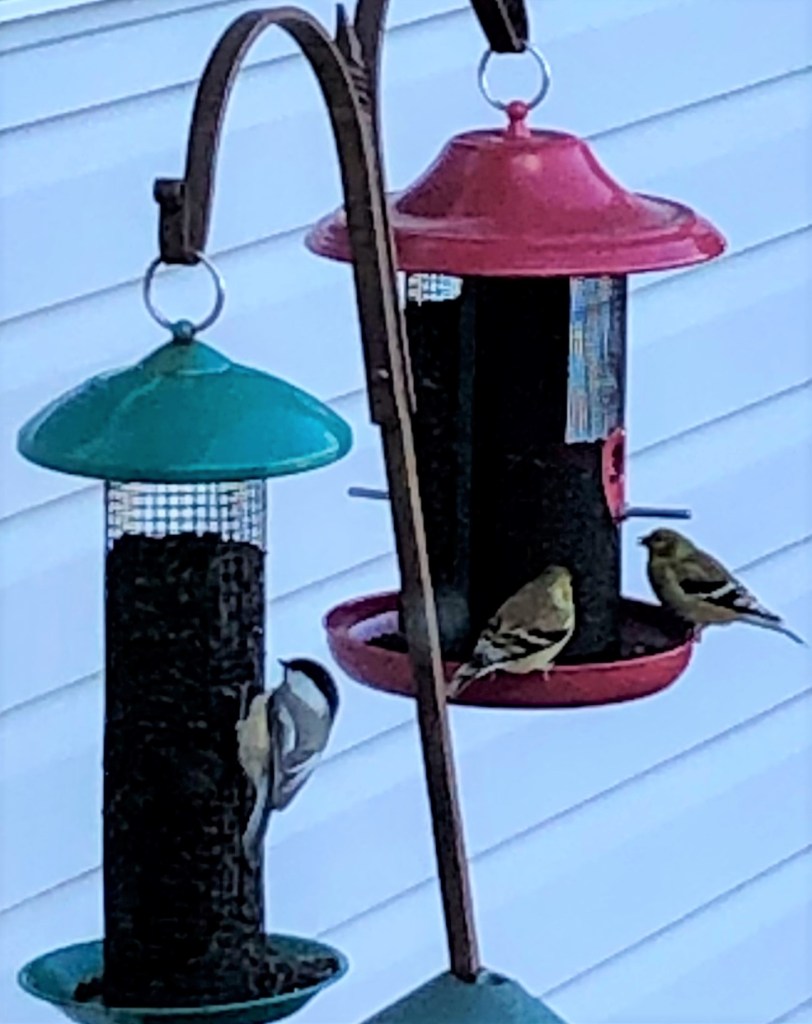
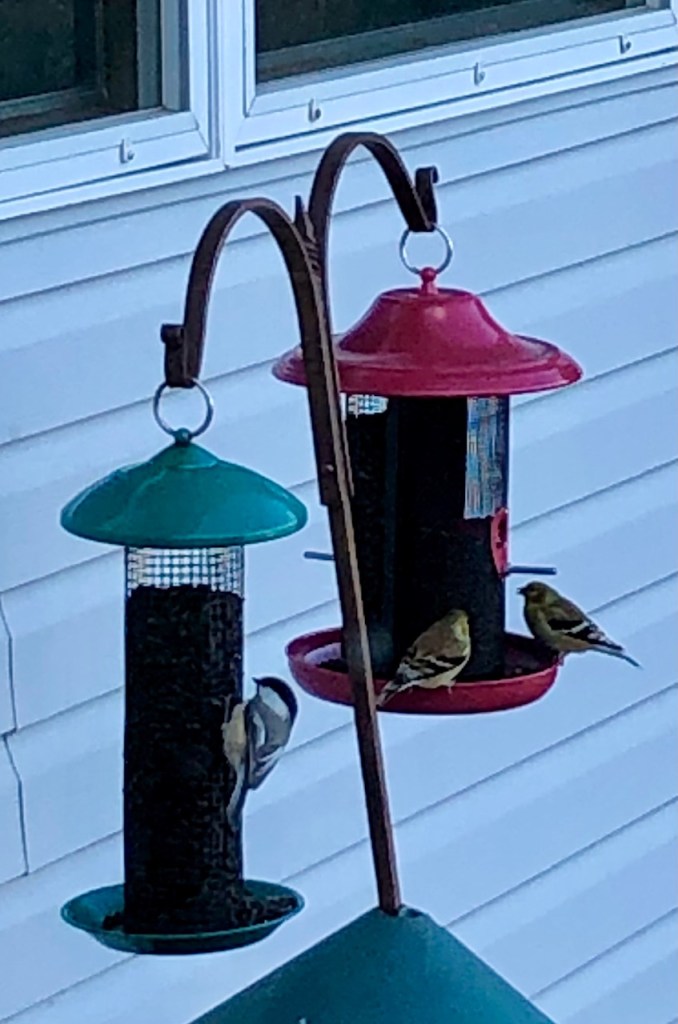
Chickadee and a pair of goldfinches.
A goldfinch’s bright yellow color fades after summer expires
.

Chickadees are handsome birds dressed in an eye-catching array of feathers, ready for an evening at a gala while singing lyrical tunes worthy of their attire.

Red-breasted nuthatches are elegant birds, striking art deco poses along branches and tree trunks. Then they open their beaks and belt out a whiny, nasal yenk, yenk, yenk. And I imagine them drunk on rum and singing a sea shanty off-key. But last week, when I heard a nuthatch yenk, yenk, yenk in my yard, I smiled, listening joyfully because I knew two bird calls!

[To see pictures of a chickadee and red-breasted nuthatch and hear their songs, click here: Audubon.]

The Interlopers

Squirrels show up at the feeders. I don’t invite them, but neither do I circle the feeders with a wall and barbed wire. I like to think of our agreement as “everybody has a fighting chance.” I buy sturdy feeders and hang them where the squirrels must invest time and ingenuity to get a meal. If a squirrel figures out how to climb, jump, or hang upside down to get seed, he’s earned a snack. There are still plenty of seeds left for the birds.

Last week I bought a new feeder to hang in the pine tree outside the window in my writing office. A few hours later, a squirrel arrived. He stretched his empty paw toward the feeder but couldn’t reach it. He lost his balance and fell off the branch, landing on the ground. Over the next couple of days, he tried different techniques, hoping to hang on the feeder, but each time he had to scramble back to the tree to avoid falling. However, failure rolled off his back like a bad dream disappearing at dawn. The squirrel, maybe after being bitten by a radioactive bat or using his bat intelligence or perhaps because he’s from a cave on Krypton, became Bat Squirrel, able to hang by his toes, poke his mouth into the mesh, and munch seeds.

During one of Bat’s visits to the feeder, a chickadee perched on a branch above him and waited patiently for him to finish eating. But after a few seconds, the chickadee flew off because that’s a chickadee’s idea of patience.

Sunny Dandelions on a Spring Day

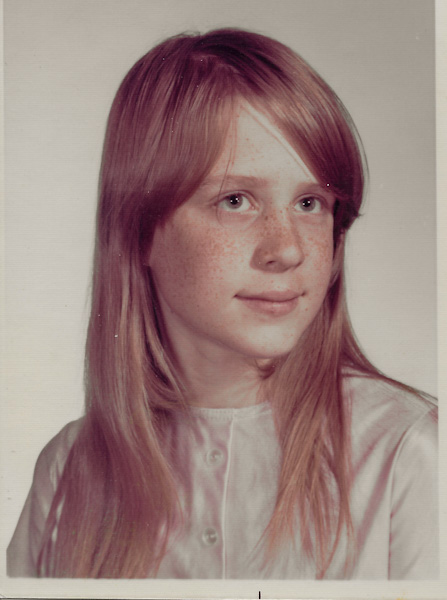
Me, about 11 or 12

In March 1971, I turned twelve. That spring and summer I spent a lot of time singing the Coca-Cola jingle, “I’d Like to Teach the World to Sing,” a song about love and harmony. And in May of that same year, while I sat in a chorus of dandelions on a sunny day, I was in harmony with hundreds of them growing on the hillside in front of our weathered barn. Warmed by sunshine, surrounded by velvety yellow, and sitting with my best friend, I was in love with the world. As a child, dandelions were my favorite flower.

ButI didn’t know their name was derived from the French phrase dent de lion meaning tooth of the lion, most likely because their serrated leaves look like teeth. I thought dandelions were named after lions because their round, shaggy, golden flowers resembled a lion’s head with a fluffy mane.

On that May afternoon, with my strawberry blonde hair topped by a crown of braided dandelions and a face freckled by the kisses of sunbeams, I watched butterflies and bees flit from golden bloom to golden bloom. I was fairy princess meets flower child.

But I didn’t know that dandelions were flowers—like asters, daisies, and sunflowers, all belonging to the same family, Asteraceae. That by the 1800s people could buy different varieties of dandelion seeds from catalogs to plant in their gardens. That Emily Dickenson wrote a poem about them and made mention of them in three other poems. I’d been told they were weeds.

My friend, wearing her own crown of dandelions, had brown hair, hazel eyes, and just a sprinkle of freckles across her nose. We plucked the flowers from the ground, choosing tall ones, and braided their thick, flexible stems, making necklaces to match our crowns. She, too, was fairy princess meets flower child.

But I didn’t know that a dandelion’s thick, hollow, supple stem had evolved to withstand strong winds. That our plucking the tall flowers would cause the next dandelions to grow shorter, hoping to avoid being picked. That when a lawn mower lopped off their flowers before they could seed, dandelions countered by sending new blooms to squat closer to the ground, hoping to keep their heads below a mower’s blades. I didn’t know dandelions had the survival skills of a toothy lion on an African plain.

As I plaited dandelion stems, a white, milky sap stained my fingers, making them sticky. I knew it wasn’t poisonous, and that it would wash away with soap and water.

But I didn’t know the substance was latex, a bitter tasting compound that protects dandelion roots from insects. I didn’t know dandelions were edible. That their leaves could be eaten in a salad and had more nutrients and vitamins than the spinach that gave Popeye the strength to defeat Brutus. That their roots could be dried, roasted, and made into a coffee-like drink. That their flowers could be made into tea or wine. That dandelions had been used for medicine, alleviating diseases caused by deficiencies in calcium, iron, and vitamins A and C.

I’m not sure what my friend and I chatted about that day. But I was crazy about the boy next door, and she was crazy about a boy she would eventually marry. We probably gossiped about those boys, our friends, and summer plans. And talked about the latest fashions and hairstyles because each of us wanted to fit in at the middle school.

But I didn’t know dandelions were considered a blight upon lawns because my parents never treated our yard with herbicides, pesticides, or fertilizers. I didn’t know that in the 1800s wealthy Americans would admire the expansive green manicured lawns of wealthy Europeans and would copy their style. That with the invention of the first mowers in the 1830s, middle-class Americans would soon covet green manicured lawns, a nod to status and belonging. The dandelion slid from grace and became a weed.

My friend and I rubbed dandelions under each other’s chins to see who liked butter, a childish game for a pair of twelve-year-old girls who talked of boys and love.

But I didn’t know twelve was the cusp between youth and young adulthood. That the buttery-colored powder was pollen, a delicacy for bees, butterflies, and insects. That dandelion blooms were masses of tubular florets, an early spring smorgasbord for hungry pollinators while they waited for other flowers to open for business.

Dandelions didn’t grow in our next-door neighbor’s yard. They treated their lawn every year with a powdered chemical. If someone had asked my twelve-year-old self to explain why my parents didn’t do the same, I would’ve chalked it up to money and time. The neighbors had more income, so they could afford weed killer. They had less than an acre of land, and my parents had two point two acres. It would’ve taken more money and time to kill the dandelions in our yard.

But I didn’t know my parents weren’t conforming to a neighborhood standard of weed-free lawns. That the neighbors had to keep treating their lawn every year. That dead shriveled leaves of poisoned dandelions left small barren spaces where new dandelion seeds, blowing in on a wind like Mary Poppins, could settle and thrive. That dandelions could regenerate from parts of their surviving roots. That if the neighbors stopped treating their yard, dandelions would once again crowd their lawn.

On the day I sat in the dandelions, I knew my great-grandfather had immigrated to America from Sweden in 1869. That other relatives had emigrated from Ireland, England, Switzerland, Germany, Spain, and Hungary.

But I didn’t know that dandelions were immigrants too. That the first wave of dandelion ancestors came over the Bering land bridge and settled as far east as the Great Plains. That the second wave arrived in the 1600s, carried across the Atlantic by European settlers as an herb used for medicine and food.

Later in the spring the dandelions would go to seed, and I would fill my lungs with air, hold the seed head in front of my mouth, and blow as hard as I could. If I dispersed every seed, I would earn a wish, and I always wished the boy next door would be my beau.

But I didn’t know the feathery seeds I blew into the air in the service of love would fall to earth at an angle, and the barbs along their edges would hook into the soil. The seeds, like me, would wait to see if their wishes would come true.

Napoleon

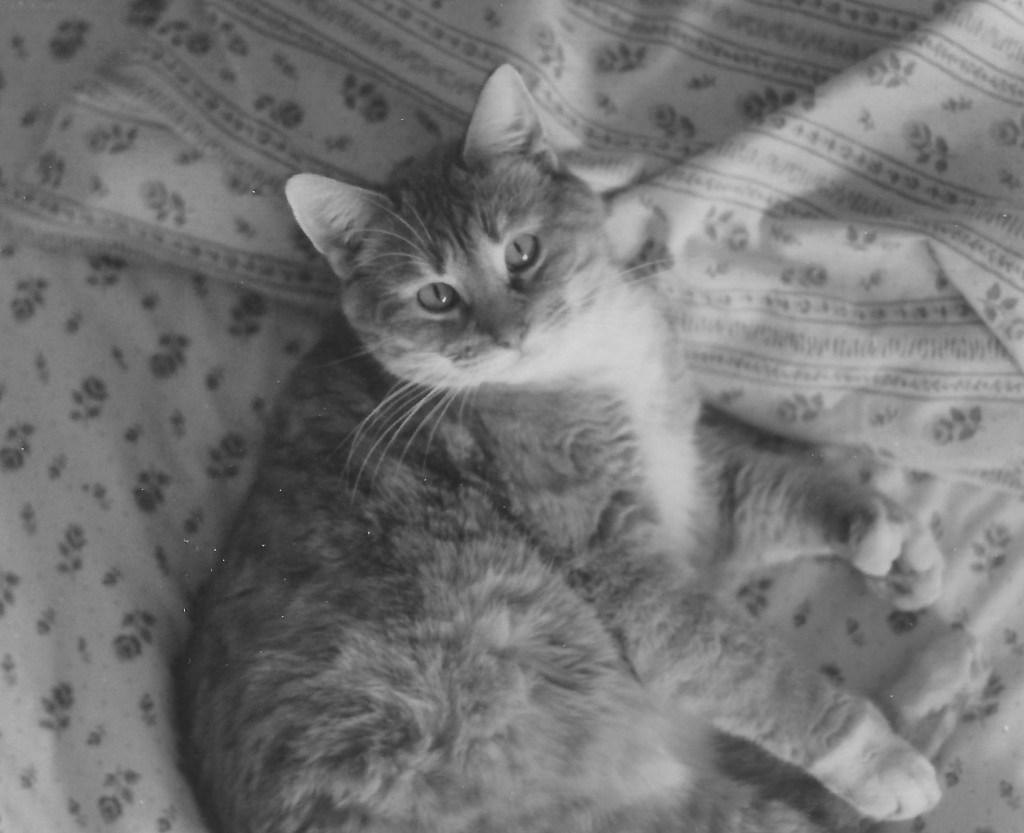
My friend and I watched my orange-and-white cat, Napoleon, hopelessly swat at butterflies as he lazed nearby in a layer of gold. At best he was an indifferent hunter, preferring to take his meals from a can and to leave nature’s creatures unharmed.

But I didn’t know that Napoleon had the good fortune to lie on an untreated lawn. That people, pets, birds, and insects could be harmed by chemicals. That a woman named Rachel Carson had written a book called Silent Spring. That as an adult I would be pressured into treating my lawn. That I would use my children and pets as excuses to avoid having herbicides and pesticides sprayed on my lawn. That I would dig hundreds of dandelions by hand to avoid chemical treatments. That after decades, I would learn that dandelions are early pollinators and that I would stop digging them.

The sea of dandelions that flooded the sunniest part of our lawn every spring, made my young heart zing. From that sea I picked buckets of bouquets, braided countless crowns and necklaces, buttered scads of chins with pollen, and blew thousands of fuzzy seeds into the air. But I remember best that day in May 1971 when I was twelve, and my friend and I sat among the waves of gold and talked of love while plaiting crowns and necklaces. While the butterflies and bees gathered pollen in harmony. And I wanted to teach the world to sing.

Resources:

The Dandelion’s Fall From Grace Has Been a Doozy. Can This Weed Become a Flower Again?

Ten Things You Might Not Know About Dandelions

The Reader. “In Praise of the Dandelion” by Jim Lundstrom

Lives of Weeds: Opportunism, Resistance, Folly by John Cardina

No Mow May

“Most likely common violets”

If you’re not familiar with the concept of No Mow May, the idea is to let your grass grow in May so early-blooming plants—like dandelions, common violets, buttercups, and wild strawberries—can flower and provide appetizers for bees, butterflies, and other insects until the main-course flowers bloom in June. My husband agreed to keep his lawn mower idled for May.

We live in northern Wisconsin at the western tip of Lake Superior, and we’ve had a cold May, so it’s taken a while for the flowers to spring from the ground. But last Tuesday small wild violets bloomed on the hill in our front yard. I used one of those nature apps where I snap a picture of a plant that I want to identify then submit the picture. A second or two later the app usually tells me that it doesn’t have enough information to make a conclusive identification, but it offers me a likely suggestion. The app suggested the violets in our yard were “most likely common violets.”

Two small, brave dandelions

Some humans label the sweet, beautiful, delicate violet—that looks like it could be worn as a hat by fairies—a weed when it grows in lawns. But bees, butterflies, and other insects consider violets a food source and collect pollen and nectar from them. And dandelions weren’t always considered weeds: They were once prized for their beauty and medicinal benefits.

I wonder what the bees, butterflies, and insects would call the herbicides and pesticides humans spray on their food. I bet they’d liken it to the tale about the Romans sowing salt in the fields of Carthage after the Third Punic War so nothing would grow. Bees are dying off and while it’s not certain, it’s most likely connected to the use of pesticides. Unfortunately, studies have also found wild birds are profoundly impacted by the use of pesticides.

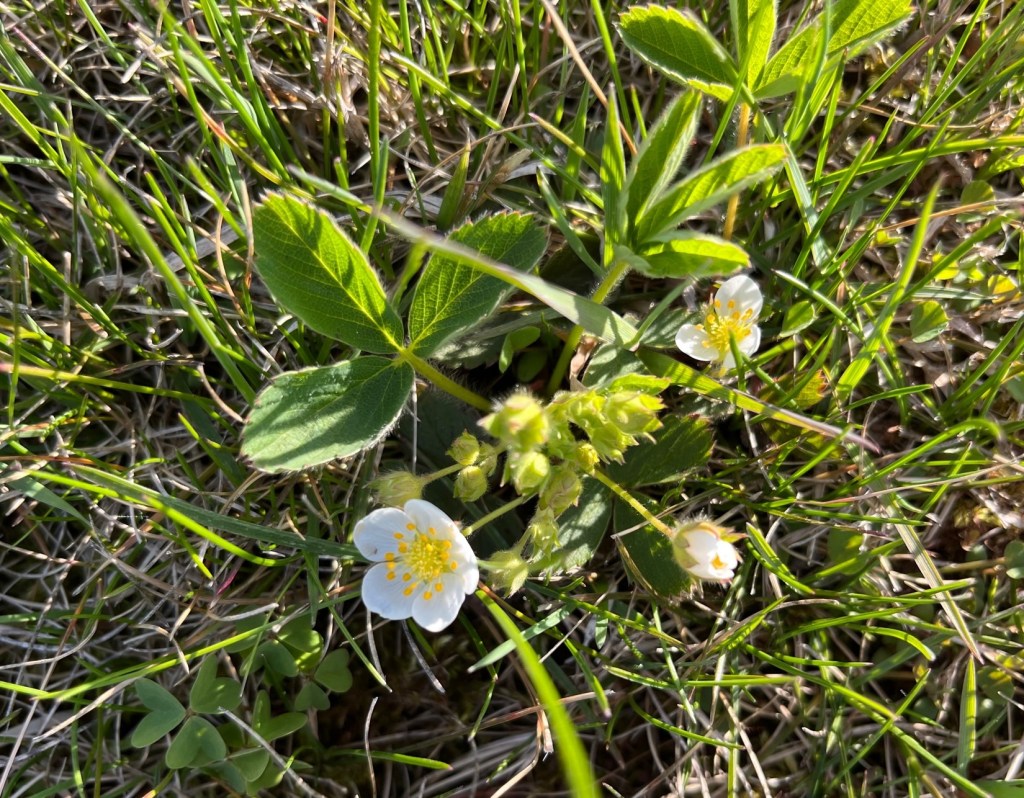
Wild strawberries

When the weather is cloudy or rainy most violets close their flowers and tilt them toward the ground to protect their pollen and nectar from being washed away, saving it for the pollinators that need its nourishment. Nature has designed an amazing ecosystem. Humans need to understand how it works, so we can appreciate and preserve it. Because while the violet can defend itself against rain that wants to wash its pollen and nectar away, it has no defense against being assaulted by pesticides.

Today I found wild strawberry flowers and two small, brave dandelions blooming in our front yard. Impressive because it was a cold weekend. I didn’t get down on my hands and knees to look for butterfly larvae on the leaves of the flowers, and I haven’t seen any bees yet. It’s probably too cold for them. I can’t do anything about the frigid winds blowing off Lake Superior, but when the pollinators wake up hungry, their food is growing in our No Mow May lawn.

Bird Feeder Trilogy

Wednesday, November 24—

Charlie, September 2021

Charlie, my three-year-old grandchild, was cranky, and I was becoming cranky. I crossed my arms, looked at him, and said, “How about you and Nana take a timeout together?”

“Okay.” He agreed because he knows it’s not a real timeout if I’m joining him. I picked him up and carried him to the family room to begin our detention. On the way he wrapped his arms around my neck and snuggled his head on my shoulder, aah Charlie-Bear hugs.

Charlie and I needed a quiet place to gather serenity (and avoid tears). We knelt on the couch, rested our elbows on the back cushions, and watched the chickadees zip back and forth from the trees to the bird feeder. Our crankiness dissolved. Before long I heard Charlie’s five-year-old brother, Evan, ask, “What are you looking at?”

“The chickadees,” I said. Evan joined us on the couch, and we watched the chickadees dart to and from the feeder. Evan asked lots of questions—he always does. But he asked with a soft, reverent voice.

Next, their ten- and eight-year-old siblings, Clara and Michael, found us and asked, “What are you doing?” Funny how each child became aware that Charlie and I were missing from the front room and in turn abandoned their toys to find us.

The five of us sat in the darkened family room, stared outside into the dimming afternoon, and watched the chickadees dash in and out to grab seeds. I pointed to a red-breasted nuthatch cavorting on the branch of a pine tree near the feeder. Sometimes it hung upside down, and sometimes it hung right-side up in its frenzied search for food lurking in the bark.

The five of us were still and spoke in muted tones, sated with the joy of watching small birds eat supper. Timeouts are good for everyone.

Saturday, November 27—

Chickadee and Goldfinches

It was cold outside, but there was no snow. I noticed small birds, including chickadees, goldfinches, and cardinals pecking at the ground and at tree branches and trunks, foraging for creepy crawlies, good sources of protein to nourish them through the winter.

A few chickadees swooped in and out to grab black oil sunflower seeds from the feeders outside my kitchen window, but only two or three chickadees at a time. In warmer months, I often see five or more doing touch-and-go landings at the feeder. Once the ground is covered in a thick, white batting of snow, the chickadees will dive bomb my feeders again. No matter how cold and snowy it gets, I keep their feeders clean and stocked.

A pair of goldfinches visited. Their yellow feathers, like the leaves and grass, have faded to brown. In the winter when a male goldfinch isn’t breeding, his brilliant yellow coloring turns a drab brown. A female goldfinch’s color fades too, but even in mating season, she’s never as flashy as her male partner. Mr. and Mrs. Goldfinch foraged on the ground and in the trees, but they also grabbed seeds from the feeders.

Mr. and Mrs. Cardinal dropped by. Mr. Cardinal was sporting his flashy red jacket. Unlike the male goldfinch whose colors fade in the winter, the male cardinal often turns a brighter red. Mrs. Cardinal was a shade of greyish-brown with a few red-feather highlights, a lipstick-orange beak, and a red-tinged mohawk. She’s always a combination of understated beauty and bold attitude.

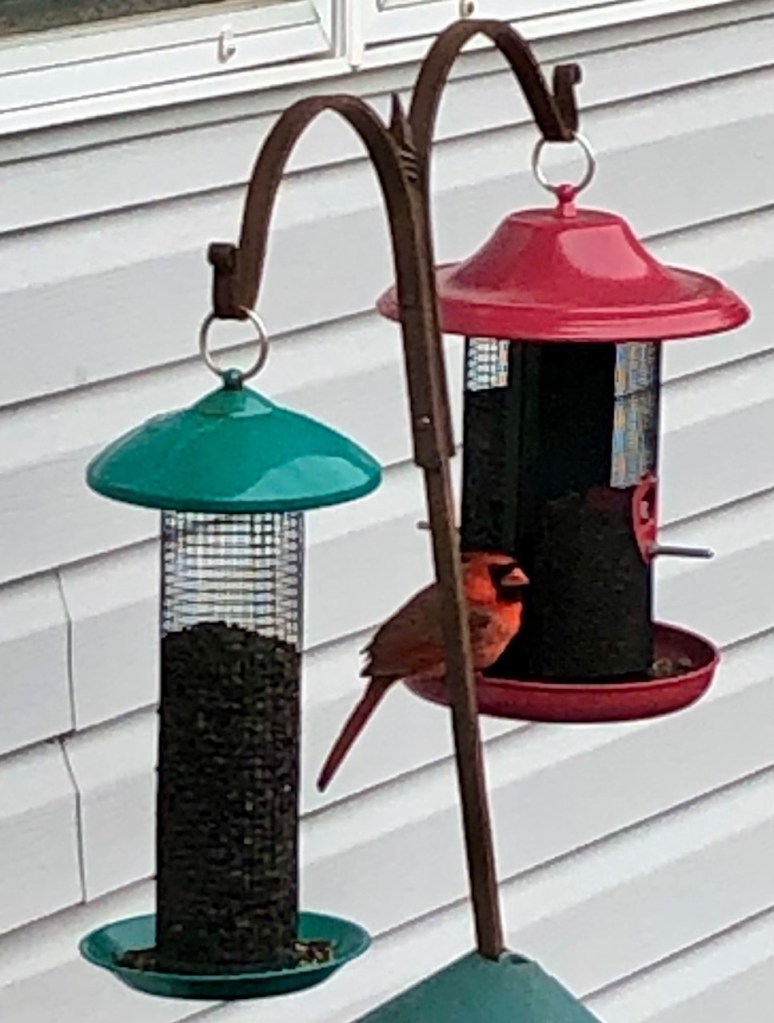
Mr. Cardinal snuck up on the bird feeder. He started in the garden, poking his beak in the ground. He lifted his head, turned it left, then right. Looking, poking, looking, poking, in a nervous cha-cha-cha. After every couple of poke-and-look moves, he hopped a little closer to the feeders. Finally, a craving for sunflower seeds overtook him, and he flapped his wings. Lifting himself from the ground for a short flight, he landed on the tray of the red feeder. I snapped a picture of him eating and texted it to my family. My sister responded, “I like how the red bird goes to the red bird feeder.” I had the same thought when I took the picture.

Stopping by the kitchen window, I watched him fill up with seeds. Mrs. Cardinal, cloistered in a nearby cedar tree, watched him too. Cardinals usually mate for life, and she was looking out for her man. After all, he stands watch when she builds their nest.

Sunday, November 28—

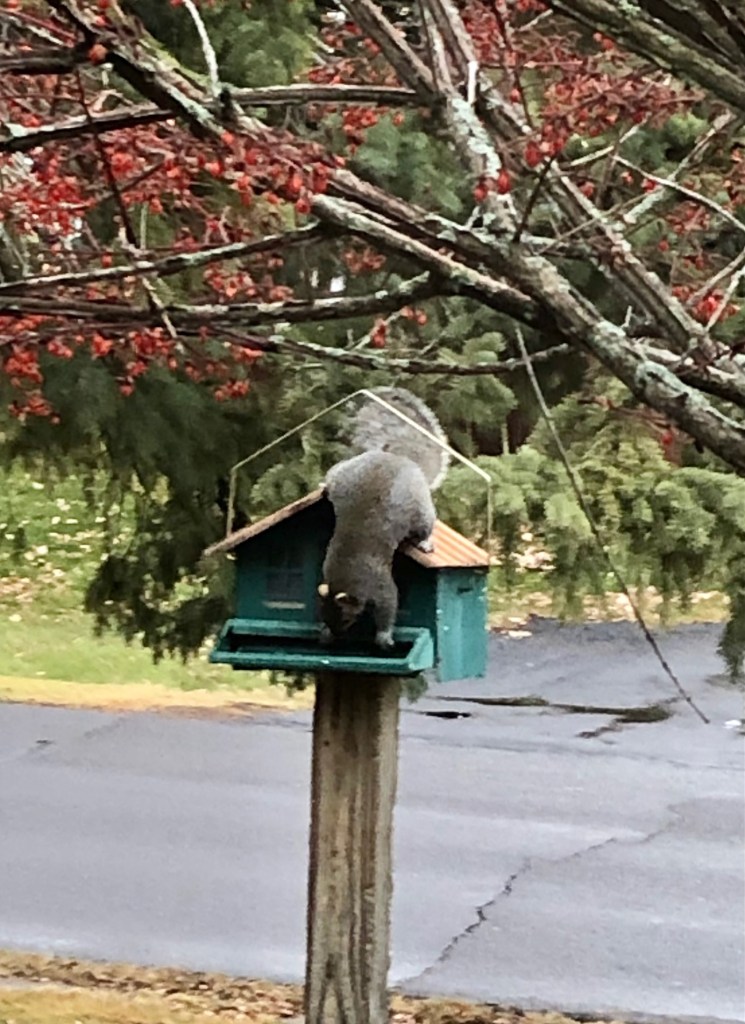
Today a grey squirrel ate lunch and dinner from the bird feeder at the side of my house. The feeder, shaped like a craftsman style home, is designed to thwart squirrels. Wally “The Hack” didn’t get the memo.

I like to think Wally “The Hack” is “Flying” Wally, who, this summer, mastered leaping from one shepherd’s hook to another shepherd’s hook from which my bird feeders hang. After his leap, he would shimmy down the pole, sit on the feeder’s tray, and munch sunflower seeds. I put the plant hanger away for the winter, so if this is Wally, he has adapted.

Wally (it has to be him) figured out he needed to climb up the back of the wooden post then sit on top of the feeder. Next, he hung upside down, grabbed seeds from the tray, sat up, then ate his morsel before repeating his moves. He had learned that if he tried to eat from the front of the feeder, his weight dropped a bar and obstructed his access to the seeds. (Other squirrels still try to get seeds out of the front of the feeder.)

I sat on the couch and watched him, and he watched me watching him. He gave off a vibe of bravado and triumph—his pilfering of each seed, a boast. I left him alone and the chickadees left him alone. They flew to the ground to grab spilled seeds then darted back to the pine tree.

I wanted to open the window and yell, “Leave the seed for the birds,” but I admired Wally’s problem-solving skills, so I let him eat. I hope he doesn’t learn to hack my wi-fi and order his own sunflower seeds.

[Local birder Rich Hoeg has a wonderful website with beautiful pictures. He loves to photograph and write about owls, but also posts gorgeous pictures of other birds: 365 Days of Birds.]

[For pictures of beautiful birds from around the world, click here. To enjoy Michael Sammut’s blog about birds, click here.]