I sometimes hear poets and non-poets disparage sonnets, calling them outdated and contrived, too formulaic. They speak of the form and the rhyme schemes as restrictive. But I like good sonnets, and I’m particularly fond of Shakespeare’s sonnets. To do a sonnet well, is to master meter, rhyme, and language. By my way of thinking Shakespeare’s greatest sonnets are a form of freedom inside of a container.
As Dame Judi Dench reads this sonnet, she will steal your breath away and strum the strings of your heart.
Happy Valentine’s Day to all the world’s friends and lovers!
[To hear Dench read this sonnet on YouTube, click here. Start the clip at 1:10.]
Sonnet 29
When, in disgrace with fortune and men’s eyes,
I all alone beweep my outcast state,
And trouble deaf heaven with my bootless cries,
And look upon myself and curse my fate,
Wishing me like to one more rich in hope,
Featured like him, like him with friends possessed,
In the fall of 2024, I sent Silent Negotiations, my collection of short stories, to Cornerstone Press at the University of Wisconsin-Stevens Point. In December of the same year, the editors at Cornerstone notified me they wanted to publish my book, and the publication date would be February 2027. It was the best Christmas present! And for a few weeks, I walked around in a euphoric bubble. But the publication date was over two years away, so I settled into a calmer mode of waiting. At times I’d forget about my upcoming book for a couple of days. With a publication date in a faraway galaxy, there wasn’t much for me to do. Then suddenly, because objects are closer than they appear, I’d fret about the book and think, “Will anyone want to read my stories? Is there something I should be doing right now? Where will I have my book launch, and will anyone come?” Then sometimes I’d get excited all over again, thrilled that my stories, which took me five years to write, will have a home together in a book.
On January 23, after I’d spent several days reading my stories one more time, I emailed my manuscript to Cornerstone Press. Don’t worry. I didn’t fiddle with them. I’ve heard other writers warn against overworking one’s stories. Besides, I’m happy with them. Instead, I looked for typos and questioned commas. I read out loud, listening for the awkward sentence, a word choice that wasn’t working, an ambiguous pronoun. I double checked stories to make sure they were coherent with correct timelines. I changed very little, but I’m glad I read them one more time.
At this point in time, I’ve made the stories the best I can make them. I think I’ve found all the errors that can escape an author’s eye, even after many readings. Because I know what my stories are about and what my sentences are supposed to say, I often read past mistakes — reading what I believe is on the page and not what is actually there. Of course, to help with this, I’ve had numerous people read my stories. It’s always a good idea to have someone read your story, essay, poem, article, or book before sending it out into the world.
I want to thank all the people who read my works in progress. Your input made my writing better. Each of you brought a unique perspective to my stories, and often found problems other readers didn’t. Now, I’m looking forward to working with the wonderful editors at Cornerstone. And I’m excited to see what the graphic design team puts together for the book’s cover!
Below, in alphabetical order by authors’ last names, is a list of short story collections published by Cornerstone that I’ve read and enjoyed! To check out these books and other short story, poetry, and memoir books published by Cornerstone, click here.
Colleen Alles, Close to a Flame
Jeff Esterholm, The Effects of Urban Renewal on Mid-Century America and Other Crimes
Steve Fox, Sometimes Creek
Nikki Kallio, Finding the Bones
Kim Suhr, Nothing to Lose
Kim Suhr, Close Call
Marie Zhuikov, The Path of Totality
Author photo for my book: Ziva and Me! I sent my final manuscript to Cornerstone on Ziva’s fifteenth birthday. Photo credit: Max Youngquist
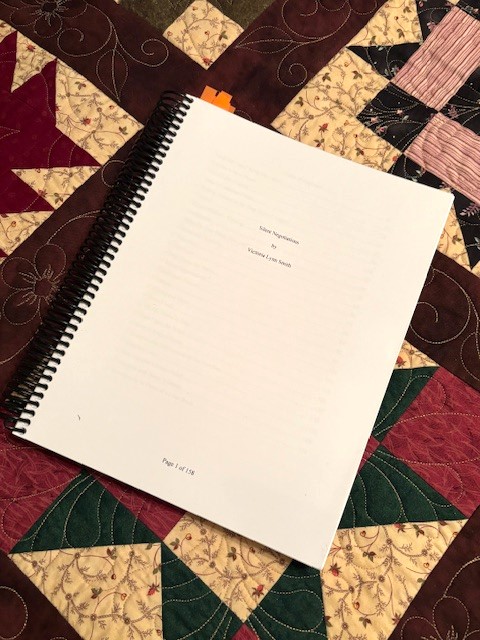
My story collection has a title! I’ll debut the cover when that is done.
In February 2027, the University of Wisconsin-Stevens Point will publish my collection of short stories through Cornerstone Press, their university press. I’m excited, and nervous, and grateful. This is my first book, and like a first-time parent, I’m not sure what to expect, so I gather information. I talk to other writers who have published books. I attend book launches and author talks. I read blogs and articles and attend seminars about how to nurture a book in the world.
When Cornerstone accepted my manuscript, my publication date was more than two years away. But now it’s about fifteen months away, and if there is one thing I know about time — it’s how quickly it flies. I need to promote my book, and for that it needs a title.
When I submitted my collection in November 2024, it was called Fishing Around in the Dog Days of Summer, after one of the stories in the book. I chose the title for a couple of reasons. First, I really like its eponymous story about two young sisters with a tenuous relationship who go crayfishing on a hot, humid August day. Second, all the characters in my short story collection are fishing around for something they want. They each dip a line in the murky waters of their lives during their own dog days, hoping to catch something they long for.
But as much as I liked my original title, I began to feel it was too long and would be hard for people to remember. And I worried if the cover depicted a fishing scene along with the title, potential readers might think all my stories were about fishing.
I looked at my table of contents and considered other story titles. “Silent Negotiations” jumped out at me. It’s short and easy to remember, and it’s another story I really like. In 2020, it won second place in the Hal Prize Fiction Contest. (So, I feel the title has good mojo.) In the story a couple who have been married over forty years renegotiate the parameters of their marriage during a disagreement. Each spouse speaks their mind, but only to a point. The rest of their negotiations are silent, yet significant. The characters in my other stories are like the old married couple in “Silent Negotiations.” They all want something. They all talk to each other, but they leave things unsaid. And what is left unsaid, changes who they are with one another and themselves.
After I decided to change my title to Silent Negotiations, I asked my writing friends and readers what they thought. They had all read my stories several times, so I knew they would be good judges as to whether or not the new title would be a good fit for the collection. They all loved Silent Negotiations.
Last weekend I attended the Wisconsin Writers Association Conference in Stevens Point. The Cornerstone Press editors were there too. I talked to Dr. Ross Tangedal about using Silent Negotiations as my title. He liked it too, and so did his student editors.
My book has an official title!
Now, I’m excited to see some cover designs. Before I know it, Silent Negotiations will be out in the world.
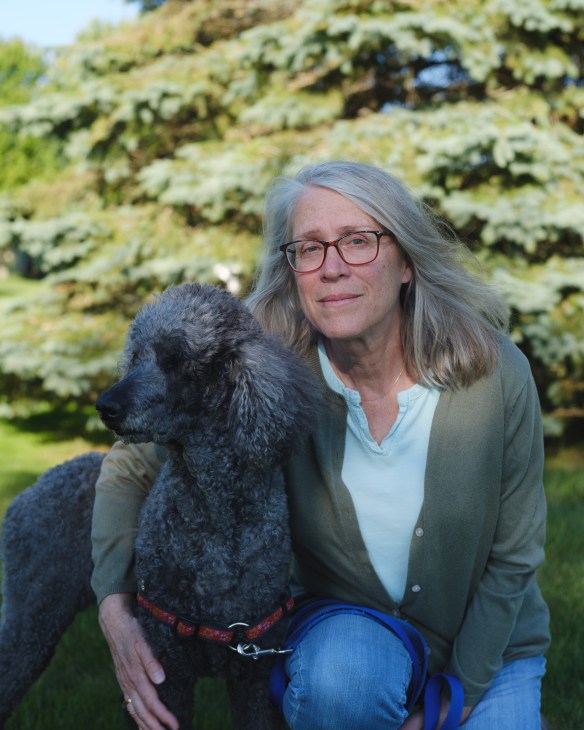
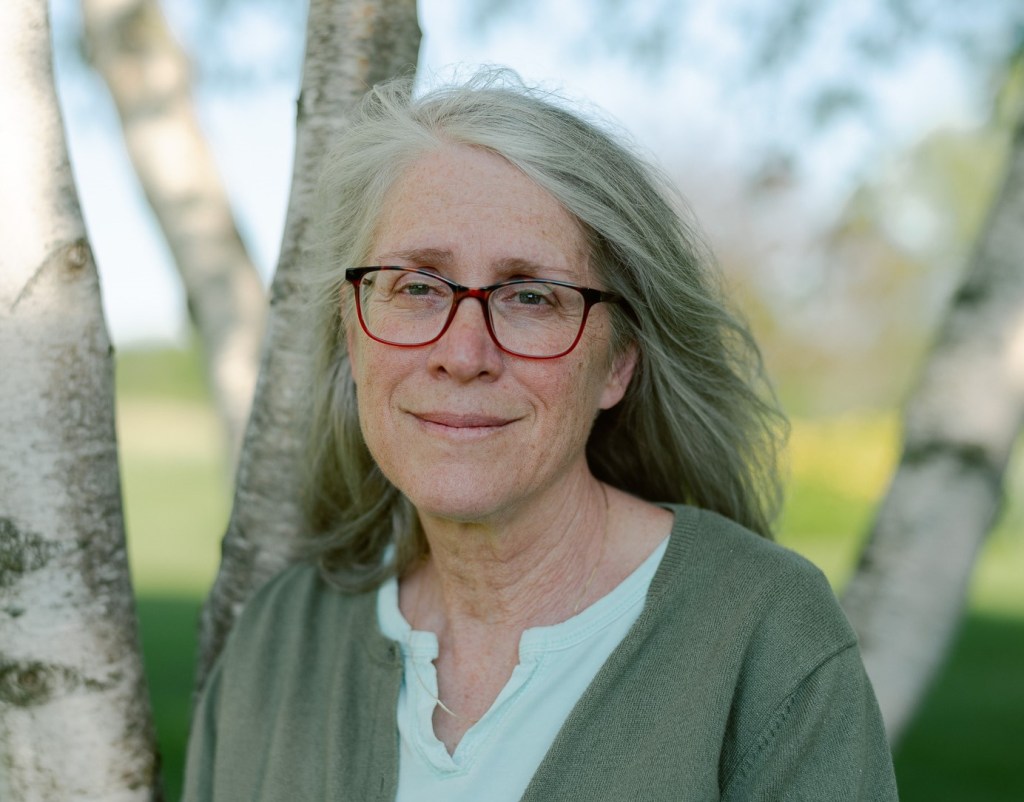
I’m hoping to use this picture for my author photo. Photo credit: Max Youngquist
Today I went to the Monarch Festival hosted by Duluth Monarch Buddies (DMB) because I want to plant pollinator gardens. But I also went because I wrote an article about DMB, and I promised the organization’s president I would come. (To read my article, click here, and turn to page 22.)
What a thrill to see my article front and center on the welcome table!
The Festival was held at the First United Methodist Church, which we locals call “The Coppertop Church” because it has a magnificent copper-topped roof. (If you want to view the locally-famous roof, click here.)
On my way into the Monarch Festival, I passed a table with pamphlets and brochures. And in the center of the table was a copy of Northern Wilds magazine opened to the page with my article. Wow! I was excited and touched. I told the woman seated next to the table, “I wrote this article.” In my right hand, I carried three copies of the magazine to give to DMB board members. One for the president, one for the vice president, and one for the secretary.
Once inside, I reintroduced myself to the president and gave her a copy of the magazine. I’d met her last summer, and I’d spoken to her on the phone this spring. She gave me a wide smile and a big hug. She asked if she could take my picture while I held the magazine open to my article. She made me feel like a celebrity. I already knew she liked the article because I had her read it for accuracy before I sent it off to my editor in April. I wanted the facts about monarchs, pollinators, and DMB to be correct. But seeing the article in print with photos is different than reading it in a word document. She was ecstatic, thanking me and telling me it was wonderful. This made my whole day because I worked hard to make the article interesting and informative.
She introduced me to someone who was filming the event for the local public TV station. She thought he might be interested in interviewing me, but he wasn’t. This wasn’t disappointing in the least because I don’t like talking to TV cameras. (Although, I would’ve done it because I’m trying to be braver about public speaking.)
The Monarch Festival was wonderful. I talked to people who are passionate about helping monarchs and bees. I learned more about planning my own pollinator gardens. I listened to the featured speaker talk about using drones to count milkweed plants in order to monitor pollinator habitats.
On my way out of the Festival, the woman seated by the table in the entry said, “I’m going to read your article later.” Talk about leaving on a high note.
It warmed my heart to know that the people I wrote about enjoyed my article, and I felt proud to represent pollinators who make our world a sustainable place.
Today was sweet because writing is hard. It’s frustrating to hear the words in my head, yet know as I endeavor to put them on paper, it will feel as if I’m searching for them in a mist. Usually, this is how each piece I write begins. But somewhere along the way, as I revise and revise, and if I’m lucky, the words fall into place. And if I’m very lucky, someone loves what I’ve written.
I scored information, seeds, a butterfly sticker, and a card.
When I told my husband I was dedicating my book to him, he said that I should dedicate it to our dog Ziva. She logged a lot of hours with me while I wrote.
In February 2027, my first book, a collection of short stories, will be published by Cornerstone Press, which is run by the University of Wisconsin-Stevens Point. Yay! (Imagine an emoji of happy, dancing feet here.)
I spent five years working on my collection of short stories. Every time I submitted a story to a journal or a contest, I sent a bio. In each bio I started writing: She is currently working on a collection of short stories. Because I wrote this in my bios, I kept writing short stories. After all, I didn’t want people to think my words were fluff. For me writing and submitting to journals was scary enough, but the idea of getting a book published was scarier. So, every time I wrote the words: She is currently working on a collection of short stories, I eased my way through my fears. Putting it in words over and over made it less intimidating and eventually kind of like saying, Yeah, I’m going to get my nails done on Saturday.
I also told myself if I finished enough stories to have a book-length collection, then I would have met my goal. I had done what I said I would do — write a collection. That didn’t mean the stories had to be published. Right? For me, the idea of getting published was terrifying. I worried about everything. Will people like my stories? Will anyone read my book? Will I have book signings and be the only one there? Will anyone buy my book? Will people like me? What if I mess up when signing someone’s book? Can I use an erasable pen? I waffled so much over whether or not to submit my short story collection to publishers that I could have become my own Waffle House franchise.
At the end of 2023, I had enough stories, but not enough courage. Then I discovered the Iowa Short Fiction Award and the Flannery O’Connor Award for Short Fiction sponsored by the University of Georgia Press. These contests are for emerging authors. I entered both of them. I didn’t believe I stood a chance of winning anything, and that made submitting my stories to them less nerve-wracking. But I took each entry seriously. I read all my stories out loud and silently, again and again. I had my readers rank which ten stories they believed were the strongest so I could place them at the beginning, middle, and end of my collection. I didn’t win anything in either contest. But after I sent my collection off to the Iowa contest, I started writing in my bios: She recently completed her first short story collection and is querying publishers.
After receiving rejections from the Iowa and Georgia presses, I waffled some more. I think I might have driven a few people crazy with my waffling. And I’m so grateful that none of them told me to shut up and go away.
I was still waffling away, when I attended the Wisconsin Writers Association Conference in October 2024. While I was there, a few things happened that gave me a shove. First, I met Lan Samantha Chang, a wonderful writer who is also the director of the Iowa Writers’ Workshop. She was one of the guest speakers, and she talked about the scariness of writing and putting one’s work out into the world. And I thought, If Chang, an accomplished writer, can be scared, I can be scared. Next, I listened to a panel of three publishers speak about their presses and submission processes. Afterward, I introduced myself to the publisher of Cornerstone Press. I told him I enjoyed listening to him and the rest of the publishers. Then I said the words, “I have a collection of short stories that I’m going to submit to Cornerstone Press.” To which he said, “I look forward to reading them.”
I had done it. I had said the words out loud. At that point I knew I would have to submit my collection because I didn’t want the publisher to think my words were fluff.
I’m still scared of all that other stuff, but I’m going to take it one fear at a time. I can handle one fear at a time.
I didn’t write my collection of stories in vacuum. I owe a lot of gratitude to so many people and organizations.
I want to thank everyone who spent any amount of time reading my stories and giving me feedback. You were always helpful.
I want to thank the people who follow my blog and would read my stories when I posted a link to where they had been published. Your positive comments meant the world to me.
I want to thank the following organizations: Lake Superior Writers, Red Oak Writing, Wisconsin Writers Association, and Write On, Door County. These organizations were a lifeline during COVID. They pivoted to Zoom classes and gatherings that gave me and others a place to connect and be writers. They are all wonderful organizations for writers who want to learn more about their craft and spend time with other writers.
I want to thank all the writers, famous and not famous, whose works I have read and who have inspired me to be a better writer. There are so many talented writers, most of whom will never be household names.
My favorite photo: Ziva and me, Petoskey, Michigan. Photo by Max Youngquist, July 2024
A week ago I wrote a blog titled “Writing and Waiting.” I was inspired to write the blog because a short story of mine was a finalist in the Wisconsin People & Ideas magazine, and I was beyond anxious while waiting to hear if it would win anything. I was so excited and nervous. Over the last few years, I have read many of the awesome short stories that have won or placed in the contest, and to have my story be one of the nine finalists this year was thrilling. And even though I was disappointed not to win anything, I’m so honored that the judges liked my story enough to make it a semi-finalist and then a finalist.
While driving over to my mother’s in Petoskey, Michigan, on July 1, I learned that my story had been chosen as a semi-finalist. And even if it was counting my chickens before they hatched, I worried about having a decent author’s photo, just in case my story won something. Before this I had wanted an updated photo because the photos I have been using for bios are candid photos taken by my husband, a stranger at a writing conference, and my granddaughter.
My nephew, who is a wonderful photographer, was also visiting my mother. So, after I arrived at Mom’s, and after I said hello to everyone and gave everyone a hug, I asked him if he would take some pictures of me after supper. He’s a big supporter of my writing. Shortly after we ate and finished up the dishes, he walked back into the kitchen with his 35mm camera slung around his neck. “Aunt Vickie, are you ready to have your picture taken?” He loves any excuse to take photos.
We went out into my mother’s beautiful yard. The sun, nearing the end of its day, created a magical light. We included my dog Ziva in some of the photos because she wasn’t letting me leave the house without her. She seemed to know she was part of a special moment. Even when my nephew took photos of just me, Ziva stood next to me.
Before the photo session, Max talked about taking more photos of me in different settings around Petoskey. After the photo session, I so loved the photos he had taken that I told him we didn’t need to go anywhere else or take any more photos. I don’t like having my photo taken, and I often feel that photos of me don’t turn out well. So, I felt lucky to have a lot of great photos to choose from. And I reasoned that if Max took more photos, I would have too many choices.
Even though my short story didn’t end up winning or placing in the contest, every time I look at the photograph of Ziva and me, I’m filled with love and peace. It reminds me of my kind and talented nephew Max and my loving and loyal dog, Ziva.
And I’m enjoying a sense of calm now because it’s at least a month or more before I expect to hear from other editors about other stories and essays I submitted this spring. As those deadlines approach, I plan to stay cool, calm, and collected. As if!
Me in Petoskey, Michigan. Ziva is on my right, next to my side. I selected this photo too because I figured it’s good to have one without the family pet. Although Ziva and I agree that having her in the photo with me makes me look better. Photo by Max Youngquist, July 2024
More about the Wisconsin People & Ideas writing contest . . .
I’m looking forward to reading the stories written by the 2024 winners. (Click here for their bios.) I have read the stories of past winners, all of which are wonderful. But there are three stories that stick with me. All three of the stories, besides being beautifully written and thematically rich, have at least one character that is unforgettable. I’ve listed the stories alphabetically by author’s last name because it’s so hard for me to pick a favorite. You can read the stories by clicking on these links:
Walking through Tom’s Logging Camp on Friday was a delightful diversion from waiting.
Children wait a lot. They wait for a parent to come home or to pick them up after a soccer practice or a dance class. They wait for a sermon to end or for Christmas morning to finally arrive. They wait for each birthday, and cherish the moment when they can add the half year to their age because their big day is that much closer. They wait for the bell to ring, dismissing fifth-hour study hall, so they can walk down the hall and hope that today when they encounter the seventh-grade classmate they are hopelessly in love with, their eyes will meet in a moment of magic. Learning to wait when one is a child is good preparation for having to wait as an adult. Because having to wait is not something a child can outgrow.
And writers wait. We wait for an idea to run with. We wait for the next time we can sit down to write. We wait for readers to give us feedback. We wait to hear from editors who will accept or decline our stories, essays, or poems. We wait to learn the results from writing contests. Once our work is accepted, we wait for our pieces to be published. We wait to see if we’ve been accepted for a writer’s residency. We wait for phone calls from our computer techs who tell us we can pick up our computers.
My parents taught me the art of waiting, which is probably how most of us learn to wait.
When I was a child, under the age of eleven, my father kept an airplane at the Hales Corner Airport, in Franklin, Wisconsin. My sisters (one thirteen months younger than me and the other four years younger) and I often went to the airport with my father. He would get the urge to work on his plane or hangout with other pilots, shooting the breeze about flying and planes — much like when I’m compelled to write or when I crave the company of other writers, so I can shoot the breeze about writing and books.
Unless my sisters and I were going on a flight with my father, we weren’t invited into the hangar. He would tell us to wait in the car, that he’d be back soon. It was never soon. He would crank down the windows, but heat stacked up in the car anyway, making us too warm. In addition to being bored beyond belief and hot, we became irritated. Our definition of soon was clearly at odds with his definition. We had a tipping point at which we risked his anger and got out of the car. But we never entered the hangar to ask him when we were going home. By a young age, we had learned this simply wasn’t to be done. This is partly why I can wait for months and months to hear from editors without contacting them, even when they’ve stated, “If you don’t hear from us after six months, please feel free to contact us.” I may never hear from them, and still they will most likely never hear from me. Those editors are in a hangar, and I’m not going in there.
At the airport my father always parked close to a tall metal pole topped with a bright orange windsock. The pole was surrounded by green grass, which was encircled by a ring of rocks, all the size of small dogs curled up for a nap. We would climb over the rocks and sit in the grass and watch the windsock as it shifted above us. The cooler air and freedom from the car helped, but our boredom and irritability soon returned. Eventually, our father would come out of the hangar. He might say a few terse words about us sitting around the pole instead of inside the car, or not. But either way we knew better than to ask him, “What took you so long?”
My ability to wait quietly doesn’t mean that waiting to hear about something I’ve submitted is easy. Far from it. I can pace with the best of the tigers. I perform menial tasks to pass time, but I end up feeling like I’m swimming in a pool filled with Salvador Dalí’s melting watches. As a projected date of a notification nears, I check my email incessantly. One moment, I convince myself that no one will ever be interested in publishing my work again. The next moment, I daydream that I’ve won a contest or that an editor has so loved my work, they gush about it, using bouquets of purple prose and ask, “Can you send us more?” (Yeah, Walter Mitty lives inside of me.)
When I first started submitting my work and received rejections, I was convinced I must be a lousy writer. I contemplated doing something easier — maybe washing windows on tall buildings, even though I’m terrified of heights. Then an editor sent me a rejection saying she had almost selected my flash fiction piece but had decided to hold off. She would keep it on the back burner but probably wouldn’t end up using it. It was an encouraging rejection, so I kept writing. A month later, she notified me that she had decided to print my story after all. Perhaps, I thought, I can write.
I keep submitting and mostly receive rejections. But I get just enough acceptances. So, like my old dog who hangs around the kitchen, hoping at any moment that she will get a treat, I keep checking my email, hoping at any moment I might receive an acceptance.
I get so bad about checking my email that I don’t open it if I’m working at my computer, I leave my phone in another room, and I make deals with myself. If I write for thirty minutes, I can check my email. After I walk the dog, I can check my email. After I finish all the dishes, I can check my email. After I’m done having coffee with a friend, I can check my email. If I go an hour without checking, I pat myself on the back, then hurry to check my email. The only reason I will confess this is because I’ve read essays written by other writers who admit they repeatedly check their email, especially when they know the date of an editor’s announcement is imminent. And if a writer submits enough pieces, there is always an announcement coming soon.
I often think of my mother when I’m waiting for an email from an editor. Before I learned to drive, I relied on my parents to drop me off and pick me up from school events, a job that fell mostly to my mother, who was always late. And there were no cell phones. To ease my worry while I waited, I played little games: If I counted to sixty, then she would come, then maybe one hundred, then perhaps fifty. I alternated that game with a counting-the-cars game: the tenth car on the road would be hers, then maybe the sixth car, then perhaps the eighth car.
For me, to write is to submit, and to submit is to wait. I find the more I submit, the easier waiting becomes because without waiting too long, I can look forward to (or be disappointed by) an email from an editor. But I check my email even more — a random reinforcement schedule is an effective motivator. If I have only a few submissions on the loose, it’s easier to ignore my email — at least until a notification date approaches.
I’m currently a finalist in a writing contest and waiting to hear if I’ve won anything. I have a short story set in 1860 entered in a historical fiction contest. My short story collection, which I entered in a contest, is hopefully being read and passed along to the next round. I’m waiting for an anthology of essays to be published because I have an essay in it. I have a short story under consideration for a British journal, and an essay under consideration for yet another British journal. I have a flash fiction piece entered in a regional contest. I’m hoping to hear about two articles I pitched to a local publication.
And so, I wait. I don’t sit next to a windsock. I don’t count seconds in my head or cars on the road. Instead, I push myself to keep writing. To get out into the world. To read a good book. To hear an author speak. To have coffee with friends. To go to lunch with my husband. To take my grandkids to Tom’s Logging Camp where we can look at old logging tools, feed ravenous trout and goats, and be ignored by an uppity llama who isn’t hungry.
And I silently thank my parents for making me wait around when I was a child.
Today after I post this blog, I’ll check my email. Then after I clean the bathroom, I’ll check my email. I have guests coming for dinner, and after they leave, I’ll check my email. (Perhaps, my parents didn’t make me wait long enough before exiting the hangar or picking me up from school.)
My office, the scene of tumultuous writing relationships
About a month and a half ago, inspired by a picture, I wrote a rough draft of a short story. About 2,300 words long, it had a nice beginning, a muddled middle, and an abrupt non-ending. I saved the story and closed the file. The story and I needed space from each other.
So, I wrote some blogs. I did minor revisions on a historical short story. I beta read a novel. I read some books. I played games with my grandchildren. I walked my dog. I watched TV. I cleaned the house.
That’s usually how it is for me at the beginning of a short-story relationship. I fall in love with an idea, which lives in my mind. I see a story with layered meaning, engaging characters, and a compelling plot. However, the vision in my head becomes incomplete and fragmented on the paper. Something gets lost in translation, and at this point, I’m never sure if I will ever meet the story I became infatuated with. It’s rare that a story and I click right away, so in the beginning, I often don’t name a story, just in case things don’t work out.
For a while, a rough draft and I will ignore each other. Then, if it’s meant to be, the story starts whispering in a corner of my mind. It nudges me when I’m drifting off to sleep. Before I open my eyes in the morning, I feel it staring at me. At this point, it’s all low-level noise. But if the story cares, it keeps calling to me, getting louder and louder, until the only way I can pacify it is to pull it up on my computer screen and spend time with it. My inspired-by-a-photo story is one of those types of stories — one that starts to follow me around.
So, last Saturday morning I returned to the story and spent hours with it. When I took my dog for a walk in the afternoon, I called a friend, who also writes. “I’m working on a story I started six weeks ago,” I told her. “It’s been painful.”
“It hurts?” she asked. I imagined her eyebrows pitching upward along with the sound of her voice.
“Yes,” I said, “I’m at the beginning stages of writing the story. I don’t know if it’s going to work or not, and that’s painful. If I can make the story work, then the revising and editing parts become fun.”
The painful phase happens almost every time I write a short story. My head spins. I crave chocolate. I check my email every five minutes. And I make excuses to leave my desk. But I’ve learned the only thing I can do is to keep returning to my story, to keep pushing forward. Sometimes after months of intermittently returning to a story again and again — trying to find a way into it, through it, or out of it — I get lucky, and my story seems to write itself. But this isn’t really true: It’s the time and work I’ve put in that suddenly makes the story feel like it’s flowing from my fingers. But not every short story I draft has a fairy tale ending. Some stories and I never see each other again, or after months of trying, we call it quits.
Last Saturday with my story felt like a bad date, and I reached a point where I had to bail. I left my office feeling I had wasted hours but determined to try again the next day.
On Sunday, I went back to the story. Back to tweaking the first couple pages, then getting up to do something, then back to the first couple pages, so I would know where I was at. Then up again. Then back to the first couple of pages. Who was I fooling? It was easier to spend time with my story’s charming beginning and overlook its flawed messy middle and nonexistent ending.
But I kept at it because when I’m writing, I consider banging my head against the wall to be part of my creative process.
After bumbling along with the story for a couple of hours on Sunday — I had been wrestling with the narrator’s voice and the story’s tense — an idea occurred to me. I revised the first few paragraphs, giving the narrator a distinct voice that seemed to fit the story’s theme and fix the tense problem at the same time. We’ll see.
For now, the story and I plan to keep seeing each other. We have coffee together in the mornings, before I pick up my grandchildren from summer school. Sometimes in the afternoon if my grandchildren are playing quietly, I sneak into my office and spend extra time with the story.
The relationship is progressing in a positive direction, but I’m not ready to declare it a love match, and the story remains unnamed. It could still turn out to be yet another frog that won’t become a prince.
(By the way, there is no reason to tell my short story that I hung out with a blog today.)
The photo that inspired my latest precarious relationship!
Delicious coffee cake paired with a cherry blossom latte from our favorite coffee shop. Note the wonderful cherry in the cup.
During COVID, I joined a book club at the library. We met in the evening once a month on Zoom instead of the library. It was the first and only book club I’ve ever belonged to, and it was perfect for the times. Because lockdowns meant I couldn’t work, I had extra time on my hands. I tried to write, but I was too anxious to produce much of anything. But I could read, so I looked forward to each Zoom gathering and the chance to meet with fellow readers who also loved to discuss books. At the end of each discussion, it was nice to “leave the meeting” and not have to get in my car and drive home. Best of all, I felt that reading and discussing books would help me grow as a writer, even if I couldn’t write. Later, I would hear other writers talk about their struggles to write during COVID. But when the lockdowns ended and the book club returned to meeting at the library, I dropped out.
I missed talking about books with fellow readers, but I also wanted something that was more focused, tailored to me as a short story writer. Then, I read an article by an essayist who said she and a couple of her fellow essayists liked to read the same essays written by well-known writers and discuss them. They looked at tense, point of view, structure, pacing, use of literary devices, and anything else they wanted to discuss. I attended writing webinars where instructors used mentor texts to model whatever writing technique they were teaching. I came up with an idea: Why not a short story club? One that would focus on the writer’s use of all the literary techniques in a writer’s toolbox.
So, I talked to a friend of mine who used to teach AP English. Because I knew he loved to discuss literature and because he was a busy guy, I figured he’d love the idea of a short story club. He did.
We take turns choosing a short story and meet up every five to six weeks at a local coffeehouse. We discuss anything and everything about the writer’s techniques. I learn a lot and my hope is that I will become a better short story writer. (Maybe I should call this my Coffeehouse MFA.) I know that much of what we discuss will end up in my writer’s toolbox, perhaps to be incorporated in some manner in one of my future stories. My friend hopes to write when he retires, so he is adding to his toolbox too.
If you want to form your own short story club, here are some ideas to get you started:
Take turns picking the short story. Be adventurous. Cover different time periods and genres and cultures. If someone ends up not liking a story, at least it’s not a whole book.
Read the story at least twice. I read a story a few weeks before we meet up, then again a day or two before our meeting.
Make a paper copy of the story so you can annotate, highlight, and underline. (My colored erasable ink pens get a workout!)
Meet up at a local coffeehouse, so no one has to worry about hosting (or cleaning his or her house or baking the treats).
Make time to visit before and after you discuss the short story. It’s fun to catch up with friends.
Depending on the size of your group, allow an hour to an hour and a half.
My short story club consists of two people, but you can go bigger.
Short stories we’ve read so far:
“Sonny’s Blues” by James Baldwin, “Virgin Violeta” by Katherine Anne Porter, “The Third Thing That Killed My Father Off” by Raymond Carver, “The Wilderness” by Ray Bradbury, “Tomorrow in Shanghai” by May-Lee Chai, “A Trifle from Life” by Anton Chekhov, and “Warpath” by Jeffrey Masuda.
***
My two favorite books from my book club days:
A five-star book
Red at the Bone by Jacqueline Woodson.Shortened synopsis from Amazon: As the book opens in 2001, it is the evening of sixteen-year-old Melody’s coming of age ceremony in her grandparents’ Brooklyn brownstone. . . . But the event is not without poignancy. Sixteen years earlier, that very dress [now worn by Melody] was measured and sewn for a different wearer: Melody’s mother, for her own ceremony — a celebration that ultimately never took place. Unfurling the history of Melody’s family – reaching back to the Tulsa race massacre in 1921 — to show how they all arrived at this moment, Woodson considers not just their ambitions and successes but also the costs, the tolls they’ve paid for striving to overcome expectations and escape the pull of history.
For an informative podcast (and to wonder, Why isn’t this taught in school?) listen to Blindspot’s Tulsa Burning. Listen to the podcast first. If you understand the horror of what happened in Tulsa, you will have a greater appreciation for Woodson’s powerful novel.
Also, a five-star book
It Takes One to Know One by Isla Dewar. My reading of this book was a happy, very happy accident. The book I was supposed to read was It Takes One to Know One by Susan Isaacs, which is a crime thriller. I didn’t make note of the author’s name, so when I ordered the book, I bought the wrong one — a wonderful mistake.
I loved Dewar’s take on the title. Her book is downright funny, even though the humor sometimes comes from a place of sadness and longing. The book is not a crime novel, but there are some small mysteries that need unraveling. Dewar is a Scottish novelist, and authors from the British Isles do the type of humor I like so well. Perhaps living on small islands in very changeable weather, and being surrounded by eerie and unearthly beautiful landscapes, and being subjected to numerous invasions and attempted invasions since the Roman Empire, makes one cultivate a sly, irreverent sense of humor in order to appear unflappable.
My son, who rarely reads fiction, read this book and laughed out loud. My daughter-in-law also loved it.
I love the encouraging signs that grace the walls of elementary classrooms.
This morning I woke with a fright. My eyes popped open, my lungs inhaled a small gasp, and my brain muttered, “Gotcha!” I’d suddenly realized that I’d probably used the wrong verb in a sentence in the blog I’d written and posted the night before. I’d written my dog Ziva laid on the floor, when I should’ve written my dog Ziva lay on the floor. (My snarky brain could’ve warned me last night while I was writing, but where’s the fun in that?)
Before my eyes could focus, before my head cleared, before I even made coffee, I googled lay vs. lie. I had indeed committed a verb-usage faux pas. And before I got up from the computer, I fixed the mistake in yesterday’s blog.
Lay vs lie is my nemesis. I should’ve double checked my usage (I always do). But when I wrote the sentence, and later reviewed the sentence, I was confident I’d chosen the correct verb. Confidence can be wonderful. I work hard on being okay with being confident. Telling myself — You can do this and It’s okay to believe you can do it. But when it comes to lay vs lie, I should’ve known that if I felt confident, it was fool’s gold. You’d think that as many times as I’ve looked up the difference between lay and lie, the answer would stick, but it doesn’t. My uncooperative brain refuses to record the information for future playback.
Why did I think laid was the correct choice? Because I thought about a T-shirt that a high school classmate used to wear that pictured a smiling egg lying in a nest, with a caption that read, You’d smile too if you’d just been laid! Well, the egg had been laid and was resting in the nest, so, of course, my dog laid on the floor because she was resting there. What I’d failed to consider was the egg had been laid by a hen, but no one laid my dog on the floor. She lay down all by herself.
My classmate wore that T-shirt to high school in the 1970s. For a long time, the double meaning of You’d smile too if you’d just been laid! escaped me. But it was the mid-1970s, and I went to a small rural-suburban high school. I’d wanted to ask my classmate what her shirt meant, but I was too afraid of sounding stupid. When I finally figured it out, I was glad I hadn’t asked. I would’ve been laughed at as the naive eleventh-grade girl who didn’t get a simple sex joke. This is also the reason, even decades later, I can still picture that classmate wearing that T-shirt.
I have a dear friend who struggles with lay and lie. She also confessed that effect and affect trip her up. “Hey,” I said, “me too.” And we were both English majors and English teachers. We don’t like to publicly admit that sometimes English grammar stumps us. When we make an error, we feel the shame more deeply. We see ourselves with red capital A‘s (for Abuser of Language) blazing on our chests. We hear people’s thoughts, “Egads! She was an English major and teacher?”
For years I avoided telling people I was an English teacher because I discovered this made them uncomfortable. Once a co-worker admitted to me that she was originally afraid to talk to me. She worried that if she used bad grammar, I would think poorly of her or even correct her. She told me she was relieved when I did neither. I told her that as an English teacher, I felt an extra sense of pressure to speak perfect English, and that if I didn’t, people would think poorly of me. We became good work buddies, speaking freely without fear of grammatical judgement.
I had another friend who struggled with the use of apostrophes in creating possessives. I remember the day I first met her in the law office where she worked as a paralegal. I’d just been hired as a second paralegal, and my new boss took me back to meet her.
“Sandi,” my boss said, “this is Vickie, the new paralegal. She was an English teacher.” I winced. I wasn’t sure why he’d felt the need to include that.
As soon as the boss walked away, Sandi said, “You might as well know right now, I struggle with using possessive apostrophes.”
I knew immediately Sandi was an extraordinary person — someone who was willing to lead with her grammatical weakness, and to a complete stranger who’d been identified as an English teacher! She was a woman who faced danger head on.
“I can never remember how to use lay and lie correctly,” I said. “And while we’re at it, effect and affect trip me up, too.”
Sandi laughed, a throw-your-head-back, deep-from-the-belly laugh. It was the beginning of a beautiful friendship that lasted until she passed away, leaving a hole in my heart.
Grammatical shortcomings make for better friendships than grammatical perfection.
But I still blush when I realize I’ve committed a grammatical error. I still had to correct yesterday’s blog before I could do anything else this morning.
And how’s this for confidence? I wonder if my correction: And to show her support, my dog Ziva lay on the floor and listened, is correct. (I’m using the past tense of to lie.)
I also struggle with restrictive and nonrestrictive clauses. What is your grammatical Achilles’ Heel?




 Writing Near the Lake