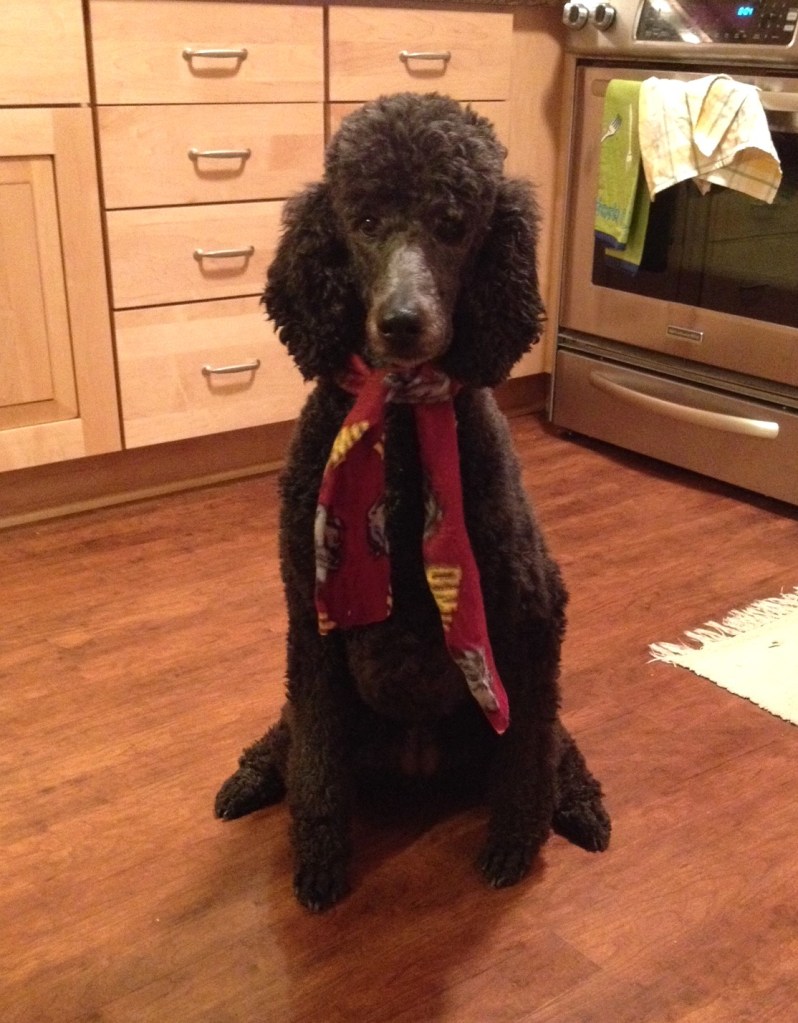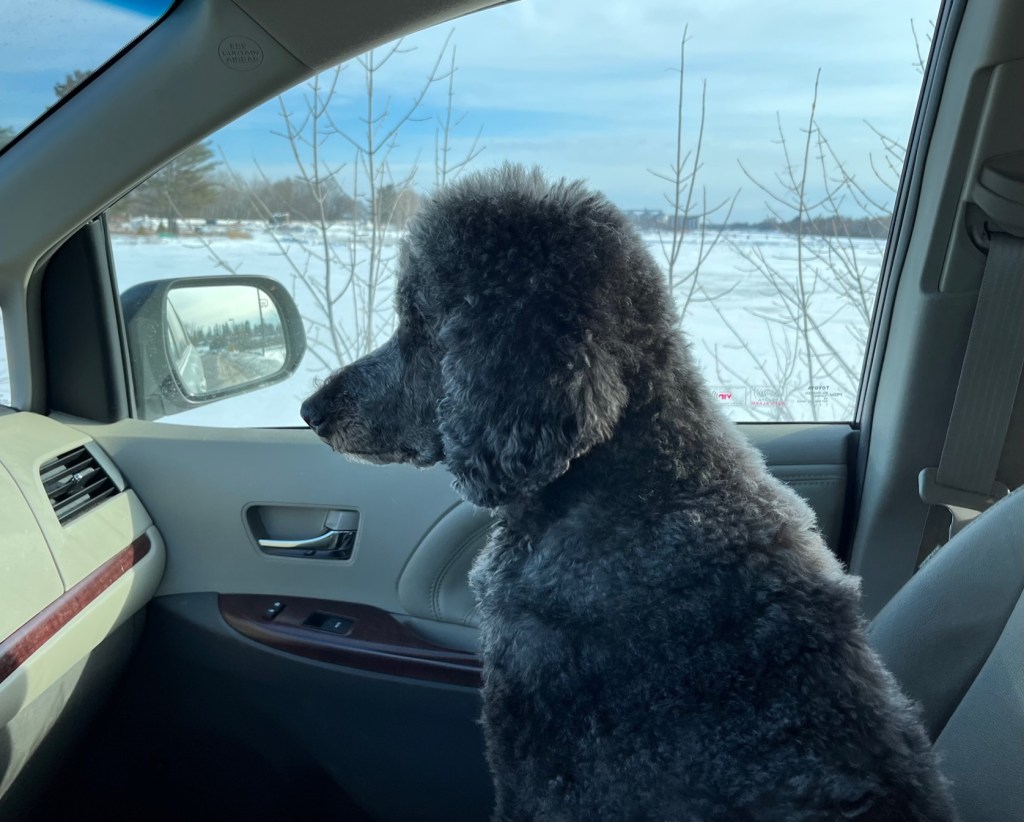
Nellie (my granddog): I heard you suggested taking me through the carwash.
Me: I’d thought about it.
Nellie: Well, let me tell you, I don’t even like windshield wiper blades.

Nellie (my granddog): I heard you suggested taking me through the carwash.
Me: I’d thought about it.
Nellie: Well, let me tell you, I don’t even like windshield wiper blades.

I recently finished a short story, and for the past few weeks, I’ve been reading and rereading it and sending it to my favorite readers for feedback. After minor revisions and edits, I think it’s done. I’m happy with the story now. But I almost ditched it because I’d spent months (on and off) trying to figure out how to write this particular story. As proof, I have multiple handwritten versions in a journal and several other attempts saved on my computer. None of those drafts were salvageable.
I had decided to use present tense and third-person point of view. But I couldn’t find a way into the story — each draft lacked a beating heart. The real problem? My third-person narrator desperately needed a voice, and I couldn’t find one. I kept putting the story aside and working on other writing. And I kept reading: fiction, nonfiction, and short stories.
It would be a short story written by Raymond Carver that gave me an idea.
Although, if you read the Carver story, you might not see its connection to my story because our styles and voices are so different, plus his story uses past tense and first-person point of view. So, what was it about the Carver story that inspired me? Narrative distance. Carver’s first-person narrator tells his story from the distance of years gone by, even though there are some closeups. As I read Carver’s story, I became giddy. A hundred-watt light bulb lit up over my head. I’d found a way to tell my story. I needed to keep my narrator at a distance.
I began my short story anew — on a blank page, without even a glance at the other drafts. I did keep the present tense and third-person point of view, but I created narrative distance. It worked. That distance gave my narrator a voice, which in turn gave my story a heartbeat.
And I’m grateful because something about the story wouldn’t let me go. It kept pleading, “Just give me one more chance.”
Experienced writers tell beginning writers to write, write, write. They also tell beginners to read, read, read. I used to think if I read while I was writing, I would end up writing like the author I was reading. But that just doesn’t happen. Instead, I’m inspired. I pay attention to how an author crafts her story, from sentence to paragraph, from beginning to end. And sometimes (thank you, Raymond Carver), I come across a technique that I can apply to something I’m currently writing.

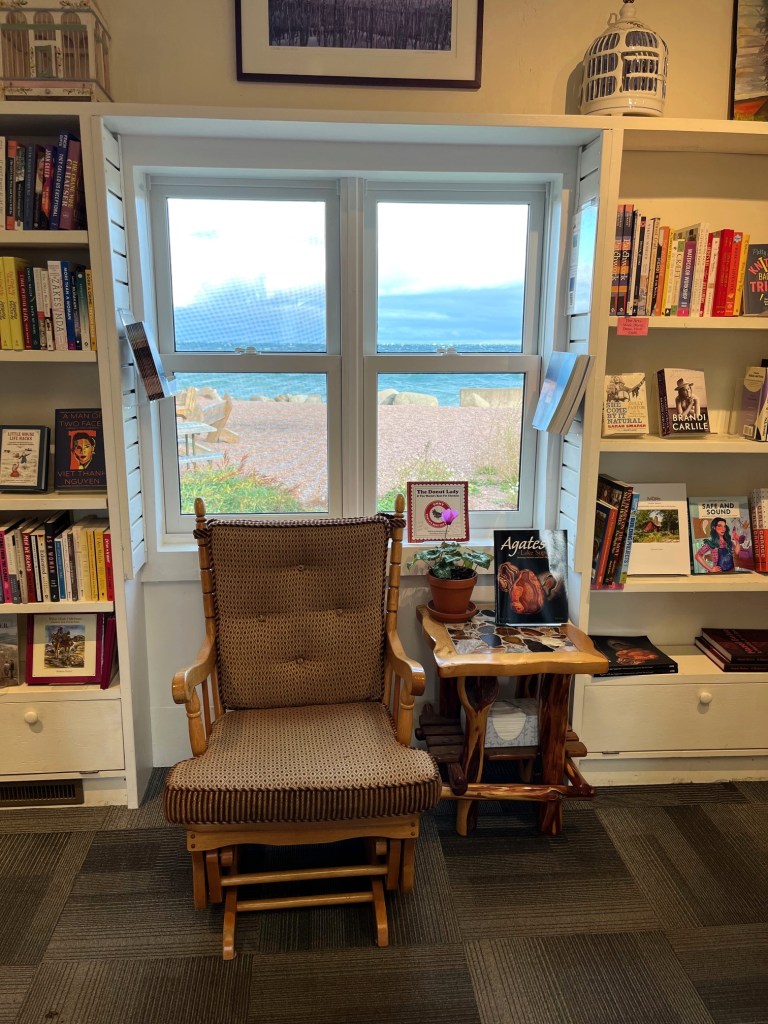
On the shore of Lake Superior, there is a small independent bookstore in Grand Marais, Minnesota, called Drury Lane Books. It’s my happy place. When I feel tired, sad, angry, or bored, I conjure up an image of the charming store, then I walk inside and sit in the window seat lined with a bright-blue cushion. In my hands I hold the perfect book, pulled from a glossy-white shelf. And I fall hopelessly in love with the characters and their stories. It’s Zen.

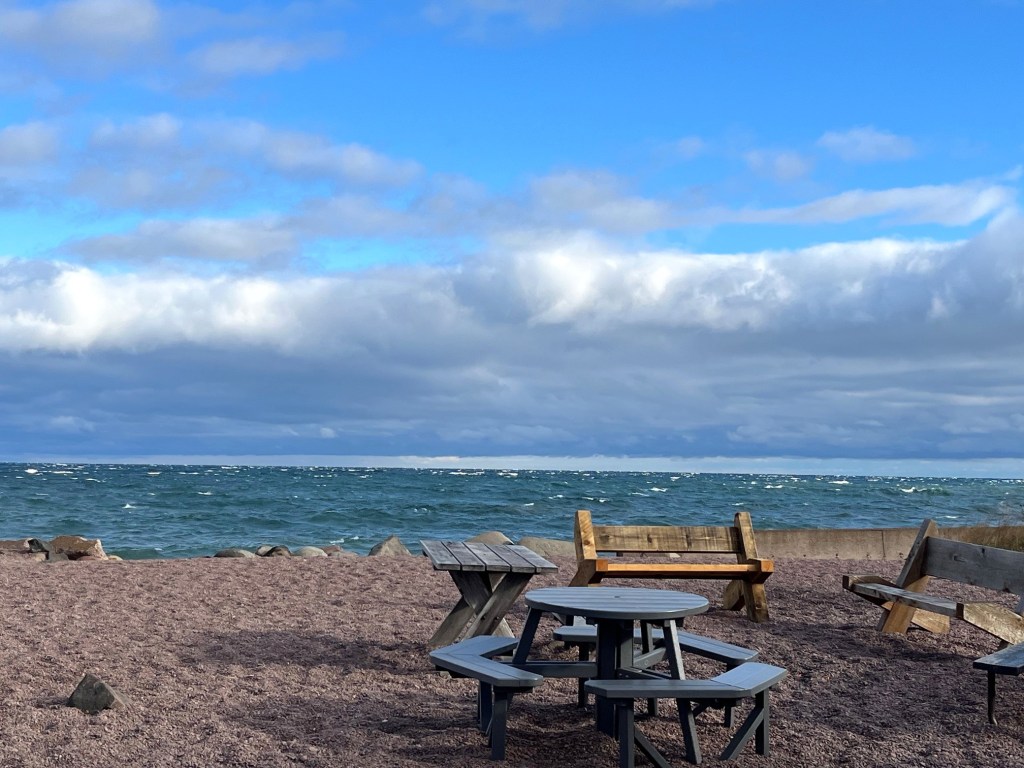
Last October my sister and I actually visited Drury Lane three times in one weekend. (I bought a collection of short stories and two novels.) During our first visit, the churning waves on Lake Superior roared so loudly that conversation outside the bookstore was difficult, unless we wanted to shout. And while we could have sat in the wooden chairs on the beach and read our new books, the cold, strong-fisted winds would have ripped pages from our hands. The next day the winds abated, but it was still chilly. So, we read our books in a local coffeehouse while sipping hot mugs of tea and coffee.
Drury Lane dreaming puts a smile on my face.


When the busy day is done, all the walks and treats and belly rubs, find your furry buddy and close your eyes. And dream your doggie dreams.
Dreams of fast runs, forest paths, green fields, chattering squirrels, hopping rabbits, and chittering birds.

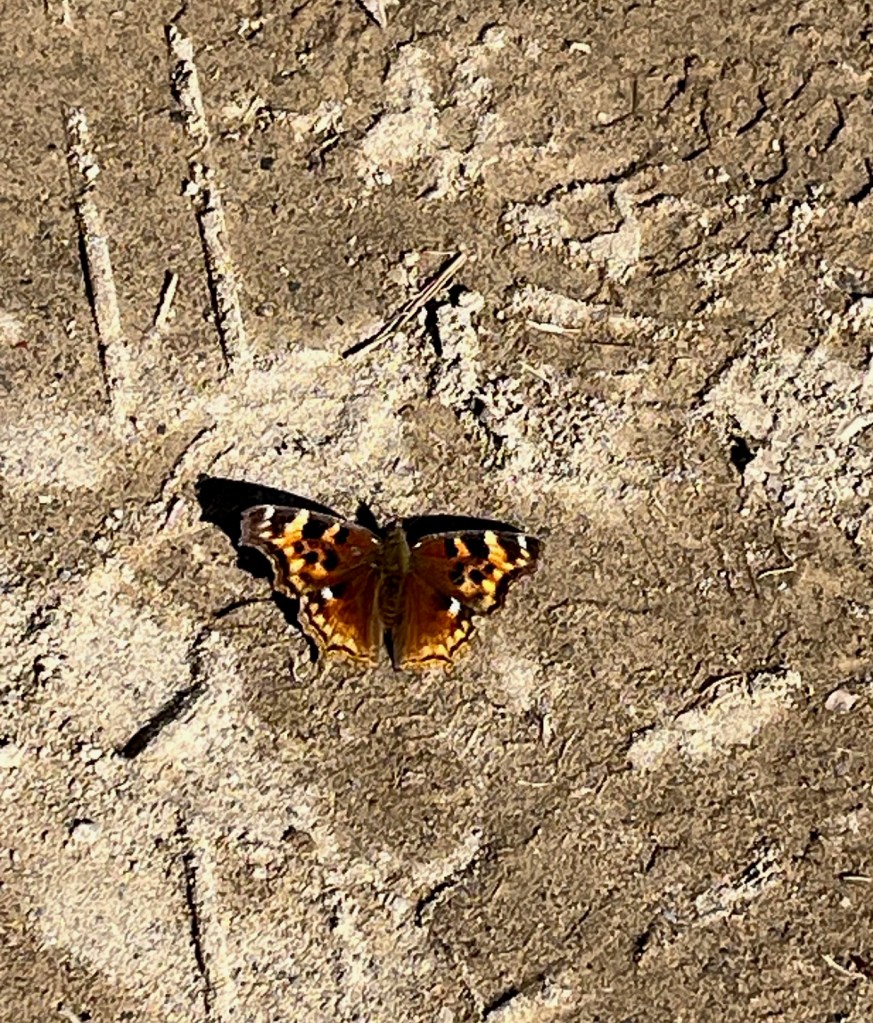
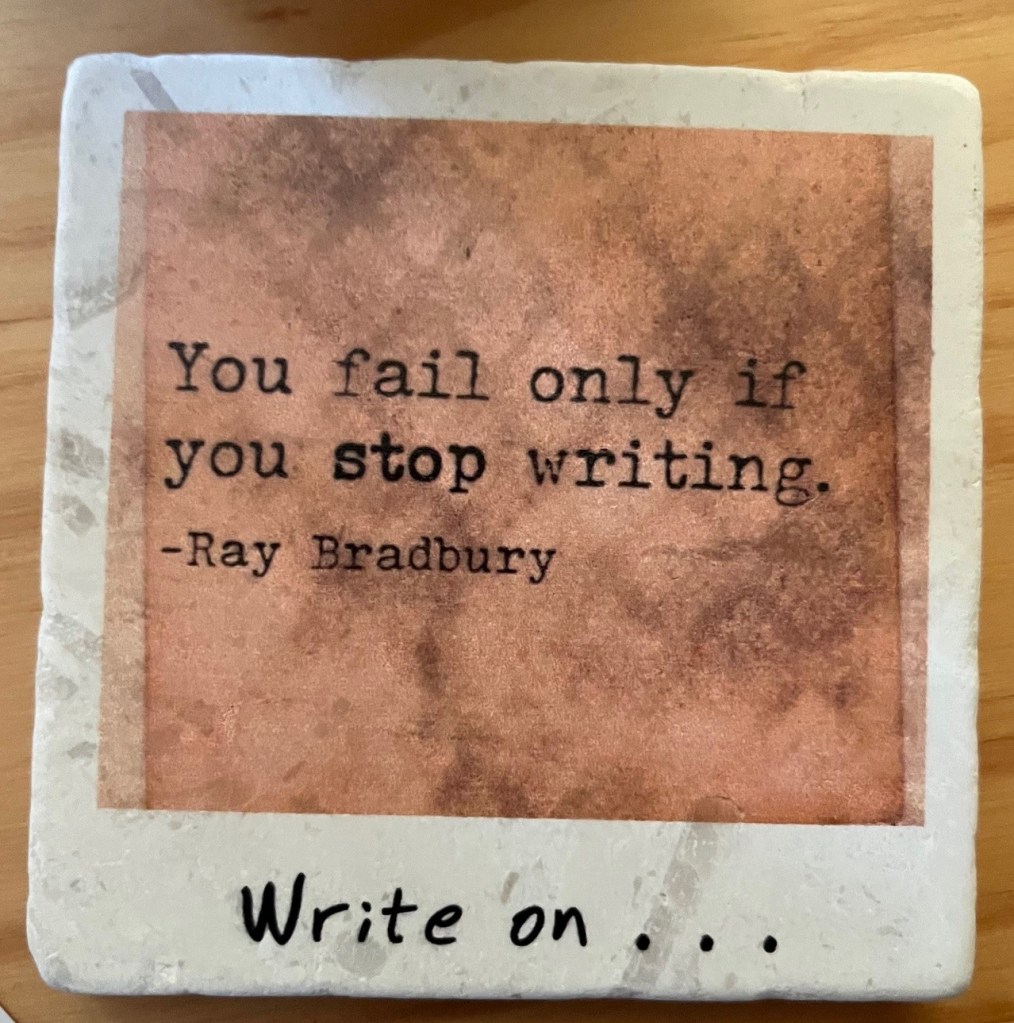
It’s Groundhog’s Day and Punxsutawney Phil has declared there will be an early spring, but I still wore my long underwear when I walked Ziva this morning. Valentine’s Day is twelve days away, and my Valentines are addressed and ready to mail. There is an extra day in February, which I plan to spend reading. I completed and submitted a creative nonfiction essay based on the theme migration. (I wrote about monarchs.) I was happy with the piece when I finally submitted it (just hours before the deadline). But while writing it, I contemplated ditching the essay to work on a short story I’m writing. Sometimes when I write a piece (like that migration essay), I feel like I’m wrestling with a tornado. To motivate myself, I kept my coffee cup on a coaster with a Ray Bradbury quote, which my sister had sent me — “You fail only if you stop writing.”
Today I’m returning to my short story. But before I dive into another writing hole, I want to share some reviews of recent reads that I have enjoyed. They are in no particular order.

Two States of Single: Essays on Family, Love, and Living Solo by Julie A. Jacob [Leaping Poodle Press, August 2020]
Julie A. Jacob’s book is a collection of well-crafted, engaging essays. Her essays follow the arc of her life as she describes her years in Chicago; a daring adventure in Brazil; joining sports clubs for young professionals; buying her own condo, then later on a house; taking a chance on love; caring for her aging parents; and losing her parents.
Vivid writing and crisp dialogue breathe life into Jacob’s essays, which resonate because of her ability to convey why each story matters, both to her and to her readers. By the time I finished Jacob’s collection of essays, I found myself longing to meet with a group of fellow readers, sip a good latte, and discuss Jacob’s essays. Her book would make a wonderful nonfiction read for a book club because we all have stories and insights to share about our choices, careers, loves, family, sorrows, and joys.

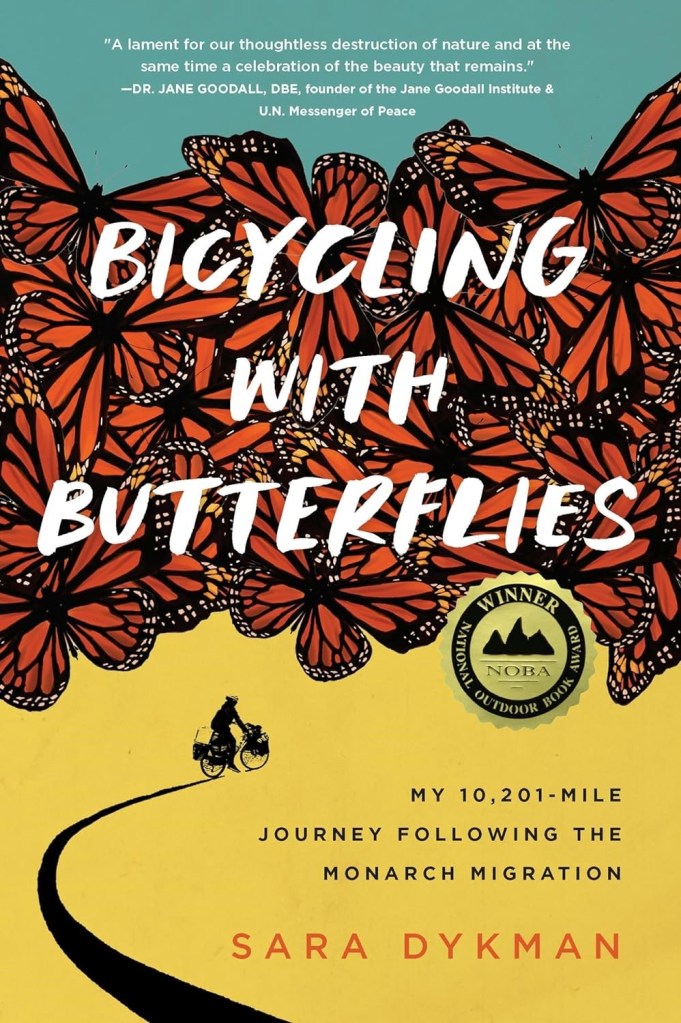
Bicycling with Butterflies: My 10,201 Mile Journey Following the Monarch Migration by Sara Dykman [Timber Press, Inc., 2021]
Sara Dykman’s book is part memoir, part science, part ecology, part travelogue (for bicyclists), and completely engaging. I read her book as part of my research for my essay on monarch migration, and I learned a lot about the migration of monarchs, which is both complex and fascinating. I also learned how climate change and habitat loss are threatening monarchs and their migrating way of life. In order to inform the world about the plight of monarchs, Dykman bicycled over ten thousand miles, from the El Rosario monarch sanctuary in Mexico, up to New England, into southern Canada, through the Upper Peninsula of Michigan, back down the central United States, then returned to El Rosario. She strived to keep pace with the monarchs. Along the way she visited classrooms and community centers and gave talks about monarchs and their habitats. She met interesting people, delighted in Mother Nature, and overcame logistical problems.
Dykman writes about biology using creative language and imagery, drawing readers into both her remarkable journey and the amazing migration of monarchs. Readers will learn so much about nature through her beautiful prose. When I wanted to give up on my monarch essay, I thought about the ten thousand miles Sara Dykman bicycled, and told myself to stop whining about writing a twenty-five-hundred-word essay.

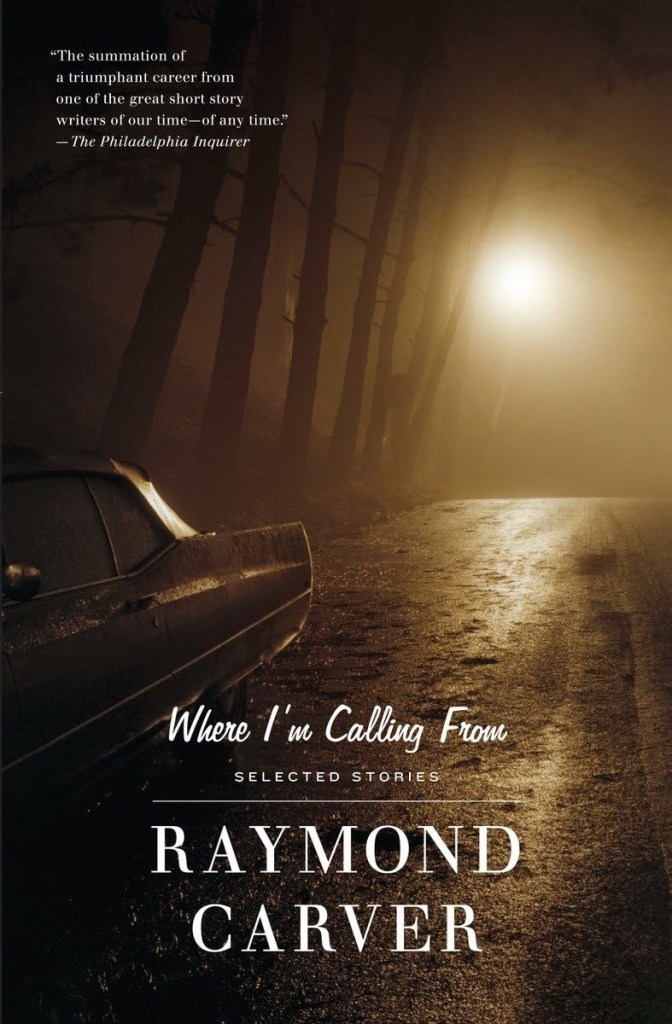
“The Third Thing That Killed My Father Off” by Raymond Carver [This short story appears in Where I’m Calling From, a collection of Carver’s short stories. First Vintage Contemporaries Edition, 1989]
“I’ll tell you what did my father in. The third thing was Dummy, that Dummy died. The first thing was Pearl Harbor. And the second thing was moving to my grandfather’s farm near Wenatchee.” And so begins the narrator, who is now a grown man looking back at an event, Dummy’s death, that killed his father’s spirit.
There are two things Carver does brilliantly in this short story. First, the dialogue and descriptions he includes. Second, the conversations and actions he omits. And between what is on the page and what lives only in the reader’s mind, Carver tells a powerful story, layered with connected themes. I read it, and then a few weeks later, I read it again.
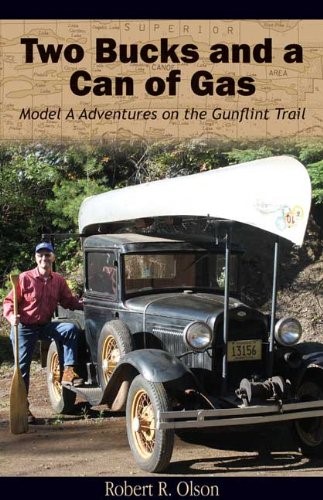
Two Bucks and a Can of Gas: Model A Adventures on the Gunflint Trail by Robert R. Olson [North Shore Press, 2012]

This is a charming series of nonfiction stories about the friendship between a man, his Model A truck, and the Gunflint Trail. Author Robert Olson develops his love of hunting, fishing, and the Model A Ford truck from his father. Olson is seven years old in 1952 when his father brings home the 1930 Model A truck.
Olson’s stories are well-written, and I liked learning about the versatile, can-do Model A truck. Once Olson has his driver’s license, he starts driving the truck to the Gunflint Trail for hunting and fishing, even during the bitter cold winters. At first he camps in an enclosed structure in the truck’s bed, then he builds a cabin. The Gunflint Trail calls to Olson, and he spends as much time as he can in the northern Minnesota wilderness. And even though roughing it during cold winters wouldn’t have been my cup of hot chocolate, Olson’s love for the wilderness, and the Model A truck that took him there, shines through.

Ziva was born in Barrett, Minnesota, on a rolling farm, but has lived her life in Wisconsin at the tip of Lake Superior. Her father’s name was Rufus and her mother’s name was Ziva. So, yes, Ziva is named after her mother, but she is also named after Ziva David from the TV show NCIS. I think the Ziva David character is very kick-ass with a great sense of humor. Our Ziva, however, is a forty-six-pound baby, who has more in common with the Cowardly Lion. But our Ziva does make us laugh. Her full name is Ziva Baby, and it suits her

If I show you a picture of Ziva, you will probably think she is a black poodle. But, we’re not so sure. When Ziva was three-and-a-half months old, two different poodle breeders told me she was actually a blue poodle. “What’s that?” people sometimes ask. In Travels with Charley, John Steinbeck describes his blue standard poodle, Charley, by saying that he looks like a dirty black poodle who needs a bath.
When she was three months old, I enrolled Ziva in a puppy socialization class. She had mixed feelings about the course. She was okay with the part where she got to sit on my lap while the dog trainer answered questions. And she didn’t mind being passed around from human to human. But when it was time to mingle with the other puppies, she crawled under the bench and hid behind my legs. Finally, the dog trainer placed us with a group of designer micro dogs, figuring the teeny-tiny pups wouldn’t be as scary. Ziva still crawled behind my legs. When she finished puppy socialization class, she was given a certificate of completion. Purely a feel-good thing because she was too shy to socialize with the other puppies.

Riding high on Ziva’s lack of success in the puppy class, I enrolled her in an obedience class. She loved it. No one expected her to play with the other dogs. She excelled, and after two sessions, she was clearly the teacher’s pet. Me, not so much. Turns out it was not your traditional sit-stay-come-heel class. I had unknowingly enrolled Ziva in a class that was for people who wanted to compete in dog shows or obedience trials with their canines. Ziva learned so quickly that the dog trainers used her to demonstrate different walking moves and turns. The problem? When I had to perform with Ziva, I was all left feet, with no sense of rhythm. Ziva got praise, I got scolded. We only went back to the class a third time because I had to return a collar I had borrowed. After we dropped off the collar, I told the instructor I had to take Ziva out to go potty. But we got back in the car, and feeling like that adolescent girl who couldn’t make the pom squad, I cried. Ziva licked my chin, and crawled onto my lap. We became dog school dropouts.

For years Ziva was a reader — books, magazines, and newspapers. She loved to chew on the written word. I still have the copy of All Quiet on the Western Front that we both savored, except I wasn’t the one who left teeth marks on it. I learned to walk around the house and make sure every book and magazine was put where she couldn’t reach it. But her desire to read triumphed, and she became resourceful. She put her paws on tables and scooped up books. She threaded her face between two couches set at a right angle and slipped my quilting magazines off the bottom shelf of the end table. She poked her snout between the chairs at my desk (placed to keep her out) and selected books off the ledge under the desk. When I successfully blocked these accesses to my books and magazines, she started reading boxes of tissues. So, I left old newspapers on the coffee table in case she wanted to read. About once or twice a month, I’d return home to find shredded newsprint all over the floor. These days she seems to be over her urge to “read.” Perhaps she has become farsighted.

If her sister, Cabela, had a toy she wanted, Ziva would run to the back door and pretend she wanted to go outside. Cabela loved to play outside, so she would drop her toy and run to the door too. My husband or I would open the door. But as soon as Cabela was outside, Ziva turned around and grabbed the toy Cabela had dropped. Cabela is gone now, but Ziva uses this technique on my husband and me. She stands by the back door and pretends she wants to go outside, when we open the door, she does a half turn and stands in front of the microwave, looking up at her bowl of treats. We laugh at her and turn away. But she will do it again and again because she occasionally gets the treat.

Ziva loves to go for rides. She knows when it’s Sunday morning because that is grocery shopping day. She loves to hear “Want to go to the bank?” because she can withdraw treats. When we get the suitcases out, she knows we are going to Michigan. Sometimes Ziva gets carsick, so we keep old towels and blankets on the van floor, and on long trips we give her Dramamine. She is a true road warrior.
And a kind, loving dog.


Ziva is ready for the big game between the Buffalo Bills and the Kansas City Chiefs. She believes she has the best seat in the house. It’s a bed sized for an Irish Wolfhound or a Great Dane. She has room for a companion on this bed, but she would object to another dog sharing it. However, she would share her oversized cushion with my seven-year-old grandson, who snuggles with her on the couch. He has already tried out the bed and declared it “very cozy!”

And no, Ziva doesn’t think it’s necessary to watch the action. She will just listen to Tony Romo and Jim Nantz call the game. She doesn’t care about the temperature and wind conditions on the field. She doesn’t care who wins. But she likes that Taylor Swift is there cheering on her beau. And by the way, so does my eighty-three-year-old mother, who went to see Swift’s Eras Tour in the theater and loved it. After all, “Girls just wanna have fun, that’s all they really want.”
And a cushion fit for a pop star.


My essay “European Tour 101” appears in Tales of Travel, a Duluth Publishing Project. This collection of poems, creative nonfiction, and photographs center around the theme: Lessons Learned while Traveling.
The anthology was curated in early 2023 by talented University of Minnesota-Duluth students from a class taught by Professor David Beard, who gave his students the gift of a real-world project.
Participating in this project was fun right from the start. I discovered the call for submissions on a Facebook page. Right away I knew I would write about the month-long trip I took to Europe when I was seventeen years old. I had been itching to write about my European trip because I have fond memories of traveling through six cities, in five countries, in twenty-seven days. But I always wondered where I could submit the essays. My trip was too long ago to be relevant for travel articles. And my European tour wasn’t filled with angst or tragedy or mind-bending revelations that would be worthy of thought-provoking, rousing essays convincing editors to say, We’ve got to publish this!
But the theme: Lessons Learned while Traveling was perfect — proving if a writer is patient, sooner or later her submission mate will arrive. Some of my best memories from my European trip could easily be described as lessons learned.
Fortunately, memory didn’t prove to be a big problem because I have a scrapbook filled with postcards; pamphlets; ticket stubs from museums, trains, subways, and buses; my airline boarding pass; maps; menus; and receipts. Plus, I have lots of photos. I quickly came up with an idea for an essay, but I spent hours writing and revising. I wanted it to be perfect, so perfect that the editors would say, We’ve got to publish this!
I divided my essay into sections: Travel without a Hangover; Even Muscle-Bound Bulls Have Feelings; If You Don’t Know the Language, Don’t Insult Those Who Do; Patriotism is Fine, But Ditch It for the Ballet; Serenade Your Tour Guide; Be Alone with Yourself in a Place You’ve Never Been Before; and Freedom from the Threat of Violence.
I was thrilled when my essay was accepted. My fondest memories about one of the best times in my life would be in print. And out there in the world.
Making it even sweeter, Professor Beard and his students hosted a book lunch for the writers during the spring semester, even though the book wouldn’t be released until December 2023. But college classes change at the semester and the students who worked on Tales of Travel would be off to other classes or perhaps have graduated when the book came out.
Held in a university classroom, it was a wonderful book launch, and there were a couple of copies of the book that we could hold and thumb through. I’m sure each writer looked for their own piece of writing in the book. I know I did. We munched on cupcakes, cookies, and assorted chips, and sipped bottles of water.
Each writer was invited to read for about five minutes. Some of the students had pieces in the anthology, but I think only one or two of them read. When they were called upon, most turned a ghostly white, lowered their eyes, and shook their heads. They were too nervous to read in front of strangers, most of whom were old enough to be their parents or grandparents. But we older folks were nervous too. I could see it in our hesitant walks to the dais. I could hear it in our voices that trembled. I could feel it in our lungs as we reminded ourselves to just breathe. Because young or old, we shared a common wish — that someone would like what we had written.
After the reading, we all gave a collective sigh of relief. It was over, and no one had fainted. We mingled and thanked the professor and the students. When people started to leave, Professor Beard pleaded, “Please, have more food. Take some home with you.” He didn’t want to haul it back to his car.
I’d already had a cupcake, but I grabbed a bag of Fritos, my favorite salty treat. Something to savor on my ride home, along with the rest of the evening.
[Both the hardcover ($29.99) and paperback ($5.99) versions are available on Amazon. Click here: Tales of Travel, a Duluth Publishing Project.]

My husband and I walked into the grocery store on Sunday morning, and while he bought his weekly lottery ticket, I walked toward the deli. I never hang around while the clerk at the service counter tells him that he hasn’t won anything. And I hope if he does win something, it will only be a small comfortable amount, enough to pad the savings account a bit, with some left over for a reasonable amount of fun, like a car trip to Maine instead of a first-class world cruise.
Before shoppers can reach the deli counter, they are tempted by a large oval salad bar, filled with leafy greens, hot and mild peppers, shredded cheeses, tomatoes, sliced eggs, julienned carrots, olives, and loads of other assorted toppings. I never buy anything from the salad bar. It’s expensive, so I slice and dice my own salad goods. Also, while I’m not too worried about germs, I draw the line at eating food that has been sitting in the open, and crammed with serving utensils that have been handled by lots of other people. But I always look at the salad bar because it’s big and strategically placed.
As I neared the salad bar, I spotted a gleeful chickadee pecking at some salad fixings. I thought about the chickadees in my yard who visited the bird feeder and had to eat ordinary black sunflower seeds. I stood and watched the audacious little bird who had invaded the grocery store. I should have been grossed out, but I was amused. Humans take so much wildlife habitat that I had to admire the plucky little fellow who had somehow found his way into a large grocery store and was helping himself to the salad bar without using tongs.
I wasn’t the only human who noticed the black-capped bird enjoying a spread so big he must have felt he had won the lottery. A deli clerk hustled up to the salad bar and tried to shoo the bird away, but chickadees aren’t that intimidated by humans, and he refused to move. The food was too good. The clerk reached for him with both of her hands, and I think she could have managed to cup the feasting bird in her palms. But just as she was about to try, she hesitated and pulled her hands back. She went to the deli and came back with two plastic containers. She tried to capture the bird between the two containers, but at the last moment the bird zipped to the other end of the salad bar and kept eating, after all it was a smorgasbord.
The clerk rounded the counter. “Get away from my salad bar,” she said, waving her hands at the bird who took flight and landed among a gathering of grapes. The grapes were all packaged, so he headed to the tomato stand. When the clerk approached, he decided to check out the watermelon. She followed him, and he took off again. He flew to the meat department and landed at the back of a shelf filled with trays of chicken. Two more clerks arrived and the three of them stood in front of the meat section, discussing how to catch the chickadee. But the little Houdini escaped again. This time he soared to the ceiling, where he could evade capture and have a bird’s-eye view of the store while waiting for a second chance at the salad bar.
My husband and I finished our shopping without seeing the chickadee again. After we paid for our groceries, I turned to head back to the deli. I wanted to ask if they had caught the chickadee. But I stopped. If they had hurt or killed it while trying to catch it, I didn’t want to know. I had been tickled by the little bird who had invaded the grocery store and grazed at the birdfeeder of his dreams. And, I worried the little fellow’s bold adventure would end badly. I felt guilty that I had taken joy from a situation that had put the wee bird in peril.

This past week I had the pleasure to sit and color with some five- and six-year-old children. We sat in small chairs at a short-legged table. Scattered along the table were boldly colored plastic travel containers meant to hold bars of soap, but which instead held crayons, both broken and whole.
Our coloring sheets were all winter themed. Snowmen, mittens, penguins in stocking caps, penguins ice skating, a snow globe filled with miniature log cabins.
We chose our colors carefully and kept our eyes on our papers because we each had a vision for our piece. But, of course, we talked — we were, after all, a community of coloring companions.
Inspired by the picture of mittens, we talked about gloves and mittens. They’re the same thing, said one child. Actually, I said, with mittens all your fingers stay together, and with gloves each finger goes in a separate finger. The child kept coloring her mittens, and said, Yes, but they’re the same thing. I let it go. She will learn about the differences between gloves and mittens soon enough. No need to rush these things.
We talked about our artwork. Do you like my rainbow mittens? Look at my penguin’s hat, isn’t it pretty? Do you like my picture? The children weren’t shy about crowing or asking for compliments. At five and six, they’re so unabashed — Look what I made, don’t you love it? I answered each one of them — Yes, so colorful! Such a pretty green hat! So lovely!
It won’t stay that way. Soon they’ll learn: Don’t boast, don’t brag, don’t fish for compliments. And for a moment, as I looked at their proud, happy faces, I wondered if there couldn’t be something in-between.