[I reviewed Two States of Single for Wisconsin Writers Association (WWA) almost a year ago. Julie Jacob’s book is a collection of memoir essays. I loved this book the first time around. In October 2024, I met Julie at the WWA writer’s conference in La Crosse. I was an excited fan. It was fun to meet someone whose book gave me such pleasure. When I returned home from the conference, I reread Julie’s book. I’m happy to say, I loved it just as much the second time around, even though I knew how each essay ended. So I’m posting my review that was posted on the WWA website.]
Two States of Single: Essays on Family, Love, and Living Solo by Julie A. Jacob is a collection of well-crafted, engaging essays. In her opening essay, “Anything You Could Want,” readers meet Jacob’s grandparents, aunts, uncles, sister, and parents as she recounts the parties her mom and dad hosted when she was a child and living in southern Wisconsin. With humor and tender nostalgia, Jacob describes her parents working together as a team to provide a bounty of food and love for the guests who would soon arrive. In this essay, Jacob recognizes a credo by which her family lived: “They knew that life was filled with bumps so they enjoyed themselves while they could.” This theme threads its way throughout her book.
Jacob’s essays continue to follow the arc of her life as she describes her years in Chicago; a daring adventure in Brazil; joining sports clubs for young professionals; buying her own condo, then later on a house; taking a chance on love; caring for her aging parents; and losing her parents. Throughout Jacob hopes to marry and have children, but as the years slip by, neither marriage nor children happen for her. However, her desire to find a soulmate does not drive the book. Instead, what shines through in Jacob’s essays are her decisions to live in the present and to explore new roads rather than waiting for something that may never happen.
Vivid writing and crisp dialogue breathe life into Jacob’s essays. Readers will feel they know the people and places she writes about. Her essays are more than just good stories. They resonate because of Jacob’s ability to convey why each story matters, both to her and to her readers. In memoir writing a writer is supposed to do more than tell an anecdote. The essay needs to answer the question, “So why should I, the reader, care about this?” Jacob’s essays impact readers because as she writes about her past, she answers that question every time. As readers discover why each of these moments are important in Jacob’s life, they are given the gift of being able to do the same with the significant events in their lives.
By the time I finished Jacob’s collection of essays, I found myself longing to meet with a group of fellow readers, sip a good latte, and discuss Jacob’s essays. Her book would make a wonderful nonfiction read for a book club. Because married or single, male or female, we all have stories and insights to share about our choices, careers, loves, family, sorrows, and joys.
Ever have someone tell you to keep your head down? I interpret that to mean I should put my head in a book. And sometimes a book is the best place to be. I’ve been hanging out in a lot of books lately.
The Ski Jumpers by Peter Geye. I read The Ski Jumpers because I read The Lighthouse Road and Safe from the Sea, both beautifully written novels. Geye writes stories with brooding, flawed characters who are self-reliant and tough, yet vulnerable, which makes me like them and root for them. The vivid landscapes in Geye’s novels become a character that his protagonists must work with and sometimes fight against. In The Ski Jumpers family secrets gather like dust bunnies hiding in the dark, under a heavy, nearly immovable antiquated piece of furniture. Because each family member knows only a part of their family’s secrets, misconceptions develop and resentments grow. Pops Bargaard loves his wife, Bett, but she struggles with her own demons, one of which is her inability to love both of her sons. She dotes on Anton while despising Johannes “Jon.” Pops, an accomplished ski jumper in his youth, introduces his sons to the sport. Ski jumping becomes an escape for Pops and his sons. And as the years go by, ski jumping becomes what Pops and his sons talk about when they are still hiding secrets, when they aren’t ready to talk about their pain, when they are holding on to happier times. One of the joys in Geye’s novel is his detailed, vivid descriptions of ski jumping, which fly off the page, taking me along, letting me ski jump with Johannes and Anton. At some point while reading Geye’s book, I skipped to the “Acknowledgments,” and as I had come to believe, I found that he grew up ski jumping, which explained how he could write so intimately about it.
Still Waters by Matt Goldman. I read Still Waters because I’ve read three of Goldman’s Nils Shapiro detective novels: Gone to Dust, Broken Ice, and The Shallows, and enjoyed them all. Still Waters is one of Goldman’s stand-alone novels. It’s a murder mystery, but one that is solved with the help of ordinary people. Siblings Liv and Gabe, who are estranged, must reunite for their older brother Mack’s funeral in their rural northern Minnesota hometown. Mack’s death has been ruled a medical event, but Liv and Gabe receive emails from their dead brother saying he was murdered. While Liv and Gabe try to make sense of Mack’s email and uncover the truth about his death, someone else dies, and it’s clearly murder. Liv and Gabe discover mysterious letters in a box that belonged to their deceased mother, and they suspect the letters hold the key to Mack’s death and the second murder. This smartly woven mystery with multiple theories and a number of potential suspects kept me guessing. Plus, I could read it before I went to bed and still drift off to sleep without checking under the bed. (I like mysteries without psychopathic serial killers.) Goldman’s mystery does have some scary moments, but only enough to make the heart race a little.
Endurance: Shackleton’s Incredible Voyage by Alfred Lansing. I read Endurance by Lansing because I like reading about shipwrecks. (Click here for proof.) The Endurance isn’t wrecked on a shoal or reef, she isn’t tossed over by a violent storm, and she isn’t irreparably wounded in battle. Instead, she has purposefully sailed into the Weddell Sea filled with ice floes, looking for a place to land on Antarctica. She is stalled by the ice, which sandwiches her in a death grip, squeezing and squeezing until she groans, and parts of her snap like toothpicks. After becoming unseaworthy, her crew have no choice but to abandon her and their mission to be the first to cross the width of Antarctica using sled dogs. Now the twenty-eight men must survive the beyond-bitter cold, the howling winds, and the snow and rain while hoping to rescue themselves. When Alfred Lansing wrote this book, he had access to the daily journals kept by some of the men, and he was able to interview some of the survivors. Lansing took great care to write an accurate and descriptive account of one of the greatest survival stories, and his book is a tribute to the human ability to put one foot in front of the other and to cling to hope. When Endurance was published in 1959, it was a critical success, but not a commercial one. By the time the book became a commercial success in 1986, Lansing was dead. If you read this book curl up with a blanket and a cup of something hot! This book chilled me to the bone!
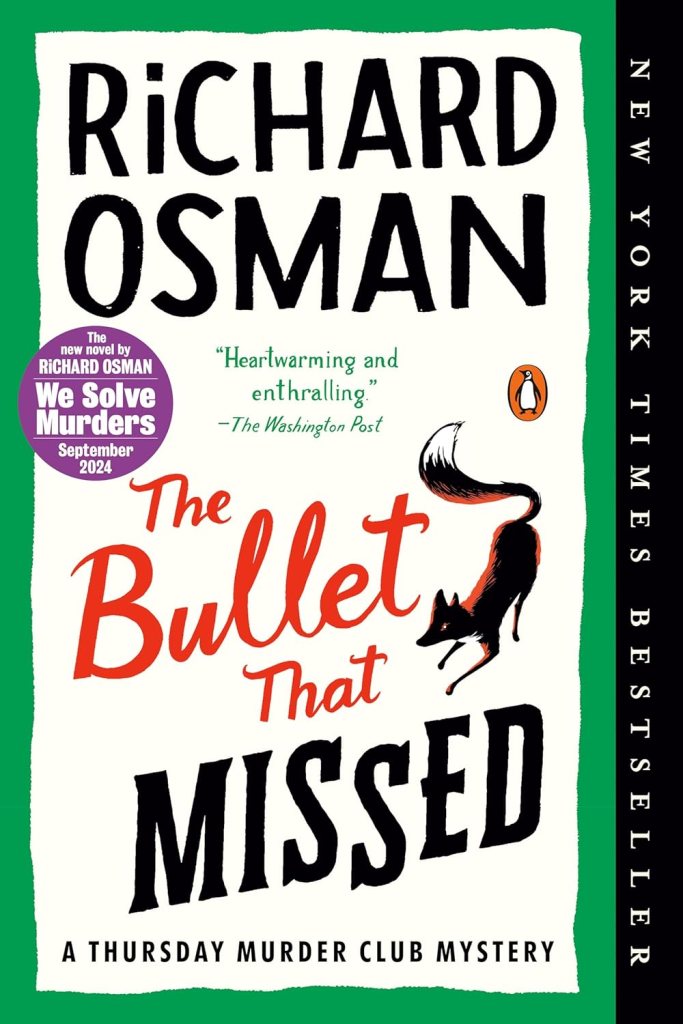
The Bullet that Missed: A Thursday Murder Club Mystery by Richard Osman. I read this book because I read the first two books in the Osman’s series, and they were fun, fun, fun. These murder mysteries are a treat. They are cozy but do have some un-cozy scenes. (And yay! No serial killers, which are so overdone.) Most of the main characters live in a retirement home in the English countryside. While they participate in some of the traditional retirement activities, they have one that’s unusual — they meet on Thursdays to look at cold cases that haven’t been solved. The unsolved murders somehow become entangled in a new murder case, which then also involves the police. One of the characters, Elizabeth, is a former MI-6 agent, and as it turns out, it’s not easy for her to give up the thrills of spying and sleuthing. Her fellow retirees join in the criminal-case-cracking adventures. This mystery series earns top kudos from me for its characters, its dialogue, and its plots. Most of the characters are senior citizens, but that doesn’t mean they have checked out of life. The older characters in the book are presented as people, who all have the same hopes, dreams, desires, and brains as the younger characters, even if the older ones do occasionally battle aches and pains. Osman’s snappy dialogue creates characters that are witty and quick thinking, conversations often drip with verbal irony and humorous understatements. The criminal characters are well-developed, too. They are brilliant and devious, but, of course, never a match for the Thursday Murder Club. While you could read these books out of sequence, I suggest they are best read in order.
Slaughterhouse-Five by Kurt Vonnegut. I read this book because I walked into Apostle Islands Booksellers and saw it prominently displayed on a shelf. I’ve had people say to me, “Have you read Slaughterhouse-Five? No? Well, you should!” I’ve read articles where writers suggest to their readers, “If you haven’t read Slaughterhouse-Five, you should!” And there it was — Vonnegut’s book — on a shelf, looking at me, waiting for me, so I bought it. Slaughterhouse-Five is described as an antiwar book focused on the firebombing of Dresden in 1945. It follows Billy Pilgrim, a WWII veteran, who time travels from his old age to Dresden, to his wedding day, to life with his family, to a veteran’s hospital, to a planet in outer space, to his youth, like a pinball pinging across a fantasy-themed pinball game. I’m not listing Billy Pilgrim’s time travels in the necessarily correct order; besides, as the story unfolds, Billy travels back and forth among these places in time. But Vonnegut clearly had a plan, and as I read the book, it not only made sense to me, it all worked seamlessly. I never felt like I was being yanked around. A book like Slaughterhouse-Five is hard to explain in words. I like it for its satire, its experimentation, its ambiguity and clarity, and its themes. I like Vonnegut’s simple, but powerful sentences. Slaughterhouse-Five is often spoken of as anti-war novel, and that theme runs through it. However, Vonnegut’s slim novel is thematically rich, and there is much more being said than war is terrible. As I read the novel, I sometimes thought about “The Swimmer” by John Cheever. Raymond Carver’s short stories also came to mind.
Time to go keep my head down in a book. The Heaven & Earth Grocery Store by James McBride is waiting for me.
Next year I’m going to Shetland. I’ve been learning as much as I can about the group of islands, which are so far north of Scotland that most maps represent Shetland with an arrow that points north and the words to Shetland. And you have to take their word for it that it’s up there, beyond the edge of the map.
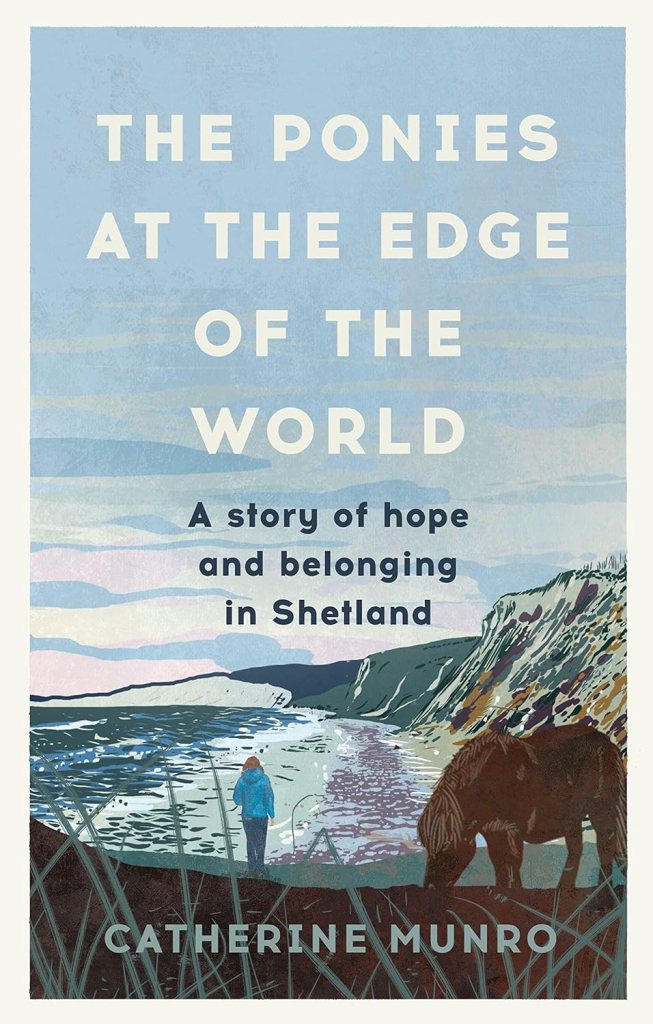
I bought Shetland: Your Essential Travel Guide (2024) by Laurie Goodlad. Her travel guide has a section titled “What to Read before You Arrive” with a list of fiction and nonfiction books. I chose Catherine Munro’s Ponies at the Edge of the World (2022) because where I grew up, we lived next to a farmer who had a small herd of American Shetland ponies, a cross between Shetland ponies and other horses. My sisters and I spent hours petting those ponies and feeding them tall grasses. The farmer who owned them taught us which grasses his ponies liked and how to hold our hands flat while the ponies nibbled their treats from our palms so our fingers wouldn’t get chomped.
What is this book about?
Catherine Munro is an anthropologist who specializes in human-animal relationships. She spent a year in Shetland to study the relationship between humans and Shetland ponies for her PhD. She interviewed people who spent their lives raising and taking care of Shetland ponies. For some Shetlanders, the tradition of caring for the ponies goes back generations.
While Munro’s book focuses on the relationship between Shetland ponies and people, she also describes some of the astonishing wildlife and the mystical landscapes that make the Shetland Islands one of the most unique and beautiful places on earth. She also brings to life the pragmatic and reserved but warm-hearted and community-minded people who live in Shetland.
What did I love about this book?
In her book, Munro describes why human-animal relationships are so important. The bond between the Shetland ponies and the people who raise them, care for them, and love them is fascinating. Shetland ponies developed over thousands of years, adapting to the climate and the terrain of Shetland. These small, thick-coated, hardy ponies became the perfect workmates for crofters who worked the land. Munro talks about the concerns for the survival of Shetland ponies as a distinct breed. She asks us to think about the importance of animals, to see them as our equals, and to understand that a respectful relationship with animals is essential for the survival of all species, including people.
Yesterday I read a blogger’s post stating that the Slender-billed Curlew has been officially declared extinct by scientists, a stark and sad announcement. To read the blog, click here. We need to do better for our earth and the plants and animals that inhabit it.
[You can follow Catherine Munro on Instagram at catherine_m_munro.]
I forgot to take a picture of the pancakes after they were fresh out of the pan, but I think the dogs are more interesting! Ziva (l) and Bogey (r), my mom’s dog
After I made the Pumpkin Bundt Cake, I had six ounces, or 3/4 of a cup, of pumpkin left. (Cooking math is the most important kind of math, and if I could go back in time to my freshman algebra class, I would tell Mr. W, “Who cares about solving for x — there is no x in cooking!”)
So, what to do with the leftover pumpkin? I hate to throw food away. It’s like throwing money in the garbage. And there are other more important considerations when food is thrown away. The waste ends up in landfills. The energy used to raise, cultivate, package, and distribute the food has been wasted. All that investment and those expended resources with no caloric intake to show for it. And as weather patterns change, food will become more scarce.
My husband suggested I make pumpkin pancakes, so I found a recipe that called for a 1/2 cup of pumpkin. All you math phenoms will know this left me with two ounces or a 1/4 cup of leftover pumpkin. (Now, I’m just showing off my math skills.)
This morning I made a batch of pumpkin pancakes, which yielded nine pancakes. We have a few leftover, but my husband will eat them. I put sliced bananas and maple syrup on mine. My husband opted for butter and maple syrup on his.
I still have two ounces of pumpkin. I could try making a pumpkin spiced latte, but that looks like a lot of work, and I don’t have anything to froth the milk. I could try feeding some to my dog, Ziva, but she’s turned her nose up at pumpkin in the past. I could just eat it. I tried a teaspoon when I made the cake, and it’s not bad. The two ounces are back in the fridge. I think I’ll mix them in with my oatmeal along with a sliced banana.
Simply Pumpkin Pancakes
Ingredients
Yields 4 servings of two pancakes each. (I ended up with nine pancakes.)
1 ¼ cups all-purpose flour
¼ cup white sugar
2 teaspoons baking powder
½ teaspoon ground cinnamon
¼ teaspoon ground nutmeg
1 cup milk (I used whole milk)
½ cup pumpkin puree
1 egg, beaten
1 tablespoon vegetable oil
Directions
Sift flour, sugar, baking powder, cinnamon, and nutmeg together in a bowl.
Whisk milk, pumpkin, egg, and oil together in a bowl. Pour milk mixture into flour mixture and stir until just moistened. Batter will be slightly lumpy.
Heat a lightly oiled griddle over medium-high heat to 350 degrees F. Drop batter by large spoonfuls (I used a ¼ measuring cup) onto the griddle and cook until bubbles form and the edges are dry, 1 to 3 minutes. Flip and cook until browned on the other side, about 1 minute more. Repeat with remaining batter.
Yesterday I made a pumpkin bundt cake from scratch. I discovered the recipe on the blog In Diane’s Kitchen. I’m proving a point to Betty Crocker.
On Tuesday I called Betty Crocker. Well, not a real Betty Crocker because she doesn’t exist. Instead, I talked to a representative in the General Mills customer care department. I lodged a complaint because Betty Crocker cake mixes have shrunk — again.
For most of my life, cake mixes were 18.25 ounces. I have some great cake recipes that call for an 18.25-ounce cake mix and build from there, like a decadent chocolate rum cake and a tasty pistachio cake. So about ten years ago when the cake companies dropped the mixes to 15.25 ounces, I wasn’t happy. At the time, I called Betty Crocker and Duncan Hines to complain. (Unlike Betty Crocker, Duncan Hines was a real person, but he died in 1959.) Neither company cared that I was concerned my cake recipes could become obsolete — 15.25 was their new standard. They weren’t rude, not at all. They were apologetic and sympathetic, but I could read between the lines — I could like it or lump it. (The phrase customer care is an oxymoron.) Fortunately, my cake recipes still worked with the 15.25-ounce size.
But last week I discovered there has been another shrinkage. Betty’s cake mixes are now 13.25 ounces. So far Duncan Hines is still weighing in at 15.25 ounces, as is Pillsbury. When I called Betty Crocker’s consumer care department on Tuesday, I told them I would no longer buy their cake mixes. I explained that I wasn’t about to experiment by using a cake mix that is 5 ounces less than the amount called for in the recipe. I further explained that if other companies followed suit, I would make all my cakes from scratch because I have some good recipes. The customer care representative was sympathetic and kept saying, “I’m sorry about that.” She said she would pass my concerns along. But I know nothing will change, except in the future when the cake mix loses more weight.
You can google to find out how much extra flour and other ingredients, like baking soda, to add to the prepared mix. But go ahead and call me “my father’s daughter” on this one: I’m not buying a product then adding what the company should have added in order to make up the difference. One website suggested buying two boxes of cake mix, and adding six tablespoons from the second box to the first box. Then I was to seal up the leftover cake mix and save it to use for other cakes. AS IF!
So yesterday to prove my point to Betty Crocker, I made a pumpkin bundt cake — from scratch. Because I follow the blog In Diane’s Kitchen, the recipe landed in my email a couple of weeks ago. Pumpkin mixed with a dash of cinnamon, ground cloves, and ground ginger makes this cake taste like a slice of autumn. It has the consistency of a pound cake, which pairs well with coffee. And, in my experience, baking a pound cake is more forgiving than baking a regular cake.
Some thoughts to keep in mind if you make this cake:
Diane recommends eating the cake with vanilla ice cream. I’d go with a creamy vanilla custard. However, this recipe calls for three sticks of butter and six eggs, so I skipped the ice cream. I’ve never baked a cake recipe that called for six eggs. This reminded me of one of my all-time favorite novels City of Thieves by David Benioff. Set in Russia in WWII, the two main characters in the novel have been arrested and are to be executed. However, a powerful Soviet colonel promises to pardon them if they can find a dozen eggs for his daughter’s wedding cake. There is war and famine, but the colonel wants his daughter to have an elegant wedding and a big cake, and so an epic quest for a dozen eggs begins. And this bundt cake? That might serve twelve people at the most? It gets six eggs!
The recipe Diane shared says to spray the bundt pan with cooking oil. I used Baker’s Joy. When it was time to remove the cake from the pan, it came out like a dream.
Diane noted that while the recipe said to bake for 60 minutes, she needed to bake the cake for 64 minutes. So did I, but I started with 60 minutes.
I will make this cake again. It was worth the extra time and effort. Besides while I made the cake, I listened to A Lady’s Guide to Gossip and Murder, the second book in Dianne Freeman’s Countess of Harleigh Mystery series.
[To read my review of Freeman’s first book in the series, click here.]
Ziva (l) and Nellie (r), my two favorite dogs, share a seat on a bookstore run.
The winds howl, trees drop leaves, and squirrels, in a frenzy, bury seeds. Halloween decorations are coming down, and Christmas decorations are going up. I wear my down coat and knit hat and sometimes my mittens when walking my dog. It’s the perfect season to enjoy cozy mysteries. I like to tuck them between the more serious books I read.
I enjoy a good cozy mystery, as long as it’s not too cozy. There has to be some close calls, some murder, and some despicable characters. But there also has to be some humor, some quirky characters, and it has to be tame enough to read or listen to before bedtime. Of course, the line between a cozy and a not-so-cozy mystery is subjective, but I know where my line is when I read one.
I have recently discovered two cozy historical mystery series, both set in England, that I like well enough to read the next book in each series.
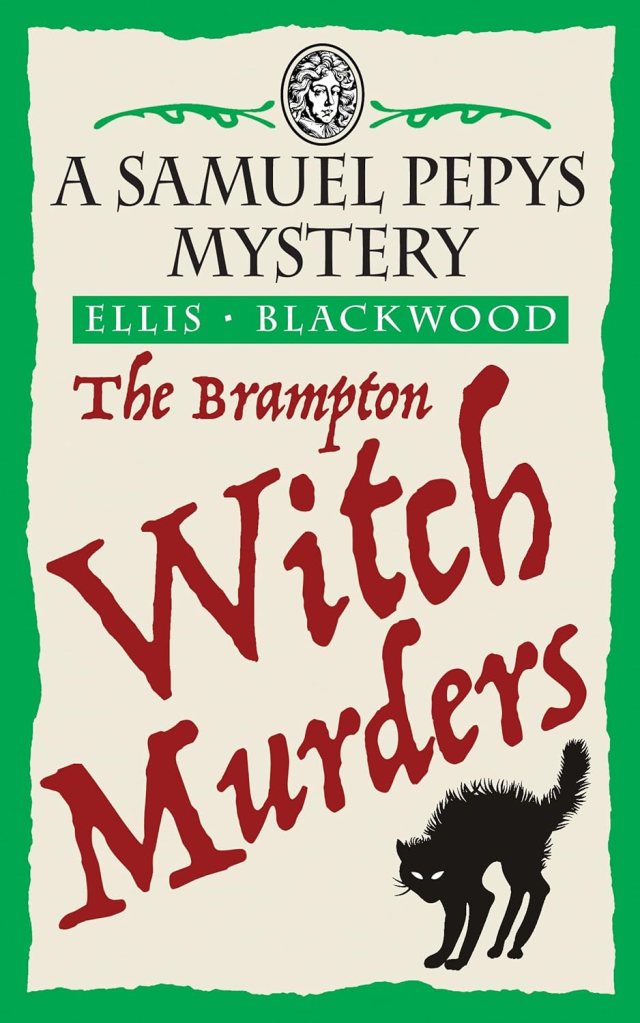
A Samuel Pepys Mystery: The Brampton Witch Murders by Ellis Blackwood
The Brampton Witch Murders is the first book in the Samuel Pepys Mystery series. It’s set in 1666 in England. Samuel Pepys runs an investigating agency in London. He has two inquisitors, Abigail Harcourt and Jacob Standish, who work for him. Pepys learns that his sister, Paulina, has been accused of witchcraft, and Simon Hopkins, a devious, zealous witch hunter has been sent to prosecute her. Pepys dispatches Abigail and Jacob to the village of Brampton, where they are to gather evidence to prove that the charges of witchcraft against Paulina and her friend are false. To complicate matters Paulina and her friend are accused of using witchcraft to commit murder.
[Note: The term inquisitors threw me at first because it made me think of an inquisition. I had to re-read the first few pages to understand that Abigail and Jacob were called inquisitors because it was their job to question other characters in order to uncover facts and evidence that would prove Paulina and the other women in the story were being falsely accused of witchery.]
Why did I like this book?
I liked the historical setting and subject matter of this cozy mystery. It’s scary how many characters in the story are willing to believe in Simon Hopkins and his accusations of witchery against the female characters without any proof. While men were sometimes found guilty and executed as witches, it was mostly women who were convicted and executed. Makes you wonder.
This is a fast-paced story and a quick, easy read. Because the book is small and a lot of the chapters are short, I kept it in my purse, so I could read it should I become stuck somewhere waiting for something or someone. The characters are interesting, the dialogue is good, and there are enough plot twists to keep readers engaged and guessing. And while it’s not thick with historical description, I still felt like I was in another time and place. Its themes of hysteria, greed, zealousness, and small-minded thinking are timeless.
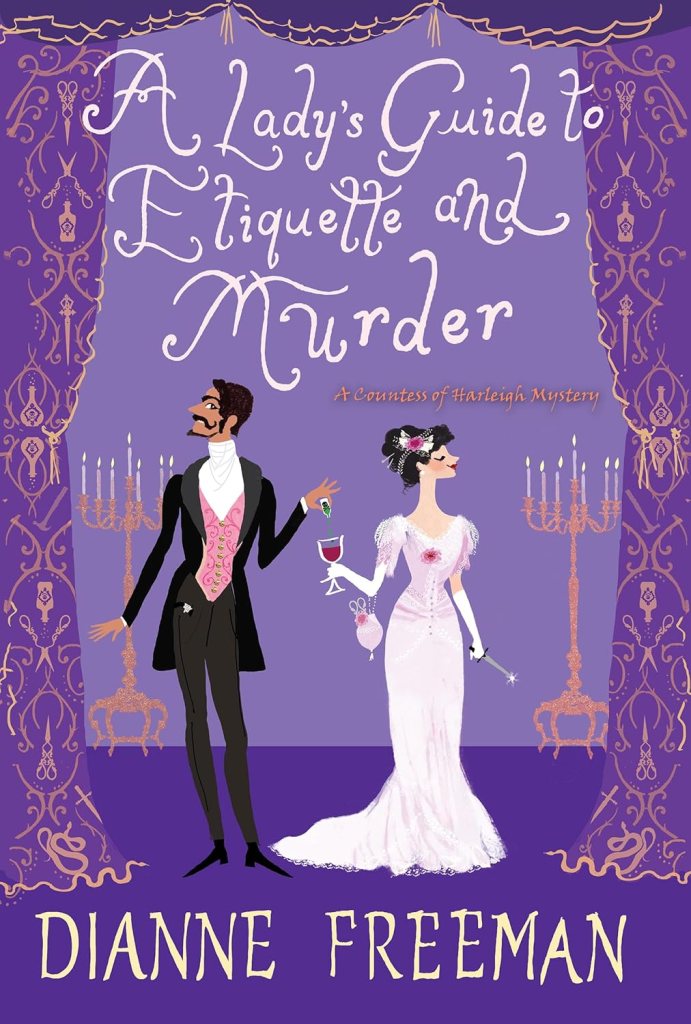
A Lady’s Guide to Etiquette and Murder (A Countess of Harleigh Mystery) by Dianne Freeman
As a young naive woman, Frances was a wealthy American with an ample dowry. In a Downton Abbey move, she married Reggie, an aristocrat with a large crumbling manor and a shrinking bank account. Unlike the marriage between Cora and Robert Crawley, romance does not blossom between Frances and Reggie. After nine years of marriage, Frances’s philandering husband dies of a heart attack while in bed with his mistress. There is a cover-up because scandal among the British upper class is to be avoided at all costs. After a year of mourning, Frances leases a house in London and packs up her daughter and her possessions. She is determined to start a new life.
But life becomes complicated for Frances. A Metropolitan police officer shows up at her new home to inform her that the police are investigating Reggie’s death as a possible murder, and she is a suspect. Her brother-in-law has filed a suit against her and her bank account is frozen. Her sister arrives from America for her first London season. And, someone is stealing expensive items at society parties. On the upside, Frances’s next-door neighbor is handsome, intelligent, and helpful. Joining together, Frances and her friends, along with the Metropolitan police officer, work to solve the mystery of Reggie’s death and the rash of thefts at society gatherings.
Why did I like this book?
Freeman’s book is delightful. It’s narrated by the main character, Frances, who is witty, self-effacing, intelligent, unflappable, and perfectly charming. I enjoyed keeping company with her as she traded her widow’s clothes for amateur sleuthing.
With an undercurrent of humor humming through its pages, Freeman’s book gently pokes fun at the upper crust of British society in 1899. Embracing the bravado and the stiff-upper-lip mindset of the British upper class, Frances, her friends, and the police follow certain protocols and unspoken rules revered by Britain’s high society, even while solving serious crimes like murder and theft. (The rich do live in a different realm of reality, whether it be 1899 or 2024.) Freeman delivers a good mystery with an ending I didn’t see coming, except in hindsight.
I listened to this book on my library app. Sara Zimmerman reads this cozy mystery, expertly giving voice to a wide array of characters. I particularly felt her keep-calm-and-carry-on voice was ideal for the character Frances. I’m already listening to the second book in Freeman’s series.
If you buy thebook, make sure you get the one with the green cover, the photo edition. Released in 2022, it’s the newest edition.
Why did I buy this book?
This book was recommended by Gwen, the manager of Drury Lane Books in Grand Marais, Minnesota, one of my favorite bookstores. (Although, I have to say any independent bookstore I go into becomes one of my favorites! And, once I’m inside a bookstore, I don’t like to leave.)
What is this book about?
Backyard Almanac: 365 Days of Northern Nature covers plants, insects, and animals that can be found in northern Minnesota and northern Wisconsin. One day and one page at a time, readers can learn about birds, butterflies, mosses, mushrooms, berries, wild flowers, amphibians, and trees, among other amazing plants and creatures.
What do I love about this book?
I started reading this book on October 10 because that is when I bought it. I read one page a day, so today I will read the entry for November 6, titled “Jiggly Jelly Fungi of Fall.” I love that I can read about nature one page a day, and it only takes a few minutes. It satisfies my urge to learn about the natural world around me, and it leaves me with time to read other books.
Each page is beautifully laid out. Larry Weber writes clear, concise descriptions with interesting details about each plant, insect, or animal. Photographer Sparky Stensaas provides beautiful photographs and informative captions. And illustrator Judy Gibbs’s enchanting sketches grace every page. It’s fascinating how much life can be found on the forest floor, in low-growing vegetation, and in trees if a person knows where to look.
At the end of each month’s section, is a blank page where a person can record notes about nature. An index at the back of the book makes it easy to look up entries. Because of the book’s thick, glossy, high-quality paper, the photographs are sharp with great color reproduction. Also, the book is heavy — good for doing some arm-toning reps, which I actually do if no one is watching.
What makes this book important?
The more people understand about nature and its interconnectedness, the more they will respect and treasure all of its plants, insects, and animals.
Look carefully. Grandchild #3 is nestled between the fish.
My grandkids didn’t have school today, and they don’t have school tomorrow, so they came to my house. I was hoping for nice weather because I planned to take them on a hike to Lost Falls in Cornucopia, Wisconsin, today, and to Cascade Falls near Grand Marais, Minnesota, tomorrow. But rain, cold, and winds up to 30 mph said differently.
Instead we went to the mall. Our first stop was the bookstore, where I bought each grandkid two books for Halloween. Then we hiked to the indoor playground. While they played, I took out my book — A Samuel Pepys Mystery: The Brampton Witch Murders by Ellis Blackwood — and I began to read.
About fifteen minutes later, my first grandchild came for her book — Dipper’s & Mabel’s Guide to Mystery and Nonstop Fun! — and she began to read.
A few minutes after that, my third grandchild came for his book — The Wild Robot by Peter Brown — and he began to read.
Not to be left out, my second grandchild came for his book — Demon Slayer Kimetsu No Yaiba #1 by Koyoharu Gotouge — and he began to read.
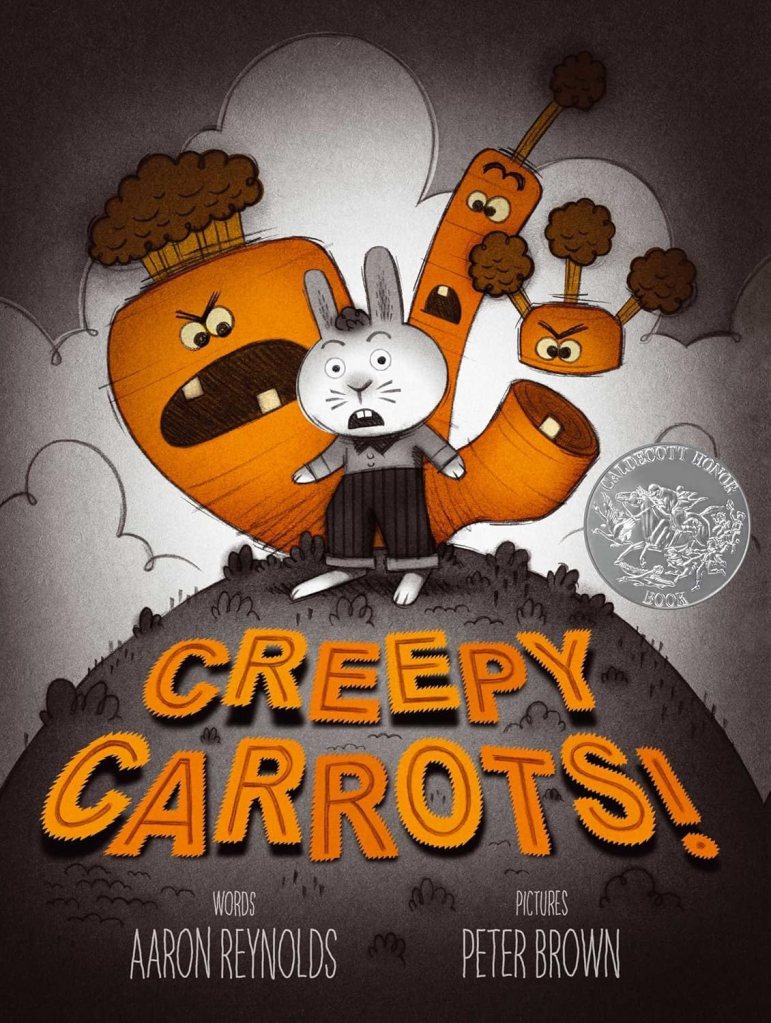
My fourth grandchild ignored the trend and kept playing on an interactive screen. He enjoys its puzzles, games, and coloring app. He read his book — Creepy Carrots! by Aaron Reynolds — on the way home.
I didn’t give my grandkids candy for Halloween. They’ll get a stash of it tonight when they trick or treat in the rain and cold and wind. I gave them candy for the imagination.
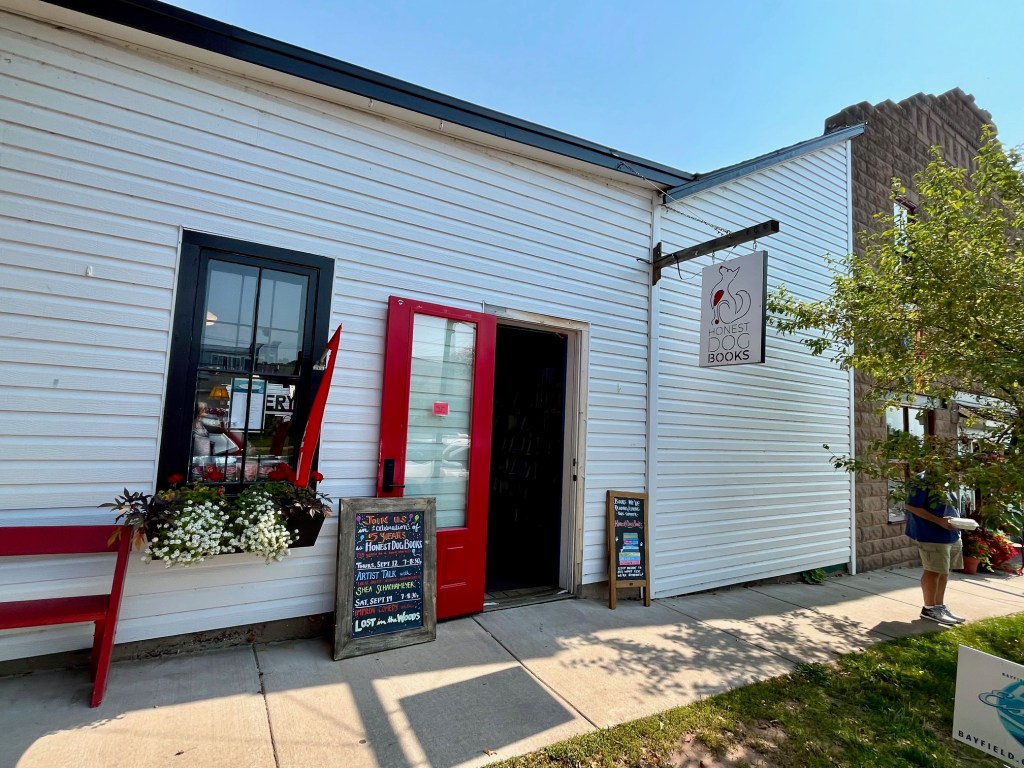
The welcoming red door to Honest Dog Books. It’s a humble entry into an amazing interior.
Bayfield, Wisconsin, has two wonderful bookstores: Honest Dog Books and Apostle Island Booksellers.Last week I wrote about Apostle Island Booksellers. Today, I will write about Honest Dog Books.
Inside Honest Dog — there are more books to the left and the right!
Yes, your dog is welcome in the store. And yes, treats will be provided for your dog while you shop for books. Also, you might meet the shop dogs, Elton and Matt — unless they’re at the beach or in the woods. (If I ever come back as a dog, I want my human to be a bookstore owner!)
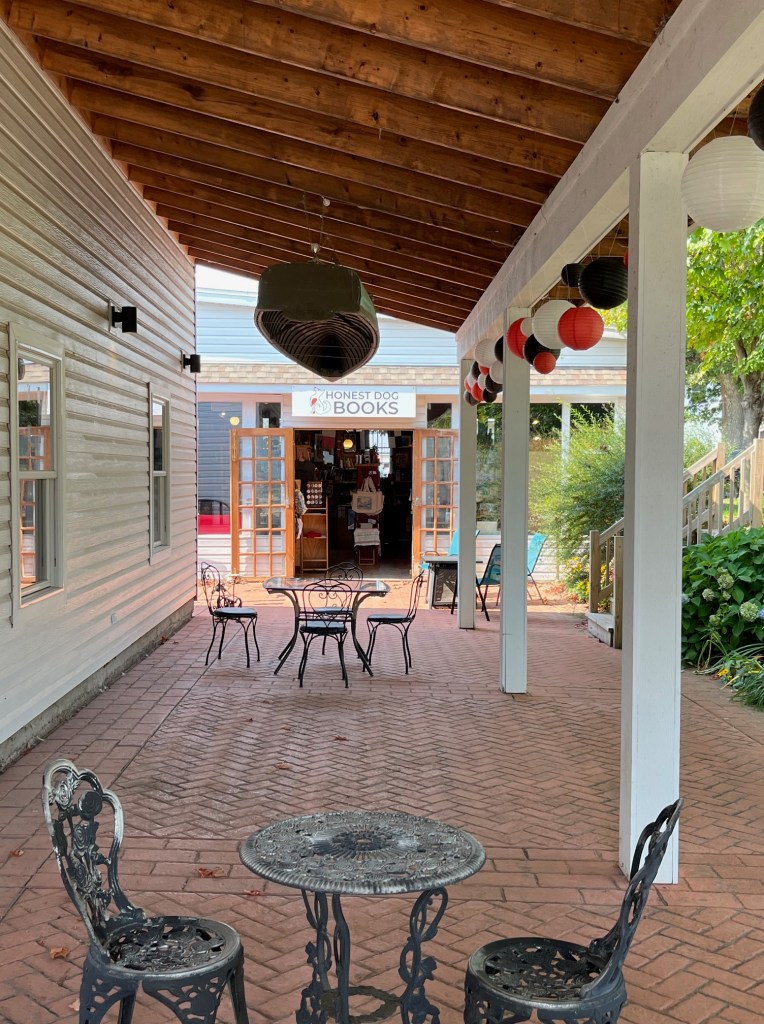
Honest Dog’s courtyard
When you walk into Honest Dog Books, it’s like entering a cozy rustic lodge. Warm wood tones gather you into a big bear hug.
The store is stocked with loads of wonderful books. You will find classics and new releases; local authors from Wisconsin, Michigan, and Minnesota; books on the great outdoors; and books for people of all ages. And yes, books about dogs, fiction and nonfiction.
You can walk in the front door of Honest Dog, buy a book, and walk out the back door into a beautiful courtyard, a wonderful place to sit and read the first chapter of your new book or talk about books with a friend.
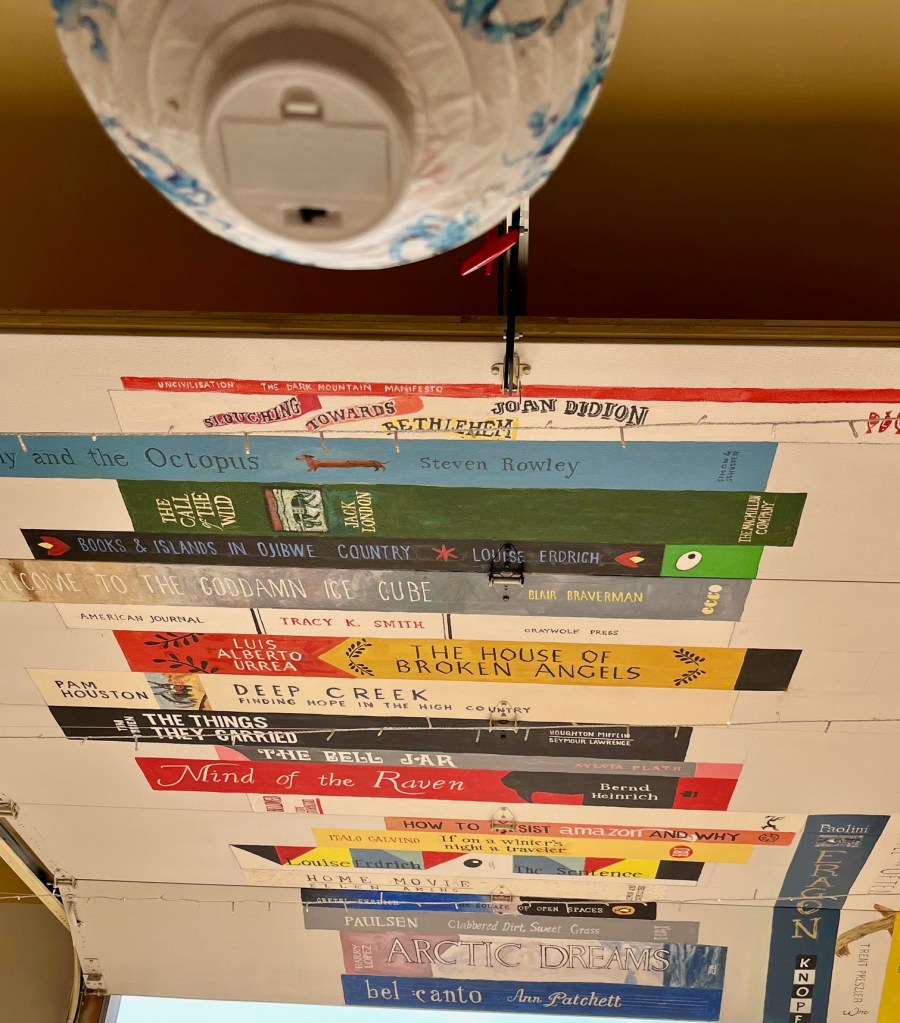
If you walk through the courtyard, you will enter a separate space called the Dog House where you can buy rare used books and vinyl records displayed in a small charming building with painted murals of book spines. The book-painted stairs lead back to the courtyard. The books painted on the inside of the garage door decorate the ceiling when the door is open on a nice day. On a cold or rainy day, the painted books become part of the wall.
What’s on your to-be-purchased list?
So, what did I buy at Honest Dog Books? The Curious Incident of the Dog in the Night-Time by Mark Haddon. The book has been on my to-be-purchased list for a long time, and it seemed right to buy it at Honest Dog Books.
During COVID, Honest Dog Books hosted author talks via Zoom. At a time when in-person social events were severely limited and businesses were closed, Honest Dog’s Zoom events gave readers and writers a chance to talk to authors. It also gave authors a way to launch their books during the lockdown. I will forever be grateful for the evenings spent meeting writers and listening to them talk about their books. It helped ease the isolation of COVID.
Below are the books that I bought — and loved — from Honest Dog during COVID after meeting the authors on Zoom. They are listed in no particular order.
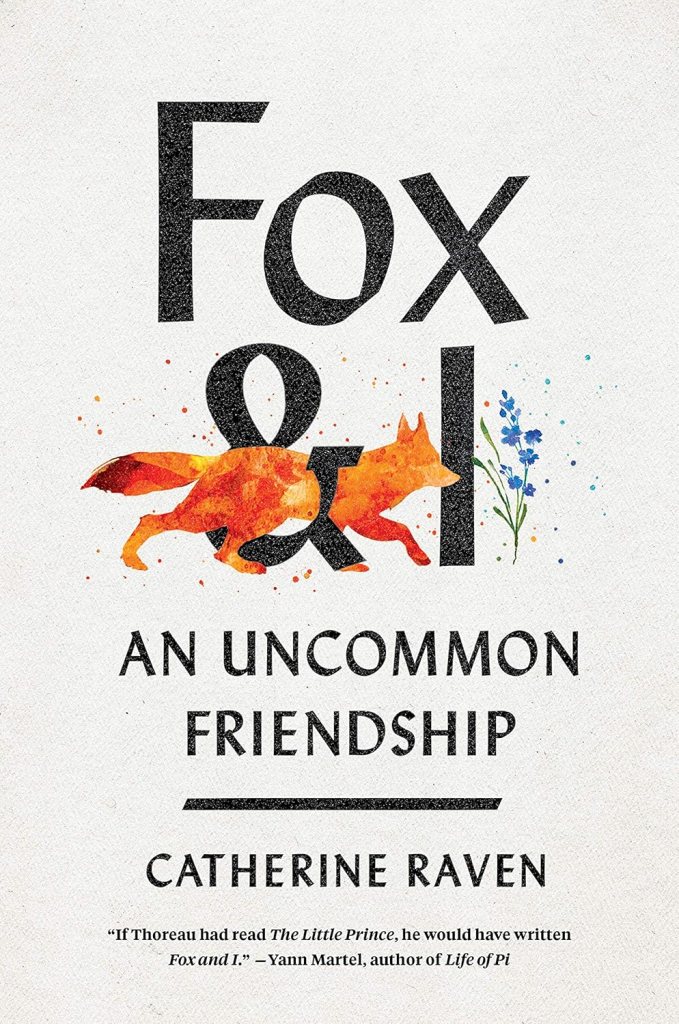
Fox & I: An Uncommon Friendship by Catherine Raven, a memoir
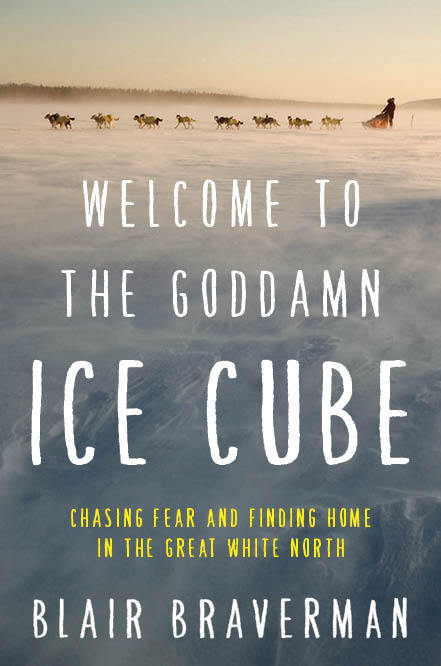
Welcome to the Goddamn Ice Cube: Chasing Fear and Finding Home in the Great White North by Blair Braverman, a memoir
Icebound: Shipwrecked at the Edge of the World by Andrea Pitzer, nonfiction history
To read a post from February 2021 about my joyful experience of ordering books from Honest Dog during a brutal cold snap in the middle of COVID. Click Here.















 Writing Near the Lake