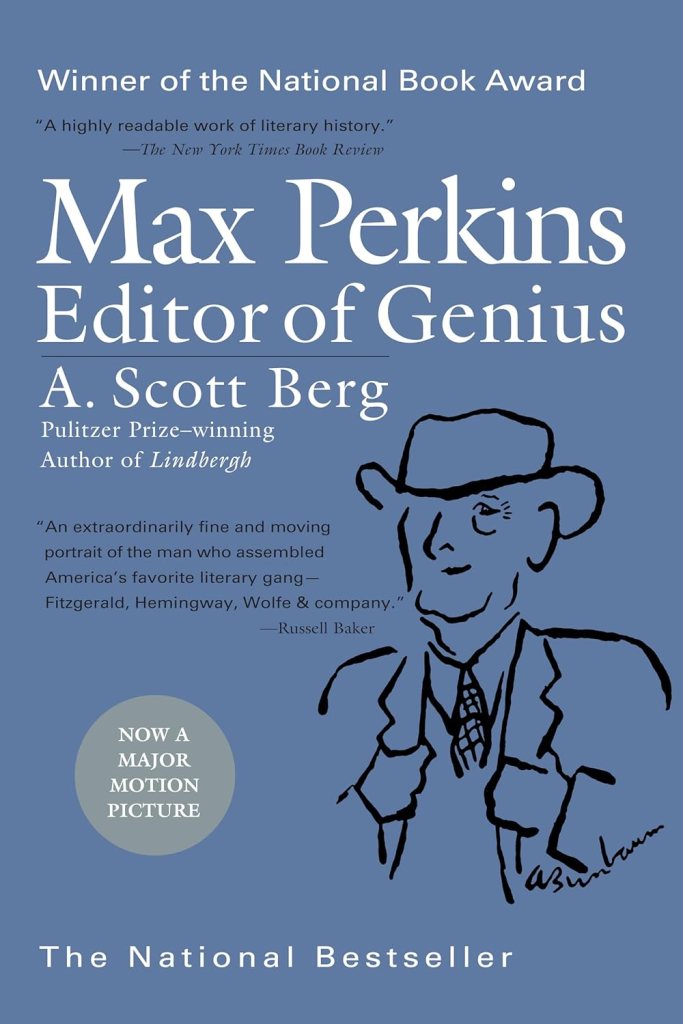
When a Friend Asks You, Repeatedly, to Read Max Perkins: Editor of Genius by A. Scott Berg

I love the title of this book because it plays two ways. When I decided to reread the book, I bought my own copy.

The first time I read Max Perkins: Editor of Genius, I did so because in the spring of 2019 my writing friend Milan suggested that I read it. He said it was a wonderful book. Then he kept following up with the question, “Have you read Max Perkins: Editor of Genius yet?” I felt bad when I had to admit that once again I hadn’t. So, in late fall I borrowed the book from the library and started reading it.

I did indeed love the book, but I never got the chance to talk about it with Milan.

Milan and I met through our local writers’ association, to which we both belonged. Before COVID the association held a gathering once a month at a local coffee house. As a person who was new to the world of writing, it was a great place for me to be in 2019. Not only did I receive lots of good advice, but it was a joy to be with fellow writers.

Every month the usual cast of writers, like me, showed up, and others came when they could. Milan came often. His enthusiasm for being with writers showed in his kindness, his warm smile, and easy laughter. He loved to talk about ideas, writing, social issues, education, and even his pickup truck when I wanted advice about trucks. Born in France, Milan had immigrated to the United States with his mother when he was a young teenager. He had written a fascinating memoir, Ma’s Dictionary: Straddling the Social Class Divide, about his life. He had a book deal with a French publisher, so at the time I met him he was translating his memoir into French, his native language.

Milan and me at the coffee house on a Saturday morning, 2019

Milan became my mentor. He asked to read my short stories, and he gave me encouraging feedback via email, which often arrived at three or four in the morning because that is the time of day when he worked on translating his memoir into French. It was always fun to wake up in the morning and find an email from him. Even nicer — he asked me for feedback on an essay he was writing.

The second week of December in 2019 was the last time I heard from Milan. I had sent him feedback on his essay, but he didn’t respond. Over the next couple of weeks, I sent two more emails but received no answer. That wasn’t like Milan. I figured maybe he had traveled to France for the holidays or maybe he had lots of company. I tried not to think about the fact he might be seriously ill or that perhaps he had died. I had never met any of Milan’s family, and other than email, I had no way to contact him.

On January 14, 2020, I sent Milan another email but again received no response. I started checking the online obituaries every few days. Perhaps that sounds morbid, but if Milan had died, I wanted to know. In March his obituary posted. He had died on March 6, 2020, at the age of 78. I’m assuming because of the time lapse between his last email to me and his death that he’d become seriously ill before he died.

I had known Milan for almost a year. We saw each other about once a month at the coffee house gatherings. And I had attended a couple of community outreach discussion groups he had facilitated regarding his memoir and the social issues it touched upon. After reading about his passing, I was so sad. I’d lost a friend, a fellow writer, and a mentor. Milan had once said that he loved to visit with me because I could talk about ideas. It was such a nice compliment. Talking about ideas was also one of the reasons I enjoyed his company so much.

I finished reading Max Perkins: Editor of Genius shortly before Milan died, but we would never talk about the book. I would never know why he liked it so much or why he kept insisting I should read it. Instead, the book became an unfinished conversation between Milan and me.

I recently reread the book about Max Perkins. My second reading of the book was prodded by a conversation with someone about a well-known writer (who was five years old when Perkins died) and his strained relationship with his editor. At the heart of the conversation was the question: How much can an editor intercede in a piece of writing before a line is crossed and the work becomes not just the writer’s but rather almost a collaboration? This conversation reminded me of the working relationship Thomas Wolfe had with his editor Max Perkins.

Because A. Scott Berg had access to hundreds of letters between Wolfe and Perkins, he was able to write about their often-tumultuous writer-editor relationship. In his book, Berg details the massive manuscripts Wolfe presented to Perkins, and Perkins’s long hours of work with Wolfe to pare them down into manageable books. (Perkins always stated that any suggestions he made to Wolfe were always subjected to Wolfe’s complete approval.)

Berg also included the opinions of some literary critics who believed Wolfe should be able to revise his own work from a rough draft into a cohesive and readable novel without extensive help from an editor. And because Wolfe couldn’t seem to do that, the critics had questions about his overall abilities as a novelist. Eventually, this caused a rift between Wolfe and Perkins, with Wolfe leaving Scribner’s for another publishing house and a new editor. Wolfe wanted to prove the critics wrong.

It’s commendable that Berg never takes sides on either the question of Wolfe’s writing ability posed by literary critics or Perkins’s role in readying Wolfe’s work for publication. Instead, Berg presents Wolfe’s and Perkins’s letters, the accolades and criticisms by others, and the events of Wolfe’s leaving Scribner’s without interjecting his own point of view. It’s up to the reader to form an opinion. I’m sure Milan would have liked to discuss Wolfe and Perkins.

I can’t say for certain what else Milan may have liked to discuss, but I’m sure there would have been lots. Berg’s book is well researched and well written. He does an excellent job of presenting information about Perkins and the many writers Perkins worked with, such as F. Scott Fitzgerald, Ernest Hemingway, Thomas Wolfe, Nancy Hale, Marjorie Kinnan Rawlings, Taylor Caldwell, and other fine writers of the 1920s through the 1940s, many of whom are still well known today.

I wish I would have read Berg’s book when Milan first suggested it to me. We would have liked talking about Max Perkins and the many writers he worked with during his editing career. I miss Milan, and I miss the conversations we never had.

_____________________________________________________________

[In 2016, A. Scott Berg’s book was made into a movie called Genius. I haven’t seen the movie, but it has some A-list actors in it. I don’t always like seeing movies based on factual events because Hollywood favors dramatic scenes over reality, but I might make an exception and watch this movie because it appears to stick to the facts better than some biographical dramas. However, overall critics panned the movie, so maybe I won’t. For information on the movie’s historical accuracy, click on Genius: History vs. Hollywood. For a synopsis of reviews by movie critics, click on Genius (2016 film).]

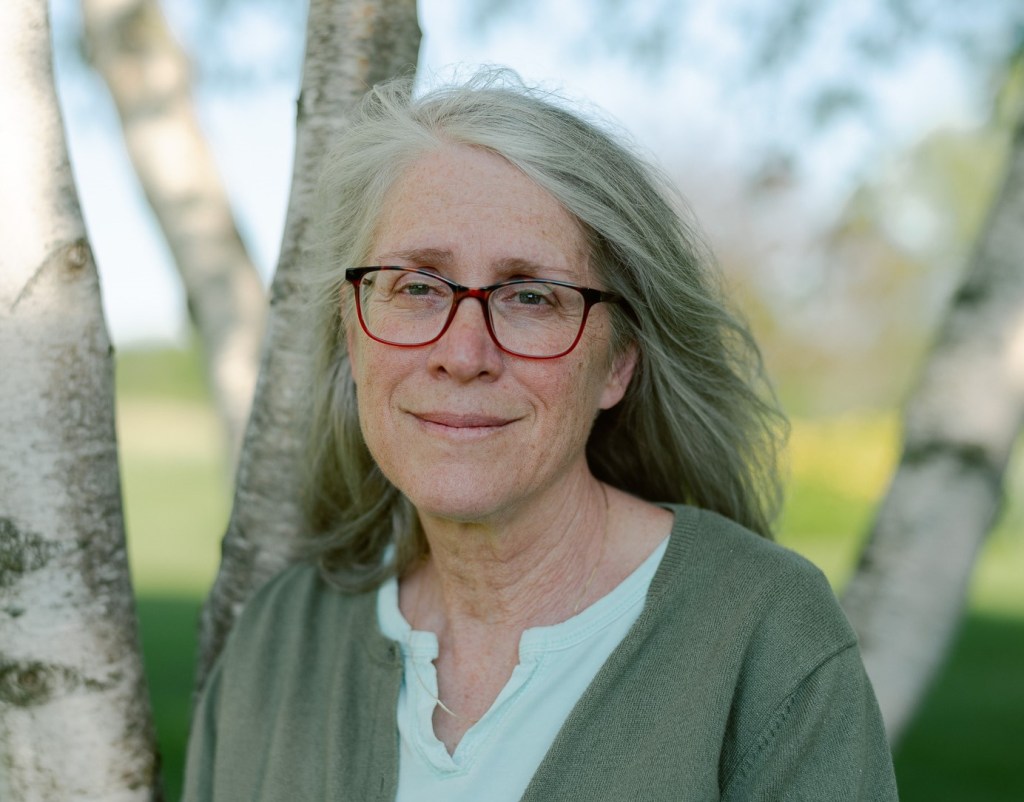
Writing Update: My Short Story Didn’t Win, but I Scored Some Wonderful Author’s Photos Taken by My Nephew!

My favorite photo: Ziva and me, Petoskey, Michigan. Photo by Max Youngquist, July 2024

A week ago I wrote a blog titled “Writing and Waiting.” I was inspired to write the blog because a short story of mine was a finalist in the Wisconsin People & Ideas magazine, and I was beyond anxious while waiting to hear if it would win anything. I was so excited and nervous. Over the last few years, I have read many of the awesome short stories that have won or placed in the contest, and to have my story be one of the nine finalists this year was thrilling. And even though I was disappointed not to win anything, I’m so honored that the judges liked my story enough to make it a semi-finalist and then a finalist.


While driving over to my mother’s in Petoskey, Michigan, on July 1, I learned that my story had been chosen as a semi-finalist. And even if it was counting my chickens before they hatched, I worried about having a decent author’s photo, just in case my story won something. Before this I had wanted an updated photo because the photos I have been using for bios are candid photos taken by my husband, a stranger at a writing conference, and my granddaughter.

My nephew, who is a wonderful photographer, was also visiting my mother. So, after I arrived at Mom’s, and after I said hello to everyone and gave everyone a hug, I asked him if he would take some pictures of me after supper. He’s a big supporter of my writing. Shortly after we ate and finished up the dishes, he walked back into the kitchen with his 35mm camera slung around his neck. “Aunt Vickie, are you ready to have your picture taken?” He loves any excuse to take photos.

We went out into my mother’s beautiful yard. The sun, nearing the end of its day, created a magical light. We included my dog Ziva in some of the photos because she wasn’t letting me leave the house without her. She seemed to know she was part of a special moment. Even when my nephew took photos of just me, Ziva stood next to me.

Before the photo session, Max talked about taking more photos of me in different settings around Petoskey. After the photo session, I so loved the photos he had taken that I told him we didn’t need to go anywhere else or take any more photos. I don’t like having my photo taken, and I often feel that photos of me don’t turn out well. So, I felt lucky to have a lot of great photos to choose from. And I reasoned that if Max took more photos, I would have too many choices.

Even though my short story didn’t end up winning or placing in the contest, every time I look at the photograph of Ziva and me, I’m filled with love and peace. It reminds me of my kind and talented nephew Max and my loving and loyal dog, Ziva.

And I’m enjoying a sense of calm now because it’s at least a month or more before I expect to hear from other editors about other stories and essays I submitted this spring. As those deadlines approach, I plan to stay cool, calm, and collected. As if!

Me in Petoskey, Michigan. Ziva is on my right, next to my side. I selected this photo too because I figured it’s good to have one without the family pet. Although Ziva and I agree that having her in the photo with me makes me look better.
Photo by Max Youngquist, July 2024

More about the Wisconsin People & Ideas writing contest . . .

I’m looking forward to reading the stories written by the 2024 winners. (Click here for their bios.) I have read the stories of past winners, all of which are wonderful. But there are three stories that stick with me. All three of the stories, besides being beautifully written and thematically rich, have at least one character that is unforgettable. I’ve listed the stories alphabetically by author’s last name because it’s so hard for me to pick a favorite. You can read the stories by clicking on these links:

  1. “In Rock Springs When the Angel Trumpets Sound” by Tom Pamperin
  2. “Everything Burns” by Kim Suhr
  3. “Honor Cord” by Allison Uselman

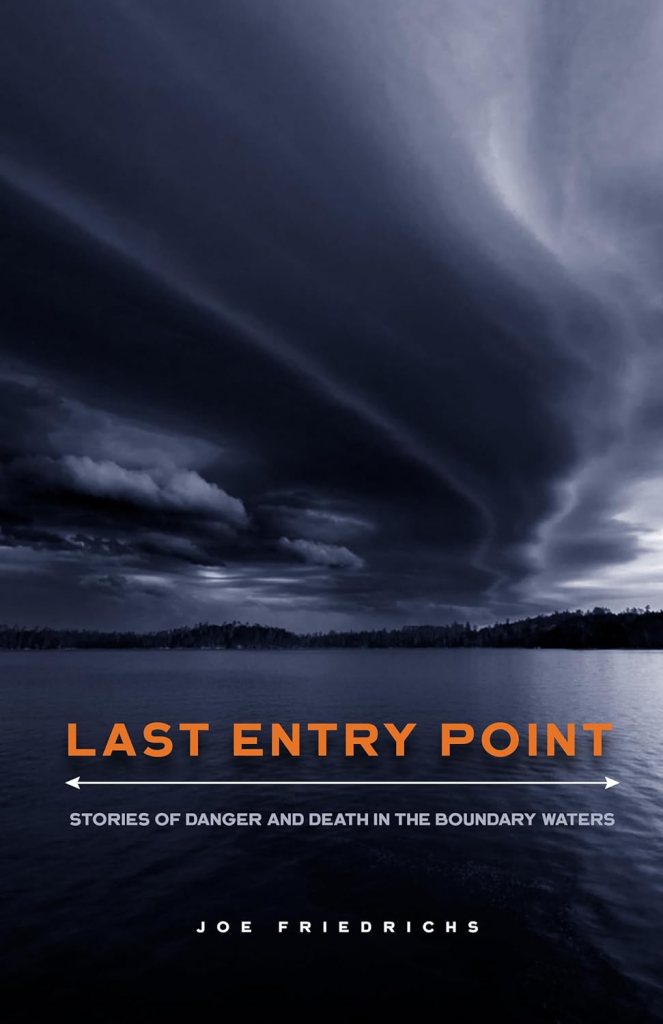
Book Review: Last Entry Point: Stories of Danger and Death in the Boundary Waters by Joe Friedrichs

Published by Minnesota Historical Society Press, April 2024

Why did I read this book?

I went to the Boundary Waters Canoe Area (BWCA) in May 1982 for several days. And although I’ve never returned, I was curious to read Joe Friedrichs’s book because it’s about a place that I once visited and found beautiful beyond words, mysteriously ancient, and intensely wild.

But because Friedrichs tells the stories of people who have died or nearly died in the Boundary Waters, I hesitated to buy his book. I wondered how he would approach his topic. Then I read a review that stated Friedrich didn’t sensationalize the stories of death, but rather treated the deceased people and their loved ones with compassion. So I bought the book, and once I started reading it, I was glad I had.

What is this book about?

Friedrichs covers stories about people who have died or almost died in the Boundary Waters due to lightning, drowning, fire, cold, and falling trees. He also tells about a couple of people who entered the BWCA, disappeared, and were never seen again. While the majority of Friedrichs’s book covers tragic and near-tragic events, he also writes about other topics connected to the BWCA.

As Friedrichs vividly describes the many lakes, rivers, portages, and trails, readers are immersed in the beauty of the nearly untouched primitive wilderness that draws so many people to the Boundary Waters. He covers some of the history about how the area became a designated wilderness, and he discusses the role of fire in the life of a forest. Readers learn about the St. Louis County Rescue Squad, the Cook County Sheriff’s Department, and other rescue teams who all work together to find and rescue people who are in trouble. Or sadly, when someone has died, who work together to recover the person’s body.

What makes this book so good?

Even though Friedrichs writes about people who have died in the BWCA, he tells those stories respectfully and compassionately. He makes sure that each person he writes about is more than just the story of their death, more than just a statistic. During the research for his book, Friedrichs talked to the loved ones of those who had died in the BWCA, even traveling to other states to speak with their family and friends.

People who visit the Boundary Waters have a love of the outdoors and a passion for canoeing, kayaking, hiking, and fishing. Friedrichs, after making his first trip to the BWCA, fell in love with the untamed wilderness and moved to Minnesota, making his home near the edge of the BWCA. He has made many trips to the BWCA, and his knowledge about the area and his understanding about the type of people who find both peace and adventure there add immeasurably to his book.

While people can certainly learn from Friedrichs’s book that one needs to be prepared and practice safety when going into the wilderness, his book isn’t a how-not-to-do-things book. Because almost every single person in his book who died or almost died was prepared, experienced, and serious about safety. Instead, some unforeseen, powerful event, usually weather-related, overtook a person or people, and then no matter how much planning had been done or safety had been practiced, it all came down to luck. Humans like to believe they can control and prepare for every outcome, and that if they do, disaster will be averted. But this isn’t always true.

Finally, Friedrichs is a wonderful writer who crafted a well-organized, thoughtful, and engaging account about a one-of-a-kind place on Earth.

Reflections about my one and only Boundary Waters trip after reading Last Point of Entry . . .

When I went to the Boundary waters in May 1982, there were five of us on the trip. We were all in our early twenties. We parked our vehicles near the lake we entered and paddled to our campsite, where we stayed for the next few days. We didn’t have to portage our canoes or supplies. I was the only person who’d never been there before, and I had almost zero experience in a canoe. But I put on my life jacket every time I stepped into the canoe. I knew this would be important to help keep me afloat should we capsize. What I didn’t know, until I read Friedrichs’s book, was how fast hypothermia might have claimed my life if I had gone into the water, even with my life jacket securely buckled around my chest. He points out that May and October are popular months for people to visit the BWCA, but those months have the highest number of drownings, not because people don’t wear life jackets, but because the water is so cold and the weather is more volatile. But people like those months because there are fewer bugs. That’s why the group I was with chose May for our camping and fishing trip.

It drizzled every day we were in the BWCA, and it was cold, above freezing, but cold. We didn’t have to worry about bugs. During the day we fished on the lake by our campsite. Even in a layer of drizzle and chilled air, the scenery was incredibly beautiful. I understood that I was among something old and pristine, a wild and natural forest carved with clear lakes and rivers. Something vast that people hadn’t managed to ruin.

While our weather was cold and rainy, we didn’t experience any intense storms, so we didn’t have to worry about our canoes being swamped, trees falling on our tents, or lightning striking us. But all that came down to luck. We didn’t catch any fish either. We ate food, including steaks, that we’d brought with us. I’ve never been back to the Boundary Waters. But not because I didn’t enjoy my trip. Even in the drizzle and cold, it was amazing. But I’m not big on camping or fishing. Still, I’m glad I was able to experience the BWCA, and I understand why other people love to enter its unspoiled wilderness.

Want to Buy the Book?

It’s available at Minnesota Historical Society Press.

Writing and Waiting

Walking through Tom’s Logging Camp on Friday was a delightful diversion from waiting.

Children wait a lot. They wait for a parent to come home or to pick them up after a soccer practice or a dance class. They wait for a sermon to end or for Christmas morning to finally arrive. They wait for each birthday, and cherish the moment when they can add the half year to their age because their big day is that much closer. They wait for the bell to ring, dismissing fifth-hour study hall, so they can walk down the hall and hope that today when they encounter the seventh-grade classmate they are hopelessly in love with, their eyes will meet in a moment of magic. Learning to wait when one is a child is good preparation for having to wait as an adult. Because having to wait is not something a child can outgrow.

And writers wait. We wait for an idea to run with. We wait for the next time we can sit down to write. We wait for readers to give us feedback. We wait to hear from editors who will accept or decline our stories, essays, or poems. We wait to learn the results from writing contests. Once our work is accepted, we wait for our pieces to be published. We wait to see if we’ve been accepted for a writer’s residency. We wait for phone calls from our computer techs who tell us we can pick up our computers.

My parents taught me the art of waiting, which is probably how most of us learn to wait.

When I was a child, under the age of eleven, my father kept an airplane at the Hales Corner Airport, in Franklin, Wisconsin. My sisters (one thirteen months younger than me and the other four years younger) and I often went to the airport with my father. He would get the urge to work on his plane or hangout with other pilots, shooting the breeze about flying and planes — much like when I’m compelled to write or when I crave the company of other writers, so I can shoot the breeze about writing and books.

Unless my sisters and I were going on a flight with my father, we weren’t invited into the hangar. He would tell us to wait in the car, that he’d be back soon. It was never soon. He would crank down the windows, but heat stacked up in the car anyway, making us too warm. In addition to being bored beyond belief and hot, we became irritated. Our definition of soon was clearly at odds with his definition. We had a tipping point at which we risked his anger and got out of the car. But we never entered the hangar to ask him when we were going home. By a young age, we had learned this simply wasn’t to be done. This is partly why I can wait for months and months to hear from editors without contacting them, even when they’ve stated, “If you don’t hear from us after six months, please feel free to contact us.” I may never hear from them, and still they will most likely never hear from me. Those editors are in a hangar, and I’m not going in there.

At the airport my father always parked close to a tall metal pole topped with a bright orange windsock. The pole was surrounded by green grass, which was encircled by a ring of rocks, all the size of small dogs curled up for a nap. We would climb over the rocks and sit in the grass and watch the windsock as it shifted above us. The cooler air and freedom from the car helped, but our boredom and irritability soon returned. Eventually, our father would come out of the hangar. He might say a few terse words about us sitting around the pole instead of inside the car, or not. But either way we knew better than to ask him, “What took you so long?”

My ability to wait quietly doesn’t mean that waiting to hear about something I’ve submitted is easy. Far from it. I can pace with the best of the tigers. I perform menial tasks to pass time, but I end up feeling like I’m swimming in a pool filled with Salvador Dalí’s melting watches. As a projected date of a notification nears, I check my email incessantly. One moment, I convince myself that no one will ever be interested in publishing my work again. The next moment, I daydream that I’ve won a contest or that an editor has so loved my work, they gush about it, using bouquets of purple prose and ask, “Can you send us more?” (Yeah, Walter Mitty lives inside of me.)

When I first started submitting my work and received rejections, I was convinced I must be a lousy writer. I contemplated doing something easier — maybe washing windows on tall buildings, even though I’m terrified of heights. Then an editor sent me a rejection saying she had almost selected my flash fiction piece but had decided to hold off. She would keep it on the back burner but probably wouldn’t end up using it. It was an encouraging rejection, so I kept writing. A month later, she notified me that she had decided to print my story after all. Perhaps, I thought, I can write.

I keep submitting and mostly receive rejections. But I get just enough acceptances. So, like my old dog who hangs around the kitchen, hoping at any moment that she will get a treat, I keep checking my email, hoping at any moment I might receive an acceptance.

I get so bad about checking my email that I don’t open it if I’m working at my computer, I leave my phone in another room, and I make deals with myself. If I write for thirty minutes, I can check my email. After I walk the dog, I can check my email. After I finish all the dishes, I can check my email. After I’m done having coffee with a friend, I can check my email. If I go an hour without checking, I pat myself on the back, then hurry to check my email. The only reason I will confess this is because I’ve read essays written by other writers who admit they repeatedly check their email, especially when they know the date of an editor’s announcement is imminent. And if a writer submits enough pieces, there is always an announcement coming soon.

I often think of my mother when I’m waiting for an email from an editor. Before I learned to drive, I relied on my parents to drop me off and pick me up from school events, a job that fell mostly to my mother, who was always late. And there were no cell phones. To ease my worry while I waited, I played little games: If I counted to sixty, then she would come, then maybe one hundred, then perhaps fifty. I alternated that game with a counting-the-cars game: the tenth car on the road would be hers, then maybe the sixth car, then perhaps the eighth car.

For me, to write is to submit, and to submit is to wait. I find the more I submit, the easier waiting becomes because without waiting too long, I can look forward to (or be disappointed by) an email from an editor. But I check my email even more — a random reinforcement schedule is an effective motivator. If I have only a few submissions on the loose, it’s easier to ignore my email — at least until a notification date approaches.

I’m currently a finalist in a writing contest and waiting to hear if I’ve won anything. I have a short story set in 1860 entered in a historical fiction contest. My short story collection, which I entered in a contest, is hopefully being read and passed along to the next round. I’m waiting for an anthology of essays to be published because I have an essay in it. I have a short story under consideration for a British journal, and an essay under consideration for yet another British journal. I have a flash fiction piece entered in a regional contest. I’m hoping to hear about two articles I pitched to a local publication.

And so, I wait. I don’t sit next to a windsock. I don’t count seconds in my head or cars on the road. Instead, I push myself to keep writing. To get out into the world. To read a good book. To hear an author speak. To have coffee with friends. To go to lunch with my husband. To take my grandkids to Tom’s Logging Camp where we can look at old logging tools, feed ravenous trout and goats, and be ignored by an uppity llama who isn’t hungry.

And I silently thank my parents for making me wait around when I was a child.

Today after I post this blog, I’ll check my email. Then after I clean the bathroom, I’ll check my email. I have guests coming for dinner, and after they leave, I’ll check my email. (Perhaps, my parents didn’t make me wait long enough before exiting the hangar or picking me up from school.)

The calming beauty of nature

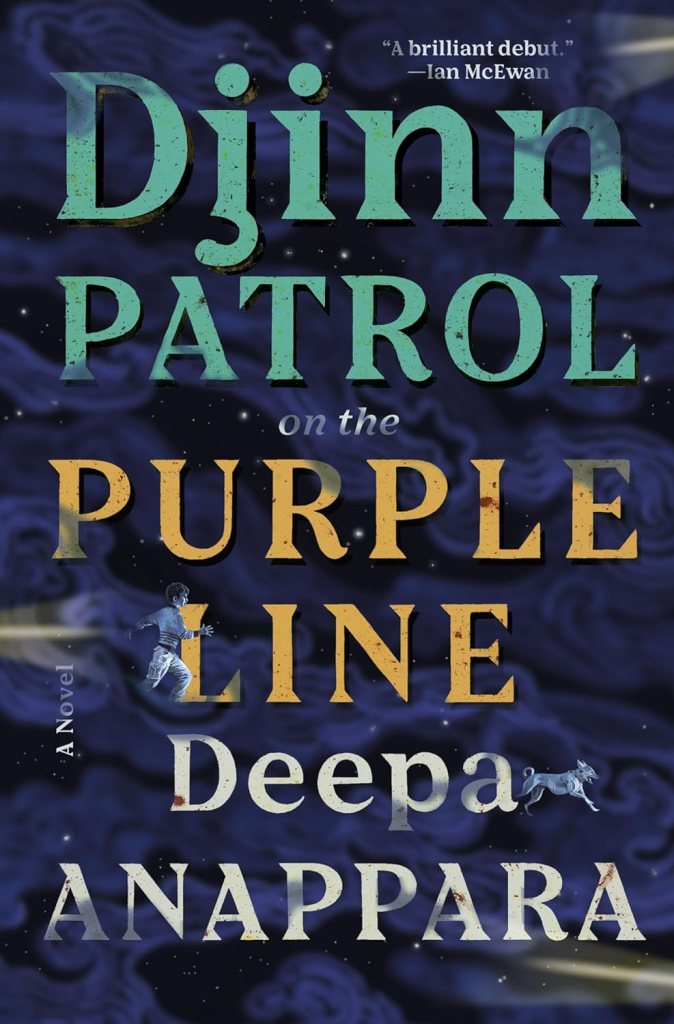
Book Review: Djinn Patrol on the Purple Line, a Novel, by Deepa Anappara

Published in 2020, Random House

Why did I read this book?

A friend of mine suggested I might like to read Djinn Patrol on the Purple Line. Not only did she love the story, she liked how Deepa Anappara structured the novel. And my friend enjoyed how many of the chapter titles were also the beginning of the first sentence in a chapter. For example:

THREE WEEKS AGO I WAS ONLY A SCHOOLKID BUT–

–now I’m a detective and also a tea-shop boy.

(And what a great sentence it is.)

What is this book about?

Nine-year-old Jai lives in India in a poor, crowded neighborhood referred to as a basti. Bordered by a smoldering rubbish dump and enveloped by an unrelenting gray smog, Jai’s life in the basti is hemmed in by poverty, garbage, pollution, and classism. The wealthy lifestyle of the hi-fi residents who live in luxurious skyscrapers separated by a high wall from his basti is beyond his reach. He lives with his older sister Runi-Didi and his Ma and Papa. His best friends are Faiz and Pari, who are also classmates.

The story opens with the disappearance of Bahadur, a quiet and unassuming boy who others rarely notice. When Bahadur doesn’t turn up, his parents and other concerned adults from the basti beg the local police to investigate. But the police refuse to take Bahadur’s disappearance seriously, and instead they threaten to have the basti bulldozed if its residents insist on causing trouble over Bahadur’s disappearance.

In answer to the indifference of the police, Jai, Faiz, and Pari declare themselves detectives. Jai, who loves to watch detective and crime shows on TV, fancies himself as the head detective. The three friends wander through their basti and the Bhoot Bazaar, asking people if they’ve seen Bahadur. They even take the Purple Line train to a neighboring city on a hunch that Bahadur may have run away or been kidnapped and taken to that city.

Soon other basti children go missing, and fear, like the pervasive smog, engulfs the basti residents. Jai, Faiz, and Pari are forbidden to leave home without an adult. But they defy their parents, and while continuing to look for Bahadur, they make inquiries about the other children who have gone missing.

What makes this book so good?

Deepa Anappara was born in India and worked as a journalist in her home country from 1997 to 2008, where she wrote about education. There is no doubt that Anappara’s personal and professional connections to India enabled her to create the realistic world in which her impoverished and marginalized characters live. Although her characters are fictional, Anappara’s portrayal of their joys, fears, hopes, and disappointments are heartbreakingly real. And most importantly, Anappara takes care not to sensationalize or diminish her characters’ stories. Instead, she has written a literary novel about the worst kind of crime. Her beautiful writing along with her measured restraint carries readers through the difficult scenes.

During her years as a journalist, Anappara interviewed many disadvantaged children, whom she found to be full of “humor, sarcasm, and energy.” While working as a journalist she learned that children from poor families disappeared at a higher rate than children from families in better circumstances. These abductions rarely made the news unless a kidnapper was caught or the details of a kidnapping were particularly gruesome. It upset Anappara that the stories of the missing children “were nowhere to be found.”

When Anappara first tried to write Djinn Patrol, she labeled her attempt a failure. In 2016, she returned to her novel. This time when she thought about the children she had interviewed in India, she remembered “their determination to survive in a society that often willfully neglected them” and she knew the story must be told from the perspective of the children. She found a way into her story, and after reading her novel, I can’t imagine it being told any other way. The story is told mostly in first person by Jai, who is at turns earnest, careless, unselfish, jealous, kind, and churlish, but who, despite his faults and missteps, captured my heart. Other times the story is told in third person through the point of view of other children.

I have to return the borrowed book to my friend. But I ordered my own copy to keep on my bookshelf. In part because like my friend, I admire Anappara’s amazing use of voice, point of view, and structure. Perhaps, I won’t read the book again, or maybe I’ll only read parts of it. Regardless, I couldn’t bear the thought of being separated from Jai, Faiz, and Pari and their dreams. And that’s the other part.

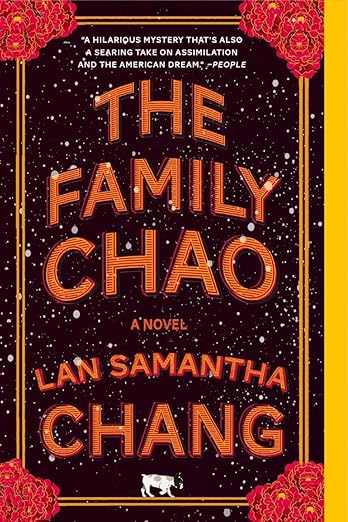
Book Review: The Family Chao, a Novel, by Lan Samantha Chang

Published in 2022 by W. W. Norton & Company

Why did I read this book?

I’m a member of the Wisconsin Writers Association (WWA), and I will be attending their 2024 Writers Conference this fall. Because Lan Samantha Chang is one of the keynote speakers, WWA recently hosted a book talk about The Family Chao with Chang. So, I wanted to read the book before attending the book talk, just to avoid any spoilers.

What is this book about?

Leo Chao and his wife, Winnie, have run a successful Americanized Chinese restaurant for thirty-five years in Haven, Wisconsin, where they settled as young immigrants in a mostly white community. Their goals were to serve high-quality food and to make sure their three sons became well educated and successful. Winnie has recently left her mean-spirited, philandering husband and the family business and moved into a religious sanctuary. For years Leo Chao has been a bad husband to his wife and a bad father to his three sons, who have come to loathe and fear him, yet still seek his approval.

Dagou, their oldest, left college to help his father run the family restaurant when his mother became ill. After his mother recovered, Dagou, an excellent chef, remained based on a promise from his father that the restaurant would one day be his. Dagou is engaged to one woman but in love with another one, and he needs money to impress the new woman. When Dagou asks his father to honor his promise regarding the restaurant, his father denies the promise exists and threatens to fire Dagou.

Ming, the middle child, is a successful businessman who lives in New York City, but as a first-generation Chinese-American, he struggles with his identity. Bullied when he attended the mostly white Haven public schools and continually embarrassed by his parents, especially his father, Ming avoids his Chinese heritage and rarely returns home to Haven.

Nineteen years old, James, the youngest son, plans to become a doctor. On his way home for the Christmas holidays, he tries to save a man who suffers a medical episode in the train station. The man dies, leaving James shaken and in possession of the man’s bag, which is destined to play a part in the Chao family drama. The three brothers don’t always get along, but they rally in support of their mother and each other when the need arises.

The Chao family appears to have put aside their differences in order to unite for the yearly Christmas dinner. The next day, Leo Chang is found dead. After an investigation, one of the brothers is arrested, but the other two brothers aren’t sure their sibling killed their father, and they keep searching for the truth. As they search, they uncover other truths that have been hidden.

What makes this book so good and important?

Chang’s beautiful writing, strong plot, and richly-drawn characters pulled me into the story. Her novel reads like a Greek tragedy — with the characters’ current sorrows rooted in past transgressions committed by themselves or others. As the story unfurls, readers watch characters struggle to escape their destinies, which are perhaps not of their own choosing or their own making. On one level, Chang’s novel explores dysfunctional families and guilt and regret. But on a deeper level, she delves into how community prejudice adds to the troubles of the Chao family and to the other Asian American families in Haven, Wisconsin.

In a world of thirty-second sound bites about immigration and stereotypes, Chang’s novel provides a deep, long look at the consequences of prejudices and misunderstandings between cultures. It’s the best kind of novel — one written to make readers think and to expand their understanding of the world, all while serving up a superbly written story.

I showed up early to appointments just so I could sit and read Chang’s book without being distracted by interruptions at home.

Dating a Short Story

My office, the scene of tumultuous writing relationships

About a month and a half ago, inspired by a picture, I wrote a rough draft of a short story. About 2,300 words long, it had a nice beginning, a muddled middle, and an abrupt non-ending. I saved the story and closed the file. The story and I needed space from each other.

So, I wrote some blogs. I did minor revisions on a historical short story. I beta read a novel. I read some books. I played games with my grandchildren. I walked my dog. I watched TV. I cleaned the house.

That’s usually how it is for me at the beginning of a short-story relationship. I fall in love with an idea, which lives in my mind. I see a story with layered meaning, engaging characters, and a compelling plot. However, the vision in my head becomes incomplete and fragmented on the paper. Something gets lost in translation, and at this point, I’m never sure if I will ever meet the story I became infatuated with. It’s rare that a story and I click right away, so in the beginning, I often don’t name a story, just in case things don’t work out.

For a while, a rough draft and I will ignore each other. Then, if it’s meant to be, the story starts whispering in a corner of my mind. It nudges me when I’m drifting off to sleep. Before I open my eyes in the morning, I feel it staring at me. At this point, it’s all low-level noise. But if the story cares, it keeps calling to me, getting louder and louder, until the only way I can pacify it is to pull it up on my computer screen and spend time with it. My inspired-by-a-photo story is one of those types of stories — one that starts to follow me around.

So, last Saturday morning I returned to the story and spent hours with it. When I took my dog for a walk in the afternoon, I called a friend, who also writes. “I’m working on a story I started six weeks ago,” I told her. “It’s been painful.”

“It hurts?” she asked. I imagined her eyebrows pitching upward along with the sound of her voice.

“Yes,” I said, “I’m at the beginning stages of writing the story. I don’t know if it’s going to work or not, and that’s painful. If I can make the story work, then the revising and editing parts become fun.”

The painful phase happens almost every time I write a short story. My head spins. I crave chocolate. I check my email every five minutes. And I make excuses to leave my desk. But I’ve learned the only thing I can do is to keep returning to my story, to keep pushing forward. Sometimes after months of intermittently returning to a story again and again — trying to find a way into it, through it, or out of it — I get lucky, and my story seems to write itself. But this isn’t really true: It’s the time and work I’ve put in that suddenly makes the story feel like it’s flowing from my fingers. But not every short story I draft has a fairy tale ending. Some stories and I never see each other again, or after months of trying, we call it quits.

Last Saturday with my story felt like a bad date, and I reached a point where I had to bail. I left my office feeling I had wasted hours but determined to try again the next day.

On Sunday, I went back to the story. Back to tweaking the first couple pages, then getting up to do something, then back to the first couple pages, so I would know where I was at. Then up again. Then back to the first couple of pages. Who was I fooling? It was easier to spend time with my story’s charming beginning and overlook its flawed messy middle and nonexistent ending.

But I kept at it because when I’m writing, I consider banging my head against the wall to be part of my creative process.

After bumbling along with the story for a couple of hours on Sunday — I had been wrestling with the narrator’s voice and the story’s tense — an idea occurred to me. I revised the first few paragraphs, giving the narrator a distinct voice that seemed to fit the story’s theme and fix the tense problem at the same time. We’ll see.

For now, the story and I plan to keep seeing each other. We have coffee together in the mornings, before I pick up my grandchildren from summer school. Sometimes in the afternoon if my grandchildren are playing quietly, I sneak into my office and spend extra time with the story.

The relationship is progressing in a positive direction, but I’m not ready to declare it a love match, and the story remains unnamed. It could still turn out to be yet another frog that won’t become a prince.

(By the way, there is no reason to tell my short story that I hung out with a blog today.)

The photo that inspired my latest precarious relationship!

Playing Chess with My Grandson

I taught my ten-year-old grandson Michael to play chess about six months ago. We sat at my kitchen table and played lots of games. I won them all. It never crossed my mind to let him win. I enjoyed feeling like a Grandmaster chess player, even if I was beating a ten-year-old child who’d never played before. Chess is a tough game. If he was going to learn to play, he needed to pay attention to the whole board and think beyond his current move, something I knew he would eventually do better than I ever could.

But a Grandmaster I’m not. I liked chess as a child, but I stopped playing when I was about thirteen. I was no good at the game because I could never think beyond a couple of moves. I never learned the higher-level strategies. I never thought or talked about the board in terms of numbers and letters. When I played against my sister or neighborhood friends, I won occasionally, but as I got older, my game didn’t mature, and I lost a lot of games. For me chess was no longer fun. I hung up my pieces and moved on.

So, when I sat at the kitchen table six months ago, beating my grandson in game after game, I enjoyed it because I knew it wouldn’t last. He is good at puzzles and games. He can read diagrams and build three-dimensional objects from many types of building sets. He can skip the directions and design his own creations. He watches YouTube videos to learn how to do things.

My grandson is eleven now. He has been playing chess with friends and watching friends play chess. He has learned some strategies. He thinks about his moves before he makes them. He thinks two or three moves ahead. I’ve started playing chess with him again.

We play in the front living room. He sets the chess board up on the coffee table and pulls up the ottoman. I sit opposite him on the couch.

Words between us are few. Chess is a quiet game. We watch each other contemplate moves. We think about our next moves. We work on seeing the whole board. There is no room for small talk. Sometimes one of my younger grandsons will come up to us and start talking. I put my hand up and say, “Michael and I are playing chess, and it takes all of our concentration. We can’t talk and think about the game at the same time.” They stop mid-sentence and back away, but in five minutes or less, one of them will forget and try to talk to us again.

My chess-playing grandson and I are evenly matched, for now. Our games last around twenty minutes. It’s a coin toss as to who will win. I give the game my all, but I don’t care if I win or lose because the victories are never lopsided. But I suspect in another year or two, my grandson will have upped his game again. My only strategy against him might be that I have no strategy, thereby creating chaos on the board.

My favorite part of playing chess with my grandson is the quiet camaraderie we share as we stare at the pieces and the board, each of us trying our best to win. And with four grandkids in the house, it gives me the perfect excuse to be left in peace and quiet for twenty minutes in the afternoon. I tell the other grandkids that barring an emergency, I’m not to be disturbed. And if they try, I hold up my hand and repeat, “Michael and I are playing chess.”

Memories don’t always have to be filled with words.

Book Review: The Curse of Pietro Houdini, a Novel, by Derek B. Miller

Why did I read this book?

The cover’s obscured artwork hints at ancient mythology, which is filled with tales of love, courage, tragedy, jealousy, joy, betrayal, and vengeance. Stories that are repeated by mortals again and again. Stories that repeat themselves in Italy in 1943-44 during WWII.

I bought this book on Indie Bookstore Day at the last bookstore I visited. I’d already purchased books from the other stores, but it was Indie Bookstore Day, so that meant I needed to buy at least two books from each store. (It’s an etiquette thing, like not refusing a second slice of pie when you visit your dear grandmother after she so nicely baked a strawberry-rhubarb pie for you.)

First, the book jacket caught my eye. The cover art is stunning. Next, the name Houdini stood out. When I was a child, I loved the Tony Curtis movie Houdini, loosely based on real-life magician and escape artist Harry Houdini. Then, the synopsis on the flap intrigued me: WWII, Nazis, Italy, an ancient abbey high on a hill. A young teenage orphan; a charismatic but secretive middle-aged man on a mission to save three priceless paintings; a pair of young lovers; a mysterious Italian nurse; a kind-hearted German soldier; an unusual monk; a war-broken woman; and Ferrari, a faithful mule. Finally, I read the first paragraph of the book. And this sentence sealed the deal: “I stole three paintings from the Nazis who were stealing them from the monks.” This one sentence contained intrigue, danger, irony, — and humor, a quiet, but incisive humor that works well in a story filled with sadness, destruction, and loss. I bought the book.

What is this book about?

It’s late summer, August 1943. The Allies are pushing into Italy to liberate it from the Germans. Massimo, a young teenager, has been orphaned during a recent American bombing of Rome and is heading toward Naples. Pietro Houdini, who is in his fifties, finds Massimo in a ditch. He convinces Massimo to accompany him to Montecassino Abbey, where he intends to catalogue and restore art. Massimo is smart, and as an only child, used to conversing with adults. Pietro is in his fifties and well educated. He is a cynical man who is capable of duplicity and murder to achieve his goals, yet hope, kindness, and loyalty linger inside him.

Pietro knows the Germans will come for the artwork at Montecassino. With the help of Massimo, he plans to steal three priceless paintings and a bag of ancient Greek gold. Soon it becomes evident to Pietro that the Americans will bomb Montecassino because they believe the Germans are using the abbey as part of their war strategy to thwart an Allied invasion of Italy. Time is running out to save the paintings, so Pietro revises his plans to include other people who have been living at the abbey and to use a different route of escape.

What makes this book good?

I’d never heard of Derek B. Miller, and my reasons for buying his book were impulsive (and perhaps frivolous) but I soon discovered Miller’s book has it all — richly drawn characters, a captivating plot, beautiful language, dry humor, and important themes.

The center of the story is the relationship between Pietro and Massimo. Massimo, recently orphaned, is walking to Naples, when a group of boys attack. Pietro, who is walking to Montecassino Abbey, interrupts the beating, pulls Massimo from the ditch, and convinces Massimo to go with him to Montecassino. It’s Pietro and Massimo’s growing friendship and singleness of purpose which draws readers into the story. Miller’s secondary characters, even the ones who appear briefly, will also live in readers’ imaginations, stirring emotions and raising questions about the horrors of war, which can never be answered. During a war, one thinks more about the randomness of life, the unlikely friendships people form, and the bonds that transcend both terror and time. Miller weaves the stories of his characters together, into an intricate tapestry, surprising his readers as the threads become a richly textured image.

Miller’s language and imagery create a reflective solemnity, revealing Montecassino’s mystical character. The abbey is more than ancient stone. It lives and breathes. It tells its stories to those who listen. When characters leave the abbey and enter the world of fascism and Nazis, Miller’s words paint scenes of dread and tragedy. But his descriptions of war and its brutality are sparsely, succinctly, and briefly told; so, it’s the stories of the civilians swept up in war that command center stage.

Miller uses humor throughout his novel, but The Curse of Pietro Houdini is not a comedy, and Miller’s humor is not slapstick or wordplay. It’s steeped in irony. Early in the novel, a line spoken by Pietro to Brother Tobias, regarding the treasure trove of art in the abbey, took my breath away. I read the sentence several times before moving on. I thought about quoting the sentence here, but I would rather other readers have the joy of discovering it. (If you read the book, the sentence is on page 44, almost halfway down the page. Don’t peek before you get there.)

Miller’s WWII novel explores the themes of war through the eyes of ordinary civilians whose lives have been forever altered or destroyed. While the Allied and Axis powers wage war on the battlefield, the characters face their own horrors away from the frontlines. There is much destruction in a war: felled buildings, mindless cruelty, the dead and the broken. Miller’s book tells these tales of war, but it also tells the stories of love, kindness, loyalty, bravery, and survival because these are also the stories of war.

A connection to the present . . .

After reading Miller’s book, I took a road trip. I drove east across Upper Michigan, and over a couple of hours, I met three different convoys of military vehicles heading west. The long lines of gigantic trucks in the military colors of desert tan, army green, and dark blue rumbled like beasts over the scenic tree-lined highway. I’ve passed convoys before, never feeling uneasy, never thinking of them as beasts. But I’d just finished reading Miller’s book, and because it’s set in WWII with fascists and Hitler and Mussolini, a chill cut through me each time another line of military vehicles passed by. I tried to imagine what the Italians felt during WWII as German, American, and Allied war machinery lumbered over their roads and into their cities. I thought about Hitler’s tanks and artillery guns and goose-stepping soldiers marching down streets, a show of military power meant to strike fear in his European neighbors and his own people.

Miller’s book is set in 1943-1944, but sadly dictators, invading armies, and war are timeless.

[Published by Avid Reader Press, an imprint of Simon & Schuster, Inc., 2024]

Between the Covers, a Bookstore in Harbor Springs, Michigan

Between the Covers, Harbor Springs, Michigan

Between the Covers is a charming bookstore in Harbor Springs, Michigan. A quaint summer resort town, it harkens back to the days when wealthy and moderately wealthy men put their families on trains and sent them to Petoskey, Harbor Springs, Charlevoix, and surrounding towns in order to escape the scorching heat and noxious smells found in urban areas such as Detroit and Chicago, keeping them safe from the dank, rancid city air. The men joined their families during vacations or for long weekends.

The trains that shuttled families back and forth have disappeared. And the numerous resorts which once existed have dwindled, replaced by individual homes and cabins. But families still flock to the towns in the northern part of Lower Michigan, which nestle along Lake Michigan, Lake Walloon, Lake Charlevoix, and many other sparkling lakes and rivers. My mother lives in Petoskey, and I love to visit her. When I do, I trek through my favorite towns, always visiting my favorite bookstores, one of which is Between the Covers.

There’s a lot to like about Between the Covers. It’s clever name. The elegant off-white brick building. The large storefront windows. The knowledgeable and friendly staff.

And their colorful edges
The journals I bought

Inside the store exposed rosy-brown brick walls give the interior a warm glow. Colorful books, like tasty pieces of bright candy, wait to be purchased and savored. There are beautiful selections of cards and stationery. A large selection of lovely journals invites writers to take one home and fill its pages with musings. As a writer, journals, like books, call to me, and just as I have books I will probably never read, I have journals I will probably never use. On my recent visit to Between the Covers, I bought three journals (but one is for a friend), a box of owl-themed stationery, and two books.

I bought a mystery for my mother and James by Percival Everett for me. I finished reading James yesterday. I loved the book. Before I read it, I listened to Huckleberry Finn. I’d already read it five times, the first when I was in middle school, the last time when I was in my forties. I wondered if my opinion of Mark Twain’s novel would be diminished by the years gone by, but it was not. I was struck once again by the biting satire Twain dishes up, mocking the ignorance and arrogance of whites and their participation in slavery and the institutionalized racism which perpetuated slavery and which continues to perpetuate discrimination.

I like to buy books from wonderful independent bookstores when I’m on vacation. The books become tangible memories of place, people, and good times, especially when I love the stories that live between their covers.

.