
Book Review: Ellie’s Pursuit of the Mighty Fitz by Mckenzie Lee Williams and illustrated by Alayna Maria

Published in hard cover, Williams’s book is durable and easy to wipe clean, making it perfect for young hands.

What is this book about?

It’s the day before spring break at Great Lakes Grade School. All of Ellie’s fifth grade classmates have travel plans. Her best friend, Mike, is going to London with his family to see Big Ben. Ellie worries her friends will return after spring break with wonderful objects and stories for their last fifth-grade show-and-tell, and she will have nothing to share because she isn’t going anywhere. She hopes her father will surprise her with a last-minute trip. But, Ellie’s only surprise is that Grandma Gigi is spending the week because her father has to go on a business trip.

While riding home after school with her father, Ellie hears Gordon Lightfoot’s song “The Wreck of the Edmund Fitzgerald” for the first time. After listening to the song, she has lots of questions about the Fitzgerald. Later she talks to Grandma Gigi about the Fitz and her recently deceased Grandpa Loren, who also sailed the Great Lakes, and even knew some of the sailors from the Fitzgerald. Ellie and her grandma decide to drive from Superior, Wisconsin, to the Great Lakes Shipwreck Museum on Whitefish Point in Michigan. They want to see the bronze bell from the Fitzgerald and to learn more about the ship and its sinking. Perhaps Ellie will have something special to share at her last show-and-tell as a fifth grader.

What makes this book special?

Delightfully written by Mckenzie Lee Williams and beautifully illustrated by Alayna Maria, this chapter book will appeal to children ages eight to twelve years old. I really enjoyed this story, and I read it in one evening. Ellie, the main character and narrator, captured my heart. She is enthusiastic, adventurous, curious, and kind. She loves learning and writing in her journal, and if you’re a writer, you’ve got to love a journal-toting character. Told with tenderness and gentle humor, this chapter book explores themes of disappointment, grief, remembrance, and resilience. Young readers will enjoy taking a road trip with Ellie and Grandma Gigi. Along the way they will learn about the Edmund Fitzgerald, the Great Lakes, and the enduring power of love. Now, I want to visit the Great Lakes Shipwreck Museum on Whitefish Point.

A special note about the author, Mckenzie Lee Williams . . .

Mckenzie Lee Williams died in a motorcycle accident in June 2024. She was twenty-three years old, a recent college graduate, and a writer. She was inspired to write Ellie’s Pursuit of the Mighty Fitzgerald when she worked at a bookstore. Customers would inquire about books regarding the Fitz for children, but there was little available. So, Williams decided to write a chapter book. After her death, her mother discovered Williams’s draft of Ellie’s Pursuit. With love and dedication, Williams’s family and friends edited and illustrated her manuscript. Like the bronze bell from the Fitzgerald, Williams’s book is a symbol of spirit, dedication, and love.

I never met Williams but she and I both had work published in the 2024 Nemadji Review at the University of Wisconsin-Superior. I was saddened when I heard about her death. Ellie’s Pursuit of the Mighty Fitzgerald is a lasting tribute to Williams and her talents as a writer.

[Ellie’s Pursuit of the Might Fitz, Mckenzie’s Mommy Publishing, October 2025, is available through Amazon and the National Museum of the Great Lakes.]

Book Review: Blooming Hollyhocks: Tales of Joy During Hard Times by Naomi Helen Yaeger

Version 1.0.0

Naomi Helen Yaeger, in a delightfully engaging biography, tells the story of her mother Janette Yaeger (née Minehart) who grew up in Avoca, Minnesota. Yaeger spent hours interviewing her mother before her mother died. In her book, Yaeger lovingly recounts the stories of Janette and her siblings, parents, and extended family. Most of the book concentrates on Janette’s life from toddlerhood through young adulthood. However, toward the end of the book, Yaeger summarizes the key highlights of Janette’s and her family’s lives as they moved through adulthood. I’m glad Yaeger did this because after reading about the early lives of Janette and her family, I wanted to know what happened to them as adults.

Yaeger’s book invites readers into a bygone era. We learn about the history, culture, and lives of ordinary people who lived through the depression, WWII, and the Korean War. We read about their daily joys, disappointments, and sorrows. Usually, the history we are taught in school focuses on major events and well-known people. But I find the daily lives of people and how they lived while major historical events happened around them fascinating. And I learned a few things that I didn’t know before reading the book.

As I read Blooming Hollyhocks, I laughed and I cried. I felt connected to my own relatives who grew up in the same era as Yaeger’s. And I remembered the stories they had told me, often similar to the stories Janette Yaeger shared with her daughter Naomi. As I finished Yaeger’s book and closed it for the last time, I was already missing the Mineharts, their relatives, and their friends.

[When I attended Naomi Yaeger’s book launch, someone mentioned that Yaeger’s book would make a great present. After finishing her book, I wholeheartedly agree. If you know someone who lived through this time or grew up listening to the stories of relatives who lived through this time, I believe they would enjoy Yaeger’s book as much as I did.]

I Have a New Bookstore to Love: Dockside Books in Charlevoix, Michigan

Dockside Books on Bridge Street in Charlevoix, Michigan

There’s a new bookstore in Charlevoix, Michigan, called Dockside Books. It’s appropriately named because water abounds in Charlevoix. From the bookstore if you look to the west, you see Lake Michigan and the Round Lake Channel, which leads into Round Lake. If you look to the east, you see Round Lake, which leads into Lake Charlevoix.

The friendly clerk who helped me pick out a book

Dockside is a charming bookstore. Depending on the light, the color painted on the walls sometimes looks sea green or stormy blue. Changeable like Lake Michigan. A rowboat standing on end serves as a bookshelf. In addition to a wonderful selection of books in all genres, customers can shop for book bags, stationery, bookmarks, and journals. There is a nice sitting area where you can try out a book before you buy it.

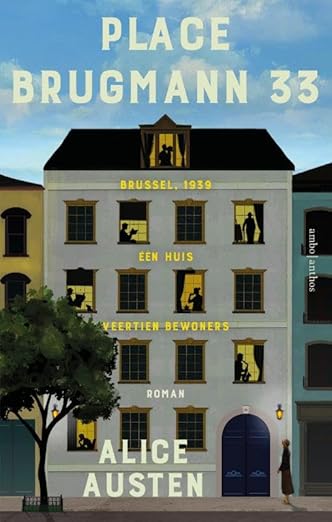
I wanted to buy a book to be supportive of the new store. But I wasn’t sure what to get because I’d recently bought other books on my wish list. So, I asked the clerk what her favorite genre was and she said she likes them all (a diplomat!), but she added she loves historical fiction. I asked, “Do you have a new historical fiction book you could recommend?” She did. 33 Place Brugmann by Alice Austen. The story, set in Brussels in a small apartment building, begins with the Nazi occupation of Belgium. I bought the book because I like historical fiction and because the clerk enthusiastically recommended it. Also, I find that reading about World War II, Nazis, and fascism, which I’ve been doing a lot lately, is somehow less scary than reading today’s news. Sometimes, however, the parallels between the past and the present are frightening. I haven’t read the book yet, but if I like it, I promise I’ll post a book review.

I didn’t have long to visit the bookstore because I had two dogs in my car waiting for their promised walk. So I’m looking forward to spending more time in Dockside when I return to Michigan this winter. I also need to read 33 Place Brugmann before I return to the store because I promised the clerk I’d tell her what I thought of the book.

The locals like to say if you keep a big enough boat on Lake Charlevoix, you can go anywhere in the world you want. Sail into Lake Michigan, navigate through a few more Great Lakes and some rivers, and voilà you will sail into the Atlantic Ocean. And from there the world awaits.

Or you can do what I did and visit Dockside Books, buy a book, and go anywhere in the world and anywhere in time without getting seasick. Soon I’ll be traveling back in time to Brussels as World War II begins and the lives of ordinary people are upended because of Hitler.

To see interior pictures of Dockside, scroll through the slideshow below.

Review of Two Books: Say Nothing: A True Story of Murder and Memory in Northern Ireland by Patrick Radden Keefe (2018) & McGarr and the Method of Descartes by Bartholomew Gill (1984)

Say Nothing by Patrick Radden Keefe is nonfiction. Published in 2018, it tells the story of The Troubles in Northern Ireland between Catholics and Protestants during the 1970s, and its aftermath during the 1980s through the early 2000s.

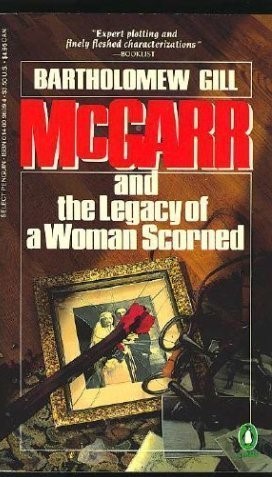
McGarr and the Method of Descartes by Bartholomew Gill is fiction. Published in 1984, it tells the story of Detective Chief Inspector Peter McGarr who strives to prevent the assassination of a Loyalist Protestant he loathes in order to prevent yet another cycle of violence between Catholics and Irish Protestants.

Both books tell stories involving the Irish Republican Army, the British Army, the Loyalist and Catholic paramilitaries, the informants, and the civilians who are swept up into tragic violence. In both books people are blown up, shot, executed, arrested, imprisoned, tortured, beaten, and burned out of their homes. Gill’s book is fiction, but it mirrors much of what happens in the real world of Keefe’s book.

I started out reading both books at the same time, sometimes reading a bit of each in a day, and other times reading them every other day. I’ve done this before with books. However, I stopped toggling back and forth after I repeated an episode from Gill’s fictional story to someone as if it had been a real episode from Keefe’s book. But in a sense it was real because the episode in Gill’s book was a fictionalized account of numerous real events that Keefe reported about in his book. Switch names and change some of the fictionalized details, and Gill’s event would be real. Gill captures the realism of the events and the emotional trauma that Keefe so deftly writes about in his nonfiction book.

Say Nothing by Patrick Radden Keefe

Keefe’s book starts with the kidnapping and murder of thirty-eight-year-old Jean McConville, a widow and mother of ten children ranging in age from twenty to six. The IRA accuses McConville of being an informant for the British Army in Belfast, Northern Ireland. Without a trial of any sort, she was abducted from her home in Belfast, driven across the border into the Republic of Ireland, shot to death, then buried in an unmarked, secret grave.

Keefe’s book is highly engaging, well organized, and clearly written — important because he covers a slice of history that is complex and involves dozens of key people. He uses McConville’s abduction as a starting point to tell the story of The Troubles in Northern Ireland, but Say Nothing covers more than McConville’s disappearance and murder. As readers learn about The Troubles during the 1970s, Keefe leaves them with an understanding of the history behind The Troubles, the trauma caused by the conflict, and the negotiated peace that somehow feels tenuous.

I read Say Nothing on the advice of a nonfiction writer, Rachel Hanel, whom I admire. She recently reread and recommended it in her newsletter, stating, “It’s still my favorite nonfiction book of the past 10 years.” Keefe’s book was made into a limited TV series that can be watched on HULU. I have not watched it, but other people have told me it’s very good.

McGarr and the Method of Descartes by Bartholomew Gill

During the investigation of a murder, DCI Peter McGarr and his investigators uncover a plot to assassinate Ian Paisley, a bigoted, loud-spoken, but charismatic Protestant minister beloved by many Irish Protestants. (By the way, Ian Paisley was a real person who was all these things.) McGarr abhors Paisley, but he also detests the IRA, the British Army, all paramilitary groups, and anyone else who conspires to use violence in order to push Ireland and Northern Ireland back into the nightmarish times of The Troubles during the 1970s. Racing against the clock and up against a group of formidable foes steeped in a long tradition of deception and intimidation, McGarr and his team work to prevent Paisley’s assassination.

I read McGarr and the Method of Descartes because I liked the first five books in Gill’s series, which he published from the late 1970s through the early 2000s. I’m intrigued to see how Gill’s characters and stories will evolve in the series. I want to learn more about Noreen, and McGarr’s past, and if women are going to become an integral part of the police force. In Gill’s sixth book McGarr’s wife, Noreen, has a minuscule role, unlike the fifth book where she has her own story arc. But after a debate with McGarr and a sleepless night, she delivers the best lines in the book to her husband before he leaves their house to try and stop Paisley’s assassination.

The female computer expert, Ruth Bresnahan, is back in her biggest role since she joined the squad. The men on McGarr’s team know she is smart and rarely wrong, and they are intimidated by her. But McGarr isn’t bothered by her smarts. He respects her intelligence, doggedness, and energy. He believes in a way she is “worth two of any of the men on the staff.” He has her read into the case and takes time to mentor her. She plays a key part in helping McGarr and the team as they attempt to save Paisley’s life.

Bartholomew Gill’s sixth Peter McGarr book is excellent. It is his darkest story yet. But The Troubles in Northern Ireland was a dark time. I’m glad I read most of Keefe’s nonfiction book along with Gill’s novel. The talents of each writer made me appreciate the other’s book. Reading Keefe’s book gave me a great appreciation for the world Gill developed while fictionalizing actual events in Ireland that were barely dry behind the ears. On the flip side, Gill’s book gave me a great appreciation for Keefe’s ability to capture the human emotion and the tragic toll The Troubles wreaked upon generations of Irish people, both Protestant and Catholic.

A point both books make . . .

Colonialism and imperialism inflict a lasting impact on people who have been subjected to outsiders invading their lands and stripping their rights. The trauma of the oppressed and the entitlement of the oppressors are passed down from generation to generation.

On one side, children of the conquered sit at the knees of their parents and grandparents and learn about the atrocities their people have endured and the acts of heroic resistance they have performed.

On the other side, children of the conquerors sit at the knees of their parents and grandparents and learn about their superiority over other people and their imperial destiny.

Conditions become untenable, things fall apart. Childhoods vanish. Neighborhoods sunder. People die.

Anne of Green Gables, the Play

Playbill from Anne of Green Gables adapted for the stage by Peter DeLaurier

On Sunday I took my fourteen-year-old grandchild to see a play based on the children’s novel Anne of Green Gables by L. M. Montgomery.

Montgomery’s novel about a determined, outspoken, red-headed orphan is one of my favorites. I’ve read it twice.

I went to see the play for two reasons: first, to meet up with my old fictional friend Anne Shirley of Avonlea, Prince Edward Island, and, second to introduce my grandchild to Anne’s story. Judging by the large crowd of people at the play, who ranged from senior citizens to young children, Anne Shirley is still loved by old friends and still being introduced to new friends.

Montgomery wrote Anne of Green Gables in 1905. At first her book was rejected by publishers. Montgomery set her novel aside for a while, but in 1907 she sent it to L.C. Page in Boston. It was accepted and published in 1908. Within five months she sold over 19,000 copies, and it was reprinted numerous times in its first year. Since its publication over fifty million copies have been sold, and it has been translated into over thirty-six languages.

What makes the novel so popular and timeless? Most definitely, it’s the main character, Anne Shirley, who wins our hearts. Set in the late 1800s, we meet Anne when she is eleven years old. She is an orphan who has lived in both foster homes and the orphanage. Her life changes when Marilla Cuthbert and her brother Matthew Cuthbert decide they need someone to help the aging Matthew with his farm chores. Marilla writes to the orphanage to request a boy be sent to them, but there is a mix up, and Anne is sent instead.

Anne has been an orphan since she was a baby. She longs for a family and a home to call her own. She has red hair and freckles, and she believes this makes her ugly. She is outspoken, talkative, and a daydreamer. In a time when girls were to be ladylike and sweet, her candid manner is labeled impertinent and disgraceful. At first Marilla is adamant that Anne should be returned to the orphanage, but Matthew doesn’t agree. Anne’s spirit touches him, and he convinces Marilla to give Anne a chance.

Why have readers for over a hundred years loved Anne of Green Gables? Because Anne wants what we all want — a home, a family, and to be loved for who she is. She doesn’t want people to make fun of her red hair and freckles. She doesn’t want people to silence her outgoing personality or tell her daydreaming is frivolous. We cheer for Anne. She is our hero, not because she is always good or perfect, but because she is so human. When she makes mistakes, she learns from them while remaining true to herself. Anne’s willingness to be true to who she is as she grows up, changes the people around her, and they become more accepting and open minded.

Over a hundred years after its publication, Montgomery’s story still invites readers to be compassionate and accepting of people’s differences. Furthermore, without moralizing, her novel delivers this message with humor; tenderness; and richly drawn characters, such as the unforgettable, irrepressible Anne Shirley.

The play I saw on Sunday was wonderful. The actor who played Anne Shirley was outstanding. She captured the essence of Anne and brought her to life on stage. The supporting cast were also excellent; after all, there are no small parts. The play was creatively staged on a well-designed set, and the costumes were charming. (I found myself wishing I could wear some of them!) The play remained true to Montgomery’s story, and I loved being able to say to myself over and over, “Yes, I remember that from the book!”

Best of all, my fourteen-year-old grandchild loved the play. Teenage years can be difficult. Young people can be filled with self-doubt and feel as though everyone is judging them as they work to discover who they are and what they want out of life. The characters in Anne of Green Gables remind us that acceptance, kindness, and love are timeless and important for both the young and old. This message feels even more important today. In a world where some people want to divide us, we need to remember we are more alike than different. To forget this is to put our humanity at risk.

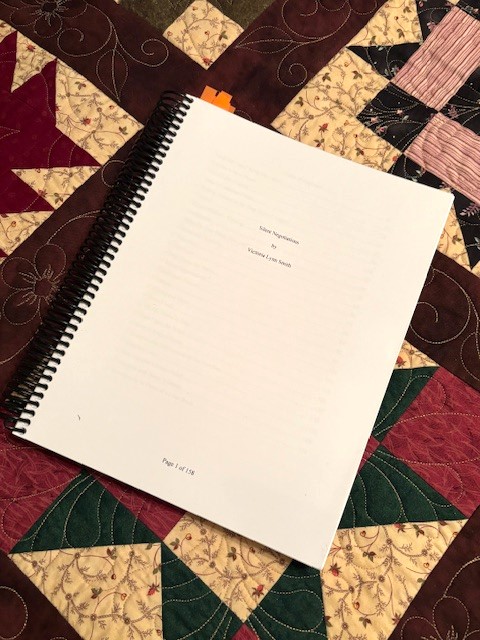
My Short Story Collection Has a Title: Silent Negotiations

My story collection has a title! I’ll debut the cover when that is done.

In February 2027, the University of Wisconsin-Stevens Point will publish my collection of short stories through Cornerstone Press, their university press. I’m excited, and nervous, and grateful. This is my first book, and like a first-time parent, I’m not sure what to expect, so I gather information. I talk to other writers who have published books. I attend book launches and author talks. I read blogs and articles and attend seminars about how to nurture a book in the world.

When Cornerstone accepted my manuscript, my publication date was more than two years away. But now it’s about fifteen months away, and if there is one thing I know about time — it’s how quickly it flies. I need to promote my book, and for that it needs a title.

When I submitted my collection in November 2024, it was called Fishing Around in the Dog Days of Summer, after one of the stories in the book. I chose the title for a couple of reasons. First, I really like its eponymous story about two young sisters with a tenuous relationship who go crayfishing on a hot, humid August day. Second, all the characters in my short story collection are fishing around for something they want. They each dip a line in the murky waters of their lives during their own dog days, hoping to catch something they long for.

But as much as I liked my original title, I began to feel it was too long and would be hard for people to remember. And I worried if the cover depicted a fishing scene along with the title, potential readers might think all my stories were about fishing.

I looked at my table of contents and considered other story titles. “Silent Negotiations” jumped out at me. It’s short and easy to remember, and it’s another story I really like. In 2020, it won second place in the Hal Prize Fiction Contest. (So, I feel the title has good mojo.) In the story a couple who have been married over forty years renegotiate the parameters of their marriage during a disagreement. Each spouse speaks their mind, but only to a point. The rest of their negotiations are silent, yet significant. The characters in my other stories are like the old married couple in “Silent Negotiations.” They all want something. They all talk to each other, but they leave things unsaid. And what is left unsaid, changes who they are with one another and themselves.

After I decided to change my title to Silent Negotiations, I asked my writing friends and readers what they thought. They had all read my stories several times, so I knew they would be good judges as to whether or not the new title would be a good fit for the collection. They all loved Silent Negotiations.

Last weekend I attended the Wisconsin Writers Association Conference in Stevens Point. The Cornerstone Press editors were there too. I talked to Dr. Ross Tangedal about using Silent Negotiations as my title. He liked it too, and so did his student editors.

My book has an official title!

Now, I’m excited to see some cover designs. Before I know it, Silent Negotiations will be out in the world.

I’m hoping to use this picture for my author photo. Photo credit: Max Youngquist

Book Review: McGarr and the P. M. of Belgrave Square by Bartholomew Gill (First Published in the United States by Viking Press, 1983)

I’m back with another update on my quest to read all of the Peter McGarr mysteries by Bartholomew Gill. I just finished McGarr and the P.M. of Belgrave Square, Bartholomew Gill’s fifth Peter McGarr mystery. And I know I said this about Bartholomew’s fourth book, but his fifth book is now my favorite of the series.

What is this book about?

A dead body lies in a water-filled ditch for most of a day. It’s inconceivable to DCI Peter McGarr that the woman in the house overlooking the ditch failed to noticed the dead man. Furthermore, McGarr reckons she must have witnessed the murder.

The dead man is William Craig, an antiques dealer and business man, who until that morning had lived with his wife in the house with the view of the watery ditch.

McGarr quickly gathers a list of suspects: the wife, the son, the business partner, the gardener, the maid, a member of the Irish Republican Army, a former Nazi collaborator. Given the method of the murder, it appears personal. Curiously, considering the many valuable antiques in Craig’s shop, the only item is missing is a valuable painting.

The P.M. of Belgrave Square is a dog (not the Prime Minister), who has retired from the police force. P.M. lives next door to McGarr, and of course they’re friends. In many ways the dog is a canine version of McGarr.

Thoughts about story and character development in Gill’s mystery series . . .

For four books, I wanted to know more about DCI McGarr’s wife, Noreen. I wanted her to do more than cook a few meals for McGarr, drive him around occasionally, and look stunning in clothes that showcase her ginger-colored hair and green eyes. I wonder if Gill ever received fan mail from readers asking for more Noreen because in this book, she has her own story arc, something missing in the first four books. In the earlier books, Noreen was nice enough, but now she’s interesting.

There are still no female detectives. And the female temp with the competent computer skills, who I really liked, is absent from this book, but I hope she still works for the department. There is only one scene at the police station in this book, so it makes sense we don’t see her.

In Gill’s first five books, we learn a lot about the murder suspects and what makes them tick, but not so much about the detectives who investigate them. It’s nice to have interesting suspects with convoluted psyches and complicated motives. But I’ve been raised on police detective stories that also focus on the investigators and what makes them tick. We get a bit more of that in McGarr and the P.M. of Belgrave Square, as Gill gives us some insight into McGarr’s life through Noreen’s perspective on their marriage.

Turns out Noreen is concerned about Peter’s drinking and his smoking. Throughout the first four books, she seemed oblivious to his bad habits. There are cracks in McGarr’s facade, hints that something from his past has left scars, and Noreen is terrified about his willingness to put himself in harm’s way. His position as a DCI means he should be off the streets and at a desk, but Peter likes to be in the thick of an investigation. She believes he has a death wish. I wonder if she will make it as a cop’s wife.

The Irish Republican Army is back. Insinuations of IRA involvement always complicate McGarr’s murder investigations. He seeks justice for the victim or victims at hand, but Special Branch, or some other investigative entity, often wants to bury IRA involvement, either because they simply don’t want to deal with it or because they are deep into an investigation and don’t want their cover blown. McGarr doesn’t give a farthing for either reason — he solves the case in front of him. If that means rattling the IRA or interfering in an ongoing Special Branch investigation, so be it.

Gill’s Peter McGarr mysteries are dark. Set mostly in Ireland, I can’t imagine they would ever be endorsed by an Irish tourism board. McGarr’s Ireland is a land of dismal weather and stormy seas with only brief bouts of sunshine. McGarr’s Dublin is a city of coal dust, simmering class resentments, and political intrigue.

I wonder if I weren’t interested in seeing how Gill develops his characters over the series, if I would still be reading these books. But I think the answer is yes. The novels have just the right amount of darkness. The writing is good. I like the dialogue. The stories are interesting. The books are quick reads. And the pocket book size feels so comfortable in my hands. After I finished this book, I ordered Gill’s next three mysteries from Thrift Books. So, like Noreen is still sticking with Peter McGarr, I’m still sticking with Bartholomew Gill.

[To read my reviews of the first four Peter McGarr mysteries, click here for books one and two and here for book three and here for book four.]

Something Published: “A Journey with Monarchs”

Tales of Migration 2025

My essay “A Journey with Monarchs” was recently published in Tales of Migration by Duluth Publishing Project. Professor David Beard (University of Minnesota-Duluth) and a group of his students spearheaded this project, from the call for submissions to the finished project. This is the second time I’ve had an essay selected for one of their anthology projects. I appreciate the hard work and dedication of Beard and his students, who all strive to make the experience memorable for their writers. In the spring after the selections are made, they always host a reading, and invite the writers to read their pieces. It’s a wonderful time. I enjoy meeting the other contributing writers, and listening to them read their work.

The inspiration for my essay

My essay was inspired by a monarch I saw in Petoskey, Michigan, on a chilly October day. The monarch clutched a pink cosmos flower, and it didn’t move when I approached it. Its behavior so intrigued me that I began to research monarchs and their migration habits. My essay is a creative nonfiction piece of nature writing. For the nonfiction part, I carefully researched all of the information by reading books and online articles from reliable sources. For the creative part, I used some literary devices that I hoped would make the essay enjoyable for people to read while learning about the wondrous migration of monarchs.

[The Tales of Migration anthology is available on Amazon. For more information, click here.]

I’ll never forget the reading for Tales of Migration because I got lost . . .

After this year’s reading, I struck up a conversation with one of the poets whose work appears in Tales of Migration. I had met her the year before when we both read our pieces from Tales of Travel. We left the meeting together and kept visiting. We had parked in different lots, but I kept walking with her because I enjoyed her company and conversation. I figured I would just walk around the outside of the buildings and return to my car. After all, it was a nice sunny evening, the UMD campus wasn’t that big, and I hadn’t gone that far out of my way.

Ha! It didn’t work out as I planned. After I exited the building with the poet, she walked off to her parking lot. I turned the opposite direction and walked off to my car. But I couldn’t find the lot in which I had parked. I walked around buildings. I set the GPS on my phone to walk mode, but it was no help. It was around 7:00 on a weeknight and the campus was devoid of students.

I walked in circles for almost twenty minutes. If it had been dark, I would have been panicked. But the skies were a bright, beautiful blue and considering what spring can be in Duluth, it was fairly warm. I have such a poor sense of direction to begin with, and faced with a random placement of large buildings connected by a maze of passageways, I began to feel stupid and frustrated. I felt trapped inside a bad episode of The Twilight Zone.

I decided I needed to reenter the doors I had exited from with the poet. I retraced my steps back through the liberal arts building and to the room where I had done my reading. From there I felt I could find the engineering building that I had walked through on my way to the liberal arts building before my reading.

But it wasn’t that easy. I had gotten so turned around and addled that I had a hard time remembering how I had originally come through the buildings, which were connected by long and meandering hallways. And to complicate matters, the floor levels in one building don’t always match up to the floor levels in the next building.

I asked a student if he could give me directions to the engineering building. He shook his head and said, “I don’t know. I’m a liberal arts major.”

“I was a liberal arts major, too,” I said, as if that explained why I was lost. He was not the only person to apologize about not being able to direct me to the engineering building. Perhaps liberal arts majors aren’t hardwired to locate engineering departments. On a large campus, many students may never need to visit certain buildings. I went to a small college, and I had classes in every building on campus.

Finally, someone was able to help me. Once I found my way into the engineering building on the correct level, I recognized where I was and located the right exit. My car was where I had left it. Dusk was descending, and I was relieved. It’s not fun being misplaced.

I had known all along where I was, and yet I had been so lost and turned around at the same time. I thought about the irony. I had just read for Tales of Migration, filled with poems and essays about moving from one place to another, sometimes covering thousands of miles. I thought about migrating people all over the world who would know the names of their new homes, yet still be lost and turned around, arriving in a land they had never been before, whose culture they had never experienced. They would have mazes and passageways to navigate, all of which would play out over years, instead of the thirty minutes in which I had been lost.

The Answer to August Tenth’s Question: It’s a Tussock Moth Caterpillar (And a Connection to a Kate Moore Book)

On August 10, I posted a picture of a caterpillar that looked like it had been assembled by a young child with a vivid imagination.

One reader said that it looked like a wet Tussock Moth caterpillar. At first, I thought the word wet was part of the caterpillar’s name. Then I realized I’d been hosing dirt off the lower part of my house’s foundation. The caterpillar rested about five feet up, but the mist from the hose gave it a shower, making it look even more fanciful than when it’s dry. A few days later, another reader also identified the caterpillar as a Tussock Moth. (There are about thirty different varieties of Tussock Moths.)

To watch a video about White-Marked Tussock caterpillars and moths, click here. Note: In this video the Tussock caterpillar is crawling on a person’s finger and hand. Because the caterpillars release toxins to discourage being eaten by predators, humans handling the caterpillars could experience itching and burning after touching them. I’d say it’s best not to touch. To learn more about Tussock Moths and see a picture of an adult version, click here.

Tussock caterpillars eat the leaves of a wide variety of trees, bushes, and other plants. They have voracious appetites, sometimes leaving trees bare. Although I’m sure no one wants to see the leaves on their trees disappear, people need to keep in mind that because Tussock Moths are native to their North American habitats, they are part of a balanced ecosystem. So, Mother Nature has an answer for Tussock Moths when they become too numerous — a virus outbreak among the species causes their numbers to drop, and that gives trees a chance to recover. However, some trees will die or be weakened and become more susceptible to other diseases and pests. As part of their ecosystem, Tussock Moths also face predation from native species found in their habitat: some birds, insects, bats, and small animals will eat Tussock Moths in their various stages of development.

While some types of trees can better withstand hungry Tussock caterpillars, other trees, especially conifers, are more susceptible to destruction. If you notice the leaves disappearing off your deciduous or coniferous trees, it might be wise to seek advice from several reliable sources.

On a literary bent, and because I often make connections to things I’ve read . . .

While watching the video on White-Marked Tussock Moths, I learned female White-Marked moths are either wingless or nearly wingless, as are most Tussock Moth species. They will never take flight. The male will find them, mate with them, then fly away to mate with other females. The female will lay her eggs and die shortly after. That’s it. She will never experience flight. Now, I know Mother Nature has specific ways of providing for the continued survival of each species, and I know I’m anthropomorphizing the White-Marked Tussock Moth, but I felt for the female moth who would never fly.

As I watched this video, I immediately thought about Kate Moore’s nonfiction book The Woman They Could Not Silence: The Shocking Story of a Woman Who Dared to Fight Back. In her book, Moore tells the story of Elizabeth Packard who is married to Theophilus Packard, a minister, and the mother of five children. It’s 1860, and after twenty-one years of marriage and being told what to think and say, Elizabeth dares to spread her wings and fly. A deeply devout woman, she begins to question some of her husband’s church’s teachings. She writes essays about her doubts and concerns. Theophilus tells her to stop, but she won’t because she believes she is a separate person from her husband and entitled to her own thoughts and opinions.

Outraged, Theophilus has Elizabeth declared insane and committed to the Illinois State Hospital in Jacksonville, Illinois. Shockingly, because Elizabeth is his wife, and because the state of Illinois allowed it, Theophilus is able to have her locked up simply on his say-so. After Elizabeth is placed in the state hospital, she discovers she isn’t the only married woman to have been declared insane by a husband who wanted his wife out of the way. Ironically, if Elizabeth and the other women had been single, it would have taken a jury of six people to agree they should be committed.

Through Elizabeth Packard’s powerful story set in the second half of the 1800s, Kate Moore explores the second-class status of women, the abysmal conditions in state hospitals, and the arrogant doctors and medical staff who professed to be experts in psychology, but who truly did great harm to the people they should have protected. Moore also talks about the people who, along with Elizabeth, worked tirelessly to change attitudes and laws to give women more rights and to reform state hospitals.

I’m just going to say it — Hey, Mother Nature, how about giving the female Tussock Moth wings?

Book Review: Death of an Irish Tradition by Bartholomew Gill (Originally Published as McGarr at the Dublin Horse Show, Charles Scribner’s Sons, 1979)

I’m back with an update on my quest to read all of the Peter McGarr mysteries by Bartholomew Gill. I just finished The Death of an Irish Tradition, Bartholomew Gill’s fourth Peter McGarr mystery. So far, this one is my favorite. (And I really liked the first three.)

What is this book about?

It’s 1979, maybe a year earlier, in Dublin, Ireland. A sixty-five-year-old woman is murdered, starting a concentric ripple that encompasses the Irish Republican Army, one of McGarr’s childhood friends, a priest, a young and gifted pianist, a young drug addict, and a landed gentleman. Over the years, among these people, hate, greed, lust, revenge, snobbery, envy, jealousy, bigotry, and secrecy have combined and simmered like a Dublin coddle left to stew in a hot oven. But unlike the coddle stew, which can be pulled from the heat before burning in its own juices, there is no reprieve from the emotions that consume the characters in Gill’s fourth novel. Peter McGarr and his constabulary must sort through the tangled lives and motives of the characters, hoping to solve one murder and attempting to prevent others. The story culminates at the Dublin Horse Show, a long-standing tradition with ties to the hated British aristocracy and their rule of Ireland, which has left it a divided country.

Why did I like this book?

I love the dialogue. Gill knows when to let his characters speak and when to have them shut up. Sometimes what’s left unsaid resounds like a clap of thunder before a battering storm arrives. I find Gill’s characters interesting. And while his stories are far from rosy, I like to think that all officers everywhere, represented by the likes of McGarr and his constabulary, are doing their best to provide justice. Gill’s mysteries aren’t cozy, but they’re also not graphically violent, which I know is a relative statement depending on one’s view about what is and isn’t too violent. If it helps, I don’t like drawn out visceral violence, but I also don’t like overly cozy mysteries. I’d place Gill’s books in the middle of the visceral-to-cozy scale. (But that’s relative too.)

The murders in Gill’s books don’t always directly involve members of the Irish Republican Army; nevertheless, the IRA’s presence and its role in The Troubles of the 1960s and 70s form an undertow in Gill’s novels, whether in the background or the forefront. The IRA is shrouded in secrecy and so woven into the fabric of Irish life that McGarr approaches each murder as if it could be connected to the IRA and The Troubles in Northern Ireland, which also spills into the Republic of Ireland. It’s mostly an unspoken theme, but when reading McGarr’s books, I’m struck by the deep and lasting damage that imperialism and colonialism inflict on societies.

I think, in part, I’m intrigued by Gill’s novels because I remember the turmoil in which his stories are set. During the 1970s, I was a pre-teen and teenager, and I watched the violence in Northern Ireland play out on the TV news. I read about it in Time and Newsweek, which came to our house in the mail. I remember the bombs and the deaths of children, women, and men, along with the deaths of British Army and Irish Republican Army members. Reporters talked about Irish Catholics, Irish Protestants, self-rule, spies and traitors, and the English who’d lived for generations in Belfast but identified as British instead of Irish. When I was seventeen, I traveled to London and read signs on buses and the Underground, cautioning people not to touch unattended packages and to immediately report them to the conductor. The IRA had been setting off bombs in England. At the time, I thought the violence would never end because each death brought about a retribution.

Reading Gill’s novels has sparked my curiosity, and I want to learn more about the time of The Troubles. While reading The Death of an Irish Tradition, I received Rachael Hanel’s latest newsletter. [Hanel is a wonderful nonfiction author. To read about her and her books, click here.] Hanel recently spent time in Belfast, and she recommended some books covering The Troubles. I want to read at least one of these books before I read the next Peter McGarr mystery:

  1. The Raptures, a novel, by Jan Carson
  2. Say Nothing: A True Story of Murder and Memory in Northern Ireland by Patrick Radden Keefe
  3. Four Shots in the Night: A True Story of Spies, Murder, and Justice in Northern Ireland by Henry Hemming

More thoughts about Gill’s books from a standpoint of craft . . .

Part of my interest in Gill’s mysteries is to see if and how he will develop his characters and their storylines as his series progresses. I hope Gill will present a broader view of his detectives that includes more of their personal lives. I appreciate a writer whose crime-solving characters develop and change throughout a series of books. To me it’s as important as a good plot. It becomes the mystery of a detective’s life set within the mystery of the crime.

You might remember I mentioned there was so much drinking in Gill’s first three books that I worried I’d wake up with a hangover. I questioned how Peter McGarr could even function, let alone solve crimes, considering the amounts of whiskey and beer he drank. In this book, while McGarr hasn’t come close to being a teetotaler, he drinks less. I wonder if Gill came under criticism from readers about his portrayal of the Irish as heavy drinkers.

There are still no female detectives. However, a woman has been hired as an office temp, and unlike the detectives, she knows her way around the new-fangled computers, which are starting to be used by police departments to access databases to help them gather pertinent information to assist in solving crimes. None of the male police officers in the department are interested in learning the new technology, but they all appreciate the new woman’s computer skills and her ability to quickly supply them with useful information.

McGarr’s wife, Noreen, is back, but her role in this story is small, like in the previous books. Noreen has one telling scene that gives readers a hint as to McGarr’s feelings for his petite, intelligent, beautiful, feisty wife. And I want more Noreen in the stories.

[To read my reviews of the first three Peter McGarr mysteries, click here for books one and two and here for book three.]

[For a Dublin Coddle recipe, click here. This stew has a cameo appearance in the book.]

[If you’re interested in the tangled story of the Irish and the British, I recommend the following novels: Trinity by Leon Uris, published in 1976, and In This Bright Future: A DC Smith Investigation, published in 2021. While these have mostly fictional characters and some fictionalized story lines, there is a lot of history in both of them. I read Trinity, a sweeping epic work that follows the Irish-British conflict during the late 1800s and early 1900s. I read it in the early 1990s, and some of its characters still haunt me. About a year ago, I listened to In This Bright Future. It’s an engaging story that takes the aging DC Smith back to Belfast, compelling him to solve a decades’ old mystery, while reliving his days in the British Army when he was stationed in Belfast and working undercover to infiltrate the Irish Republican Army. By the way, I recommend any of Grainger’s DC Smith mysteries. Also, Exodus and Armageddon by Uris are excellent.]

[I love it when I’m reading one book, and it makes me think of another book. For example, I’m listening to Jeeves and the Wedding Bells: An Homage to P. G. Wodehouse by Sebastian Faulks, which is set in England. At one point a character refers to another character as being judged like a horse at an Irish Horse Show — in other words: scrupulously and critically. I smiled because after reading Gill’s The Death of an Irish Tradition, I understood the reference on a deeper level.]

Happy reading!