Short Story Club Idea for Writers or Nonwriters Who Love Literature

Delicious coffee cake paired with a cherry blossom latte from our favorite coffee shop. Note the wonderful cherry in the cup.

During COVID, I joined a book club at the library. We met in the evening once a month on Zoom instead of the library. It was the first and only book club I’ve ever belonged to, and it was perfect for the times. Because lockdowns meant I couldn’t work, I had extra time on my hands. I tried to write, but I was too anxious to produce much of anything. But I could read, so I looked forward to each Zoom gathering and the chance to meet with fellow readers who also loved to discuss books. At the end of each discussion, it was nice to “leave the meeting” and not have to get in my car and drive home. Best of all, I felt that reading and discussing books would help me grow as a writer, even if I couldn’t write. Later, I would hear other writers talk about their struggles to write during COVID. But when the lockdowns ended and the book club returned to meeting at the library, I dropped out.

I missed talking about books with fellow readers, but I also wanted something that was more focused, tailored to me as a short story writer. Then, I read an article by an essayist who said she and a couple of her fellow essayists liked to read the same essays written by well-known writers and discuss them. They looked at tense, point of view, structure, pacing, use of literary devices, and anything else they wanted to discuss. I attended writing webinars where instructors used mentor texts to model whatever writing technique they were teaching. I came up with an idea: Why not a short story club? One that would focus on the writer’s use of all the literary techniques in a writer’s toolbox.

So, I talked to a friend of mine who used to teach AP English. Because I knew he loved to discuss literature and because he was a busy guy, I figured he’d love the idea of a short story club. He did.

We take turns choosing a short story and meet up every five to six weeks at a local coffeehouse. We discuss anything and everything about the writer’s techniques. I learn a lot and my hope is that I will become a better short story writer. (Maybe I should call this my Coffeehouse MFA.) I know that much of what we discuss will end up in my writer’s toolbox, perhaps to be incorporated in some manner in one of my future stories. My friend hopes to write when he retires, so he is adding to his toolbox too.

If you want to form your own short story club, here are some ideas to get you started:

  • Take turns picking the short story. Be adventurous. Cover different time periods and genres and cultures. If someone ends up not liking a story, at least it’s not a whole book.
  • Read the story at least twice. I read a story a few weeks before we meet up, then again a day or two before our meeting.
  • Make a paper copy of the story so you can annotate, highlight, and underline. (My colored erasable ink pens get a workout!)
  • Meet up at a local coffeehouse, so no one has to worry about hosting (or cleaning his or her house or baking the treats).
  • Make time to visit before and after you discuss the short story. It’s fun to catch up with friends.
  • Depending on the size of your group, allow an hour to an hour and a half.
  • My short story club consists of two people, but you can go bigger.

Short stories we’ve read so far:

“Sonny’s Blues” by James Baldwin, “Virgin Violeta” by Katherine Anne Porter, “The Third Thing That Killed My Father Off” by Raymond Carver, “The Wilderness” by Ray Bradbury, “Tomorrow in Shanghai” by May-Lee Chai, “A Trifle from Life” by Anton Chekhov, and “Warpath” by Jeffrey Masuda.

***

My two favorite books from my book club days:

A five-star book

Red at the Bone by Jacqueline Woodson. Shortened synopsis from Amazon: As the book opens in 2001, it is the evening of sixteen-year-old Melody’s coming of age ceremony in her grandparents’ Brooklyn brownstone. . . . But the event is not without poignancy. Sixteen years earlier, that very dress [now worn by Melody] was measured and sewn for a different wearer: Melody’s mother, for her own ceremony — a celebration that ultimately never took place. Unfurling the history of Melody’s family – reaching back to the Tulsa race massacre in 1921 — to show how they all arrived at this moment, Woodson considers not just their ambitions and successes but also the costs, the tolls they’ve paid for striving to overcome expectations and escape the pull of history.

For an informative podcast (and to wonder, Why isn’t this taught in school?) listen to Blindspot’s Tulsa Burning. Listen to the podcast first. If you understand the horror of what happened in Tulsa, you will have a greater appreciation for Woodson’s powerful novel.

Also, a five-star book

It Takes One to Know One by Isla Dewar. My reading of this book was a happy, very happy accident. The book I was supposed to read was It Takes One to Know One by Susan Isaacs, which is a crime thriller. I didn’t make note of the author’s name, so when I ordered the book, I bought the wrong one — a wonderful mistake.

I loved Dewar’s take on the title. Her book is downright funny, even though the humor sometimes comes from a place of sadness and longing. The book is not a crime novel, but there are some small mysteries that need unraveling. Dewar is a Scottish novelist, and authors from the British Isles do the type of humor I like so well. Perhaps living on small islands in very changeable weather, and being surrounded by eerie and unearthly beautiful landscapes, and being subjected to numerous invasions and attempted invasions since the Roman Empire, makes one cultivate a sly, irreverent sense of humor in order to appear unflappable.

My son, who rarely reads fiction, read this book and laughed out loud. My daughter-in-law also loved it.

Listening to Oliver Twist While Driving across the Upper Peninsula of Michigan, and Other Thoughts about Charles Dickens

I listened to this recording. Flo Gibson did an excellent job.

I recently drove to Petoskey, Michigan, to see my mother, then five days later drove back again. I always listen to books on CD when I drive to my mother’s. I visit my local library and check out more books on CD than I will need for the round-trip ride because on rare occasions, I start listening to a book and either I don’t like it or I don’t like the reader’s voice. Because I specifically wanted to listen to Oliver Twist, I played that first. I liked the reader’s voice, which was a perfect pairing for such a tale as Oliver’s story. And, I liked the Dickens novel well enough, so I kept listening.

During my twenties I read mostly British literature written before 1900 — Dickens, Daniel Defoe, George Elliot, Thomas Hardy, Jane Austen, William Makepeace Thackeray, Sir Arthur Conan Doyle, and the Bronte sisters, among others. I like to refer to that as my “early Brit-lit phase.”

Oliver Twist has many of the elements found in the Dickens novels that I so enjoyed when I read them in my twenties. The secondary characters are interesting, quirky, and sometimes so delightfully nasty that I truly enjoy their downfall. The plot threads are complex and engaging — twisting, turning, separating then rejoining, surprising me, yet making me sigh, “But of course!” There are the Dickensian themes of poverty, cruelty, and snobbery. The heroes have to rise above their circumstances, like poverty or the sins of others, which they are blamed for and held in contempt for, even though they’ve had no part in the events that have befallen them. And, of course, there are the good-natured, kindly characters who help along the way. But in Oliver Twist, the good, especially the women, are portrayed as sainted angels upon the earth — too good to walk upon the lowly soil. But thankfully, for the long-suffering Oliver, it’s beneficial they do because they are able to discern in Oliver all that is noble and good and become his staunch allies. (I guess one sainted person can always recognize another.)

I didn’t, however, like Dickens’ portrayal of Fagin, the criminal ringleader. Fagin is Jewish, and Dickens hammers that point over and over again, continually referring to Fagin as the Jew, rarely using his name Fagin. It wasn’t necessary to describe the character as Jewish because Fagin’s religious or ethnic background has no bearing on the story. It’s a racist stereotype.

On the other hand, Dickens’ novels often exposed the wretched conditions faced by the poor. I was struck by the theme of poverty in Oliver Twist and how relevant it is today. Characters could be arrested for sleeping in doorways. Adults and children in the workhouses and poorhouses were overworked, underfed, and mistreated by the people who ran those “charitable” institutions. The poor were labeled lazy and stupid, and believed to be one step away from a life of crime. By creating one narrative — that all poor people were undeserving — society could dismiss the poor with one wave of its hand and justify their mistreatment. With his fiction, Dickens spoke on behalf of the poor and forced Victorian society to face a harsh truth. But sadly, we haven’t come far. As I listened to Oliver Twist, it struck me that those same prejudices and stereotypes are still being repeated — this time about the poor and homeless in our current society.

I’ve read eight of Charles Dickens’ novels, and the one I rank as his best is Great Expectations, which was serialized from 1860 to 1861 in a weekly publication. The story of Pip and his rise and fall lacks the full-on sentimental mush found in Oliver Twist (although a bit of sentimentality can be found). Pip is a much more complex character, whose desires and dreams get in the way of his own happiness and cause heartache to those he loves. Pip’s growth as a person and his final realization and acceptance of his faults is a much more nuanced and mature story than Oliver Twist, which was written and serialized from 1837 to 1839. I’ve read Great Expectations twice, and I’ve listened to it three times. Each time I revisit the novel, my appreciation for the genius of Great Expectations grows. I think Dickens was truly at the height of his story-telling prowess when he penned Pip’s story. I plan to read more of Dickens’ novels, so if I change my mind, I’ll blog about it.

Others choose A Tale of Two Cities as Dickens’ best, but not me. I tried reading that novel twice in my twenties and didn’t finish it either time. A few years ago, I started listening to it on tape. I thought I might appreciate it more as an older adult. Nope. I was ready to stop less than halfway through because my aging hadn’t improved the novel. But my son called one night when I was out walking my dogs, listening to A Tale of Two Cities. Turns out he didn’t like the novel either, but he read the whole book anyway. “Well,” I told him, “if you can take it, I can take it too.” And I finished listening to it. But I didn’t grow to like it. A couple of years ago I started reading The Old Curiosity Shop, but I couldn’t finish it. Partly because the character Daniel Quilp is the most evil and vile character I’ve ever come across in a book. (Granted I don’t read horror books or stories with serial killers.) And partly because I couldn’t stand the unrelenting suffering Little Nell faces.

But Dickens is one of my favorite authors. He is a master of dialogue, irony, humor, satire, social commentary, melodrama, metaphor, and characterization. His memorable characters spring to life from the pages of his books. This, along with his delectable plots and vibrant dialogue, makes his stories perfect for dramatization as miniseries and movies.

I also like The Pickwick Papers, David Copperfield, Hard Times, and A Christmas Carol, which I read or watch every Christmas. In a month or so, I want to listen to David Copperfield, which I read about forty years ago, because I have a copy of Demon Copperhead by Barbara Kingsolver on my to-be-read pile. I loved David Copperfield when I first read it. But I wonder — after reading it again — if I will I rank it with Oliver Twist or Great Expectations or somewhere in between.

***

If you’re a writer . . . you might want to read some Dickens to appreciate his characterization and dialogue. When it comes to creating characters, especially secondary ones, Dickens’ motto could be “Go bold or go home!” Characters like Uriah Heep (a bad guy) and John Wemmick (a good guy) capture the imaginations of readers. Reading Uriah Heep’s dialogue makes my skin crawl.

Dickens’ dialogue can be satirical, duplicitous, menacing, sentimental, comical, and heartfelt. Every time I read Great Expectations, I marvel at how Dickens distinguishes between Wemmick’s office and home personas. Wemmick’s transformation by degrees as he leaves his employer’s office and walks home is mesmerizing. Wemmick’s mannerisms, opinions, and especially his way of speaking undergo a radical change. Wemmick knows he must be one man at work, but that he can be another man at home.

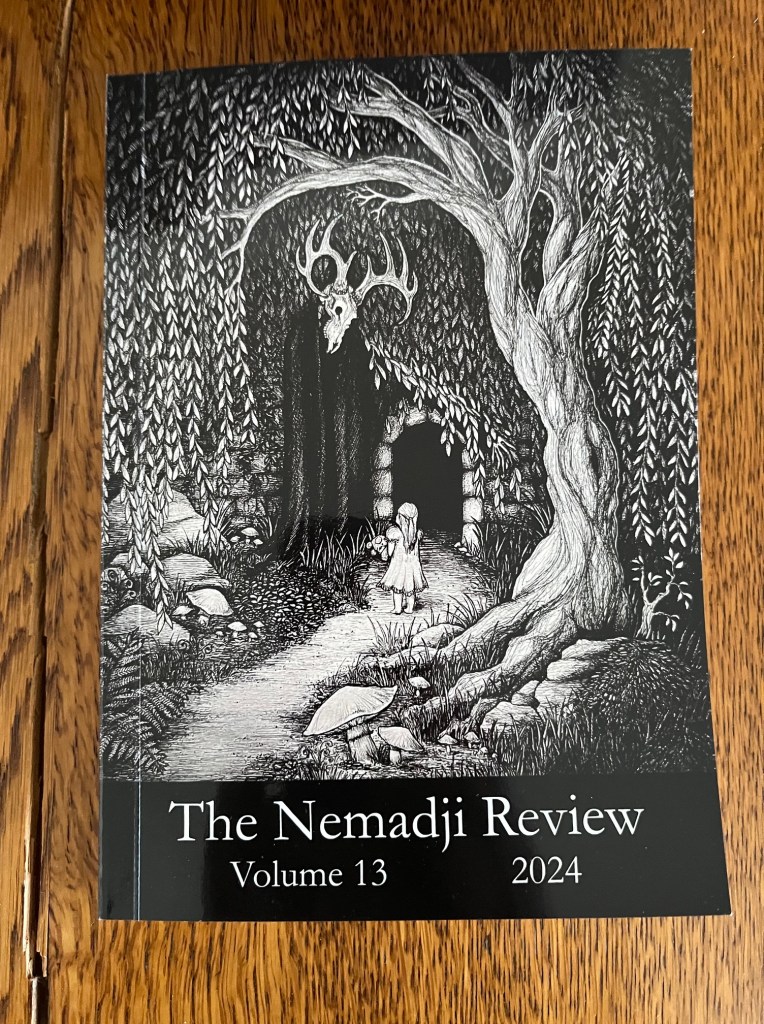
Something Published: “Dog Down the Stairs” appears in The Nemadji Review

This year’s theme was “Welcome to the 13th Floor.” The cover art titled Secret Tunnel of the Willow is by Amy Bates.

My flash fiction story “Dog Down the Stairs” was selected for the 2024 Nemadji Review, which is published by the University of Wisconsin-Superior. I’m so excited to be included in the Review because I graduated from the University of Wisconsin-Superior, a small but mighty force for liberal arts and education majors. Every time I walk onto the campus of my alma mater, happy memories flood my soul, and I feel as though I’m being hugged.

Last night the dedicated editorial staff of The Nemadji Review held a reading for the writers whose works appear in this year’s journal. What a delightful evening! Beautiful prose and poems were read by writers in a cozy and inviting auditorium filled with a supportive audience, followed by conversations with fellow writers while eating scrumptious treats. I had a brownie and a cookie!

I think I’m getting better at these readings. Before last night’s event, I read an essay at another journal launch in April. After I finished my five-minute reading and took my seat, I realized that I hadn’t had an “out of body” experience while reading. Before that, somewhere in the middle of a reading, fear would always take over, and I would become disconnected from the written word. I would no longer be able to put any emotion into the words because I would need all my energy to wade through my fear in order to finish reading. However, last night I did it again — I made it through my allotted reading time without having an “out of body” experience.

Maybe the brownie I ate before I read gave me courage. Or maybe I’ve come to realize the floor isn’t going to crack open and swallow me. Flying monkeys aren’t going to whisk me off stage. And my tenth-grade speech teacher isn’t going to present me with a grade.

I also think, because I keep reading in front of people, my flight or fight mode has relaxed. It’s decided there is no reason for concern. Best to save the adrenaline for real emergencies.

[To read my story click here, then scroll to page 94 of the journal.]

I forgot to have my friend take a photo of me reading. Perhaps that was a convenient-memory slip.

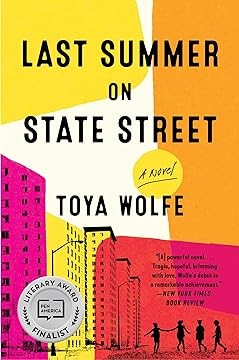
Book Review: Last Summer on State Street by Toya Wolfe

[William Morrow, An Imprint of HarperCollins Publishers, 2022.]

What is this book about?

Last Summer on State Street by Toya Wolfe is both a historical and coming-of-age novel. Set in 1999, the story follows four 12-year-old girls through a tumultuous summer of change. Set during the real-life demolition of Chicago’s Robert Taylor Homes by the Chicago Housing Authority, most of the story takes place in or around building 4950, which will soon be torn down. Twelve-year-old Felicia “Fe Fe” Stevens lives in 4950, along with her mother and teenage brother. Fe Fe and her friends, Precious and Stacia, spend their days going to school, jumping rope, and hanging out. When Fe Fe befriends Tonya, a skinny, forlorn girl with a drug addicted mother, and invites her into their circle of friends, Precious and Stacia aren’t happy.

As the summer temperatures scorch their neighborhood, trouble brews and spills into the streets. Gang wars erupt and residents endure gang shootouts and indiscriminate police violence. Fe Fe’s brother, who has managed to avoid gang life, is wrongly arrested and taken to jail. As Tonya’s beauty becomes more apparent, she can’t escape the unwanted attention of older boys. When the dynamics of Fe Fe, Precious, and Stacia’s relationships change, Fe Fe faces difficult questions about friendship and self-preservation. And as demolition day nears, Fe Fe worries about where her family will be allowed to live.

What makes this book so good?

From the first page, Wolfe’s style of prose, story-telling skills, and well-rounded characters combine to create a gripping and powerful series of events that draws the reader in and holds them throughout the book. Wolfe’s characters face crucial moments in their lives, forcing them to make tough choices in an environment that offers few options. And as her novel unfolds readers come to understand that Wolfe’s characters are complex and evolving.

Fe Fe, who narrates the story, is an adult looking back at her twelve-year-old self and her summer of seismic shifts. Wolfe creates a compelling, believable, and seamless voice for Fe Fe, who tells us a pivotal story from her youth as an adult, but at the same time as if she were still that child. I loved this weaving of Fe Fe’s voice, both young and innocent, but at the same time layered with reflection and maturity. If you’re a writer, thinking about writing a book where a character looks back at an event from their childhood, Last Summer on State Street provides an excellent model for the technique.

Why is this book important?

Wolfe’s beautifully written novel illustrates the consequences of racism and segregation against African Americans. A gripping story, skillfully told in first-person POV by Fe Fe Stevens, Wolfe’s debut novel is filled with sadness and joy, broken dreams and hope. And most importantly, it’s a book that can start conversations and encourage understanding among diverse people. Wolfe’s novel tells the story of segregated neighborhoods, poverty, fear, violence, stripped opportunities, and forced displacement. We live in a political climate where some people want to sanitize history, supposedly to spare white people uncomfortableness. But books like Wolfe’s have a much greater power to build bridges of understanding, hopefully fostering amends and shattering stereotypes.

[PEN Open Book Award finalist; Chicago Writers Association Book of the Year Award winner; Stephen Curry Underrated Literati Book Club Pick; Named a Best Book of Summer by Good Housekeeping, Chicago Magazine, The St. Louis Post Dispatch, Chicago Tribune, Veranda, The Milwaukee Sentinel, Publisher’s Weekly, among others.]

P. S. Re: Raymond Carver’s Stories

When I posted my thoughts yesterday about the twelve Raymond Carver stories I liked, I discussed, from a craft standpoint, what I believe makes those stories so good.

Someone pointed out to me that some of Carver’s stories were heavily edited by his editor Gordon Lish. I was aware of that, having read about it a handful of years ago. But I made a decision to keep the Carver-Lish editing relationship out of the blog because I wanted to focus on what worked in those stories for me. I wanted to write about what I took away from those stories as far as craft. Also, I have no idea which stories on my list were written by Carver when Lish was his editor, and which stories were written by Carver after he stopped working with Lish. Or which stories might be printed as Carver originally wrote them.

I didn’t want to get into the conversation about Carver and Lish because that wasn’t the focus of my blog. But after thinking about it for a day, I should have made mention of the writer-editor relationship between Carver and Lish, so my readers could decide if they still wanted to read the stories. Because I knew about Carver and Lish’s working relationship before I decided to read the stories, I should have let my blog readers know. However, either way, whether a story on my list is solely written by Carver or one written by Carver then heavily edited by Lish, making it more of a collaboration, I still love these stories and admire their craft. And the stories stick to my ribs.

Random Thoughts about Reading a Collection of Raymond Carver’s Short Stories

A friend of mine gave me a used copy of Where I’m Calling From: New and Selected Stories by Raymond Carver. She had picked up the book from the free shelves at our library, which is a section of books that have been donated by people who need to make room in their homes for more books. Anyone can come in, peruse those shelves, take what they want, and leave — no library card needed. People can keep the books, pass them along to friends, or donate them back to the library. Note: I’m keeping the copy of Carver’s short stories. My heirs can argue over who gets to inherit it.

My paperback edition of Carver’s stories was published in 1989 by Vintage Books: A Division of Random House. My particular copy has an intense black-and-white photo of Carver staring at his readers. The whites of Carver’s eyes are abnormally bright, suggesting an effect created by the photographer. Carver is neither smiling nor frowning, but looks like he could have done either after the shutter clicked. Every time I look at his photo, I wonder what he is thinking. This book is still in print, but the updated cover art isn’t nearly as interesting as Marion Ettlinger’s photograph of Carver, with its Mona Lisa vibe.

After my friend finished reading Carver’s book, she thought I’d like to read it. Sure, why not. I hadn’t remembered reading any of Carver’s work before. (Probably not the only gaping hole in my literary education. I still haven’t read a single Colleen Hoover novel or War and Peace.)

There is no way I’m going to take on reviewing Carver’s short story collection. Literary critics have done that. But having read the book, cover to cover, I feel compelled to share some thoughts.

If you write short stories, you might want to read Raymond Carver, not because you need to write like him, but because you will learn about craft from him. So here, and in no particular order, are random thoughts about Carver’s stories:

  1. He writes great dialogue, conversations filled with irony, skepticism, avoidance, misunderstandings, and sarcasm — the way angry, unhappy, disillusioned, conflicted people talk.
  2. He writes great first-person point of view narration. It’s not easy to create a character’s narrative voice that can reflect, ponder, and think about the past and the present without becoming oppressive or irritating. It’s a skill that when done right looks so easy, but when done wrong sounds like fingernails scratching on a chalkboard.
  3. He creates characters who come to life, stirring up emotions of dread, disgust, helplessness, loss, confusion, regret, grief, boredom, uselessness, and addiction. Carver has been called a postmodernist and a minimalist. He writes about real life in a stark manner with bruised and broken characters, leaving readers to fill in between the lines, and he doesn’t provide tidy endings. But you don’t need to go all postmodernist to admire and learn from Carver’s character development.
  4. I read Carver’s stories before bed. Some of his characters drank so much alcohol, I worried I would be hungover in the morning. They lit up one cigarette after another, filling ashtrays to overflowing. Occasionally, a joint gets passed around. The dulling of the senses is a motif in many of Carver’s stories, but it’s usually not the story. It’s an atmosphere created, one that made me psychosomatically nauseous as I read through a powerfully told, unsettling story.
  5. I didn’t like all of Carver’s stories. To me, some of them were little more than a short conversation, and I felt something was missing. This was especially true when the dialogue pulled me in, making me want more of a story. Most of the stories I didn’t like were in the first part of the book, but I kept reading because it was Raymond Carver, who is considered one of the finest short story writers in American literature.
  6. But I loved a lot of his stories, usually the longer ones, which were in the second half of his book. My favorites from this collection: “The Third Thing That Killed My Father Off”, “So Much Water So Close to Home”, “Careful”, “Where I’m Calling From”, “Chef’s House”, “Fever”, “Feathers”, “Cathedral”, “A Small Good Thing”, “Boxes”, “Elephant”, and “Blackbird Pie.”
  7. Carver’s story titles throw subtle, understated jabs at the situations in his stories. The title “A Small Good Thing” nods to a sad irony in a tragic story. The title “Where I’m Calling From” is layered with multiple meanings, including its play on the phrase, where I’m coming from. The one-word title “Boxes” is brilliant in its ability to cover the physical and the metaphorical dimensions of a dysfunctional family.
  8. Carver sometimes weaves absurdly unexpected events into the mundane. And they’re believable because Carver believes them. For example, in the story “Feathers” a city couple goes to dinner at a country couple’s house. The country couple have an ornery peacock that likes to come into the house at night, a plaster-of-Paris cast of repulsive teeth that decorates the top of their TV, and the ugliest baby one can imagine. My take-away: Don’t be afraid to throw curveballs in your story.
  9. Even though some of Carver’s characters believe they are happy, they actually live vapid lives, teetering in the balance. So, when a complication occurs, their lives become complete crap, miring them in muck that will stick to them, even should they pull themselves out of the cesspool. The stories I liked best reveal a before, followed by a pivotal change, which lets loose a wrecking ball headed toward at least one of the characters. We don’t get to see the impact; we are left to imagine it.
  10. Less is more. Carver’s stories say so much by not saying all of it. Every word counts for something, and he never nags. I’m reminded of Grandma’s advice: Put your jewelry on, then take one piece off. Or Marilyn Monroe’s advice: Don’t make your hairdo too perfect, or no one will notice the rest of you. You know, just “kill your little darlings.”
  11. Of course, I looked up Carver’s own story. He died of lung cancer. He was an alcoholic, but found sobriety. He had a failed marriage, but found a second love. He died young, at 50, but he achieved a literary immortality.

A shout-out to my kind friend who handed me a collection of Carver’s stories and said, “I thought you might like to read these.” She was right.

And I recently discovered I won’t have to read War & Peace because PBS is airing it as a miniseries, starring James Norton, a dreamy British actor, who I came to adore while watching Grantchester. That means I have time to re-read David Copperfield and Huckleberry Finn then read Demon Copperhead by Barbara Kingsolver and James by Percival Everett.

    Book Launch of Sister Lumberjack by Candace Simar (Release Date April 16, 2024)

    Sister Lumberjack, release date April 16, 2024

    On St. Patrick’s Day, I drove two hours and ten minutes to Brainerd, Minnesota, to attend a book launch for Sister Lumberjack, Candace Simar’s newest historical novel. My daughter-in-law agreed to go with me, even though she hadn’t read any of Simar’s books yet. But she loves to read, so she’s always willing to do book things with me.

    I was intrigued by the story and its characters. The year is 1893, Minnesota winter is approaching, and lumberjacks are returning to the camps. Solveig Rognaldson, sixty years old and recently widowed, hopes to hire on as a cook in a lumberjack camp. Cooks earn high wages, and she needs the money to pay the mortgage on her beloved farm, or the bank will repossess it. However, logging companies don’t hire women. Nels Jensen, a young man struggling with the drink, knows he needs to grow up. He plans to work in the camps again, but he discovers he has been blacklisted. Sister Magdalena, a young, atypical nun, sells hospital tickets to lumberjacks as a form of insurance, should they get injured and need medical care. These three people come to know one another at Starkweather Timber, a logging camp where nothing runs smoothly.

    Fun fact: There was a real nun who lived in Minnesota and sold hospital tickets to lumberjacks. When Simar discovered this golden nugget, she was inspired to write her book, which she said is a fictionalized account of that nun. I have to say, the idea of a nun traveling from one logging camp to another, sometimes while wearing snowshoes, captured my imagination. I was all in for a book launch in Brainerd.

    Does this make me a historical fiction groupie? Perhaps! Author Candace Simar couldn’t believe that my daughter-in-law and I traveled more than two hours to come to her book launch. Several times Simar asked, “You really came all that way for my book launch?”

    Yep, we did. But I explained to Simar that my daughter-in-law and I also made a day of it. We went to Christmas Point, a large, lovely gift shop, where we had a tasty lunch. Then to kill more time, we went to Target. If any of the local bookstores had been open, we would have gone to one of them instead. But it was Sunday, and I’m guessing the booksellers were all at home reading.

    So, how did I become a devoted Candace Simar fan? Well, historical fiction is one of my favorite genres, and I read Simar’s historical novel Shelterbelts, which is set in Minnesota at the end of World War II, and I loved it. The novel, set in a small town, follows a cast of interesting characters as they adjust to life after the end of the war. Simar’s dedication to research, and her ability to use that research to create realistic characters and settings, took me back in time, immersing me in a beautifully written, well-told story.

    Because I attended Simar’s book launch, I was able to buy a copy of Sister Lumberjack a month early. Simar’s publisher printed a run of seventy-five books, which were offered for sale. After asking Simar to sign my copy of Shelterbelts, I bought Sister Lumberjack and had her sign that too.

    Candace Simar, March 17, 2024

    My daughter-in-law and I helped ourselves to cookies and punch, then settled in at a table to read. I handed my copy of Shelterbelts to my daughter-in-law, and I cracked open Sister Lumberjack. We read for a bit before a couple of other Simar fans asked if they could sit with us. By this time the room was crowded with people who had come to buy a book, have it signed, and hear Simar read. We had a nice chat with the women, but soon my daughter-in-law and I drifted back to our books. I was already hooked on Sister Lumberjack, and my daughter-in-law took my copy of Shelterbelts home with her.

    In a packed room, filled with attentive fans, Simar read two passages from her book, one featuring Widow Solveig and the other featuring Sister Magdalena. When she finished, the audience saluted her with a well-deserved, hearty round of applause.

    I’m on “Chapter 10” in Sister Lumberjack. Once again, Simar has transported me back in time. I’m performing farm chores with Solveig, squirming when Nels takes a job with an undertaker, laughing at Sister Magdalena’s mishaps in the kitchen. And I’m learning lumberjack lingo. Best of all, Simar’s novel Sister Lumberjack is every bit as good as Shelterbelts.

    Candace Simar, signing books before her reading

    Today, Reviews of a Novel, a Memoir, and a Collection of Short Stories All Walked onto the Pages of Pink Panther Magazine.

    They are gathered on pages 44 and 45, enjoying a nice two-page spread in the beautiful Pink Panther Magazine, which describes itself as “a celebration of women’s art and writing.” So appropriate because it’s filled with exquisite artwork, fiction, and poetry.

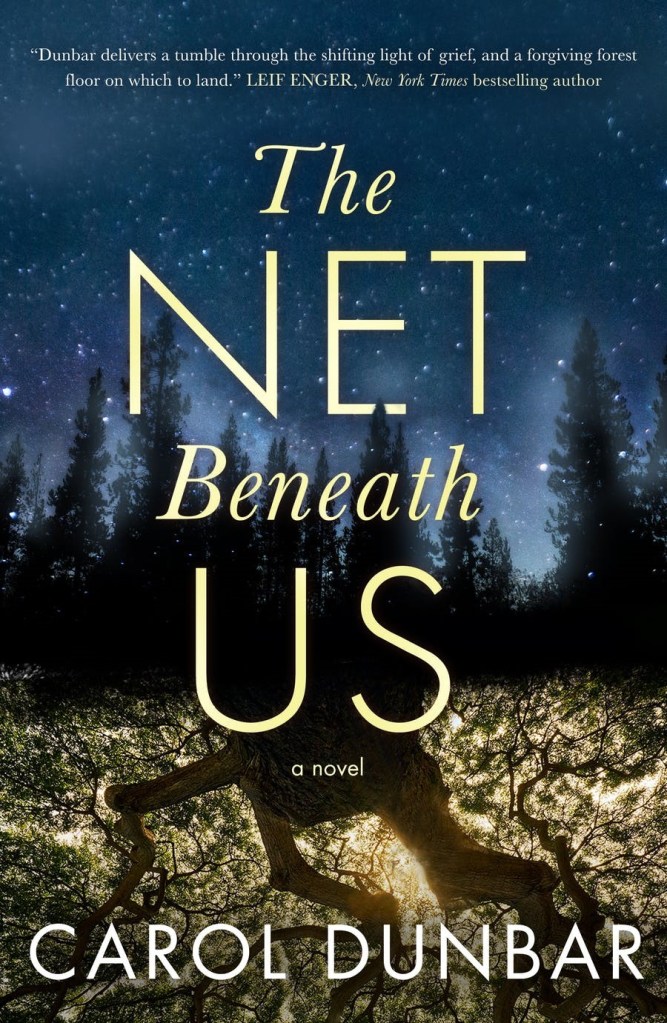
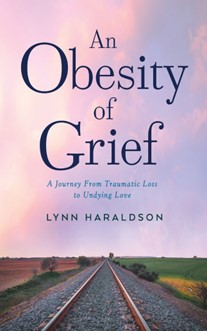
    I reviewed three wonderful books: The Net Beneath Us by Carol Dunbar, An Obesity of Grief by Lynn Haraldson, and Finding the Bones by Nikki Kallio. Another fun bonus — my writing friend Kim Suhr has a short story, “Pay Phone,” in the same issue. Suhr is one of my favorite writers, and so it’s a kick to be with her in the same publication.

    For me it’s an honor to be part of Pink Panther Magazine with all of the talented women featured, especially on International Women’s Day.

    Click here to find Pink Panther Magazine, March 2024, Volume 15, Number 1.

    The Novel
    The Memoir
    The Short Story Collection

    Drury Lane Books, Grand Marais, Minnesota

    The entrance to Drury Lane: to the left is Lake Superior, to the right is a donut shop

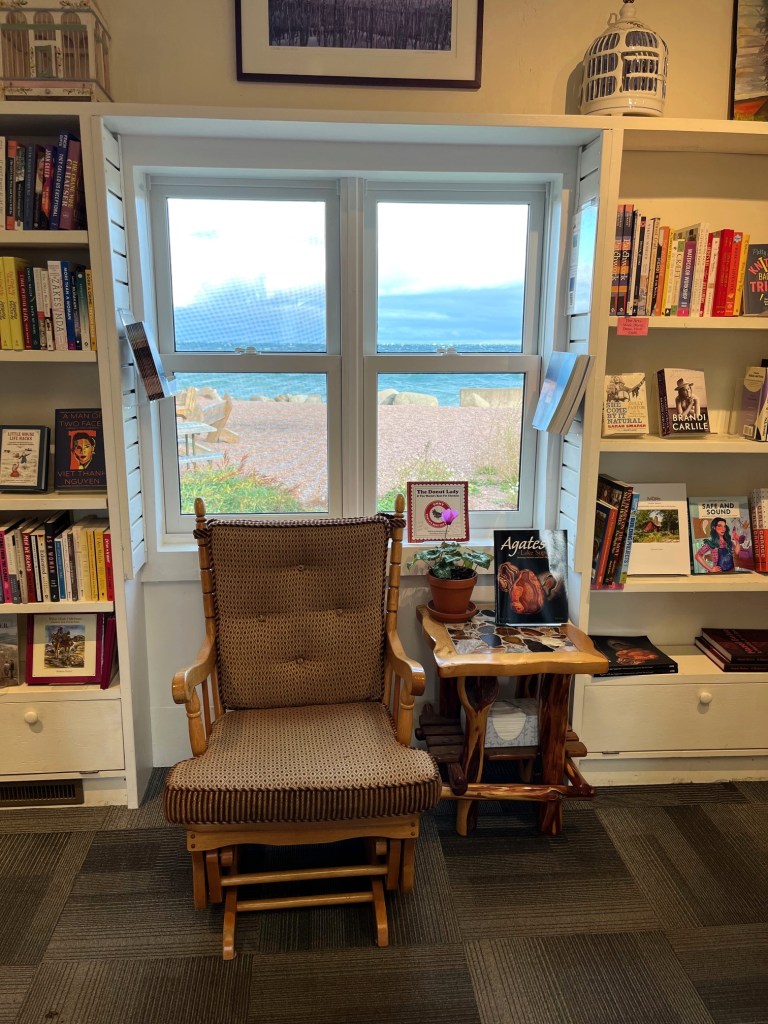
    On the shore of Lake Superior, there is a small independent bookstore in Grand Marais, Minnesota, called Drury Lane Books. It’s my happy place. When I feel tired, sad, angry, or bored, I conjure up an image of the charming store, then I walk inside and sit in the window seat lined with a bright-blue cushion. In my hands I hold the perfect book, pulled from a glossy-white shelf. And I fall hopelessly in love with the characters and their stories. It’s Zen.

    A cozy nook inside of Drury Lane

    Last October my sister and I actually visited Drury Lane three times in one weekend. (I bought a collection of short stories and two novels.) During our first visit, the churning waves on Lake Superior roared so loudly that conversation outside the bookstore was difficult, unless we wanted to shout. And while we could have sat in the wooden chairs on the beach and read our new books, the cold, strong-fisted winds would have ripped pages from our hands. The next day the winds abated, but it was still chilly. So, we read our books in a local coffeehouse while sipping hot mugs of tea and coffee.

    Drury Lane dreaming puts a smile on my face.

    A great place to read a book, as long as Lake Superior is behaving

    Cupid Loves a Reader: February Book and Short Story Reviews

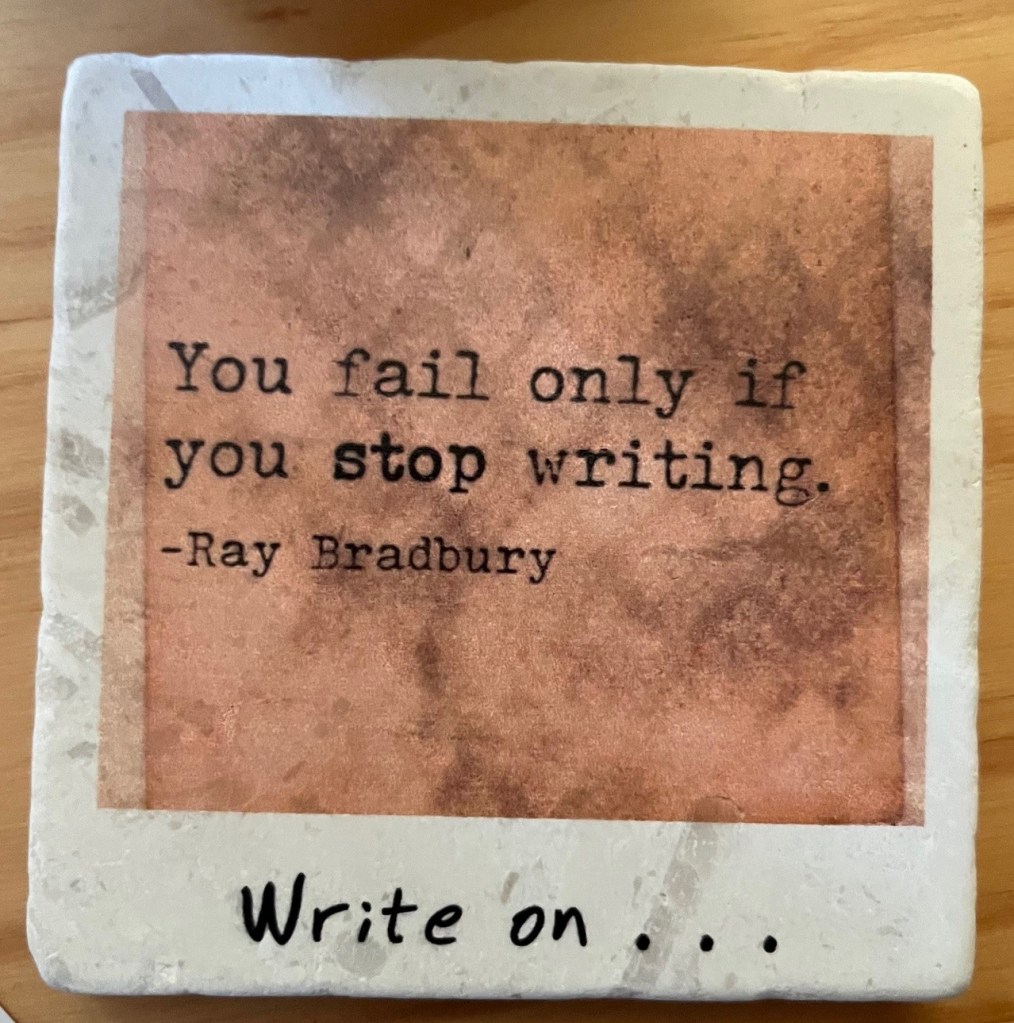
    It’s Groundhog’s Day and Punxsutawney Phil has declared there will be an early spring, but I still wore my long underwear when I walked Ziva this morning. Valentine’s Day is twelve days away, and my Valentines are addressed and ready to mail. There is an extra day in February, which I plan to spend reading. I completed and submitted a creative nonfiction essay based on the theme migration. (I wrote about monarchs.) I was happy with the piece when I finally submitted it (just hours before the deadline). But while writing it, I contemplated ditching the essay to work on a short story I’m writing. Sometimes when I write a piece (like that migration essay), I feel like I’m wrestling with a tornado. To motivate myself, I kept my coffee cup on a coaster with a Ray Bradbury quote, which my sister had sent me — “You fail only if you stop writing.”

    Today I’m returning to my short story. But before I dive into another writing hole, I want to share some reviews of recent reads that I have enjoyed. They are in no particular order.

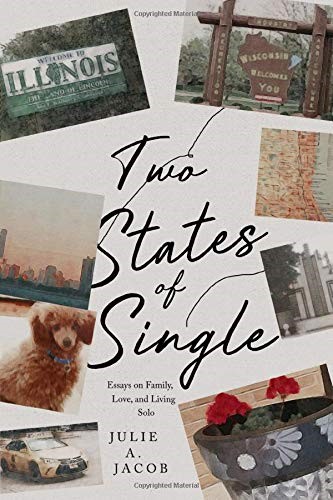
    Two States of Single: Essays on Family, Love, and Living Solo by Julie A. Jacob [Leaping Poodle Press, August 2020]

    Julie A. Jacob’s book is a collection of well-crafted, engaging essays. Her essays follow the arc of her life as she describes her years in Chicago; a daring adventure in Brazil; joining sports clubs for young professionals; buying her own condo, then later on a house; taking a chance on love; caring for her aging parents; and losing her parents.

    Vivid writing and crisp dialogue breathe life into Jacob’s essays, which resonate because of her ability to convey why each story matters, both to her and to her readers. By the time I finished Jacob’s collection of essays, I found myself longing to meet with a group of fellow readers, sip a good latte, and discuss Jacob’s essays. Her book would make a wonderful nonfiction read for a book club because we all have stories and insights to share about our choices, careers, loves, family, sorrows, and joys.

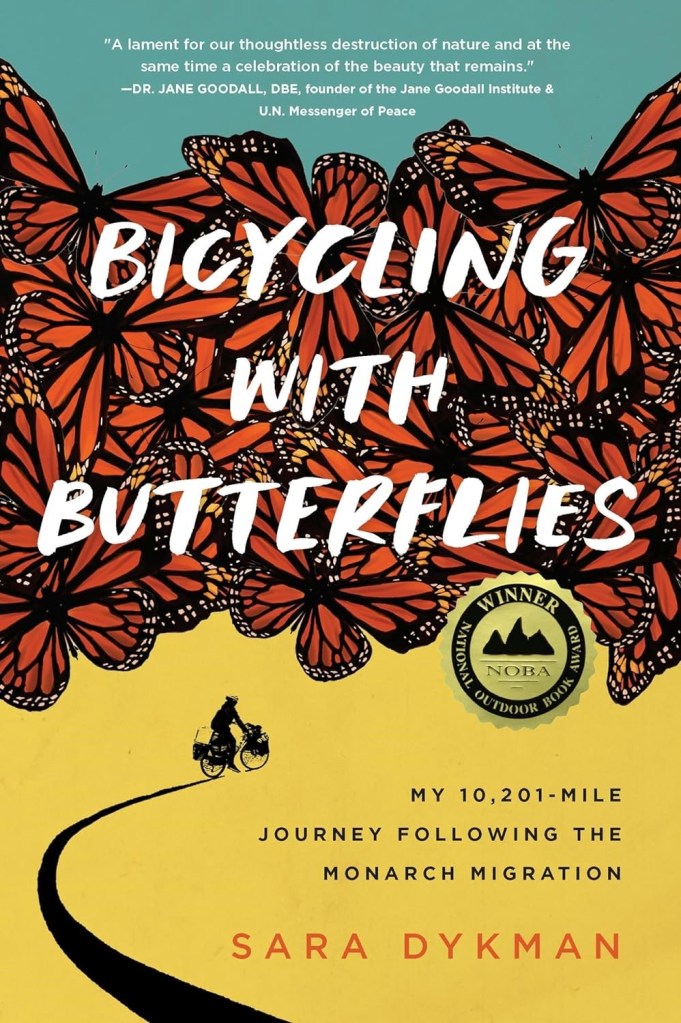
    Bicycling with Butterflies: My 10,201 Mile Journey Following the Monarch Migration by Sara Dykman [Timber Press, Inc., 2021]

    Sara Dykman’s book is part memoir, part science, part ecology, part travelogue (for bicyclists), and completely engaging. I read her book as part of my research for my essay on monarch migration, and I learned a lot about the migration of monarchs, which is both complex and fascinating. I also learned how climate change and habitat loss are threatening monarchs and their migrating way of life. In order to inform the world about the plight of monarchs, Dykman bicycled over ten thousand miles, from the El Rosario monarch sanctuary in Mexico, up to New England, into southern Canada, through the Upper Peninsula of Michigan, back down the central United States, then returned to El Rosario. She strived to keep pace with the monarchs. Along the way she visited classrooms and community centers and gave talks about monarchs and their habitats. She met interesting people, delighted in Mother Nature, and overcame logistical problems.

    Dykman writes about biology using creative language and imagery, drawing readers into both her remarkable journey and the amazing migration of monarchs. Readers will learn so much about nature through her beautiful prose. When I wanted to give up on my monarch essay, I thought about the ten thousand miles Sara Dykman bicycled, and told myself to stop whining about writing a twenty-five-hundred-word essay.

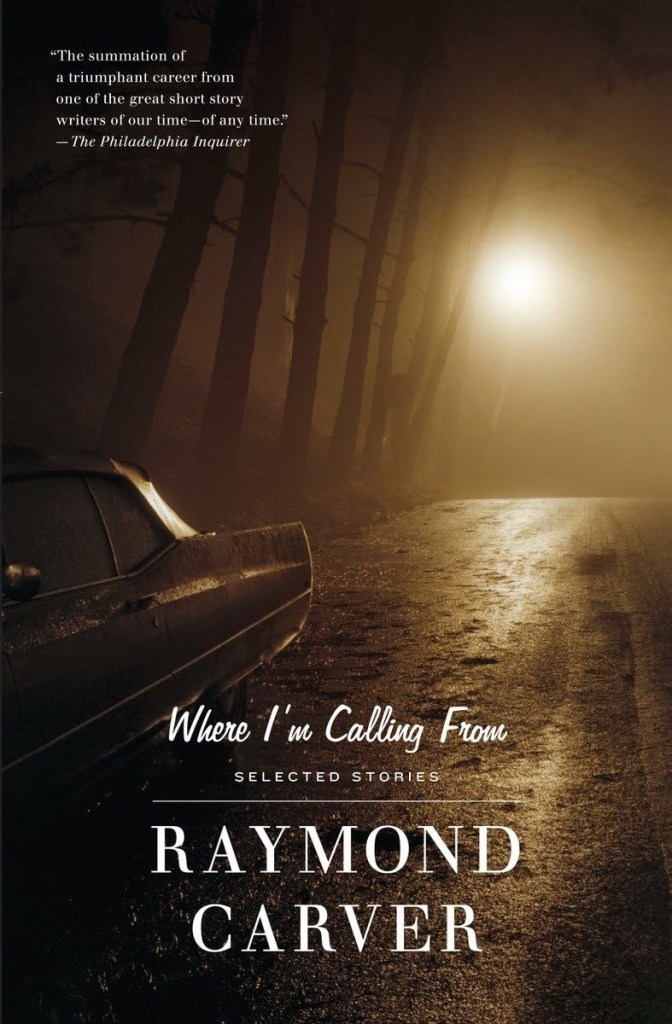
    “The Third Thing That Killed My Father Off” by Raymond Carver [This short story appears in Where I’m Calling From, a collection of Carver’s short stories. First Vintage Contemporaries Edition, 1989]

    “I’ll tell you what did my father in. The third thing was Dummy, that Dummy died. The first thing was Pearl Harbor. And the second thing was moving to my grandfather’s farm near Wenatchee.” And so begins the narrator, who is now a grown man looking back at an event, Dummy’s death, that killed his father’s spirit.

    There are two things Carver does brilliantly in this short story. First, the dialogue and descriptions he includes. Second, the conversations and actions he omits. And between what is on the page and what lives only in the reader’s mind, Carver tells a powerful story, layered with connected themes. I read it, and then a few weeks later, I read it again.

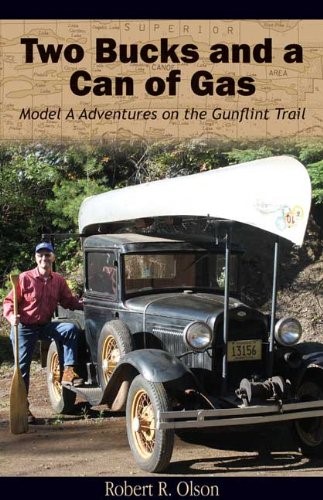
    Two Bucks and a Can of Gas: Model A Adventures on the Gunflint Trail by Robert R. Olson [North Shore Press, 2012]

    This is a charming series of nonfiction stories about the friendship between a man, his Model A truck, and the Gunflint Trail. Author Robert Olson develops his love of hunting, fishing, and the Model A Ford truck from his father. Olson is seven years old in 1952 when his father brings home the 1930 Model A truck.

    Olson’s stories are well-written, and I liked learning about the versatile, can-do Model A truck. Once Olson has his driver’s license, he starts driving the truck to the Gunflint Trail for hunting and fishing, even during the bitter cold winters. At first he camps in an enclosed structure in the truck’s bed, then he builds a cabin. The Gunflint Trail calls to Olson, and he spends as much time as he can in the northern Minnesota wilderness. And even though roughing it during cold winters wouldn’t have been my cup of hot chocolate, Olson’s love for the wilderness, and the Model A truck that took him there, shines through.