Dating a Short Story

My office, the scene of tumultuous writing relationships

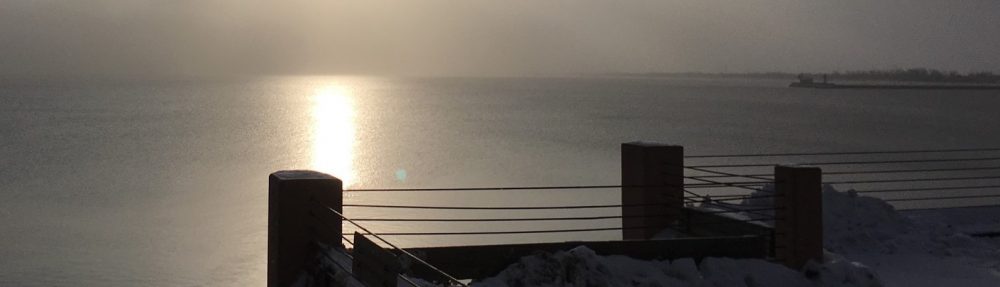
About a month and a half ago, inspired by a picture, I wrote a rough draft of a short story. About 2,300 words long, it had a nice beginning, a muddled middle, and an abrupt non-ending. I saved the story and closed the file. The story and I needed space from each other.

So, I wrote some blogs. I did minor revisions on a historical short story. I beta read a novel. I read some books. I played games with my grandchildren. I walked my dog. I watched TV. I cleaned the house.

That’s usually how it is for me at the beginning of a short-story relationship. I fall in love with an idea, which lives in my mind. I see a story with layered meaning, engaging characters, and a compelling plot. However, the vision in my head becomes incomplete and fragmented on the paper. Something gets lost in translation, and at this point, I’m never sure if I will ever meet the story I became infatuated with. It’s rare that a story and I click right away, so in the beginning, I often don’t name a story, just in case things don’t work out.

For a while, a rough draft and I will ignore each other. Then, if it’s meant to be, the story starts whispering in a corner of my mind. It nudges me when I’m drifting off to sleep. Before I open my eyes in the morning, I feel it staring at me. At this point, it’s all low-level noise. But if the story cares, it keeps calling to me, getting louder and louder, until the only way I can pacify it is to pull it up on my computer screen and spend time with it. My inspired-by-a-photo story is one of those types of stories — one that starts to follow me around.

So, last Saturday morning I returned to the story and spent hours with it. When I took my dog for a walk in the afternoon, I called a friend, who also writes. “I’m working on a story I started six weeks ago,” I told her. “It’s been painful.”

“It hurts?” she asked. I imagined her eyebrows pitching upward along with the sound of her voice.

“Yes,” I said, “I’m at the beginning stages of writing the story. I don’t know if it’s going to work or not, and that’s painful. If I can make the story work, then the revising and editing parts become fun.”

The painful phase happens almost every time I write a short story. My head spins. I crave chocolate. I check my email every five minutes. And I make excuses to leave my desk. But I’ve learned the only thing I can do is to keep returning to my story, to keep pushing forward. Sometimes after months of intermittently returning to a story again and again — trying to find a way into it, through it, or out of it — I get lucky, and my story seems to write itself. But this isn’t really true: It’s the time and work I’ve put in that suddenly makes the story feel like it’s flowing from my fingers. But not every short story I draft has a fairy tale ending. Some stories and I never see each other again, or after months of trying, we call it quits.

Last Saturday with my story felt like a bad date, and I reached a point where I had to bail. I left my office feeling I had wasted hours but determined to try again the next day.

On Sunday, I went back to the story. Back to tweaking the first couple pages, then getting up to do something, then back to the first couple pages, so I would know where I was at. Then up again. Then back to the first couple of pages. Who was I fooling? It was easier to spend time with my story’s charming beginning and overlook its flawed messy middle and nonexistent ending.

But I kept at it because when I’m writing, I consider banging my head against the wall to be part of my creative process.

After bumbling along with the story for a couple of hours on Sunday — I had been wrestling with the narrator’s voice and the story’s tense — an idea occurred to me. I revised the first few paragraphs, giving the narrator a distinct voice that seemed to fit the story’s theme and fix the tense problem at the same time. We’ll see.

For now, the story and I plan to keep seeing each other. We have coffee together in the mornings, before I pick up my grandchildren from summer school. Sometimes in the afternoon if my grandchildren are playing quietly, I sneak into my office and spend extra time with the story.

The relationship is progressing in a positive direction, but I’m not ready to declare it a love match, and the story remains unnamed. It could still turn out to be yet another frog that won’t become a prince.

(By the way, there is no reason to tell my short story that I hung out with a blog today.)

The photo that inspired my latest precarious relationship!

Short Story Club Idea for Writers or Nonwriters Who Love Literature

Delicious coffee cake paired with a cherry blossom latte from our favorite coffee shop. Note the wonderful cherry in the cup.

During COVID, I joined a book club at the library. We met in the evening once a month on Zoom instead of the library. It was the first and only book club I’ve ever belonged to, and it was perfect for the times. Because lockdowns meant I couldn’t work, I had extra time on my hands. I tried to write, but I was too anxious to produce much of anything. But I could read, so I looked forward to each Zoom gathering and the chance to meet with fellow readers who also loved to discuss books. At the end of each discussion, it was nice to “leave the meeting” and not have to get in my car and drive home. Best of all, I felt that reading and discussing books would help me grow as a writer, even if I couldn’t write. Later, I would hear other writers talk about their struggles to write during COVID. But when the lockdowns ended and the book club returned to meeting at the library, I dropped out.

I missed talking about books with fellow readers, but I also wanted something that was more focused, tailored to me as a short story writer. Then, I read an article by an essayist who said she and a couple of her fellow essayists liked to read the same essays written by well-known writers and discuss them. They looked at tense, point of view, structure, pacing, use of literary devices, and anything else they wanted to discuss. I attended writing webinars where instructors used mentor texts to model whatever writing technique they were teaching. I came up with an idea: Why not a short story club? One that would focus on the writer’s use of all the literary techniques in a writer’s toolbox.

So, I talked to a friend of mine who used to teach AP English. Because I knew he loved to discuss literature and because he was a busy guy, I figured he’d love the idea of a short story club. He did.

We take turns choosing a short story and meet up every five to six weeks at a local coffeehouse. We discuss anything and everything about the writer’s techniques. I learn a lot and my hope is that I will become a better short story writer. (Maybe I should call this my Coffeehouse MFA.) I know that much of what we discuss will end up in my writer’s toolbox, perhaps to be incorporated in some manner in one of my future stories. My friend hopes to write when he retires, so he is adding to his toolbox too.

If you want to form your own short story club, here are some ideas to get you started:

  • Take turns picking the short story. Be adventurous. Cover different time periods and genres and cultures. If someone ends up not liking a story, at least it’s not a whole book.
  • Read the story at least twice. I read a story a few weeks before we meet up, then again a day or two before our meeting.
  • Make a paper copy of the story so you can annotate, highlight, and underline. (My colored erasable ink pens get a workout!)
  • Meet up at a local coffeehouse, so no one has to worry about hosting (or cleaning his or her house or baking the treats).
  • Make time to visit before and after you discuss the short story. It’s fun to catch up with friends.
  • Depending on the size of your group, allow an hour to an hour and a half.
  • My short story club consists of two people, but you can go bigger.

Short stories we’ve read so far:

“Sonny’s Blues” by James Baldwin, “Virgin Violeta” by Katherine Anne Porter, “The Third Thing That Killed My Father Off” by Raymond Carver, “The Wilderness” by Ray Bradbury, “Tomorrow in Shanghai” by May-Lee Chai, “A Trifle from Life” by Anton Chekhov, and “Warpath” by Jeffrey Masuda.

***

My two favorite books from my book club days:

A five-star book

Red at the Bone by Jacqueline Woodson. Shortened synopsis from Amazon: As the book opens in 2001, it is the evening of sixteen-year-old Melody’s coming of age ceremony in her grandparents’ Brooklyn brownstone. . . . But the event is not without poignancy. Sixteen years earlier, that very dress [now worn by Melody] was measured and sewn for a different wearer: Melody’s mother, for her own ceremony — a celebration that ultimately never took place. Unfurling the history of Melody’s family – reaching back to the Tulsa race massacre in 1921 — to show how they all arrived at this moment, Woodson considers not just their ambitions and successes but also the costs, the tolls they’ve paid for striving to overcome expectations and escape the pull of history.

For an informative podcast (and to wonder, Why isn’t this taught in school?) listen to Blindspot’s Tulsa Burning. Listen to the podcast first. If you understand the horror of what happened in Tulsa, you will have a greater appreciation for Woodson’s powerful novel.

Also, a five-star book

It Takes One to Know One by Isla Dewar. My reading of this book was a happy, very happy accident. The book I was supposed to read was It Takes One to Know One by Susan Isaacs, which is a crime thriller. I didn’t make note of the author’s name, so when I ordered the book, I bought the wrong one — a wonderful mistake.

I loved Dewar’s take on the title. Her book is downright funny, even though the humor sometimes comes from a place of sadness and longing. The book is not a crime novel, but there are some small mysteries that need unraveling. Dewar is a Scottish novelist, and authors from the British Isles do the type of humor I like so well. Perhaps living on small islands in very changeable weather, and being surrounded by eerie and unearthly beautiful landscapes, and being subjected to numerous invasions and attempted invasions since the Roman Empire, makes one cultivate a sly, irreverent sense of humor in order to appear unflappable.

My son, who rarely reads fiction, read this book and laughed out loud. My daughter-in-law also loved it.

Reading a Raymond Carver Story Saves My Relationship with a Troublesome Story of My Own

Lake Michigan, the eastern side

I recently finished a short story, and for the past few weeks, I’ve been reading and rereading it and sending it to my favorite readers for feedback. After minor revisions and edits, I think it’s done. I’m happy with the story now. But I almost ditched it because I’d spent months (on and off) trying to figure out how to write this particular story. As proof, I have multiple handwritten versions in a journal and several other attempts saved on my computer. None of those drafts were salvageable.

I had decided to use present tense and third-person point of view. But I couldn’t find a way into the story — each draft lacked a beating heart. The real problem? My third-person narrator desperately needed a voice, and I couldn’t find one. I kept putting the story aside and working on other writing. And I kept reading: fiction, nonfiction, and short stories.

It would be a short story written by Raymond Carver that gave me an idea.

Although, if you read the Carver story, you might not see its connection to my story because our styles and voices are so different, plus his story uses past tense and first-person point of view. So, what was it about the Carver story that inspired me? Narrative distance. Carver’s first-person narrator tells his story from the distance of years gone by, even though there are some closeups. As I read Carver’s story, I became giddy. A hundred-watt light bulb lit up over my head. I’d found a way to tell my story. I needed to keep my narrator at a distance.

I began my short story anew — on a blank page, without even a glance at the other drafts. I did keep the present tense and third-person point of view, but I created narrative distance. It worked. That distance gave my narrator a voice, which in turn gave my story a heartbeat.

And I’m grateful because something about the story wouldn’t let me go. It kept pleading, “Just give me one more chance.”

Experienced writers tell beginning writers to write, write, write. They also tell beginners to read, read, read. I used to think if I read while I was writing, I would end up writing like the author I was reading. But that just doesn’t happen. Instead, I’m inspired. I pay attention to how an author crafts her story, from sentence to paragraph, from beginning to end. And sometimes (thank you, Raymond Carver), I come across a technique that I can apply to something I’m currently writing.