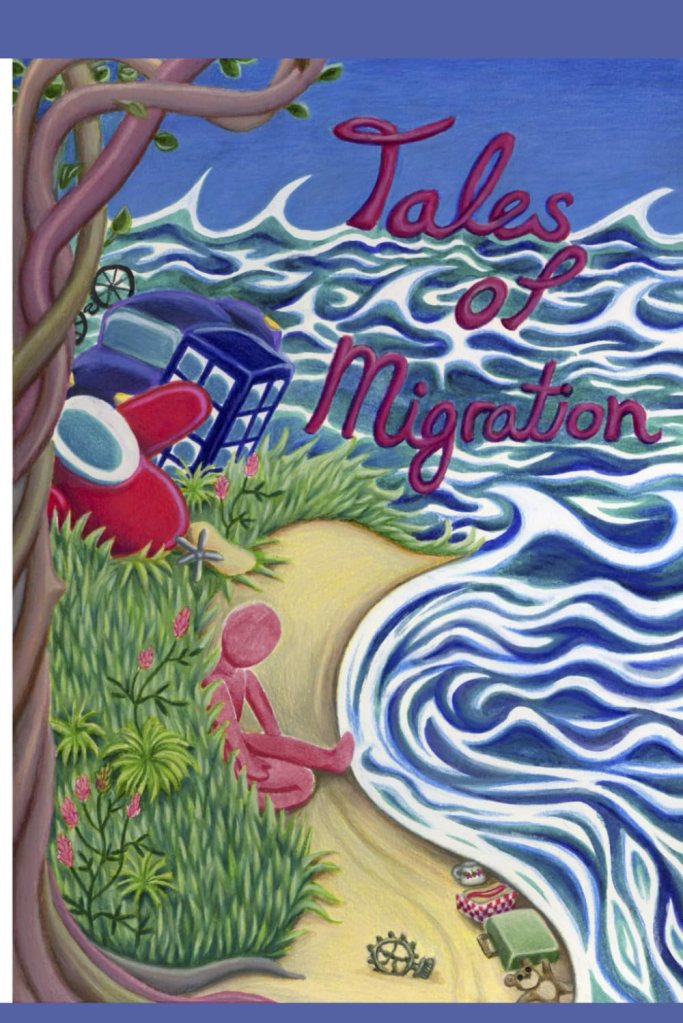
Something Published: “A Journey with Monarchs”

Tales of Migration 2025

My essay “A Journey with Monarchs” was recently published in Tales of Migration by Duluth Publishing Project. Professor David Beard (University of Minnesota-Duluth) and a group of his students spearheaded this project, from the call for submissions to the finished project. This is the second time I’ve had an essay selected for one of their anthology projects. I appreciate the hard work and dedication of Beard and his students, who all strive to make the experience memorable for their writers. In the spring after the selections are made, they always host a reading, and invite the writers to read their pieces. It’s a wonderful time. I enjoy meeting the other contributing writers, and listening to them read their work.

The inspiration for my essay

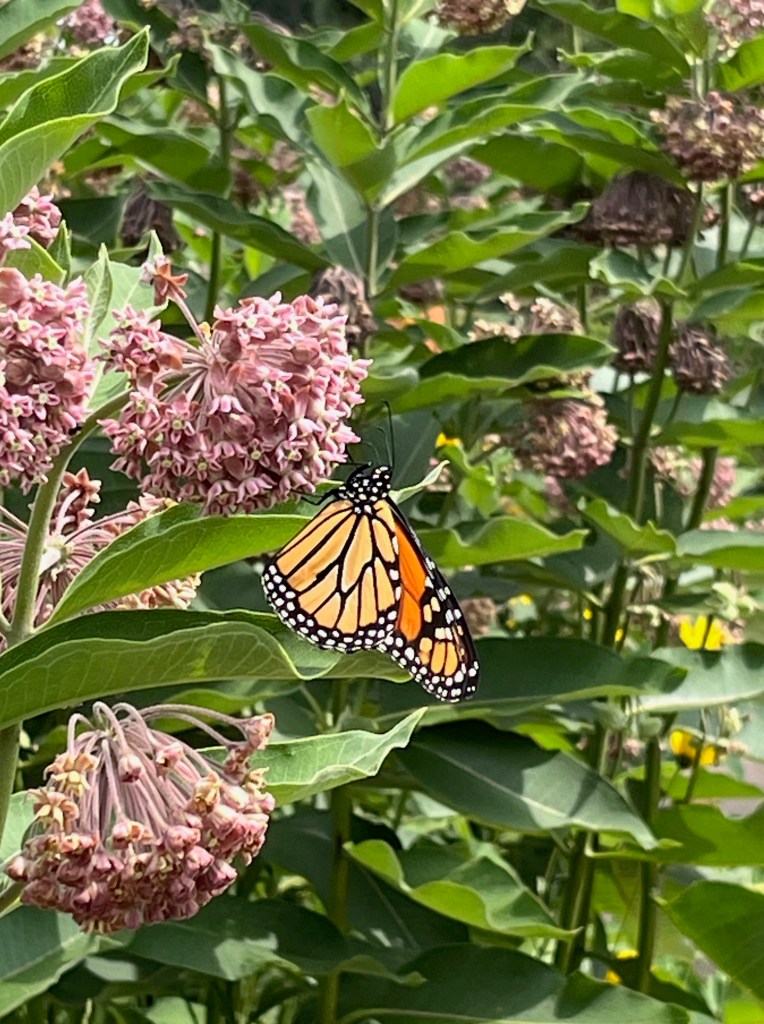
My essay was inspired by a monarch I saw in Petoskey, Michigan, on a chilly October day. The monarch clutched a pink cosmos flower, and it didn’t move when I approached it. Its behavior so intrigued me that I began to research monarchs and their migration habits. My essay is a creative nonfiction piece of nature writing. For the nonfiction part, I carefully researched all of the information by reading books and online articles from reliable sources. For the creative part, I used some literary devices that I hoped would make the essay enjoyable for people to read while learning about the wondrous migration of monarchs.

[The Tales of Migration anthology is available on Amazon. For more information, click here.]

I’ll never forget the reading for Tales of Migration because I got lost . . .

After this year’s reading, I struck up a conversation with one of the poets whose work appears in Tales of Migration. I had met her the year before when we both read our pieces from Tales of Travel. We left the meeting together and kept visiting. We had parked in different lots, but I kept walking with her because I enjoyed her company and conversation. I figured I would just walk around the outside of the buildings and return to my car. After all, it was a nice sunny evening, the UMD campus wasn’t that big, and I hadn’t gone that far out of my way.

Ha! It didn’t work out as I planned. After I exited the building with the poet, she walked off to her parking lot. I turned the opposite direction and walked off to my car. But I couldn’t find the lot in which I had parked. I walked around buildings. I set the GPS on my phone to walk mode, but it was no help. It was around 7:00 on a weeknight and the campus was devoid of students.

I walked in circles for almost twenty minutes. If it had been dark, I would have been panicked. But the skies were a bright, beautiful blue and considering what spring can be in Duluth, it was fairly warm. I have such a poor sense of direction to begin with, and faced with a random placement of large buildings connected by a maze of passageways, I began to feel stupid and frustrated. I felt trapped inside a bad episode of The Twilight Zone.

I decided I needed to reenter the doors I had exited from with the poet. I retraced my steps back through the liberal arts building and to the room where I had done my reading. From there I felt I could find the engineering building that I had walked through on my way to the liberal arts building before my reading.

But it wasn’t that easy. I had gotten so turned around and addled that I had a hard time remembering how I had originally come through the buildings, which were connected by long and meandering hallways. And to complicate matters, the floor levels in one building don’t always match up to the floor levels in the next building.

I asked a student if he could give me directions to the engineering building. He shook his head and said, “I don’t know. I’m a liberal arts major.”

“I was a liberal arts major, too,” I said, as if that explained why I was lost. He was not the only person to apologize about not being able to direct me to the engineering building. Perhaps liberal arts majors aren’t hardwired to locate engineering departments. On a large campus, many students may never need to visit certain buildings. I went to a small college, and I had classes in every building on campus.

Finally, someone was able to help me. Once I found my way into the engineering building on the correct level, I recognized where I was and located the right exit. My car was where I had left it. Dusk was descending, and I was relieved. It’s not fun being misplaced.

I had known all along where I was, and yet I had been so lost and turned around at the same time. I thought about the irony. I had just read for Tales of Migration, filled with poems and essays about moving from one place to another, sometimes covering thousands of miles. I thought about migrating people all over the world who would know the names of their new homes, yet still be lost and turned around, arriving in a land they had never been before, whose culture they had never experienced. They would have mazes and passageways to navigate, all of which would play out over years, instead of the thirty minutes in which I had been lost.

Bees, Roses, A Water Fountain, Ice Cream, and Rocks on the Beach

A happy pollinator on the first flowers we encountered

Two years ago I took my four grandkids to a rose garden. We smelled the roses, walked along Lake Superior, ate ice cream, and tossed rocks in the water. Then we did it again last year. So, of course, we had to do it again this year. It’s a tradition now. When my grandkids are grown up and old, they will say to each other, “Remember when Nana took us to the rose garden every summer, and we’d get ice cream then throw rocks in the lake?” Just like I recall my nana taking us to George Webb, Sherman Park, and Capital Drive, and letting us use her galvanized steel wash tubs as swimming pools on hot days.

Can you find the pollinator in the rose?

We arrived at the rose garden, which also has other flowers. We spotted bees slurping nectar. My oldest grandchild took photos of the bees and roses. I took photos of the bees and roses. My other three grandkids watched the bees and smelled the roses. We all love the flowers and bees. I like to refer to bees as pollinators, like it’s a royal title and the bees belong to a noble class. Watching pollinators feed on flowers gives me hope for the world. If you want to help create hope, plant something pollinators like, and make sure it’s pesticide free.

As we smelled the roses, we took care to look for bees before sniffing. We didn’t want our noses stung, or egads, to inhale a bee. We visited the rose garden a couple of weeks later than we normally do, so we missed the peak bloom. But the roses that had waited for us didn’t disappoint.

My grandkids love the functioning water fountain, a focal point in the garden. I handed out pennies for wishes. They splashed their hands in the water. One of them found a small, round, flat stone painted with the message Make a Wish. I think more than one of them would have liked to climb into the fountain. Kids and water just go together. The summer I was twelve, my siblings and I spent three weeks with our grandma Olive. Every day we begged her to take us to Bluegill Lake so we could swim. The fountain in the rose garden was originally located in a different part of the city, where it supplied fresh water for horses in the days before automobiles. Everything changes.

After spending time with the roses, we headed down the Lakewalk, and enjoyed the views of Lake Superior. Later, on our way back, my youngest grandchild stopped at several of the park benches and assessed the views, commenting on each one. Perhaps, he is a budding travel writer.

On our walk from the gardens to the ice cream shop, we always stop at a large stone stage. Flanked with two stout turrets, it has a castle vibe. My grandkids ran across the stage and through the hidden passageways behind it, then suddenly appeared once again. Their laughter and excited shouts to one another rang through the air. I thought about Shakespeare’s famous line, “All the world’s a stage,” followed by his musings about the “seven ages” of life from infancy to old age. I stood on the stage with my grandkids, yet apart from them, separated by several “ages” of life.

Peaceful pigeons

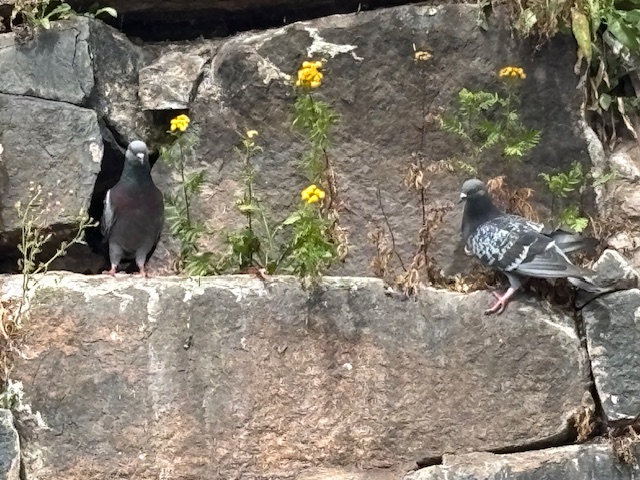
The cooing sounds of pigeons who nest in the nooks of a stone wall along the railroad tracks captured the attention of my grandkids. One grandchild was impressed by the range of their colors and the variety of their markings. And the other three started a cooing conversation with the pigeons. I have to say, the cooing sounds my grandkids made were impressive, but finally I said, “What if the pigeons hear your coos as a battle cry and attack?” Yes, you got it, I was thinking about Alfred Hitchcock’s The Birds. I saw the movie once, years ago, and I’m still miffed Hitchcock killed off Suzanne Pleshette’s character in the movie! She was one of my favorite actors.

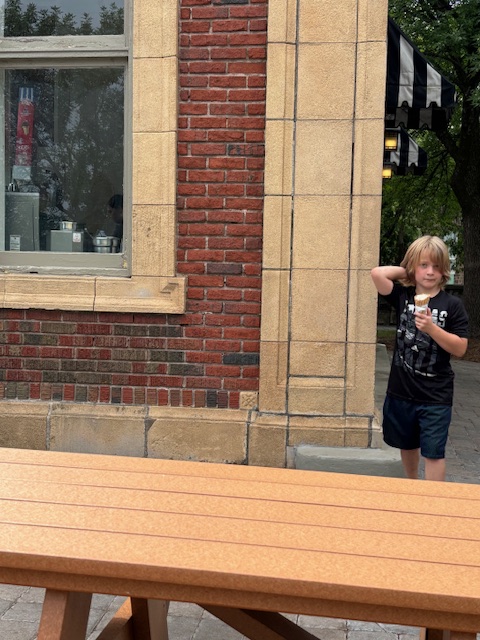
If you asked my grandkids what they liked best about our adventure, they would probably say the ice cream. It’s what I would have said when I was their age. The picnic tables at the ice cream shop were new and so was the chocolate mint ice cream used to make my malt. For thirty years I’ve been ordering chocolate mint malts, made with the same minty ice cream filled with thin, flat pieces of dark chocolate. This year the ice cream was a little too minty and the thin, flat pieces of chocolate were replaced by mini chocolate chips. It was good, but not as good as it used to be. Next year I’m going to order a different flavored malt. Maybe I will find a new favorite. The clerk at the shop said they could no longer get the same kind of chocolate mint ice cream. All things change. But don’t ask me to say change is good when it comes to my ice cream. Some wasps hung out with us while we ate our treats. None of us panicked, but neither did we share our ice cream with them.

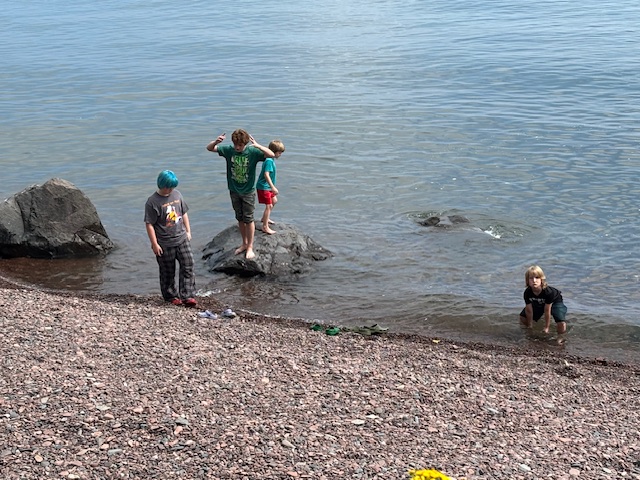
Our next stop was the lakeshore filled with rocks waiting for my grandkids to toss them back into the water. Now that they are older, they try to skip the rocks across the water instead of just throwing them. I planned to let them stay ten minutes, maybe fifteen, but they were having so much fun with each other. I watched them toss rocks, look for agates and beach glass, and play with driftwood, and suddenly I could see my siblings and myself on the sandy shores of Bluegill Lake seining for minnows, building sand castles, and floating on inner tubes in the water. I marveled at how long ago that was and yet how quickly the years had passed — in the snap of a finger. We stayed for more than a half hour. This was the best part of my day. Because while my grandkids on the beach had no idea how quickly time would slip by, I did.

The Answer to August Tenth’s Question: It’s a Tussock Moth Caterpillar (And a Connection to a Kate Moore Book)

On August 10, I posted a picture of a caterpillar that looked like it had been assembled by a young child with a vivid imagination.

One reader said that it looked like a wet Tussock Moth caterpillar. At first, I thought the word wet was part of the caterpillar’s name. Then I realized I’d been hosing dirt off the lower part of my house’s foundation. The caterpillar rested about five feet up, but the mist from the hose gave it a shower, making it look even more fanciful than when it’s dry. A few days later, another reader also identified the caterpillar as a Tussock Moth. (There are about thirty different varieties of Tussock Moths.)

To watch a video about White-Marked Tussock caterpillars and moths, click here. Note: In this video the Tussock caterpillar is crawling on a person’s finger and hand. Because the caterpillars release toxins to discourage being eaten by predators, humans handling the caterpillars could experience itching and burning after touching them. I’d say it’s best not to touch. To learn more about Tussock Moths and see a picture of an adult version, click here.

Tussock caterpillars eat the leaves of a wide variety of trees, bushes, and other plants. They have voracious appetites, sometimes leaving trees bare. Although I’m sure no one wants to see the leaves on their trees disappear, people need to keep in mind that because Tussock Moths are native to their North American habitats, they are part of a balanced ecosystem. So, Mother Nature has an answer for Tussock Moths when they become too numerous — a virus outbreak among the species causes their numbers to drop, and that gives trees a chance to recover. However, some trees will die or be weakened and become more susceptible to other diseases and pests. As part of their ecosystem, Tussock Moths also face predation from native species found in their habitat: some birds, insects, bats, and small animals will eat Tussock Moths in their various stages of development.

While some types of trees can better withstand hungry Tussock caterpillars, other trees, especially conifers, are more susceptible to destruction. If you notice the leaves disappearing off your deciduous or coniferous trees, it might be wise to seek advice from several reliable sources.

On a literary bent, and because I often make connections to things I’ve read . . .

While watching the video on White-Marked Tussock Moths, I learned female White-Marked moths are either wingless or nearly wingless, as are most Tussock Moth species. They will never take flight. The male will find them, mate with them, then fly away to mate with other females. The female will lay her eggs and die shortly after. That’s it. She will never experience flight. Now, I know Mother Nature has specific ways of providing for the continued survival of each species, and I know I’m anthropomorphizing the White-Marked Tussock Moth, but I felt for the female moth who would never fly.

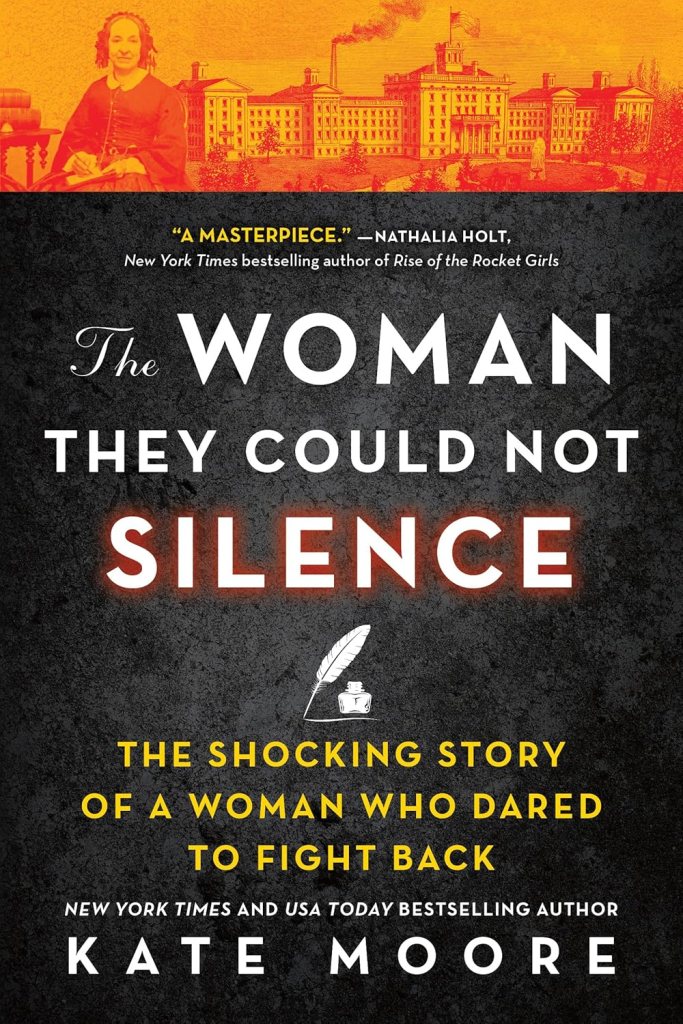
As I watched this video, I immediately thought about Kate Moore’s nonfiction book The Woman They Could Not Silence: The Shocking Story of a Woman Who Dared to Fight Back. In her book, Moore tells the story of Elizabeth Packard who is married to Theophilus Packard, a minister, and the mother of five children. It’s 1860, and after twenty-one years of marriage and being told what to think and say, Elizabeth dares to spread her wings and fly. A deeply devout woman, she begins to question some of her husband’s church’s teachings. She writes essays about her doubts and concerns. Theophilus tells her to stop, but she won’t because she believes she is a separate person from her husband and entitled to her own thoughts and opinions.

Outraged, Theophilus has Elizabeth declared insane and committed to the Illinois State Hospital in Jacksonville, Illinois. Shockingly, because Elizabeth is his wife, and because the state of Illinois allowed it, Theophilus is able to have her locked up simply on his say-so. After Elizabeth is placed in the state hospital, she discovers she isn’t the only married woman to have been declared insane by a husband who wanted his wife out of the way. Ironically, if Elizabeth and the other women had been single, it would have taken a jury of six people to agree they should be committed.

Through Elizabeth Packard’s powerful story set in the second half of the 1800s, Kate Moore explores the second-class status of women, the abysmal conditions in state hospitals, and the arrogant doctors and medical staff who professed to be experts in psychology, but who truly did great harm to the people they should have protected. Moore also talks about the people who, along with Elizabeth, worked tirelessly to change attitudes and laws to give women more rights and to reform state hospitals.

I’m just going to say it — Hey, Mother Nature, how about giving the female Tussock Moth wings?

Stumped by Nature. Can You Help?

Dear Readers,

Yesterday I was outside perusing my newly refreshed gardens, which surround the front, side, and back of my house, daydreaming about what types of perennials I could plant to attract more pollinators.

Nature is amazing! Note: the black spot to the lower left of the caterpillar is a stain on my siding.

While thinking about milkweed, wild geraniums, wild columbine, and plants whose names I’ve yet to learn, something on the siding caught my eye. It was a caterpillar — like nothing I’d ever seen before.

Adhering to my policy of not touching insects or critters, for both their safety and mine, I left it alone. But I did run back into my house to grab my camera, which also doubles as my phone. I snapped a few pictures, and submitted one of them to my iNaturalist app. The results were simply stated as “unknown.”

To me the caterpillar looks like something one of my young grandkids would engineer out of odd pieces of Legos or draw and color on a blank sheet of paper, producing something otherworldly and fantastical, but in no way realistic.

So, I am asking if any of my readers knows what type of caterpillar this is and what it turns into.

Thanks!

Today I’m a Writer with a Warm Heart

Today I went to the Monarch Festival hosted by Duluth Monarch Buddies (DMB) because I want to plant pollinator gardens. But I also went because I wrote an article about DMB, and I promised the organization’s president I would come. (To read my article, click here, and turn to page 22.)

What a thrill to see my article front and center on the welcome table!

The Festival was held at the First United Methodist Church, which we locals call “The Coppertop Church” because it has a magnificent copper-topped roof. (If you want to view the locally-famous roof, click here.)

On my way into the Monarch Festival, I passed a table with pamphlets and brochures. And in the center of the table was a copy of Northern Wilds magazine opened to the page with my article. Wow! I was excited and touched. I told the woman seated next to the table, “I wrote this article.” In my right hand, I carried three copies of the magazine to give to DMB board members. One for the president, one for the vice president, and one for the secretary.

Once inside, I reintroduced myself to the president and gave her a copy of the magazine. I’d met her last summer, and I’d spoken to her on the phone this spring. She gave me a wide smile and a big hug. She asked if she could take my picture while I held the magazine open to my article. She made me feel like a celebrity. I already knew she liked the article because I had her read it for accuracy before I sent it off to my editor in April. I wanted the facts about monarchs, pollinators, and DMB to be correct. But seeing the article in print with photos is different than reading it in a word document. She was ecstatic, thanking me and telling me it was wonderful. This made my whole day because I worked hard to make the article interesting and informative.

She introduced me to someone who was filming the event for the local public TV station. She thought he might be interested in interviewing me, but he wasn’t. This wasn’t disappointing in the least because I don’t like talking to TV cameras. (Although, I would’ve done it because I’m trying to be braver about public speaking.)

The Monarch Festival was wonderful. I talked to people who are passionate about helping monarchs and bees. I learned more about planning my own pollinator gardens. I listened to the featured speaker talk about using drones to count milkweed plants in order to monitor pollinator habitats.

On my way out of the Festival, the woman seated by the table in the entry said, “I’m going to read your article later.” Talk about leaving on a high note.

It warmed my heart to know that the people I wrote about enjoyed my article, and I felt proud to represent pollinators who make our world a sustainable place.

Today was sweet because writing is hard. It’s frustrating to hear the words in my head, yet know as I endeavor to put them on paper, it will feel as if I’m searching for them in a mist. Usually, this is how each piece I write begins. But somewhere along the way, as I revise and revise, and if I’m lucky, the words fall into place. And if I’m very lucky, someone loves what I’ve written.

I scored information, seeds, a butterfly sticker, and a card.

Something Published: Duluth Monarch Buddies: Helping Monarchs One Waystation at a Time

My article “Duluth Monarch Buddies: Helping Monarchs One Waystation at a Time” appears in the June issue of Northern Wilds. To read my article, click here, and turn to page 22.

I’m particularly proud of this article because it focuses on pollinators, such as monarchs and bees. With the current threat to our national forests and programs designed to protect our environment, there are ways we as individuals can help make Earth a better place. Plant a pollinator garden, ditch the use of pesticides, plant a tree, learn about the natural world around you, and connect with organizations like Duluth Monarch Buddies to learn how you can be a power of one in the protection of our planet.

Northern Wilds also published my short article “Capt’n J’s Mini Golf: A Treasure Chest of Fun on Barker’s Island.” To read my article, click here, and turn to page 7.

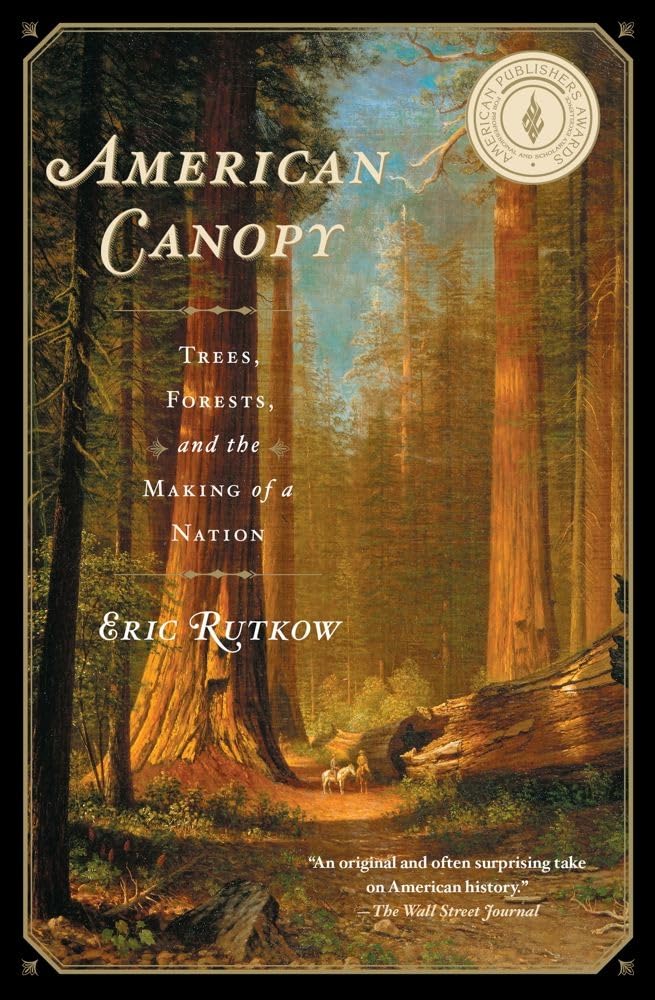
Book Reviews of My Latest Reading Accomplishments, Part 5 of 6: American Canopy: Trees, Forests, and the Making of a Nation by Eric Rutkow

[To read Part 1, click here. To read Part 2, click here. To read Part 3, click here. To read Part 4, click here.]

American Canopy by Eric Rutkow takes a unique look at a slice of United States history by focusing on its relationship with its immense forests. When settlers first arrived in North America, forests covered more than half of what would eventually be the forty-eight contiguous states. Rutkow notes that in the United States people will find giant sequoias, the largest trees in the world; coastal redwoods, the tallest trees in the world; bristlecone pines, the oldest trees in the world; and the biggest single living organism in the world, a stand of quaking aspens in Utah.

When the first settlers arrived on the Eastern shores of the New World, they encountered dark, dense forests. Settlers viewed the forests as something to be cleared to make way for farms and towns and as a resource to be used in trade and manufacturing. And with so many extensive forests, people and lumber companies cut down trees as if the supply was endless.

Rutkow’s book is a comprehensive, chronological history of America’s forests and how those forests played an integral role in the building of a nation. Rutkow’s history covers how trees were used to build ships, trains, railroad tracks, and airplanes until other materials like steel and aluminum were developed. And while some new technologies meant a decreased demand for wood, other innovations called for an increased demand. He covers the lumber industry’s devastating impact on forests and the growing movements to save forests in order to protect water and air quality and to mitigate climate change. Readers meet lumber barons, conservation advocates, politicians, botanists, environmentalists, naturalists, and entrepreneurs, among others.

Why I loved this book . . .

It’s well-organized, well-written, and interesting. I learned so much about the history of our forests. I liked this book so much that I bought Eric Rutkow’s book The Longest Line on the Map: The United States, the Pan-American Highway, and the Quest to Link the Americas. But most importantly, at this moment in history when some of our political leaders have turned their backs on our national parks and forests, and hope to sell public lands to private industries, Rutkow’s book informs us why our national parks and forests are vital to our well-being and the health of our planet.

Something Published: “Christmas Break Snowstorms Were the Best

My short essay “Christmas Break Snowstorms Were the Best” appears in the March issue of Northern Wilds, where I’m a contributing writer. I love writing for the magazine and reading it.

You can view it in blog form here: https://northernwilds.com/snow-day-memories-part-two/ You will need to scroll down. My essay is the second one,

Or you can view it in the magazine format here: https://northernwilds.com/current-issue/ There is an option to view it in full screen. My essay appears on page 18.

This is where I spent most of my childhood. Our old white farmhouse sat close to a narrow road. The barn on the left belonged to our family. The structures in the background, a barn and a home, belonged to two different neighbors. Our snowbanks ran from the back of the farmhouse toward the neighbor’s barn.

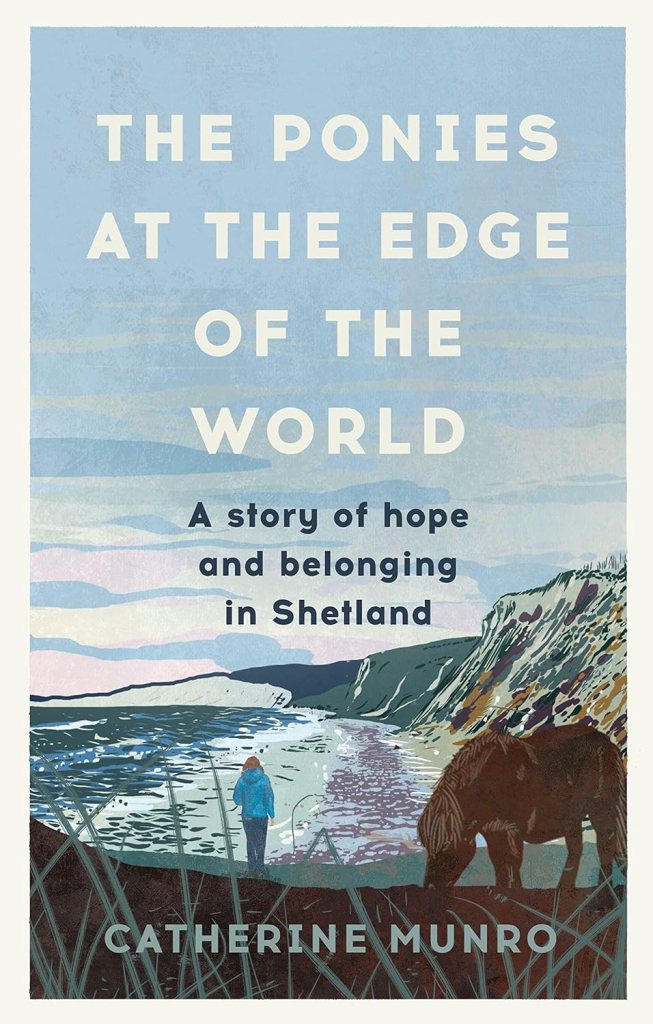
Book Review: The Ponies at the Edge of the World: A Story of Hope and Belonging in Shetland by Catherine Munro

Why did I read this book?

Next year I’m going to Shetland. I’ve been learning as much as I can about the group of islands, which are so far north of Scotland that most maps represent Shetland with an arrow that points north and the words to Shetland. And you have to take their word for it that it’s up there, beyond the edge of the map.

I bought Shetland: Your Essential Travel Guide (2024) by Laurie Goodlad. Her travel guide has a section titled “What to Read before You Arrive” with a list of fiction and nonfiction books. I chose Catherine Munro’s Ponies at the Edge of the World (2022) because where I grew up, we lived next to a farmer who had a small herd of American Shetland ponies, a cross between Shetland ponies and other horses. My sisters and I spent hours petting those ponies and feeding them tall grasses. The farmer who owned them taught us which grasses his ponies liked and how to hold our hands flat while the ponies nibbled their treats from our palms so our fingers wouldn’t get chomped.

What is this book about?

Catherine Munro is an anthropologist who specializes in human-animal relationships. She spent a year in Shetland to study the relationship between humans and Shetland ponies for her PhD. She interviewed people who spent their lives raising and taking care of Shetland ponies. For some Shetlanders, the tradition of caring for the ponies goes back generations.

While Munro’s book focuses on the relationship between Shetland ponies and people, she also describes some of the astonishing wildlife and the mystical landscapes that make the Shetland Islands one of the most unique and beautiful places on earth. She also brings to life the pragmatic and reserved but warm-hearted and community-minded people who live in Shetland.

What did I love about this book?

In her book, Munro describes why human-animal relationships are so important. The bond between the Shetland ponies and the people who raise them, care for them, and love them is fascinating. Shetland ponies developed over thousands of years, adapting to the climate and the terrain of Shetland. These small, thick-coated, hardy ponies became the perfect workmates for crofters who worked the land. Munro talks about the concerns for the survival of Shetland ponies as a distinct breed. She asks us to think about the importance of animals, to see them as our equals, and to understand that a respectful relationship with animals is essential for the survival of all species, including people.

Yesterday I read a blogger’s post stating that the Slender-billed Curlew has been officially declared extinct by scientists, a stark and sad announcement. To read the blog, click here. We need to do better for our earth and the plants and animals that inhabit it.

[You can follow Catherine Munro on Instagram at catherine_m_munro.]