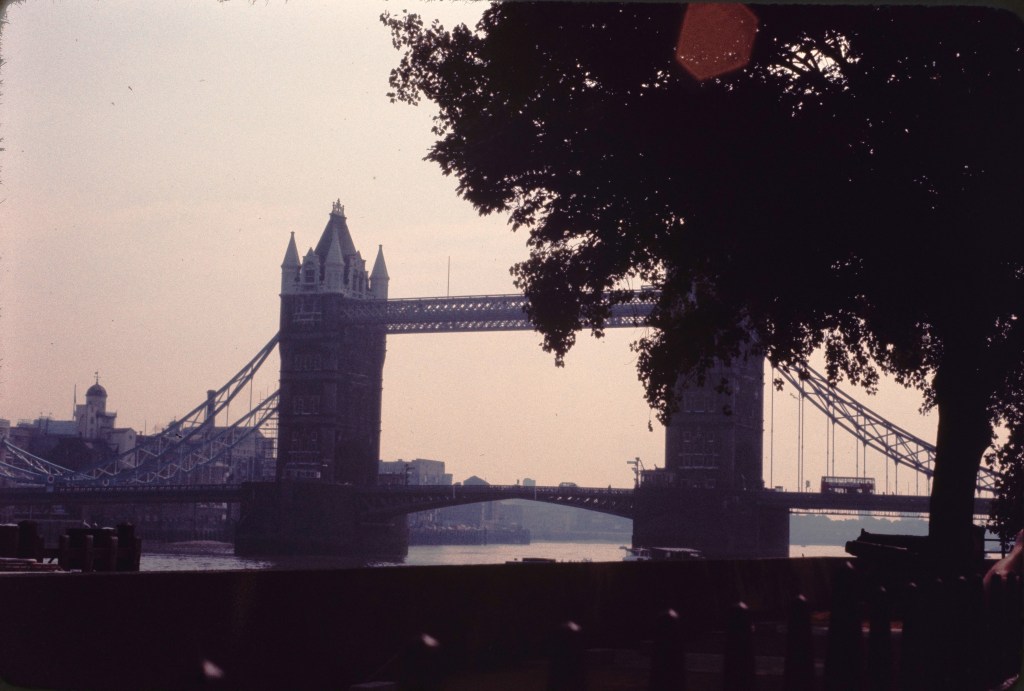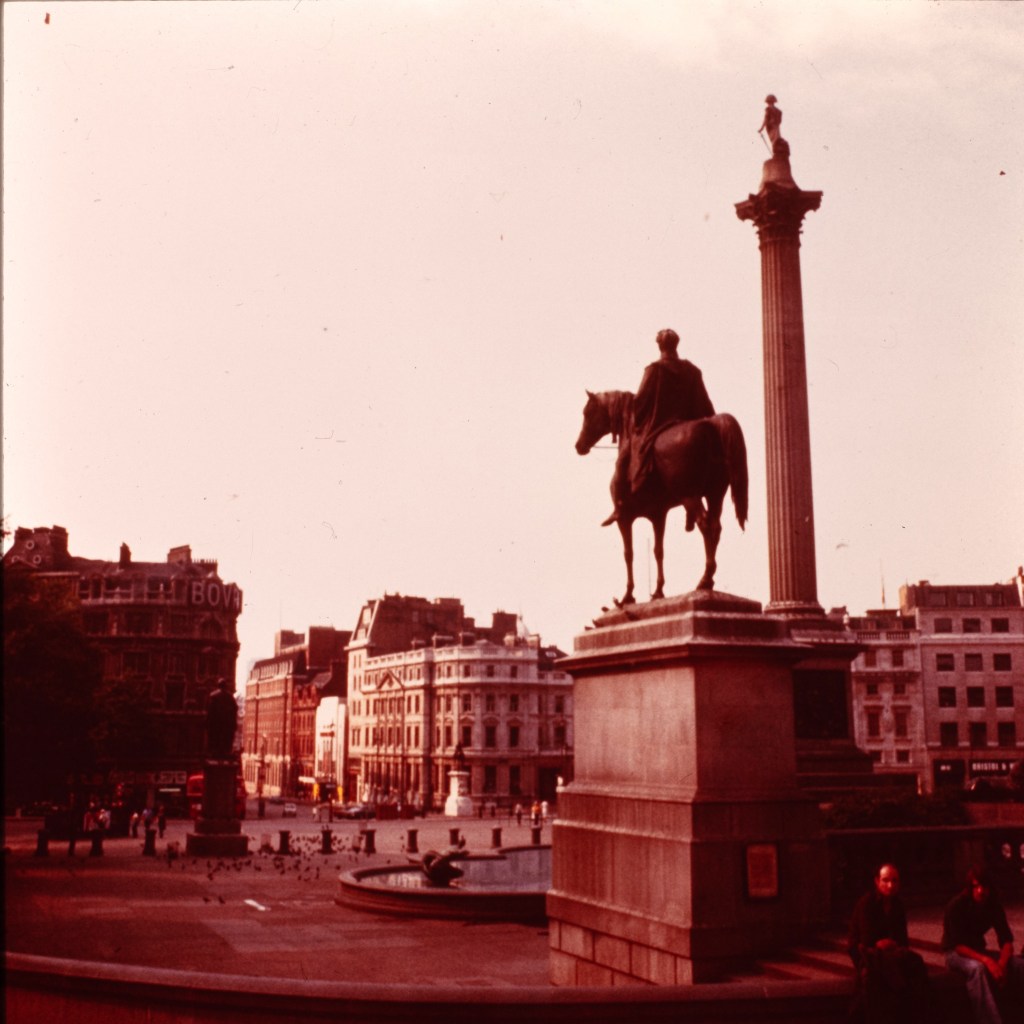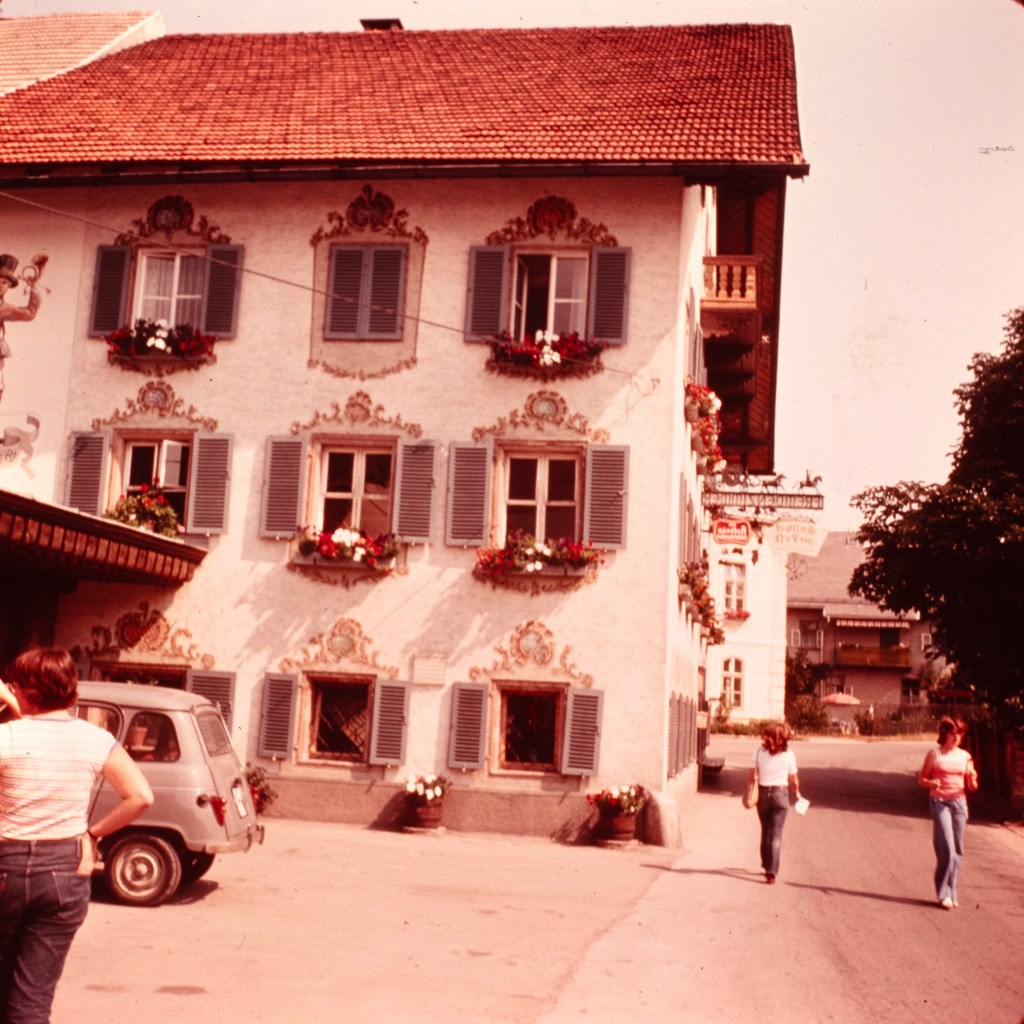
European Tour 101 – Part 4, Paris, City of Light

[In 1976 when I was seventeen, I traveled to Europe with a group of fellow high school students. I wrote the essay European Tour 101 in 2023. This essay was published in Tales of Travel by the University of Minnesota-Duluth. I’m publishing it to my blog in five parts.]

Lesson Six: Be Alone with Yourself in a Place You’ve Never Been Before

Notre Dame, 1976

In 1976, I had a lot of freedom in Europe. I can’t imagine high school students today having the freedom we had. We only had a few rules: Be respectful to everyone, be on time for the bus tours, and never go out at night alone. However, during the day when we had time off from tours, we could wander out alone. I did this a bit in all the cities we visited, but in Paris I spent most of my free time on my own, walking miles and miles along city sidewalks and riding the metro to explore different neighborhoods. I didn’t have a word for it when I was seventeen, but now I would say that my introverted self had reached a threshold by the time we had reached Paris.

I listened to musicians busk in the Paris metro, their melodies amplified by the underground walls covered with white subway tile. I bought a bottle of Chanel N°5, my favorite perfume, from a department store that catered to tourists. I walked past bakeries because I didn’t like French pastries.

Arc de Triomphe, 1976. We were in Paris for Bastille Day.

From a local boutique which didn’t cater to tourists, I bought a blue T-shirt even though the clerk was rude when he discovered I couldn’t speak French beyond my greeting of bonjour. I thought if I bought something in the shop, the clerk would see me as a customer and be nice, but he continued to snub me as he took my money, bagged the shirt, and handed it to me. I was angry because I believed I was being respectful by greeting him in French. But now I think about it from his viewpoint: I was just another American showing off my one word of French, someone who couldn’t be bothered to learn the rest of his language.

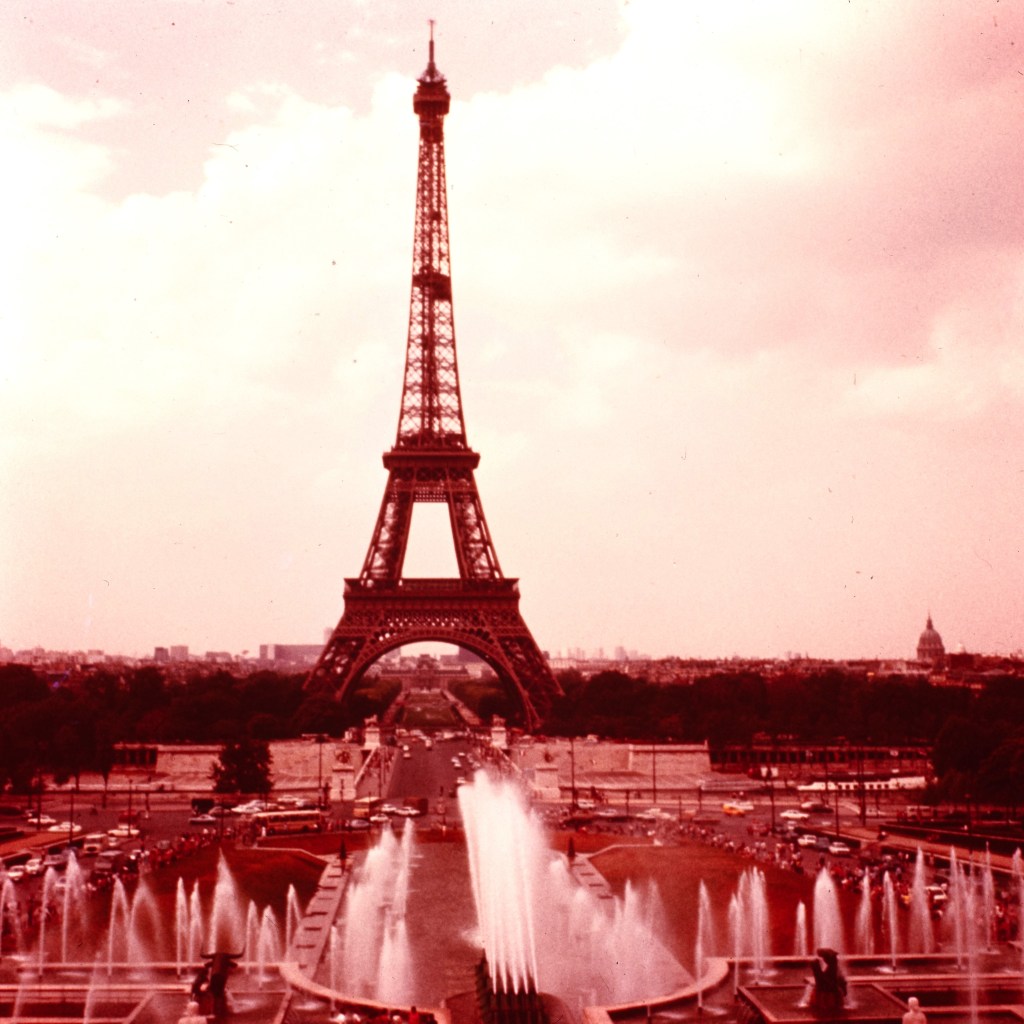
Eiffel Tower, 1976

Almost every day I ate by myself at an Italian restaurant owned by two handsome brothers from Sicily. The brothers were charming, the food outstanding, and the sorbet, served in large Italian lemons, took the sizzle out of the hot Parisian summer. One afternoon I sat in front of the Eiffel Tower next to the Trocadero Fountain, mesmerized by it synchronized spouts of playful water. I saw much of Paris at my own pace – without the need to negotiate with anyone about what to see, or how long to linger, or where to eat.

Enjoy solitude among many.

[Coming soon: European Tour 101 – Part 5, London]

European Tour 101 – Part 3, Austria

[In 1976 when I was seventeen, I traveled to Europe with a group of fellow high school students. I wrote the essay European Tour 101 in 2023. This essay was published in Tales of Travel by the University of Minnesota-Duluth. I’m publishing it to my blog in five parts.]

Lesson Five: Serenade Your Tour Guide

Salzburg, Austria, 1976

Our train left Salzburg in the evening, shortly after nightfall. The station’s platform was written in romantic darkness, punctuated with street lamps. Our Austrian tour guide had come to the station to make sure our travel arrangements were in order and to say goodbye. We were headed to Paris.

A hazy view from the Alps, 1976

I no longer remember the guide’s name. She was a university student, kind and soft spoken, with a gentle smile and a lilting laugh. Warm blue eyes sparkled behind her gold wire-rimmed glasses. She had accompanied us to a salt mine, to museums and art galleries, and to the Alps where the mountain scene for the Sound of Music was filmed. We stayed in Adnet, a farming village, thirty minutes from Salzburg. The small village had a well-lighted, welcoming restaurant, and we ate our evening meals there as one large group. After dinner we sang songs, and one night someone taught us the words to “Edelweiss” from the Sound of Music.

After we boarded the train, our tour guide stood on the platform waving at us. Someone in our group began to sing “Edelweiss.” Spontaneously, voice after voice, the rest of us joined in, and on a warm summer’s night as the train eased its way along the track, we leaned our heads and hands out the windows, and as one rhythmic beating heart, over and over, we sang the words about a small white flower, about meetings and greetings, about remembering and forever.

A view of Adnet, Austria, where we learned the words to “Edelweiss,” 1976

Our guide cried, wiping tears from her cheeks before they could splatter on the concrete beneath her. We sang and waved until we could no longer see her. And as the distance between us grew, one by one our voices drifted off, and we pulled our heads and hands inside the windows, and settled in our seats, bound for Paris, the City of Light.

I sang “Edelweiss” to both of my children when they were babies, and it became my youngest child’s favorite lullaby. After all these years, I remember the gifts we traded with our guide at the station: our song for her — and her tears of delight for us. I wonder if she ever plays the memory in her mind like a scene from an old movie as I still do.

Be spontaneous; express gratitude.

[Coming soon: European Tour 101 – Part 4, Paris]

European Tour 101 – Part 2, Italy

[In 1976 when I was seventeen, I traveled to Europe with a group of fellow high school students. I wrote the essay European Tour 101 in 2023. This essay was published in Tales of Travel by the University of Minnesota-Duluth. I’m publishing it to my blog in five parts.]

Lesson Four: Patriotism is Fine, But Ditch It for the Ballet

Rooftops of Rome, 1976

On July 4, 1976, our tour group was in Rome. Even before I left for Europe, I felt bad about missing America’s Bicentennial birthday bash. When we arrived in Rome, we were given a choice about how we wanted to spend the Fourth of July. We could attend a professional ballet performance or an evening picnic followed by fireworks sponsored by the American Embassy. I chose the picnic and fireworks because if I couldn’t be in the States for the Bicentennial, I could at least be with a group of patriotic Americans eating scrumptious picnic food and watching extravagant fireworks.

It was the worst Fourth of July celebration I ever attended. The food was second-rate, the fireworks were average, and the park was peppered with litter. I grew up inspired by Lady Bird Johnson and the Keep America Beautiful campaign. Every spring and fall my sisters and I pulled our red wagon up and down our road and picked garbage out of the ditches. I yelled at friends who threw litter out of car windows. The inconsiderate Americans who couldn’t put their trash in the garbage can embarrassed me. Before the fireworks even started, I regretted skipping the ballet.

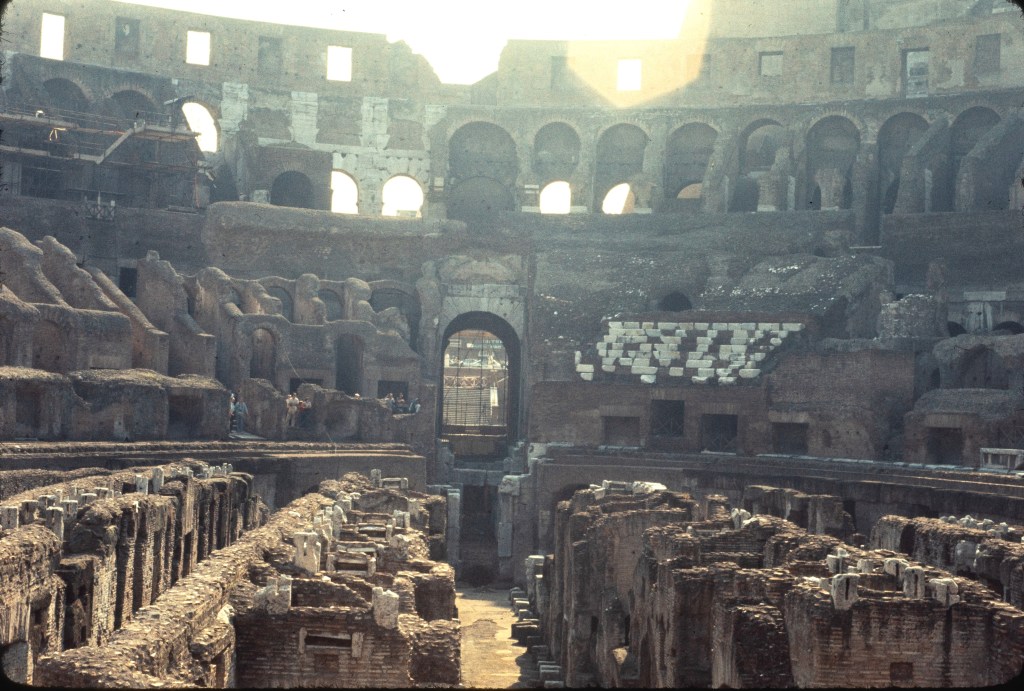
Roman Colosseum, 1976

At the time I saw the embassy picnic as a lackluster celebration that didn’t match the significance of two centuries of democracy. In hindsight it strikes me that American democracy has a long history of casting aside many of its citizens, like the discarded rubbish I saw on July 4, 1976, dropped by patriotic Americans who somehow felt entitled to litter someone else’s park. Patriotism isn’t about eating a hotdog or watching fireworks. Patriotism should be about loving a country that embraces equality, justice, and opportunity for all.

Years later my mother-in-law took me to my first ballet, The Nutcracker. I loved everything about it—Tchaikovsky’s music, the graceful dancers, the whimsical costumes, and the enchanted scenery. And again, I regretted missing the ballet in Rome, which I think was Swan Lake.

Always choose the ballet.

[Coming soon: European Tour 101 – Part 3, Austria]

European Tour 101 – Part 1, Spain

[In 1976 when I was seventeen, I traveled to Europe with a group of fellow high school students. I wrote the essay European Tour 101 in 2023. This essay was published in Tales of Travel by the University of Minnesota-Duluth. I’m publishing it to my blog in five parts.]

My European scrapbook is filled with ticket stubs, receipts, brochures, maps, postcards, etc.

In the spring of 1976 when I was seventeen, I brought home a brochure from my German class that showcased a thirty-day trip to six European cities in five countries. I had studied high school German for two years and middle and high school Spanish for five years, and Austria and Spain were two of the countries we would visit. I had no illusions about my ability to chat in German or Spanish with the locals, but I longed to visit Europe. I gave the brochure to my mother, who after reading it told me I could go. There was never a discussion of “maybe” or “we’ll see.” The trip cost around $1,400 in 1976, a lot of money for my parents who were on the lower end of the middle-class ladder.

Mother never said it in so many words, but she believed in learning about other cultures. She had encouraged me to study a foreign language. While I was in high school, she signed up to host foreign exchange students for Milwaukee Week. During this time, exchange students from all over Wisconsin spent a week in Milwaukee. I enjoyed meeting the exchange students, learning about their countries, and showing them around my city.

I’m over sixty now, but I remember my only trip to Europe with fondness because it was a good time, it influenced my life in a positive way, and it was educational on many levels. The life lessons I learned in Europe stand out to me because my European experiences are stored in my brain on a thirty-day shelf between two bookends—the touchdown in Madrid on one side and the departure from London four weeks later on the other side. The memories lean on one another, easy to access and tapping one wakes up its neighbor.

Lesson One: Travel without a Hangover

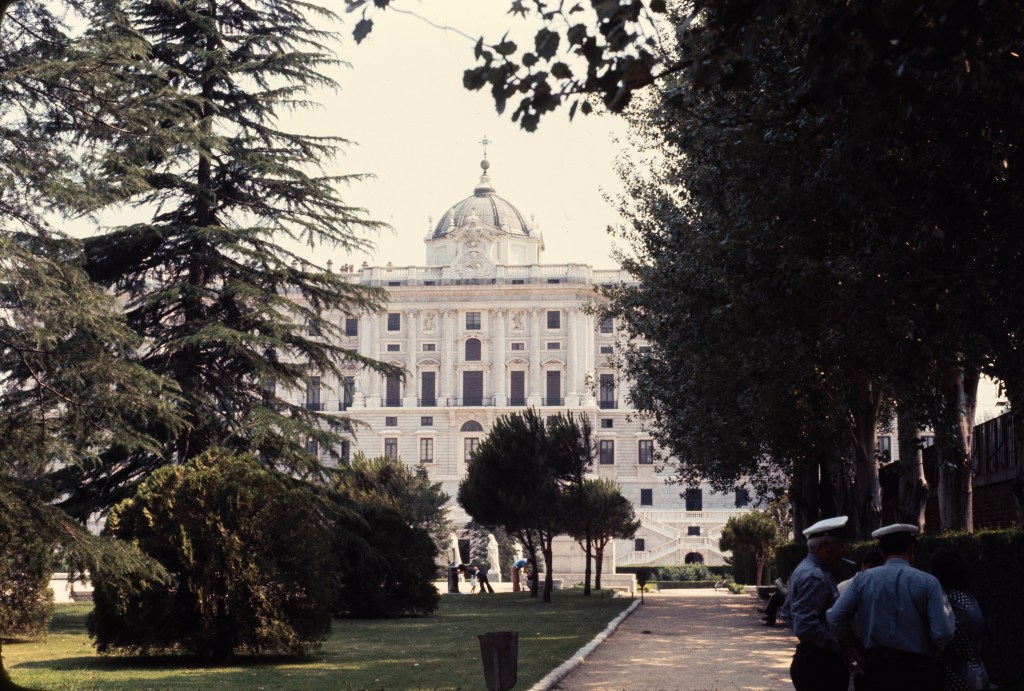
Royal Palace of Madrid, 1976
Sabatini Gardens, Madrid, 1976

The first lesson I learned was don’t be hungover as a tourist. A pounding headache and an unsure stomach turned out to be poor companions while touring Madrid’s architectural marvels on my second day in Spain. The day before at lunch, I split a small bottle of white wine with a friend, and at supper we split a small bottle of red wine. I never drank in the States because I was seventeen, but in Europe I wasn’t breaking the law, so I decided to embrace the whole experience, which is why I tried white wine at lunch and red at supper. In the evening a group of us went dancing. While disco music and colorful lights pulsated around the nightclub, and we danced with Spanish teenagers, I drank two screwdrivers because that is what my friends were drinking.

The next morning, a chaperone banged on our door, rousting us for breakfast. Startled, I sat upright in a finger’s snap. My head lagged behind, pounding as it tried to keep up with my body. Most of the day I had a throbbing headache. I didn’t throw up but the possibility was a nagging pest. Thousands of miles from home and only seventeen, I decided to experience Europe without hangovers, so if I drank at all, I limited myself to no more than one or two drinks in a day. I carried the lesson back home with me and even after I turned eighteen and could legally drink, I never forgot about my second day in Madrid.

Don’t be hungover in life.

Lesson Two: Even Muscle-Bound Bulls Have Feelings

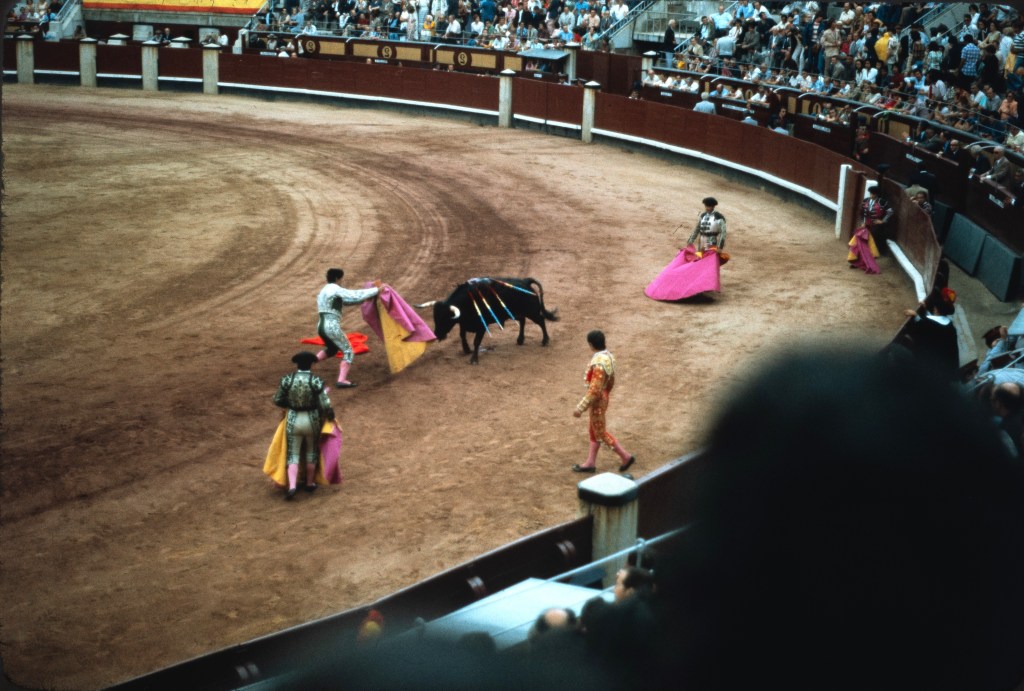
Madrid, Spain, 1976

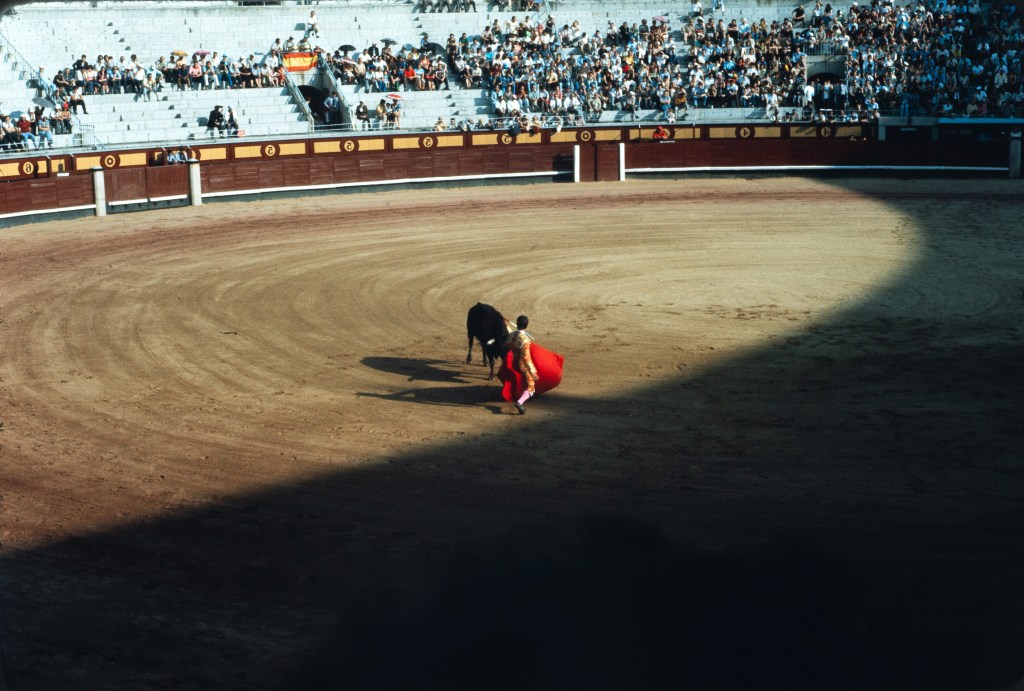
In Madrid we went to a bullfight. Attendance was optional because even though bullfights were part of the Spanish culture, the pretense of masculinity and bravado they symbolized had begun to dissipate as more people spoke against the cruelty suffered by the bulls. I decided to go because it was a Spanish tradition. I don’t remember if the bull died, but the matador didn’t. The stadium, crouching under the Mediterranean sun, became a cauldron of heat. I didn’t like hot weather, and I was sorry I had come. Why would anyone sit in the scorching sun to watch a choreographed drama between a sidestepping matador dressed like a golden baroque candlestick swirling a red cape and an incensed bull snorting like a diesel engine?

We had been told it was a nuanced battle, steeped in meaning. Clearly, I didn’t get it because that afternoon I decided if the object was to kill the bull, it was a show of pointless machismo. I sympathized with the bull, who unlike the matador or me, had been given no choice about where it wanted to be on that blistering afternoon. I concluded that any competition, legal or not, that humiliated or sacrificed animals in the name of amusement was wrong. But I couldn’t throw stones because I knew Americans had their dog fights and rooster fights and probably other types of fights.

Madrid 1976

As an adult, while watching cartoons with my children, I discovered Ferdinand the Bull, a Disney animated short that won an Oscar in 1938. Ferdinand wouldn’t fight. He wanted only to smell flowers. He so enraged the bullfighters they simply took him back to his green fields filled with flowers. Ferdinand was a consummate pacifist.

Don’t go to bullfights or dog fights or rooster fights.

Lesson Three: If You Don’t Know the Language, Don’t Insult Those Who Do

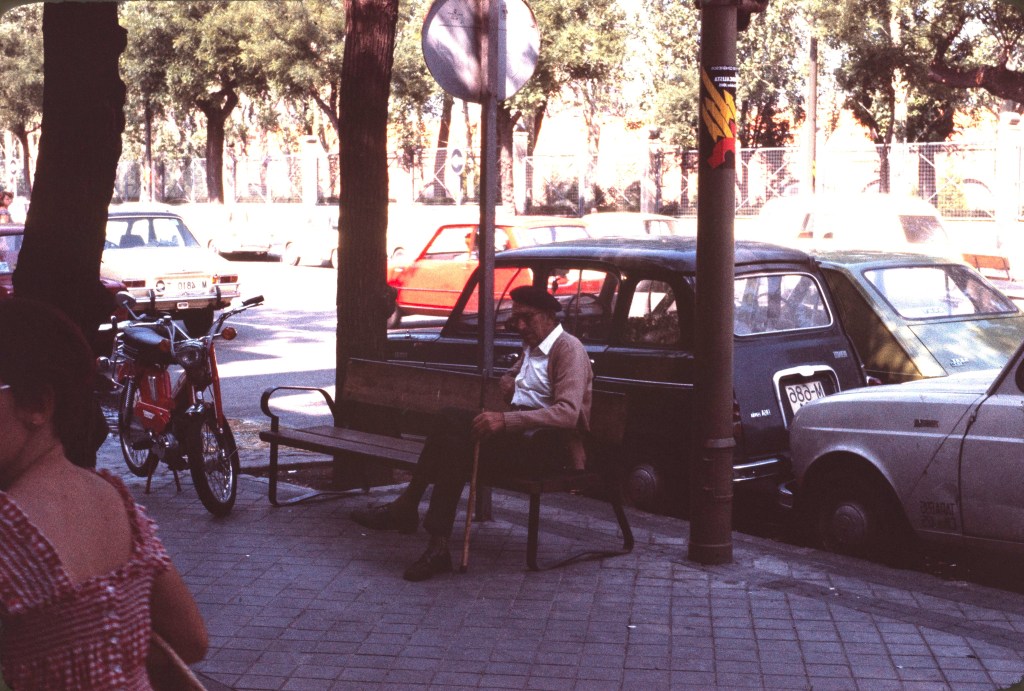
Man on a bench, Madrid, 1976

Mr. Z., who had been my freshman history teacher came on the trip as a chaperone. He was passionate about history, which I had liked about him. But he had a condescending manner that he dressed up as humor, often unsuccessfully, and that I didn’t like. His manner of off-handed superiority almost got him thrown out of a restaurant in Madrid. Tom and Gene, teachers from a neighboring high school, who were seasoned chaperones, often took us to restaurants that catered to locals instead of tourists. The food was usually excellent and the prices reasonable. But this meant staff at the restaurants rarely spoke proficient English. However, between Tom and Gene, we always had someone who could speak Spanish, Italian, German, or French, someone who could help with the pesetas, liras, shillings, or francs.

Firemen in Madrid, 1976

At this particular lunch, after listening to Tom speak Spanish with the waiter, Mr. Z., who probably suffered from a bit of insecurity after being shown up by a multi-lingual, seasoned traveler, declared, “It’s easy to speak Spanish. You just add an o or an a to the English word. So, soup is soupa.” Not quite, but no one corrected him. During the lunch, Mr. Z. needed butter for his rolls, but instead of asking Tom to talk to the waiter, he decided to ask the waiter directly. Applying his theory about the simplicity of the Spanish language to the word butter, he waived the waiter over, looked at him, and uttered a word that came out sounding like the Spanish word burro, meaning donkey. The waiter’s face went red, and his words, rapid and angry, crashed like falling rocks, frightening Mr. Z., who at least had the good sense to stop talking and look nervous.

Tom, fluent in Spanish, straightened out the mess. Understanding the arrogant American hadn’t meant to call him a donkey, soothed the waiter a bit, but Mr. Z.’s insult to the Spanish language still rankled him. To Mr. Z.’s credit for the rest of the trip, he didn’t try to speak Spanish or any other foreign language, but he should have known better. He had been to the same pre-trip meetings the rest of us had been to. We had been told that many Europeans looked down on Americans who expected everyone to speak English, yet couldn’t be bothered to learn another language themselves. Perhaps Mr. Z. wanted to soothe his bruised ego, or maybe he wanted to be funny, but either way he failed.

Don’t show off at the expense of other people.

[Coming soon: European Tour 101 – Part 2, Italy]

Staying Home with an Old Dog after a Near Accident

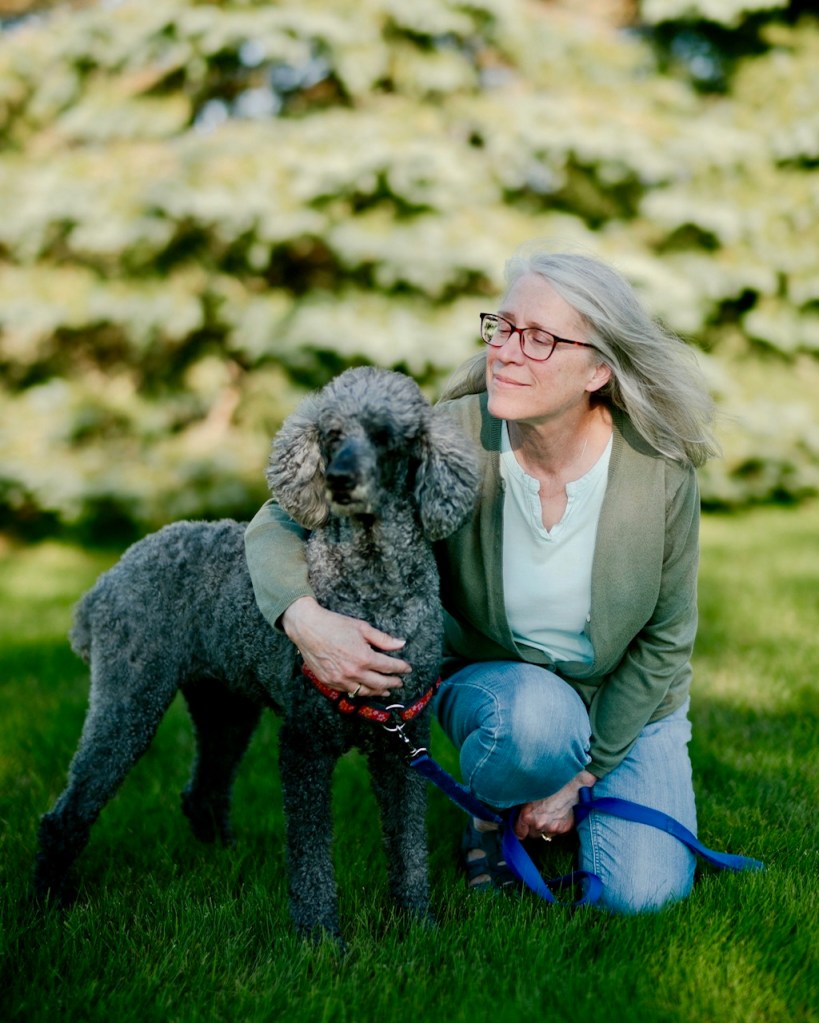
Ziva and me, July 2024

Yesterday morning I asked my dog, Ziva, if she wanted to go for a car ride. Of course, she said yes. She’ll go anywhere in the car, around the block or on a ten-hour trip to Petoskey, Michigan. She is just happy to be included.

We had three errands to run: go to the post office, go to the bank, and pick up my grand-dog Nellie. Before we could do any of those things, Ziva and I had a mishap. In a residential neighborhood, a speeding truck pulled out in front of us. Not only was the driver speeding, but he couldn’t see us as he approached the street that I was driving on because several thick evergreen trees grew on the corner of the lot. When he did see us, he drove even faster to avoid us, which was the better choice because he could not have stopped in time.

I was already going slow, but I had to use a heavy foot on the brakes, causing Ziva to slide from the front seat onto the floor. After I stopped, I honked my horn loud and long. The man stomped on his gas pedal, zooming away like an Indy race car driver after the green flag waves. If he thought he was fleeing from an angry woman, he was right. Had I been alone in the car, I would not have honked at him, as my honking would have come too late to serve as a warning. But my dog was tangled up on the floor, struggling to regain her footing. I used my horn to scream at him.

Ziva gingerly worked to untangle her feet. She slowly climbed back up on the front seat. Nothing appeared to be broken. For a moment I wondered if she would ever want to get in a car with me again.

Fritz, the dog who never forgot, Christmas 1962

When I was almost one, my mother had a car accident. Our two-year-old German Shepherd, Fritz, and I were in the car. After the accident the car was not drivable, but other than my mother having some cracked ribs, everyone was fine, including Fritz, who had been sleeping when the accident occurred. He never forgot that accident or that he had been sleeping instead of on guard. Afterward, if my mother was driving, no matter how long or short the journey, Fritz would sit on the seat and watch the road. His head might bob and his eyelids might droop, but he would jerk himself back to consciousness if he momentarily drifted off. If my father drove, Fritz would curl up and go to sleep. Fritz lived to be fifteen years old, and he never again slept in the car when my mother drove.

Nellie and I settled on the couch for some reading time. December 16, 2024

Ziva and I finished our errands then picked up Nellie. I was glad my grand-dog hadn’t been in the car when I had to slam on my brakes. She has an excellent memory, and in the future she might have become reluctant to get in my car.

As for Ziva, she was more than happy to get back in the car when we took Nellie home. And later on when I went to the grocery store, she was excited to ride along. She blamed neither me nor our car for her mishap, and she had been oblivious about the stupid, lead-footed pickup driver.

But after Ziva got up this morning, her head was crooked and she couldn’t seem to hold it straight, and when she walked, her gait was awkward. So, I decided to stay home with her. She ate a good breakfast, and after she moved around a bit, her stiffness disappeared and her head righted itself. People are always stiff and sore the day after an accident, so it would make sense animals would be the same.

Ziva is taking her morning nap as I write this. She’s happy to have me at home, and I’m happy to be with her. She is almost fourteen years old, and this morning, for a brief moment, I worried something might be wrong with her that couldn’t be fixed. After all, falling hurts more when we get older. We don’t bounce as well.

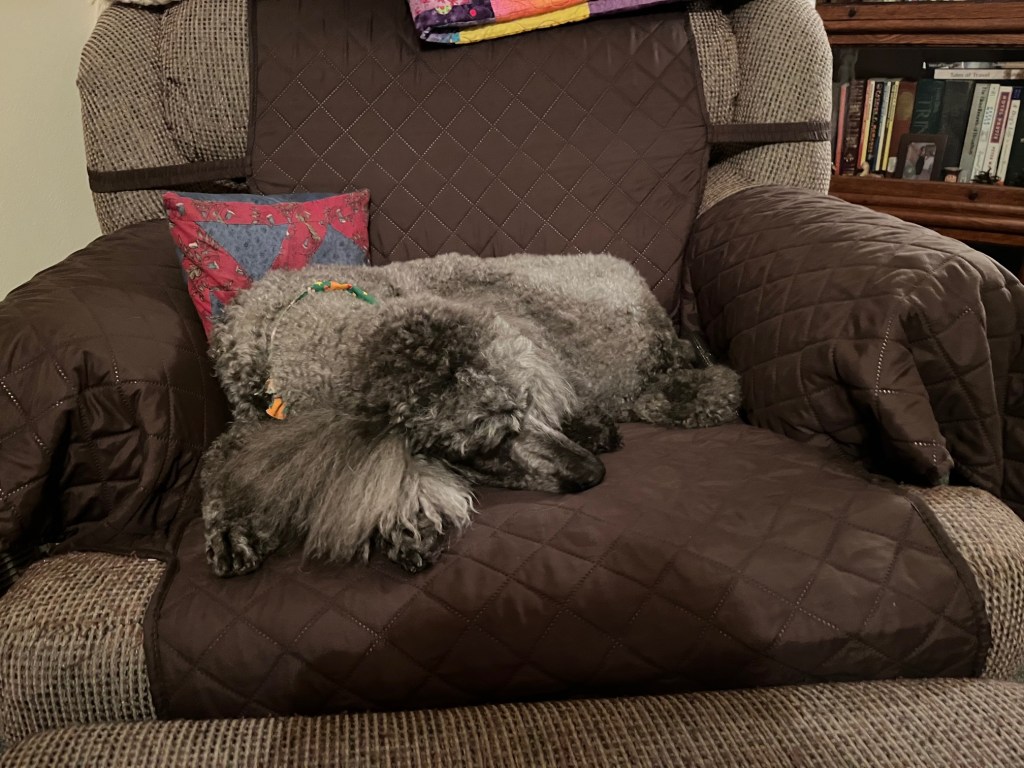
Ziva enjoying a good snooze after breakfast, resting up for our walk. December 17, 2024

There Was Magic in the Air Last Night

When I returned home from A Midsummer Night’s Dream, a mystical moonscape greeted me.

Last night I went to see a high school production of A Midsummer Night’s Dream. Student actors dressed in colorful, eclectic, whimsical costumes, creating shimmering visions on the stage. They recited Shakespeare’s verse, never stumbling over their words. As the love potion delivered by Puck caused chaos and confusion, the energetic actors made their way on and off the stage, delivering humorous lines, catching the audience up in laughter. All of this on a stage decorated with cut-out trees so enchanting in their color changes, they almost stole the show.

During the quieter moments of the performance. I thought about the many high school and college plays I have seen over the years. All of those young people working together to create a moment of magic on a stage. A moment that would never be the same as the performance that came before, or the one that would come next. I thought about the long hours drama students spend rehearsing, creating sets, lighting the performance, making costumes. How they pass their time together, forging friendships and romances, talking about life and their dreams. Cracking inside jokes that only they understand, the bond of a shared experience. I thought about how young they are, with their whole lives ahead of them. I thought about how once these young thespians leave high school or college, they might never act upon a stage again.

Then I thought about Tom Lake by Ann Patchett, which I recently read and loved. Tom Lake is a story within a story. Lara Nelson, now in her fifties, owns a cherry orchard with her husband. Set in 2020 during the COVID lockdown, Lara’s three adult daughters are staying at the farm with their parents. Because of the pandemic, the family of five works the cherry farm without the usual hired help. Picking cherries is time-consuming, monotonous work. To pass the time, Lara, in a series of flashbacks, recounts the story of her summer in Tom Lake, where as a young woman she performed in a summer stock production of Our Town by Thornton Wilder. Even though Patchett’s novel is set during COVID, it’s not about the pandemic–at all. It’s a beautifully written, heart-wrenching coming of age story.

Last night as I watched the young actors perform, I wondered about their coming-of-age stories. I thought about my own coming-of-age stories.

And that is what good literature does. It slumbers in a corner of your brain, until something in your present world nudges it, and it lives once again in your imagination, giving meaning to both the world that is your life and the world of make believe.

Smile Big and Have Some Fun — An Evening with Liberace and Liza

A quiet moment before the show

After fifty-three years, I believe I’m finally ready to get up on a stage and play the Wizard in The Wizard of Oz. When I performed the role in seventh grade, I developed severe stage fright. My voice, which was supposed to roar from behind a curtained booth, stuttered and whimpered instead, barely audible.

Saturday night I went to see Liberace & Liza, A Tribute at the Depot Theater in Duluth. David Saffert and Jillian Snow, two excellent entertainers, became Liberace and Liza for the evening. The show was a wonderful ninety-minute escape into a bygone era from my youth. My sisters and I grew up watching TV variety shows starring Liberace, Dean Martin, Carol Burnett, Sonny & Cher, and Flip Wilson.

Near the end of their act, Liberace and Liza performed a skit called “Liberace OR Liza.” They explained they would read scenarios, and two volunteers from the audience would take turns guessing if the statement was about Liberace or Liza. However, when they asked for two volunteers to come up on stage, the audience went silent. Finally, Liberace and Liza encouraged a young man from the second row to join them. The man, named Kevin, wore a black T-shirt and a pair of gold sequined pants. I had seen him forty minutes before the show started. I had admired his outfit, figuring it was a nod to Liberace and Liza, who both loved sequins. But I had also wondered if he would be part of the show.

No one else raised a hand.

I waited. I mulled it over: a chance to perform with Liberace and Liza, who kept pleading for a second volunteer. All I would have to do was smile big and answer questions in a cheerful, audible voice. I thought some more. I had a chance to be part of a variety show, even if it wasn’t televised. I could smile big and have some fun. After all, I reasoned, the real Liberace was a hometown boy from Milwaukee, so I should help him and Liza. I, too, was born in Milwaukee, and lived there until I was five, when we moved to Franklin, which is still in Milwaukee County.

I stuck my hand high in the air and volunteered.

I was sitting near the back of the theater, so I had a long walk to the stage. Pushing aside the memory of my seventh-grade acting failure, I strode forward, feeling confident and fearless — I became Quiz-Show Contestant on her way to win jubilantly or lose gracefully.

When my sisters and I watched the real Liberace on TV, he performed in flashy colorful sequined outfits. His fingers, festooned with diamond-and-gold jewelry, flew up and down the keys on a golden piano that sparkled with mirrors and rhinestones. The combination of his fast-paced piano playing and his never-ending glitz mesmerized us. If he had played a plain piano while wearing a black tuxedo and using bare fingers, my sisters and I would never have noticed him, even if he had kept the same frenetic playing style. Liberace was an excellent showman who understood how to sell an image.

Before I went to the tribute show, I looked up Liberace and learned that from the 1950s to the 1970s, he was the highest paid performer in the world. I also learned that serious music critics panned his piano-playing skills, to which he responded, “I’m crying — all the way to the bank.”

Once on the stage, Liberace and Liza explained the rules of the quiz to Kevin and me. I smiled. I had no sense of dread or wishing they would get on with it, so I could go back to my seat. I was having fun. Liberace wore a sequined red-white-and-blue, stars-and-stripes themed jacket with long red fringe dangling from its sleeves; a pair of matching sequined hot pants; red-white-and-blue knee highs; and sparkling shoes. Liza wore a red-sequined top and pants, loosely covered by a flowing, floor-length black gauzy garment. Under the stage lights, the gold sequins on Kevin’s pants lit up like fireflies. I wore mostly black, sans sequins. My only bling was a pair of subdued silver earrings and two small rings.

My consolation prize, which I will treasure

Kevin’s personality matched the sparkle of his pants, and he embraced his role. I didn’t try to upstage him. I became the calm, composed character next to Kevin’s funny-guy schtick. I smiled, made a few restrained theatrical gestures, and answered three questions, earning one point. Using grand theatrical gestures and hammy facial expressions, Kevin answered all three of his questions correctly, so he won the big prize. I received a consolation prize, a very cool Liberace & Liza tribute sticker. Liberace and Liza shook hands with me and thanked me. I shook Kevin’s hand and congratulated him. I had become Quiz-Show Contestant Losing Gracefully. But I smiled because I was triumphant in defeat — not once did I experience stage fright, and I had a great time. I even wished there had been someone to take a picture of me up on the stage.

Liberace took my hand and escorted me off the stage. For a moment, as I made my way back to my seat, I wished that I could have felt fearless and confident in seventh grade while playing the Wizard. But my self-assured debut with Liberace and Liza made up for my seventh-grade acting debacle.

Kevin’s big prize was to be serenaded by Liza while he sat on a stool upon the stage. He embraced this with delightfully comic acting, even singing along with Liza near the end of the song. And, although he sang off key and seemed unsure of the words to the song, something about Kevin and Liza’s bit made me think he may have been a plant in the audience. I had even thought about this when he was encouraged to volunteer. On the one hand, Liberace’s and Liza’s interactions with Kevin seemed so spontaneous, but on the other hand, could they really leave finding the perfect contestant to chance? One who would be able to ham it up with Liza as she sang to him? Even Kevin’s outfit made two arguments. Had he dressed to be part of the act or had he just been an enthusiastic audience member? Either way, his glittering gold pants sure looked good on stage, making him the perfect accessory to Liberace and Liza.

The intrigue around Kevin’s role made it even more fun for me. I know someone I could ask, who would probably tell me if Kevin was a plant or not, but I don’t want to spoil the magic and mystery of the moment. Besides, Kevin was perfect up there. I would not have been as entertaining if Liza had had to sing her heart out to me.

Liberace, Liza, and Kevin didn’t realize it, but I did win the bigger prize. I had zero stage fright, and I didn’t worry if I was going to look silly. Something else that Liberace and Liza didn’t know, but the warmth and good humor they had exuded throughout their show, let me know I would be in kind hands if I went up on the stage

Wisdom doesn’t belong to seventh graders playing the Wizard. But thankfully, I have gained some as I have aged: Smile big, have some fun, and don’t be afraid to be silly. That’s what I did. And that’s what Liberace, Liza, and Kevin did.

When a Friend Asks You, Repeatedly, to Read Max Perkins: Editor of Genius by A. Scott Berg

I love the title of this book because it plays two ways. When I decided to reread the book, I bought my own copy.

The first time I read Max Perkins: Editor of Genius, I did so because in the spring of 2019 my writing friend Milan suggested that I read it. He said it was a wonderful book. Then he kept following up with the question, “Have you read Max Perkins: Editor of Genius yet?” I felt bad when I had to admit that once again I hadn’t. So, in late fall I borrowed the book from the library and started reading it.

I did indeed love the book, but I never got the chance to talk about it with Milan.

Milan and I met through our local writers’ association, to which we both belonged. Before COVID the association held a gathering once a month at a local coffee house. As a person who was new to the world of writing, it was a great place for me to be in 2019. Not only did I receive lots of good advice, but it was a joy to be with fellow writers.

Every month the usual cast of writers, like me, showed up, and others came when they could. Milan came often. His enthusiasm for being with writers showed in his kindness, his warm smile, and easy laughter. He loved to talk about ideas, writing, social issues, education, and even his pickup truck when I wanted advice about trucks. Born in France, Milan had immigrated to the United States with his mother when he was a young teenager. He had written a fascinating memoir, Ma’s Dictionary: Straddling the Social Class Divide, about his life. He had a book deal with a French publisher, so at the time I met him he was translating his memoir into French, his native language.

Milan and me at the coffee house on a Saturday morning, 2019

Milan became my mentor. He asked to read my short stories, and he gave me encouraging feedback via email, which often arrived at three or four in the morning because that is the time of day when he worked on translating his memoir into French. It was always fun to wake up in the morning and find an email from him. Even nicer — he asked me for feedback on an essay he was writing.

The second week of December in 2019 was the last time I heard from Milan. I had sent him feedback on his essay, but he didn’t respond. Over the next couple of weeks, I sent two more emails but received no answer. That wasn’t like Milan. I figured maybe he had traveled to France for the holidays or maybe he had lots of company. I tried not to think about the fact he might be seriously ill or that perhaps he had died. I had never met any of Milan’s family, and other than email, I had no way to contact him.

On January 14, 2020, I sent Milan another email but again received no response. I started checking the online obituaries every few days. Perhaps that sounds morbid, but if Milan had died, I wanted to know. In March his obituary posted. He had died on March 6, 2020, at the age of 78. I’m assuming because of the time lapse between his last email to me and his death that he’d become seriously ill before he died.

I had known Milan for almost a year. We saw each other about once a month at the coffee house gatherings. And I had attended a couple of community outreach discussion groups he had facilitated regarding his memoir and the social issues it touched upon. After reading about his passing, I was so sad. I’d lost a friend, a fellow writer, and a mentor. Milan had once said that he loved to visit with me because I could talk about ideas. It was such a nice compliment. Talking about ideas was also one of the reasons I enjoyed his company so much.

I finished reading Max Perkins: Editor of Genius shortly before Milan died, but we would never talk about the book. I would never know why he liked it so much or why he kept insisting I should read it. Instead, the book became an unfinished conversation between Milan and me.

I recently reread the book about Max Perkins. My second reading of the book was prodded by a conversation with someone about a well-known writer (who was five years old when Perkins died) and his strained relationship with his editor. At the heart of the conversation was the question: How much can an editor intercede in a piece of writing before a line is crossed and the work becomes not just the writer’s but rather almost a collaboration? This conversation reminded me of the working relationship Thomas Wolfe had with his editor Max Perkins.

Because A. Scott Berg had access to hundreds of letters between Wolfe and Perkins, he was able to write about their often-tumultuous writer-editor relationship. In his book, Berg details the massive manuscripts Wolfe presented to Perkins, and Perkins’s long hours of work with Wolfe to pare them down into manageable books. (Perkins always stated that any suggestions he made to Wolfe were always subjected to Wolfe’s complete approval.)

Berg also included the opinions of some literary critics who believed Wolfe should be able to revise his own work from a rough draft into a cohesive and readable novel without extensive help from an editor. And because Wolfe couldn’t seem to do that, the critics had questions about his overall abilities as a novelist. Eventually, this caused a rift between Wolfe and Perkins, with Wolfe leaving Scribner’s for another publishing house and a new editor. Wolfe wanted to prove the critics wrong.

It’s commendable that Berg never takes sides on either the question of Wolfe’s writing ability posed by literary critics or Perkins’s role in readying Wolfe’s work for publication. Instead, Berg presents Wolfe’s and Perkins’s letters, the accolades and criticisms by others, and the events of Wolfe’s leaving Scribner’s without interjecting his own point of view. It’s up to the reader to form an opinion. I’m sure Milan would have liked to discuss Wolfe and Perkins.

I can’t say for certain what else Milan may have liked to discuss, but I’m sure there would have been lots. Berg’s book is well researched and well written. He does an excellent job of presenting information about Perkins and the many writers Perkins worked with, such as F. Scott Fitzgerald, Ernest Hemingway, Thomas Wolfe, Nancy Hale, Marjorie Kinnan Rawlings, Taylor Caldwell, and other fine writers of the 1920s through the 1940s, many of whom are still well known today.

I wish I would have read Berg’s book when Milan first suggested it to me. We would have liked talking about Max Perkins and the many writers he worked with during his editing career. I miss Milan, and I miss the conversations we never had.

_____________________________________________________________

[In 2016, A. Scott Berg’s book was made into a movie called Genius. I haven’t seen the movie, but it has some A-list actors in it. I don’t always like seeing movies based on factual events because Hollywood favors dramatic scenes over reality, but I might make an exception and watch this movie because it appears to stick to the facts better than some biographical dramas. However, overall critics panned the movie, so maybe I won’t. For information on the movie’s historical accuracy, click on Genius: History vs. Hollywood. For a synopsis of reviews by movie critics, click on Genius (2016 film).]

Something Published: “European Tour 101”

Hardcover version
Paperback version

My essay “European Tour 101” appears in Tales of Travel, a Duluth Publishing Project. This collection of poems, creative nonfiction, and photographs center around the theme: Lessons Learned while Traveling.

The anthology was curated in early 2023 by talented University of Minnesota-Duluth students from a class taught by Professor David Beard, who gave his students the gift of a real-world project.

Participating in this project was fun right from the start. I discovered the call for submissions on a Facebook page. Right away I knew I would write about the month-long trip I took to Europe when I was seventeen years old. I had been itching to write about my European trip because I have fond memories of traveling through six cities, in five countries, in twenty-seven days. But I always wondered where I could submit the essays. My trip was too long ago to be relevant for travel articles. And my European tour wasn’t filled with angst or tragedy or mind-bending revelations that would be worthy of thought-provoking, rousing essays convincing editors to say, We’ve got to publish this!

But the theme: Lessons Learned while Traveling was perfect — proving if a writer is patient, sooner or later her submission mate will arrive. Some of my best memories from my European trip could easily be described as lessons learned.

Fortunately, memory didn’t prove to be a big problem because I have a scrapbook filled with postcards; pamphlets; ticket stubs from museums, trains, subways, and buses; my airline boarding pass; maps; menus; and receipts. Plus, I have lots of photos. I quickly came up with an idea for an essay, but I spent hours writing and revising. I wanted it to be perfect, so perfect that the editors would say, We’ve got to publish this!

I divided my essay into sections: Travel without a Hangover; Even Muscle-Bound Bulls Have Feelings; If You Don’t Know the Language, Don’t Insult Those Who Do; Patriotism is Fine, But Ditch It for the Ballet; Serenade Your Tour Guide; Be Alone with Yourself in a Place You’ve Never Been Before; and Freedom from the Threat of Violence.

I was thrilled when my essay was accepted. My fondest memories about one of the best times in my life would be in print. And out there in the world.

Making it even sweeter, Professor Beard and his students hosted a book lunch for the writers during the spring semester, even though the book wouldn’t be released until December 2023. But college classes change at the semester and the students who worked on Tales of Travel would be off to other classes or perhaps have graduated when the book came out.

Held in a university classroom, it was a wonderful book launch, and there were a couple of copies of the book that we could hold and thumb through. I’m sure each writer looked for their own piece of writing in the book. I know I did. We munched on cupcakes, cookies, and assorted chips, and sipped bottles of water.

Each writer was invited to read for about five minutes. Some of the students had pieces in the anthology, but I think only one or two of them read. When they were called upon, most turned a ghostly white, lowered their eyes, and shook their heads. They were too nervous to read in front of strangers, most of whom were old enough to be their parents or grandparents. But we older folks were nervous too. I could see it in our hesitant walks to the dais. I could hear it in our voices that trembled. I could feel it in our lungs as we reminded ourselves to just breathe. Because young or old, we shared a common wish — that someone would like what we had written.

After the reading, we all gave a collective sigh of relief. It was over, and no one had fainted. We mingled and thanked the professor and the students. When people started to leave, Professor Beard pleaded, “Please, have more food. Take some home with you.” He didn’t want to haul it back to his car.

I’d already had a cupcake, but I grabbed a bag of Fritos, my favorite salty treat. Something to savor on my ride home, along with the rest of the evening.

[Both the hardcover ($29.99) and paperback ($5.99) versions are available on Amazon. Click here: Tales of Travel, a Duluth Publishing Project.]

Coloring with Kindergarteners

My artwork in progress

This past week I had the pleasure to sit and color with some five- and six-year-old children. We sat in small chairs at a short-legged table. Scattered along the table were boldly colored plastic travel containers meant to hold bars of soap, but which instead held crayons, both broken and whole.

Our coloring sheets were all winter themed. Snowmen, mittens, penguins in stocking caps, penguins ice skating, a snow globe filled with miniature log cabins.

We chose our colors carefully and kept our eyes on our papers because we each had a vision for our piece. But, of course, we talked — we were, after all, a community of coloring companions.

Inspired by the picture of mittens, we talked about gloves and mittens. They’re the same thing, said one child. Actually, I said, with mittens all your fingers stay together, and with gloves each finger goes in a separate finger. The child kept coloring her mittens, and said, Yes, but they’re the same thing. I let it go. She will learn about the differences between gloves and mittens soon enough. No need to rush these things.

We talked about our artwork. Do you like my rainbow mittens? Look at my penguin’s hat, isn’t it pretty? Do you like my picture? The children weren’t shy about crowing or asking for compliments. At five and six, they’re so unabashed — Look what I made, don’t you love it? I answered each one of them — Yes, so colorful! Such a pretty green hat! So lovely!

It won’t stay that way. Soon they’ll learn: Don’t boast, don’t brag, don’t fish for compliments. And for a moment, as I looked at their proud, happy faces, I wondered if there couldn’t be something in-between.