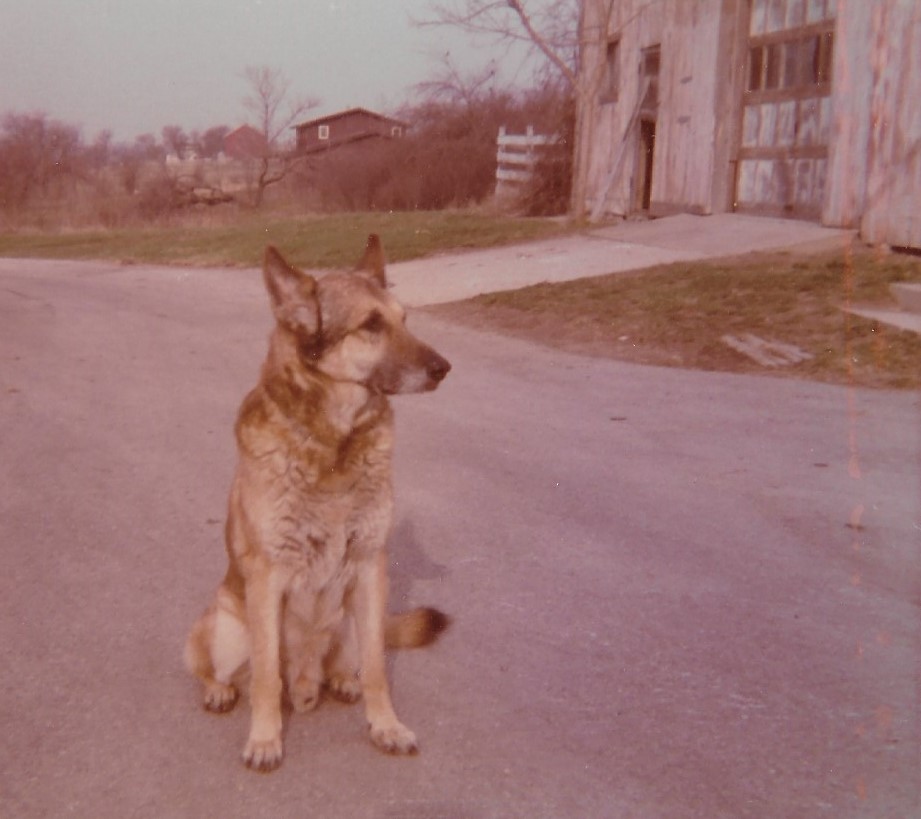
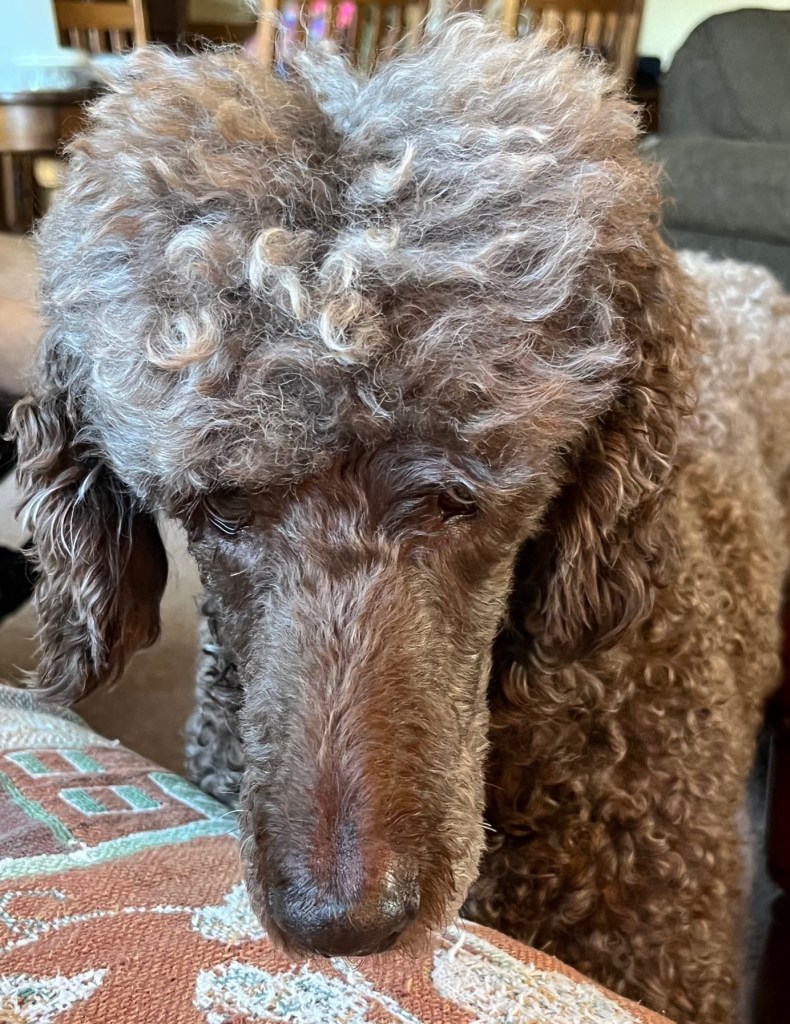
Nights with Cabela

Cabela

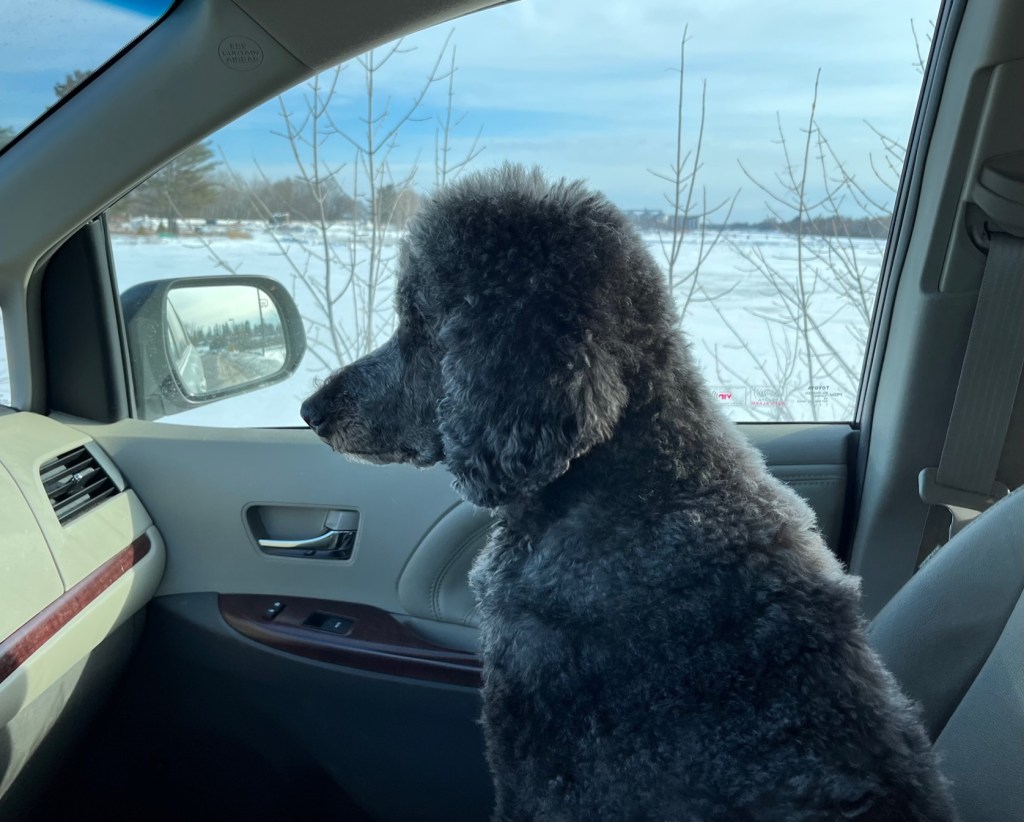
My dog Cabela is fourteen-and-a-half-years old, so in human years she’s ninety-and-a-half. Living with Cabela these days is like living with a very senior citizen. (I’m not sure I like that term. Maybe I’d prefer aged person. But maybe not. It’s February and I get cabin fever in February so I get moody. What sounds good to me one day, sounds awful to me the next day. But this post isn’t going to be about what to call old people. And by the way, winter doesn’t bother me. I don’t care how much snow falls or how many days it has been since the sun has made an appearance. But the quality of the daylight changes in February, and it awakens something in me, and I get cabin fever which recedes sometime in April when I return to ignoring the weather. But this post isn’t going to be about weather either.) It’s about living with an old dog whom I love dearly. And a hardworking grandfather who lost his sight when he was eighty.

Cabela often enters a room and stops abruptly. She stands still, not looking in any direction, and hangs her head, pondering. She’s asking herself, “Why did I come in here?” or “Where was I going?” It takes her a bit to figure it out. I know, I know, sometimes when I go into the basement, I forget why I went down there. But I usually remember as soon as I go back upstairs. And most of the time I don’t forget why I went downstairs.

At night Cabela’s more confused and she often paces. It’s called sundowning, which is not a disease, but a condition that can occur with dementia, and yes, dogs can get dementia. Sometimes I think Cabela has a touch of it. She knows all her people. She hasn’t forgotten when it’s time for her meals, treats, and walks. And she doesn’t mistake the floors for the yard. But she has changed.

On most nights, somewhere between midnight and two in the morning, Cabela begins the restless pacing, the waking up and wandering from the bedroom to the family room to the bathroom. The first time she does it, I get up and let her outside. Lots of older people need to get up during the night and pee, and if Cabela needs to go, she needs to go. It’s not good to hold it. But after she comes back inside, she can’t decide if she wants to sleep on her bed in the bathroom or her bed in the bedroom or on one of the couches in the family room. I hear her paws swoosh on the carpet as she walks by the bedroom on her way into the family room. I hear her walk by the bedroom again on her way to the bathroom where her nails click on the linoleum and her body thuds onto the sheepskin bed tucked between the end of the toilet and the cupboard. I hear her rise up and once again her nails click on the floor, but instead of walking by the bedroom, she enters it. I know she’s looking at me, wondering why I don’t get up. Because I believe she thinks it’s time to get up. Finally, she settles down for a few more hours, but eventually she begins pacing again before my husband and I have to get up.

Last night Cabela was more restless than normal. The only one who slept through it all was Ziva, our other younger dog.

Cabela, left; Ziva right

So my grandkids and I took Cabela and Ziva for a walk this morning before it started raining. Cabela can’t walk far, but we went slow. We walked three blocks up, one block west, three blocks down, and one block east. My idea was to give her more daytime activity, hoping she’d sleep better tonight. But we’ve only managed one walk because it’s still raining, and it’s cold, soggy, and windy. It’s not good weather for a “ninety-year-old” dog.

On our morning walk, I thought about my grandpa George who went blind at eighty years old. He didn’t have dementia, but he was restless at night. He kept waking my grandma Olive and asking her if it was time to get up. He’d fuss about who was taking care of his garden or about something that needed attention at his gas station. In the darkness of night, things are always a worry. And for Grandpa, who’d lost his sight, I imagine those worries became terrors.

Before Grandpa George went blind, he still went to work at his station six-and-a-half days a week. He pumped gas and tinkered in the garage. He’d been going to work at his station for over sixty years, rarely taking a vacation or even a day off. He planted a large garden and grew raspberries, strawberries, green onions, sweet onions, new potatoes, russet potatoes, corn, peas, beans, beets, asparagus, carrots, and a few flowers between the rows of fruits and vegetables. He did the sowing and the harvesting, even at eighty years old.

Olive and George, 1930s

But after he lost his sight, his life screeched to halt, like a pair of rusty brakes on a customer’s old car that he once would’ve fixed. Grandpa George, who got up every morning before six, ate at seven, and opened his station at eight, couldn’t walk from his bed to the bathroom without someone to help him find his way. Grandpa George, who raised the finest garden in town that provided food for his family throughout the summer, fall, winter, and spring, could no longer read the rain gauge or sort his seeds for planting.

Grandpa’s days and nights somersaulted. He dozed on the living room couch during the day when he should’ve been filling someone’s gas tank and checking her oil. He listened to the evening news when he should’ve been checking the corn and pulling potatoes in the garden. At night when he would’ve been sleeping after a day’s work, his mind raced and he kept his wife up with question after question, starting with, “Olive, you awake?”

Grandma Olive tried to keep Grandpa from falling asleep on the couch during the day. At first people came to visit, and he told them what to do at the station in order to close it down, and there were the last crops to reap from the garden, all activities Grandpa oversaw while sitting at the kitchen table, his calloused mechanic’s hands resting on a white oilcloth decorated with nickel-sized cherries.

Someone came and tried to teach Grandpa to read braille. Perhaps books would entertain him. But his hands shook slightly, and he couldn’t track the raised bumps on the page.

Nuts.

Someone decided pecans were the answer. Grandpa sat at the kitchen table and cracked pecan after pecan. He sorted the meat from the shells the best he could, but someone else, usually Grandma, needed to pick out the stray shells. Another job for her to take on, along with all her other chores that needed completing on a short night’s sleep. The pecans were stored in jars and given to family and friends, all of whom soon had more pecans than they could ever use.

Grandpa kept cracking nuts, but he didn’t sleep better. Nights were restless and his mind paced, although the rest of him couldn’t. Grandpa was certain dawn must be coming soon, even though it was hours away, and he would ask, “Olive, you awake? What time is it?” And Cabela, certain the day should begin even though it’s hours away, stares at me most mornings as if to say, “You awake? It’s got to be time to get up.”

Ice Sculpture Safari

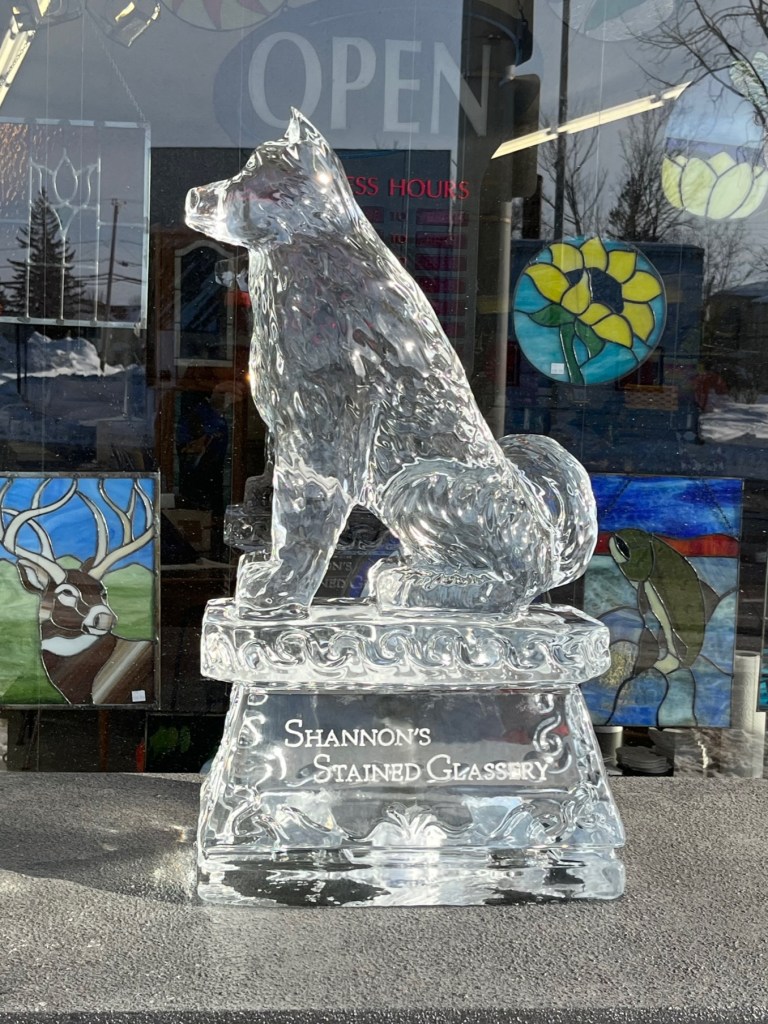
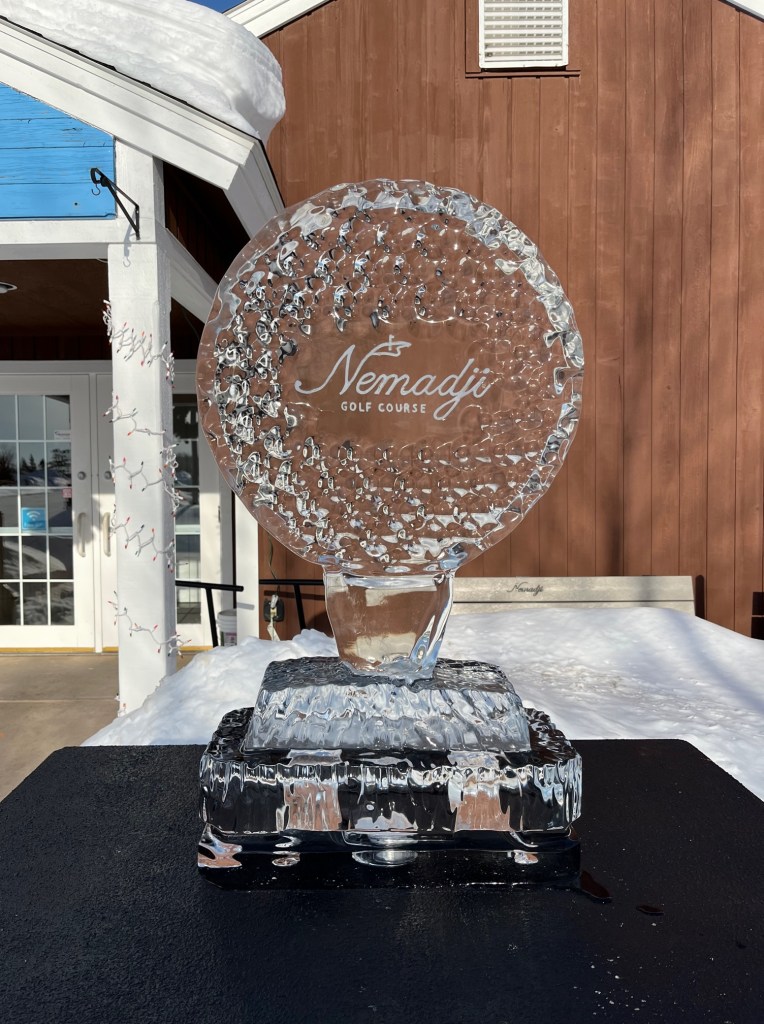
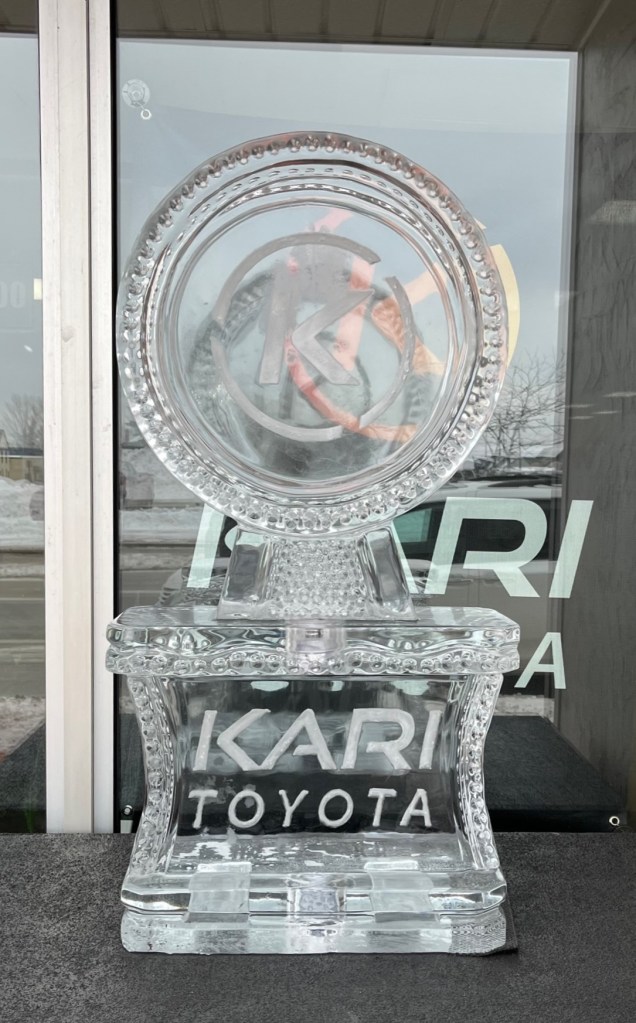
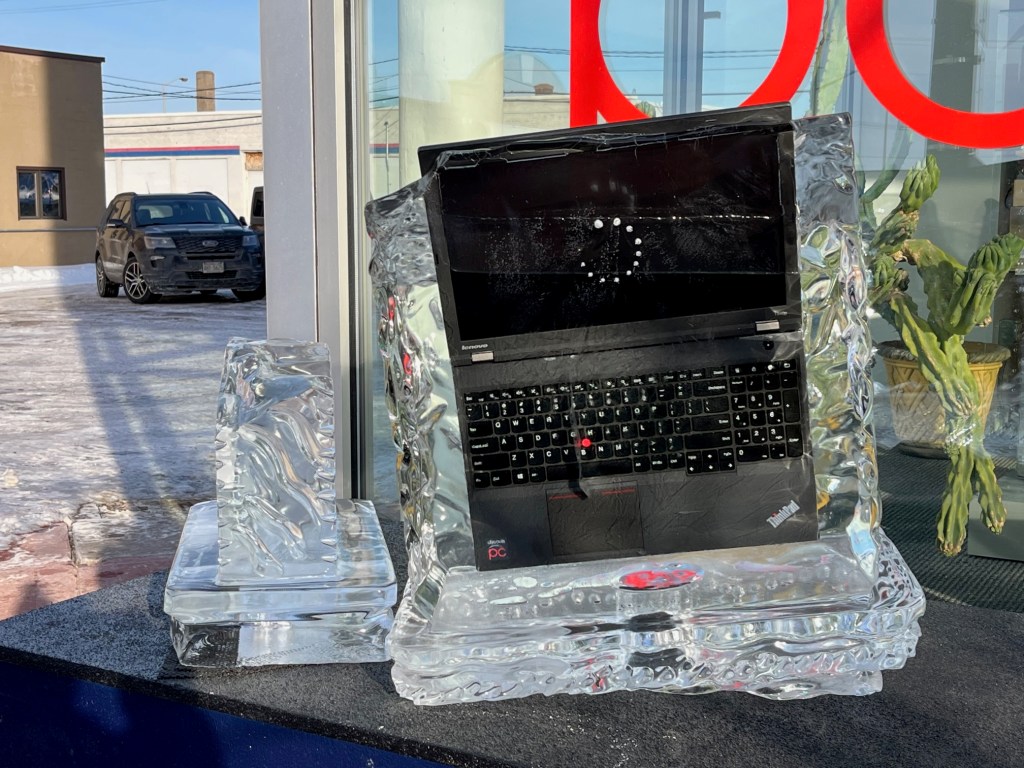
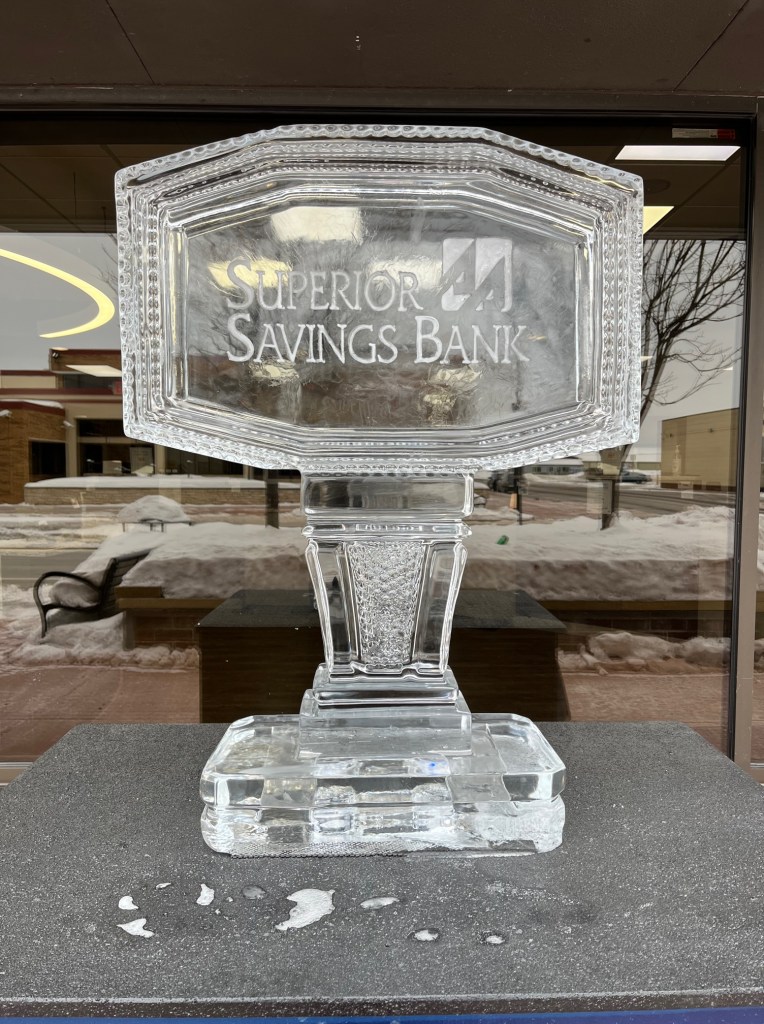
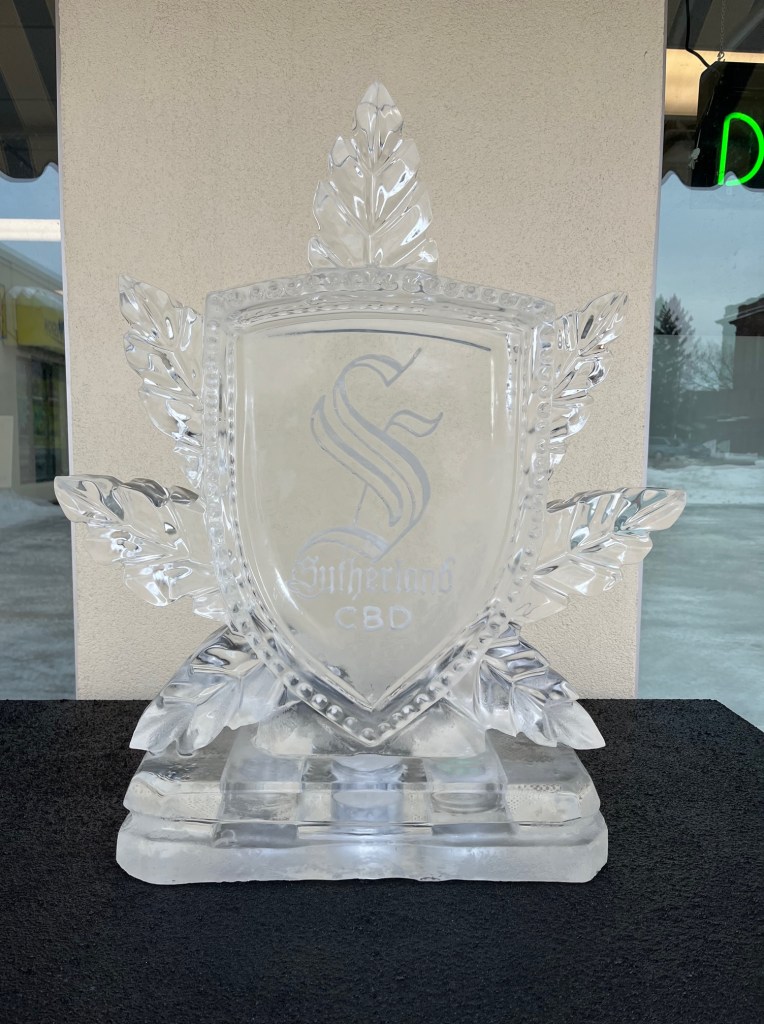
On the last weekend of January, my city celebrates winter with an Ice Festival, and as part of that celebration, small ice sculptures crop up around town. This year right before the festival weekend, an arctic front showed up carrying a couple of bags of windchill and settled in for a week like our town was an Airbnb.

I wasn’t bothered that Mr. Arctic Front crashed the festival because I never attend the outdoor tribute to winter. It’s not because I don’t like snow and cold, but I embrace it differently. I honor winter by reading, writing, walking my dogs, feeding the birds, baking, and marching briskly from my car to whatever building I’m entering. But on Saturday night, I enjoyed the festival’s closing fireworks, watching them from my kitchen window while sipping raspberry hibiscus tea with honey.

After the Ice Festival was over Mr. A. Front stayed on for the week. Each day his mood descended into a deeper frigid funk, deep enough by Friday morning to cause scads of school districts to either delay their start by two hours or completely cancel classes. The next day Mr. Front stuffed the windchill back into his bags and left town. The temperature rose to a glorious balmy 25°, and I got an itch to have some fun, which brings me back to the ice sculptures. I decided I needed to photograph each one.

I found the list of businesses that sponsored the sculptures, grabbed my phone, and set out on a mission. It was like a treasure hunt, but without the stupid clues. I’m no good at puzzlers or clues or those math problems with trains leaving stations at different times, going different speeds, and heading different directions. I always wanted to shout, “Take the damn bus or drive or fly!”

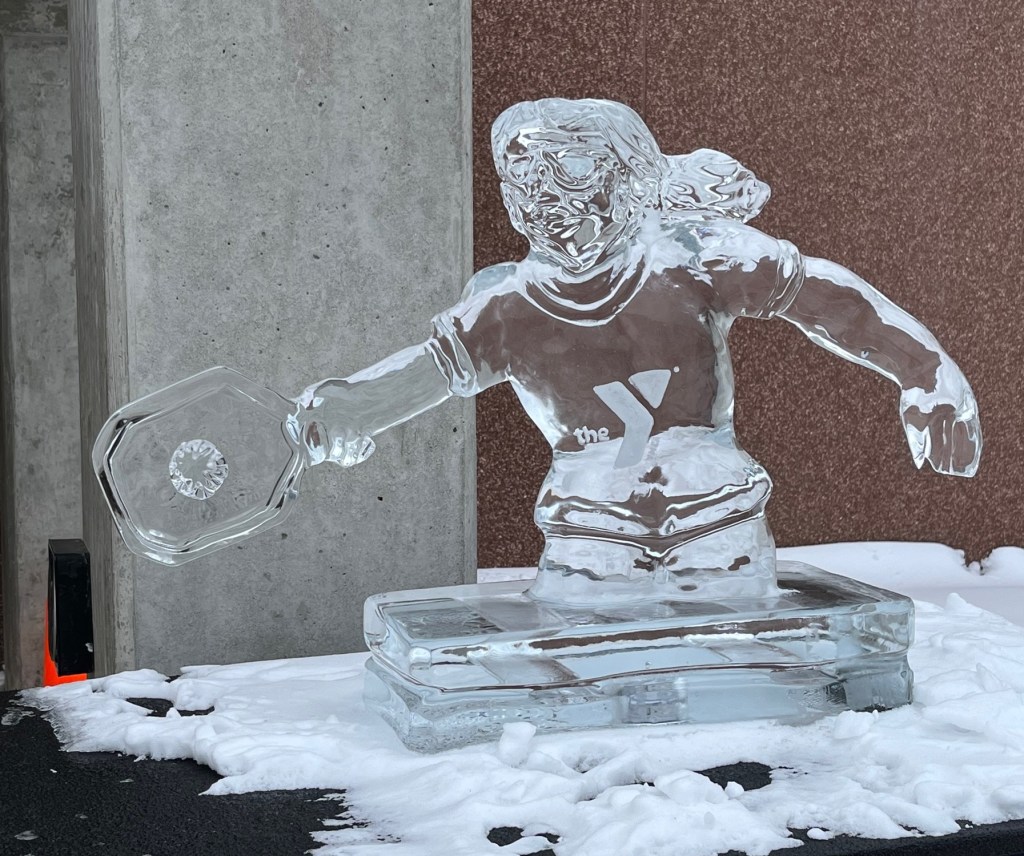
Pretending my phone was a righteous 35mm with a telephoto lens of phallic proportions, I fancied myself a photojournalist. (Hey, it’s my Walter Mitty fantasy.) I started my ice sculpture treasure hunt with some coin in the bank because I had already photographed the icy racquetball player in front of the YMCA when I dropped my grandson off at his 3K school on Wednesday, and I had snapped a picture of the sculpture in front of the vet’s when I dropped off a urine sample for Cabela on Friday. Years ago, I played many racquetball games with a college friend at the Y. The vet who takes care of my dogs was a former student of mine, and she has cared for all of our dogs accept the first one my husband and I had. My ice safari would turn out to be a trip down memory lane.

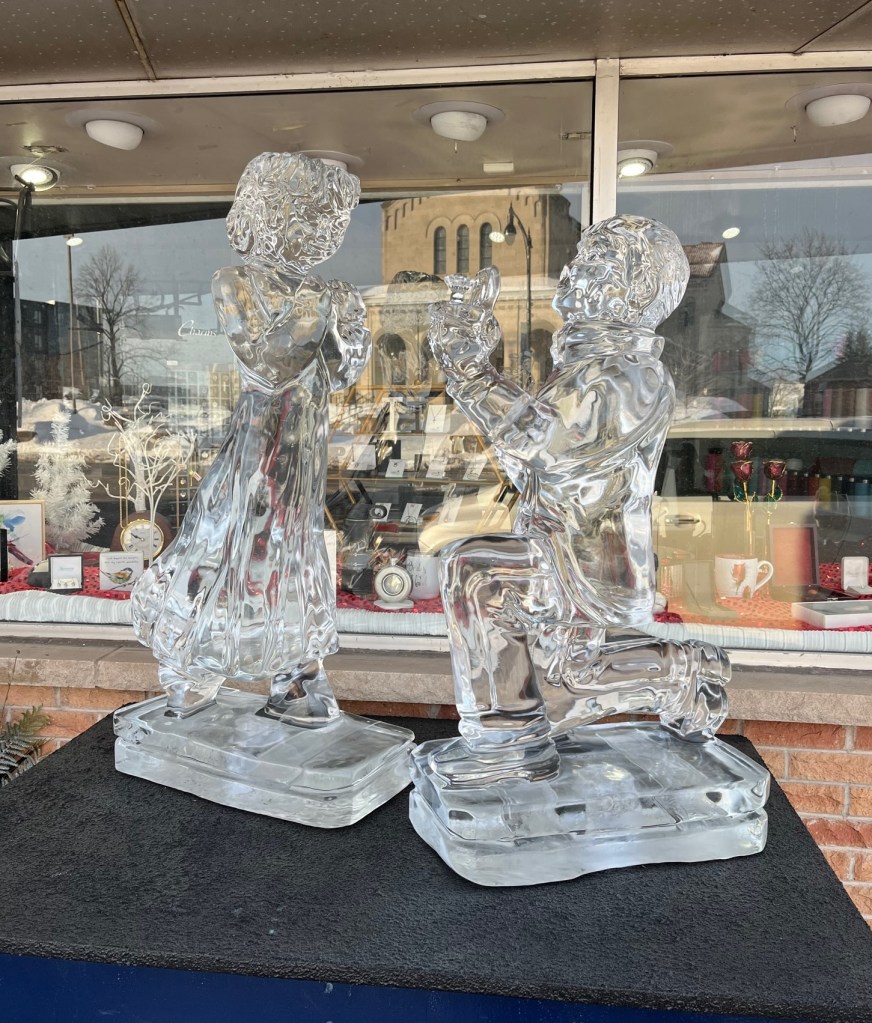
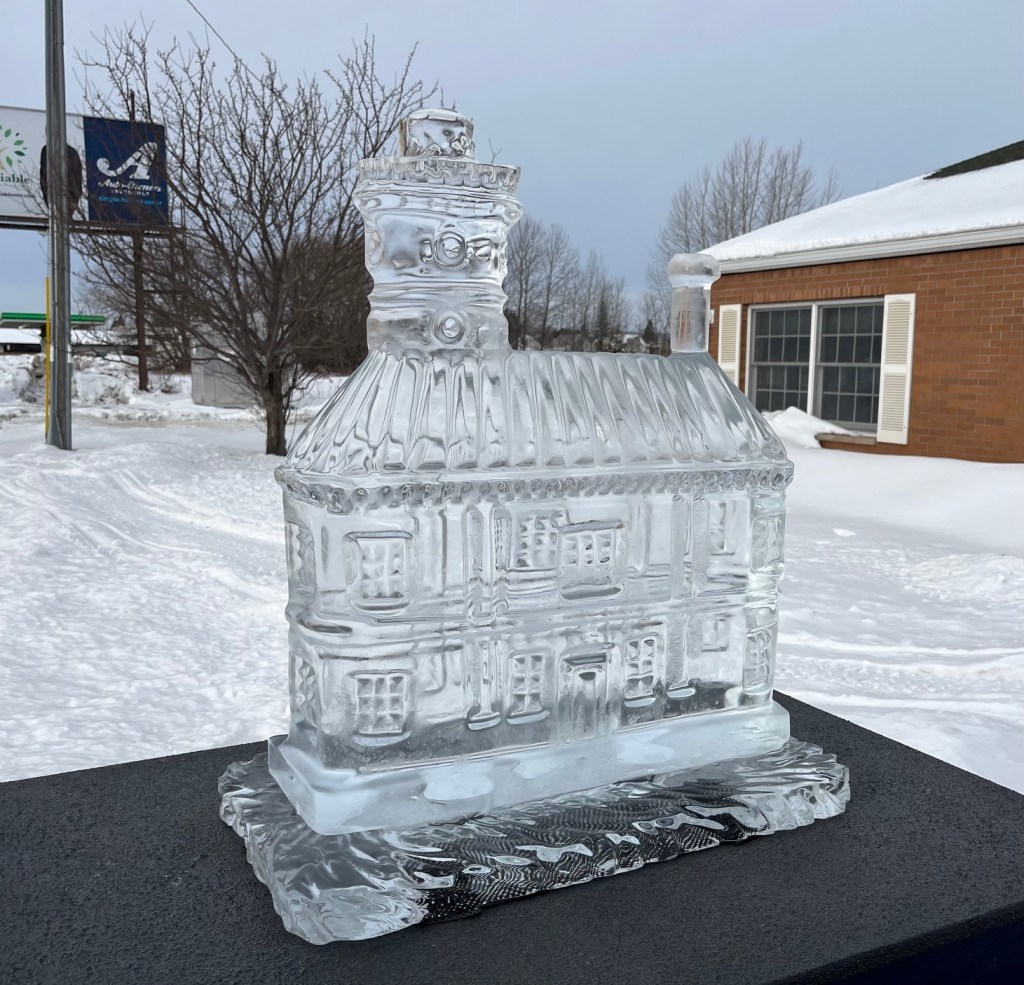
I photographed the tender proposal in front of the jewelry store where my husband and I bought our wedding rings in 1985. The Victorian house was captured in front of the chamber of commerce. It represents Fairlawn Mansion built by Martin Pattison, a lumber and mining baron. After Pattison’s death, his wife Grace donated Fairlawn to be used as a children’s home. Two of my uncles lived there for a brief time after they became orphans.

The cool Tramp wooed the adorable Lady while sharing a sparkly, silver noodle made from a pipe cleaner in front of Vintage Italian Pizza (VIP). A couple of days ago when I ordered a pizza to be delivered, I told the young person who took our order that my husband and I have been ordering pizza from VIP for almost thirty years. “Wow,” he said, “I’ve only been working here for five months.” He didn’t sound old enough to have been doing anything for thirty years. “Don’t worry,” I told him, “you’ll get there soon enough.”
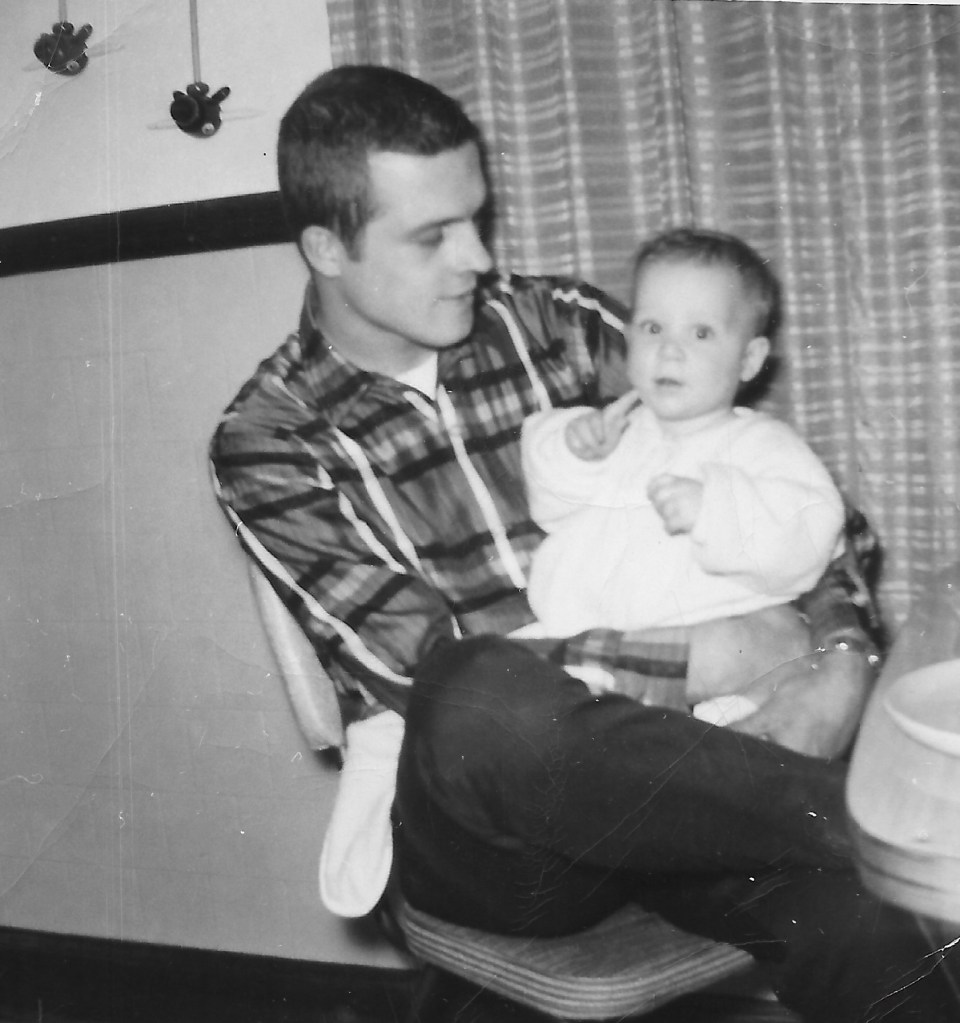
My favorite coffee shop sponsored a frozen hot coffee with chilled steam rising out of the mug. I took a break from my self-imposed photojournalism assignment and went inside to order a decaf latte with a shot of raspberry. Sometimes when I write I get cagey, so I pack up my computer and go to the coffeehouse and write. There’s always at least one other person plunking on a keyboard. We never speak because we don’t know each other, but I feel a sense of community.

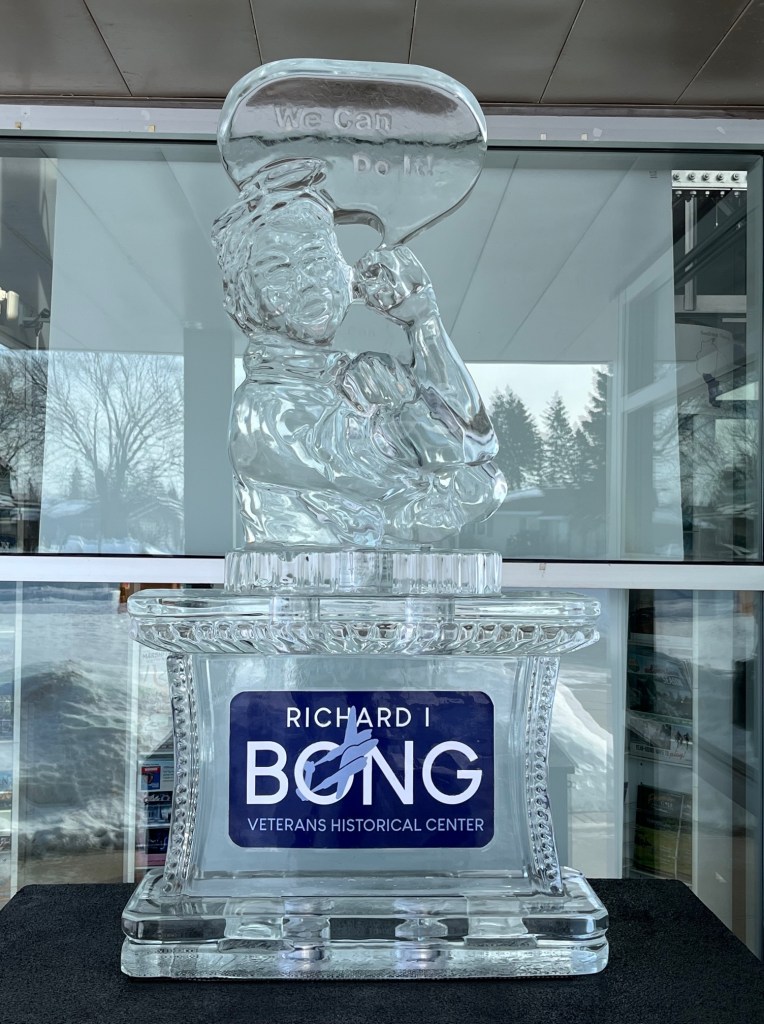
Richard Bong, a WWII flying ace, flew many missions and shot down many enemy planes. However, he didn’t die in battle, but while working as a test pilot in California.

The Richard Bong Center chose Rosie the Riveter to represent their museum honoring American veterans. My mother-in-law would have loved the cool-as-ice Rosie because she believed women were smart, capable, and strong.

My grandpa Howard served in the U.S. Army during WWII from January 1941 until August 1945. In 1943, he was wounded in Italy and received the Purple Heart. My sister, one of her sons, and I paid tribute to Howard through the Flag of Honor program started by American Legion Post 435 at the Bong Center. The American flag presented to Howard’s family at his funeral was raised during a short ceremony to commemorate his service in WWII

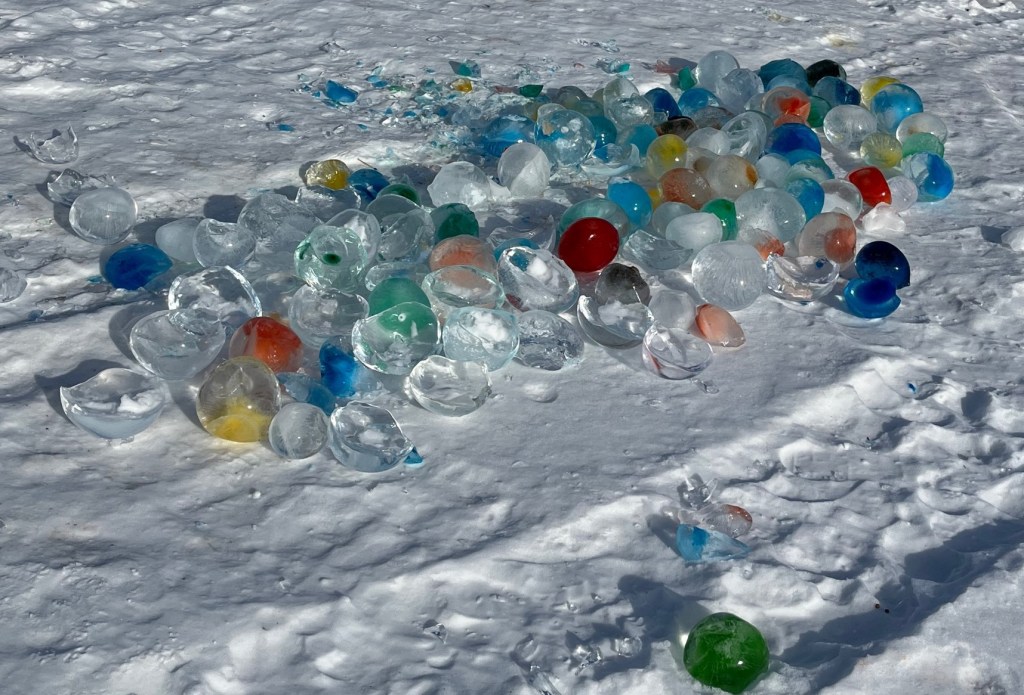
After photographing the ice sculptures downtown, I headed for Barker’s Island, the site of the festival, to track down more sculptures. When I parked the car, I spotted a large pile of misshaped ice marbles. They were part of the winter festival, but I’m not sure how. I liked thinking about them as giant marbles left behind by Paul Bunyan. I loved playing marbles when I was in second grade, and I could beat all the boys. In fifth grade I played Babe the Blue Ox in a play. I made my own costume by cutting out the silhouette of an ox from cardboard and painting it blue. When I was on stage, I was always behind the cardboard ox, and I had no lines, so I didn’t discover I had stage fright until I played the Wizard in the Wizard of Oz in seventh grade.

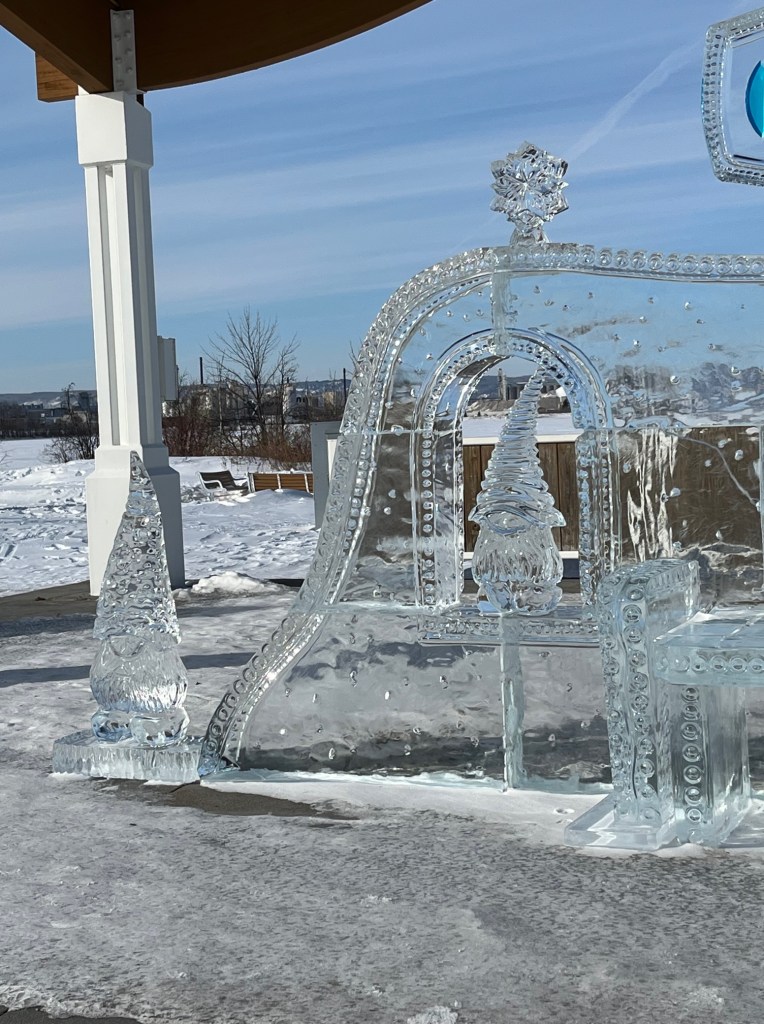
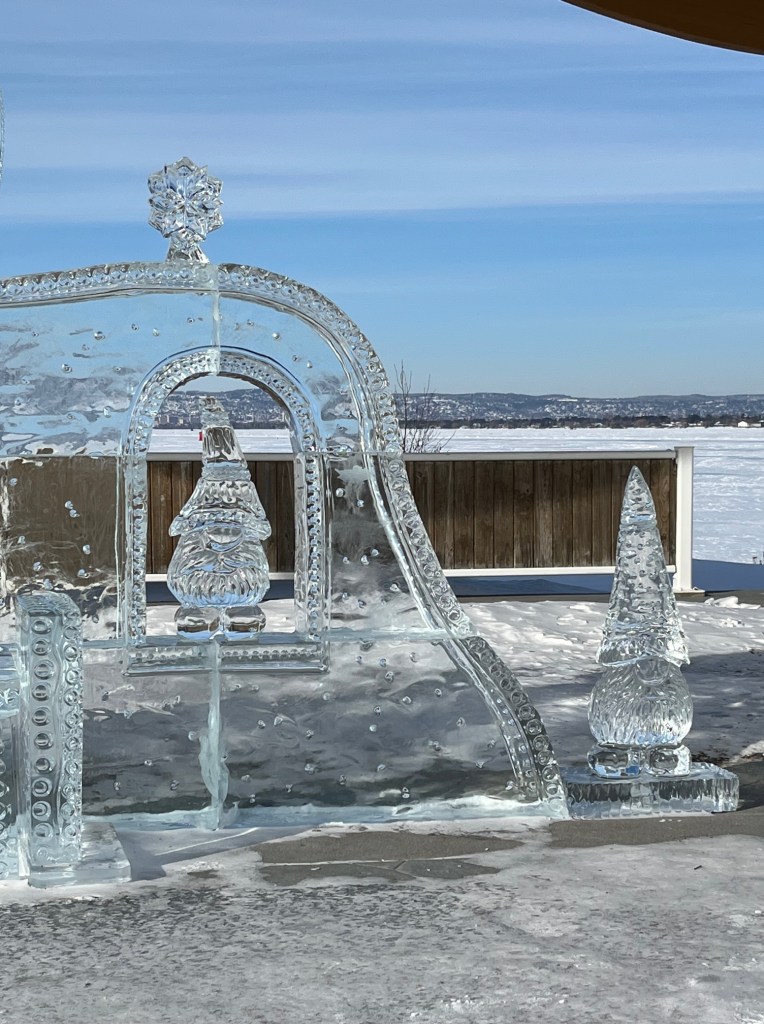
Across from Paul Bunyan’s abandoned marbles, were two of the prettiest ice sculptures. I don’t know what they symbolize, but I imagine they have a connection to sailors and ships and open waters. In the left photo in the background is the Seaman’s Memorial, a statue dedicated to sailors who have lost their lives on Lake Superior.

And the Ice Festival throne . . . heavy is the head that wears the crown and frozen is the butt that sits upon this throne.

The Superior Refinery sponsored an ice sculpture. On April 26, 2018, an explosion and fire rocked the refinery, which was owned by another company at the time. Luckily no one was killed at the refinery, and even luckier the explosion wasn’t as bad as it could have been. Because if it had been, everyone within a twenty-five mile radius from the refinery would probably not be around to tell their stories. There was a large-scale evacuation. My mother-in-law, who was suffering from heart failure was in the hospital that evening in a neighboring city, which was less than fifteen miles away, and her husband was with her. It was their 66th wedding anniversary. My husband and I visited them at the hospital. Less than a month later my mother-in-law passed away. But on that night, she had her humor with her, and she quipped, “Well, I won’t ever forget the date of the explosion.”

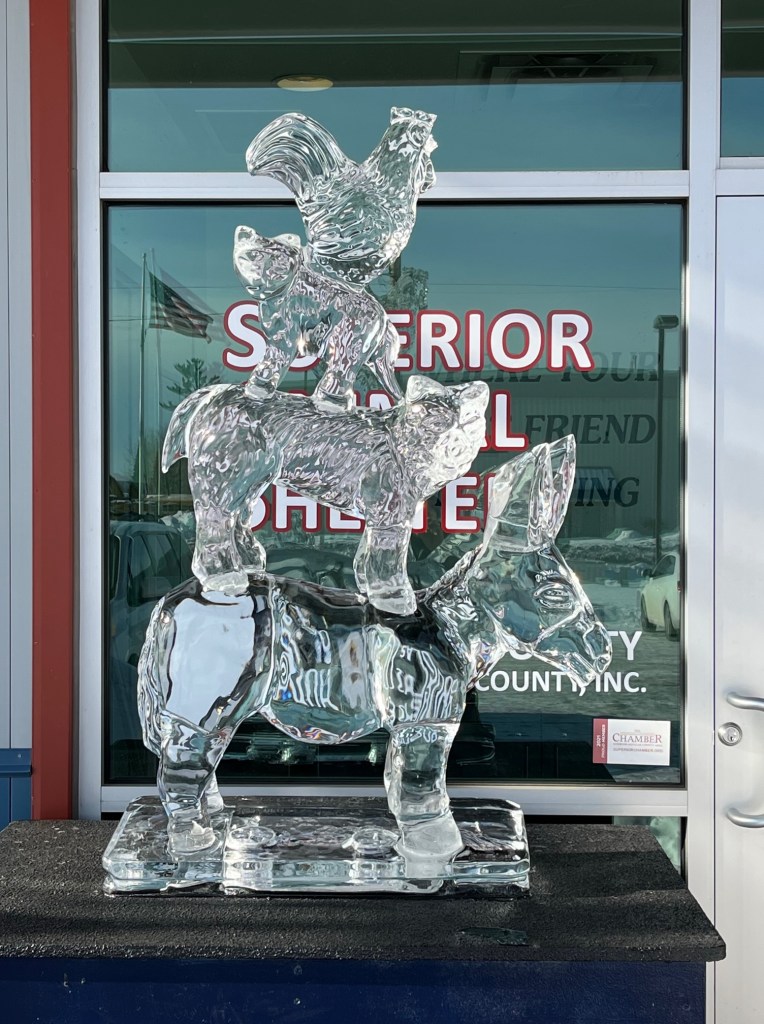
And on a happier note, my favorite ice sculpture, “The Town Musicians of Bremen,” was sponsored by the animal shelter. As a child, the story by the Brothers Grimm was one of my favorites. Turns out the four famous animal musicians have statues of themselves in Bremen, Germany, the Lynden Sculpture Garden in Milwaukee, and in front of some veterinary schools in Germany. (You can listen to the story here.)

And the rest of the sculptures . . . Click on the side arrows to move through the slideshow.

The Ice Gnomes in Waiting

Bloganuary Post for January 16: Do You Have a Memory Linked to a Smell?

[Bloganuary is hosted by WordPress. A new topic is presented each day during January. This is yesterday’s topic.]

Nana Kitty in front of her house, 1978

I cannot describe what my nana’s kitchen smelled like because there is no specific scent I know of to compare it to. But on rare occasions, I walk into someplace and unexpectedly inhale a whiff of the same smell that was a constant part of her kitchen. Permanent just like the yellowed-white plastic radio on her burgundy-red linoleum countertop or the see-no-evil, hear-no-evil, speak-no-evil statuette of monkeys perched next to the acorn-and-pipe-cleaner figurine who played a single bongo drum, both resting on a shelf above the ledge where her princess phone lounged.

It wasn’t the smell of cookies in the oven or bread dough rising because she never baked. Her bankrupt cookie jar squatted in a corner to the left of the sink, tucked next to the toaster. It wasn’t the smell of fried chicken sizzling on the stove or a Sunday roast baking in the oven because Nana never cooked the way most women did in the 1960s. I don’t have a single memory of our family gathering around her kitchen table for a holiday dinner or any other dinner. She had no dining room. My siblings and I often stayed with Nana for two or three days at a time, but I remember little about what we ate.

Her kitchen was a small space with a trivial parcel of countertop, an afterthought of cupboards, a narrow gas stove, and an old diminutive, single-door refrigerator with a miniature freezer box tucked inside. The kitchen was designed to discourage cooking.

Perhaps the distinct smell of Nana’s kitchen was a conglomeration of its tiny world: a tea kettle of water boiling over a gas flame to make instant coffee; a sunny-side-up egg in melted butter, frying in a cast iron pan, basted to perfection; Malt-O-Meal bubbling in a stainless-steel pot; a slice of bread browning in a toaster, then layered with butter or marmalade; tea steeping in hot water, brewed to soothe a queasy stomach; a rose or peony cut from the garden, standing in a vase; shoes or winter boots gathered on yesterday’s newspaper near the outside door; an old oak table covered with oilcloth; faux brick vinyl wallpaper on the front wall; white cotton curtains washed in Fels-Naptha soap; cleanser scrubbed against the porcelain sink; wax applied to the yellow, brown, and orange patterned floor; aging varnish on wooden trim; the metal-lined milk chute, waiting for the day’s delivery; the heavy, dark wooden door, layered with years of oil from the hands of Nana’s grandchildren, children, and her dead husband.

It’s been awhile since I have smelled anything like Nana’s kitchen. Perhaps that’s because many of the smells that lived there are now too old-fashioned, having been made from products no longer used. Perhaps my sense of smell has dulled. Recently, I looked at pictures of Nana’s home on a realtor’s site. The kitchen has been modernized, but it’s still tiny, still designed to discourage cooking. I imagine the smells have been updated too.

Bloganuary Post for January 4: A Treasure That I Have Lost

[Bloganuary is hosted by WordPress. A new topic is presented each day during January. I’m a day behind.]

When my father, who lived in Tucson, died in 2016, there were three things I wanted from his estate: a bed-sized quilt I’d made for him, a lap quilt my youngest son had made for him, and a scrapbook of photos I’d made for him filled with pictures of him and my sons.

I got two out of three.

Dad’s quilt with a white background in the focus fabric and a dark blue border

The quilt made for my father arrived first. Years before, on a visit north, my father had gone into a fabric store with me on purpose. Maybe it’s a cliché but most men don’t follow women into fabric stores. My husband always sits in the car. I had a friend whose husband always sat in the car and sometimes napped while she bought material. But my father wasn’t a sit-in-the-car kind of guy. Once on an afternoon jaunt along Lake Superior, I stopped at a yarn shop, and my father came inside with me. He found something to like in that store–the owner’s dogs. While I perused the yarn, they chatted about their dogs.

After I picked out some lovely woodsy, snowy themed material in the quilt shop, my father offered to pay for it. He didn’t say, “Make me a quilt.” The gift came with no threads attached. But in that moment, I knew I’d make him a quilt out of the material. A few days later, I bought a second set of the same fabric in a different color scheme, and I made two quilts, one for him and one for me. I thought about the quilts as a gift of connectedness: he had one and I had one.

Weeks later the quilt my son made for his grandpa arrived. It was late coming because at first no one could find it. I wanted my son to have the quilt. On his own he’d decided to make his grandpa a quilt. He picked out a focus fabric with an airplane motif because his grandpa had a small private plane, which he used every summer to fly from Tucson to Wisconsin to visit us.

The airplane quilt

The making of the airplane quilt was a joint effort between my son and me when he was about twelve. He selected the material, chose a design, and sewed the squares together. I cut the squares using a rotary cutter. If you’ve ever seen or used a rotary cutter for quilting, you will understand why you don’t put one in the hands of a child. When the quilt top was finished, I machine quilted it and put a binding on it. During one of my father’s summer visits, my son gave his grandpa the quilt, who most fittingly put it in his plane when he left and few it home.

The scrapbook of photos never arrived. No one ever found it. I made it for my father around 2005. I wasn’t into scrapbooking, but I had a friend who made gorgeous eye-candy scrapbooks to memorialize family vacations. When I was a child, a scrapbook had plain white pages and people taped or glued articles, photos, ticket stubs, and other flat mementos in them. I have one I made when I was a teenager after my trip to Europe. But scrapbooking had evolved, and people used decorative papers, elaborate stickers, and fancy stick-on letters to create themed pages, which were slipped into plastic sleeves then inserted into a binder.

I made one of those upscale, themed, gorgeous eye-candy, fancy scrapbooks for my father. I filled it with pictures of him and his grandsons. Pictures of him holding them as babies. Pictures of them fishing with him. Pictures of them with him when we visited Tucson. And, most sentimentally, the pictures I took each year of him and his grandsons in front of his plane, just before we stepped away and he climbed inside. We’d listen to him yell “clear” before he started the engine. We’d watch him taxi to the runway then take off. We’d stand on the ground and wave, and my father would tip his wings back and forth, waving goodbye to us.

The scrapbook is a treasure gone missing. No one is sure what happened to it. One year my father, who lived in a raised ranch, had water damage in the lower level in an area where he stored a lot of stuff that had to be thrown away. Maybe the scrapbook was part of the flood.

I have copies of all the photos, but it’s not the same. In the scrapbook, those remembrances were gathered in one place. I wanted to be able to open the scrapbook and wander through those collected memories of my father with his grandsons. I could’ve made another scrapbook, but I haven’t. I think of the one I made for my father as perfect, something I couldn’t replicate.

But I use the quilt I made for him on my bed. The gift-of-connectedness quilt that I made for myself hangs on the quilt rack in my family room.

My quilt with a tan background in the focus fabric
and a sage green border

Bloganuary Post for January 3: What’s the Earliest Memory I Have?

My sister and me, a few months before our trip to Pulaski Park

[Bloganuary is hosted by WordPress. A new topic is presented each day during January.]

My earliest childhood memory? That would be the morning my younger sister (2) and I (3) took pity on my sleeping mother, left the house early in the morning, and walked a handful of blocks to Pulaski Park in Milwaukee. Mom was tired. Who wouldn’t be with two busy toddlers around the house? So, we didn’t wake her up and ask her silly questions like, “Can we go to the park?”

We also didn’t worry about getting dressed. My sister and I each wore a stylish combination of cotton training pants and summer pajama tops. During a hot Milwaukee summer, we didn’t bother with pajama bottoms.

Pulaski Park was our favorite because Nana Kitty took us there when she came to visit. She put each of us on a swing and pushed us up, up, up, into the always robin’s-egg-blue sky. And, our best, most favorite part? Nana sang “Puff the Magic Dragon” to us while she pushed us on the swings.

It was my favorite song. And on that morning, it was my idea to go to the park. If my nana couldn’t take us, I would take us. I wanted to go to the park because I wanted to sing “Puff the Magic Dragon” just like Nana did, even though I didn’t know all the words like she did.

I held my sister’s hand, and we walked down sidewalks, waited at stoplights, and crossed streets without getting hit by a car. We walked on the path into the park and crossed a concrete bridge over a small creek. I helped my sister into the swing, and I pushed her up, up, up, into the always robin’s-egg-blue sky. I sang some of the words from “Puff the Magic Dragon.”

A woman who was at the park, pushing her child on a swing, asked me, “Where is your mother?”

“In bed,” I replied. “I’m taking care of my sister.” I smiled. I felt proud as I pushed my sister into the sky and sang about Puff, the childhood friend of Little Jackie Paper.

And that’s where my memory stops, and my mom’s memory begins.

When my sister and I were older, Mom told us how our trip to the park ended. She woke up shocked and panicky to find we weren’t anywhere in the house. But she had a good idea where we went. She put our German Shepherd, Fritz, into the car and drove to Pulaski Park. So relieved to find us there, she hugged and kissed us over and over again.

A couple of weeks later, Mom woke up and my sister and I were gone—again. We’d gone back to Pulaski Park on our own—again. Mom and Fritz came to get us—again. But the second time, Mom was so upset to find us there, she gave us spankings!

Show and Tell to Remember

[“Show and Tell to Remember” was originally published by the Bacopa Literary Review 2022. It earned an honorable mention for humor.]

Inside my dress pocket, I had the best thing for show and tell. In 1964, I was new at Pleasant View Elementary, and having started in October instead of September, I was an outsider. My kindergarten classmates were going to be impressed. The popular girls would envy me and ask me to jump rope with them during recess. The cute boys would elbow each other and try to sit by me at snack time. My pretty teacher, with bouncing brown hair that flipped up in a long continuous curl around her neck, would look at me with approval.

“Vickie,” the teacher said, “it’s your turn.”

I snapped out of my daydream, rose from the floor, and stood next to the teacher who sat in a chair. My dress was clean, my saddle shoes were polished, and my unruly hair was combed into pigtails. It was my moment. I slipped my hand into my pocket.

“I brought a balloon,” I said. “Each one comes in its own wrapper.” My classmates leaned forward. My teacher turned toward me for a better view. I opened the package and pulled out the balloon.

“Let me see that,” my teacher said. Her hand clutched the balloon and its wrapper. She told me to sit down then called on the next student.

My face burned. At five and a half years old, I had enough sense to know I had done something wrong. But what? I wanted to ask for my balloon back, but I didn’t dare.

Me, circa kindergarten

After show and tell, I saw my teacher on the phone and heard her say my name. I was in trouble, but I didn’t know why. Too embarrassed to ask her what I had done wrong, I waited for a punishment, which in my imagination grew in magnitude as the afternoon dragged on. My graham crackers and milk didn’t sit well in my stomach, and naptime wasn’t restful. Usually, I rode the bus home, but at the end of the day, my teacher told me my mother would pick me up. My classmates left without me.

Mom arrived shortly after the buses rolled away. The teacher invited her to sit in the chair next to her desk but told me to wait in the hallway. They would talk about me, find me guilty—of what I didn’t know—and punish me forever. It had to be bad, very bad, but they didn’t talk long.

“Where did you get the balloon?” Mom asked after we got in the car.

“From your dresser.” Lying would’ve made it worse. My mother always seemed to know the answers to the questions she asked me.

“Don’t go in my dresser again. Or your dad’s dresser. Understand?”

I nodded in agreement. That was it. Not a word about punishment. No “wait until your father gets home.” This confused me because Mom had been called to school. My classmates said nothing about my show-and-tell offering either, and my dreams of popularity remained buried in the playground sandbox.

Because of the eerie silence that followed my kindergarten show and tell, I never forgot about it. It wasn’t until I was a freshman in high school that I realized I had taken a condom to school, and that Mom had said nothing more about the “balloon” because she didn’t want to explain condoms to her five-year-old daughter.

After I figured it out, I never asked, “Hey, Mom, remember when I thought I took a balloon to kindergarten for show and tell and the teacher called you?” Like any other teenager, I didn’t want to talk about birth control or sex with a parent. The where-do-babies-come-from talk Mom and I had when I was nine, still made me squirm with embarrassment.

After I had children, I appreciated that my kindergarten teacher and Mom handled my show-and-tell blunder with the calmness of an air traffic controller communicating with a pilot as he makes his final approach to a busy airport during a raging thunderstorm. But they never knew how much I suffered that afternoon.

Years later, I wondered if Mom might have been embarrassed because my teacher called her to school to discuss why her five-year-old daughter had a condom in her pocket. If Mom was mortified, she hid it well. She was twenty-four and had three daughters ages, five, four, and one. She may have been more horrified by the wasted condom than my taking it to school. Our family didn’t have the kind of lifestyle where condoms grew on trees.

Having graduated in 1958, Mom was six years out of St. John’s, a catholic high school, from which she almost didn’t graduate. She had written an essay scolding the pope and the Catholic Church for banning the use of birth control by its members. If she had, instead, written an essay describing her struggles with her Catholic faith and questioning the existence of God, the nun who taught the religion class may have said, “God expects his followers will experience a crisis of faith now and then. Keep praying.” But questioning the pope’s stance on birth control was sacrilege.

The school threatened to withhold Mom’s diploma, but she refused to rewrite her essay. She stood ready to see her high school diploma burned at the stake for the right of women to use birth control without fearing God or Hell or nuns who taught religion classes.

But Mom was also practical: She called the Wisconsin Department of Education, who made it clear to the school’s administrators they could give Mom an F in religion, but they couldn’t deny her a diploma because the state didn’t require a religious class for graduation.

For Mom, having to talk to my kindergarten teacher about my birth-control-show-and-tell balloon was probably child’s play. She had already taken on the pope and the Catholic Church and St. John’s High School and a perturbed nun. Besides I went to a public school, and no one threatened to keep me from graduating kindergarten.

[The Bacopa Literary Review 2022 can be ordered by clicking here. To read the complete list of winners and honorable mentions in humor, fiction, creative nonfiction, and poetry, click here.]

Flashlight Magic after a Snowstorm

Last week a snowstorm moved through our area, and school was cancelled three days in a row. I took care of my youngest two grandsons for two of the days, which included a sleepover.

After the first day of the storm, there was a lull in the evening before part two of the storm hit. So, on a beautiful, warm winter evening dressed in fresh snow, my grandsons bundled up in their outerwear, and my husband gave them headlamps to strap around their hats. I leashed the dogs, and we went for a walk.

My happy grandsons ran down the sidewalk, mesmerized by the bouncing lights shining from their headlamps. They laughed and played games as they ran. My dogs and I trailed behind. The dogs ignored their antics, but I remembered my sisters and I as young children and our fascination with flashlights. We’d heist a flashlight from the kitchen junk drawer and hide it in our bedroom. After dark, we used it to create animals with our fingers on the walls of our bedroom. We had such fun–until my father, days or weeks later, opened the junk drawer to find his flashlight missing when he needed it.

My father’s voice would boom: “Where’s my damn flashlight?” My sisters and I would exchange glances, then fetch it from the bedroom and place it in his hand.

“I can’t have a damn thing around this house!” he’d spout. My father, a master of hyperbole, turned every problem that impacted him into an all-or-nothing event.

In reality, there were only two things my father couldn’t have around the house–flashlights and tape measures. Considering he was a mechanic with an amazing array of tools in his garage and a junk drawer full of household tools, he could’ve fared worse. My father’s booming voice didn’t deter us. Eventually, we’d hijack the flashlight again, always with a plan to return it before he noticed it was missing, a plan that usually failed.

At some point we discovered tape measures were fun, not because we measured stuff, but because the metal tape could be pulled out and locked in place, then with a flick of a finger, unlocked. And ZING, twenty feet of metal tape would dash into its case with satisfying speed and a snappy sounding CHING. Of course, we often forgot to return the tape measure.

One day, one of us, I think it was me, pulled the metal tape out too far. Nothing we tried would fix it. Next time my father boomed, “Where’s my damn tape measure?” we wouldn’t be able to retrieve it and put it in his hand, unless we handed it to him with its innards spilling onto the floor.

We did the only sensible thing we could think of–we placed the broken tape measure in a paper bag and carried it into the field of tall grass behind our backyard. We left it there, hoping no one would find it.

I don’t remember if my father or mother ever found the bag. And I don’t remember what happened the next time my father boomed, “Where the hell is my tape measure?” I asked my sisters and they didn’t remember the event, although they were part of the caper and cover up.

Sometimes I think I have a vague memory of it being discovered, but that my father made no bigger deal out of it than to repeat his usual “I can’t have a damn thing around here” lament, a tirade that probably lasted only a minute or two because being a busy guy, he had other things to do. He also had tape measures in his garage.

My father could at best be described as a curmudgeon, but for all his bluster, he was sentimental. Once we all grew up and moved out, I wonder if he ever went to his junk drawer and felt a bit sad to find both his flashlight and tape measure undisturbed.

Dad and me, before I started playing with his flashlights and tape measures.
Dad was 22 years old, and I was ten months old.

Watching my joyful grandsons with mini flashlights strapped to their heads made me smile, and I offered up some words to my father who passed away six years ago. Dad, I know our love of your flashlights and tape measures drove you crazy, but thanks for being a good sport about it–in your own way. And I told him that my grandsons are crazy about flashlights and tape measures, and if they lived with him, he’d find those things going missing once again.

The First Real Snow of the Season

Ziva, November 29, 2022, home after our evening walk

Snow began falling around 8:00 a.m. today. The forecast predicted a trace to one inch, but it snowed all day, and four fluffy inches covered the ground, roads, trees, and cars. Snow can be that way, making weather forecasters look foolish.

This isn’t the first snow of the year, but today’s snow has a good chance of staying on the ground, making it a white Christmas. That’s why I call it the first real snow of the year.

I loved snow as a child, and I haven’t grown old enough yet to resent or fear it. The first real snowfall of the year evokes childhood memories of snowballs, snowmen, snow forts, and sledding. Swaddled in snow pants, jackets, hats, scarves, and mittens, our joyful shouts, squeals, and laughter bounced off the trees and houses.

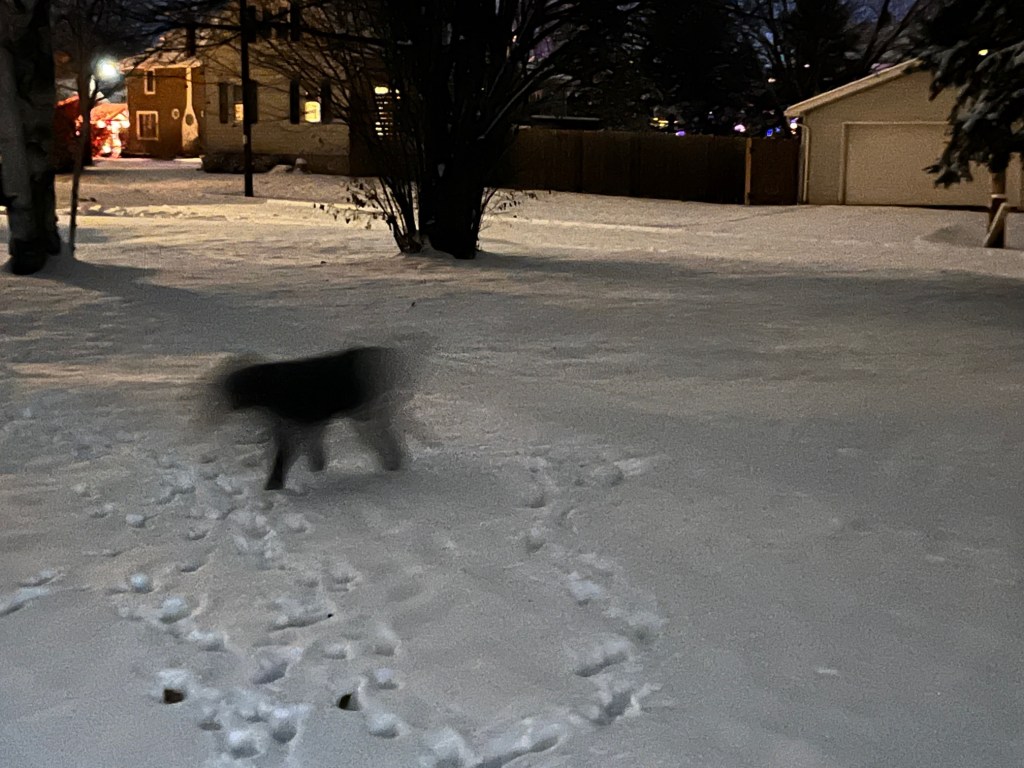
I love to walk my dogs, Ziva and Cabela, in the evening after a fresh snowfall when the air is still. My dogs love the first real snow too. They prance. They stuff their noses in the snow, tossing it in the air or eating it. Sometimes the snow tickles their noses, and they sneeze. Even Cabela, who’s now fourteen-and-a-half, becomes youthful. When they were puppies, the first snowfall of the year gave them the crazies. They pounced and dashed and rolled in it, creating doggie snow angels. They reminded me of a gaggle of children unleashed into the first good snow of the year.

Perhaps snow sparks something primal in my dogs and myself, something that lights up ancient places in our brains, something that is more complex than our happy memories of youthful frolics in the snow.

Ziva, a blur in the snow

I Bake a Pumpkin Pie, and a New Thanksgiving Tradition is Born

My husband likes pumpkin pie. I do not. For more than twenty years we cooked a traditional Thanksgiving dinner for a big group of people. But not pumpkin pie. Someone else always brought pumpkin pie. I baked a cake or cheesecake.

This year we’re having a nontraditional Thanksgiving dinner. No turkey, no stuffing, no mashed potatoes, no pumpkin pie. There will be four of us. We’re having a roast, baked potatoes, and green beans (not mixed with cream of mushroom soup). I’m making a chocolate peanut butter chip cake. My husband is happy to skip the turkey and other fixings, but he mentioned twice that he was going to miss the pumpkin pie. Yesterday, I decided to bake him a pumpkin pie before Thanksgiving.

I called Aunt Coralee. She bakes smack-down, grand-champion, blue-ribbon, best-of-show pies. I asked her how she makes pumpkin pie. She starts with a homemade crust. Her crusts are flakey, tender, rich and golden brown, and if her pie filling mysteriously evaporated, her crust could carry the day on its own. I told her that was an art form I did not have time to master. She told me to buy a premade crust at the store. All I had to do was unroll it and put it in the pie pan. No rolling pin required. I could do that. She told me to use canned pumpkin and follow the recipe on the back of the label. I could do that, too. Off to the store, I went.

My second call to Aunt Coralee was from the grocery store. “Do you bake your pie in a glass or tin pan?” I asked. She uses glass or ceramic. “Cool,” I said because I had a glass pie dish that I used for quiche.

“Don’t forget the whipped cream,” Aunt Coralee said.

“Thank you, thank you, thank you.” I’d thought about whipped cream in produce, but breezed by the dairy cooler in pursuit of refrigerated pie crust. “If you want to see a grown man cry, just hand my husband a piece of pie without whipped cream,” I said. Aunt Coralee and I had a good laugh–everything’s funnier in a grocery store when you’re buying ingredients to bake a pie you’ve never made before.

Back home I unrolled the pie crust and placed it in the glass pie pan. I mixed the filling and poured it into the crust. Baking time: fifteen minutes at 425° then thirty to forty minutes at 350°. Thirty to forty minutes! That’s a big spread of time, like across a few time zones. The instructions said the pie would be done when a knife inserted into the center came out clean.

After thirty-five minutes at 350°, I did the knife test. It came out clean, except for three tiny, wee specks of pumpkin. That had to be considered clean, but the center of the pie was jiggly. I baked it another five minutes. Then tested again. Just a few tiny, wee specks of pumpkin, but still jiggly in the center. I was up to forty minutes but decided the pie needed five more minutes. When the timer binged, I pulled the pie from the oven and set it on the stove. The center was still a little jiggly. I called Aunt Coralee for a third time.

I worried the pie wasn’t done but also worried I’d cooked it too long. Aunt Coralee assured me it would be fine, that I couldn’t really overcook the pumpkin by adding an extra five minutes. But she explained the center of a custard pie will be jiggly when it’s done cooking and will set up as it cools. The pie did look lovely as it cooled and the center set up.

After work my husband discovered his pumpkin pie on the stove, he smiled, and stated the obvious, “You made me pumpkin pie. Thanks.” He kissed me on the cheek. Smart guy.

Next year I’m going to make him another pumpkin pie. I’ll stop baking it when the knife comes out clean, and I’ll remember the center will be jiggly. And even though I won’t eat a slice, I’ll admire it as it cools on the stove.

A new Thanksgiving tradition.

Something Published: “Fritz Warms Up Our New Neighbors”

[This essay was published in Red Cedar Review, Volume XXIV in the fall of 2022. Red Cedar Review is published by the University of Wisconsin-Eau Claire through its Barron County Campus. It’s a print- only journal, and its editors and staff consider art, prose, and poetry from northern Wisconsin residents. I decided to post this essay in honor of Thanksgiving because when I reflect on my childhood, I’m very thankful for our old farmhouse and our wonderful neighbors.]

The Old Farmhouse, late 1960s or early 70s

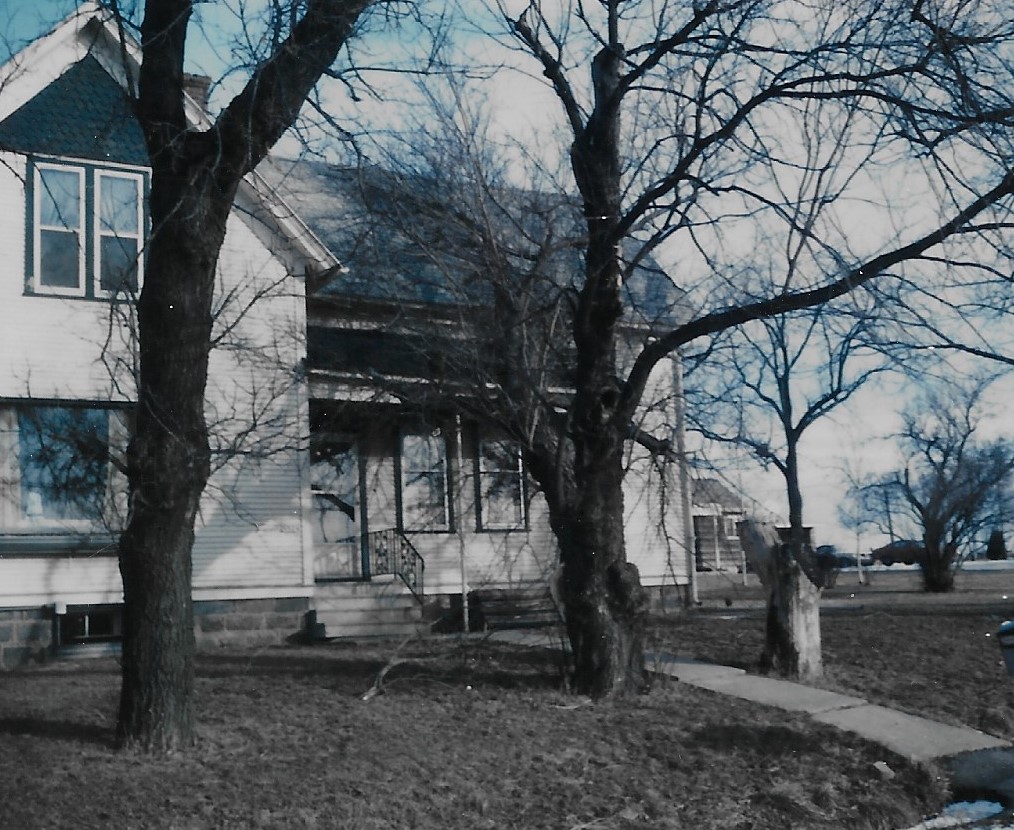
Wrapped in thin white clapboard, the two-story farmhouse built in 1907 was 57 years old when my parents, my two sisters, and I came to live there in October 1964. It looked older to my five-year-old mind, much older, in the way a person of thirty or forty seems very old to a small child. My parents sold their duplex in Milwaukee where rows of houses sat a handshake apart, fronted by sidewalks and busy streets lined with parked cars. They moved their dysfunctional marriage and children to a country road with a smattering of houses fronted by rural mailboxes and a narrow road, on which no one parked. From age five to seventeen, I lived there with my parents, two sisters, and a brother, born in 1967.

A week after we moved into our farmhouse, a knock rattled the front door that opened into our large kitchen, the kind where a farmer’s wife could cook a hearty meal to feed her husband, their children, and the farmhands all in one shift. Mom was working in the kitchen while my sisters and I played on the floor. She was twenty-four. Her face, scrubbed clean of makeup and her chestnut-brown hair pulled up into a pony tail, made her look far too young to be the mother of three small girls. She gave birth to me, the oldest, when she was eighteen.

Mom opened the old wooden door and on the other side of a modern aluminum screen door stood John Giese, Sr., whom we’d soon come to refer to as “Old Man Giese,” distinguishing him from his son, John Giese, Jr.

The Giese barn

Old Man Giese stood on our front stoop, clutching two dead chickens by their feet, one in each hand. He and his three grown children, John Jr., Mildred, and Leona, lived across the street in a white farmhouse as ordinary as ours. But the Giese farmhouse, surrounded by fields to be planted and harvested; by cows and chickens to be fed and tended; by cherry trees, blackberry bushes, and current bushes bearing fruit to be picked and preserved, appeared grand. Our farmhouse, surrounded by two acres of mowed grass then acres of overgrown farmland, looked tired. Giese’s bright red barn stood proud in contrast to our barn layered with various shades of washed out red, which made it appear mostly pink.

“Ma’am,” began the old gentleman, for although he wore a frayed cap and shabby blue denim overalls, he exuded a dignity the two dead chickens and his working clothes couldn’t erase. Old Man Giese was the first real farmer I ever met. My previous knowledge of farmers came from watching Mr. Green Jeans on Capitan Kangaroo, and in my five-year-old mind, Old Man Giese was the opposite of Mr. Green Jeans in every way.

Mom, a city girl, gawked at his welcoming gift of two dead chickens. She knew nothing about cleaning them.

Fritz sitting by our pinkish-colored barn, early 1970s, a couple of years before he passed away

“Your dog,” Old Man Giese continued, “killed my chickens.”

Fritz, our six-year-old German shepherd, lay on the family room floor and made no move to join the conversation.

“I’m so sorry,” Mom said. “Can I pay you for the chickens?”

“No, just keep the dog off my farm, ma’am.” Old Man Giese put his back to us. A lifeless chicken in each hand, he descended our front stairs and returned to his farm. He never called on us again, and a few years later he, too, would be dead, gone to join his wife who died before we arrived.

Mom, relieved she wouldn’t have to clean chickens but mortified Fritz might have killed them, shut the door and strode into the family room. “No chickens,” she yelled at Fritz. “Never again.” He understood and stayed away from the Giese farm, but he still ran loose, up and down the country roads, chasing female dogs in heat.

That evening at dinner, she told Dad, “At first I thought the chickens were an apology for his cows chomping on our lawn the morning after we moved in.” But the chickens had been an indictment, not an apology.

In our new neighborhood, Fritz had committed the first faux pas, setting the standard by which my family’s behavior could be explained. When my parents fought in the middle of warm summer nights, their shouts crawling in and out of open windows, the neighbors could say, What do you expect? Their dog kills chickens. When my sisters and I threw apples at passing cars, but the parents of two older, well-behaved children, from down the road got a visit from the police, their parents could say, They can’t control their dog either. When Dad sped down the country road or set off cherry bombs in our yard, the neighbors could say, What do you expect from a man who lets his dog ignore good-neighbor etiquette?

Our existence in the neighborhood was like a hoppy beer—an acquired taste. Some people come to love the taste of hops, but others can’t force it past their taste buds. Most of the families up and down our sparsely populated road came to accept us, and we were welcomed into their homes and yards. Only two families never warmed to us, not bad considering our parents’ occasional nocturnal fights, dad’s shenanigans, and our string of dogs that never stayed home.

Dad, despite his bad-boy-James-Dean manner, was handsome and charming. An excellent mechanic, he was always willing to lend a hand to neighbors and offer them a beer. Mom was hard-working and friendly, and if she borrowed a cup of sugar or a roll of toilet paper, she always repaid her debt. My siblings and I stopped throwing apples at cars, and we behaved ourselves so no one had to call the police on us again. We were polite or Mom would’ve walloped us or grounded us for life, depending on the prevailing winds of her mood that day. Most of the neighbors decided we were okay.

And the Gieses? They didn’t hold Fritz’s chicken incident against us. After all, their cows had grazed in our front yard the day after we’d moved in. Old Man Giese and his son fixed their fence, and the cows stayed home. Fritz defied fences, but he obeyed Mom’s command and stayed out of their yard and away from the chickens, easy for him because they didn’t own dogs. To prove there were no hard feelings, when my siblings and I were old enough to cross the road, the Gieses gave us an open invitation to play in their yard, to eat fruit from specific trees and bushes, and to cross their fields in winter to ice skate on the frozen river running through their property.

None of Old Man Giese’s children had youngsters of their own. Looking back, I believe they enjoyed seeing us run through their yard, roll down the hill by their barn, and eat the fruit they grew. I believe they smiled when they heard our voices on the winter wind, echoing through the trees as we skated on the frozen waters just behind their fields. And I wonder what they thought, when as a teenager, I sat on a large tree stump near the barn and talked to their cows, who gathered by the fence, eager for gossip about my teenage troubles.

[I want to thank the editors and staff of Red Cedar Review for selecting my essay for their Fall 2022 issue. The ending of this essay is slightly different from the version that appears in their 2022 issue. I added the last two sentences because I felt the ending was too abrupt. As a writer, I often see ways to improve something I’ve written, even after it has gone to press.]