My story collection has a title! I’ll debut the cover when that is done.
In February 2027, the University of Wisconsin-Stevens Point will publish my collection of short stories through Cornerstone Press, their university press. I’m excited, and nervous, and grateful. This is my first book, and like a first-time parent, I’m not sure what to expect, so I gather information. I talk to other writers who have published books. I attend book launches and author talks. I read blogs and articles and attend seminars about how to nurture a book in the world.
When Cornerstone accepted my manuscript, my publication date was more than two years away. But now it’s about fifteen months away, and if there is one thing I know about time — it’s how quickly it flies. I need to promote my book, and for that it needs a title.
When I submitted my collection in November 2024, it was called Fishing Around in the Dog Days of Summer, after one of the stories in the book. I chose the title for a couple of reasons. First, I really like its eponymous story about two young sisters with a tenuous relationship who go crayfishing on a hot, humid August day. Second, all the characters in my short story collection are fishing around for something they want. They each dip a line in the murky waters of their lives during their own dog days, hoping to catch something they long for.
But as much as I liked my original title, I began to feel it was too long and would be hard for people to remember. And I worried if the cover depicted a fishing scene along with the title, potential readers might think all my stories were about fishing.
I looked at my table of contents and considered other story titles. “Silent Negotiations” jumped out at me. It’s short and easy to remember, and it’s another story I really like. In 2020, it won second place in the Hal Prize Fiction Contest. (So, I feel the title has good mojo.) In the story a couple who have been married over forty years renegotiate the parameters of their marriage during a disagreement. Each spouse speaks their mind, but only to a point. The rest of their negotiations are silent, yet significant. The characters in my other stories are like the old married couple in “Silent Negotiations.” They all want something. They all talk to each other, but they leave things unsaid. And what is left unsaid, changes who they are with one another and themselves.
After I decided to change my title to Silent Negotiations, I asked my writing friends and readers what they thought. They had all read my stories several times, so I knew they would be good judges as to whether or not the new title would be a good fit for the collection. They all loved Silent Negotiations.
Last weekend I attended the Wisconsin Writers Association Conference in Stevens Point. The Cornerstone Press editors were there too. I talked to Dr. Ross Tangedal about using Silent Negotiations as my title. He liked it too, and so did his student editors.
My book has an official title!
Now, I’m excited to see some cover designs. Before I know it, Silent Negotiations will be out in the world.
I’m hoping to use this picture for my author photo. Photo credit: Max Youngquist
I write short stories, so I read a lot of short stories. Lots and lots of short stories. Many of which I enjoy immensely. Some stories fade from memory after a few weeks. Others resonate with me for months, while some haunt me for years.
I’ve selected nine stories by five different authors that I read in 2024. I chose these nine out of the dozens I’ve read because as 2025 starts, I still think about these stories. I’ll be doing the dishes, or walking the dog, or standing in line at the grocery store, and one of these stories will pop into my head. These stories have stayed with me, even months after reading them. I’ve listed them in alphabetical order by author. There is no way I can list them in order of preference because each story is both unique and powerful, with beautiful prose, captivating plots, and intriguing characters. Each story is wonderful for its own reasons, making me say, “Gee, I wish I’d written that!” Best of all, these stories give readers plenty to contemplate.
[Click on the authors’ names to learn more about them and their books.]
Two stories from Hunger: A Novella and Storiesby Lan Samantha Chang (25th Anniversary Edition, W. W. Norton & Company, Inc., 2023)
1. “San” is a story about broken dreams and abandonment, and the struggle to survive both. The story is narrated by Caroline, whose parents emigrated from Taiwan before she was born. She tells the story of her father’s inability to claim his piece of the American dream, eventually causing him to desert his family. Caroline recounts the day she watched her father leave, taking her umbrella with him, never to return: “The umbrella had been a present from him. Now I stood and watched it go, bright and ill-fated like so many of his promises.” With stunning metaphors and beautiful prose, Chang creates a shifting setting and vivid characters that tell an ageless story in a new way.
2. “The Unforgetting” is the story of Ming and Sansan Hwang and their young son, Charles, who have emigrated from China and settled in Iowa. They speak Chinese in their home until one day when Charles’s fourth-grade teacher explains that their son’s English vocabulary is below average. The teacher suggests the family speaks only English at home. His parents follow the teacher’s advice, and a rift grows between Charles and his parents. Ming and Sansan never master English, making it difficult for them to express their thoughts and emotions with Charles, who, at the same time, forgets most of his Chinese: “Since they did not test [Charles], Ming never knew how long it took for all of those words to be forgotten.” Language is how people understand their worlds. Chang’s story explores how the stripping of one’s native language is more than a loss of vocabulary.
A story from The Effects of Urban Renewal on Mid-Century America and Other Crime Stories by Jeff Esterholm (Cornerstone Press, 2023)
1. “Long Ago on a Sunday in June” is the story of Patrick, who is almost fifteen. He wakes in the early morning hours on a Sunday to deliver newspapers. In the first paragraph, we learn Patrick won’t be coming home afterward because his body has been found in a field. The rest of the story is told as a flashback. We follow Patrick as he eats his breakfast and begins his paper route. We learn about Patrick and his dreams: “He wanted to get into Mr. Bukoski’s art class when he entered Port Nicollet High in September. That was a given.” He has a crush on his friend’s sister, and he wants a job at a pizza joint. We follow Patrick on the last day of his very ordinary life, and because we know how the story ends, and because Esterholm’s prose is both richly layered and nuanced, we are devastated for the life Patrick will never live.
Two stories from Close Call by Kim Suhr(Cornerstone Press, 2024)
1. “Play-School” is the story of four elementary-aged children who play a game of school. Young Mary plays the teacher, delivering lessons in addition and subtraction. During one of her lessons, she interrupts herself, lowers her voice, and pretends to be the principal as she announces, “It is time to begin our lockdown drill.” Told through the eyes of Willie, a first grader, “Play-School” explores the topic of school shootings and lockdown drills from the point of view of the children. (There are no adults in this story.) Suhr’s use of a child’s point of view, along with her realistic portrayal of elementary-aged children, creates a wallop in a short space. “Play-School” deservedly won first place in the 2024 Jade Ring Contest sponsored by Wisconsin Writers Association.
2. “Eradicated” is a dystopian tale set in the future where artistic creativity, now labeled a disease, needs to be eradicated, a goal that is nearly complete when we meet Dr. Bells, a scientist. Wishing to observe creative artists before the last of them dies out, the doctor visits an artists’ colony where creative people, who are considered to have disturbed minds, have been contained after being extracted from society. He wants “to hang out with people and ask, ‘What’s your medium?’ And say things like, ‘That’s so derivative.'” The themes in “Eradicated” are both timely and timeless. Marvelously written and exquisitely paced, Suhr’s story serves as a cautionary tale against intolerance and mindless conformity.
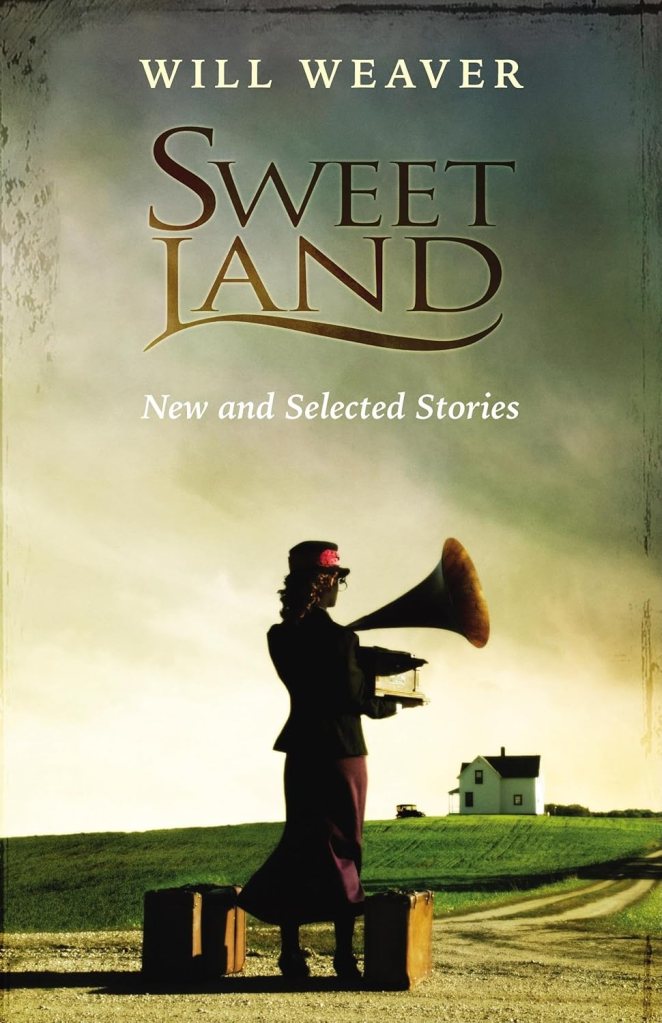
Two stories from Sweetland: New and Selected Stories by Will Weaver (Borealis Books, 2006)
1.“Flax Seed” is the story of a grandfather named Helmer who turns his farm over to his grandson, Kenny. With a handshake, Helmer states the terms of their deal: “Two-thirds, one-third. And no Sunday farming.” Kenny promises. He decides to plant flax, something his grandfather never grew. Farming is difficult. There is a time to sow, and a time to harvest. There is too much rain or too little. Too much heat or not enough. There are pests and diseases, rising and falling prices. There is often a race against time. For Helmer there is God. For Kenny there is the hope of flax and making good as a farmer. Helmer and his God; Kenny and his flax. And a difficult year. It’s a haunting story. Amen.
2. “A Gravestone of Wheat” is the story of Olaf who has loved Inge for forty-five years. They have farmed the land together and raised their son, Einar. They have welcomed grandchildren and great-grandchildren. When Inge dies, Olaf plans to bury her on their farm as Inge wished. But the law has changed: “‘You can’t bury your wife here on the farm,’ the sheriff said. ‘That’s the law.'” Olaf must decide if he will break the law and bury Inge on the farm or if he will bury her in town in the Greenacre Cemetery, knowing she despised the town. Inge has been his devoted wife for forty-five years. As Olaf ponders his choices, he recalls his first meeting with Inge and their unusual courtship, and readers are treated to a beautiful, but pragmatic love story. It’s a wonderful piece of historical fiction.
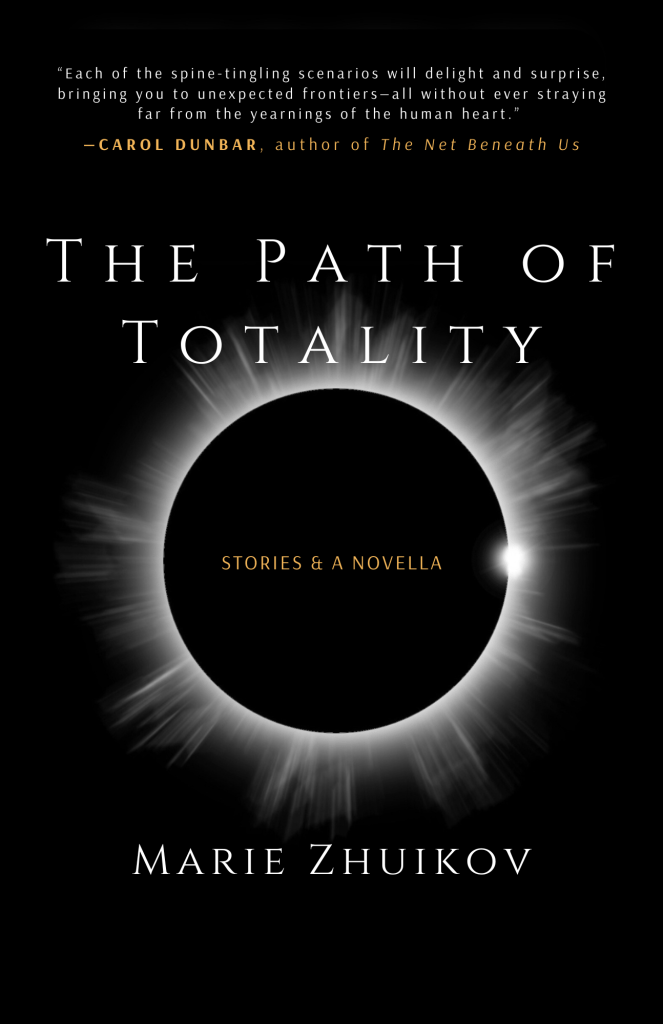
Two stories from The Path of Totality by Marie Zhuikov (Cornerstone Press, to be released February 2025) To pre-order Zhuikov’s book, click here.
1. “The Path of Totality” is the story of Marjorie and Justin, a young married couple, who travel from Medford, Oregon, to Salem, Oregon, to see the total eclipse of the sun. Caught up in a grief that both unites and divides them, the couple each experience the eclipse differently. Marjorie, along with other spectators, sees it all, astounded as the moon covers the sun. “But to Justin, the sun still shone as whole and bright as ever.” With eloquent prose, rich imagery, and well-crafted dialogue, Zhuikov’s story, told from the young husband’s perspective, is spellbinding. From a craft perspective, Zhuikov’s story reminds us that nature and natural events in our world can be powerful metaphors for human experiences.
2. “Bog Boy: A Northern Minnesota Romance” is set in rural Minnesota, where sixteen-year-old Natalie works at the Sax-Zim Bog, a nature preserve. On a spring day, while leading a birding tour, Natalie discovers a mummified teenage boy in the bog, whose remains are determined to be two thousand years old. The well-preserved teenager, with high cheekbones and beautiful hair, is handsome, and Natalie falls in love with him as only a teenage girl can – completely, blindly, devotedly. Because she cannot be without him, she brings the bog boy home to live with her and her father. Darkly humorous, “Bog Boy” combines the realm of speculative fiction with thought-provoking satire that made me laugh out loud at times. I still smile when I think about the story.
Today the 2023 Hal Prize winners were announced. I’m so excited and honored to have won 1st place for my short story “Newlyweds Standing in Front of a Lilac Bush” and 3rd place for my short story “New Boy.”
The winning short stories, nonfiction, poetry, and photos will be published in the 2023 8142 Review, which I believe will happen in January 2024. Here is a link to the 8142 Review: https://www.thehalprize.com/issues/. The 2023 edition isn’t for sale yet, but back issues can be purchased. My second-place story “Maginot Line” is in the 2022 journal and my second-place story “Silent Negotiations” is in the 2020 edition.
I was inspired to write “Newlyweds in Front of a Lilac Bush” after taking a historical flash fiction class with Rebecca Meachem. She is an excellent teacher. The class with Rebecca was offered through Write On, Door County.
Both of my short stories were workshopped through Red Oak Writing, which was so helpful! To learn more about Red Oak Writing and its wonderful offerings, such as roundtable writing critique groups, workshops, and literary services, click here.
It would be a groan-worthy pun if I had titled this piece “Fall into Books.” But on the race track of seasons, autumn is — by two horse lengths — my favorite season, plus I think autumn is a beautiful word. Autumn colors are magnificent, and this year nature outdid herself with luminous swaths of red, orange, and yellow. Autumn air is crisp (often code for cold and windy where I live), so it’s a good time to read. (Really, anytime is a good time to read.) And I read lots. I’m a writer, so reading is part of my craft. I hope to be inspired by and to internalize good writing: the plots and subplots, the organization, the characterization, and the dialogue. Before we get too far into autumn, I’m going to share some of my recent reads, all of which were enjoyable, stimulating, and page-turning. So, if you’re looking for ideas . . .
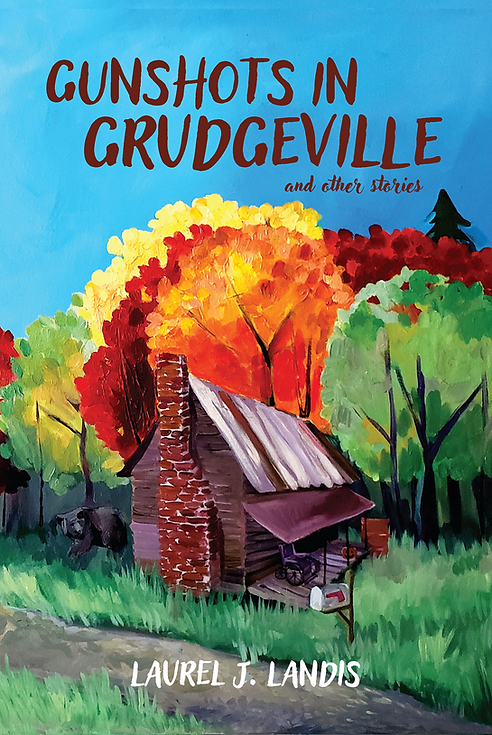
I loved the cover of this book and its catchy title. And Laurel J. Landis’s short stories beneath the cover are just as vibrant and intriguing as the autumn trees and the mysterious old shack — inviting readers to sit and connect with ordinary people living in a small town. Landis pulls readers into the lives of her characters and their tales of bad choices, grief, coming-of-age, love-gone-awry, and broken promises. I lived in a small town for three years, and Landis masterfully nails the feel of small-town life. Her characters and settings are authentic, reminding me of people I once knew in the unincorporated town of 350 where I once lived. Landis’s short stories remind us we don’t have to travel to faraway lands or other worlds because life happens everywhere, even in small towns. My favorites: “Tornado,” “Small Injuries,” “Breathless,” “Junction, County T,” and “Gunshots in Grudgeville.” [To order Landis’s book, click here.]
Mallory Moe, a twenty-five-year-old Army vet, works overnights at Speed Stop, a gas station and convenience store in rural northern Wisconsin. She is estranged from her family, in an abusive relationship, and drifting through life. While out on a cold winter’s night, Mallory encounters Shay, a teenage girl, who is hurt and on the run from an abusive boyfriend who is trafficking her. As she tries to help Shay, Mallory realizes she must confront her own traumatic childhood.
Don’t expect this book to be a thriller about rescuing trafficked girls from the clutches of evildoers at the eleventh hour. Carol Dunbar‘s novel is so much better, deeper, and smarter. She researched the science of PTSD, the brain, and current counseling practices that help people recover from childhood traumas. Dunbar deftly weaves her research into A Winter’s Rime, keeping it in the background, so it’s Mallory’s riveting story that drives the novel. Dunbar’s supporting characters, even the ones who make short appearances are memorable and believable. Dunbar likes to say her novels are character driven, and they are. But she is also a master of settings that are beautiful and haunting, often metaphors for the struggles the characters face.
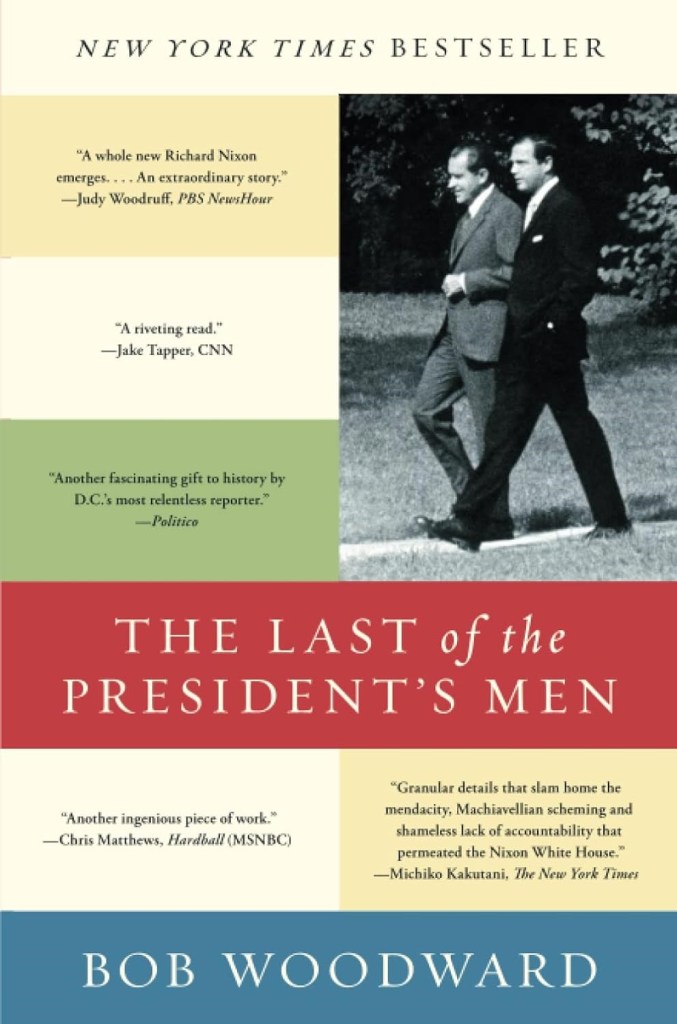
I read this book because I heard Cassidy Hutchinson, author of Enough, talk about it. I was fourteen when Richard Nixon resigned from the presidency because of Watergate. In my early twenties, I read All the President’s Men by Carl Bernstein and Bob Woodward and Blind Ambition by John Dean. I decided it was time to read another book about Watergate.
Woodward held extensive interviews with Alex Butterfield, who worked closely with H. R. Haldeman and President Nixon. Both Butterfield and Haldeman knew about Nixon’s taping of White House conversations. During the Watergate investigation, Butterfield testified about Nixon’s tapes, effectively ending Nixon’s presidency.
The most frightening takeaway from The Last of the President’s Men is that so many of Nixon’s staff and supporters had blind loyalty to him, even though he broke the law, even though he believed his methods to maintain power were justified, even though he felt his presidency meant he was above the law — the behavior of dictators. Supporters saw Nixon as their president, and they ignored his abuses of power.
The Last of the President’s Men is well-researched and clearly written. Even though I knew Butterfield would testify about Nixon’s tapes and that Nixon would resign, Woodward’s book about Nixon and his staff, who believed it was their job to keep their president happy and do his bidding, even if they knew it was wrong, was very scary.
And if you don’t have time to read a book, try a single short story!Below are three choices to consider.
Isabelle and Blake are young, in love, and on their honeymoon. Everything is wonderful, until it isn’t. (My synopsis is short because readers need the joy of discovering Kim Suhr’s thought-provoking, well-crafted story for themselves.)
Suhr’s short story “APrayer4You.com” haunts my thoughts. I might go for weeks without thinking about it, then something nudges my brain, and I wonder, How is Isabelle coping? And what about Blake?
Even though “APrayer4You.com” is a short read, under 1,600 words, savor each word, sentence, and paragraph because Suhr weaves a gripping story in a short space. There are so many layers of meaning in her story that it would make a good selection for a book club. (Or, brilliant idea that just occurred to me: a short story club for readers who have busy lives!)
Note, if you’re a writer, read Suhr’s story as a reader first. Then go back and read it again as a writer. Pay attention to her use of opposites in the story. Opposite situations, opposite ideas, opposite beliefs, opposite personalities, opposite actions. Suhr skillfully uses all these opposites to create tension in her story. [Suhr has also published a wonderful collection of short stories titled Nothing to Lose. Visit Suhr’s author page. Click here to read “APrayer4You.com.” ]
Euphemia, Effie for short, has run away from home and the insults of her older brother. But she’s young, and so she’s hidden herself away in the yard. She refuses to come out of hiding when her mother calls her for supper. In a swift 690 words, Diana creates a story with a magical sense of wonder that takes readers back to a time when all things were possible to a young child.
I don’t want to say too much about this story and its themes or the different ways to think about it because I want readers to have the joy of reading this gem.
Diana writes the blog wonkagranny. Even though I follow her blog, I don’t know her last name, but she gave me permission to post a link to “Effie’s Trinket.”
Note, if you’re a writer, you will enjoy reading Diana’s comments about her writing process, which appear before and after “Effie’s Trinket.” Also, be amazed at how a simple story can be layered with the many textures of life.
“To Build a Fire” by Jack London
On an “exceedingly cold and gray” day in the Yukon Territory, a man who is inexperienced with the brutal arctic winters decides to walk to another camp to visit friends. Before leaving, he is warned about the dangers of hiking alone in the extreme sub-zero temperatures. But he has the arrogance of a newcomer, who neither respects nor understands the perils of his new home. His hike does not go well.
Jack London’s “To Build a Fire” is one of my favorite short stories. On a micro level, this story is about the arrogance of one man who brushes off the warning from an old-timer who tells him he shouldn’t go out alone because the temperatures are dangerously cold. On a macro level, this story can be read as a metaphor about the arrogance of the whole human race, who are newcomers on Earth, and their disregard for nature.
Note, if you’re a writer, part of what makes this story so horrifically chilling is London’s accurate, detailed, and graphic descriptions about what his character experiences, physically and emotionally, as he slowly freezes to death. London’s attention to these details teaches me that even in fiction, research is important to a story.
[The link I provided is for the 1908 version of London’s story, in which the protagonist dies. In the 1902 version, the protagonist lives. London was right to modify the story’s ending. The tragic version is powerful and thematically more complex.]







 Writing Near the Lake