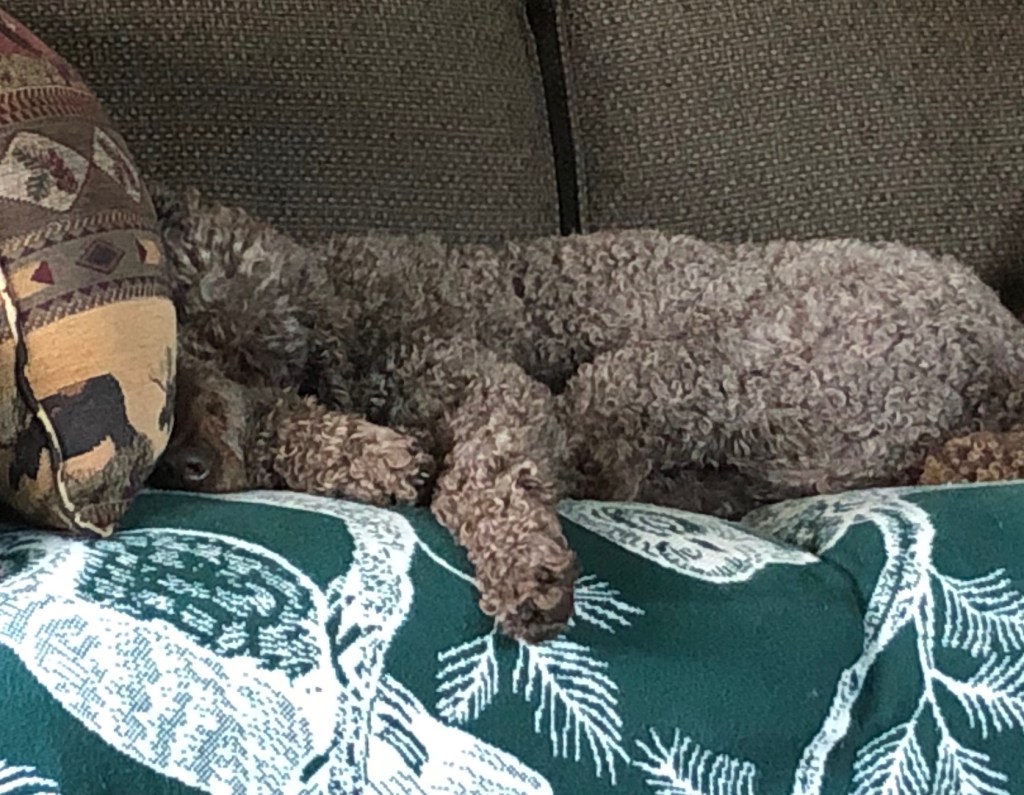
This morning Cabela pranced around the yard. Perhaps she was inviting her sister, Ziva, to play. Perhaps she was inviting me to throw a ball. The midsummer morning felt like a beautiful autumn day—cool, breezy, and invigorating, but warm enough to avoid an extra layer of clothes. At fourteen years old, Cabela is headed into her winter, but this morning she was a lovely autumn day, enjoying a frolic before her winter arrives. Something in the cool, breezy weather tapped into her memory of younger days. I wonder how many frolics she has left.
Ziva didn’t want to play, and it’s too risky for Cabela to play fetch. If she didn’t have four legs, she would need a walker, so I took them for a stroll. Cabela meandered from one blade of grass to another. A couple of years ago, she stopped strutting in front of me on our walks and looking over her shoulder as if to ask, “What’s taking you so long?” Now she dawdles behind me and moves when she’s good and ready as if to say, “What’s your hurry?”
I’m headed into the autumn of my years. The cool, breezy weather made me feel like prancing too, so I wore my blue jeans with holes in the knees. Perhaps at sixty-three, I shouldn’t because young people wear ripped jeans. But I feel like a summer day from my youth when I wear them. Since my twenties I’ve always had a pair of jeans with torn knees. I’ve never bought them that way. My jeans had to earn their holes by hanging in there with me day after day, year after year.
I hope Cabela walks with me through another winter and into another fall. I hope, if I need to live in a nursing home one day, I’ll have a pair of holey jeans to take with me.
I tried to go paddle boarding yesterday morning, but the wind was 16 mph. When I stepped past the shelter of the buildings near the dock, the winds caught my board and almost whirled me around like spinner from a child’s board game. I would’ve struggled to get on the dock and put my board in the water. I gave up and went for a bicycle ride.
I’d like to say that struggling to hang on to my board was embarrassing, but . . .
Five minutes before my failed launch, I used the porta potty. Not a fan, but at my age I like to go right before I get on the water. My youthful days of taking an eight-hour road trip and not having to pee are way down the highway.
The porta potty was clean, but a long strip of toilet paper was coiled on the floor under the dispenser. Better than some things I’ve seen on the floors of portable bathrooms, and there was hand sanitizer. So, I entered and went.
After exiting the bathroom, something tickled my leg. I turned to look. Stuck to my shoe, like a streamer was the toilet paper that had been coiled up on the floor. The wind tossed it about.
I looked around. Yep, my first concern was how many people might see me. Then, while cursing people who throw toilet paper on the floor, I gathered up the paper and returned it to the biffy. More hand sanitizer. Lots more.
I didn’t share my embarrassing moment with anyone–too embarrassing. I knew the paper was on the floor, still I hadn’t been careful.
Then I watched the January 6th hearings last night.
I listened to Republican Congress members who gave speeches right after the January 6th insurrection and coup attempt. Those Republicans, fresh from the experience of wondering if they were going to die, called out Trump and condemned what happened. They knew Trump was a piece of toilet paper clinging to their shoes.
But then something changed because Trump’s base didn’t see it that way.
So, many Republicans started calling the insurrection and coup attempt “a tour of the Capitol Building” or “an overblown description by the leftist media” or “unimportant when compared to inflation.” They chose to ignore the toilet paper clinging to their shoes.
It would go like this:
“Hey, Republican Congress persons, do you know you’ve got pieces of toilet paper trailing from your shoes?”
“Oh, that? It’s a loyal constituent who wants a tour of the Capitol Building,” says one Republican Congress member.
“Only the leftist media can see that,” says another Republican Congress member.
“Do you know how much toilet paper costs now?” says a third Republican Congress member.
These are the same Republicans who ran for their lives on January 6th, who called Trump and begged him to help them, who decided the stolen election narrative had to end.
Fortunately, there are Republicans who understand the difference between tourists and insurrectionists, who know some behaviors are beyond partisanship, who comprehend that a dictator would be a bigger threat than cyclical economic trends.
As for the Republican Congress members who are ignoring the toilet paper on their shoes, thanks for making my embarrassing moment yesterday pale in comparison to your embarrassing conduct.
Although, I’d give anything to still be too embarrassed to talk about my porta potty episode in exchange for a country where I’m not worried about what is going to happen in the next election cycle.
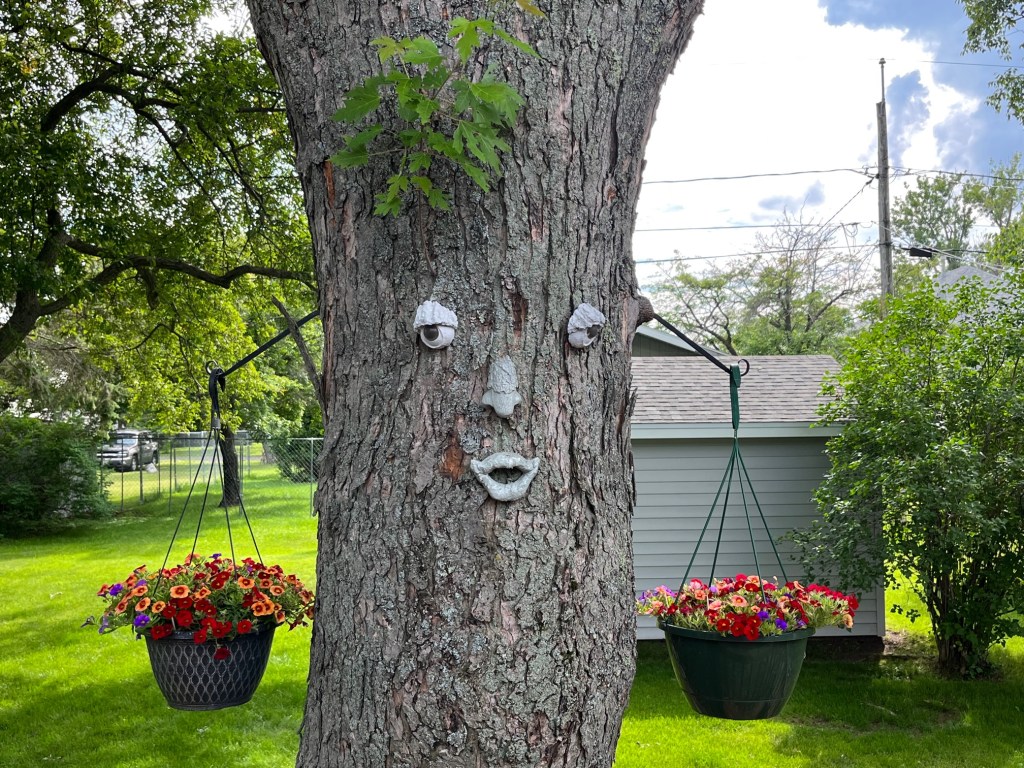
After the Fourth of July, I had promises to keep. So, Tree Guy got a pair of earrings on Wednesday, and I went paddle boarding on Saturday.
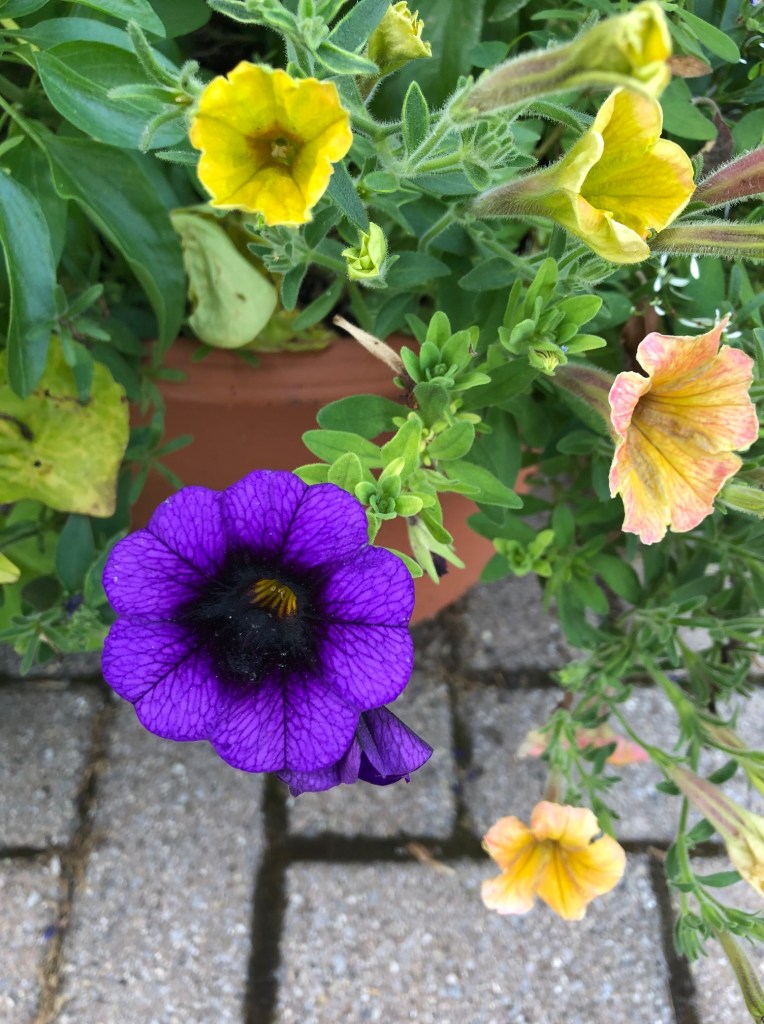
Tree Guy’s looking good, but Friday morning I discovered a squirrel had messed with one of his earrings. Every summer I forget about the hooligan squirrels until I find dirt and a section of flowers on the ground. Searching for an easy place to bury seeds for the next winter, squirrels dig in the flower baskets hanging from Tree Guy’s earlobes. Joke’s on the squirrels because I empty the baskets in the fall and return them to the farmers market so they can be reused. I stuck bamboo kabob skewers in the baskets and made plans to replace the damaged flowers. Yesterday morning I discovered one of the skewers on the ground, no doubt used as a javelin by one of the wayward squirrels.
After fortifying the hanging baskets, I went paddle boarding for the first time this summer. Last year I started paddling in June. But this year a long, cold spring latched onto the heels of a long, cold winter.
Mayflies on my screen this morning
I needed a reminder about how to attach my seat and ankle strap because once I connected them to my board last summer, they stayed put until I deflated the board in the fall. Heather, part owner of the paddle board shop, helped me. She talked about mayflies, and how late they hatched this year. I, too, had wondered where they had been. Heather described a recent moonlight paddle-boarding session where a flock of birds burst into the air, zooming and darting, feasting on newly hatched mayflies. She was excited to share her story, and I was happy she did.
Getting on my board and paddling away from the dock was like riding a bicycle after winter recedes—muscle memory kicked in. The water was smooth, the breeze a whisper, and the air hot. Even though I saw other paddle boarders, small fishing boats, and large pleasure craft gliding through the water, it was quiet. Perhaps because the heat and still air created a meditative atmosphere that compels people to lower their voices and move silently.
As I paddled around the northwest tip of the island, I watched billowing cloud formations compete for space to present shifting images. A pair of clouds became two bear cubs standing on their hind legs, playfully boxing with each other. A moment later one cub morphed into a zaftig fertility goddess, and the other cub became a roaring lion with a flowing mane. Scanning the sky, I found a wolf, its snout tilted toward the heavens in a silent howl at a still sleeping moon. I spotted a laughing puppy and a resting dragon along the way.
A pair of paddle boarders put in from their home along the island, and on one of the boards, a yellow lab sat with its back toward their destination. Its owner said the dog was learning to stay on the board. Me too. On days when the water is rough or when a wake created by a motor boat rolls past me, I sit on my board and paddle kayak style.
I rounded the southeastern tip of the island and noticed tiny dead creatures floating on the water’s surface. I used my paddle to lift one of them out of the water for a closer look. They were exoskeletons. I wondered if they belonged to mayflies that shed their nymph skins then rest on the water’s surface to dry their wings before they can take flight. Later, I googled a picture of a mayfly’s nymph skin, and it seemed to match. Given Heather’s description of the recent mayfly hatch, it made sense.
Another paddler I met waved and said, “Summer’s finally here.”
“Yes,” I answered. And while I was out on the water, I forgot about the squirrels in my backyard preparing for winter.
[For more information about mayflies read my blog “Mayflies.”]
I read The Audacity of Goats because I read North of the Tension Line, the first book in J. F. Riordan’s series, and loved it. If you want to read my review of the first book, click here. If you think you might like to read the first book in Riordan’s series, you may want to stop reading this because some of the information will be spoilers for the first book.
What’s this book about?
Audacity, defined as boldness, daring, courage, bravery, and fearlessness. All the characteristics people need for every day life, like how to manage a long-distance romance, how to get along with a spouse, how to fit in, how to stand your ground, how to deal with unreasonable neighbors, how to win a local election, how to tell a lie if it’s for the greater good, how to let your child grow into adulthood, how to takedown a corrupt politician, how to master a difficult pose in yoga.
In addition to its share of fog and snow, Washington Island in Door County, Wisconsin, becomes shrouded in mystery. Blood-curdling screams shred the night. At first, Islanders who hear the shrieks worry someone is being hurt, but no bleeding bodies, alive or dead, are found. Some Islanders think it’s bored youth having fun, some think it’s ghosts, others think a crazed person is hiding on the Island. Curious but rather unfazed, the Islanders carry on. They’re more concerned about long winters and the upcoming local election.
Fiona Campbell reluctantly decides to run for town chairman against her conniving, nasty neighbor, Stella DeRosiers. Inhabitants who were born on the Island mostly admire Fiona but consider her an outsider. Conversely, Islanders detest Stella, but she’s one of them. Jim, the local DNR officer, is crazy about Fiona, but she’s in a relationship with Pete, whose work takes him to dangerous parts of the world.
Roger and Elizabeth return from their Italian honeymoon, and Roger worries about how to be a good husband. The Angel Joshua, advises Roger to join his yoga class, so he can get in touch with his feminine side and improve his relationship with Elizabeth. Never one to do things halfway, Roger embraces the whole downward-dog-savasana-namaste yoga scene.
Pali, full-time ferry captain and part-time poet, thinks his writing muse had departed. Not being able to write steeps him in moodiness. He contemplates giving up poetry so he can be a good husband, father, and captain, instead of a melancholy shadow in his own life.
Ten-year-old Ben, Pali and Nika’s son, has a secret he can’t share with adults because he knows they won’t understand. Ben has been taught that lying, breaking rules, and shirking one’s honor are wrong. But he’s facing circumstances that aren’t colored in black and white, so he bends his moral code.
What makes this book memorable?
Book Two is a second date that goes as well or better than an exciting first date. Riordan’s cast of memorable characters are back along with a few new ones, and their daily walks through the pages of life provide plenty of laughs, groans, gasps, and an occasional misty eye.
Riordan deftly portrays ten-year-old Ben’s coming-of-age dilemma. His predicament takes me back to my childhood and the struggle between the clarity youth and the murkiness of growing up. When Emily Martin, a new character, shows up on the page, I have fun rolling my eyes and thinking, “Oh, please, Emily, do you hear yourself?” right along with the Islanders.
The stakes for the characters in this book are small when compared to a thriller where the hero is striving to save the world, but Riordan’s use of structure and point of view create suspense around the ordinary, making The Audacity of Goats both a page turner and a meditation at the same time, all while making us smile and laugh.
What’s next?
I’ll read Book Three, Robert’s Rules of Order, followed by Book Four, A Small Earnest Question. I’m savoring these books, sipping them like a rare wine. When I finish them, I’ll miss Riordan’s captivating characters, finely woven stories, and lilting humor. However, I’m cheered because I recently learned that Book Five, Throwing Bears for George will be released on July 25, 2022.
My humorous essay “Show and Tell to Remember” won honorable mention for humor and will be published by the Bacopa Literary Review in September 2022. Other 2022 contest winners can be found at Bacopa Literary Review Editor’s Blog. The 2022 edition of the Bacopa Literary Review will be available in September 2022.
If you’re interested in entering next year’s contest to have a chance be published in the Bacopa Literary Review in 2023 and possibly win money click here to review the rules for the 2022 contest and bookmark the website. I believe the themes change each year. There was no submission fee. Bacopa Literary Review, an international print journal, is published by the Writers Alliance of Gainesville in Gainesville, Florida.
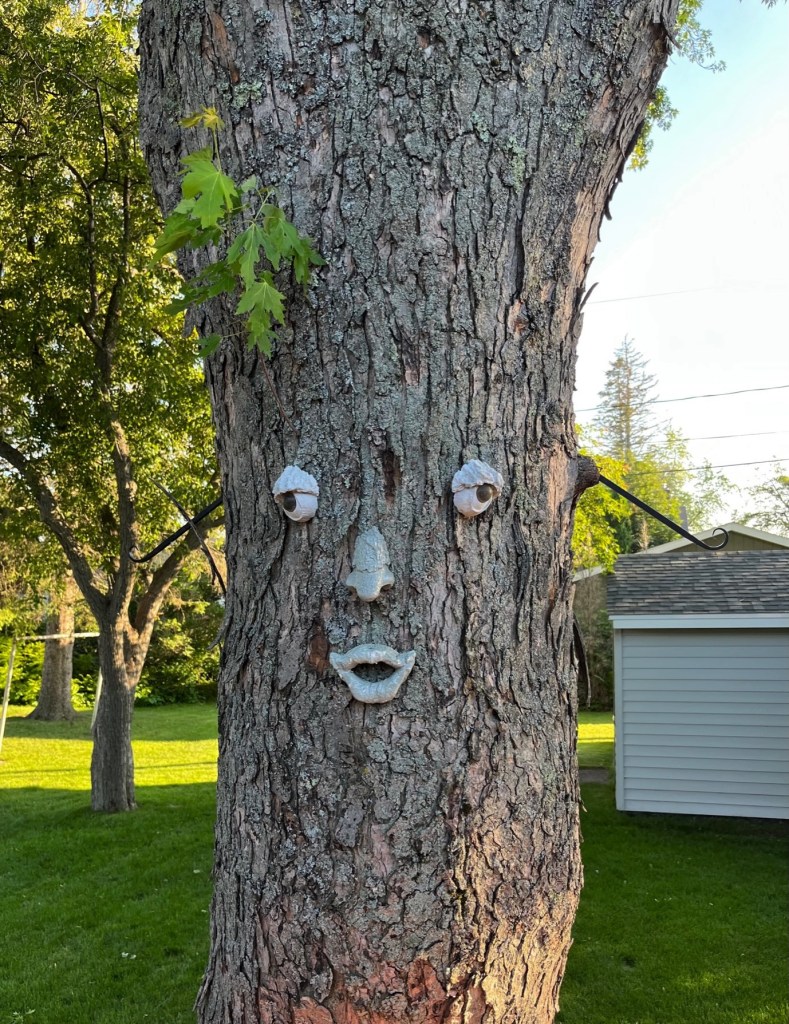
Tree Guy with his summer hairdo and refurbished nose
For those of you who may have missed the other Tree Guy posts, let me summarize: Tree Guy had a bit of a rough winter. In January he lost an eye during a snowstorm. When I found his eye and rehung it, I noticed his nose was gone. Through the rest of January, February, and March, I looked for Tree Guy’s nose, hoping to find it as the snow retreated, but fresh snow kept falling. Finally, at the end of March, my husband spotted the nose frozen in the snow. I tried to pick it up, but it was stuck in the snow’s frozen mantle. A few days later, with the precision of an archeologist, I dug it out. Good thing because it snowed the next day.
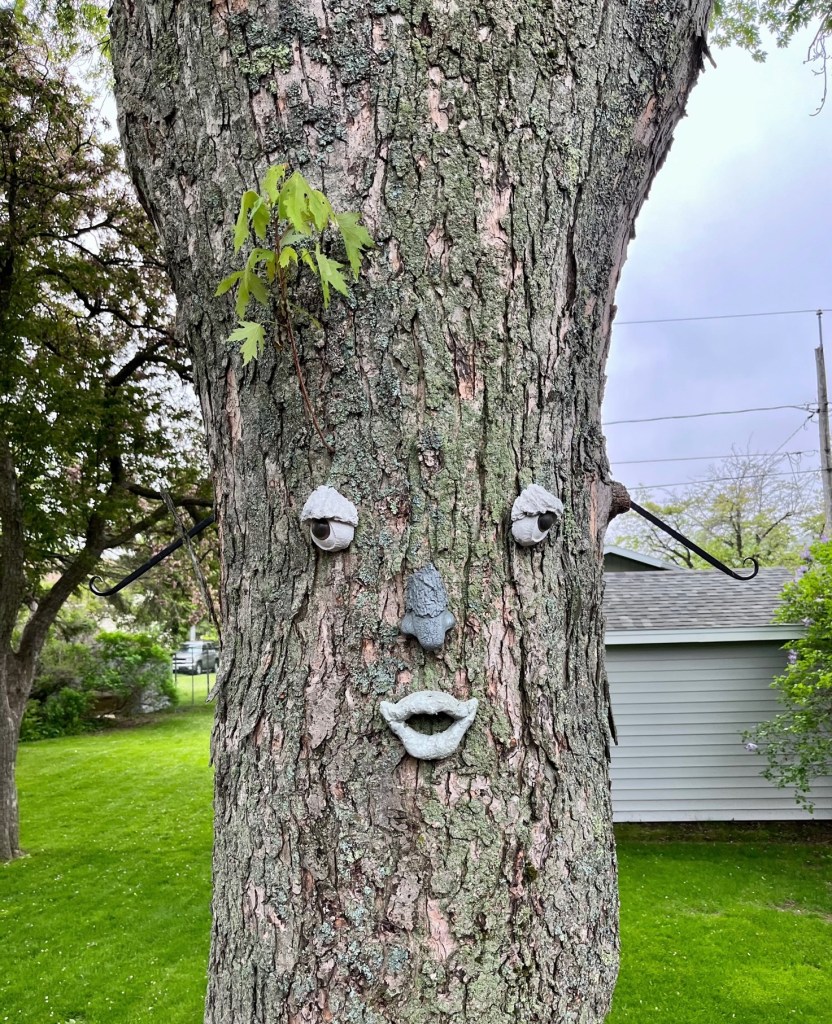
When I rescued Tree Guy’s nose, it needed a paint job. My husband took it to work, painted it gray, and rehung it in May. But the shade of gray blended in with the tree trunk. This bothered Tree Guy because he’s proud of his schnoz—he might lose it, but he never hides it. Of course, my husband understands Tree Guy because he’s the one who purchased Tree Guy and installed him on our maple tree. He has always watched over him. I’m the relative newcomer to the game of “How Is Tree Guy Doing Today?”
Tree Guy with the wrong paint job
I mentioned the too-dark-gray color to my husband, and he agreed. He already had plans to take the nose back to work and repaint it a lighter shade of gray. The second paint job is perfect, so there will be no fifty shades of gray noses.
It was a long, cold, snowy winter for Tree Guy. He worried about his eye then his nose. But he’s come through, and this spring he sported a new hairdo. He looks sassy with his asymmetrical patch of green, leafy hair. A tree expert told me that small shoots along a tree trunk, such as Tree Guy’s new hairdo, should be cut off. But I don’t have the heart. Tree Guy had a jittery winter. I get it. This winter I read about plagues, like tuberculosis, the Black Death, and syphilis. And I read Russian short stories, which are mostly bleak and fine companions to winter and stories about plagues. After reading the “The Nose” by Nikolai Gogol, I concocted a crazy theory that Kovalyov lost his nose because he had syphilis and that Gogol’s story was really about the syphilis epidemic before antibiotics, a time when some sufferers had their noses rot away. With each passing day of winter my crazy theory became more conceivable. I reread “The Nose” to see if I could make my theory work—I couldn’t. But I enjoyed the story even more the second time. I thought about researching my “The Nose”—syphilis theory online, but I didn’t want to get caught up in crazy nose-conspiracy theories.
Yes, Tree Guy has it all together again, and he’s sporting a new hairdo. And me, I ditched my theory about Gogol’s story “The Nose,” then I had two inches trimmed off my hair.
We’re enjoying summer while it’s here. After the Fourth, Tree Guy will get two flower-basket earrings, and I will go paddle boarding for the first time this season. (It was a cold, windy spring on the shores of Lake Superior.) Next winter Tree Guy will hope to keep his face intact, and I will read more Russian short stories.
On Sunday I made strawberry-rhubarb crisp. I’m not much into cooking these days because cooking causes dirty dishes. And I’m not into washing dishes. But I had three reasons for making the strawberry-rhubarb crisp.
One: Rhubarb is plentiful. If you have any growing in your garden, you know what I’m talking about. You ask people, “Say, could you use some rhubarb?” If they say no, you ask, “Are you sure? I’ve got plenty.” You bring bags of rhubarb stalks and set them on the lunch table in the breakroom or the coffee table in the church hall. I don’t grow rhubarb, but I never have to buy it in the grocery store (where I recently saw a tiny package of it for two dollars and change). I have connections. I know people desperate to share their abundance of rhubarb.
Two: I found a recipe for strawberry-rhubarb crisp in Southern Living that I could make in my Le Creuset Heritage Tart Tatin Dish. (I had no idea the dish had such a fancy name until I looked it up to get the name right.) I bought my Heritage Tart Tatin Dish because it was orange and sexy. These are, by the way, two good reasons to buy a kitchen implement. Another rule for buying a kitchen implement is that it should serve two purposes. (I’ve been known to break this rule, but only if the single-use implement will get lots of use, like my garlic press, lemon squeezer, or mango slicer.) Until last Sunday, I had only used the orange, sexy Heritage Tart Tatin a few times in the last ten years to make jalapeño corn bread. So, making the strawberry rhubarb crisp gave my dish dual-use status. It’s not just another pretty tart dish.
Three: My grandmother Olive made the best strawberry-rhubarb pie or any other kind of pie. I haven’t had a good piece of strawberry-rhubarb pie since I lived with her. I don’t bake pies. I cheat and make crisps because I don’t know how to make crusts. Grandma Olive made pie crusts from scratch, and they were as a pie crust should be–flakey, tender, and golden brown. She also knew her way around the fillings. She never made a pie with canned fruit filling. Baking a strawberry-rhubarb crisp was the closest I was going to get to Grandma Olive’s pie version.
The crisp turned out well. I served it with whipped cream or ice cream. The filling is equal parts strawberry and rhubarb, so it’s tart, even with the cup of added sugar. You have to like tart if you’re going to eat something made with rhubarb.
If you have your very own Le Creuset Heritage Tart Tatin Dish and you want to make the recipe from Southern Living, you’ll need to adjust the quantity of rhubarb and strawberries. I used three cups of each, instead of four because I was worried my tart dish wasn’t deep enough. (Please, no jokes about my shallow tart dish.) I didn’t reduce the amount of sugar or any other ingredient. Also, I didn’t have any chopped roasted salted Marcona almonds, so I used some chopped unsalted roasted almonds. That makes this a healthy recipe. (As long as we don’t mention the brown sugar in the oat topping and the cup of sugar mixed in with the fruit.)
Grandma Olive with my sister and me (in the foreground)
When I served the strawberry-rhubarb crisp, I thought of Grandma Olive. I miss her. She and Grandpa had a big garden with their own patch of rhubarb and strawberries. I wonder how much rhubarb they tried to foist off on friends.
I saved this recipe, and I’ll make it once a year in the early summer. I don’t want to strain my rhubarb supplier.
In March 1971, I turned twelve. That spring and summer I spent a lot of time singing the Coca-Cola jingle, “I’d Like to Teach the World to Sing,” a song about love and harmony. And in May of that same year, while I sat in a chorus of dandelions on a sunny day, I was in harmony with hundreds of them growing on the hillside in front of our weathered barn. Warmed by sunshine, surrounded by velvety yellow, and sitting with my best friend, I was in love with the world. As a child, dandelions were my favorite flower.
ButI didn’t know their name was derived from the French phrase dent de lion meaning tooth of the lion, most likely because their serrated leaves look like teeth. I thought dandelions were named after lions because their round, shaggy, golden flowers resembled a lion’s head with a fluffy mane.
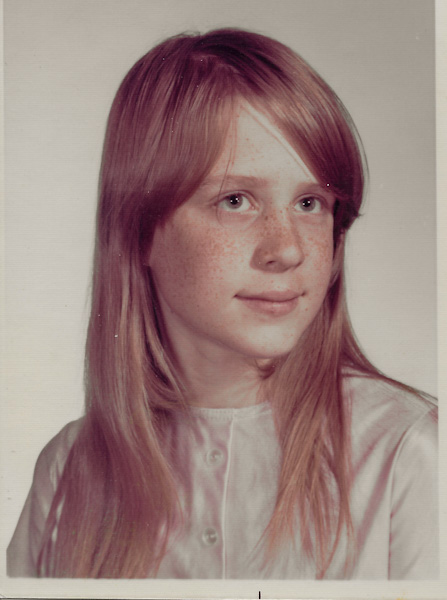
On that May afternoon, with my strawberry blonde hair topped by a crown of braided dandelions and a face freckled by the kisses of sunbeams, I watched butterflies and bees flit from golden bloom to golden bloom. I was fairy princess meets flower child.
But I didn’t know that dandelions were flowers—like asters, daisies, and sunflowers, all belonging to the same family, Asteraceae. That by the 1800s people could buy different varieties of dandelion seeds from catalogs to plant in their gardens. That Emily Dickenson wrote a poem about them and made mention of them in three other poems. I’d been told they were weeds.
My friend, wearing her own crown of dandelions, had brown hair, hazel eyes, and just a sprinkle of freckles across her nose. We plucked the flowers from the ground, choosing tall ones, and braided their thick, flexible stems, making necklaces to match our crowns. She, too, was fairy princess meets flower child.
But I didn’t know that a dandelion’s thick, hollow, supple stem had evolved to withstand strong winds. That our plucking the tall flowers would cause the next dandelions to grow shorter, hoping to avoid being picked. That when a lawn mower lopped off their flowers before they could seed, dandelions countered by sending new blooms to squat closer to the ground, hoping to keep their heads below a mower’s blades. I didn’t know dandelions had the survival skills of a toothy lion on an African plain.
As I plaited dandelion stems, a white, milky sap stained my fingers, making them sticky. I knew it wasn’t poisonous, and that it would wash away with soap and water.
But I didn’t know the substance was latex, a bitter tasting compound that protects dandelion roots from insects. I didn’t know dandelions were edible. That their leaves could be eaten in a salad and had more nutrients and vitamins than the spinach that gave Popeye the strength to defeat Brutus. That their roots could be dried, roasted, and made into a coffee-like drink. That their flowers could be made into tea or wine. That dandelions had been used for medicine, alleviating diseases caused by deficiencies in calcium, iron, and vitamins A and C.
I’m not sure what my friend and I chatted about that day. But I was crazy about the boy next door, and she was crazy about a boy she would eventually marry. We probably gossiped about those boys, our friends, and summer plans. And talked about the latest fashions and hairstyles because each of us wanted to fit in at the middle school.
But I didn’t know dandelions were considered a blight upon lawns because my parents never treated our yard with herbicides, pesticides, or fertilizers. I didn’t know that in the 1800s wealthy Americans would admire the expansive green manicured lawns of wealthy Europeans and would copy their style. That with the invention of the first mowers in the 1830s, middle-class Americans would soon covet green manicured lawns, a nod to status and belonging. The dandelion slid from grace and became a weed.
My friend and I rubbed dandelions under each other’s chins to see who liked butter, a childish game for a pair of twelve-year-old girls who talked of boys and love.
But I didn’t know twelve was the cusp between youth and young adulthood. That the buttery-colored powder was pollen, a delicacy for bees, butterflies, and insects. That dandelion blooms were masses of tubular florets, an early spring smorgasbord for hungry pollinators while they waited for other flowers to open for business.
Dandelions didn’t grow in our next-door neighbor’s yard. They treated their lawn every year with a powdered chemical. If someone had asked my twelve-year-old self to explain why my parents didn’t do the same, I would’ve chalked it up to money and time. The neighbors had more income, so they could afford weed killer. They had less than an acre of land, and my parents had two point two acres. It would’ve taken more money and time to kill the dandelions in our yard.
But I didn’t know my parents weren’t conforming to a neighborhood standard of weed-free lawns. That the neighbors had to keep treating their lawn every year. That dead shriveled leaves of poisoned dandelions left small barren spaces where new dandelion seeds, blowing in on a wind like Mary Poppins, could settle and thrive. That dandelions could regenerate from parts of their surviving roots. That if the neighbors stopped treating their yard, dandelions would once again crowd their lawn.
On the day I sat in the dandelions, I knew my great-grandfather had immigrated to America from Sweden in 1869. That other relatives had emigrated from Ireland, England, Switzerland, Germany, Spain, and Hungary.
But I didn’t know that dandelions were immigrants too. That the first wave of dandelion ancestors came over the Bering land bridge and settled as far east as the Great Plains. That the second wave arrived in the 1600s, carried across the Atlantic by European settlers as an herb used for medicine and food.
Later in the spring the dandelions would go to seed, and I would fill my lungs with air, hold the seed head in front of my mouth, and blow as hard as I could. If I dispersed every seed, I would earn a wish, and I always wished the boy next door would be my beau.
But I didn’t know the feathery seeds I blew into the air in the service of love would fall to earth at an angle, and the barbs along their edges would hook into the soil. The seeds, like me, would wait to see if their wishes would come true.
Napoleon
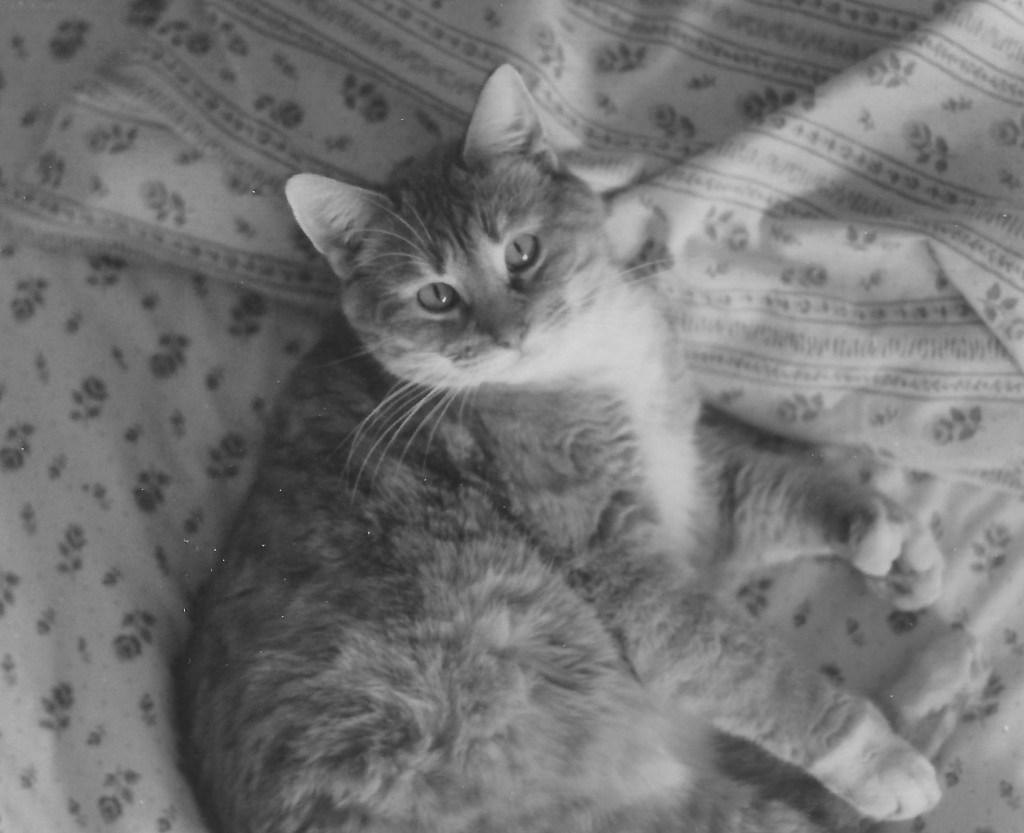
My friend and I watched my orange-and-white cat, Napoleon, hopelessly swat at butterflies as he lazed nearby in a layer of gold. At best he was an indifferent hunter, preferring to take his meals from a can and to leave nature’s creatures unharmed.
But I didn’t know that Napoleon had the good fortune to lie on an untreated lawn. That people, pets, birds, and insects could be harmed by chemicals. That a woman named Rachel Carson had written a book called Silent Spring. That as an adult I would be pressured into treating my lawn. That I would use my children and pets as excuses to avoid having herbicides and pesticides sprayed on my lawn. That I would dig hundreds of dandelions by hand to avoid chemical treatments. That after decades, I would learn that dandelions are early pollinators and that I would stop digging them.
The sea of dandelions that flooded the sunniest part of our lawn every spring, made my young heart zing. From that sea I picked buckets of bouquets, braided countless crowns and necklaces, buttered scads of chins with pollen, and blew thousands of fuzzy seeds into the air. But I remember best that day in May 1971 when I was twelve, and my friend and I sat among the waves of gold and talked of love while plaiting crowns and necklaces. While the butterflies and bees gathered pollen in harmony. And I wanted to teach the world to sing.
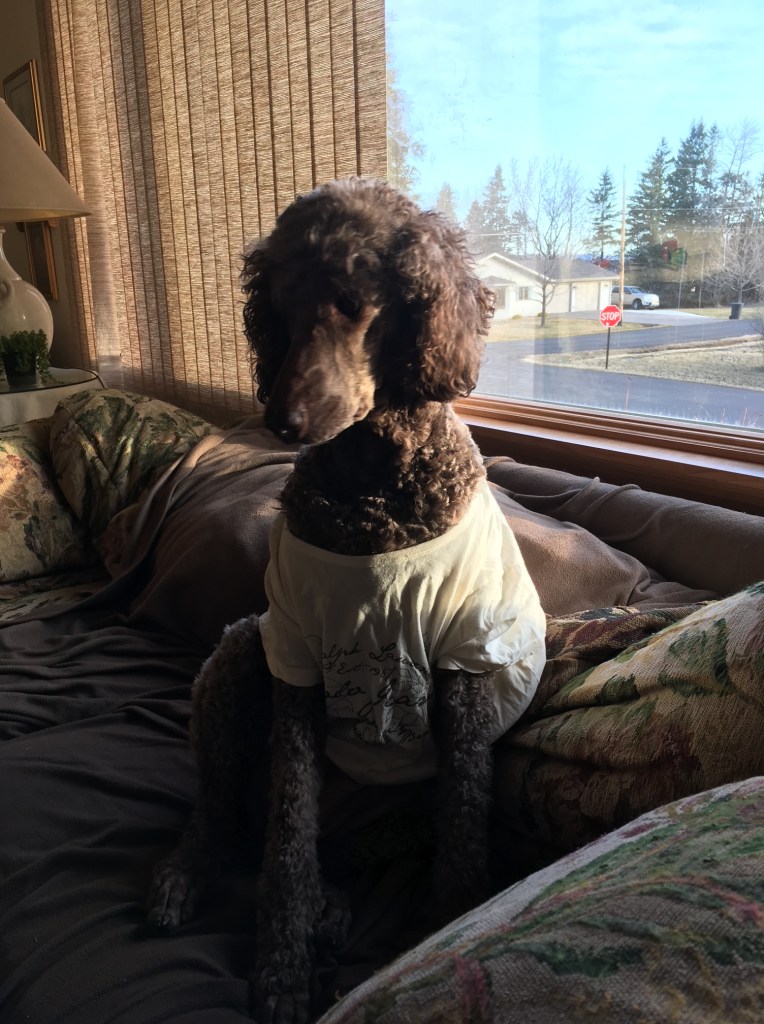
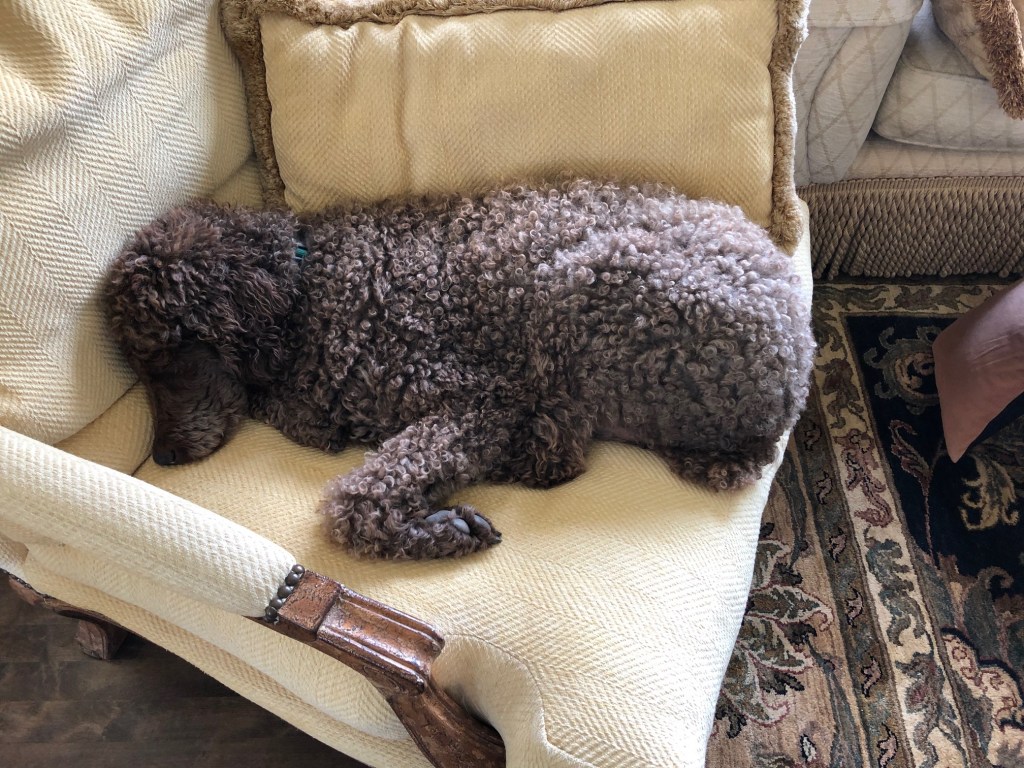
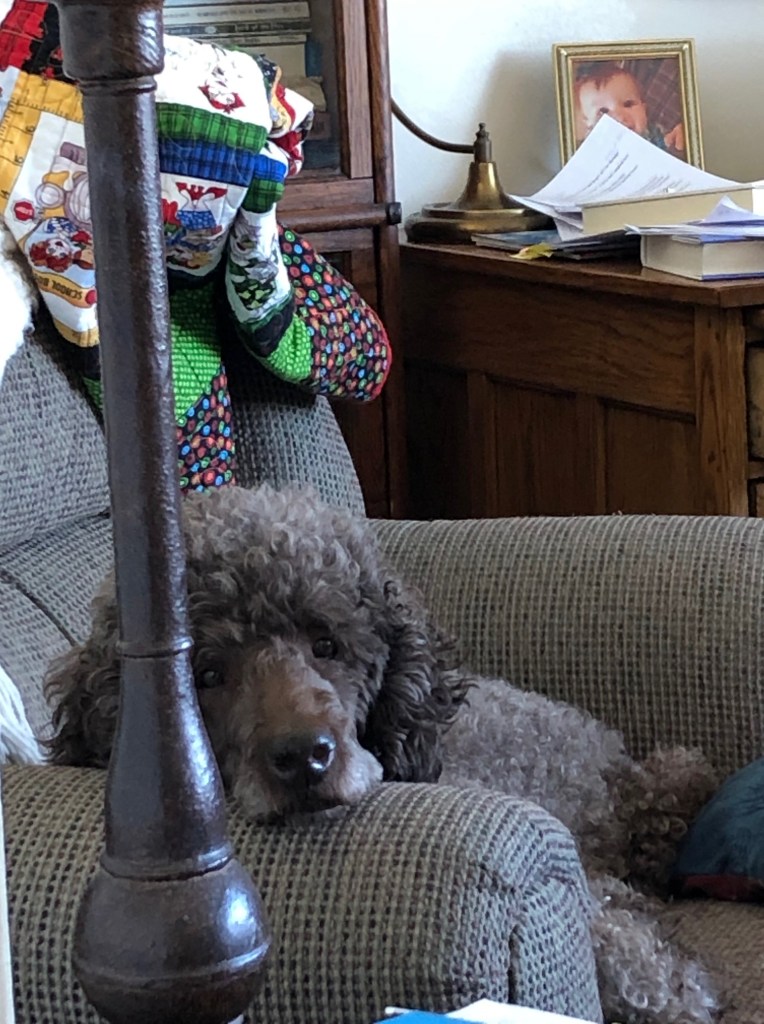
Today is Cabela’s birthday. She’s 14 years old. In dog years that’s about 83—if I calculate it based on the new formula. When I was young, I would’ve multiplied her age by 7, and she would’ve been 98. But today Cabela’s age is calculated using new math. She likes that.
Her full name is Cabela Grace. She was named after Cabela’s, the outdoor and sporting goods store, because we bought her near the store. Once, when she was a puppy— and having the crazies—she ran into the wall instead of down the hall. I added Grace to her name. She has many nicknames: Snickerdoodle, Range Rover, Ichabod, Sneaky Pete, Kadiddlehopper, and Our Bell or Bell, but never Bella.
When my son comes to visit, she likes to have a silent moment with him. He puts his face near hers, and she looks at him intently. Sometimes my son speaks to her, and sometimes it’s just a wordless exchange. He was the one who picked her up out of a small pen and held her. She nuzzled under his chin. He asked us to take her home. So, we did because who can resist an eighteen-year-old boy who adores a chocolate standard poodle puppy. I believe Cabela remembers her first snuggle with him. I will argue with any animal psychologist who says this couldn’t be possible.
Cabela was born on a farm an hour west of the Twin Cities in Minnesota. The couple who owned the farm raised dogs. Emmet raised Labradors, and Ruth raised standard poodles. They did not raise labradoodles. Hunters often bought Emmet’s Labradors. But sometimes a hunter bought one of Ruth’s poodles. Some hunters are smarter than others. Cabela would’ve made a good hunting dog. As a puppy she pointed at birds, had a soft mouth, and loved being outside in any kind of weather.
Ziva, Cabela’s half sister; same father, different mothers; December 2019
If Cabela were a literary character, she would be Bartleby the Scrivener. She’s stubborn and if she could speak, her catch phrase would be “I would prefer not to.” She prefers not to enter the vet’s examination room, but she does and she’s good and the vet loves her. She prefers not to stop eating her sister’s dog food, but she’ll stop if I take the dish away. She prefers not to move if she’s settled into a spot, but if I pick her up, she’ll go along with it.
The vet once told me that Cabela had the heart rate of an athlete. “That’s because she is an athlete,” I said. Cabela used to do hot laps around the house when she got excited about a dog, a car, or a delivery truck that passed by. She’d run like a greyhound, circling the house four or five times. Or she would approach our pine tree and launch herself six feet into the air along the tree’s trunk. When she played fetch, we had to lob the ball up into the air, so it would bounce off the ground because she liked to leap up and catch it in her mouth. But like all athletes, the laps became fewer and slower and the leaps up the side of the tree become shorter and shorter. And last summer my husband and I decided we had to toss the ball low to the ground. Her old hips have sidelined her. She likes her walks short and her naps long.
Cabela has a signature look. She’ll give us the puppiest puppy eyes, raising one eyebrow, then the other, alternating them up and down, slowly, melting our hearts. This is how she asks to go outside or for a walk or a ride or for supper or a treat.
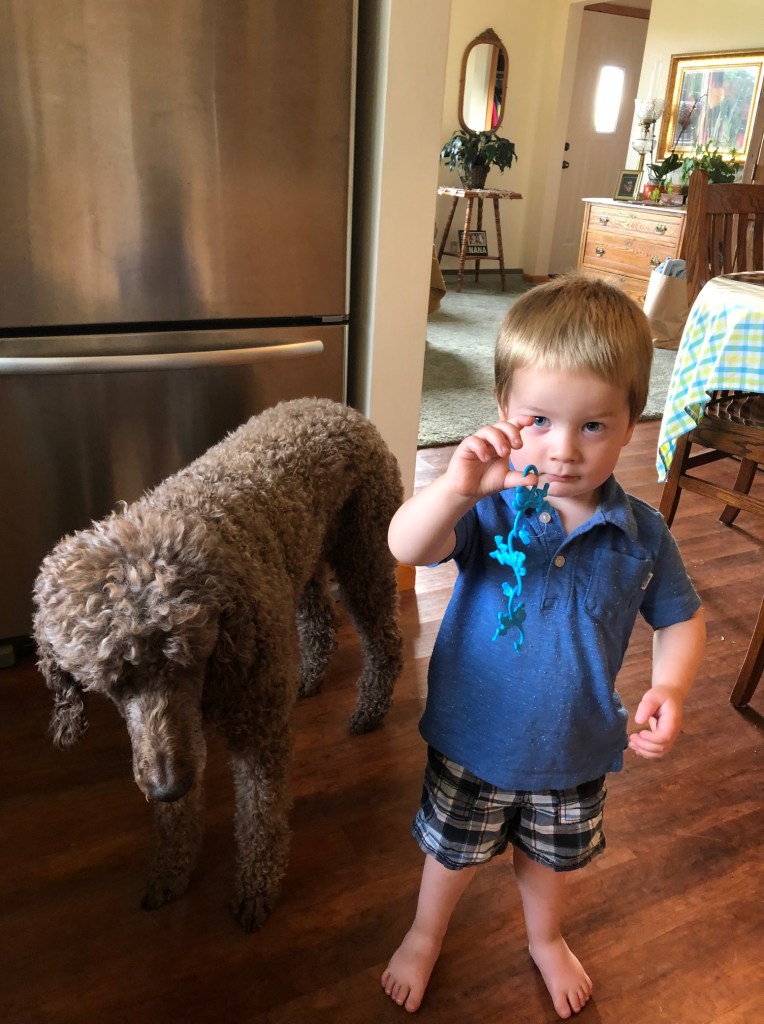
She’s a daddy’s girl. She’s a loving girl. She kind to her sister, Ziva, and she loves our grandchildren. She’s a good dog. And that’s what we should all hope to be at our best.
I listened to J. F. Riordan speak about her North of the Tension Line series via Zoom. A Small Ernest Question, the fourth book in the series, came out in August 2020, so like many authors who had books coming out during the pandemic lockdown, Riordan needed to promote her book in a new way. Instead of visiting bookstores to meet potential readers, she used Zoom to speak to them.
By the end of her talk, I had three good reasons for buying all four books in the series. One: She has a German Shepherd. I grew up with a German Shepherd—he was the smartest dog I have ever known. Two: Her stories are set in Door County, with much of the action occurring on Washington Island. When I was twelve, my father, who was a private pilot, flew our family to Washington Island for their annual Fly-In Fish Boil. And I love a good fish boil. Three: Someone in the Zoom audience said to Riordan, “You must love all this extra time to write during the lockdown.” Riordan replied, “It’s much harder to write.” She explained that being out in the world among people inspired her writing. I felt a kinship with her because I was having a hard time writing too. Her words comforted me. So, without dipping a big toe in the water to test it, I dove in and bought her books.
What is this book about?
In North of the Tension Line, Fiona Campbell, a freelance writer, has moved from Chicago to Ephraim, Wisconsin, on the Door County peninsula. Her best friend Elisabeth Wright owns an art gallery there and a lovable German Shepherd named Rocco. Roger Mason, a former physicist, owns the coffee shop in Ephraim. His lack of social finesse and his disinterest in fancy coffee drinks makes him an unlikely coffee shop owner. Elisabeth and Roger seem to like one another, but his inability to show romantic feelings makes him an unlikely partner. Fiona meets an interesting man at a wedding in Chicago, but their encounter is only a brief conversation. At least Fiona and Elisabeth have Rocco.
The women enjoy taking day trips with Rocco to Washington Island via the ferry. Fiona loves the Island but cannot imagine living there. Then she accepts a dare to spend the winter in a house that she buys on a whim. Winters are long and lonely after the tourists leave, but winter becomes the least of Fiona’s problems. Roger, worried she will be lonely, gives her a goat named Robert that is part Satan, part Einstein. Her neighbors on the Island mistakenly believe she is a hooker. A critter is living in the walls of her house. And Stella, her nearest neighbor, loathes her. But Fiona makes friends, takes care of her goat, writes articles, works on her home, and discovers the local DNR officer has feelings for her.
What makes this book memorable?
Riordan creates main characters who are charming, amusing, and intriguing. They hope and dream, taking small risks and big leaps of faith while life throws them small curves and the occasional hairpin turn. Riordan uses gentle humor, keen observation, and tightly woven story arcs to create a tale that captivates but never dips to the level of a soap opera. Her minor characters also delight. Pali, the ferryboat captain who is inspired by a ghost, writes poetry. Stella who is nasty to the insides of her bones, hates everyone. Piggy, a small dog, fiercely defends its stretch of road with a fierceness that would make Cujo shudder. Mike and Terry, regulars at Roger’s coffee shop, patiently bear witness to Roger’s shifts in behavior.
Riordan captures the flavor of small-town life. Everyone knows everyone, and people with quirks or infuriating habits cannot be avoided. People know what their neighbors are up to before the neighbors themselves even know. They know alliances will be strong and grudges will be nursed. And while they might tolerate an outsider, they will only humor a foolish outsider.
Who might like this book?
This book is about people, their individual stories, and how those stories intertwine with the stories of their friends and neighbors. If you like a book that pulls you down a gentle river with occasional rapids, a book that allows you to admire the unfolding scenery along the banks of the water without worrying about too many rough currents, climb into a canoe and travel through Riordan’s North of the Tension Line.
What’s next?
I’m currently reading The Audacity of Goats, the second book in Riordan’s series, and so far, I am loving the trip.