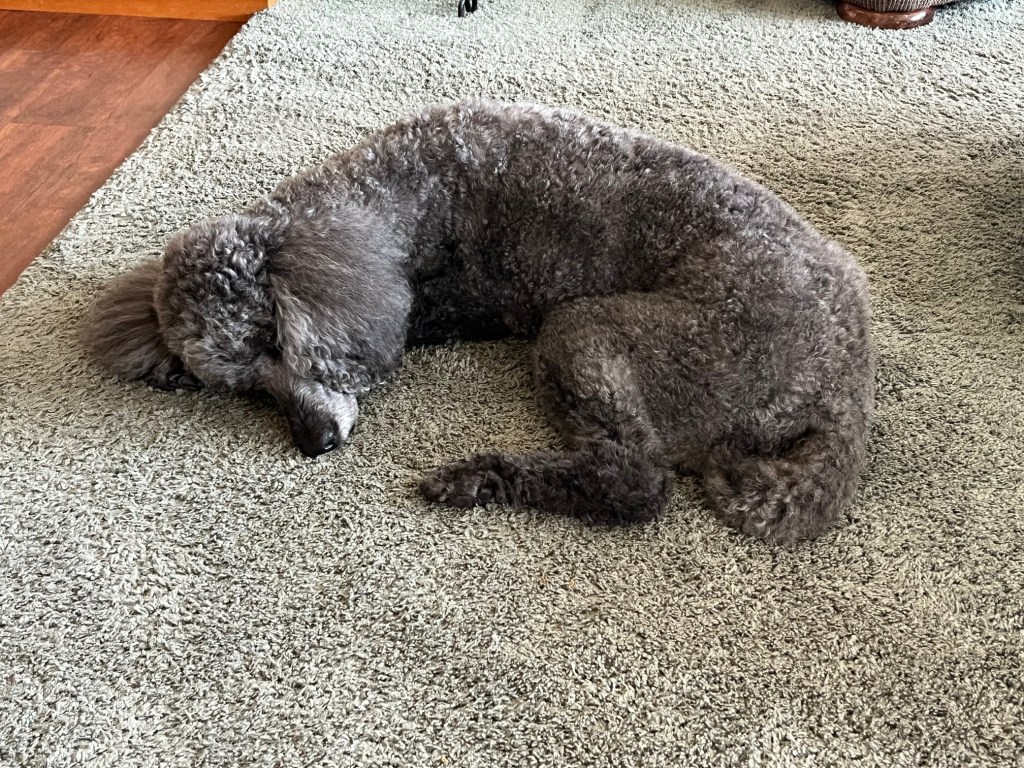
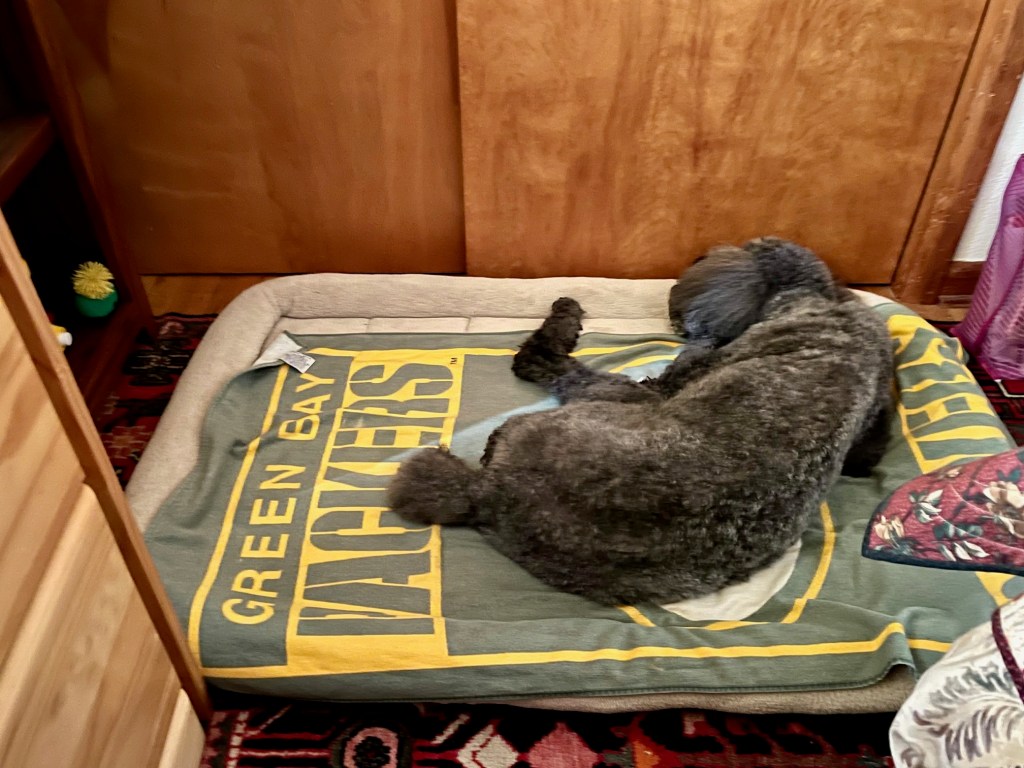
I forgot to take a picture of the pancakes after they were fresh out of the pan, but I think the dogs are more interesting! Ziva (l) and Bogey (r), my mom’s dog
After I made the Pumpkin Bundt Cake, I had six ounces, or 3/4 of a cup, of pumpkin left. (Cooking math is the most important kind of math, and if I could go back in time to my freshman algebra class, I would tell Mr. W, “Who cares about solving for x — there is no x in cooking!”)
So, what to do with the leftover pumpkin? I hate to throw food away. It’s like throwing money in the garbage. And there are other more important considerations when food is thrown away. The waste ends up in landfills. The energy used to raise, cultivate, package, and distribute the food has been wasted. All that investment and those expended resources with no caloric intake to show for it. And as weather patterns change, food will become more scarce.
My husband suggested I make pumpkin pancakes, so I found a recipe that called for a 1/2 cup of pumpkin. All you math phenoms will know this left me with two ounces or a 1/4 cup of leftover pumpkin. (Now, I’m just showing off my math skills.)
This morning I made a batch of pumpkin pancakes, which yielded nine pancakes. We have a few leftover, but my husband will eat them. I put sliced bananas and maple syrup on mine. My husband opted for butter and maple syrup on his.
I still have two ounces of pumpkin. I could try making a pumpkin spiced latte, but that looks like a lot of work, and I don’t have anything to froth the milk. I could try feeding some to my dog, Ziva, but she’s turned her nose up at pumpkin in the past. I could just eat it. I tried a teaspoon when I made the cake, and it’s not bad. The two ounces are back in the fridge. I think I’ll mix them in with my oatmeal along with a sliced banana.
Simply Pumpkin Pancakes
Ingredients
Yields 4 servings of two pancakes each. (I ended up with nine pancakes.)
1 ¼ cups all-purpose flour
¼ cup white sugar
2 teaspoons baking powder
½ teaspoon ground cinnamon
¼ teaspoon ground nutmeg
1 cup milk (I used whole milk)
½ cup pumpkin puree
1 egg, beaten
1 tablespoon vegetable oil
Directions
Sift flour, sugar, baking powder, cinnamon, and nutmeg together in a bowl.
Whisk milk, pumpkin, egg, and oil together in a bowl. Pour milk mixture into flour mixture and stir until just moistened. Batter will be slightly lumpy.
Heat a lightly oiled griddle over medium-high heat to 350 degrees F. Drop batter by large spoonfuls (I used a ¼ measuring cup) onto the griddle and cook until bubbles form and the edges are dry, 1 to 3 minutes. Flip and cook until browned on the other side, about 1 minute more. Repeat with remaining batter.
Yesterday I made a pumpkin bundt cake from scratch. I discovered the recipe on the blog In Diane’s Kitchen. I’m proving a point to Betty Crocker.
On Tuesday I called Betty Crocker. Well, not a real Betty Crocker because she doesn’t exist. Instead, I talked to a representative in the General Mills customer care department. I lodged a complaint because Betty Crocker cake mixes have shrunk — again.
For most of my life, cake mixes were 18.25 ounces. I have some great cake recipes that call for an 18.25-ounce cake mix and build from there, like a decadent chocolate rum cake and a tasty pistachio cake. So about ten years ago when the cake companies dropped the mixes to 15.25 ounces, I wasn’t happy. At the time, I called Betty Crocker and Duncan Hines to complain. (Unlike Betty Crocker, Duncan Hines was a real person, but he died in 1959.) Neither company cared that I was concerned my cake recipes could become obsolete — 15.25 was their new standard. They weren’t rude, not at all. They were apologetic and sympathetic, but I could read between the lines — I could like it or lump it. (The phrase customer care is an oxymoron.) Fortunately, my cake recipes still worked with the 15.25-ounce size.
But last week I discovered there has been another shrinkage. Betty’s cake mixes are now 13.25 ounces. So far Duncan Hines is still weighing in at 15.25 ounces, as is Pillsbury. When I called Betty Crocker’s consumer care department on Tuesday, I told them I would no longer buy their cake mixes. I explained that I wasn’t about to experiment by using a cake mix that is 5 ounces less than the amount called for in the recipe. I further explained that if other companies followed suit, I would make all my cakes from scratch because I have some good recipes. The customer care representative was sympathetic and kept saying, “I’m sorry about that.” She said she would pass my concerns along. But I know nothing will change, except in the future when the cake mix loses more weight.
You can google to find out how much extra flour and other ingredients, like baking soda, to add to the prepared mix. But go ahead and call me “my father’s daughter” on this one: I’m not buying a product then adding what the company should have added in order to make up the difference. One website suggested buying two boxes of cake mix, and adding six tablespoons from the second box to the first box. Then I was to seal up the leftover cake mix and save it to use for other cakes. AS IF!
So yesterday to prove my point to Betty Crocker, I made a pumpkin bundt cake — from scratch. Because I follow the blog In Diane’s Kitchen, the recipe landed in my email a couple of weeks ago. Pumpkin mixed with a dash of cinnamon, ground cloves, and ground ginger makes this cake taste like a slice of autumn. It has the consistency of a pound cake, which pairs well with coffee. And, in my experience, baking a pound cake is more forgiving than baking a regular cake.
Some thoughts to keep in mind if you make this cake:
Diane recommends eating the cake with vanilla ice cream. I’d go with a creamy vanilla custard. However, this recipe calls for three sticks of butter and six eggs, so I skipped the ice cream. I’ve never baked a cake recipe that called for six eggs. This reminded me of one of my all-time favorite novels City of Thieves by David Benioff. Set in Russia in WWII, the two main characters in the novel have been arrested and are to be executed. However, a powerful Soviet colonel promises to pardon them if they can find a dozen eggs for his daughter’s wedding cake. There is war and famine, but the colonel wants his daughter to have an elegant wedding and a big cake, and so an epic quest for a dozen eggs begins. And this bundt cake? That might serve twelve people at the most? It gets six eggs!
The recipe Diane shared says to spray the bundt pan with cooking oil. I used Baker’s Joy. When it was time to remove the cake from the pan, it came out like a dream.
Diane noted that while the recipe said to bake for 60 minutes, she needed to bake the cake for 64 minutes. So did I, but I started with 60 minutes.
I will make this cake again. It was worth the extra time and effort. Besides while I made the cake, I listened to A Lady’s Guide to Gossip and Murder, the second book in Dianne Freeman’s Countess of Harleigh Mystery series.
[To read my review of Freeman’s first book in the series, click here.]
Look carefully. Grandchild #3 is nestled between the fish.
My grandkids didn’t have school today, and they don’t have school tomorrow, so they came to my house. I was hoping for nice weather because I planned to take them on a hike to Lost Falls in Cornucopia, Wisconsin, today, and to Cascade Falls near Grand Marais, Minnesota, tomorrow. But rain, cold, and winds up to 30 mph said differently.
Instead we went to the mall. Our first stop was the bookstore, where I bought each grandkid two books for Halloween. Then we hiked to the indoor playground. While they played, I took out my book — A Samuel Pepys Mystery: The Brampton Witch Murders by Ellis Blackwood — and I began to read.
About fifteen minutes later, my first grandchild came for her book — Dipper’s & Mabel’s Guide to Mystery and Nonstop Fun! — and she began to read.
A few minutes after that, my third grandchild came for his book — The Wild Robot by Peter Brown — and he began to read.
Not to be left out, my second grandchild came for his book — Demon Slayer Kimetsu No Yaiba #1 by Koyoharu Gotouge — and he began to read.
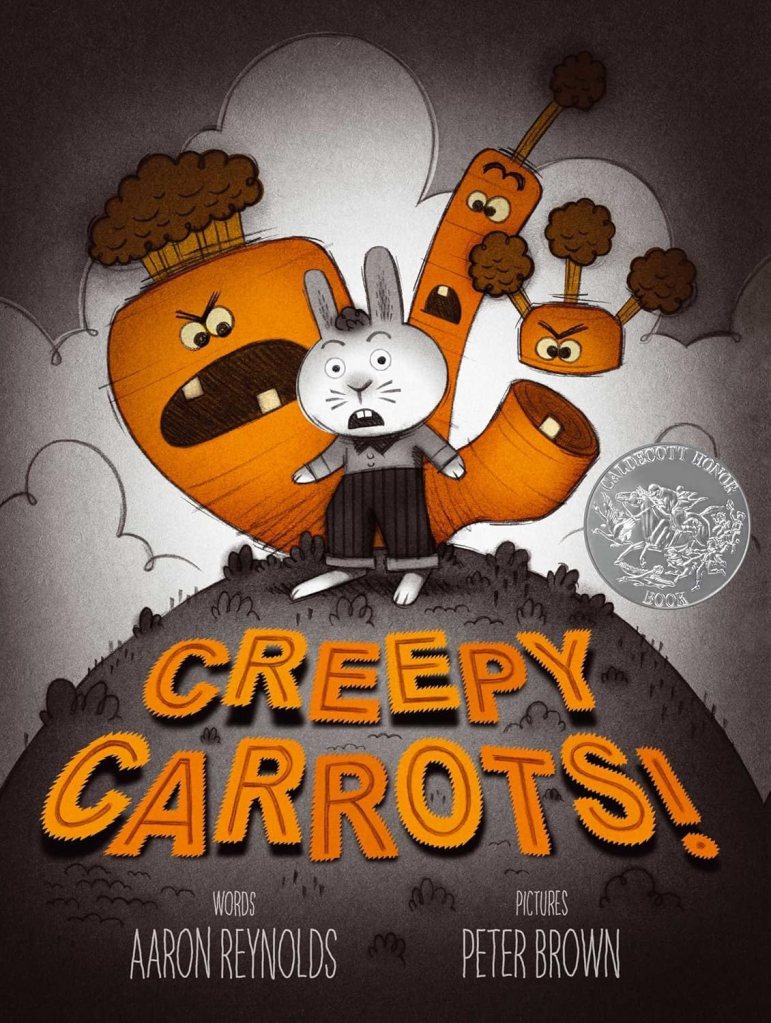
My fourth grandchild ignored the trend and kept playing on an interactive screen. He enjoys its puzzles, games, and coloring app. He read his book — Creepy Carrots! by Aaron Reynolds — on the way home.
I didn’t give my grandkids candy for Halloween. They’ll get a stash of it tonight when they trick or treat in the rain and cold and wind. I gave them candy for the imagination.
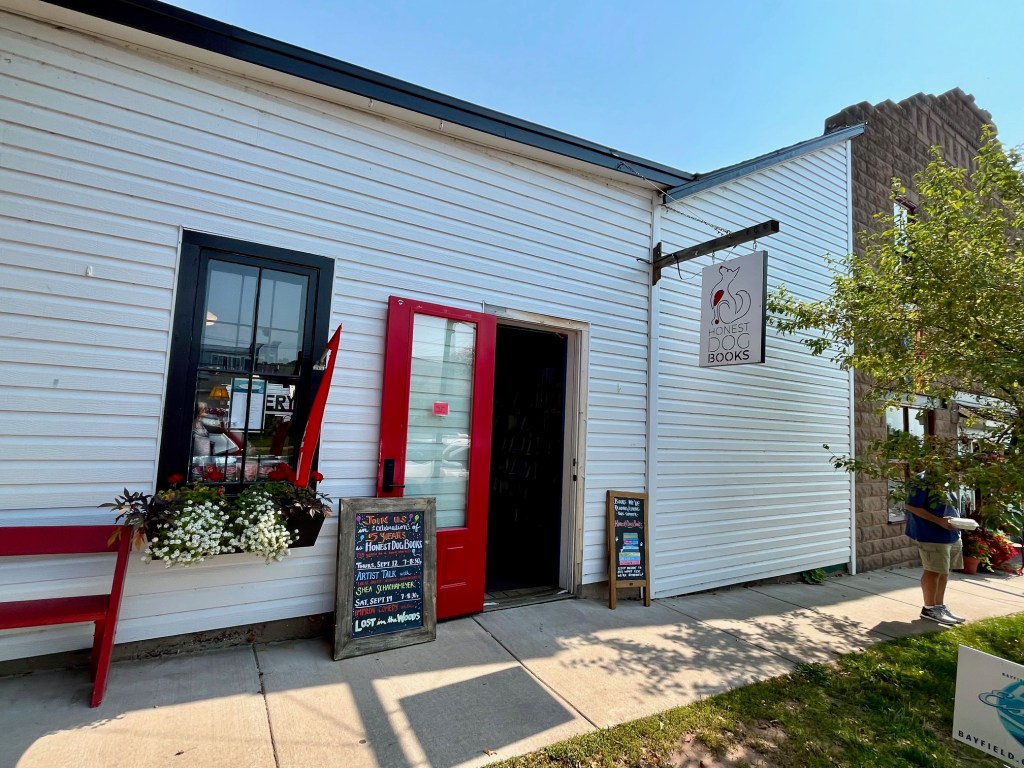
The welcoming red door to Honest Dog Books. It’s a humble entry into an amazing interior.
Bayfield, Wisconsin, has two wonderful bookstores: Honest Dog Books and Apostle Island Booksellers.Last week I wrote about Apostle Island Booksellers. Today, I will write about Honest Dog Books.
Inside Honest Dog — there are more books to the left and the right!
Yes, your dog is welcome in the store. And yes, treats will be provided for your dog while you shop for books. Also, you might meet the shop dogs, Elton and Matt — unless they’re at the beach or in the woods. (If I ever come back as a dog, I want my human to be a bookstore owner!)
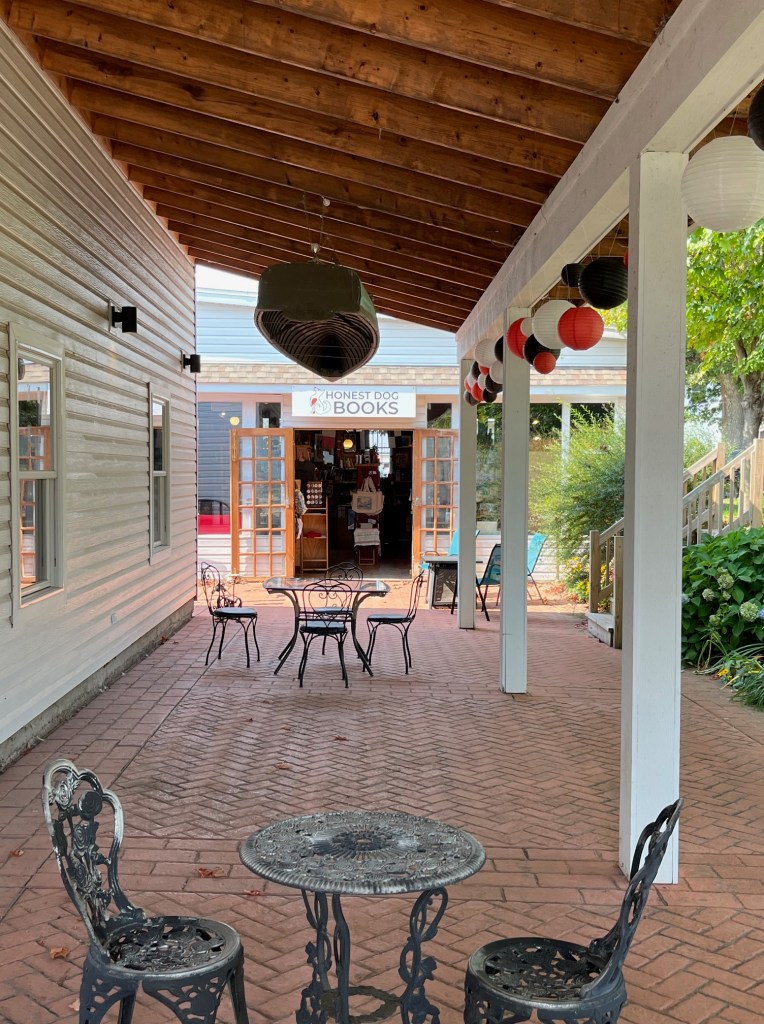
Honest Dog’s courtyard
When you walk into Honest Dog Books, it’s like entering a cozy rustic lodge. Warm wood tones gather you into a big bear hug.
The store is stocked with loads of wonderful books. You will find classics and new releases; local authors from Wisconsin, Michigan, and Minnesota; books on the great outdoors; and books for people of all ages. And yes, books about dogs, fiction and nonfiction.
You can walk in the front door of Honest Dog, buy a book, and walk out the back door into a beautiful courtyard, a wonderful place to sit and read the first chapter of your new book or talk about books with a friend.
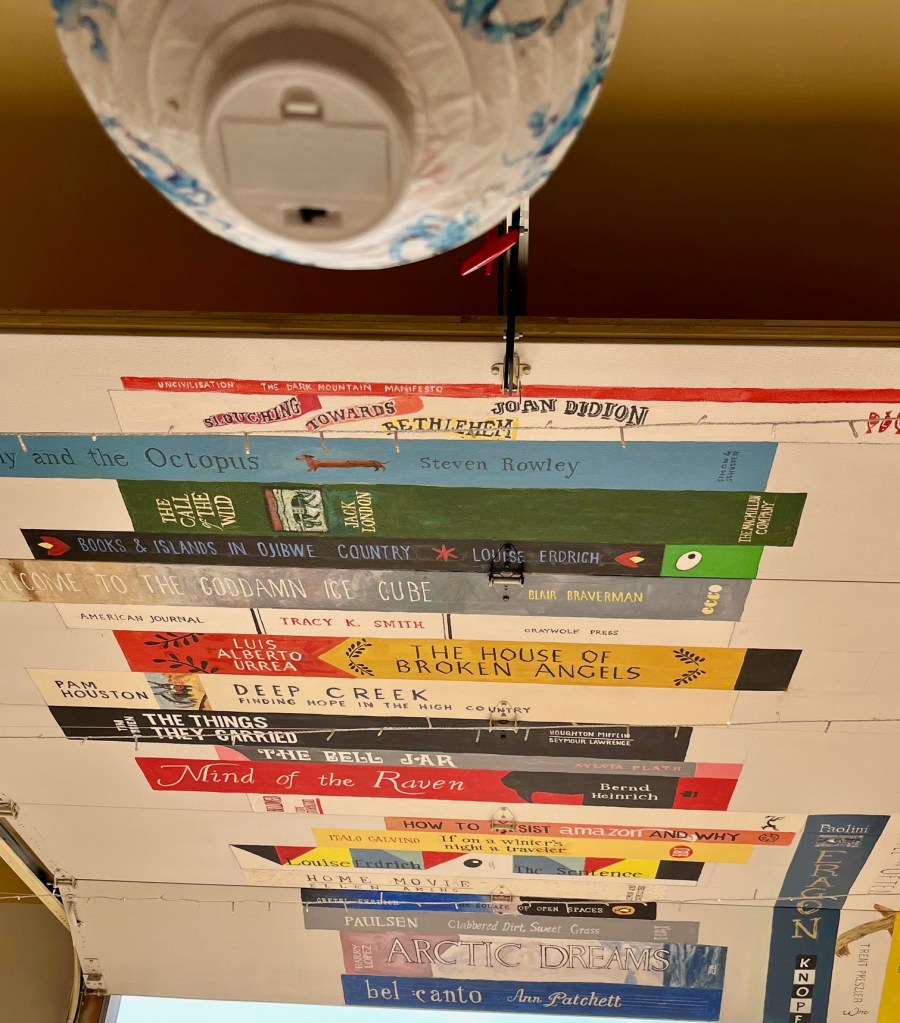
If you walk through the courtyard, you will enter a separate space called the Dog House where you can buy rare used books and vinyl records displayed in a small charming building with painted murals of book spines. The book-painted stairs lead back to the courtyard. The books painted on the inside of the garage door decorate the ceiling when the door is open on a nice day. On a cold or rainy day, the painted books become part of the wall.
What’s on your to-be-purchased list?
So, what did I buy at Honest Dog Books? The Curious Incident of the Dog in the Night-Time by Mark Haddon. The book has been on my to-be-purchased list for a long time, and it seemed right to buy it at Honest Dog Books.
During COVID, Honest Dog Books hosted author talks via Zoom. At a time when in-person social events were severely limited and businesses were closed, Honest Dog’s Zoom events gave readers and writers a chance to talk to authors. It also gave authors a way to launch their books during the lockdown. I will forever be grateful for the evenings spent meeting writers and listening to them talk about their books. It helped ease the isolation of COVID.
Below are the books that I bought — and loved — from Honest Dog during COVID after meeting the authors on Zoom. They are listed in no particular order.
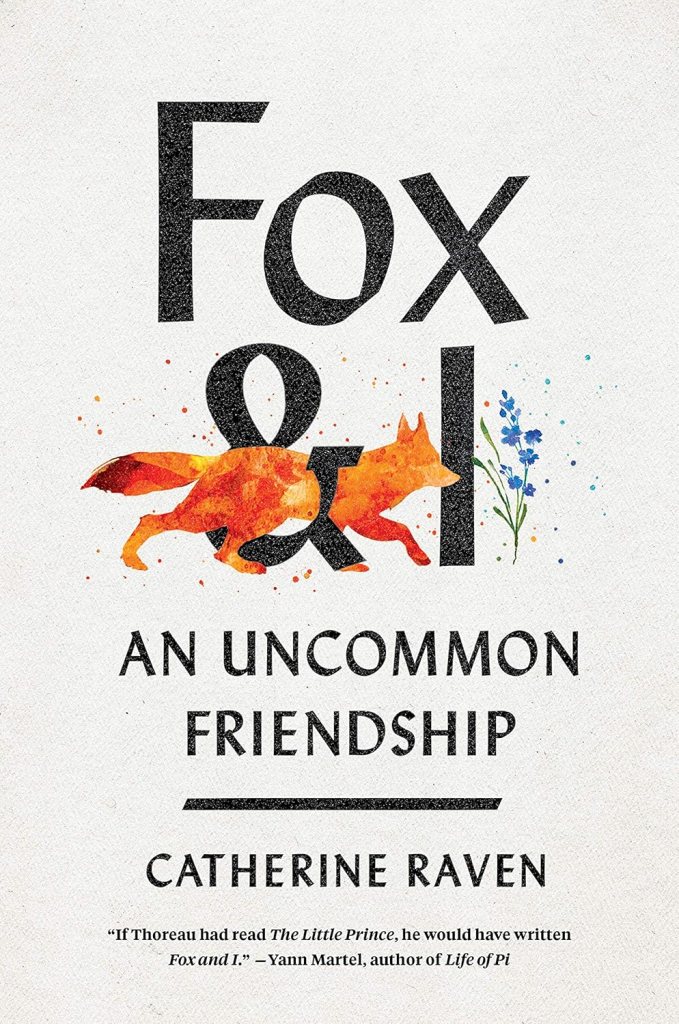
Fox & I: An Uncommon Friendship by Catherine Raven, a memoir
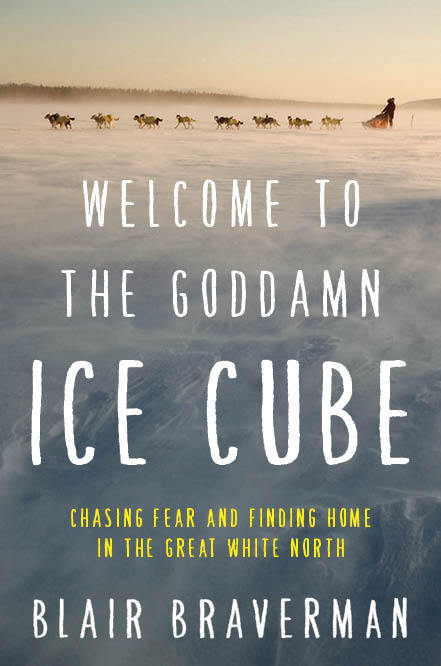
Welcome to the Goddamn Ice Cube: Chasing Fear and Finding Home in the Great White North by Blair Braverman, a memoir
Icebound: Shipwrecked at the Edge of the World by Andrea Pitzer, nonfiction history
To read a post from February 2021 about my joyful experience of ordering books from Honest Dog during a brutal cold snap in the middle of COVID. Click Here.
Apostle Island Booksellers: A Store with a beautiful cover, and a stunning interior
The view after walking in the front door
Bayfield, Wisconsin, has two wonderful bookstores: Apostle Island Booksellers and Honest Dog Books. Every time I visit Bayfield, I visit both places. I will talk about Apostle Island Booksellers in this blog, and Honest Dog Books in an upcoming blog.
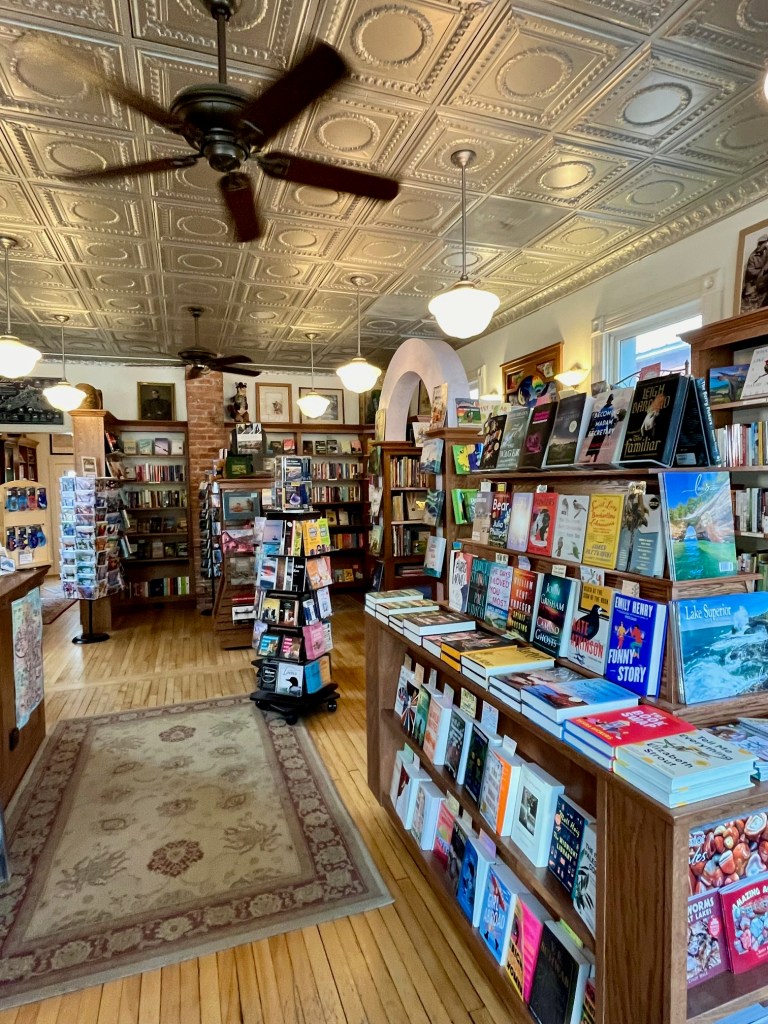
Apostle Island Booksellers is small but gorgeous, and stocked with a wonderful selection of books. Walking through the front door, transports me back in time, into a warm and cozy and other-worldly space. A creamy-white tin ceiling with old-fashioned lights — the kind that bring old schoolhouses and libraries to mind — hangs over the natural-colored wood floors. Windows trimmed in decorative molding, wooden shelves, brick accents, and an old area rug catch my eye. But it’s the colorful covers of books that win over, and I look for something to take home with me.
A romantic corner, the perfect place to fall in love with a book.
I walk around the front part of the bookstore, then head for the small back room tucked away like a treasure. As I go, my eyes scan titles and cover art. Along the hallway and in the back room, more books are displayed, making use of every available place to shelve a book. I’m happy to see the room around the corner is unchanged. It has what every bookstore should have: a place for a reader to sit and read a few pages of a book, to see if it’s a good fit.
I think I’ve made up my mind about which book I will buy, but I finish looking around the store before I pluck Slaughterhouse Five by Kurt Vonnegut from its spot on the shelf. My nephew suggested I read it, and I’ve also read that it’s one of Vonnegut’s best.
I discover another book, The Shipping News by Annie Proulx, and snap a picture of its cover. The synopsis intrigues me, but I will think about this book. I might borrow it from the library, or buy it at another bookstore, or buy it from Apostle Island Booksellers the next time I’m in town. Like other book lovers, I wish I could buy all the books that catch my fancy, but I’m limited by the coins in my purse and the space in my home. And my mind becomes uneasy if my To-Be-Read piles mushroom too quickly on the flat surfaces in my home.
While I pay for my book, the clerk and I strike up a conversation about British literature. We are both huge fans and discover that in our early years, we read almost nothing else but British literature. Her love of British authors started with Shakespeare when she was in ninth grade. My love started with Sir Arthur Conan Doyle’s Sherlock Holmes stories when I was in seventh grade.
I slip my new book into my large purse, and head to Honest Bog Books. I have one more book to buy.
After fifty-three years, I believe I’m finally ready to get up on a stage and play the Wizard in The Wizard of Oz. When I performed the role in seventh grade, I developed severe stage fright. My voice, which was supposed to roar from behind a curtained booth, stuttered and whimpered instead, barely audible.
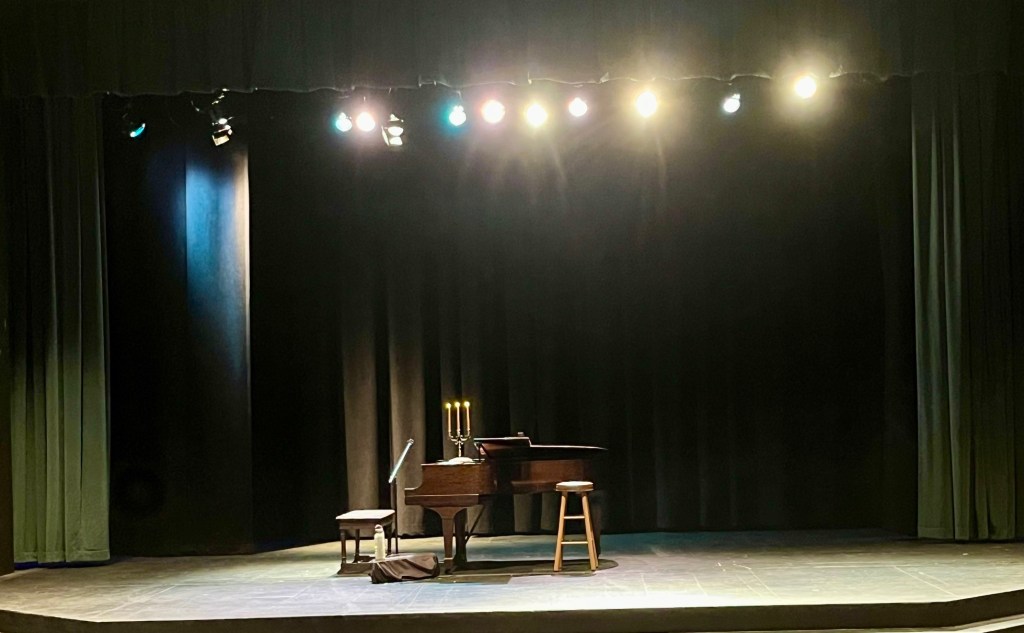
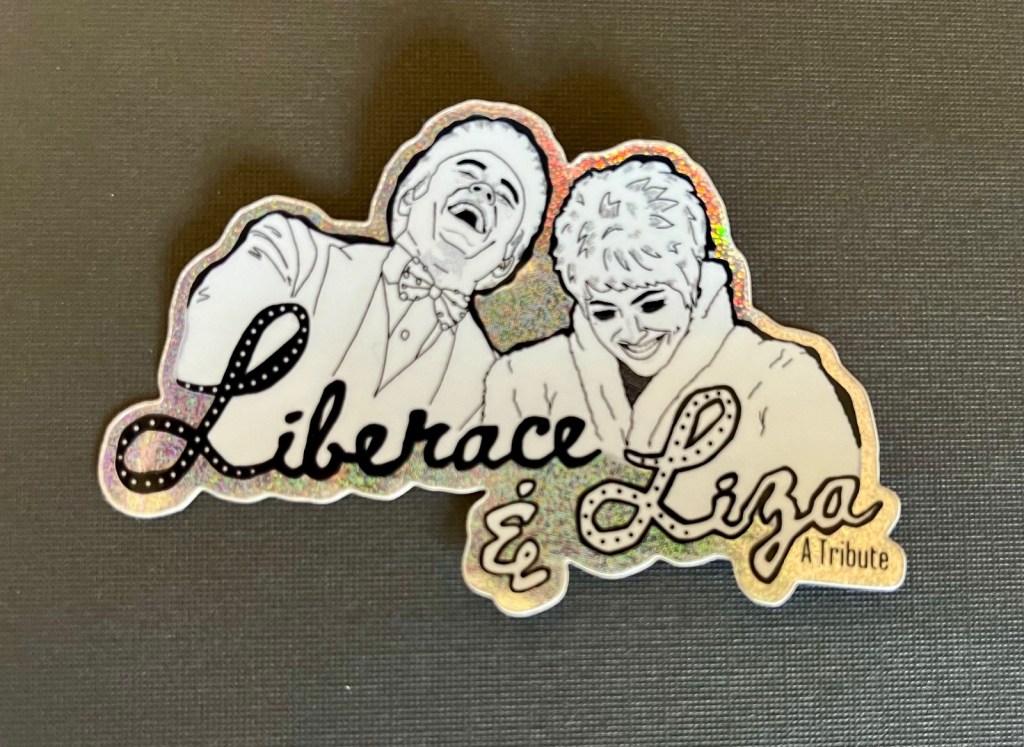
Saturday night I went to see Liberace & Liza, A Tribute at the Depot Theater in Duluth. David Saffert and Jillian Snow, two excellent entertainers, became Liberace and Liza for the evening. The show was a wonderful ninety-minute escape into a bygone era from my youth. My sisters and I grew up watching TV variety shows starring Liberace, Dean Martin, Carol Burnett, Sonny & Cher, and Flip Wilson.
Near the end of their act, Liberace and Liza performed a skit called “Liberace OR Liza.” They explained they would read scenarios, and two volunteers from the audience would take turns guessing if the statement was about Liberace or Liza. However, when they asked for two volunteers to come up on stage, the audience went silent. Finally, Liberace and Liza encouraged a young man from the second row to join them. The man, named Kevin, wore a black T-shirt and a pair of gold sequined pants. I had seen him forty minutes before the show started. I had admired his outfit, figuring it was a nod to Liberace and Liza, who both loved sequins. But I had also wondered if he would be part of the show.
No one else raised a hand.
I waited. I mulled it over: a chance to perform with Liberace and Liza, who kept pleading for a second volunteer. All I would have to do was smile big and answer questions in a cheerful, audible voice. I thought some more. I had a chance to be part of a variety show, even if it wasn’t televised. I could smile big and have some fun. After all, I reasoned, the real Liberace was a hometown boy from Milwaukee, so I should help him and Liza. I, too, was born in Milwaukee, and lived there until I was five, when we moved to Franklin, which is still in Milwaukee County.
I stuck my hand high in the air and volunteered.
I was sitting near the back of the theater, so I had a long walk to the stage. Pushing aside the memory of my seventh-grade acting failure, I strode forward, feeling confident and fearless — I became Quiz-Show Contestant on her way to win jubilantly or lose gracefully.
When my sisters and I watched the real Liberace on TV, he performed in flashy colorful sequined outfits. His fingers, festooned with diamond-and-gold jewelry, flew up and down the keys on a golden piano that sparkled with mirrors and rhinestones. The combination of his fast-paced piano playing and his never-ending glitz mesmerized us. If he had played a plain piano while wearing a black tuxedo and using bare fingers, my sisters and I would never have noticed him, even if he had kept the same frenetic playing style. Liberace was an excellent showman who understood how to sell an image.
Before I went to the tribute show, I looked up Liberace and learned that from the 1950s to the 1970s, he was the highest paid performer in the world. I also learned that serious music critics panned his piano-playing skills, to which he responded, “I’m crying — all the way to the bank.”
Once on the stage, Liberace and Liza explained the rules of the quiz to Kevin and me. I smiled. I had no sense of dread or wishing they would get on with it, so I could go back to my seat. I was having fun. Liberace wore a sequined red-white-and-blue, stars-and-stripes themed jacket with long red fringe dangling from its sleeves; a pair of matching sequined hot pants; red-white-and-blue knee highs; and sparkling shoes. Liza wore a red-sequined top and pants, loosely covered by a flowing, floor-length black gauzy garment. Under the stage lights, the gold sequins on Kevin’s pants lit up like fireflies. I wore mostly black, sans sequins. My only bling was a pair of subdued silver earrings and two small rings.
My consolation prize, which I will treasure
Kevin’s personality matched the sparkle of his pants, and he embraced his role. I didn’t try to upstage him. I became the calm, composed character next to Kevin’s funny-guy schtick. I smiled, made a few restrained theatrical gestures, and answered three questions, earning one point. Using grand theatrical gestures and hammy facial expressions, Kevin answered all three of his questions correctly, so he won the big prize. I received a consolation prize, a very cool Liberace & Liza tribute sticker. Liberace and Liza shook hands with me and thanked me. I shook Kevin’s hand and congratulated him. I had become Quiz-Show Contestant Losing Gracefully. But I smiled because I was triumphant in defeat — not once did I experience stage fright, and I had a great time. I even wished there had been someone to take a picture of me up on the stage.
Liberace took my hand and escorted me off the stage. For a moment, as I made my way back to my seat, I wished that I could have felt fearless and confident in seventh grade while playing the Wizard. But my self-assured debut with Liberace and Liza made up for my seventh-grade acting debacle.
Kevin’s big prize was to be serenaded by Liza while he sat on a stool upon the stage. He embraced this with delightfully comic acting, even singing along with Liza near the end of the song. And, although he sang off key and seemed unsure of the words to the song, something about Kevin and Liza’s bit made me think he may have been a plant in the audience. I had even thought about this when he was encouraged to volunteer. On the one hand, Liberace’s and Liza’s interactions with Kevin seemed so spontaneous, but on the other hand, could they really leave finding the perfect contestant to chance? One who would be able to ham it up with Liza as she sang to him? Even Kevin’s outfit made two arguments. Had he dressed to be part of the act or had he just been an enthusiastic audience member? Either way, his glittering gold pants sure looked good on stage, making him the perfect accessory to Liberace and Liza.
The intrigue around Kevin’s role made it even more fun for me. I know someone I could ask, who would probably tell me if Kevin was a plant or not, but I don’t want to spoil the magic and mystery of the moment. Besides, Kevin was perfect up there. I would not have been as entertaining if Liza had had to sing her heart out to me.
Liberace, Liza, and Kevin didn’t realize it, but I did win the bigger prize. I had zero stage fright, and I didn’t worry if I was going to look silly. Something else that Liberace and Liza didn’t know, but the warmth and good humor they had exuded throughout their show, let me know I would be in kind hands if I went up on the stage
Wisdom doesn’t belong to seventh graders playing the Wizard. But thankfully, I have gained some as I have aged: Smile big, have some fun, and don’t be afraid to be silly. That’s what I did. And that’s what Liberace, Liza, and Kevin did.
Ziva is pretty much back to her old self this morning.
Ziva loves to be with the grandkids when they visit. March 2024
Yesterday morning Ziva met Dr. F, a new vet, and Ziva loved her immediately, but she loves everyone. I really liked the new vet, too; although, I refrained from leaning my head against the vet’s leg and nuzzling her.
I had been nervous about having a stranger examine Ziva because she already has two other vets, Dr. J. and Dr. M., who treat her. I wanted Ziva to see one of the vets who currently care for her. But now we have three wonderful vets to choose from, which might make it easier to get an appointment when we need one.
From Tuesday, when I made Ziva’s vet appointment, until Thursday, when Ziva saw the vet, she had improved. However, I had videos on my phone to show the vet, so she could see how poorly Ziva had been moving in the previous days. The vet examined Ziva and determined that she most likely had a soft-tissue injury that needed to heal. The vet recommended increasing Ziva’s Librela shots for her osteoarthritis from every four weeks to every three weeks, giving her a three-to-five-day course of an anti-inflammatory medicine, and monitoring her movements.
Monitoring Ziva’s movements is the tricky part. Because when she feels better, she likes to run up the side of the house. She likes to run out to the front yard and prance around while she barks at a squirrel scrambling up a tree or a passing dog or the neighbor who is once again for the zillionth time mowing his lawn. Right now, I cringe when I watch her do these things, so I’ve been taking her outside on her leash. She’s limited to a couple of walks a day, but only around the block, which suits her just fine. And if I take her in the car, I put her on the leash and walk her to the back passenger door, so she can’t dance, prance, and spin in happy circles because she’s excited for a ride.
The reality is that while Ziva’s doing much better, going forward we’ll have to take care with her by limiting her exposure to situations where she could reinjure herself. But we’ll also have to make sure she is living the best life she can. This includes making sure she moves because “move it or loose it” applies to dogs too.
Ziva, cooling her toes in Lake Michigan, September 2023
Yesterday, after her rough morning, Ziva had a slightly better afternoon. She still slept most of the time, but when she did get up, she moved better, slowly and cautiously, but better.
I’ve become an expert at watching Ziva’s movements and her gait. I’ve been doing it for five or six years now. We walk a lot, so I’m able to note how she moves from day to day, week to week, and month to month. In 2017, I read Being Mortal: Medicine and What Matters in the End by Dr. Atul Gawande. He wrote that if doctors know what they are looking at, they can tell a lot about an older person by the way he or she walks. When I worked at a bookstore, medical students sometimes came in with a list of suggested reading (beyond medical texts) given to them by a professor. I always suggested they add Gawande’s Being Mortal to their stack because it deals with aging and death, topics about which they would receive little exposure to in medical school. They usually bought the book because I was able to convince them that geriatric and end-of-life concerns were going to figure in their practice — regardless of their medical specialties. And so, I watch Ziva’s gait and movements. I note the changes over time, and I can describe them to the vet in a manner that impresses her and helps her to treat Ziva. I did the same with Cabela, Ziva’s sister, as she aged.
When my husband and I came home from the grocery store yesterday afternoon, Ziva met us at the door and wagged her tail. I realized how much I take her incessant tail wagging for granted. We made a big fuss over her swirling tail and gave her a treat. It might sound like Ziva gets a lot of treats, and she does. Most days she eats her breakfast and supper too, as long as we doctor it up with good stuff (eggs, boiled chicken, a bit of canned food), what my husband likes to call “frosting.” Ziva isn’t overweight. Rather when we go to the vet’s, I hold my breath and hope she hasn’t lost another half-pound. When she weighs the same as she did the last time, I joyfully exhale.
Around three o’clock, while she appeared to be sound asleep, I whispered to my husband that I was going for a walk. Unbeknownst to me, while I got ready, Ziva got up, walked to the back door, and waited for me. (There is nothing wrong with her hearing or her ability to look like she’s in a deep sleep when she’s actually keeping tabs on her people.) She looked at me with big pleading eyes — the ones that say: You’re surely not going without me?
In the morning we’d agreed that Ziva should have lots of rest. No car rides, no walks, no extended outside time. But she stood at the back door, telling she felt better and wanted to walk. I worried she might tweak her injury if she stumbled. But I kept my comments to myself because she didn’t want to hear about my fears. She had her own. And even though she was hurting, she wanted some say in how she was going to get better. In that moment, I weighed her need for a small outing against the chances she might aggravate her injury. I decided her emotional well-being was important to her healing.
When I was nineteen and living with my grandparents, I got very sick. I was on bed rest for two weeks. Finally, I started to feel better. I wanted to do something other than lay in bed. I hadn’t been out of the house since coming home from the hospital, but I was weak. I called my mother, and I started crying as I explained how I felt. She told me to get out of the house for a bit, that if I felt like going out, it was a sign I was getting better. I called my girlfriend, who said that she and her boyfriend were going to a softball game, and they would come and pick me up, take me to the game, then bring me home. My grandmother and I had a big argument about my going out. Of course, she was worried about me. But I didn’t back down. I finally told her, “I called my mother this morning, and she told me I could go out for a bit.” I felt so much better when I returned home a couple of hours later; although, I did need a nap. My grandmother, noting my happy face, said, “It was so nice of your friends to take you out and bring you back.” I believe she was also relieved I hadn’t overdone it.
While I grabbed Ziva’s harness and fastened it around her, I thought about my grandmother and our argument. I explained the rules to Ziva. We would walk down through the grass instead of down the stairs, and our walk would be slow and short. We walked less than one city block, but Ziva went to the bathroom and sniffed a few of her favorite spots along the way. When I announced it was time to go home, she happily turned around. After we got home, she curled up for a big nap, but she had enjoyed herself. After her nap, she wasn’t any worse for the walk, but she didn’t want her after-dinner walk.
This morning Ziva is moving a little faster and with more confidence, but still carefully. And her tail wagging, while not back to normal, tells me her pain has eased a bit.
A little over a week ago, my dog, Ziva, slipped on the wooden stairs that run along the side of my house. She didn’t just lose her footing, she fell down. When she got back up, she could hardly put any weight on her back left leg. She’s thirteen and a half years old, so injuries are disconcerting.
At the time Ziva fell, we were headed out for a walk with my four grandkids. I thought I’d have to carry Ziva back in the house, but after she took a few steps, her leg worked better, but walking wasn’t easy for her. I figured we’d just walk across the road and let her tinkle, then go back home. But the more she walked, the better her leg worked. She resisted my efforts to turn around and go home, making it clear she wanted to keep walking, just like an athlete shaking off a momentary ache before getting back in the game. We completed our short walk, and Ziva did well for the rest of the day.
Then on Sunday, she must have done something that tweaked her injury. She likes to prance and dance around when she’s excited, especially if she’s outside and we’re getting ready to go for a ride or if she sees a dog walking down the street. She was a little gimpy Sunday evening, but not too bad, and she still insisted we go for her after-dinner walk. When she woke up on Monday, she was back to her old self.
But on Monday afternoon, she tweaked her injury again, probably getting out of the van. Because not long after her ride to the post office with us, she once again struggled to walk around. She was obviously in pain. She ate supper, but she wanted nothing to do with her after-dinner walk. At first I thought she wanted to walk because she stood by the back door. So, I put her leash on, and we walked onto the back deck. But she refused to move more than a few feet beyond the back door. We went back in the house, and she stood in front of the microwave and looked up at her treat dish. Her message to me: I walked a few feet, now I want my treats. Happy that she had an appetite, and that she still enjoyed bossing me around, I gave her a half dozen small crunchy treats. After she realized she wasn’t going to get anymore, she went to sleep on her bed in the family room, where she stayed for the rest of the night.
Tuesday morning when Ziva woke up, she was her cheery, tail-wagging self. Her walking was back to normal, and she was interested in breakfast and her morning walk.
But Tuesday afternoon after prancing and dancing in the yard, Ziva reinjured herself. And this time was worse than the other times. She was in pain. She struggled to walk. Anytime she got up from the floor, she stood still for a couple of minutes, as if waiting to see if she could trust her leg to move forward and keep her upright. She wouldn’t wag her tail.
I called the vet’s office, and because there was a cancellation, I was able to get Ziva an appointment for Thursday morning. I couldn’t believe our good luck. It’s so hard to get a short-notice appointment at my vet’s because they have so many patients and not enough staff. A pet has to be in dire condition, and Ziva’s injury doesn’t meet that standard. Even the emergency veterinary hospital, which is open nights and weekends, wouldn’t want me to bring her in because they wouldn’t consider her critically ill. They would tell me she could be seen by her regular vet. And her regular vet would tell me that I could take her to the ER vet hospital when it opened. It’s a classic Catch-22 moment when this happens. So much so that it gives me pause about getting another dog.
On Tuesday night after her supper, Ziva never asked for a walk or her post-walk treats. After I took her outside to go to the bathroom, she climbed into her large, cushy bed on the family room floor and went to sleep. Throughout the afternoon and evening, she never once wagged her tail. I was glad she had eaten supper and that she drank water, but I wanted to see her poofy tail twirl in the adorable circles it makes when she wags it.
I tried to walk without Ziva. I walked down to the road and started to go left, but that’s usually the way Ziva and I go, which made me sad. Then I discovered I had my T-shirt on inside out, which distressed me. I wondered if anyone would notice because I knew if I went inside the house to turn it right-side out, I wouldn’t come back outside. I decided to walk the other direction, but I couldn’t do that either. I was too sad without Ziva. There are times I have walked without her, but that’s because it was too hot for her or because she was taking a big nap and I didn’t want to wake her. This time was different because she wasn’t able to come with me. I went back inside and turned my T-shirt right-side out. I picked up a book and sat down on the couch. While reading, I kept looking up to watch Ziva as she slept, hoping she was healing.
This morning Ziva was only slightly better. In pain and not trusting her leg, she walked slowly. But before she went outside to the bathroom, she wagged her tail and asked for a treat. My husband and I both gave a small cheer while Ziva ate her treats.
Today there will be no walks or car rides. Ziva won’t go outside unless someone is with her to make sure there is no prancing and dancing. After we see the vet tomorrow, we’ll know more, but continued rest will probably be part of the treatment. We are keeping an eye on her. She can hop up on the couch or the stuffed chair, but when she wants to get down, she looks to one of us for help. As I finish writing this, she is sleeping on her bed in my office. She often joins me when I write. She is a mama’s girl. And she is my Ziva Baby.
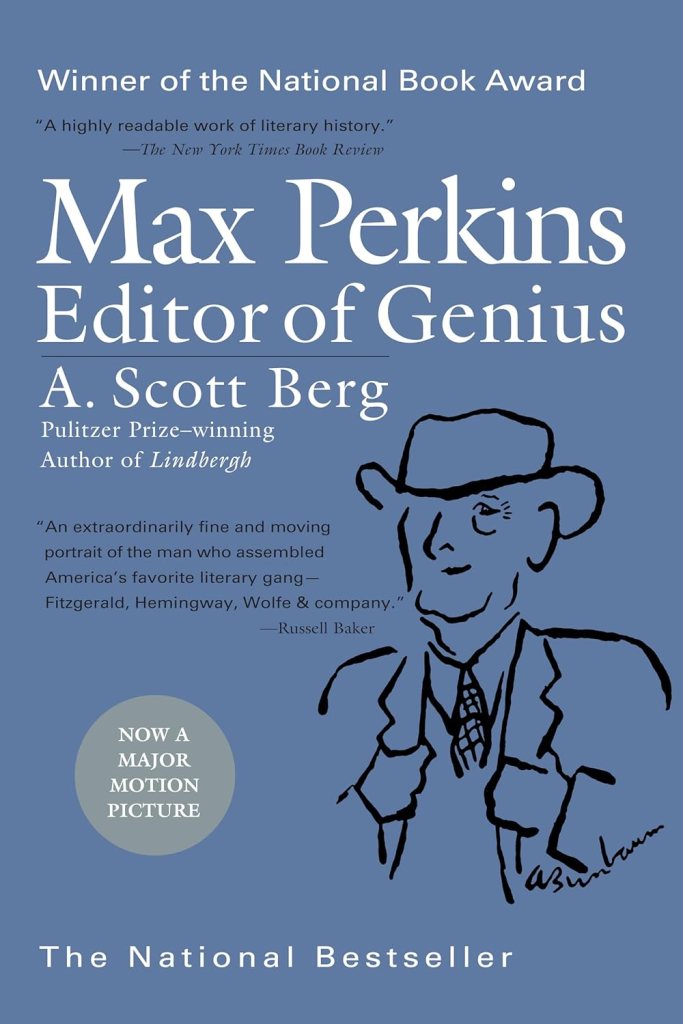
I love the title of this book because it plays two ways. When I decided to reread the book, I bought my own copy.
The first time I read Max Perkins: Editor of Genius, I did so because in the spring of 2019 my writing friend Milan suggested that I read it. He said it was a wonderful book. Then he kept following up with the question, “Have you read Max Perkins: Editor of Genius yet?” I felt bad when I had to admit that once again I hadn’t. So, in late fall I borrowed the book from the library and started reading it.
I did indeed love the book, but I never got the chance to talk about it with Milan.
Milan and I met through our local writers’ association, to which we both belonged. Before COVID the association held a gathering once a month at a local coffee house. As a person who was new to the world of writing, it was a great place for me to be in 2019. Not only did I receive lots of good advice, but it was a joy to be with fellow writers.
Every month the usual cast of writers, like me, showed up, and others came when they could. Milan came often. His enthusiasm for being with writers showed in his kindness, his warm smile, and easy laughter. He loved to talk about ideas, writing, social issues, education, and even his pickup truck when I wanted advice about trucks. Born in France, Milan had immigrated to the United States with his mother when he was a young teenager. He had written a fascinating memoir, Ma’s Dictionary: Straddling the Social Class Divide, about his life. He had a book deal with a French publisher, so at the time I met him he was translating his memoir into French, his native language.
Milan and me at the coffee house on a Saturday morning, 2019
Milan became my mentor. He asked to read my short stories, and he gave me encouraging feedback via email, which often arrived at three or four in the morning because that is the time of day when he worked on translating his memoir into French. It was always fun to wake up in the morning and find an email from him. Even nicer — he asked me for feedback on an essay he was writing.
The second week of December in 2019 was the last time I heard from Milan. I had sent him feedback on his essay, but he didn’t respond. Over the next couple of weeks, I sent two more emails but received no answer. That wasn’t like Milan. I figured maybe he had traveled to France for the holidays or maybe he had lots of company. I tried not to think about the fact he might be seriously ill or that perhaps he had died. I had never met any of Milan’s family, and other than email, I had no way to contact him.
On January 14, 2020, I sent Milan another email but again received no response. I started checking the online obituaries every few days. Perhaps that sounds morbid, but if Milan had died, I wanted to know. In March his obituary posted. He had died on March 6, 2020, at the age of 78. I’m assuming because of the time lapse between his last email to me and his death that he’d become seriously ill before he died.
I had known Milan for almost a year. We saw each other about once a month at the coffee house gatherings. And I had attended a couple of community outreach discussion groups he had facilitated regarding his memoir and the social issues it touched upon. After reading about his passing, I was so sad. I’d lost a friend, a fellow writer, and a mentor. Milan had once said that he loved to visit with me because I could talk about ideas. It was such a nice compliment. Talking about ideas was also one of the reasons I enjoyed his company so much.
I finished reading Max Perkins: Editor of Genius shortly before Milan died, but we would never talk about the book. I would never know why he liked it so much or why he kept insisting I should read it. Instead, the book became an unfinished conversation between Milan and me.
I recently reread the book about Max Perkins. My second reading of the book was prodded by a conversation with someone about a well-known writer (who was five years old when Perkins died) and his strained relationship with his editor. At the heart of the conversation was the question: How much can an editor intercede in a piece of writing before a line is crossed and the work becomes not just the writer’s but rather almost a collaboration? This conversation reminded me of the working relationship Thomas Wolfe had with his editor Max Perkins.
Because A. Scott Berg had access to hundreds of letters between Wolfe and Perkins, he was able to write about their often-tumultuous writer-editor relationship. In his book, Berg details the massive manuscripts Wolfe presented to Perkins, and Perkins’s long hours of work with Wolfe to pare them down into manageable books. (Perkins always stated that any suggestions he made to Wolfe were always subjected to Wolfe’s complete approval.)
Berg also included the opinions of some literary critics who believed Wolfe should be able to revise his own work from a rough draft into a cohesive and readable novel without extensive help from an editor. And because Wolfe couldn’t seem to do that, the critics had questions about his overall abilities as a novelist. Eventually, this caused a rift between Wolfe and Perkins, with Wolfe leaving Scribner’s for another publishing house and a new editor. Wolfe wanted to prove the critics wrong.
It’s commendable that Berg never takes sides on either the question of Wolfe’s writing ability posed by literary critics or Perkins’s role in readying Wolfe’s work for publication. Instead, Berg presents Wolfe’s and Perkins’s letters, the accolades and criticisms by others, and the events of Wolfe’s leaving Scribner’s without interjecting his own point of view. It’s up to the reader to form an opinion. I’m sure Milan would have liked to discuss Wolfe and Perkins.
I can’t say for certain what else Milan may have liked to discuss, but I’m sure there would have been lots. Berg’s book is well researched and well written. He does an excellent job of presenting information about Perkins and the many writers Perkins worked with, such as F. Scott Fitzgerald, Ernest Hemingway, Thomas Wolfe, Nancy Hale, Marjorie Kinnan Rawlings, Taylor Caldwell, and other fine writers of the 1920s through the 1940s, many of whom are still well known today.
I wish I would have read Berg’s book when Milan first suggested it to me. We would have liked talking about Max Perkins and the many writers he worked with during his editing career. I miss Milan, and I miss the conversations we never had.
[In 2016, A. Scott Berg’s book was made into a movie called Genius. I haven’t seen the movie, but it has some A-list actors in it. I don’t always like seeing movies based on factual events because Hollywood favors dramatic scenes over reality, but I might make an exception and watch this movie because it appears to stick to the facts better than some biographical dramas. However, overall critics panned the movie, so maybe I won’t. For information on the movie’s historical accuracy, click on Genius: History vs. Hollywood. For a synopsis of reviews by movie critics, click on Genius (2016 film).]