Naan Bread, Taco Soup, and a Small Blizzard

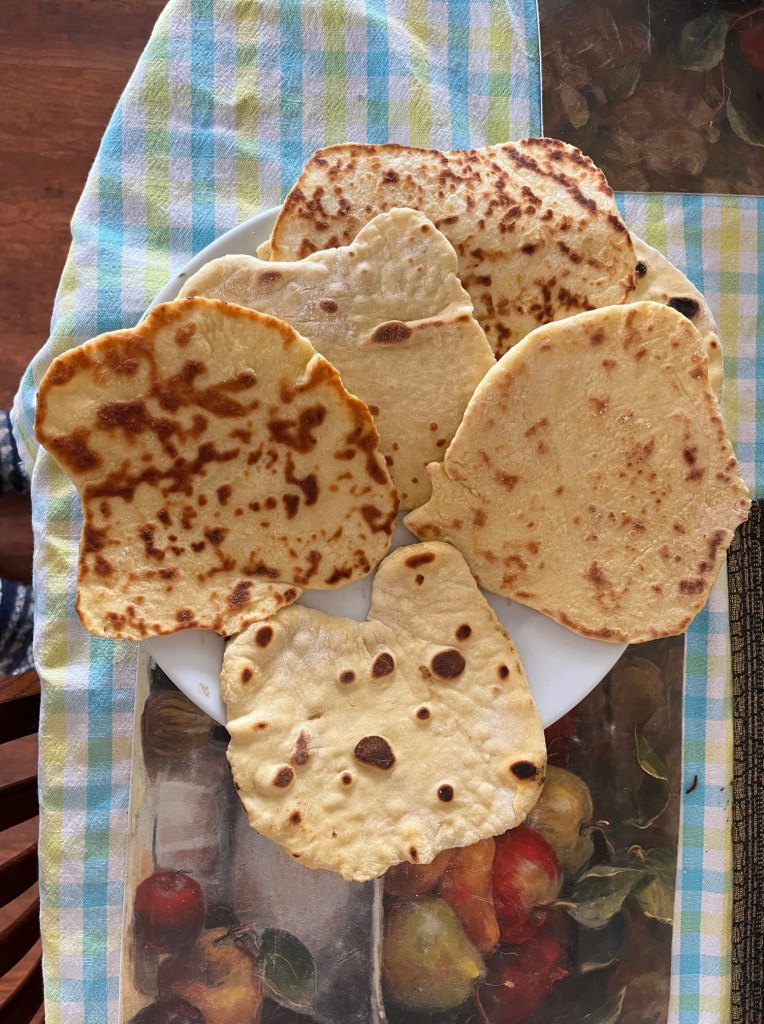
naan bread dough, ready to fry

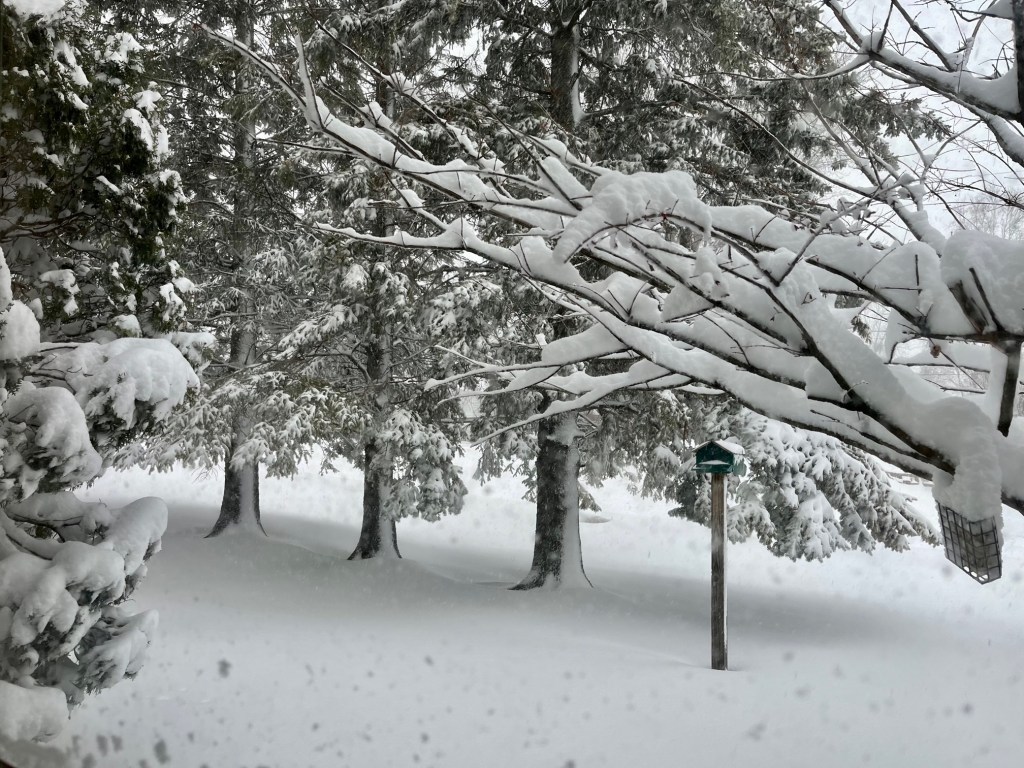
Today, March came in like a lion. The winds were 20 mph, and the gusts were a whole lot gustier. We were supposed to get one to three inches of snow, but at least six inches blew in off Lake Superior, and flurries are still coming and going. Around two o’clock this afternoon, a light pole fell over onto the Bong Bridge and blocked traffic from Duluth to Superior. Fortunately, it didn’t fall on a vehicle.

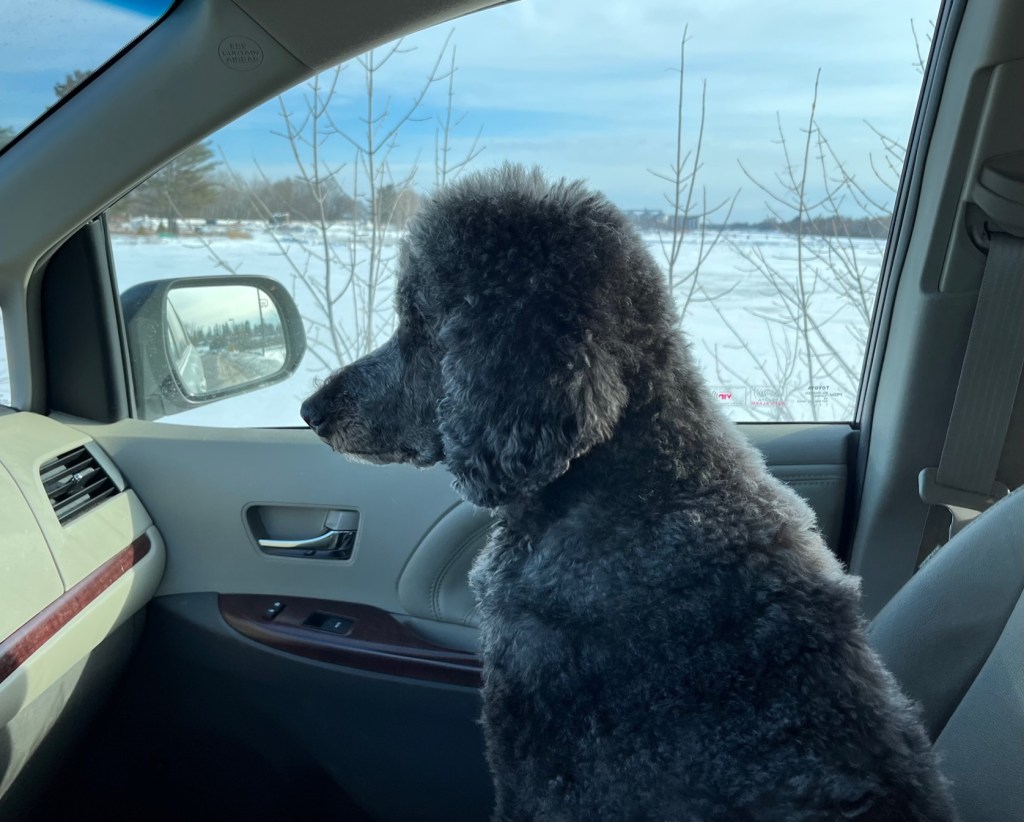
In my yard the snow piled up on existing drifts, turning hills into mountains. I will need a Sherpa, oxygen, and snowshoes to walk around my yard. When I opened my back door, I pushed it slowly, using it as a plow to move a drift just enough so I could reach around and grab the shovel. I cleared a path across the deck for the dogs, who unfortunately need to go potty outside, and do other stuff, like walk around the house to smell for bunnies. They come back inside looking like four-legged abominable snowmen, and I have to towel dry them and dig ice balls out of their feet.

I worked this morning, which left my afternoon wide open for cooking — something I feel compelled to do during a snowstorm. Perhaps it’s a primal instinct, meant to ensure I survive the brutal winter elements while I’m inside my house with central heating, electricity, and running water. First, I made taco soup in the crockpot. Nice and simple. This gave me time to make naan bread.
frying the bread

Why did I decide to make naan bread? Reading made me do it. I’ve read Behind the Lens and Double Exposure written by Jeannée Sacken. Her novels are about the adventures of photojournalist Annie Hawkins, who travels to Afghanistan. They are page-turning adventures with twists and turns and danger and romance, but they are also filled with the sounds, smells, and tastes of Afghan food, and naan bread is mentioned often. After reading the second book a few months ago, I decided I needed to make naan bread. On Sunday, I bought the ingredients.

sort of six-inch circles

I made bread once before when I was sixteen and babysitting for my younger cousins. And it turned out perfect. It was so good — just the right color and height and texture and taste — that I never made bread again. I figured I had nowhere to go but down. My next loaf of bread would have surely been a brick. But naan bread is mostly flat, so I was encouraged. The naan bread could be dipped in the taco soup or torn into bits and dropped into the soup.

My first attempt at activating the yeast was a failure. My water was warm enough, but when I put that warm water into a cool metal bowl, the water temperature dropped, and the yeast fizzled instead of bubbling. I had to throw it out. After some internet research, I tried again. This time I used my Pyrex measuring cup. I warmed it up with warm water, then I put warm water in the cup with the yeast. It bubbled up and doubled in volume, just like it was supposed to do. I mixed the other ingredients in and kneaded the dough on the pastry mat. I covered the dough and let it rise for an hour and a half, while I attended a Zoom write-in.

Triple play: soup cooking in the crockpot and dough rising in a bowl under a dish towel while I write.

After the naan bread dough finished rising, I divided it into eight sections, rolled each one into a flat six-inch circle — more or less — and fried each piece. I set off the smoke alarm, but only once. I made a mess out of my kitchen. When I finished there were dishes all over the countertops and stove, and I found flour on the floor. I don’t know how I can cook something and make so many dirty dishes and create such a mess. I guess it’s a gift.

When my husband came home, there was no evidence of my afternoon cooking spree. The kitchen was clean and the dishes were done. (I even managed to read a bit and take a nap.) He looked at the plate of naan bread on the counter and asked, “What are those?”

“That’s naan bread. I made it this afternoon.”

“Yeah, right. You went to the grocery store and bought it,” he said.

“Nope,” I said, “I even took out the rolling pin and pastry mat and put them in the dish rack, so you would think I made them from scratch.”

He looked at the dish rack overflowing with bowls, pans, and measuring cups, and he laughed. He knew I’d been cooking and baking. He also doesn’t understand how I can cook something and make so many dishes and such a mess. Some talents are inexplicable. But he liked the naan bread and soup, happy to have a hot home-cooked meal after snow blowing.

Nights with Cabela

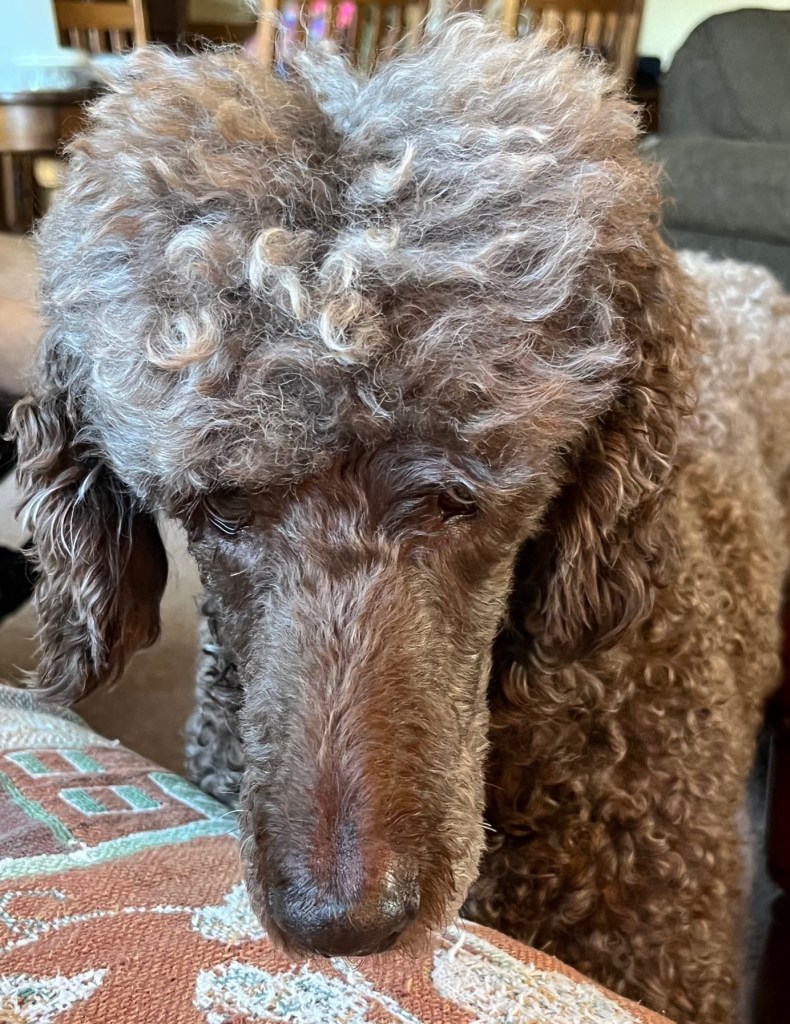
Cabela

My dog Cabela is fourteen-and-a-half-years old, so in human years she’s ninety-and-a-half. Living with Cabela these days is like living with a very senior citizen. (I’m not sure I like that term. Maybe I’d prefer aged person. But maybe not. It’s February and I get cabin fever in February so I get moody. What sounds good to me one day, sounds awful to me the next day. But this post isn’t going to be about what to call old people. And by the way, winter doesn’t bother me. I don’t care how much snow falls or how many days it has been since the sun has made an appearance. But the quality of the daylight changes in February, and it awakens something in me, and I get cabin fever which recedes sometime in April when I return to ignoring the weather. But this post isn’t going to be about weather either.) It’s about living with an old dog whom I love dearly. And a hardworking grandfather who lost his sight when he was eighty.
Cabela often enters a room and stops abruptly. She stands still, not looking in any direction, and hangs her head, pondering. She’s asking herself, “Why did I come in here?” or “Where was I going?” It takes her a bit to figure it out. I know, I know, sometimes when I go into the basement, I forget why I went down there. But I usually remember as soon as I go back upstairs. And most of the time I don’t forget why I went downstairs.

At night Cabela’s more confused and she often paces. It’s called sundowning, which is not a disease, but a condition that can occur with dementia, and yes, dogs can get dementia. Sometimes I think Cabela has a touch of it. She knows all her people. She hasn’t forgotten when it’s time for her meals, treats, and walks. And she doesn’t mistake the floors for the yard. But she has changed.

On most nights, somewhere between midnight and two in the morning, Cabela begins the restless pacing, the waking up and wandering from the bedroom to the family room to the bathroom. The first time she does it, I get up and let her outside. Lots of older people need to get up during the night and pee, and if Cabela needs to go, she needs to go. It’s not good to hold it. But after she comes back inside, she can’t decide if she wants to sleep on her bed in the bathroom or her bed in the bedroom or on one of the couches in the family room. I hear her paws swoosh on the carpet as she walks by the bedroom on her way into the family room. I hear her walk by the bedroom again on her way to the bathroom where her nails click on the linoleum and her body thuds onto the sheepskin bed tucked between the end of the toilet and the cupboard. I hear her rise up and once again her nails click on the floor, but instead of walking by the bedroom, she enters it. I know she’s looking at me, wondering why I don’t get up. Because I believe she thinks it’s time to get up. Finally, she settles down for a few more hours, but eventually she begins pacing again before my husband and I have to get up.

Last night Cabela was more restless than normal. The only one who slept through it all was Ziva, our other younger dog.

Cabela, left; Ziva right

So my grandkids and I took Cabela and Ziva for a walk this morning before it started raining. Cabela can’t walk far, but we went slow. We walked three blocks up, one block west, three blocks down, and one block east. My idea was to give her more daytime activity, hoping she’d sleep better tonight. But we’ve only managed one walk because it’s still raining, and it’s cold, soggy, and windy. It’s not good weather for a “ninety-year-old” dog.

On our morning walk, I thought about my grandpa George who went blind at eighty years old. He didn’t have dementia, but he was restless at night. He kept waking my grandma Olive and asking her if it was time to get up. He’d fuss about who was taking care of his garden or about something that needed attention at his gas station. In the darkness of night, things are always a worry. And for Grandpa, who’d lost his sight, I imagine those worries became terrors.

Before Grandpa George went blind, he still went to work at his station six-and-a-half days a week. He pumped gas and tinkered in the garage. He’d been going to work at his station for over sixty years, rarely taking a vacation or even a day off. He planted a large garden and grew raspberries, strawberries, green onions, sweet onions, new potatoes, russet potatoes, corn, peas, beans, beets, asparagus, carrots, and a few flowers between the rows of fruits and vegetables. He did the sowing and the harvesting, even at eighty years old.

Olive and George, 1930s

But after he lost his sight, his life screeched to halt, like a pair of rusty brakes on a customer’s old car that he once would’ve fixed. Grandpa George, who got up every morning before six, ate at seven, and opened his station at eight, couldn’t walk from his bed to the bathroom without someone to help him find his way. Grandpa George, who raised the finest garden in town that provided food for his family throughout the summer, fall, winter, and spring, could no longer read the rain gauge or sort his seeds for planting.

Grandpa’s days and nights somersaulted. He dozed on the living room couch during the day when he should’ve been filling someone’s gas tank and checking her oil. He listened to the evening news when he should’ve been checking the corn and pulling potatoes in the garden. At night when he would’ve been sleeping after a day’s work, his mind raced and he kept his wife up with question after question, starting with, “Olive, you awake?”

Grandma Olive tried to keep Grandpa from falling asleep on the couch during the day. At first people came to visit, and he told them what to do at the station in order to close it down, and there were the last crops to reap from the garden, all activities Grandpa oversaw while sitting at the kitchen table, his calloused mechanic’s hands resting on a white oilcloth decorated with nickel-sized cherries.

Someone came and tried to teach Grandpa to read braille. Perhaps books would entertain him. But his hands shook slightly, and he couldn’t track the raised bumps on the page.

Nuts.

Someone decided pecans were the answer. Grandpa sat at the kitchen table and cracked pecan after pecan. He sorted the meat from the shells the best he could, but someone else, usually Grandma, needed to pick out the stray shells. Another job for her to take on, along with all her other chores that needed completing on a short night’s sleep. The pecans were stored in jars and given to family and friends, all of whom soon had more pecans than they could ever use.

Grandpa kept cracking nuts, but he didn’t sleep better. Nights were restless and his mind paced, although the rest of him couldn’t. Grandpa was certain dawn must be coming soon, even though it was hours away, and he would ask, “Olive, you awake? What time is it?” And Cabela, certain the day should begin even though it’s hours away, stares at me most mornings as if to say, “You awake? It’s got to be time to get up.”

Ice Sculpture Safari

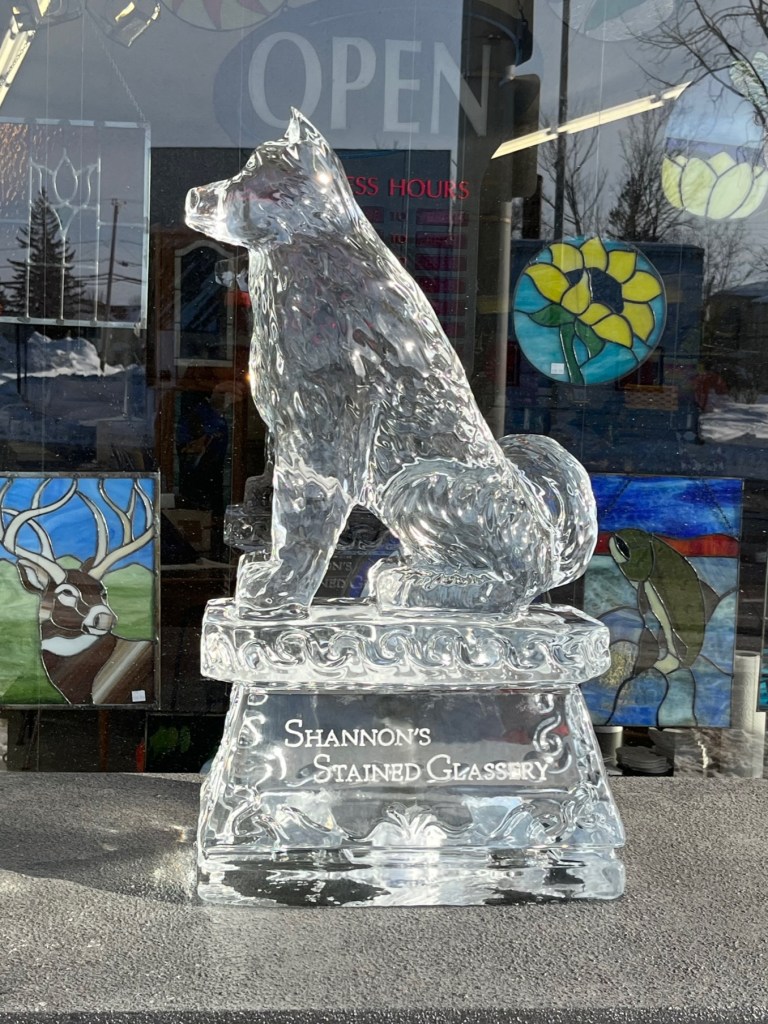
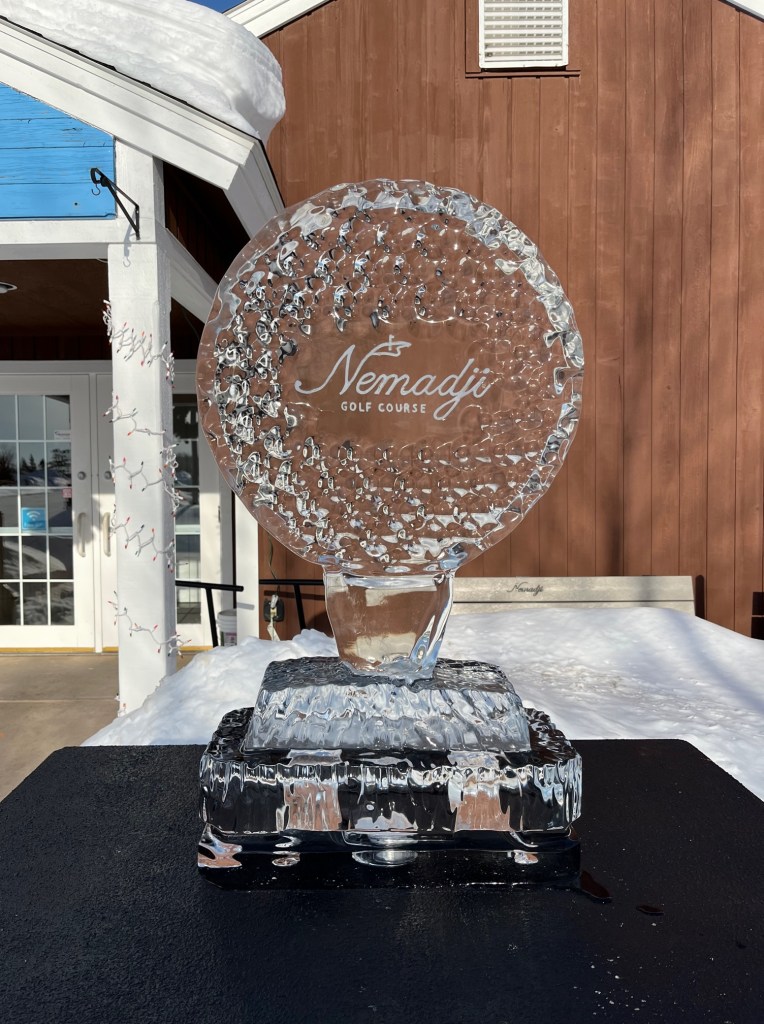
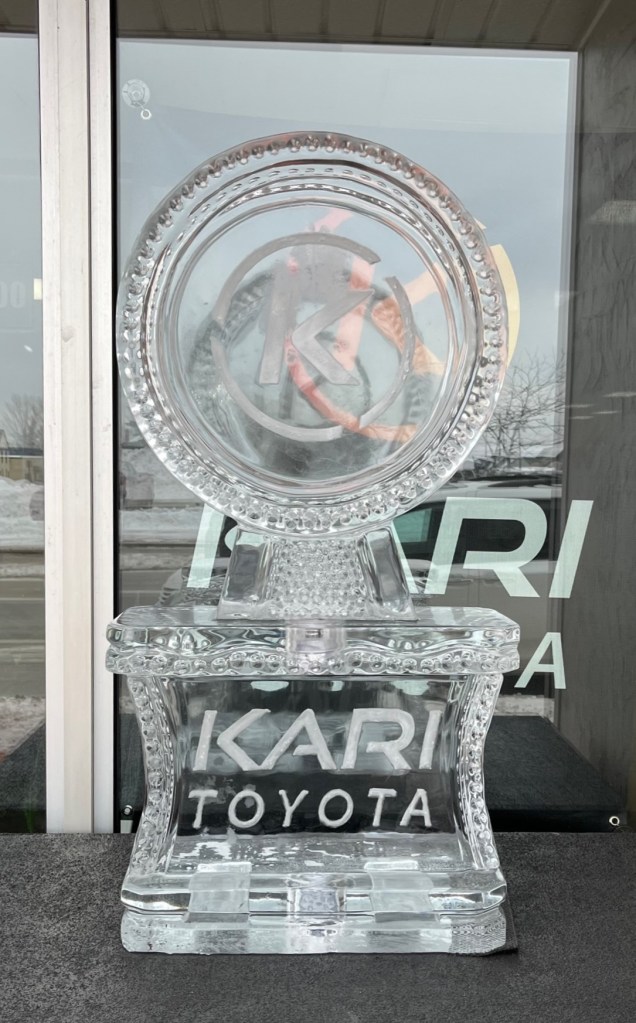
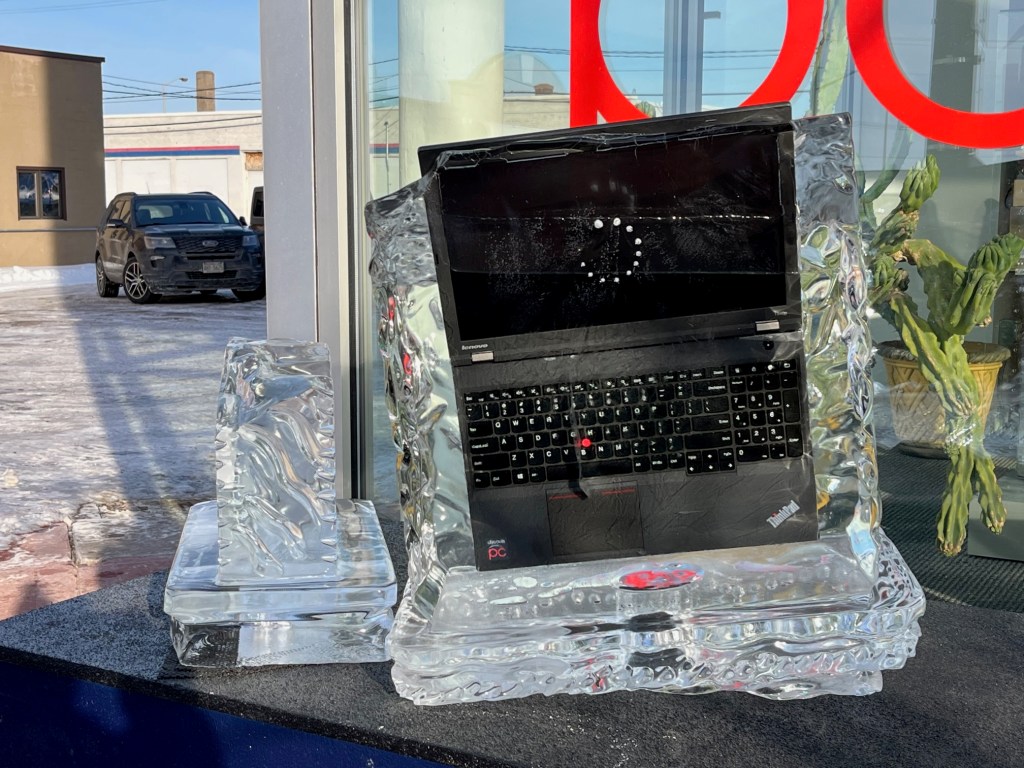
On the last weekend of January, my city celebrates winter with an Ice Festival, and as part of that celebration, small ice sculptures crop up around town. This year right before the festival weekend, an arctic front showed up carrying a couple of bags of windchill and settled in for a week like our town was an Airbnb.

I wasn’t bothered that Mr. Arctic Front crashed the festival because I never attend the outdoor tribute to winter. It’s not because I don’t like snow and cold, but I embrace it differently. I honor winter by reading, writing, walking my dogs, feeding the birds, baking, and marching briskly from my car to whatever building I’m entering. But on Saturday night, I enjoyed the festival’s closing fireworks, watching them from my kitchen window while sipping raspberry hibiscus tea with honey.

After the Ice Festival was over Mr. A. Front stayed on for the week. Each day his mood descended into a deeper frigid funk, deep enough by Friday morning to cause scads of school districts to either delay their start by two hours or completely cancel classes. The next day Mr. Front stuffed the windchill back into his bags and left town. The temperature rose to a glorious balmy 25°, and I got an itch to have some fun, which brings me back to the ice sculptures. I decided I needed to photograph each one.

I found the list of businesses that sponsored the sculptures, grabbed my phone, and set out on a mission. It was like a treasure hunt, but without the stupid clues. I’m no good at puzzlers or clues or those math problems with trains leaving stations at different times, going different speeds, and heading different directions. I always wanted to shout, “Take the damn bus or drive or fly!”

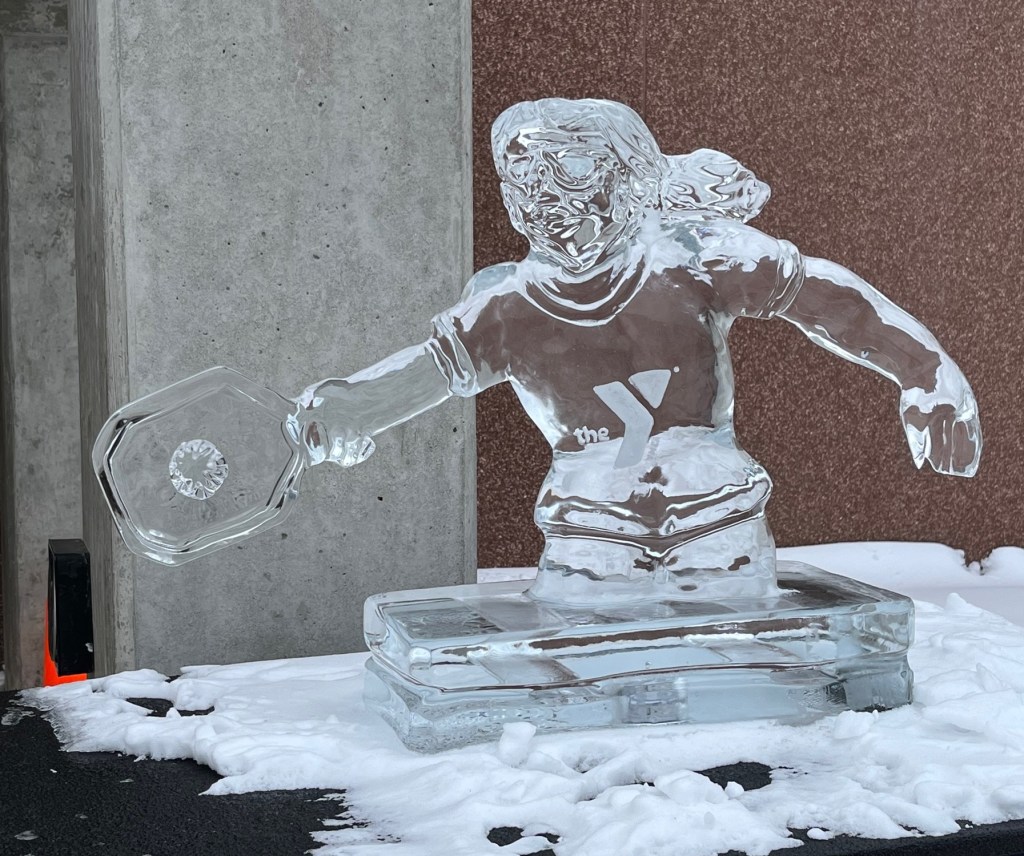
Pretending my phone was a righteous 35mm with a telephoto lens of phallic proportions, I fancied myself a photojournalist. (Hey, it’s my Walter Mitty fantasy.) I started my ice sculpture treasure hunt with some coin in the bank because I had already photographed the icy racquetball player in front of the YMCA when I dropped my grandson off at his 3K school on Wednesday, and I had snapped a picture of the sculpture in front of the vet’s when I dropped off a urine sample for Cabela on Friday. Years ago, I played many racquetball games with a college friend at the Y. The vet who takes care of my dogs was a former student of mine, and she has cared for all of our dogs accept the first one my husband and I had. My ice safari would turn out to be a trip down memory lane.

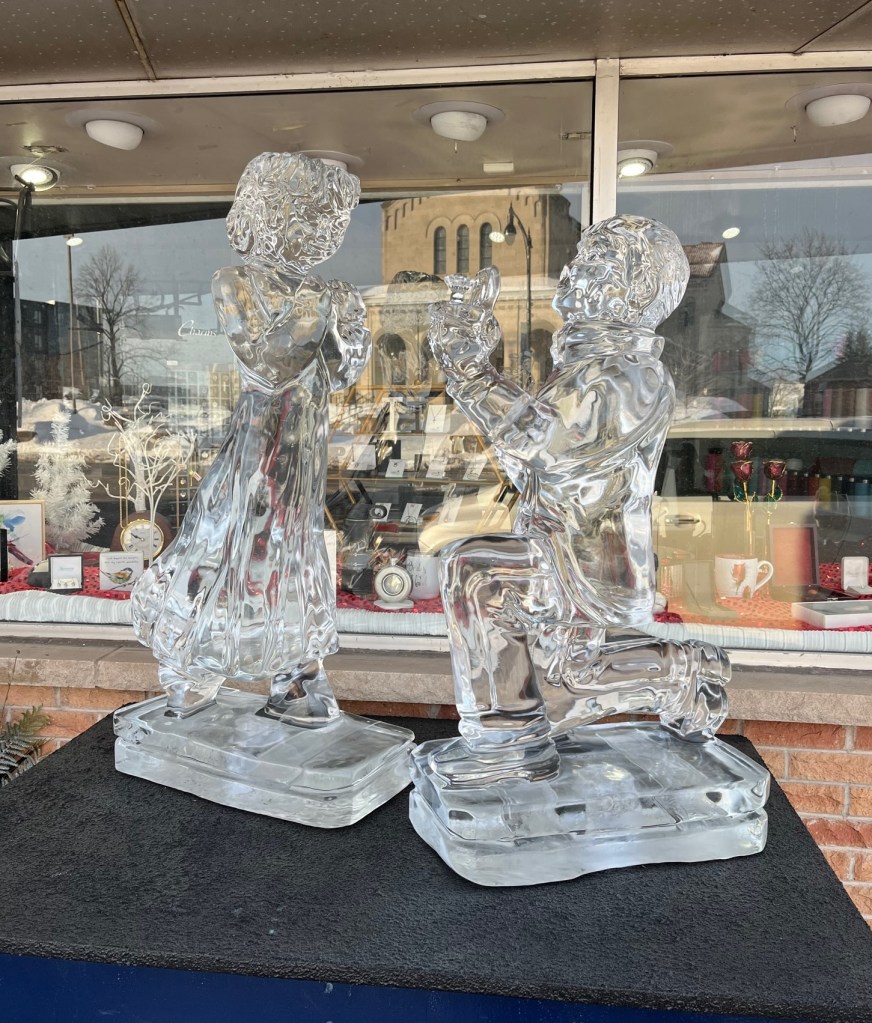
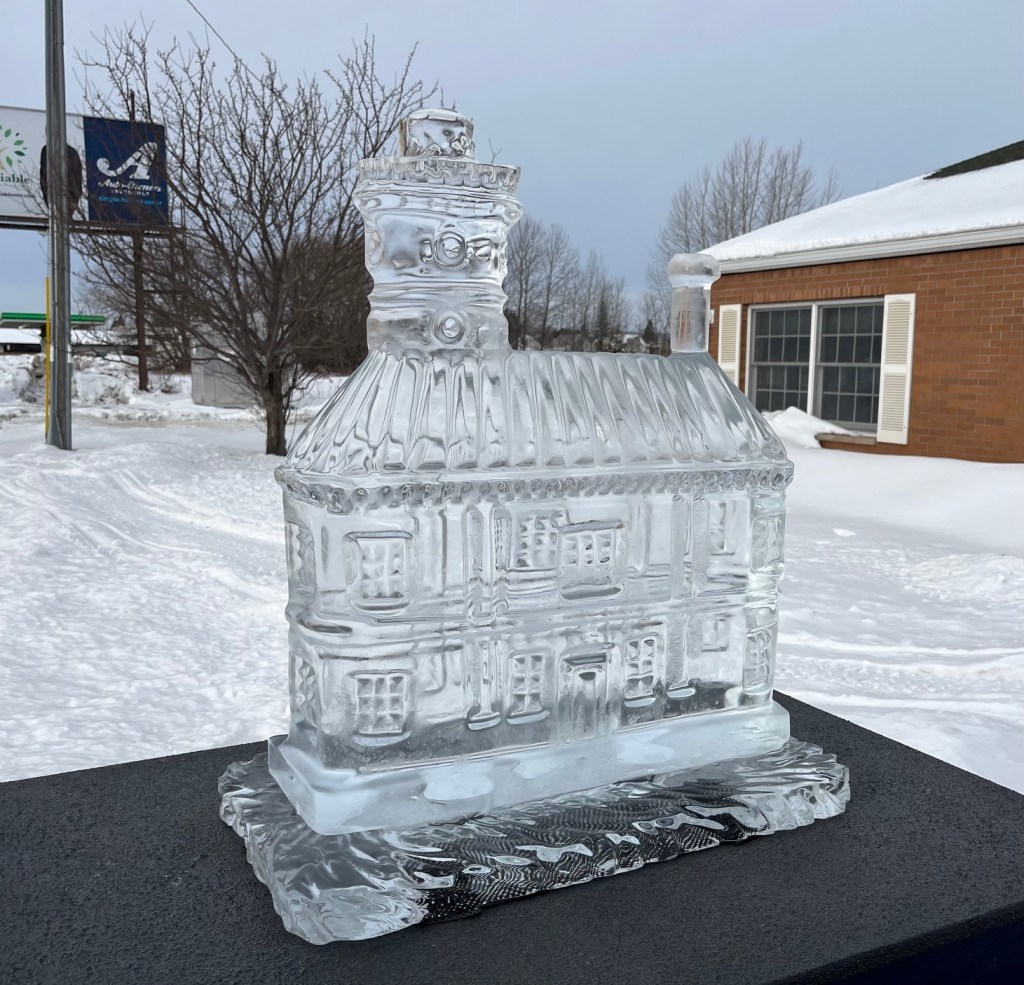
I photographed the tender proposal in front of the jewelry store where my husband and I bought our wedding rings in 1985. The Victorian house was captured in front of the chamber of commerce. It represents Fairlawn Mansion built by Martin Pattison, a lumber and mining baron. After Pattison’s death, his wife Grace donated Fairlawn to be used as a children’s home. Two of my uncles lived there for a brief time after they became orphans.

The cool Tramp wooed the adorable Lady while sharing a sparkly, silver noodle made from a pipe cleaner in front of Vintage Italian Pizza (VIP). A couple of days ago when I ordered a pizza to be delivered, I told the young person who took our order that my husband and I have been ordering pizza from VIP for almost thirty years. “Wow,” he said, “I’ve only been working here for five months.” He didn’t sound old enough to have been doing anything for thirty years. “Don’t worry,” I told him, “you’ll get there soon enough.”

My favorite coffee shop sponsored a frozen hot coffee with chilled steam rising out of the mug. I took a break from my self-imposed photojournalism assignment and went inside to order a decaf latte with a shot of raspberry. Sometimes when I write I get cagey, so I pack up my computer and go to the coffeehouse and write. There’s always at least one other person plunking on a keyboard. We never speak because we don’t know each other, but I feel a sense of community.

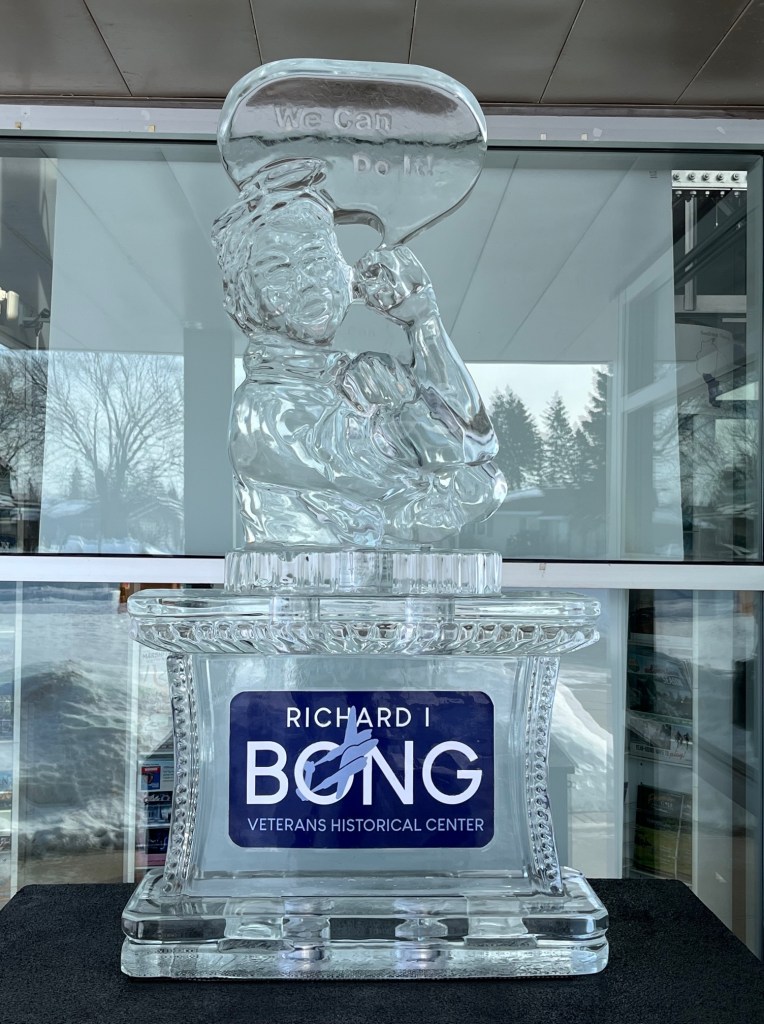
Richard Bong, a WWII flying ace, flew many missions and shot down many enemy planes. However, he didn’t die in battle, but while working as a test pilot in California.

The Richard Bong Center chose Rosie the Riveter to represent their museum honoring American veterans. My mother-in-law would have loved the cool-as-ice Rosie because she believed women were smart, capable, and strong.

My grandpa Howard served in the U.S. Army during WWII from January 1941 until August 1945. In 1943, he was wounded in Italy and received the Purple Heart. My sister, one of her sons, and I paid tribute to Howard through the Flag of Honor program started by American Legion Post 435 at the Bong Center. The American flag presented to Howard’s family at his funeral was raised during a short ceremony to commemorate his service in WWII

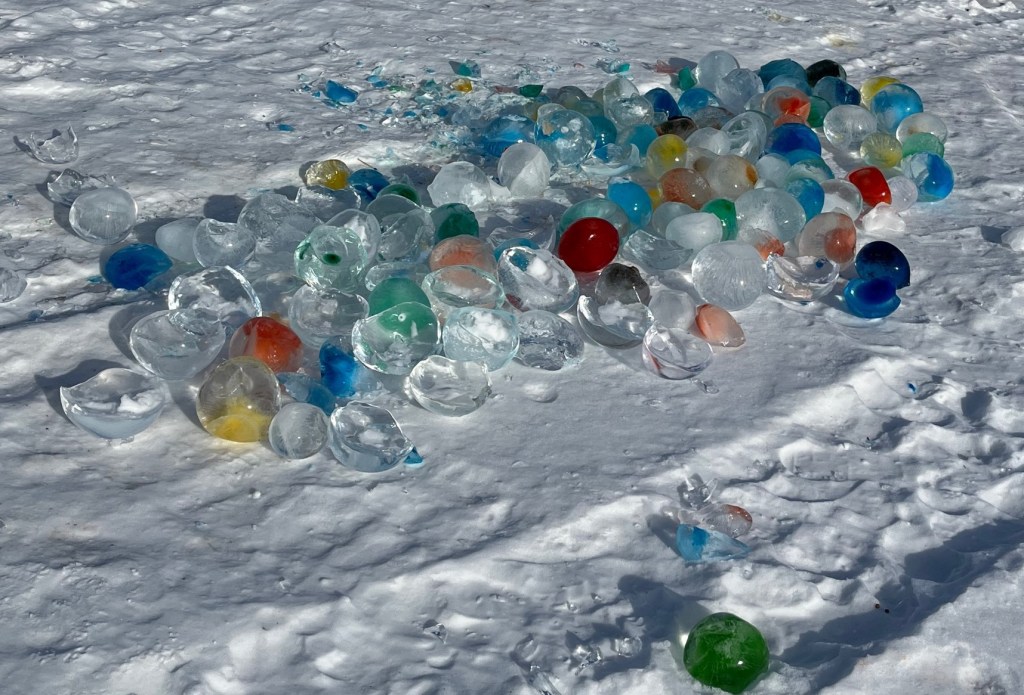
After photographing the ice sculptures downtown, I headed for Barker’s Island, the site of the festival, to track down more sculptures. When I parked the car, I spotted a large pile of misshaped ice marbles. They were part of the winter festival, but I’m not sure how. I liked thinking about them as giant marbles left behind by Paul Bunyan. I loved playing marbles when I was in second grade, and I could beat all the boys. In fifth grade I played Babe the Blue Ox in a play. I made my own costume by cutting out the silhouette of an ox from cardboard and painting it blue. When I was on stage, I was always behind the cardboard ox, and I had no lines, so I didn’t discover I had stage fright until I played the Wizard in the Wizard of Oz in seventh grade.

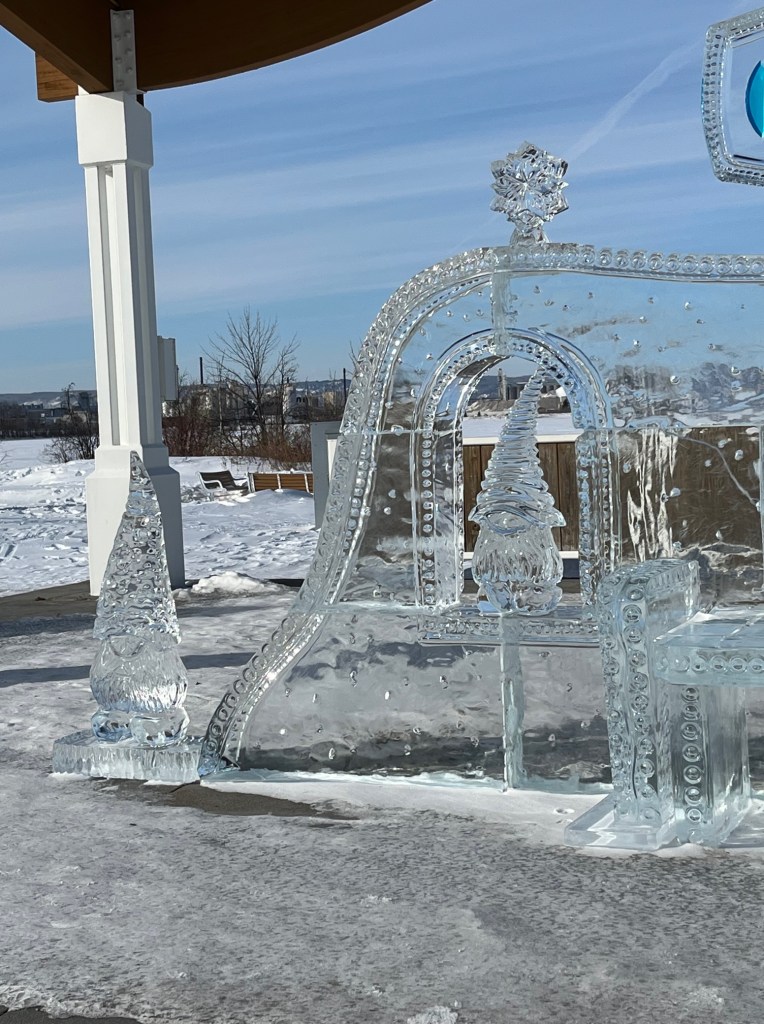
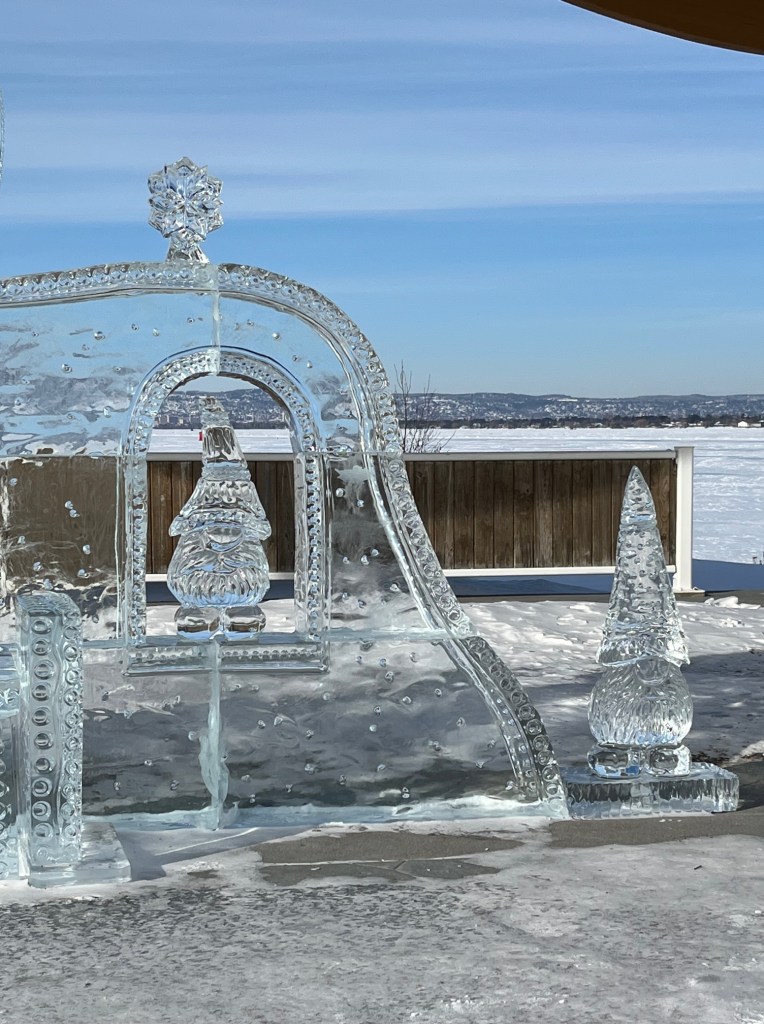
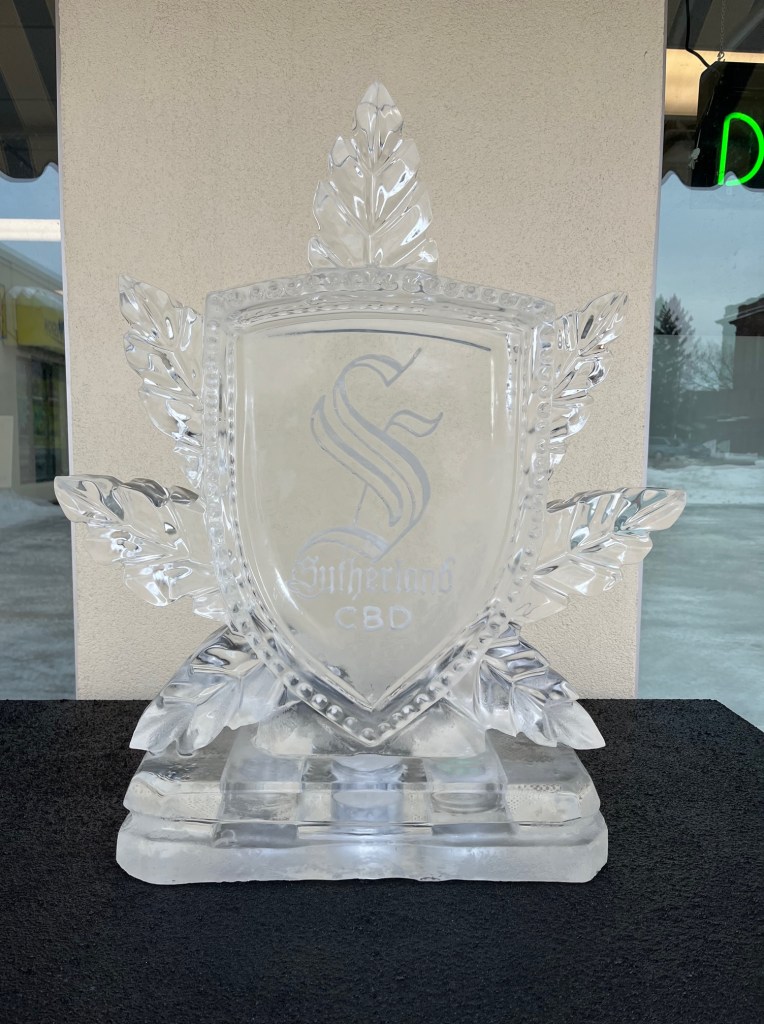
Across from Paul Bunyan’s abandoned marbles, were two of the prettiest ice sculptures. I don’t know what they symbolize, but I imagine they have a connection to sailors and ships and open waters. In the left photo in the background is the Seaman’s Memorial, a statue dedicated to sailors who have lost their lives on Lake Superior.

And the Ice Festival throne . . . heavy is the head that wears the crown and frozen is the butt that sits upon this throne.

The Superior Refinery sponsored an ice sculpture. On April 26, 2018, an explosion and fire rocked the refinery, which was owned by another company at the time. Luckily no one was killed at the refinery, and even luckier the explosion wasn’t as bad as it could have been. Because if it had been, everyone within a twenty-five mile radius from the refinery would probably not be around to tell their stories. There was a large-scale evacuation. My mother-in-law, who was suffering from heart failure was in the hospital that evening in a neighboring city, which was less than fifteen miles away, and her husband was with her. It was their 66th wedding anniversary. My husband and I visited them at the hospital. Less than a month later my mother-in-law passed away. But on that night, she had her humor with her, and she quipped, “Well, I won’t ever forget the date of the explosion.”

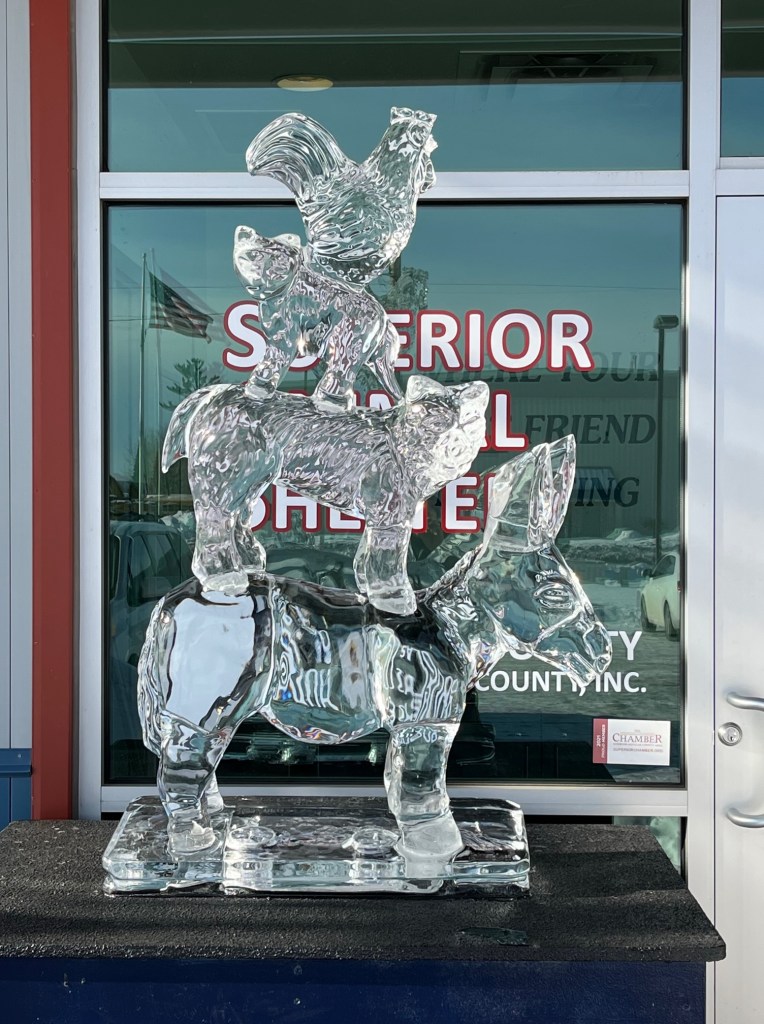
And on a happier note, my favorite ice sculpture, “The Town Musicians of Bremen,” was sponsored by the animal shelter. As a child, the story by the Brothers Grimm was one of my favorites. Turns out the four famous animal musicians have statues of themselves in Bremen, Germany, the Lynden Sculpture Garden in Milwaukee, and in front of some veterinary schools in Germany. (You can listen to the story here.)

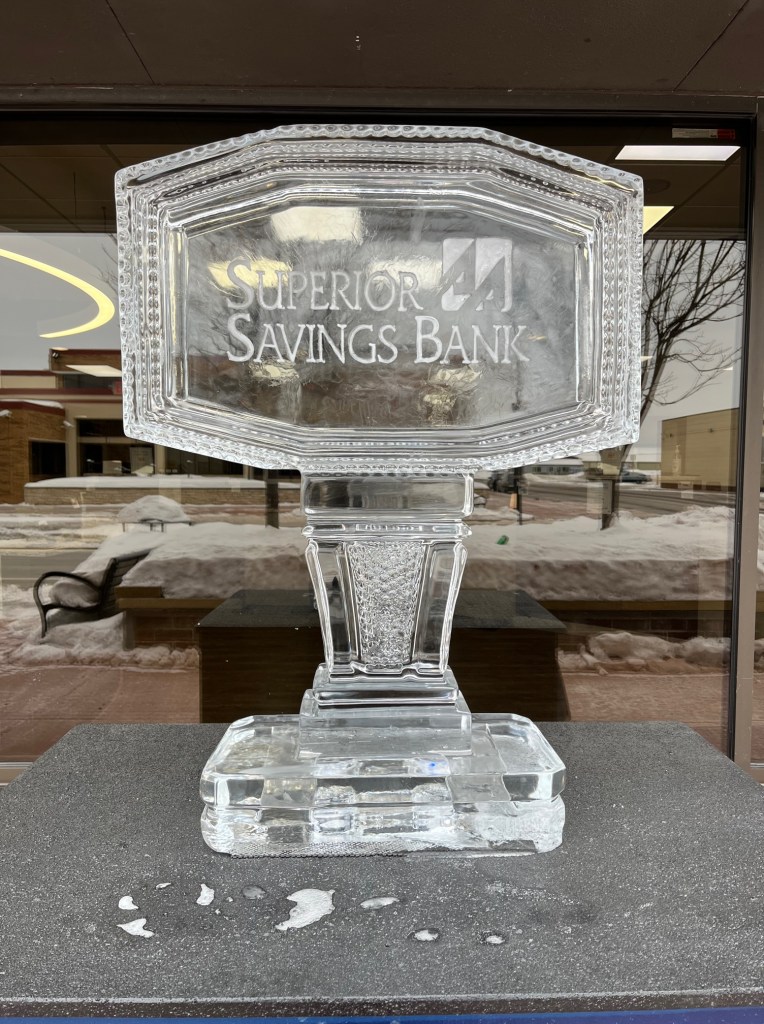
And the rest of the sculptures . . . Click on the side arrows to move through the slideshow.

The Ice Gnomes in Waiting

Bloganuary Post for January 9: What’s the Most Memorable Gift You’ve Received?

[Bloganuary is hosted by WordPress. A new topic is presented each day during January. With this post I’m both behind and moving in reverse through the topics. But Merlin aged backwards, growing younger, so there you go.]

Charlie in Turtle Park, November 2022

Choosing anything to label as “the best” or “most memorable” or “the greatest” is difficult. The answer to my most memorable gift would’ve been different last year, ten years ago, twenty years ago, or forty years ago, and if I wrote about any of those gifts, it wouldn’t mean the others were less memorable. So, I’ve decided to write about my most recent memorable gift for a couple of reasons. One, it’s recent, so I remember more details, and two, because, well, it’s memorable.

In December my youngest two grandchildren, Evan and Charlie, came for a sleepover. When they arrived, I opened the overhead door to let them in the garage. Charlie, the four year old, stood in front of me clutching the top of a sandwich baggie in his fists. His dad and grandpa talked to each other, Evan talked to everyone, and Charlie talked to me, keeping a firm grip on his baggie. But his voice is small, and his C‘s come out as W‘s, and sometimes he drops his S‘s. My ears have trouble distinguishing between M‘s and N‘s and B‘s and D‘s. Sometimes in a room of crowded voices, it’s hard for my ears to decipher Charlie’s words. But I figured he was talking about a snack in the baggie, so I patted his head and said, “That’s nice.” I told him to go inside and take his jacket and boots off. Charlie smiled big, and went into the house.

My son looked at me. He knew I hadn’t heard a word Charlie said because I had that look on my face. The look of someone pretending she has heard. “You know,” my son said, “Charlie filled that baggie with warm air from the car. He wants to give it to you for your house.”

I did not know. I had not heard. I followed Charlie into the basement.

“Charlie, you brought me some warm air. Thank you so much.”

“Yeah!” Charlie cooed, smiling even bigger, firmly holding the baggie, making sure none of the air escaped while he shook off his boots one at a time. I offered to hold the baggie of air while he took off his jacket.

I handed the air back to Charlie. “Let’s go upstairs, and you can set the warm air free.”

In the living room, he placed the baggie on the coffee table, opened it, and let the warm air loose. I opened my arms wide. “Can you feel all that nice warm air?”

“Yes, I can,” Charlie said, opening his arms wide, lifting his fingers up toward the ceiling to feel the warmth of his gift, his face filling with the joy of giving his nana such a fine present.

Bloganuary Post for January 10: Has a Book Changed Your Life?

[Bloganuary is hosted by WordPress. A new topic is presented each day during January. I’m a day behind. And I missed some days, but I was writing other stuff.]

Yes, all of them, even the books I don’t remember.

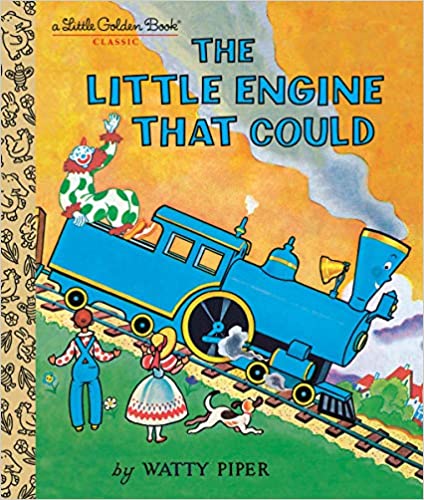
The first book I loved was “The Little Engine That Could.” It was my favorite bedtime story. My mother once tried to convince me to choose another story for her to read, but I became Little Blue Engine chugging away, steadfastly keeping the course up the mountain, refusing all other stories until my mother gave in and read it. I finally understood her point of view after I had children and had to read “Green Eggs and Ham” a bajillion trillion times.

Grandma Olive believed in books. She was a teacher and gave us books for birthdays and Christmas. She was also the organist and choir director at the Presbyterian Church, so the books usually had a religious theme. She lived eight hours away, and I think she suspected my parents were lackadaisical in the religious education of her grandchildren. She was right to be suspicious. Before every trip up north, my mother reminded us not to mention that we only went to church when we visited Grandma Olive. But I liked those children’s Bible stories too. On Sunday mornings while my parents slept in, my sisters and I created a circle of books by opening them, standing them on edge, and lining them up cover to cover. We climbed inside, pretending we were “Three Men in a Tub,” and recited the Mother Goose rhyme. Then because it was Sunday, I read Bible stories to my sisters, secretly hoping Grandma Olive could sense our piety.

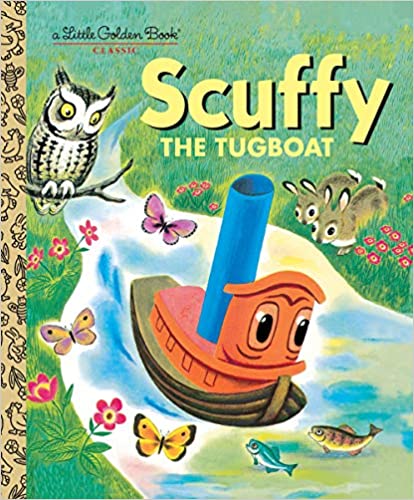
Nana Kitty believed in books. She had a set of encyclopedias from the 1950s on a petite bookshelf in her doll-sized living room. Those volumes contained the world, from Argentina to Yugoslavia, from Aardvark to Zebra, from Mercury to Pluto. I sat on her sofa and played alphabet roulette, reading about Queen Victoria one time and Canada another time. Nana also had a handful of Little Golden Books. My favorite was Scuffy the Tugboat. After Nana died, I ended up with some of the Little Golden books, including Scuffy, which I sometimes read to my grandchildren.

When I was in elementary school, my mother refused to buy me a pair of black patent leather shoes. I was a tomboy and she believed I would wreck them before I could outgrow them, so she considered them a waste of money. But my mother believed in books. Every time I came home from school with a book order form, which was two or three times a year, she let me order three or four books. She never told me they were a waste of money, even when money was tight. Each time my books arrived and the teacher gave me my stack held together with a rubber band, I smelled their newness then hugged them to my chest. I had wanted patent leather shoes, so I would fit in with the patent-leather-shoe girls. But my shoes were never going to make a difference. The books, however, were great friends who took me to new worlds.

In fourth grade I read biographies. The library at Pleasant View Elementary had a series of biographies. Eventually, I read them all–Marie Antionette, Catherine the Great, Alexander Graham Bell, Florence Nightingale, Edith Cavell, Jenny Lind, Marie Currie, and others whose names I can’t remember. While I wanted to sing like Jenny Lind, the person I most admired was Madam Marie Currie. She was determined to get an education despite living through political upheaval and at a time when women didn’t routinely attend college. Between the biographies, I read Alfred Hitchcock and the Three Investigators mysteries, and Nancy Drew mysteries.

On Christmas morning there were always some books and new pajamas under the tree. My third favorite part of Christmas day (after the unwrapping and eating) was to climb into bed wearing my new jammies and read my new book. When I was in seventh grade, my mom bought me a complete, unabridged, two-volume set of Sherlock Holmes. She knew I liked mysteries. During Christmas break, I sat in a stuffed armchair with a dictionary tucked beside me and Sir Authur Conan Doyle’s wily detective and his sidekick on my lap. At first, I needed to look up lots of words, but before long I could read Doyle’s stories with only an occasional turn to the dictionary. I was Little Blue Engine, chugging away, up the mountain of new words. I felt so proud that my mother bought something so grown-up for me.

I read through high school and college. During most of my twenties, when I read for fun, it had to be a book written by a British author before 1900. I’ve been a reader my whole life, fiction and nonfiction. I always have a book on my nightstand and a book on the end table. I often have a book in my purse, and in a pinch I have a nook app on my phone with some witty, heart-throbbing regency romances by Jennifer Tretheway, books that are so much fun they are worth a second read.

Once I learned to read, I never stopped. I have a lot of books on my to-be-read pile, but that doesn’t stop me from buying new ones. Will I ever get them all read? Well, “I think I can–I think I can–I think I can–I think I can.”

Bloganuary Post for January 5: What Brings Me Joy

Bogey, my mother’s dog

[Bloganuary is hosted by WordPress. A new topic is presented each day during January. The words in quotes are from “I Wandered Lonely as a Cloud” by William Wordsworth. I first read this poem in college, and loved it. It’s still my favorite poem.]

What Brings Me Joy

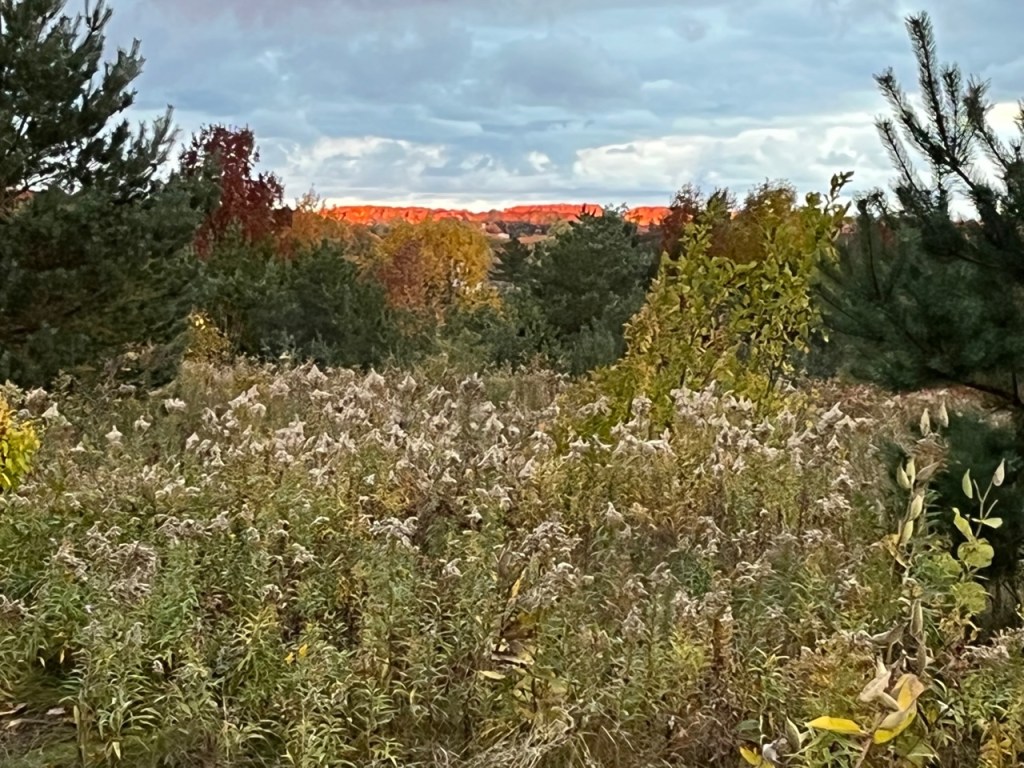
Fields filled with swaying grasses, splashed with wild flowers, and hugged by trees are my joy. I wandered through those kinds of fields as a child when I lived in southern Wisconsin. And now, I wander along those kinds of fields when I visit my mother in Michigan and walk her dog.

Those fields are to me what William Wordsworth’s “host of golden Daffodils” were to him.

For even when I am absent from those fields, they can “flash upon that inward eye / Which is the bliss of solitude, / And then my heart with pleasure fills, / And dances [not] with the Daffodils,” for those belong to Wordsworth. My heart dances with the swaying grasses, for those belong to me.

[To read “I Wandered Lonely as a Cloud” click here. To view the slideshow below, click on the square on either side of the picture.]

Bloganuary Post for January 4: A Treasure That I Have Lost

[Bloganuary is hosted by WordPress. A new topic is presented each day during January. I’m a day behind.]

When my father, who lived in Tucson, died in 2016, there were three things I wanted from his estate: a bed-sized quilt I’d made for him, a lap quilt my youngest son had made for him, and a scrapbook of photos I’d made for him filled with pictures of him and my sons.

I got two out of three.

Dad’s quilt with a white background in the focus fabric and a dark blue border

The quilt made for my father arrived first. Years before, on a visit north, my father had gone into a fabric store with me on purpose. Maybe it’s a cliché but most men don’t follow women into fabric stores. My husband always sits in the car. I had a friend whose husband always sat in the car and sometimes napped while she bought material. But my father wasn’t a sit-in-the-car kind of guy. Once on an afternoon jaunt along Lake Superior, I stopped at a yarn shop, and my father came inside with me. He found something to like in that store–the owner’s dogs. While I perused the yarn, they chatted about their dogs.

After I picked out some lovely woodsy, snowy themed material in the quilt shop, my father offered to pay for it. He didn’t say, “Make me a quilt.” The gift came with no threads attached. But in that moment, I knew I’d make him a quilt out of the material. A few days later, I bought a second set of the same fabric in a different color scheme, and I made two quilts, one for him and one for me. I thought about the quilts as a gift of connectedness: he had one and I had one.

Weeks later the quilt my son made for his grandpa arrived. It was late coming because at first no one could find it. I wanted my son to have the quilt. On his own he’d decided to make his grandpa a quilt. He picked out a focus fabric with an airplane motif because his grandpa had a small private plane, which he used every summer to fly from Tucson to Wisconsin to visit us.

The airplane quilt

The making of the airplane quilt was a joint effort between my son and me when he was about twelve. He selected the material, chose a design, and sewed the squares together. I cut the squares using a rotary cutter. If you’ve ever seen or used a rotary cutter for quilting, you will understand why you don’t put one in the hands of a child. When the quilt top was finished, I machine quilted it and put a binding on it. During one of my father’s summer visits, my son gave his grandpa the quilt, who most fittingly put it in his plane when he left and few it home.

The scrapbook of photos never arrived. No one ever found it. I made it for my father around 2005. I wasn’t into scrapbooking, but I had a friend who made gorgeous eye-candy scrapbooks to memorialize family vacations. When I was a child, a scrapbook had plain white pages and people taped or glued articles, photos, ticket stubs, and other flat mementos in them. I have one I made when I was a teenager after my trip to Europe. But scrapbooking had evolved, and people used decorative papers, elaborate stickers, and fancy stick-on letters to create themed pages, which were slipped into plastic sleeves then inserted into a binder.

I made one of those upscale, themed, gorgeous eye-candy, fancy scrapbooks for my father. I filled it with pictures of him and his grandsons. Pictures of him holding them as babies. Pictures of them fishing with him. Pictures of them with him when we visited Tucson. And, most sentimentally, the pictures I took each year of him and his grandsons in front of his plane, just before we stepped away and he climbed inside. We’d listen to him yell “clear” before he started the engine. We’d watch him taxi to the runway then take off. We’d stand on the ground and wave, and my father would tip his wings back and forth, waving goodbye to us.

The scrapbook is a treasure gone missing. No one is sure what happened to it. One year my father, who lived in a raised ranch, had water damage in the lower level in an area where he stored a lot of stuff that had to be thrown away. Maybe the scrapbook was part of the flood.

I have copies of all the photos, but it’s not the same. In the scrapbook, those remembrances were gathered in one place. I wanted to be able to open the scrapbook and wander through those collected memories of my father with his grandsons. I could’ve made another scrapbook, but I haven’t. I think of the one I made for my father as perfect, something I couldn’t replicate.

But I use the quilt I made for him on my bed. The gift-of-connectedness quilt that I made for myself hangs on the quilt rack in my family room.

My quilt with a tan background in the focus fabric
and a sage green border

Bloganuary Post for January 2: How am I Brave?

[Bloganuary is hosted by WordPress. A new topic is presented each day during January.]

I don’t know if I’m brave because I’ve never been in a situation requiring bravery. I could offer insignificant bits of times when I’ve been microscopically brave, but those examples are dust and easily blown away. However, there are stories of bravery among my family, mostly it’s the kind of bravery needed to get through the beating life sometimes hands a person.

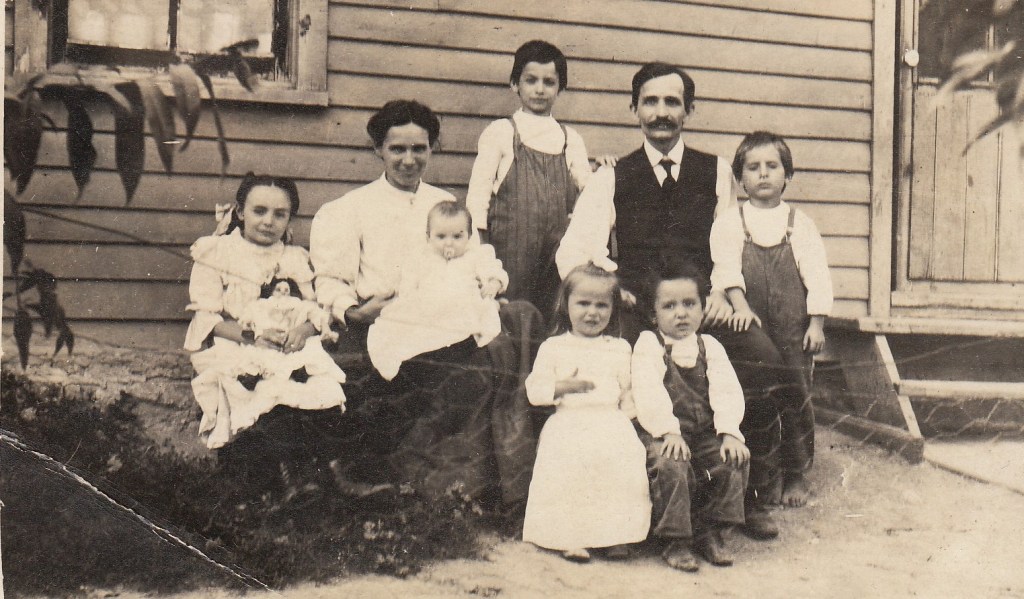
My great-grandfather Joseph, in the vest and tie, died of typhoid fever in 1922. His wife Mary is holding my Nana.

My great-grandparents Mary and Joseph, both orphaned young, traveled from New York City to West Bend, Wisconsin, on different orphan trains when they were small children, most likely with notes pinned to their clothing, listing their names, their destination, and the names of their new families—who they met for the first time at the station. Later, Mary and Joseph fell in love and married. But Joseph died young, leaving Mary with seven children and one on the way.

Grandpa George and Grandma Olive with their first child, my father.

My grandpa George and his three younger siblings became orphans at 11, 10, 8, and 3. They went to live with an aunt and uncle. But young George felt it was his responsibility to provide for his siblings, so he went to work at a copper mine. While riding in a wagon and holding a container of kerosene between his legs to keep it upright, some kerosene slopped on his legs and caused serious burns because George didn’t tell anyone until he got out of the wagon. His aunt put her foot down, refusing to let him work at the mine. He was, after all, only 11, and she and his uncle had the means to welcome the four orphans into their brood of children. Later, George started a business, married, and had three children. For the rest of his life, he quietly helped people in need. In his old age, he lost his sight, and to keep busy he cracked pecans, filling jars with nuts to give to family and friends.

Grandpa Howard as a young man

My grandpa Howard fought in World War II for four-and-a-half years. He was shot in the leg while fighting in Italy, and for that bullet he was awarded a Purple Heart. I don’t know if Howard ever carried a wounded soldier to safety or saved his fellow soldiers from enemy fire. He never talked about the war that gave him two permanent souvenirs: a limp and nightmares. The limp was constant, and the nightmares were frequent. The war wrecked his first marriage. He became estranged from his children. And he drank heavily until he became sober in his late 50s, eventually helping other alcoholics.

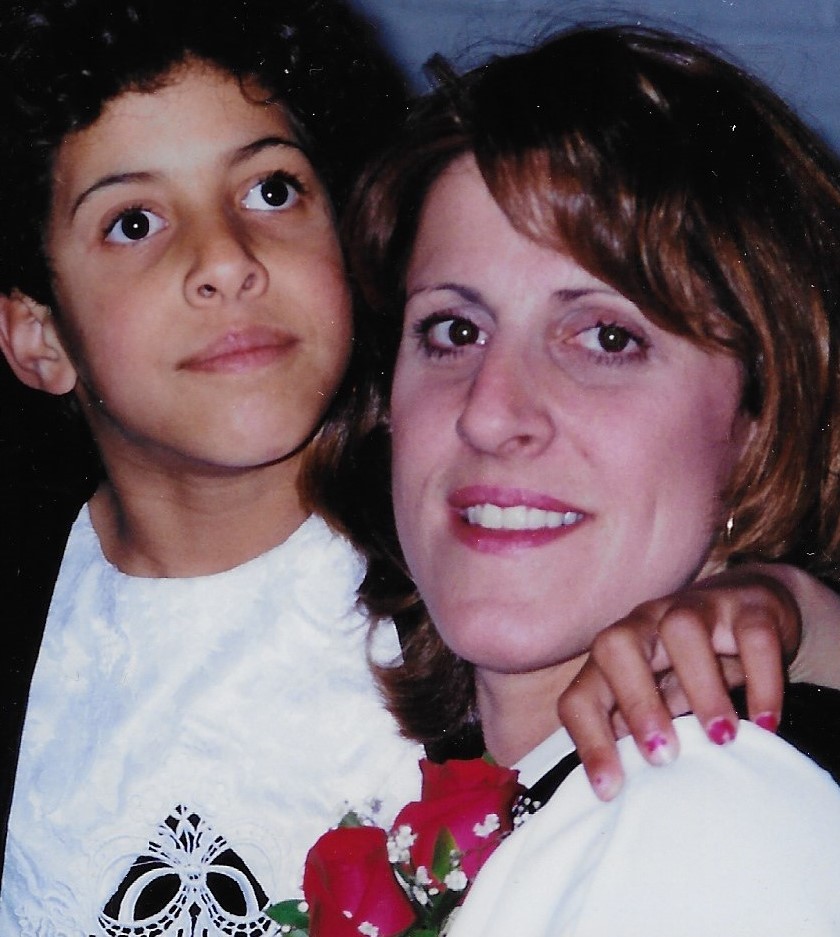
My beautiful sister and her beautiful daughter, circa 1994

My sister has a special needs child who almost died from seizures at three months old. My sister was brave on that night and has been brave many times since. Doctors told her that her daughter suffered brain damage and would probably never walk or talk or feed herself or learn to use the toilet. My sister spent as much time with her infant daughter as she could, stimulating her, talking to her, moving her limbs. Now an adult, my niece walks, talks, uses the bathroom, swims, plays soccer, and much more. Was it my sister’s love and bravery? Or the neuroplasticity of an infant’s brain? Or a combination? Because of my niece’s cognitive disabilities, she still struggles, and my sister is still brave.

Someday, I will probably need to be brave. And I hope my family stories will give me courage.

Bloganuary Post for January 1: What Is Something You Want to Achieve This Year?

[Bloganuary is hosted by WordPress. A new topic is presented each day during January.]

I gave up making New Year’s resolutions a long time ago. Maybe because I never kept them any better than the resolutions I made at any other time of year. I also don’t stay up until midnight anymore. The arrival of the New Year finds its way without my shouts of “Happy New Year,” and when I wake in the morning it will still be January 1.

But I have an ongoing list of ways I try to improve that I keep in mind throughout the whole year:

  • Be kind, as much as I can, to both people I know and strangers I don’t know.
  • Move around more and eat better.
  • Socialize more. Because I’m an introvert, my first inclination is to stay home, content in my own world with just my dogs and husband for company.
  • Revise and polish some of the rough drafts of stories and essays that I’ve written.
  • Share.
  • Understand and use commas better.
  • Remember that it’s okay to make time to do the things that I want to do.

The New Year gives us a chance to reflect and start again, to make resolutions and become better people. But any other day of the year can be a good day to reflect and start again, to make resolutions. So, Happy New Year throughout 2023, for today and any other day that you may need it the most.

Show and Tell to Remember

[“Show and Tell to Remember” was originally published by the Bacopa Literary Review 2022. It earned an honorable mention for humor.]

Inside my dress pocket, I had the best thing for show and tell. In 1964, I was new at Pleasant View Elementary, and having started in October instead of September, I was an outsider. My kindergarten classmates were going to be impressed. The popular girls would envy me and ask me to jump rope with them during recess. The cute boys would elbow each other and try to sit by me at snack time. My pretty teacher, with bouncing brown hair that flipped up in a long continuous curl around her neck, would look at me with approval.

“Vickie,” the teacher said, “it’s your turn.”

I snapped out of my daydream, rose from the floor, and stood next to the teacher who sat in a chair. My dress was clean, my saddle shoes were polished, and my unruly hair was combed into pigtails. It was my moment. I slipped my hand into my pocket.

“I brought a balloon,” I said. “Each one comes in its own wrapper.” My classmates leaned forward. My teacher turned toward me for a better view. I opened the package and pulled out the balloon.

“Let me see that,” my teacher said. Her hand clutched the balloon and its wrapper. She told me to sit down then called on the next student.

My face burned. At five and a half years old, I had enough sense to know I had done something wrong. But what? I wanted to ask for my balloon back, but I didn’t dare.

Me, circa kindergarten

After show and tell, I saw my teacher on the phone and heard her say my name. I was in trouble, but I didn’t know why. Too embarrassed to ask her what I had done wrong, I waited for a punishment, which in my imagination grew in magnitude as the afternoon dragged on. My graham crackers and milk didn’t sit well in my stomach, and naptime wasn’t restful. Usually, I rode the bus home, but at the end of the day, my teacher told me my mother would pick me up. My classmates left without me.

Mom arrived shortly after the buses rolled away. The teacher invited her to sit in the chair next to her desk but told me to wait in the hallway. They would talk about me, find me guilty—of what I didn’t know—and punish me forever. It had to be bad, very bad, but they didn’t talk long.

“Where did you get the balloon?” Mom asked after we got in the car.

“From your dresser.” Lying would’ve made it worse. My mother always seemed to know the answers to the questions she asked me.

“Don’t go in my dresser again. Or your dad’s dresser. Understand?”

I nodded in agreement. That was it. Not a word about punishment. No “wait until your father gets home.” This confused me because Mom had been called to school. My classmates said nothing about my show-and-tell offering either, and my dreams of popularity remained buried in the playground sandbox.

Because of the eerie silence that followed my kindergarten show and tell, I never forgot about it. It wasn’t until I was a freshman in high school that I realized I had taken a condom to school, and that Mom had said nothing more about the “balloon” because she didn’t want to explain condoms to her five-year-old daughter.

After I figured it out, I never asked, “Hey, Mom, remember when I thought I took a balloon to kindergarten for show and tell and the teacher called you?” Like any other teenager, I didn’t want to talk about birth control or sex with a parent. The where-do-babies-come-from talk Mom and I had when I was nine, still made me squirm with embarrassment.

After I had children, I appreciated that my kindergarten teacher and Mom handled my show-and-tell blunder with the calmness of an air traffic controller communicating with a pilot as he makes his final approach to a busy airport during a raging thunderstorm. But they never knew how much I suffered that afternoon.

Years later, I wondered if Mom might have been embarrassed because my teacher called her to school to discuss why her five-year-old daughter had a condom in her pocket. If Mom was mortified, she hid it well. She was twenty-four and had three daughters ages, five, four, and one. She may have been more horrified by the wasted condom than my taking it to school. Our family didn’t have the kind of lifestyle where condoms grew on trees.

Having graduated in 1958, Mom was six years out of St. John’s, a catholic high school, from which she almost didn’t graduate. She had written an essay scolding the pope and the Catholic Church for banning the use of birth control by its members. If she had, instead, written an essay describing her struggles with her Catholic faith and questioning the existence of God, the nun who taught the religion class may have said, “God expects his followers will experience a crisis of faith now and then. Keep praying.” But questioning the pope’s stance on birth control was sacrilege.

The school threatened to withhold Mom’s diploma, but she refused to rewrite her essay. She stood ready to see her high school diploma burned at the stake for the right of women to use birth control without fearing God or Hell or nuns who taught religion classes.

But Mom was also practical: She called the Wisconsin Department of Education, who made it clear to the school’s administrators they could give Mom an F in religion, but they couldn’t deny her a diploma because the state didn’t require a religious class for graduation.

For Mom, having to talk to my kindergarten teacher about my birth-control-show-and-tell balloon was probably child’s play. She had already taken on the pope and the Catholic Church and St. John’s High School and a perturbed nun. Besides I went to a public school, and no one threatened to keep me from graduating kindergarten.

[The Bacopa Literary Review 2022 can be ordered by clicking here. To read the complete list of winners and honorable mentions in humor, fiction, creative nonfiction, and poetry, click here.]