I Sent My First Book to a Publisher

I adore Post-its!

On Friday morning I woke up with several goals in mind. I needed to wash some blankets and area rugs. I planned to cook an enchilada casserole using some homemade enchilada sauce a friend gave me. And I wanted to submit my 45,600-word collection of short stories to the 2024 Iowa Short Fiction Awards.

I have been working on a collection of short stories since January 2019, when I wrote my first short story, one I actually completed from start to finish. I submitted the story to a local contest, and it won first prize.

But I had a lot to learn.

For the next four years, I kept writing stories and essays. I started a blog. I took writing classes and attended writing seminars. I went to hear authors speak about their writing. I subscribed to writing magazines and read them. I read books on the craft of writing. I shared my drafts with writing groups, friends, and family members who were willing to give me feedback. I read lots and lots of books, novels and memoirs, short stories and essay collections. I was always a reader, but I kicked it up to a new level. And I revised “finished” stories based on my new insights.

I have submitted stories and essays to journals and contests, and I have nearly two hundred rejections to prove it. But some of my stories and essays have been published, and a handful have won or placed in contests. A year ago I did some math and discovered my acceptance rate was almost fifteen percent, but I don’t get published in the higher-ranking literary journals.

The writer’s bio I send with my submissions usually contains the words: “She is working on a collection of short stories.” Because a writer’s bio is written in the third-person, it feels like I’m talking about some other person, way over there, sitting at the other end of the room. But putting the words about writing a book of short stories in my bio was a contract with myself. That I wouldn’t just say it — I would do my best to make it happen. And my story collection grew.

On Friday morning the only thing I had left to do was finalize the order in which my stories would appear in my book. I paced like a traveler on a platform, waiting for an overdue train. I put the dishes away, made oatmeal, paid the power bill, and did a load of washing. I waited for my husband to go to work, so I could concentrate without interruptions, then I waited for feedback from one of my readers regarding which seven stories she felt were the strongest. I had asked four different readers to choose their top seven stories. The goal in arranging a short story collection is to start and end strong, and sprinkle other strong stories throughout the collection.

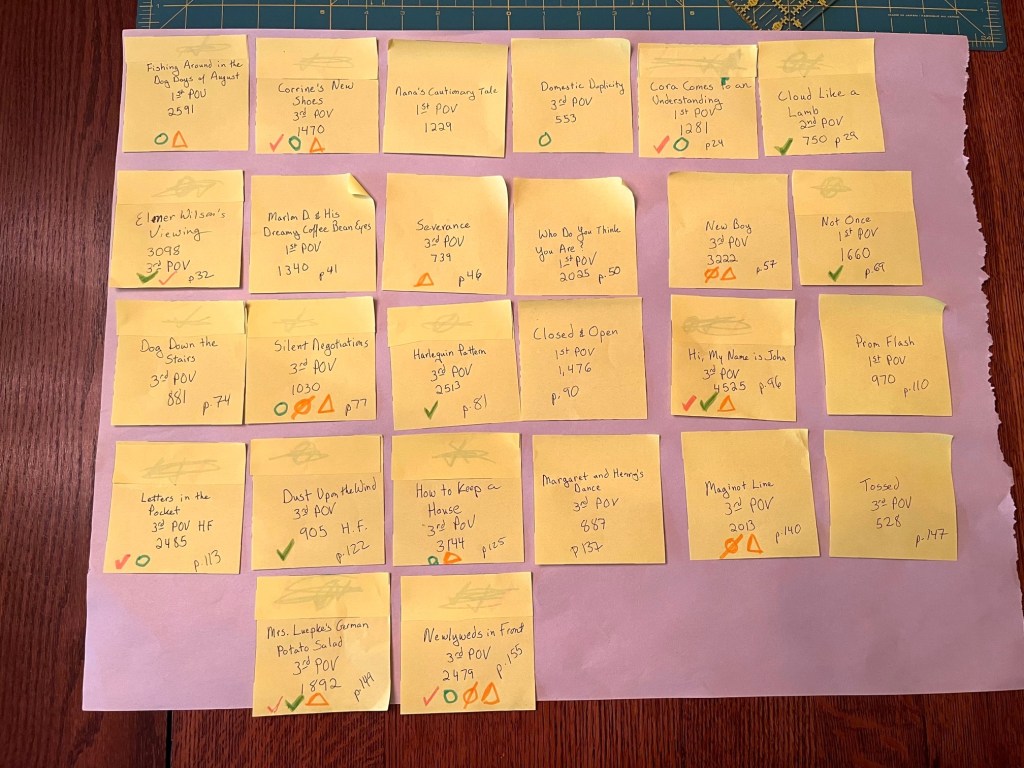
I knew which story would be the engine and which one would be the caboose, but I agonized over how to arrange the rest of the cars in my train of stories. I finally told myself, “Stop being ridiculous. If the judges don’t choose your story collection, it won’t be because they felt you should have put “Silent Negotiations” before “Elmer Wilson’s Viewing.”

I took a deep breath and folded over in the ragdoll yoga pose. After all, I didn’t even need to write a query letter to accompany my submission, and I didn’t have to pay a reading fee. Just a minimum of 150 pages, double spaced, with one-inch margins, preferably as a PDF file. Geez, I just needed to relax.

A short while later, I received my last reader’s list of favorites. Using Post-its on a large piece of newsprint, I moved story titles around until I was happy with their sequence. I copied and pasted the stories into one document then reviewed it. I filled out the electronic submission form and uploaded my file. After a slow inhale, I clicked submit, then exhaled. My stories had left the station on their first adventure. I won’t hear about them until January 2024. In the meantime, I will keep reading and learning and writing.

In the afternoon I washed the blankets and rugs, then I made the chicken enchilada casserole for supper. It was marvelous, and to celebrate my first book submission, I paired the casserole with a Bell’s Oktoberfest beer.

Now my bios will include: “She has finished her first short story collection and is submitting queries to publishers,” or something like that — it might need a few revisions.

Happy trees

I’m in This Book!

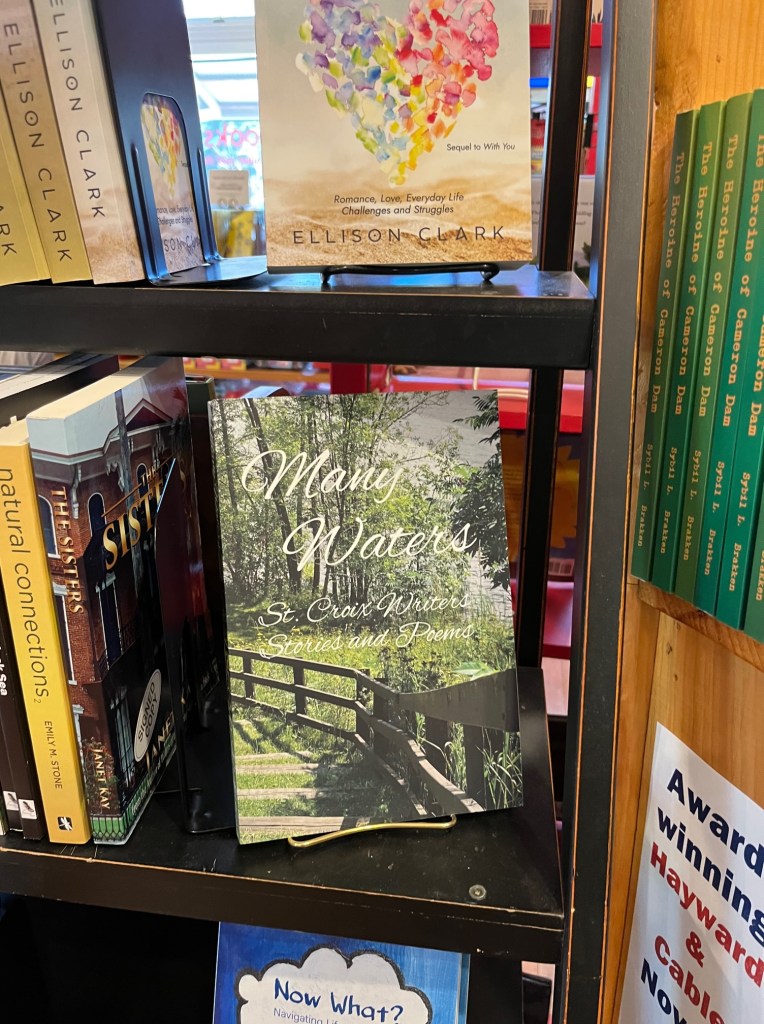
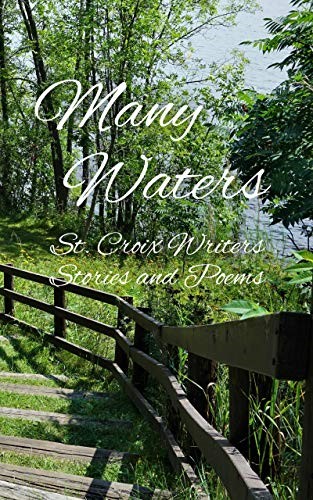
“I have a story in this book,” I whisper to my granddaughter. We are in Redbery Books in Cable, Wisconsin. I hold an anthology of essays, short stories, and poems published by the St. Croix Writers of Solon Springs in 2020.

I whisper because I don’t want the clerk to think I’m bragging. Yet, I’m itching to tell the clerk, I have a story published in this book.

“That’s nice,” my granddaughter says, her voice mixed with a bit of awe, excitement, and curiosity. “What’s it called?”

I open the book to the table of contents and find my entry. As I show my granddaughter, I run my finger under my name and the title of my piece — Victoria Lynn Smith: A Cracker Jack of a Story, page 192. “It’s an essay about eating Cracker Jacks with my nana and the story she would always tell about finding a real diamond ring inside one of the boxes when she was a girl.”

I love the Redbery Books! It’s charming and cozy.

I want to tell the clerk, I’m in this anthology. Instead I return the book to the shelf where it’s displayed cover-side out, in a place of prominence. To see a book, in a bookstore, with my writing in it, fills my body with loads of tiny giggling bubbles joyfully bouncing around, tickling my insides.

But, I don’t want to come across as boastful.

I move away from the book but chide myself, What’s wrong with you? If you can’t even tell a clerk in a bookstore that you have an essay in a book they are selling, how are you going to promote the book of short stories you’ve almost finished writing.

I realize if I don’t tell the clerk, I will regret it. My book of short stories doesn’t have a publisher yet, maybe it never will. This is the first time a piece of my writing is in a book, in a bookstore, for sale. Maybe that won’t ever happen again.

I turn back, take a deep breath, and lift the book again. I walk up to the clerk who is behind the counter and say, “I have an essay in this book.”

She smiles and gives me the best possible response: “So you’re a writer, then?”

“Yes,” I say, and the tiny giggling bubbles inside of me shift into overdrive.

The clerk asks my name and the title of my piece. I hope she will read it later but realize she probably won’t. But I will remember her moment of undivided attention and kindness.

When I leave the shop, I don’t feel like a braggart. I feel proud. If my book of short stories gets published, promoting it will be difficult for me, but I will remember the clerk who was gracious — because most people are gracious.

Before I leave the bookstore, I buy a journal with dapper foxes on the cover and a greeting card featuring a few lines of poetry by William Butler Yeats. I hope to one day have a book of my own on a shelf in a bookstore, so the words by Yeats are encouraging.

[Note: When I sat down to write this blog, I opened my copy of Many Waters and found I actually have three pieces in the anthology. I’d forgotten about the other two, which aren’t listed in the table of contents. My other two pieces are “Writing’s Daily Worries,” an essay first published by Brevity Blog; and “Tossed,” a short story that won first place in a contest and was also selected for WritersRead at Northland College in Ashland, Wisconsin, where it was recorded for Wisconsin Public Radio.]

The Saga of the Difficult Flash Essay Continues

Ziva and Cabela, my walking buddies

Yesterday I blogged about my struggles while trying to write a flash essay. By the end of the blog, I decided to write my story as fiction. The plan was to walk my dogs and brainstorm ideas.

Well, I walked the dogs. And I thought about the essay as fiction. But every story path I went down rang false.

When the dogs and I returned home, and after I gave them treats, I looked at the rough draft of my flash essay. It didn’t read as badly as I thought it did when I’d spent time with it the night before. Maybe we just needed a break from each other.

Yesterday afternoon I revised and edited then emailed my essay to some readers, both writers and nonwriters. The feedback was good, so I think I’ve done okay. I can hang out with the essay for a week before I have to submit it. I’ll check on it a couple of times a day, making sure it still looks okay.

Something about the event in my essay wouldn’t let me turn it into fiction. I had to find a way to make the real story say what I wanted it to say, as best I could. Then I had to accept that it would never completely hold what is in my heart.

Years ago when my father and I were driving around his hometown, he pointed to different houses that had been built by the same carpenter. I’ve forgotten the name of the man but not the wisdom of my father’s story. The carpenter told my father that each time he built a house, he tried to improve upon the previous house he’d built. He wanted the new house to have a better floor plan and better function. He also told my father that each time he finished a house, he knew he hadn’t reached his ideal, that he’d always find something about the house wanting. The carpenter told my father that he came to realize he would never build the perfect house, no matter how many houses he built.

That’s good wisdom for a writer. Because that’s how I feel about each story or essay I write: It doesn’t match the ideal in my head, but sometimes I get close.

I’m Supposed to Be Writing a Flash Essay . . .

Sloth is outpacing me today.

. . . but instead, I’m blogging about having a difficult time writing the flash essay. Probably because it’s about a moment in my life that has a lot of meaning and emotions attached to it. (I’ve already tried writing about this event as a long essay, and I have several versions of it in notebooks and computer files. But none of that was working either.)

Writing about something that is very near to me can be tricky. I want to capture the feeling of the moment without sounding trite or whiney. I want to express its importance in a way that gives it respect, but also in a way that says what I want it to say. And that’s the hard part. I can hear the words and emotions in my head, but when I try to put them on paper, they don’t always come out in a way that is even close to what I want to say.

So, I’ve been experimenting. I’ve started the flash essay at different points in time, and I’ve tried different tenses. There is less wiggle room with point of view. Most essays I write are in first-person. I’ve used second-person a few times when the essay is very brief, but only after I couldn’t make the essay work in first-person. Using the second-person point of view seems to give me permission to put a bit of distance between me and the raw emotion that is hampering my writing. But sometimes second-person doesn’t work either. How do I know these other attempts aren’t working? Because when I try them, they are clumsy, tripping over their own words, then falling flat upon the page.

On rare occasions, I take a third approach. I turn my essay into flash fiction or a short story. A couple of months ago, I worked on an essay but couldn’t make it work. I wrote and rewrote, trying different tenses and points of view, different starting points, more dialogue, less dialogue, more backstory, less backstory, more showing, less showing. I ruled out trying a second-person point of view because I knew that wouldn’t work. I was frustrated, feeling like a failure. Why couldn’t I write my personal essay? I gave up, and put it away. A few days later, I returned to it and wrote it as a short story in third-person point of view.

And ZING, it worked. Writing it as fiction allowed me to step away from the story that I couldn’t tell as nonfiction. I let my characters’ conversations, thoughts, and actions tell the story, and they were able to convey the emotional richness that I couldn’t capture in an essay. I also manipulated the timeline and tossed in some fictional details, none of which changed the emotional truth of the story, but rather made the story flow better as fiction. I wish I could write the flash essay as a flash fiction story, but I remember the submission guidelines as asking for nonfiction flash essays or poems. And I’m no poet.

I’m back. You didn’t know I was gone, but after I wrote the previous paragraph, I decided to take a shower, which is another way I try to solve writing dilemmas. And while in the shower, I kept wishing the publication took flash fiction along with flash essays and poems. The hot water smacking me in the head must have thawed something in my memory because suddenly, I thought I’d remembered reading that the publication took fiction too. But that was a few years ago when I submitted my first flash essay to them. This time I hadn’t actually read the submission details beyond the word count and the topic, because having submitted nonfiction flash to them twice before, that’s what stuck in my mind. As soon as I got out of the shower, I checked and, sure enough, they accept flash fiction too!

So, today, I’m going to try writing my essay as fiction. I can fiddle with timelines and factual details to give it the shape of a story. And I hope by letting the characters have the spotlight, I’m able to capture the emotional truth of the story, telling it in a way that will say what I want it to say.

The shower is such a good place to think.

I’m going to walk the dogs now and ruminate about my flash fiction story before I start writing it.

Class Offering! How to Submit Your Work for Publication, Tuesday, April 4, 2023, 6:30 to 7:30 p.m.

This class is offered by Write On, Door County as part of my writer’s residency. Class description:

Submitting writing for publication can be scary and intimidating. But if you have written stories, essays, or poetry, and you are longing to see them published, you will need to submit. In her virtual workshop, Victoria Lynn Smith will cover the basics. You will learn about submission guidelines and where to send your work. We will discuss the issue of fee-based versus free submissions. Tips for writing a cover letter and bio and how to increase your chances of acceptance will be shared. Most importantly, we will take about rejection and how to deal with them. A list of resources and a class outline will be shared with all participants. Please note that this class does not cover submitting articles to magazines, which is often done through query letters.

This opportunity is presented free but registration is required. Goodwill donations are accepted. To register click here. (Donations go to support Write On, Door County and the many programs they provide for the writing community.)

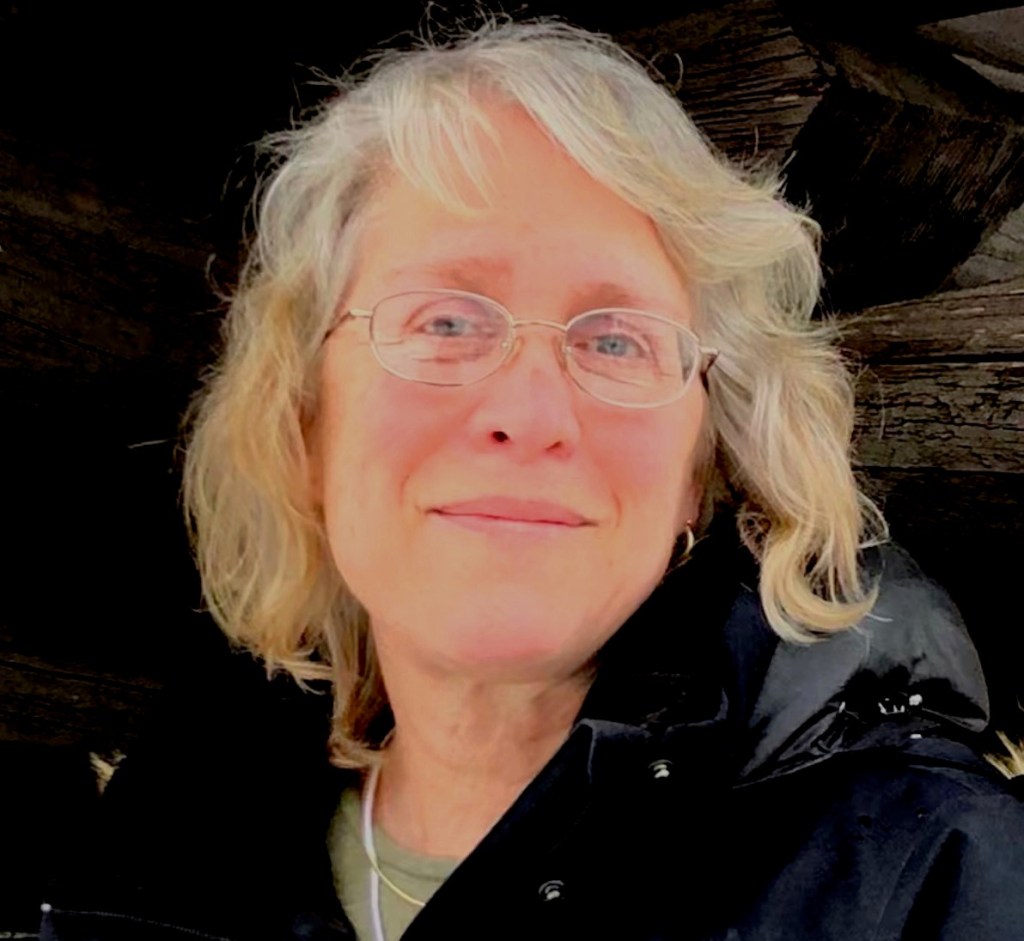
Teaching Artist: Victoria Lynn Smith writes short stories and essays. Her work has been rejected more than 174 times but has been accepted thirty-eight times. She lives by Lake Superior, a source of inspiration, happiness, and mystery. Her work has been published by Wisconsin Public Radio, Twin Cities Public Television, Brevity BlogBetter Than StarbucksHive Avenue Literary Journal, Persimmon TreeJenny45th ParallelMason Street Review, and regional journals. Her essay “The Dummy Never Showed Up” won an honorable mention in the 2022 Wisconsin Writers Association’s Jade Ring Contest. Her essay “Show and Tell to Remember” won an honorable mention in Bacopa Literary Review’s humor category and was published in November 2022. She was a semi-finalist in the Wisconsin People & Ideas 2022 Fiction Contest, and she placed second in the 2022 Hal Prize Fiction Contest. She is working on a collection of short stories.

Unless You’re Buying an Appliance, Comparisons Aren’t Always Useful

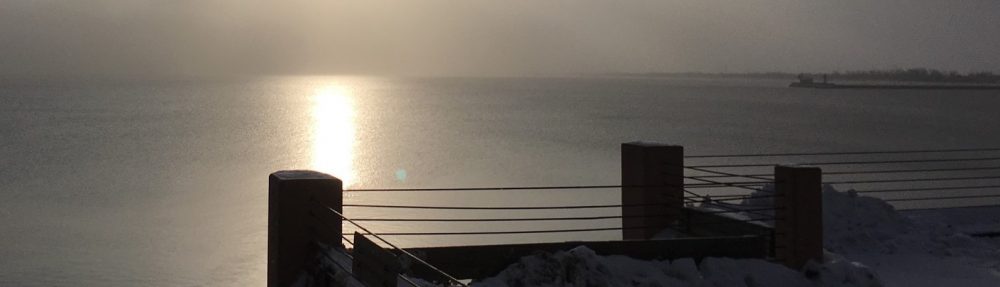
Looking out on Lake Charlevoix in Boyne City, Michigan, December 2022.

A couple of days ago I read “Avoid Comparing Yourself to Other Writers – Even Yourself,” a blog by Finnian Burnett, and as I read, I kept nodding my head in agreement. With the tweaking of a few details, Burnett could’ve been writing about me.

I related to their comparing their 2022 writing accomplishments to their 2023 writing attempts. I, too, have deadlines looming for journals and contests that I’ve submitted to in the past few years but wonder if I’ll submit to all of them again this year. I’ve been working on writing new stories and essays, but it’s harder this year, and what I have is a handful of rough drafts that I haven’t returned to working on yet because I tell myself I need to let them simmer. I’m not sure why writing seems harder this year, but I have some guesses. First, I spent large chunks of time this fall and early winter visiting my mom, who is recovering from major heart surgery. And I’m subbing a lot more, something I did infrequently during the 2021-22 school year. Both of those activities have taken time away from my writing. Also, I had short stories and essays published and a few won prizes in contests during 2022. Now, I wonder if I can write something as good or hopefully better. That kind of thinking makes my fingers freeze over the keyboard.

Like Burnett, I often admire another writer’s work, and say to myself, “Wow, I wish I could write like that!” It’s a little easier to put those comparisons aside and remind myself to be the writer I am and to compete only against myself. But that can be perilous too. Burnett has a point about looking back at our past accomplishments and using them against ourselves as a measuring stick – it’s not too helpful when sitting down to write in the present.

Reading Burnett’s blog made me feel better. It’s comforting to know someone else feels the way I feel. Writing is a solitary endeavor most of the time, and when I do get together with other writers, we often discuss what we’re working on, give each other feedback, and share resources. But if I’m struggling, I don’t want to be the little black cloud in the group raining insecurity, so I’m grateful that Burnett shared their feelings about the times when writing isn’t clicking. It’s wonderful to have a community of writers to share the good times and happy news with, but it’s also wonderful to have a community of writers to share the tough times with. Talking about the boogeyman hiding under my keyboard helps because the pesky monster shrinks in size when I talk about it.

Burnett suggests we be compassionate with ourselves. So, I’ve done a handstand and flipped my viewpoint, and I’m giving myself credit for what I’ve done so far this year. I have three rough drafts that might make good stories. I’m reworking an essay I thought was complete, giving it more depth and meaning (letting a piece of writing simmer isn’t just procrastination). In the last two weeks I finished a 900-word story and a 3,000-word essay, which I submitted a day before the deadline, and I started another short story that has promise. And I write for my blog.

The only cure I know for writing is to keep writing. And I’ve been doing that, just differently and slower. And it’s all okay.

Thank you, Finnian Burnett, for saying so in your blog and reminding us all to be kind to ourselves. And you said it so well!

[To read “Avoid Comparing Yourself to Other Writers – Even Yourself” by Finnian Burnett, click here.]

Bloganuary Post for January 6: Why I Write

[Bloganuary is hosted by WordPress. A new topic is presented each day during January.]

I write because I love words and sentences and paragraphs. I can play with them like a box of orphaned, mismatched Legos, combining them in different colors and sizes and shapes, building something familiar–yet perhaps not quite like anything anyone has ever seen before.

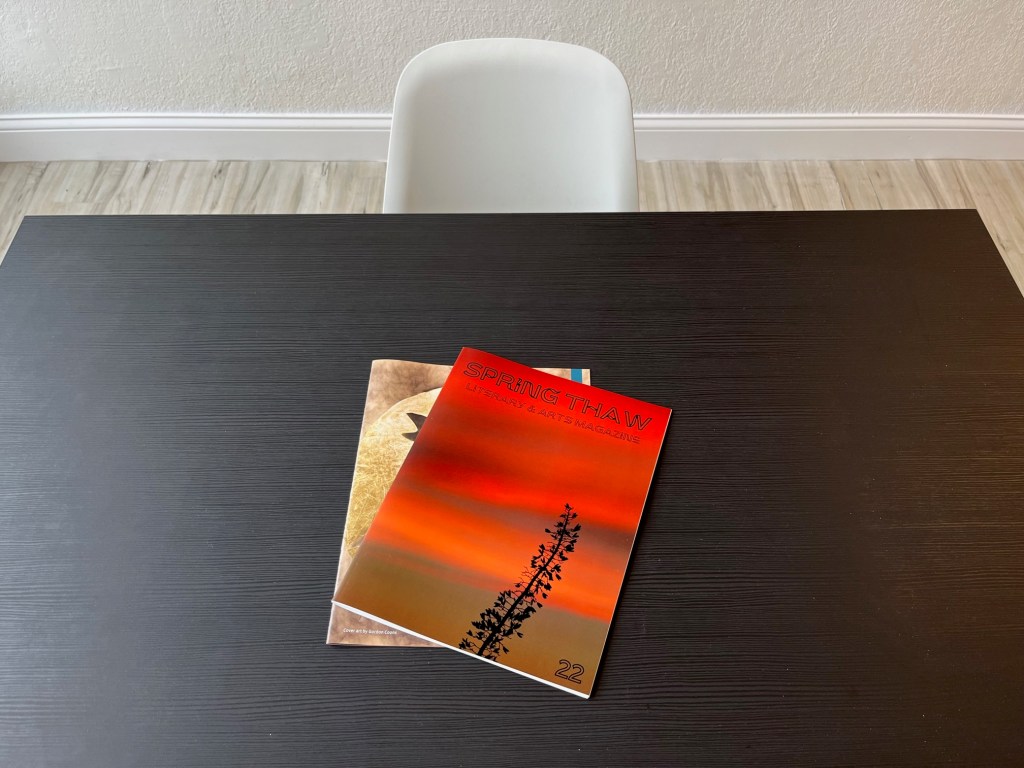
I write because I love to put an idea, an emotion, a story out into the world, hoping it connects with another person. My story in an online journal, accessible by anyone anywhere with a computer and internet. My story in a paper journal on a table in an art gallery in a small town in Minnesota, accessible by anyone who sits and turns a page.

I write because if I don’t, I’m out of sorts, at odds with myself, missing a piece of me.

Sloth and Me

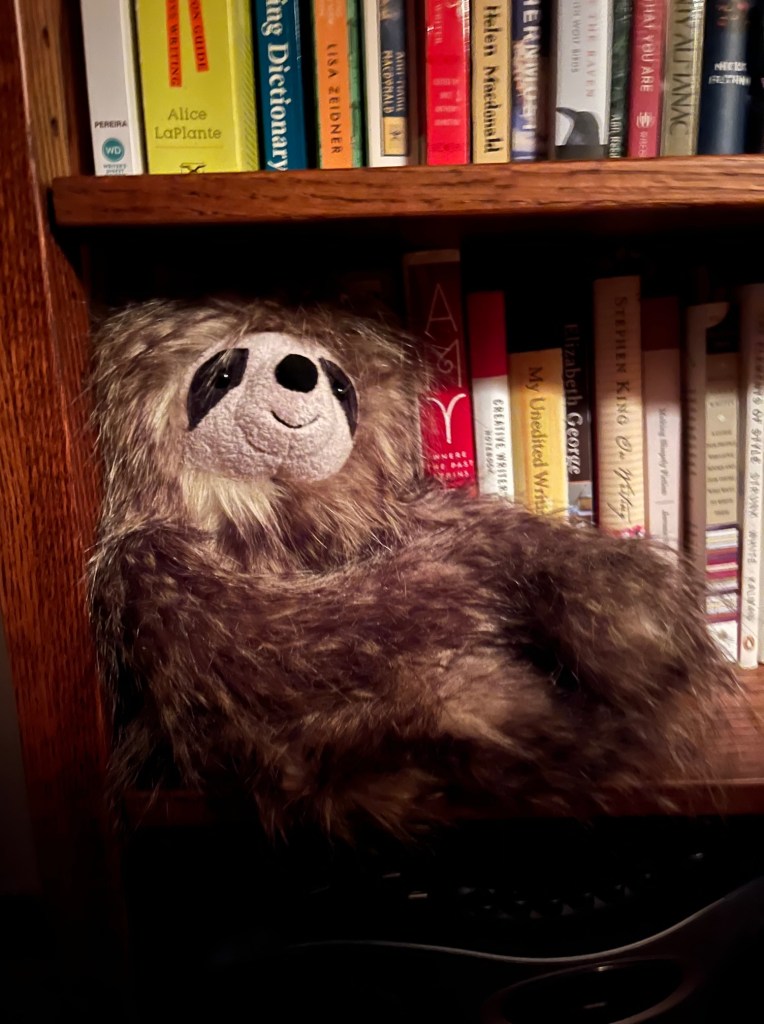
It’s International Sloth Day, so I thought I’d say a few words about my writing buddy, Sloth. Yes, I named him Sloth. I borrowed the idea from my granddaughter who named her stuffies sensibly: Puppy, Teddy, Foxy, and Spidey, a stuffed spider I bought her when she was fascinated by spiders.

I bought Sloth in a small gift shop. When I met him, I fell for his smile, an adorable sweet grin that said, “Gee you’re wonderful, I’ll always be your friend.” He cost more than a sensible, mature person like me wanted to spend on a stuffed toy, but I bought him and tucked him in my purse, like I was Paris Hilton and Sloth was Tinkerbell the Chihuahua.

Sloth took up residence on my writing desk, sitting astride my electric pencil sharpener. After I moved my writing office from the living room into a spare bedroom, Sloth decided to sit on the bookshelf.

I used to joke I kept Sloth nearby when I wrote to remind myself there was someone even slower than me. Rather cheeky of me, still I pictured Sloth typing three words per minute. But recently my writing process from a rough draft to a finished piece is so slow that I make Sloth seem like a jaguar pouncing through the forests of South America.

Perhaps, I began to think, Sloth was mocking me with his sublime smile. That he always knew he was faster than me. That if he could get his three toes on my keyboard, he’d clack out prose at speeds much faster than me.

Then I looked at his smiling face again. Sloth doesn’t mock. He understands slow. He understands pacing. He understands conservation of energy. Sloth has his own international day, hoping to bring awareness to deforestation and loss of habitation for sloths.

Writers have an international day, too, on March 3. Sloth thinks I can finish writing something by then, especially if it’s flash. Cheeky fellow.

Writer’s Block In Michigan

Sunset on Lake Michigan

I’m not sure I’m a writer anymore, so I thought I’d write a blog post to see if I could prove myself wrong.

My mother had quadruple by-pass surgery on September 2, in Michigan. My sister and I went to be with her before surgery and to take care of her afterward. My sister is still there, and I will go back in a couple of weeks when she leaves. We marveled at how time blurred. I thought about Salvador Dali’s limp, contorted watches.

I spent two weeks in Michigan and wrote only one paragraph—and not a long one like the kind Henry James used to get up to.

Busy and tired and apprehensive, the idea of putting words on paper was akin to slogging through a swamp, like Bogart pulling his boat the African Queen through the marsh then emerging from the water, speckled with leeches, pleading, “Pull them off me.” Certain my words would be leeches, I didn’t write, except for the one skimpy paragraph that would’ve reduced Henry James to convulsions.

But I read a book about writing (The Complete Guide to Writing Fiction by Barnaby Conrad), and as if to scold me, a whole section in the book was dedicated to the point that writers write: they make time every day, no matter what; even on Sunday, said one writer. And me? Only one paragraph in two weeks.

Statue based on a 1920 photograph of Hemingway about to depart Petoskey for a job in Toronto

I didn’t compose in my head either, like I do when I’m at home. I didn’t want to think about ideas for stories or essays that I wouldn’t jot down. No point in it because I either couldn’t or wouldn’t write while I was in Michigan. Even the Hemingway statue in Petoskey didn’t inspire me. Instead, every night after reading The Complete Guide to Writing Fiction, I’d drift off to sleep, thinking about a story I’d already written and ask myself, “How does the writing advice compare to what I’ve written?” I never stayed awake long enough to come up with a concrete answer.

I bought three slim journals decorated with whimsical artwork and bound with smooth covers that gave my fingers pleasure when I caressed them, but I didn’t write a word of prose in them.

I attended a webinar with Allison K. Williams called Pitch, Publish, and Get Paid. I hid in the upstairs guest room and made myself take the time to watch it live because I’d paid for it and because Williams is a good teacher. I jotted a few notes in one of my new journals, the one with fanciful cacti on the front because I felt prickly. But I didn’t write anything to pitch or sell.

I wrote letters and postcards to friends and relatives. But my notes lacked story arcs, themes, and snappy dialogue. I kept them purposefully short because I didn’t wish to put the people I love to sleep. By the time they realized my letters were a snooze, they’d be done reading, thereby avoiding the need to abandon them.

I took pictures of flowers and scenery that moved me, thinking later I could write inspiring blogs based on the images.

I received two rejections for the same story that I was falling asleep thinking about. (If I’m getting rejected, I’m a writer, right?) I’ve revised it dozens of times. A couple of months ago, a journal long-listed it then declined it. The story, an old-fashioned piece, won’t be an easy one to place, but I like it now, despite our once rocky relationship.

The night before I left Michigan, an editor from the Mason Street Review, published by the Newark Public Library, sent me an email accepting a story I’d submitted. But my excitement fizzled because I was more concerned about not having written anything in two weeks. This is warped in the way that a person about to hang criticizes the rope being used.

I came home and still didn’t write for a few days.

But I started composing in my head again.

I finished reading The Complete Guide to Writing Fiction.

I started playing with Nina Schuyler’s Stunning Sentences series. Every few days, Nina selects another writer’s stunning sentence, all of which are complex: left-, right-, or mid-branching, dripping with clauses and phrases. She breaks the sentence down and analyzes it. How does it work? Why does it work? What literary techniques are used? Then it’s my turn to create a sentence following the formula as closely as I can. This is Kung Fu,and I’m Grasshopper. I love it. Read, contemplate, and emulate a master. It’s meditative, it’s Zen, it’s sit-on-a-pumpkin with Henry David Thoreau. Since coming home, I’ve tackled three stunning sentences and each one I wrote had at least one element that made me proud. But one sentence does not a story make. Although, it could if someone else hadn’t beaten me to the baby-shoes-for-sale bit. I’ve been accused of parsimony with words, but I’m not good enough to be as cheap as Hemingway.

As I finish this blog piece—sitting in my office, surrounded by books, my dog sleeping by my desk—I feel like a writer again. I’ve written something with a beginning, a middle, and an end. Recently, I read a quote by a writer who said that if we question our ability to write or if we wonder if we’ll ever write something worthwhile again, then we’re writers because that’s what writers do.

But tonight, it’s my dog Ziva who acknowledges I’m doing something important. My writing session has trespassed into her walk time, but she gives me the space to finish my rough draft before we go for a walk. In the picture, she appears to be sound asleep, but be assured as soon as I lift myself from the chair, and before I can straighten up, she will be off her bed in a blink, ready for her walk. She’s earned an extra treat after our evening stroll.

She’s not really sleeping. And as predicted, as soon as I lifted my butt off the chair, she sprang to her feet, cocked her head, and asked, “Are we walking now?”