The Dummy Never Showed Up

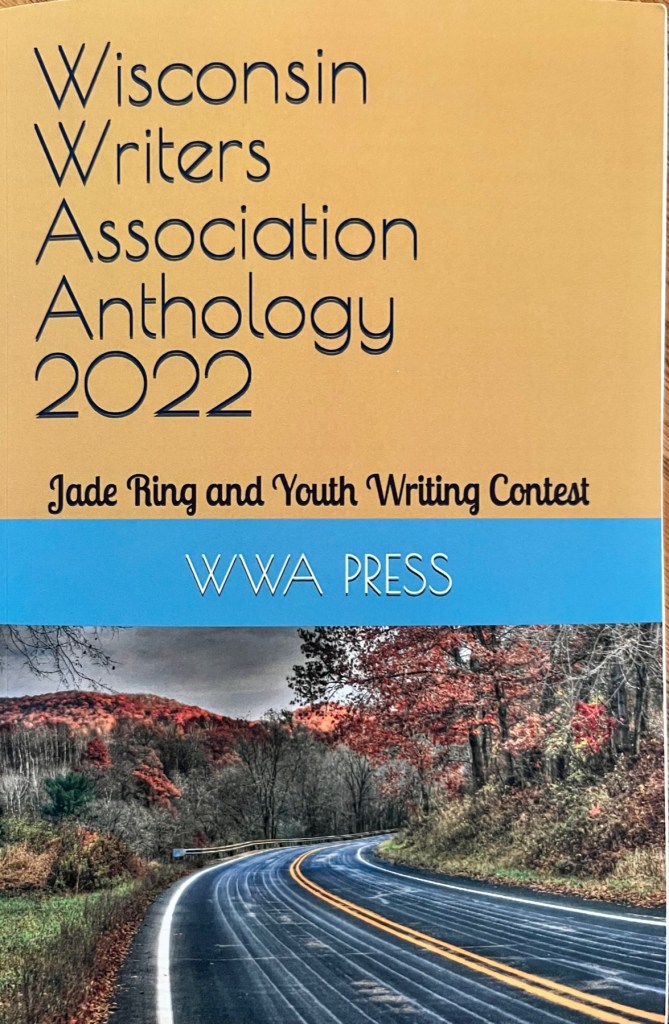
[This essay received an honorable mention in the Wisconsin Writers Association’s 2022 Jade Ring Contest. To read the works of other winners, see the links after the essay.]
Charlie broke my heart in 1971. Dressed in a top hat and tuxedo, and well-groomed with manicured nails and combed hair, he was debonair, even if his monocle made him look a bit stuffy. Always ready with a smart comeback, a smooth put-down, or a drop of wisdom, he was witty, candid, and self-assured. Charlie was a dummy, but I wanted him anyway.

The big problem—he was unavailable. Like all desirable men, he was taken. Women everywhere had lined up to have a chance with him. Seems like everyone wanted a wise-cracking fella who was perpetually dressed for the opera.

My mother broke the news to me. “Honey, I have to talk to you about your Christmas list.” I was twelve, so we had long ago stopped calling it “my letter to Santa.”

“I’ve looked everywhere.” Her voice shrunk as she spoke. “I can’t find a Charlie McCarthy doll.” She asked me to think of something else to add to my list. I did, but I don’t recall what it was. I could’ve asked for a hand puppet, but that would’ve been like having to settle for Eddie Haskell after hoping to date Donny Osmond. There was no substitute for Charlie.

I wanted to be a ventriloquist. I was going to be famous. I was going to be a star. And I couldn’t do it without Charlie. My daydream about becoming a celebrated ventriloquist was another chapter in my someday-I’ll-be-a-famous-singer-actor-or-dancer book of fantasies. I spent hours singing with Doris Day, Petula Clark, Dionne Warwick, and Barbara Streisand, pretending to be them. Sometimes I sang along with Johnny Cash, Frank Sinatra, Sammy Davis Jr., or Trini Lopez, pretending they had recognized me—a famous singer—in the audience and called me up on stage to sing with them. The exuberant audience, unable to contain their cheers and thunderous clapping, would rise to their feet moments before we had finished our duet.

Sometimes, I’d lay on the floral velour couch in the living room, the most elegant space in our farmhouse, and imagine myself a great actor giving spellbinding performances on stage or film. Or I would be Cyd Charisse, dancing, defying Newton’s laws of motion, giving men whiplash. When I wasn’t doing my famous talent stuff, I would travel to exotic places, win awards, and marry a leading man or a velvet-voiced crooner.

With Charlie I would’ve been more than a ventriloquist—I would’ve been funny! The see-saw, back-and-forth humorous banter between Charlie and Edgar Bergen captivated me. Bergen said things that came out of Charlie’s mouth. Through Charlie, Bergen insulted people and everyone laughed at Charlie. Through Charlie, Bergen flirted with women and everyone thought Charlie was adorable. Charlie sassed Edgar, his elder, and never got whapped alongside the head. My twelve-year-old mind found this setup very attractive. But reflecting on it now, I don’t think my mother would’ve whapped Charlie alongside his head.

After I learned Charlie wouldn’t be helping me on my way to ventriloquism fame, I crawled in the closet under the stairs. I sat with a box of hats, mittens, and scarves. I inhaled a mixture of musty wool and dust while tears rained down my cheeks. Charlie would never sit with me on the floral velour couch. I wouldn’t toss my voice into his throat. I wouldn’t watch our reflections in the mirrored wall as we practiced talking to each other. We might have sung along with Sinatra or Streisand, the three of us making harmony.

I was crushed. I was heartbroken. I was an overly-dramatic twelve-year-old. Oscar worthy, no doubt.

I’d like to say that I pined for Charlie and that Christmas Day was hollow without him and that I asked for him for my birthday in March. But I did none of that. I was over him before Christmas. I don’t remember what I got instead of Charlie, but it was the next best thing, and I’m sure I was happy with it. I ate my mom’s good cooking. I played board games with my sisters and cousins. And I read my new Nancy Drew mystery before I drifted off to sleep that night.

If Charlie hadn’t stood me up, truth is, I would’ve dumped him. Within a month or so, he would’ve been tucked away in my closet, along with my fantasies of winning an Oscar or a Grammy. I hope all the Charlies found better homes.

I never became a famous singer, dancer, or actor. I can’t carry a tune. I have no sense of rhythm. And in seventh grade, I learned I had terrible stage fright.

Funny, when I was twelve, I never imagined myself as a famous writer. I started writing after I retired, so I’m too old for silly fantasies now. But if I were twelve, I would win a Pulitzer Prize, I would make Oprah’s reading list every other year, and the New Yorker would call me and beg for one of my short stories.

[All the winners of the 2022 Jade Ring Contest can be read in the online Creative Wisconsin Magazine, along with other essays, poetry, and articles. If you wish to purchase a copy of the Wisconsin Writers Association Anthology 2022: Jade Ring and Youth Writing Contest, click here.]

Writer’s Block In Michigan

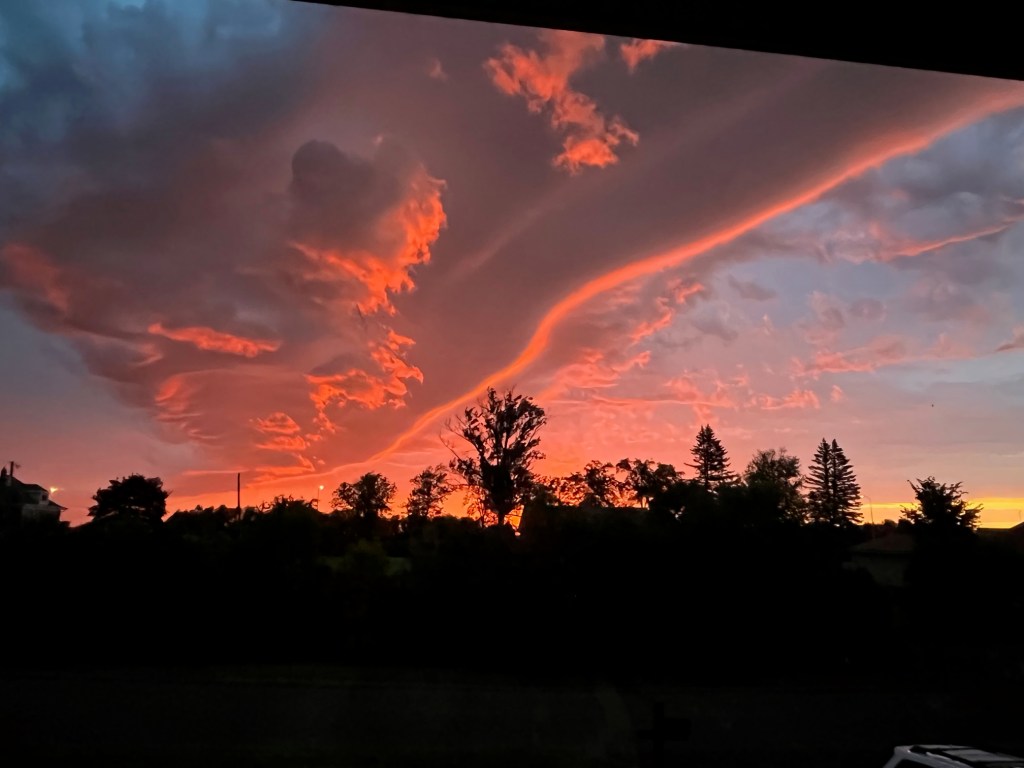
Sunset on Lake Michigan

I’m not sure I’m a writer anymore, so I thought I’d write a blog post to see if I could prove myself wrong.

My mother had quadruple by-pass surgery on September 2, in Michigan. My sister and I went to be with her before surgery and to take care of her afterward. My sister is still there, and I will go back in a couple of weeks when she leaves. We marveled at how time blurred. I thought about Salvador Dali’s limp, contorted watches.

I spent two weeks in Michigan and wrote only one paragraph—and not a long one like the kind Henry James used to get up to.

Busy and tired and apprehensive, the idea of putting words on paper was akin to slogging through a swamp, like Bogart pulling his boat the African Queen through the marsh then emerging from the water, speckled with leeches, pleading, “Pull them off me.” Certain my words would be leeches, I didn’t write, except for the one skimpy paragraph that would’ve reduced Henry James to convulsions.

But I read a book about writing (The Complete Guide to Writing Fiction by Barnaby Conrad), and as if to scold me, a whole section in the book was dedicated to the point that writers write: they make time every day, no matter what; even on Sunday, said one writer. And me? Only one paragraph in two weeks.

Statue based on a 1920 photograph of Hemingway about to depart Petoskey for a job in Toronto

I didn’t compose in my head either, like I do when I’m at home. I didn’t want to think about ideas for stories or essays that I wouldn’t jot down. No point in it because I either couldn’t or wouldn’t write while I was in Michigan. Even the Hemingway statue in Petoskey didn’t inspire me. Instead, every night after reading The Complete Guide to Writing Fiction, I’d drift off to sleep, thinking about a story I’d already written and ask myself, “How does the writing advice compare to what I’ve written?” I never stayed awake long enough to come up with a concrete answer.

I bought three slim journals decorated with whimsical artwork and bound with smooth covers that gave my fingers pleasure when I caressed them, but I didn’t write a word of prose in them.

I attended a webinar with Allison K. Williams called Pitch, Publish, and Get Paid. I hid in the upstairs guest room and made myself take the time to watch it live because I’d paid for it and because Williams is a good teacher. I jotted a few notes in one of my new journals, the one with fanciful cacti on the front because I felt prickly. But I didn’t write anything to pitch or sell.

I wrote letters and postcards to friends and relatives. But my notes lacked story arcs, themes, and snappy dialogue. I kept them purposefully short because I didn’t wish to put the people I love to sleep. By the time they realized my letters were a snooze, they’d be done reading, thereby avoiding the need to abandon them.

I took pictures of flowers and scenery that moved me, thinking later I could write inspiring blogs based on the images.

I received two rejections for the same story that I was falling asleep thinking about. (If I’m getting rejected, I’m a writer, right?) I’ve revised it dozens of times. A couple of months ago, a journal long-listed it then declined it. The story, an old-fashioned piece, won’t be an easy one to place, but I like it now, despite our once rocky relationship.

The night before I left Michigan, an editor from the Mason Street Review, published by the Newark Public Library, sent me an email accepting a story I’d submitted. But my excitement fizzled because I was more concerned about not having written anything in two weeks. This is warped in the way that a person about to hang criticizes the rope being used.

I came home and still didn’t write for a few days.

But I started composing in my head again.

I finished reading The Complete Guide to Writing Fiction.

I started playing with Nina Schuyler’s Stunning Sentences series. Every few days, Nina selects another writer’s stunning sentence, all of which are complex: left-, right-, or mid-branching, dripping with clauses and phrases. She breaks the sentence down and analyzes it. How does it work? Why does it work? What literary techniques are used? Then it’s my turn to create a sentence following the formula as closely as I can. This is Kung Fu,and I’m Grasshopper. I love it. Read, contemplate, and emulate a master. It’s meditative, it’s Zen, it’s sit-on-a-pumpkin with Henry David Thoreau. Since coming home, I’ve tackled three stunning sentences and each one I wrote had at least one element that made me proud. But one sentence does not a story make. Although, it could if someone else hadn’t beaten me to the baby-shoes-for-sale bit. I’ve been accused of parsimony with words, but I’m not good enough to be as cheap as Hemingway.

As I finish this blog piece—sitting in my office, surrounded by books, my dog sleeping by my desk—I feel like a writer again. I’ve written something with a beginning, a middle, and an end. Recently, I read a quote by a writer who said that if we question our ability to write or if we wonder if we’ll ever write something worthwhile again, then we’re writers because that’s what writers do.

But tonight, it’s my dog Ziva who acknowledges I’m doing something important. My writing session has trespassed into her walk time, but she gives me the space to finish my rough draft before we go for a walk. In the picture, she appears to be sound asleep, but be assured as soon as I lift myself from the chair, and before I can straighten up, she will be off her bed in a blink, ready for her walk. She’s earned an extra treat after our evening stroll.

She’s not really sleeping. And as predicted, as soon as I lifted my butt off the chair, she sprang to her feet, cocked her head, and asked, “Are we walking now?”

Somethings Published: “The Dummy Never Showed Up” and “Remembering Nana Kitty”

My essay “The Dummy Never Showed Up” earned an honorable mention in the Wisconsin Writers Association’s 2022 Jade Ring Writing contest. My essay can be read by clicking here: Creative Wisconsin Magazine then scrolling down to page 15. The other contest winners’ stories, essays, and poetry can also be read by clicking the above link,

Creative Wisconsin Magazine also published my essay “Remembering Nana Kitty” on page 64. My essay can be read by clicking here: Creative Wisconsin Magazine then scrolling down to page 64.

Thanks to all the hard work of the contest organizers, judges, and editors!

Tree Guy Goes Mum

Speechless

Yesterday Tree Guy lost his mouth. I noticed his missing smile last night when I let the dogs outside. I leaned over the deck, Tree Guy’s mouth lay on the ground in pieces, most likely KO’d by a squirrel.

Squirrels have been scurrying up and down Tree Guy’s trunk, busying themselves for winter. The Farmer’s Almanac has predicted a harsh winter for our area, designating it a “Hibernation Zone.” Sounds quaint, doesn’t it? Just eat a lot of food, then curl up for a long nap in a cozy place.

Tree Guy’s mouth won’t be repaired again. It’s in pieces and the back hanger is gone. I could probably find the metal loop, and my husband could fix the mouth—again, but it wouldn’t last because the interior substance is dry rotted. The shiny paint job on Tree Guy’s mouth is like an iridescent-paint job on an old car, covering copious amounts of Bondo—pretty to look at but not a long-term solution.

Losing his mouth has changed Tree Guy’s expression. While trying to determine if he looks contemplative or stern or forlorn, I’ve decided he looks mostly confused.

My husband and I agreed that while Tree Guy’s mouth won’t be fixed, we’ll leave him with his eyes and nose. He’ll still watch over the deck and smell his flower-basket earrings, but he won’t talk. Anyone wanting to know what he thinks will have to look into his eyes, windows to his inner sap. Tree Guy’s been part of our lives for over a decade, we’d rather lose him in bits than all at once.

I’ve pulled the nail from the tree where Tree Guy’s mouth hung and tossed his broken lips into the trash.

[Other stories in the Tree Guy Saga: Tree Guy, Tree Guy Update, Tree Guy’s Nose Is Still Missing, Another Tree Guy Update, Excavating Tree Guy’s Nose, Tree Guy’s Nose Is Safe, Tree Guy Has It All Together Again]

Deck Block

Welcoming committee after my paddle around the island

Every other year I need to stain our deck, but this year I have Deck Block. It’s like Writer’s Block but worse because my deck won’t rot away if I don’t write.

Yesterday I procrastinated prepping the deck by writing, walking the dogs, reading, washing dishes, going to a medical appointment, napping, and eating an ice cream cone. At four o’clock, I decided to clean out the gunk between the deck boards. For the first twenty minutes, I resented the chore. I almost went to the hardware store for deck wash. To the feed store for sunflower seeds. To Walmart for white-out. But the more debris I cleaned out of the cracks, the better I felt, so I kept excavating. It reminded me of writing a rough draft—the more words I put on paper, the better I feel and the more I write.

This morning I knew I should keep prepping the deck, but I went paddleboarding. Blue skies, no wind, pleasant temps—perfect for paddling. (And working on the deck, but that’s not how Deck Block works.)

While skimming the water, which resembled an old piece of rippled window glass, I thought about ways to expand a flash essay into a narrative essay. But, my prewriting-paddleboard session did nothing for the deck.

After paddleboarding, I ate a hot dog with pickles and ketchup, comfort food to conquer Deck Block. Then I promised myself a trip to Dairy Queen—but only if I spent a couple of hours prepping the deck first. I’m so very disciplined.

During the mindless, boring task of prepping the deck, I let my mind wander, free association therapy. But I kept my head away from the railings, which were full of cobwebs. I didn’t want to show up at Dairy Queen, looking like Miss Havisham.

Tomorrow paddleboarding, then power washing. For sure.

Shetland Island Dreams versus Boxing Squirrels

Ziva Baby

The evening walk, once a sixteen-block jaunt with my dogs, has become a stroll around the block. That’s all fourteen-year-old Cabela can handle. Her hips and left rear leg slow her down; although, she occasionally dashes across the yard or gallops along the property line in moments that my father would’ve called, “Old enough to know better, but young enough to do it anyway.” My father lived by those words, with mixed results for the people around him.

For Ziva, our walks are too short. But she’s a go-along-to-get-along kind of dog. When she walks with her sister, she adopts Cabela’s slow pace, and like Cabela, she smells all the grass. The two of them have a favorite spot to sniff in the neighbor’s yard, a spot worthy of serious, laborious inspection each time we walk by it. The spot looks normal, but obviously it smells delightful and contains a message they are both hoping to decode. I understand because when lilacs are in bloom, I sometimes stop along other people’s yards and inhale their aroma. The scent of lilacs is my favorite flower smell. I muse about nature having assigned each flower its own perfume.

Some days, when Cabela is sound asleep and doesn’t hear us, Ziva and I sneak out of the house for a longer walk. I crook my finger at Ziva in a follow-me motion as I whisper, “Want to go for a walk?” She always does. Without Cabela, she poodle prances swiftly along the road, her butt sashaying like she’s a model in high heels striding down a runway. Sometimes I ask, “Ziva Baby, do you have a hamburger to go with that shake?” She ignores the question, and tells me to keep up. When we return, Cabela is usually sleeping in the same spot she was before we left and has no idea we’ve been gone. I’m thankful because I don’t want her to feel like a junior high dog whose friends ditched her.

A few nights ago, when we returned from our around-the-block walk, which turned into a twice-around-the-block walk to avoid some people with a dog, Cabela was tired. I let go of Ziva’s leash so she could trot up the stairs along side the house, and I walked with Cabela, letting her take her time.

Ziva reached the last landing and spotted three squirrels and a bunny in the back yard. She took off like a middling horse out of the starting gate. (Ziva might walk fast, but she’s a jogger not a sprinter.) She treed the squirrels and sent the bunny scurrying into the neighbor’s yard. She came within inches of one of the squirrels but made no attempt to grab it. She has come close to catching squirrels before, but she doesn’t want one. She enjoys harassing them. She stretched up along the tree trunk and gave a couple of quick barks.

If Ziva caught a squirrel, I picture it curling its front paw into a fist and pummeling her on the nose. She would cry and run to hide behind my legs. Ziva is a brave knight in the face of danger that she believes won’t come to pass. For all other occasions, she’s a damsel in distress hiding behind my skirts. If you invited Ziva to go bungy jumping, she’d tag along—but only to watch you jump. And I would be standing next to Ziva. Neither of us are too adventurous.

But next year I’m going to the Shetland Islands. This is an adventure for me. The Shetland Islands are so far north of Scotland that on most maps, the Islands are denoted with their name and an arrow pointing north—as in “Yeah, they’re up there somewhere.” I fell in love with their stark, stunning scenery while watching Shetland, a mystery series named after the Islands. My desire to visit the Islands became so strong that I thought about it every night before I drifted off to sleep and ever morning when I woke. Then COVID hit, and my dream drifted away. But the yearning is back, so I’m making concrete plans.

I’m nervous about going, about being so far away from home, about travel arrangements being garbled. But, when I start thinking this way, I’ll remind myself that being punched in the nose by squirrel can’t hurt worse than giving up on a dream.

The Yearly Teeth Cleaning: A Reflection on the Passing of Time

Cabela and Ziva stand by the door of the vet’s exam room. Tired, they sway on their feet like a couple of soldiers who’ve just returned from a lengthy skirmish at the front. Cabela has been through more, and she struggles to keep her butt in the air and her back paws planted on the smooth, slick floor. They look at me, their superior officer, and wait to be told, “At ease, girls, dismissed.” I look at the vet, this is her briefing, so my dogs and I wait.

They haven’t really come from a battle, but from having their teeth cleaned. They were anesthetized and x-rayed. Neither of them had to have teeth pulled.

Cabela in shorts

My dogs watch me watching the vet. We all seem to know the drill. Be quiet, listen, nod. The more efficiently we can do this, the quicker we can go home, Cabela and Ziva because they’re worn out, me because I want to cry. My dogs are 14 and 11½ years old. These days the sand trickles faster through the hourglass.

Cabela had a benign cyst, the size of a small rubber ball, removed from her left hindquarter. She has a two-and-a-half-inch incision and a dozen stitches. The vet says Cabela shouldn’t lick her incision. I head off any discussion of her having to wear a cone: “I have a pair of shorts she can wear.” Medical treatment with dignity.

I wonder if I’ll have Cabela, the oldest one, put under anesthesia for a nonemergency surgery again, or perhaps any surgery. The older she gets, the riskier surgical procedures become. Today I worried—more than in the past—that one of my dogs might not wake up. I chose the option to have the vet call after each dog’s teeth cleaning was done instead of waiting until they were both done.

The vet explains Ziva has bone loss in her jaw, but she still has enough bone to avoid having teeth pulled. This time. Cabela has bone loss too, but less than Ziva’s.

The vet relays all this to me and shows me x-rays from this year and last year.

I trust the vet—I don’t need to see the pictures. But I don’t say this. I stand at attention, and pull myself up as tall as I can, perhaps to make up for my dogs who sag under the lingering effects of anesthesia.

The vet clicks an icon, and ghostly black-and-white images of Ziva’s teeth parade across the computer screen. I feign deep interest, but I want to go home. My dogs’ noses are nearly touching the exam room door, willing it to open.

The vet wants to explain the medical stuff—like a fourth root on one of Ziva’s molars that she hadn’t seen before. She sent the x-rays to a veterinary dentist for a consultation. I tell her that’s fine. I knew her before she was a vet, and she’s been our vet for over twenty years. She’s doing her job, taking time with us, treating us with respect.

She asks if I have any other questions, and I don’t. She can’t tell me how long Cabela and Ziva will live. She can’t tell me how long I have before I sit in front of doctors who explain age-related medical stuff to me.

I watch my dogs and see my future.

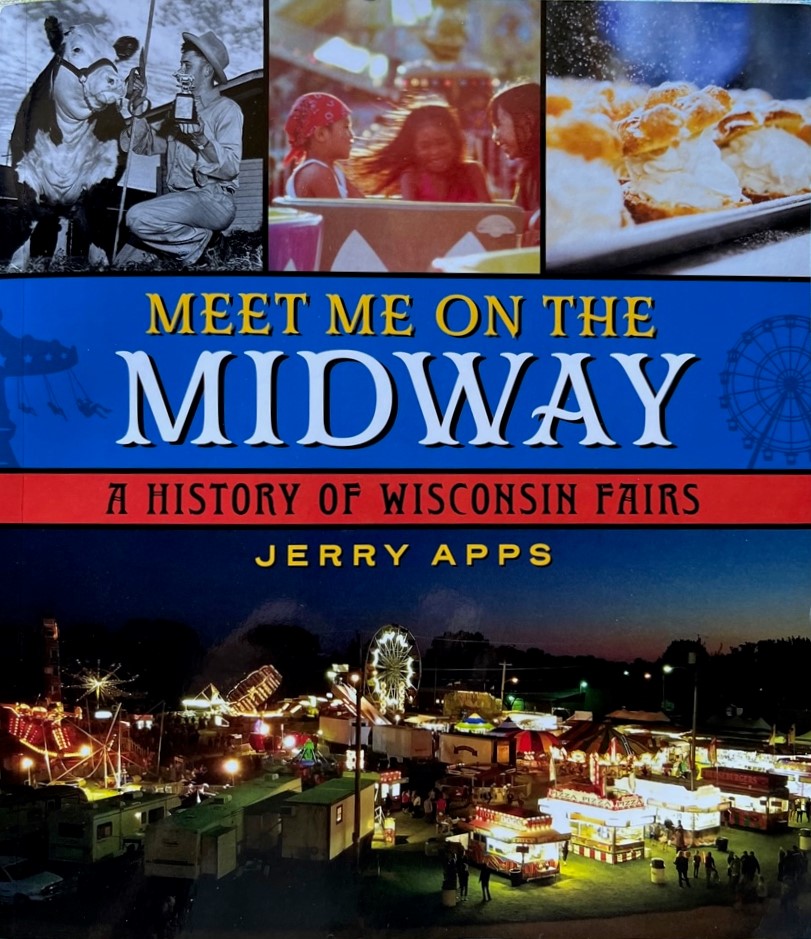
Book Review: Meet Me on the Midway: A History of Wisconsin Fairs by Jerry Apps

Published by Wisconsin Historical Society Press, Nonfiction history, 264 pages

Reviewed by Victoria Lynn Smith

Meet Me on the Midway: A History of Wisconsin Fairs by Jerry Apps presents an engaging and informative history of Wisconsin’s state and county fairs. His book focuses on the stories of agricultural societies, county extension agents, fair organizers, judges, volunteers, exhibitors, workers, and 4-H and Future Farmers of America members. Because Apps never forgets that history is the story of people, he pulls readers into the fascinating behind-the-scenes world of state and county fairs. Readers will also appreciate the generous servings of photographs, which are as delectable as fair food and as eye catching as the midway.

To read the rest of this book review click here: Wisconsin Writers Association–Book Reviews.