Room to Write

[This essay was published on Brevity Blog, June 6, 2022.]

A couple of weeks ago, within twenty-four hours, both Stephen King and my mom told me I needed an office for writing. I decided if Mom and Mr. King agreed about something, I needed to listen.

My office space along the wall

Of course, Mr. King was talking to me from the pages of his book On Writing. He advised me (okay, he was talking to all writers) to have a space of my own with a door that closes. He wrote Carrie and Salem’s Lot in the laundry room of a trailer, but there was a door that closed. He never mentions if he ever threw a load of dirty clothes in the washer. I would have washed and dried clothes and written between the cycles.

Then Mom called. I felt too blue to just put a smile in my voice and chitchat about weather and family and the latest movie she had seen. Spurred on by Mr. King urging me to have an office with a door and frustrated by the traffic patterns in my writing space, I was weepy about not having a quiet place of my own to write.

My office space in the living room had worked if I was home alone, but my amygdala had begun to associate it with interruption and chaos. The living room is a thoroughfare from one side of the house to the other. When my husband is home, he likes to stop off and chat as he motors through. My grandkids also play in the living room three days a week. They inhabit the space with toys and voices and nonstop movement. While playing, they chatter with delight and argue with rancor, all of it mall-level noise. So, it didn’t matter if my husband and grandkids weren’t in the house when I tried to write because my brain would anticipate interruption and commotion anyway, leaving me frazzled. Logically, I understood why I was antsy, but it’s not easy to calm down a fired-up amygdala.

Mom suggested I turn the spare bedroom, tucked at the front side of the house, into an office with a pullout couch. “You can take a nap on the couch when you’re tired, and you can use it as a bed when the grandkids sleep over.” I wondered what Mr. King would say about napping in one’s writing office.

Sloth on a Shelf: I write faster than he does!

I rejected the pullout couch solution, but Mr. King’s and Mom’s advice started me thinking. Over the next several days, I wandered in and out of my two spare bedrooms with a tape measure, sizing up the dimensions of the rooms and the furniture, arriving at a solution. I swapped a desk and dresser and bought a bookcase. For the first few days, I would wander into my new space and stare at it with wonder and love, the way I looked at my children when they were newborns.

It’s not a whole office, but I like it that way. It’s a little cramped, but when I sit at my desk, it feels like a hug, and in a pinch, the bed right behind me serves as a table. Mr. King says a writing office should probably be humble, so my space measures up. I can shut the door, so I’m not interrupted. And when the grandkids visit, they aren’t allowed to play in my room.

My amygdala does yoga. I breathe and write.

Something Published: Fishing Around in the Dog Days of August

My short story “Fishing Around in the Dog Days of August” was published by Jenny in their Issue 020, Spring 2022 edition. Jenny is produced by the Student Literary Arts Association of Youngstown State University in Ohio. I want to thank the editors and staff at Jenny for selecting my story to appear in their online journal.

My story, other stories, essays, and poetry published in the Spring 2022 edition can be read here: Jenny, a part of Youngstown State University’s Student Literary Arts Association.

No Mow May

“Most likely common violets”

If you’re not familiar with the concept of No Mow May, the idea is to let your grass grow in May so early-blooming plants—like dandelions, common violets, buttercups, and wild strawberries—can flower and provide appetizers for bees, butterflies, and other insects until the main-course flowers bloom in June. My husband agreed to keep his lawn mower idled for May.

We live in northern Wisconsin at the western tip of Lake Superior, and we’ve had a cold May, so it’s taken a while for the flowers to spring from the ground. But last Tuesday small wild violets bloomed on the hill in our front yard. I used one of those nature apps where I snap a picture of a plant that I want to identify then submit the picture. A second or two later the app usually tells me that it doesn’t have enough information to make a conclusive identification, but it offers me a likely suggestion. The app suggested the violets in our yard were “most likely common violets.”

Two small, brave dandelions

Some humans label the sweet, beautiful, delicate violet—that looks like it could be worn as a hat by fairies—a weed when it grows in lawns. But bees, butterflies, and other insects consider violets a food source and collect pollen and nectar from them. And dandelions weren’t always considered weeds: They were once prized for their beauty and medicinal benefits.

I wonder what the bees, butterflies, and insects would call the herbicides and pesticides humans spray on their food. I bet they’d liken it to the tale about the Romans sowing salt in the fields of Carthage after the Third Punic War so nothing would grow. Bees are dying off and while it’s not certain, it’s most likely connected to the use of pesticides. Unfortunately, studies have also found wild birds are profoundly impacted by the use of pesticides.

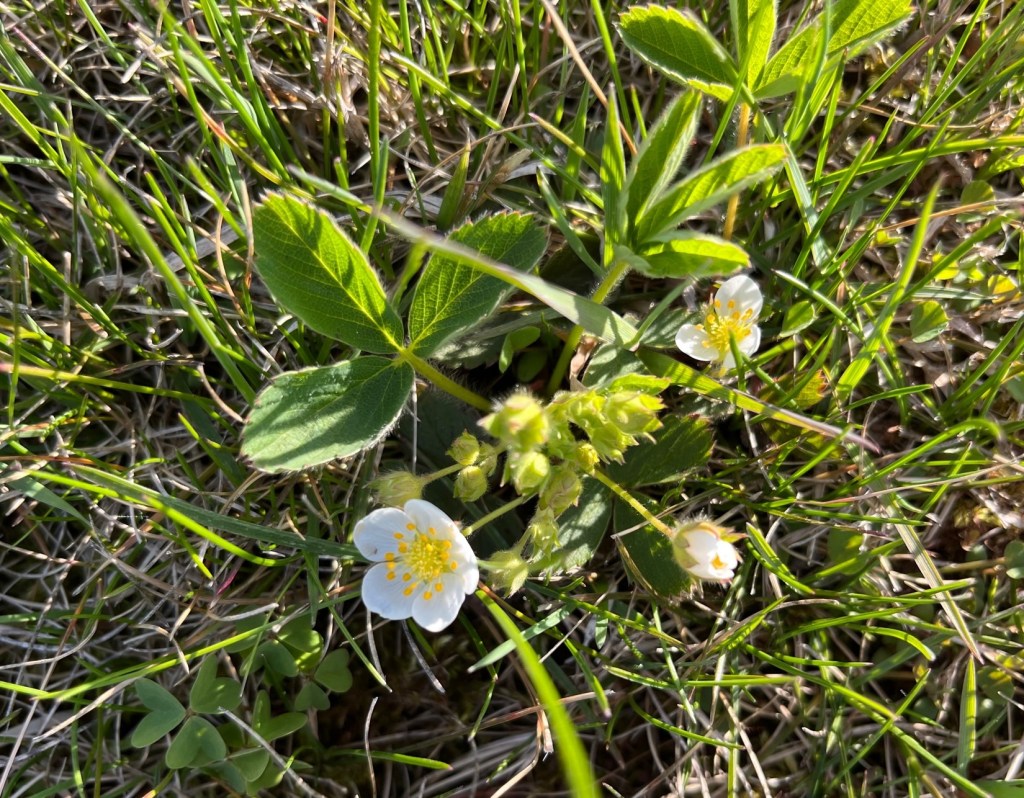
Wild strawberries

When the weather is cloudy or rainy most violets close their flowers and tilt them toward the ground to protect their pollen and nectar from being washed away, saving it for the pollinators that need its nourishment. Nature has designed an amazing ecosystem. Humans need to understand how it works, so we can appreciate and preserve it. Because while the violet can defend itself against rain that wants to wash its pollen and nectar away, it has no defense against being assaulted by pesticides.

Today I found wild strawberry flowers and two small, brave dandelions blooming in our front yard. Impressive because it was a cold weekend. I didn’t get down on my hands and knees to look for butterfly larvae on the leaves of the flowers, and I haven’t seen any bees yet. It’s probably too cold for them. I can’t do anything about the frigid winds blowing off Lake Superior, but when the pollinators wake up hungry, their food is growing in our No Mow May lawn.

Pearls from Nana

Dear Nana,

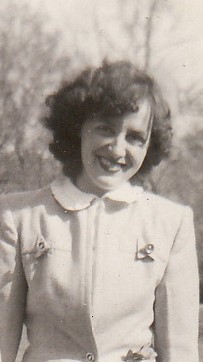
Nana Kitty, circa 1940

Remember how you always said, “The early bird gets the worm.” And I would answer back, “I don’t like worms” because I wanted to sleep until noon. I thought you’d like to know that now I rarely sleep past 6:00 a.m.

Remember how you always said, “Early to bed and early to rise, makes a man healthy, wealthy, and wise.” And I would answer back, “I don’t care” because I wanted to watch the late movie on TV. I thought you’d like to know that now I usually fall asleep before 10:00 p.m.

Remember how you always said, “You can win more flies with honey than vinegar” when I was spitting mad and wanted to tell someone off. And I would answer back, “Vinegar is what she deserves” because I desired payback. I thought you’d like to know that now I believe honey is a better tonic.

Remember how you always said, “Turn the other cheek.” And I would answer back, “If I do, someone will just slap the other one” because I was hurt and didn’t want to forgive. I thought you’d like to know that now I try to practice the other-cheek philosophy.

Remember how you always said, “A penny saved is a penny earned.” You were a widow scrapping by on a waitress’s earnings. But I wanted things, so once I badgered you into buying me a troll doll and another time a delivery pizza that you couldn’t afford. I thought you’d like to know I’m sorry, and that fifty years later I still have the doll. And the pizza didn’t taste good that night because I regretted my behavior before it was delivered. Best of all, I became good at saving money. You’d be proud.

Remember how you always said, “If you can’t say something nice, don’t say anything at all.” That was good advice. And I thought you’d like to know that after years of practice, I’ve gotten better. I could be such a wiseass when I was a teenager.

Remember how you always said, “Never trust a man who doesn’t like animals.” I embraced that advice. Some of the men I dated weren’t the best, but they all loved animals. My husband loves dogs. We have two. And he is the best.

Remember how you always said, “Silence speaks volumes.” I didn’t understand what that meant, but I never asked you to explain because I wanted you to think I was smart. I thought you’d like to know that now I get it. But I also know you didn’t mean that I should always be silent because you spoke up when it mattered.

Remember how you always said, “Wear clean underwear every day in case you get in an accident.” I never answered back because it made sense. As I got older, I discovered that piece of wisdom was a great source of comedic mockery. But I thought you’d like to know that it’s still stellar advice. And I bet the mocking comedians change their underwear every day because their mother or nana told them to.

With love,

Your granddaughter who is wiser because you always took the time to say . . .

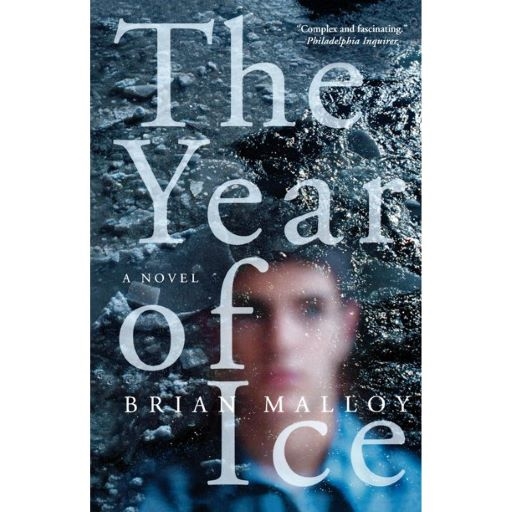
The Year of Ice by Brian Malloy: A Book Review

Why did I read this book?

I serve on the board of a local writing organization, and at the end of March, Brian Malloy was our featured author. I hosted the program, so I read The Year of Ice. I’m glad I volunteered to host because I loved Malloy’s book.

What is the book about?

The Year of Ice, published in 2002, is a coming-of-age story set in 1978. An arctic-like winter has descended on Minnesota’s Twin Cities where Kevin Doyle, a high school senior, is undecided about his future. He’s angry with his mother who died almost two years ago when her car slid off an ice-covered road and plunged into the Mississippi River. He and his father, Patrick, tiptoe around her death, but Kevin is his father’s protector. He foils widows and divorcées who show up at their door with casseroles and desserts for Patrick, who isn’t interested in dating. Then Kevin learns a secret about his parents’ marriage, and his threadbare relationship with his father unravels.

Kevin has his own secret. At 6’2” and 185 pounds, he’s good looking and muscular. Girls swoon over him, but he’s in love with Jon Thompson, a handsome classmate. Kevin can’t tell Jon how he feels; he can’t tell anyone he’s gay. He knows people like him, but they like him as the tall, handsome, charming Kevin, a straight young man with a sense of humor and a measure of kindness.

Kevin hides the fact he’s gay by embracing an “alpha dog” routine and kicking butt if any of his male peers challenge his alpha status. When Jon gets mouthy during a football game, Kevin slaps him on the side of the head, telling us, “[I]f I smack him, nobody will guess that I want to pick him up and kiss him really hard, right on the lips. And . . . he’s got to be reminded that I’m tougher than he is. Wolves do this all the time to keep order in the pack. I’m the alpha; he’s the beta.” Kevin attempts to keep order in his life, but everything is changing.

What is noteworthy about the story?

Malloy’s masterful use of present-tense, first-person narrative hooked me on the first page and held me until the end. I read the book in less than two days. Malloy creates a complex, engaging character who comes to life. Kevin reminds me of the teenagers I went to high school with—myself included. He’s moody and funny and a smart ass, and he hides his problems and feelings. He makes some mistakes, but I like him and empathize with him as he copes with his dysfunctional family, his unrequited love for Jon, and the girlfriend he doesn’t desire. Malloy’s supporting characters are unique and fully developed and, in addition to being part of Kevin’s world, have their own intriguing story arcs.

The Year of Ice won an Alex Award in 2003. Awarded by the American Library Association, this award is given every year to ten books that were written for adults but appeal to young adult audiences between twelve and eighteen years of age.

Why is this book important?

Malloy’s book is a classic coming of age story where the main character happens to be gay. Blatant discrimination and hateful behavior toward the LBGTQ community has increased the in last several years. Some people lobby to ban books like Malloy’s from school libraries, but the need to stand up for books like The Year of Ice is important. All young people need to see themselves in the world around them and to know that someone speaks to their experiences. It’s why coming of age stories are so important to us, often at any stage of our lives. Kevin Doyle shares his ups and downs and his hopes and disappointments with us, and we care about him. We want him to find his way, be true to who he is, and to have a good life.

Being Five and Making Friends

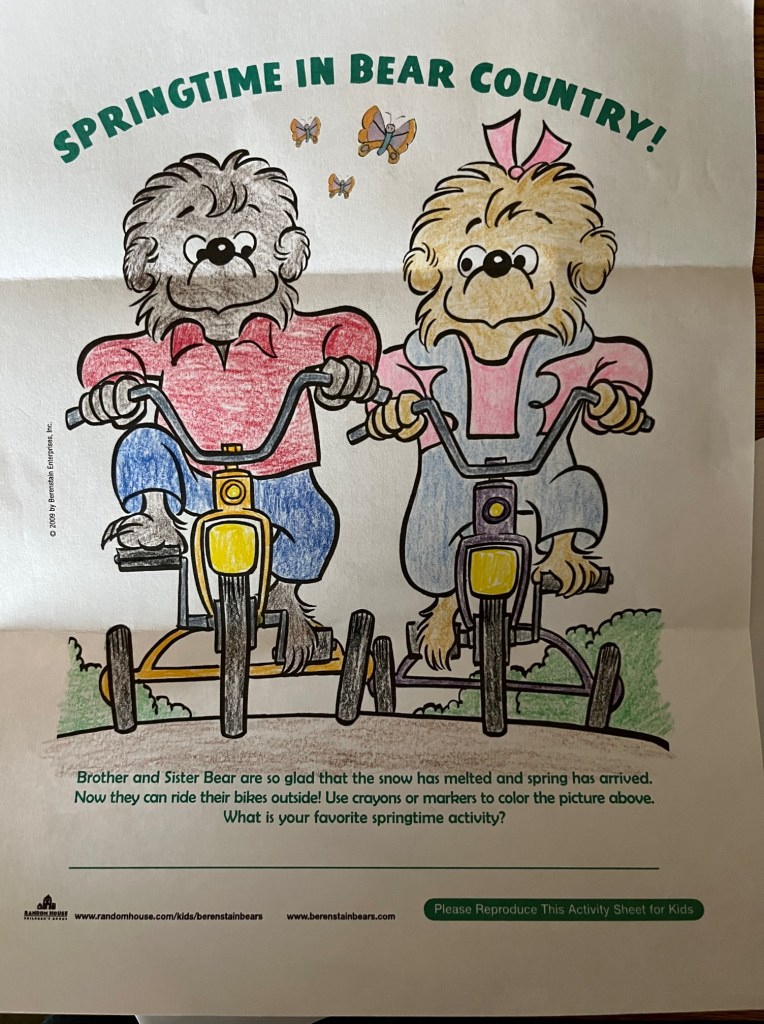
I did some artwork.

I’ve been taking my five- and three-year-old grandsons to the library because it’s spring, which means it’s too cold, wet, and windy to play at the park.

Evan, the five-year-old, is into making friends. Last week he made a friend at the library and they played and played. They also ran around. I told them not to run, the other boy’s mother told them not to run, and the librarian told them not to run. So, yes, they had a good time. After we left the library, he told me all about his new friend. Numerous times during the afternoon he mentioned his new friend. When his dad came to pick him up, he told him about his new friend.

Today we went back to the library because it was cold, wet, and windy because it’s still spring. On our way into the children’s library, we picked up the craft project then sat at a table to color the paper Easter eggs. Evan hashed a couple streaks of color on one of his eggs and said, “I’ll do these at home. I’m going to make some new friends.”

And that’s what he did. He made friends with a boy, and they played for almost an hour until the boy had to leave with his mom. Then Evan made friends with a girl, and they played until we had to leave. Evan looked like Droopy, the cartoon basset hound. I told him we’d come back to the library tomorrow, and he could make more friends. He grinned.

That’s how it is when you’re five. You go to the park or the library and meet other kids. You play, then you’re friends. No one cares about your resume, your politics, your religion, your economic class, your ethnic background, your orientation, or any other element that grownups use to drive wedges between people.

The kids have it nailed: show up, smile, introduce yourself, play nice, have fun.

Mid April

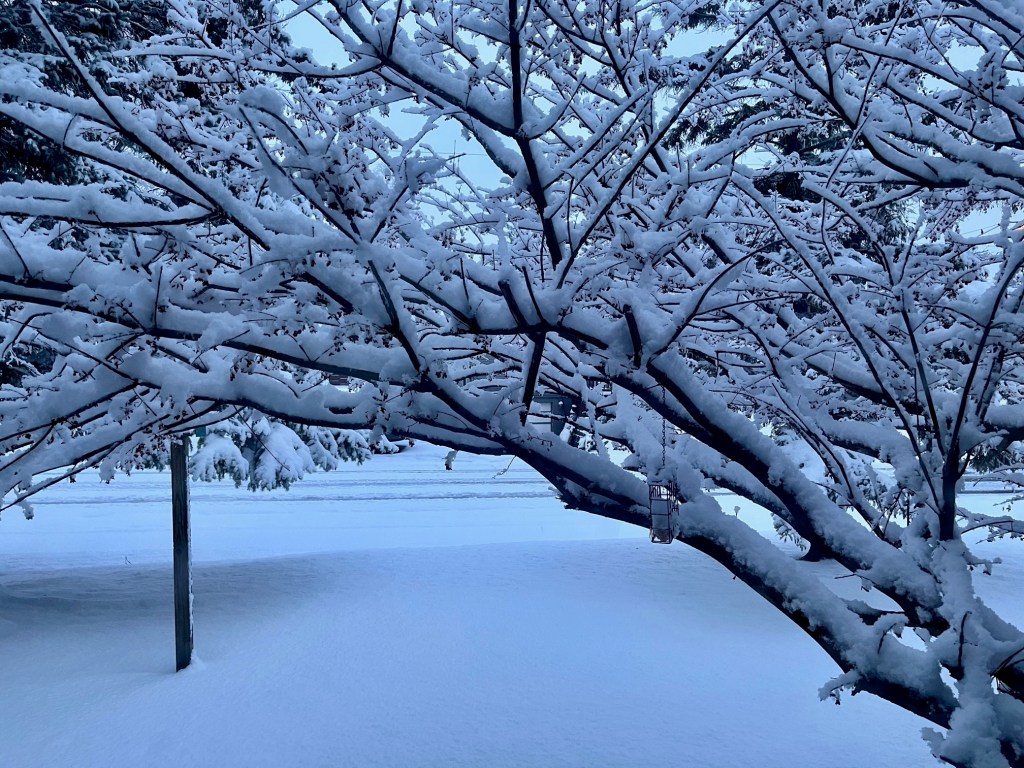
So far April has been cold and snowy.

But Mr. Goldfinch’s drab gray feathers continue to give way to his yellow courting plumage.

This afternoon it’s 31 degrees with 17 mph winds, and, yes, there’s a windchill.

But Mr. Goldfinch believes summer is coming–his feathers are more yellow today than yesterday.

Two to four inches of snow are predicted for Sunday night.

With her back to Mr. Goldfinch, Mrs. Goldfinch is waiting until he has all his yellow feathers.

Perhaps she’s not sure about summer’s arrival.

Tree Guy’s Nose Is Safe

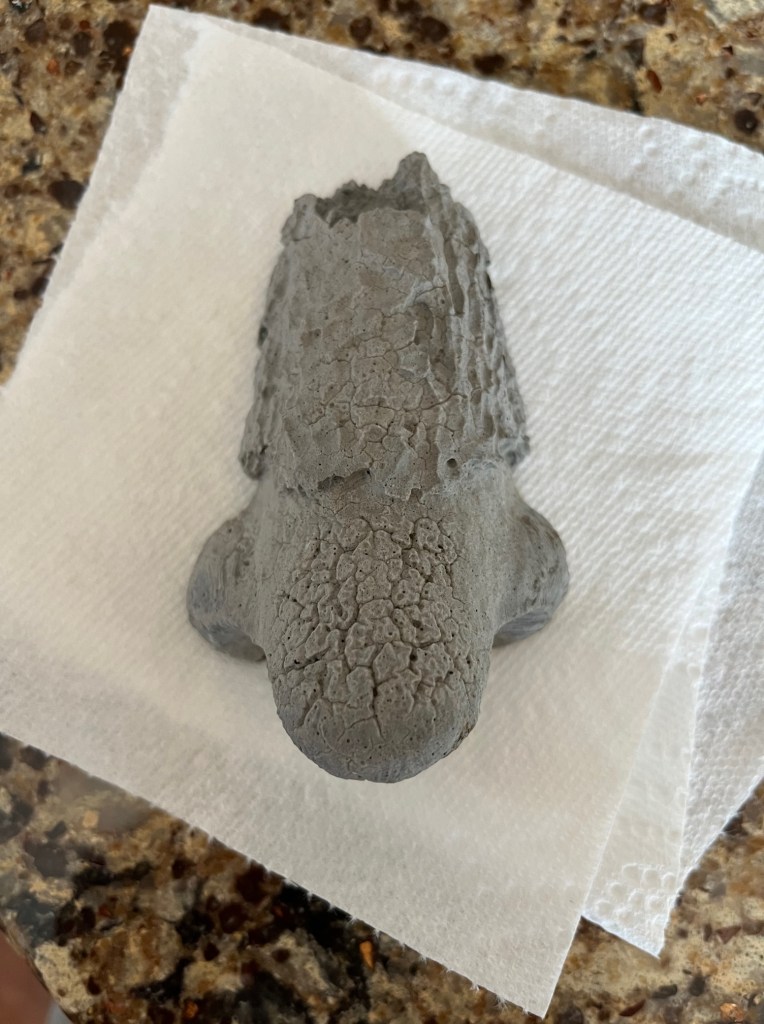
The rescued schnoz, slightly damaged at the top

On March 29, I dug Three Guy’s nose out of the icy snow. It took me awhile because I worked like an archaeologist on a dinosaur dig, gently, slowly, never getting too close to the nose with my excavating tool. I’ve never wanted to be an archaeologist because it’s hot, dusty work, at least according to all the pictures and documentaries I’ve seen that depict archaeologists laboring in the field. I don’t even want to take a vacation and sit on a beach, in the sun, in the heat.

In high school, I read a book on zodiac signs. After reading that a Pisces was more likely to be found perusing a book on a park bench rather than at the beach tanning in the sun–which totally described me–I embraced astrology as science and read my horoscope daily.

Next, I read about Cancer, the sign of the boy I’d fell in love with when I was twelve. In high school I wrote his name, surrounded with hearts, all over the inside of my folders. We were supposed to be highly compatible water signs, but our upbringings gave us different views of the world, and neither of us budged. After high school I fell in love with a Scorpion, also a highly compatible match for a Pisces, but that romance failed because he fell in love with every pretty girl he saw. I kicked astrology to the curb.

Scraping ice pellets, layer by layer, away from Tree Guy’s nose, gave me time to think about random stuff, free-floating thoughts cobbled together by tenuous threads. I stopped periodically to check if I could lift the nose from its icy clutch. Nope, nope, nope. I kept scraping because a storm was coming and because small bits from the top of Tree Guy’s nose had already crumbled into the snow.

The day after the nose’s rescue

After I freed the nose, I placed it on my husband’s workbench, so it could dry out. It would need the coat of paint he’d suggested. Later that night the winds carried in rain, which morphed into ice, then converted to snow, enough for some area schools to cancel classes on Wednesday. After work my husband asked if I’d picked up the nose before the storm came. I gave him the update.

I don’t need to check for Tree Guy’s nose anymore—it’s safe. But every night before I go to bed and every morning after I wake up, I’ve been checking my phone for news about Ukraine. I want to read that Putin has called off his war. I imagine him waking up and finding his nose is missing. He’s dashing around the streets, looking for it, eager to repair his visage. I imagine he promises to be a good despot, if only someone will return his nose.

But life isn’t a story. Dictators don’t change or learn their lessons. Because sociopaths brood and lie and plot, then seek vengeance for perceived slights. Winning and power are their only divinities.

And in case you’re wondering, Putin is a Libra and Volodymyr Zelenskyy is an Aquarius, making them highly compatible air signs. But life ignores astrology.

Excavating Tree Guy’s Nose

[If you missed the earlier blogs: Tree Guy, Tree Guy Update, Tree Guy’s Nose Is Still Missing, and Another Tree Guy Update.]

Pictures of snow in March look like bad abstract art.

This morning I went outside to retrieve Tree Guy’s schnoz. I tried to pick it up but discovered it was frozen into the icy snow. I shouldn’t have been surprised. When I got out of bed at 6:30 this morning, it was 9° with a 9-mph wind. And if that were a mathematical story problem, the answer would be a windchill of -4°. (Don’t ask how this would change if one train was leaving Grand Central Station at 9:00 a.m., traveling at 60 mph, and another train was leaving Union Station at 10 a.m., traveling at 55 mph. I didn’t care when I was in school, and I still don’t care.)

I didn’t try to muscle the nose out of the snow. Increased force is usually the wrong answer to most problems. I found a stick and scrapped snow away from the sides of the nose. I tried to lift it again, but it wouldn’t budge. The nose appeared to be intact, so I decided against digging underneath it because it might break. Impatience is usually the wrong option for most situations.

I hoped the space I created along the sides of the nose would allow the sun’s warm rays to melt the snow from under it. On Tuesday the temperature is supposed to reach 41°. If the icy snow hasn’t released the nose by that evening, I’ll cover it with a bucket because it’s supposed to snow on Wednesday and Thursday.

Tree Guy doesn’t want his nose to be buried again. At this point in his life, he doesn’t appreciate history repeating itself.