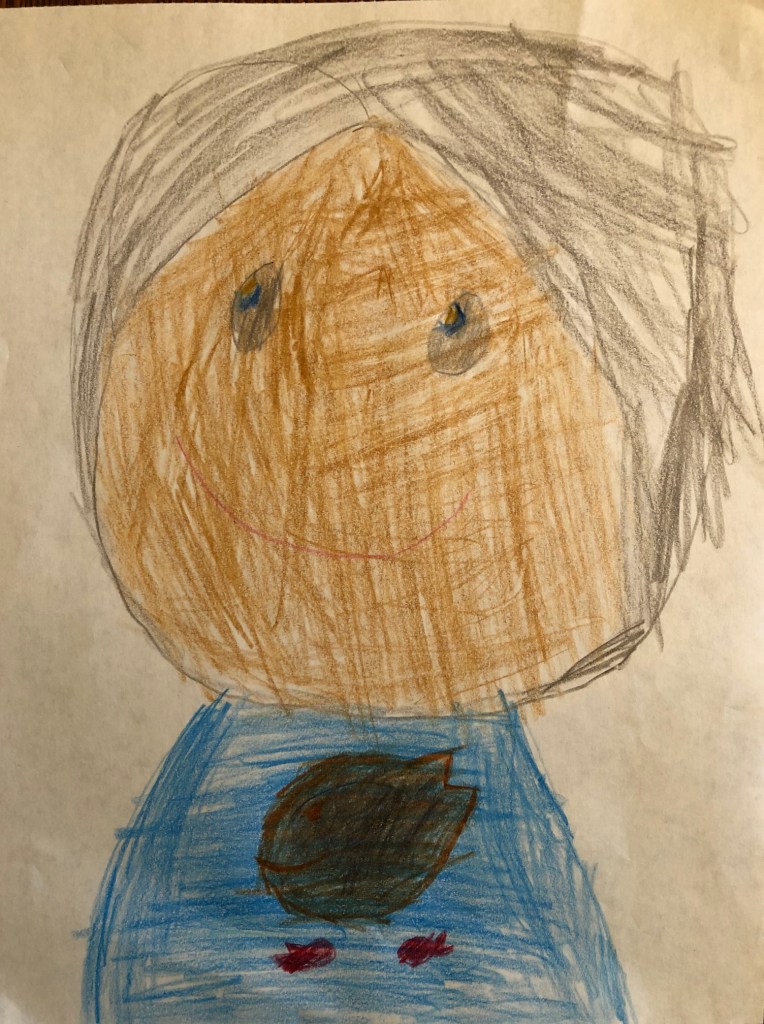
Puppy by Impulse

[“Puppy by Impulse” was published in June 2021 by Itasca Community College, Grand Rapids, Minnesota, in their annual magazine Spring Thaw.]

“Standard poodles, black, males and females, eight weeks, available January 2, $300.” My husband started reading these ads to me after a vacation to Tucson where he’d met my father’s three standard poodles, Tyrone, Lady and Gabby. After a second visit to Tucson and meeting Daisy, my father’s newest poodle, my husband’s reading of the ads intensified. The colors and prices varied, but not his need to inform me that somewhere nearby, someone was selling poodles. My husband, who loves dogs, wanted one.
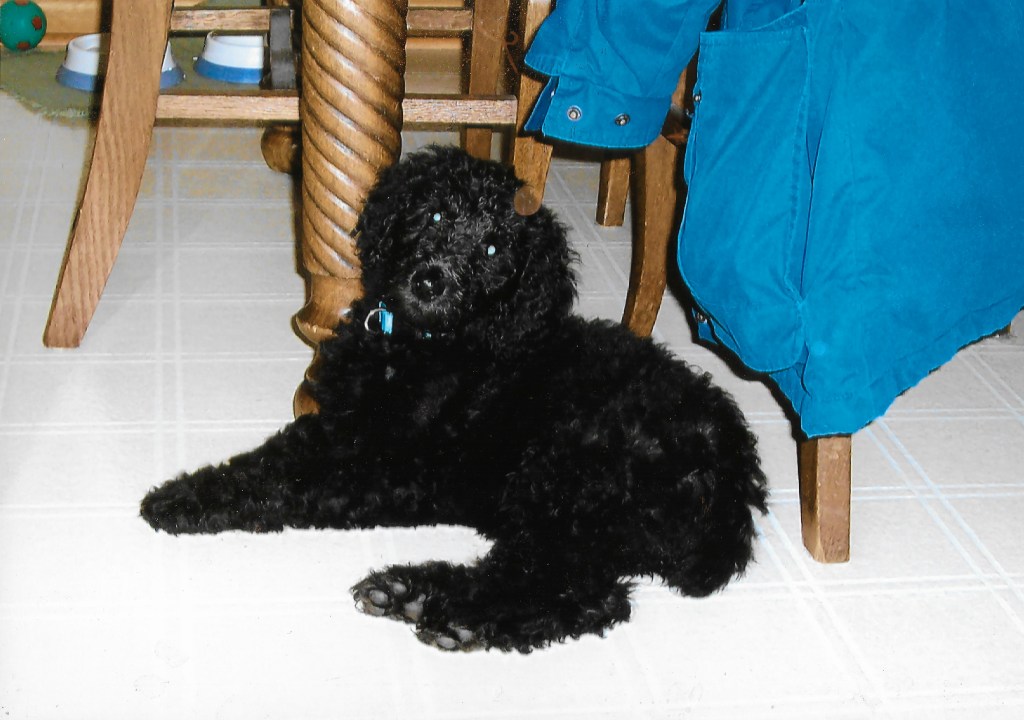
Bailey, shortly after coming to live with us. January 2006

I ignored him.

“That’s cheap,” he said, “a real bargain.”

“We have Buffy. I don’t want two dogs.”

“Buffy would have a buddy,” he said. In the past at this point, my husband had always said: I’m not saying we should get one right now. I’m just reading the ad. He was off script.

“Ha,” I said. “You mean our dog who wags her tail when she meets another dog, then tries to bite it when it gets close?”

“I’m sure she’d be nice to a puppy,” he said.

“Buffy is almost fourteen. She doesn’t want a puppy.”

I left the room and thought about canceling the newspaper.
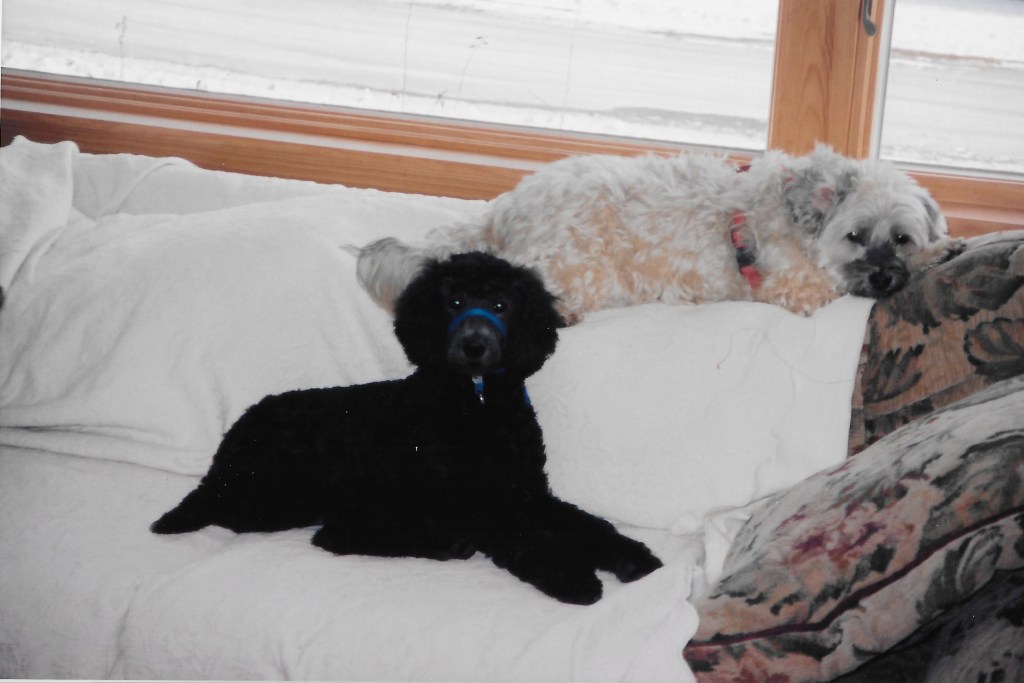
Buffy decided Bailey could stay. Buffy, who was fourteen, would lay near Bailey, but wouldn’t play with her. Winter 2006

*****

We stayed home New Year’s Eve because our youngest son played hockey, and we were on a budget. My husband moped.

“I’m probably the only one stuck at home,” he said.

“I ran into John and his son at the video store. He and his wife aren’t going out either.” John’s son played hockey with our son.

“There’s nothing on TV.” The remote was getting a workout.

“Do you want to watch the movie I rented?” I asked. “It’s an action flick.”

“No,” he answered, “I’m going to bed.” It was before midnight.

*****

On New Year’s Day, he was still moping—disconcerting to me because moping wasn’t his style. He’s a wake-up-cheery kind of guy. Heck, he’s a cheery-all-the-time kind of guy. I wondered if not getting a puppy was more upsetting than spending New Year’s Eve at home.

“Where’s the ad about the $300 poodles?” I asked. Did I just say that?

My forty-seven-year-old husband leapt out of his funk and found the ad. Yup, I’d said it.

His sudden mini-midlife crisis, which addled my reasoning, seemed like it could be cured by buying a puppy. Better a puppy than an expensive red sports car. Besides, I knew he’d never settle for a sports car, not if he could have a poodle.

“If you call now,” he said, “maybe you can see the puppies tomorrow and get first pick.”

I backpedaled. “I’m just going to ask the breeder some questions.”

That statement swiftly morphed into We’re getting a puppy! by my husband and sons. Even I caught puppy fever, but my excitement burned bright like a shooting star then fizzled into a blackhole. But after raising their hopes, I couldn’t bring myself to tell my husband and sons I had second thoughts about a puppy. I forgot our anniversary once—wasn’t a problem. But if I changed my mind about the puppy—that was possibly husband-gets-a-new truck­ territory in order to get myself out of the doghouse. Despite having an English degree, I still had enough financial savvy to understand a puppy was the cheaper option.

My teenage sons, Josh and Tim, had never asked for a dog, as we’d always had one, but they’d never had a puppy. Jelly Bean, a coal-black German shepherd-Labrador retriever, was two when our first child was born. And Buffy, a small terrier-poodle mix, was two when we adopted her. I imagined my sons giving me the stink eye at future family gatherings as they reminisced about the puppy they were promised but never got. I pictured the day each son would bring home his future wife who’d look at me as if saying, So, you’re the reason my fiancé has trust issues. I kept my puppy misgivings to myself and called the breeder.

“We can see the puppies tomorrow,” I said, after getting off the phone. “They have five females and five males. They’re all black.” We decided to get a female.

“What are we going to name it?” Josh asked.

“Pearl,” I said. I was the sponsor of the okay-we’ll-get-a-puppy crazies, and I knew I’d be the primary caregiver, so I claimed naming rights.

“No way,” Josh said.
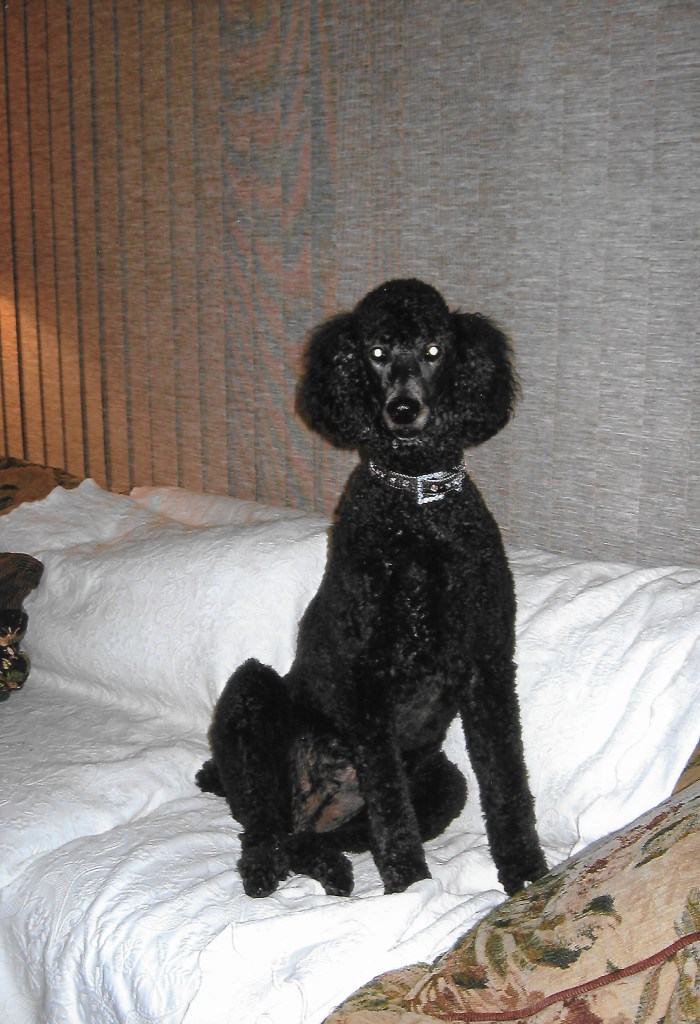
Bailey wearing the Swarovski crystal collar my mother bought her. Summer 2007

“Black pearls are lustrous and beautiful,” I said. “And no matter which dog we pick, it’s going to be black.”

“That’s a dumb name,” Tim said.

“I’m not going to stand outside and yell Pearl,” my husband said. “You have to think about what it’s going to sound like to yell the name out loud.”

I had. “It’s a strong one-syllable word, the kind of name dog trainers recommend.”

“Pearl is an old-lady name,” Tim argued.

“Poodles are sophisticated,” I countered. “I can picture one wearing pearls.”

Every name my husband and sons suggested, I rejected, and they refused to call the puppy Pearl.

“How about Bailey?” I asked. I prepared for another round of rejections, but they liked it. Now, we had a name for the puppy, which I still didn’t want.

*****

The next day my sons and I went to look at the poodles that were priced at three times the amount my husband and I would’ve spent going out on New Year’s Eve. My teenage sons were we are willing to get in a car and drive 180 miles with our mom excited. My husband was it isn’t fair I have to work and can’t go with disappointed. I was why did I open my big mouth remorseful.

With the prudence of a settler heading west in a covered wagon, I packed the SUV with a borrowed crate, old towels, a couple of blankets, a roll of paper toweling, a garbage bag, a dish, and some water.

“Now remember,” I told my sons, “we’re going to look. If things don’t seem right, we aren’t just getting a puppy anyway.”

“Okay,” they said.

“I mean it,” I said. “The place could be a dump. We can’t get a dog from a bad home. Who knows what kind of problems we’d have?”

“Okay,” they said. It was the okay spoken by a child who isn’t listening, a child who knows whatever is being said will have no bearing on what’s going to happen.

“The dogs could be mangy and unfriendly, even vicious,” I said.

“Okay,” they said, dragging out each syllable.

Yeah, right. Too late. I’d set the act of buying a puppy in motion, and like a runaway train hurtling down a mountain, I couldn’t stop it. No one goes to look at a litter of puppies and walks away empty-handed. It’s Einstein’s lesser-known theory of puppy relativity. Still, I hoped to avoid getting a puppy. The 90-mile trip to northern Minnesota gave me time to stew in a pot of regret. Potty training. Accidents. Chewing. Walks in all kinds of weather. Grooming. Vet bills. Obedience training.

Ninety miles later, we arrived at the breeder’s home. It wasn’t looking good. As I pulled into the driveway, a picturesque family farm materialized before me. The fields draped with fresh white snow evoked visions of horse-drawn sleighs filled with laughing people and proud poodles out for a jaunt on a crisp winter’s day. I could even hear the darn bells jingling. A cheerful clapboard farmhouse sat on the western edge of the field. The only part missing was an artist with an easel capturing all that scenic beauty on a canvas, for which some wealthy city dweller would gladly pay top dollar and hang on the wall of an ostentatious, 4,000-square-foot, seldom-used “cabin.”

I hoped the inside of the house could save me. Nope. No improvement there. Three big, affectionate dogs greeted us, not a whisper of a growl or a moan of discontentment among them. A regal silver standard poodle, who turned out to be the proud father, gently placed his paws on Josh’s shoulders and licked his face. The dogs were clean and neatly groomed. The breeder said, “Sit,” and three furry butts hit the floor.

I surveyed the room and realized it belonged to the dogs. Outdated but clean, well-preserved linoleum covered the floor. Big double-hung windows lined the walls, giving the dogs panoramic views of the farm. Cozy, plump dog beds bordered the wall opposite the door. And, a short breezeway led to the main house where the dogs spent time with their people. The dogs were cared for and loved.

An ample, sturdy-built kennel occupied the corner of the room. Mother poodle, happy to have a reason to escape her ten busy pups, hopped over a short barrier and came to greet us. Her puppies, each a jet-black ball of wiggles, jumped against the barrier. “Hey, Mom, where you going?” they squealed.

My last hope rested with the puppies. Perhaps they would cower in fear or show signs of hostility. The puppies let me down. Turned loose for our inspection, they ran to us with wagging tails. Both boys crouched down to play with the yipping, wriggling, nipping puppies. The only problem was choosing one. Our soon-to-be puppy solved the problem—she picked Josh. She scrambled into his arms and licked his face. “This one,” he said.

I paid the breeder, and Josh strode out of the house holding our new puppy like a trophy. After letting her piddle, we put her in the crate in the back of the SUV and started for home.

“Something stinks like crap,” Tim said. We were just twenty miles down the road.

I stopped. Our puppy had pooped in the crate. While I cleaned it, the boys walked her, and she dutifully piddled. I put her back in the crate and drove on.

“It stinks like crap again,” Tim said. We’d only gone another twenty miles, but our puppy had pooped again.

“Nerves,” we said.

Once more, I cleaned the crate and the boys walked our puppy, who piddled. I started to put her in the crate.

“I’ll hold her,” Tim said.

Another twenty miles and I heard retching.

“Mom, she threw up,” Tim said.

I pulled over and looked at my son, who was wearing his hockey warm-up suit. Vomit covered his lap. He tried to keep it from dripping on the floor. I braced for the snarky words I knew were coming and heard him say, “Poor little girl. You’re just a little baby, aren’t you?” He continued to coo at our puppy.

I wanted to ask, Who are you and what have you done with my fifteen-year-old son? But I didn’t. At that moment I knew my reserved, grumpy teenager still had his soft heart. Trying to keep the tears in my eyes, I grabbed some paper towel and silently cleaned puppy vomit off my son and the seat. Josh walked our puppy, who piddled again.

“Maybe we should put her back in the kennel,” I said, thinking she couldn’t have much left in her to excrete.

“I’ll hold her,” Tim said. I grabbed the blanket, folded it, placed it in his lap, and put our puppy on it.

Bailey (R) loved dogs. Buffy never played with her. But after Buffy died in 2008, we bought Cabela (L), a chocolate standard poodle. Baily was overjoyed when we brought Cabela home. Bailey pranced and smiled, as if to say, “You brought me a puppy, thank you, thank you, thank you!” She and Cabela played immediately. September 2008

We made it home without any more messes. Josh carried our puppy into the house and put her on the kitchen floor. She did a circle dance, squatted, and piddled. Tail wagging, she pranced over to greet my husband, who bent down and scratched the ears of his little bargain.

And what a bargain she was. Our next trip was to the pet store for all the necessities: puppy food, treats, a stylish collar and leash, a dog bed, cuddly toys, and teething bones. Trips to the vet, puppy-socialization class, and obedience training followed. But rather than an expensive bargain, I soon began to think of Bailey as an investment in love, paying unlimited dividends.

[Bailey became ill in February 2011 and passed away. Cabela looked for her for days. In April 2011, we bought Ziva, a blue standard poodle. Ziva and Cabela became friends.]
Whose Story Is It Anyway?

[“Whose Story Is It Anyway?” appeared on Lake Superior Writers’ Blog on July 9, 2020.]

At the end of the 1946 romantic comedy, Cluny Brown, Adam Belinski, animated by a flash of insight, tells Cluny, “I’m going to write a bestseller, a murder mystery.” Belinski and Cluny agree the victim must be a rich man because it’s pointless to murder a poor man, and Cluny asks, “Who killed him? Who did it?”

My first initial written in the bark

“For 365 pages, I will not know myself,” replies Belinski, “but when, on page 366, it finally comes out, will I be surprised and so will millions of others!”

The first time I heard Belinski tell Cluny he’d write a mystery without knowing who committed the murder until the last page, I laughed. Ridiculous, I thought. Of course, he’ll have to know who the murderer is when he starts writing his book.

But I wasn’t a writer then.

Before I started writing, I heard authors talk about their characters as if they had a say in the storyline. Interviews often went something like this:

Interviewer: Why does your character go to Oslo, connect with Norwegian relatives, and paint fjords instead of going to Paris to create haute couture and stroll along the Seine with a Parisian lover?

Author: Well, at first the character was going to Paris, taking the fashion world by storm, and meeting a soulmate, but when I tried to write it that way, the character steadfastly refused to get on a plane to Charles de Gaulle Airport.

I’d listen to authors talk about characters and wonder, Do authors actually talk to their characters? Do characters visit authors in a dream? Is this some type of mystical, mysterious, transcendental, existential enigma? Then I’d conclude, Characters might talk to real writers, but I’ll bet mine will never talk to me.

And then one did.

I was writing a story, and my character needed to do the right thing after doing the wrong thing. Our conversation went like this:

Me: Time to do the right thing.

My Refusing to Be Reformed Character (MRBRC): Nope, don’t want to.

Me: But your doing the right thing is the whole point of the story.

MRBRC: Tough cowhides. I see no point in it.

Me: Readers won’t like you if you don’t.

MRBRC: I don’t care. I’d much rather be memorable and get my way.

Me: Can’t you be memorable and do the right thing?

MRBRC: Seriously? How droll.

Me: But what about my story?

MRBRC: Excuse me? It’s my story. It’s about me, not you.

I gave up. My character did the wrong thing, and she wasn’t sorry. And to solidify her position, she mocked the other characters.

I finished the story and sent it to a local contest in northern Wisconsin. The story earned an honorable mention. The first judge wrote, “This story is professional. It can give the reader a look into the mind of an underprivileged child and how envy and poverty come together to affect behavior.”

The second judge wrote, “A vivid portrait of a girl who would rather steal than earn. Sadly, there are real people like that. I didn’t like her.” This judge said I developed the story well, but added that she hoped the girl didn’t grow up “nurturing her self-pity.”

Well, me too. I’ve hope for my character’s future, and even with her faults, I still like her. Would my story have placed first or second if the character had done the right thing? I don’t know, but I’ll never rewrite her storyline. In the end, I empathized with my character’s choice.

And I realized something. The first judge read my story as a commentary on poverty. The second judge talked about my character as if she were a real girl, who’d grow up to be an adult. My character, unlikeable but memorable, got under the second judge’s skin. My character’s defiance makes the story resonate more than her compliance would’ve. I can hear her gloat.

Since the debate with my I’m-going-to-do-the-wrong-thing-no-matter-what-you-say character, I’ve had other characters argue with me. I understand now what writers mean when they say characters speak to them, so if a character wants to discuss something with me, I listen.

I still laugh at the end of Cluny Brown but for a new reason—I get the inside joke. The script writers were poking fun at the writing process.

Refracted

Split Rock Lighthouse stands along the western shore of Lake Superior, atop a soaring cliff. Dressed in cream-colored brick and elegant trim more fitting for a grand house in a genteel neighborhood, it once worked as a watchman holding a luminous light, warning ships about rocky shores at its feet.

My grandchildren at Split Rock Lighthouse, late October 2017

It’s a crisp late-October morning. The last day of the season before the lighthouse shutters for the year. From an expansive autumn-blue sky, sunshine washes the landscape in gold. The temperature wanders just north of forty-five degrees. The air breathes softly.

My granddaughter, six, and grandson, four, are with me. It’s their first visit to the lighthouse. Because it’s a weekday and almost the last day the lighthouse will entertain visitors for the year, we are nearly alone on the grounds.

We climb the twisting steps of the lighthouse, just the three of us. We are quiet, and with nothing to arrest my attention, other than the shuffle of feet on the stairs, I travel decades back in time.

My father, my sisters, and I climb the stairs. My father has come to see the Fresnel lens, and we are his pupils. Some of his words wend down the tower: France, prisms, refraction, illumination, fog, storms. But his lesser words are swallowed by the voices of other tourists. His face points up toward the lens; my sisters and I are in tow behind him.

My granddaughter leads the way, followed by my grandson, then me. I’m the caboose, better, I think, to catch them if they slip. I’m not interested in touting the wonders of the Fresnel lens. I leave them to their thoughts as they ascend the stairs, and I return to mine.

At twelve, I’m content to let my father’s explanations about the lens waft past my ears. I imagine the lightkeeper climbing the stairs during a howling storm to ensure the beacon shines across roiling waves of the frigid lake. I fancy the lightkeeper manning the signal house to ensure the horn bellows over icy waters while dense fog unfurls across an eerily still lake. I remember my father’s words about Lake Superior, mostly spoken to my frightened mother as he would fly us over a corner of the lake, “You’ll die of hypothermia before you’ll drown.” I ponder the number of sailors the lighthouse spared from freezing to death before they could drown.

I’ve no idea if my fancies about a lightkeeper’s duties are accurate, but I measure life as a lightkeeper’s daughter against life with my father.

Sometimes my father is a martinet. My siblings and I endeavor to read his barometric pressure and side-step his thunderclouds. We learned early to listen carefully.

He’s an extraordinary mechanic. His hands tinker, build, tune, modify, rig, experiment, adapt. Cars, trucks, motorcycles, planes, appliances. All engineering feats, great and small, captivate him. He wants us to be enthralled. But my fascination is for the people who lived and worked at the lighthouse on the prodigious cliff. I crave the stories of people. Lake Superior, which, if it had the chance, would freeze me to death before swallowing me, enchants me. My father doesn’t notice my attention has wandered because he’s hammering the tour guide with his knowledge of the brilliant lens.

“Oh, wow,” my grandson says, exhaling the words as a brief, but reverent Gregorian chant. He’s caught his first glimpse of the Fresnel lens gleaming in sunlight spilling through the windows. He stops and stares. The echo of his chant swirls around the tower.

Years ago, my father expressed his amazement of the lens with descriptions of its design and function. My grandson captures his admiration in two words. But at this moment, although they’ll never meet, they’re tethered together across four generations, both of them mesmerized by a triumph of engineering designed to mitigate the angry moods of the lake. I see my father through the eyes of my grandson’s wonderment, and he becomes a curious four-year-old boy, instead of an ill-tempered adult. And I ponder what he might have said about the enormous, glistening lens had he seen it as a four-year-old boy. Their shared veneration softens prickly memories of my father. I can’t picture him as a little boy and be angry with him at the same time.

With the massive lens above me, I stand at the top of the lighthouse, peering out at Lake Superior and hear my father’s voice, She’ll freeze you before she’ll drown you.

I know, I answer, but, still, I love her.

Gardening on the Fly

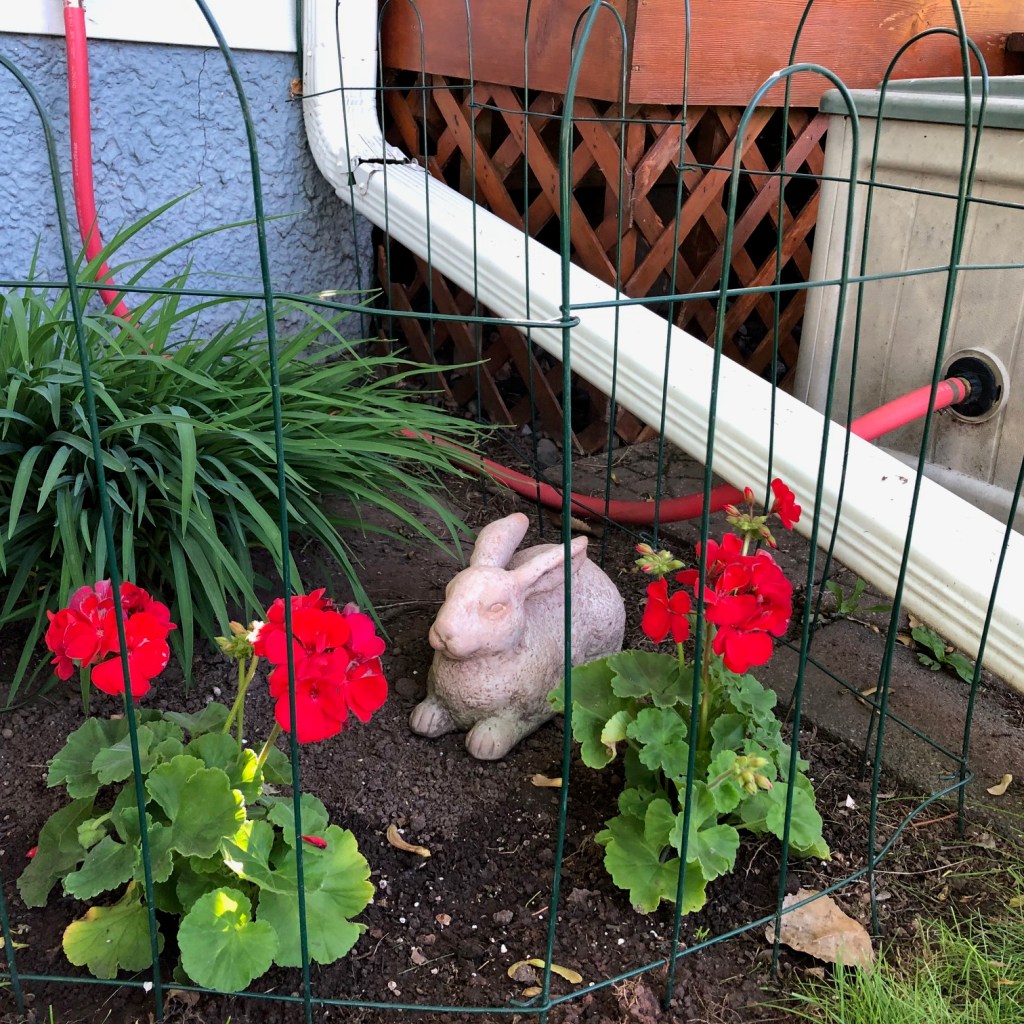
The best kind of bunny to have in the garden

In the movie, Cluny Brown, once it becomes clear Elizabeth will marry Lady Carmel’s son, Lady Carmel tells her they will have a long talk in the morning, “especially about the gardens because they’re all planned three years ahead.” Gardens are the marquee headliner in their upcoming talk—not wedding plans or financial settlements or living arrangements.

The movie is set in England just before World War II consumes Europe. Lord and Lady Carmel have an English estate in the countryside. Their gardens are immense and sumptuous, the kind that need planning and a bevy of gardeners. Even the shore along their lake is landscaped. Lady Carmel probably has a rose named after her. She probably enters a flower arrangement every year in the village garden show and, no doubt, wins.

Hand-me-down irises in bloom

Lady Carmel would’ve been disappointed to have me as a daughter-in-law. My idea of planning gardens? Go to the farmer’s market, see what’s being offered, and decide if I have a place to plant it. This is an ongoing slice of my summer, with the heaviest impromptu gardening happening between the end of May and the middle of June.

My gardens present a challenge—I need plants that can stand the shade. I have lots of shade: complete shade, almost all shade, mostly almost all shade, some sun but still a lot of shade, and a few good hours of morning sun then lots of shade. I need plants with sunglasses, wide brimmed hats, and slathers of sunblock on their leaves, begging to be lodged in shade.

Farmer’s market columbine

I’m giddy when I discover flora that blooms in the shade. Last weekend as I paid a vendor at the farmer’s market for a hanging basket and some painted rocks, I spotted a plant at the back of her stand. “What’s that?” I asked, pointing to a pot with a dowel to which a picture was taped.

The vendor rattled off a name, which I promptly forgot. “Does it like shade?” I asked.

“It loves shade,” she said.

“Complete shade?” I needed her to know the sunlessness of my empty garden spot.

“It doesn’t care if it ever sees the sun,” she said.

A bumble bee visits my flowering spearmint, another farmer’s market buy.

“Does it bloom?” I asked because most plants seem to want some sun if they’re going to bloom.

“Yes, it gets lots of little heart-shaped flowers.”

“I’ll take it.” My feet tapped eight to the bar.

I imagined Lady Carmel standing next to me, saying, We can’t buy that. It’s not on the three-year plan.

Lighten up, Lady Carmel, I’d say. Do you know how hard it is to find a plant that loves shade and blooms?

Near the beginning of Cluny Brown, Lord Carmel tells a house guest that the gardens are Lady Carmel’s empire. He figuratively implies the sun never sets on the grounds that she rules. My gardens are like a small unincorporated township. But Lady Carmel and I would both agree that no matter the size, our gardens are our dominions.

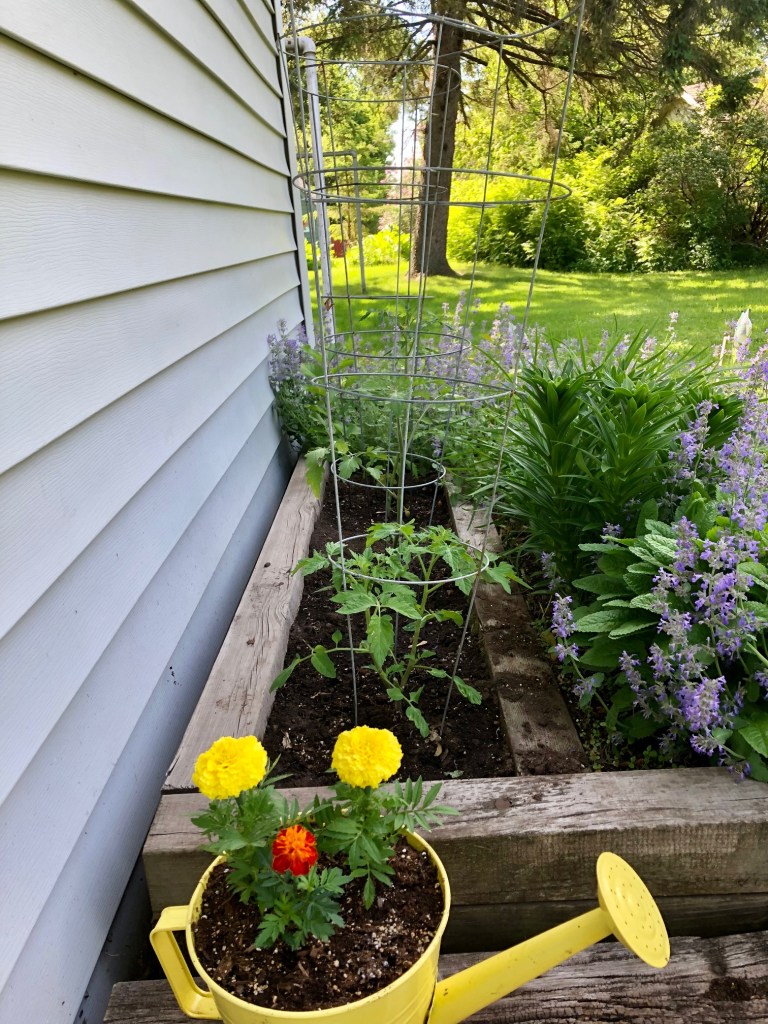
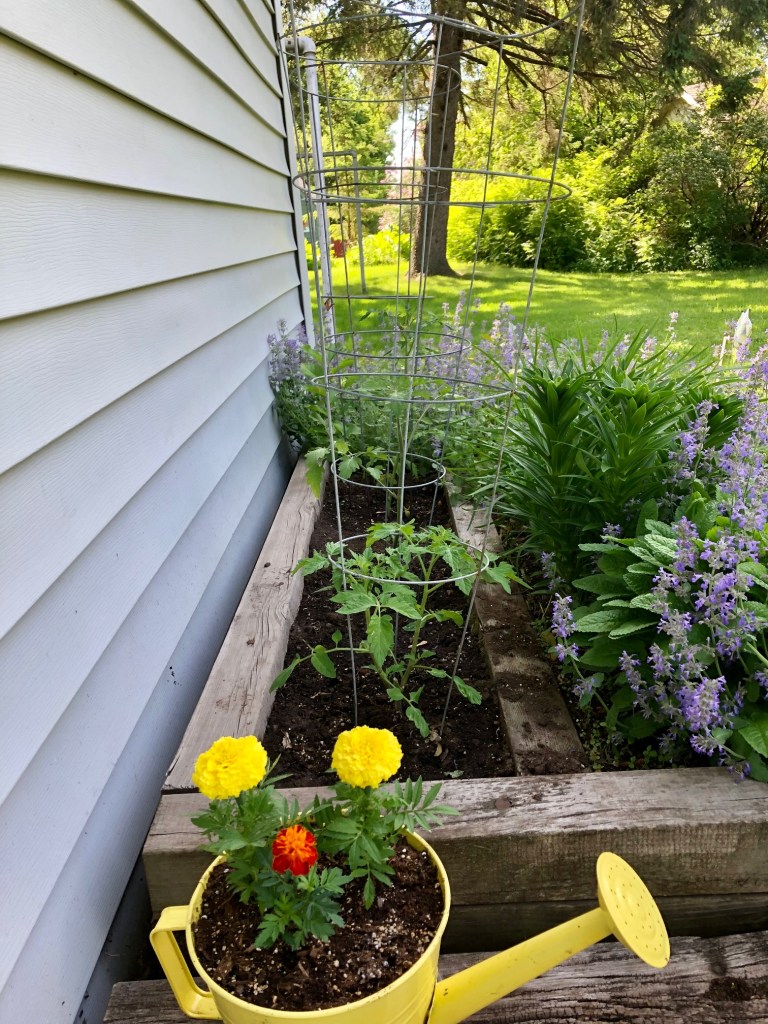
Marigolds and tomato plants from the farmer’s market

Every morning, afternoon, and evening, I tour my gardens, meandering around my house then behind the shed where a small, full-sun planting bed exists, my only one. I gauge the needs of my flowers and plants, pulling a few weeds, deadheading, and watering the thirsty.

My gardens are humble, but they’re mine, and like Lady Carmel, I feel rather noble after returning from a tour of my blossoms and greenery.

I do have a three-year plan now, but it involves the garden spaces, not the plants in the them. This year I’m getting new vinyl-clad basement windows. Next year I’m having the stucco around the foundation fixed. The following year I’m increasing the size of my gardens and having new borders installed. Lady Carmel might think there’s hope for me, but I will still buy my plants on the fly.

And the finches like my front garden, where the seeds are!

Things That Go Boom in the Night Frighten Cabela

Last year COVID canceled the city-sponsored fireworks. Many people in our neighborhood bought fireworks and staged their own shows on the Fourth of July. In the twenty-four years I’ve lived here, the amateur firework shows have never been louder or lasted longer.

Boom, snap, crackle, and bang reverberated from after sunset until sometime after midnight. My twelve-year-old poodle, Cabela, distraught at the noise that wouldn’t end, trembled. I took her to the basement, her comfort spot when a thunderstorm or a few pre- or post-Fourth-of-July fireworks explode.

But she didn’t crawl into her kennel and curl up like she normally does. She slunk into the back of the basement next to my husband’s workbench, sat on his cushioned floor mat, and stared at the wall, waiting for the noise to stop. She had the demeanor of a shell-shocked soldier.

I stayed in the basement with her. I sat on the stool in front of the workbench. Eventually, she lay down, keeping her nose to the wall. I wondered, Does she think if she stays in the corner long enough the punishment will end?

It’s the middle of June, and the firework warmups have begun, a few pops here and there, mostly off in the distance. Cabela is a bit hard of hearing, so she doesn’t hear all of these early fireworks, and mercifully their duration is short. But the Fourth of July is coming. The booms will become closer, louder, and last longer. I wonder if this year’s Fourth will be a repeat of last year’s Fourth because even with her diminished hearing, she will hear them. My sweet, tender, stoic dog will be frightened and confused.

Neither one of us likes the Fourth of July anymore.

Two Rounds of Tomato Plants

Mother Nature gave us some warm days in the second half of May, but to keep us from getting smug, she tossed in some freezing weather with substantial winds off Lake Superior. I’ve lived in northern Wisconsin too long to plant flowers or tomato plants until the first weekend of June. This year was no different. I didn’t plant anything early, but I lost three tomato plants. Icy winds roared off Lake Superior, withering their leaves.

The tomato plants stood on my back deck, tucked up against the house, nestled among flowers and other plants waiting to be transplanted. I’d heard the weather forecast. I’d felt the frozen sandpaper winds off Lake Superior, bursting around the side of my house and over my roof. I should’ve moved my plants into the garage that night, but I was smug.

And my tomato plants paid the price. After two days of winds off the lake, temperatures below 40˚, and overcast skies, their baby-skin leaves curled over on themselves, attempting to cover up in the cold.

I touched one of the furled leaves, struck by how soft and thin it was. The leaves of my other plants were rough-hewn slabs in comparison. I apologized to the tomatoes and hoped they’d heal. But they didn’t.

I tossed them in the garbage, sorry they wouldn’t have a chance to share fruit with me.

I bought three more tomato plants. I pampered them, moving them into the garage at night and hauling them out during the day. On the first weekend of June, I planted my gardens. Hot-furnace winds blew out of the southwest, temperatures reached 96˚, and endless blue stretched across the sky.

Now, with a watering can in hand, I check my gardens several times a day, looking for drooping leaves, watering the thirsty, protecting my plantings from Mother Nature’s current mood—a heatwave.

I can’t be smug. I don’t want to start over with new plants.

Spur of the Moment

[Two Harbors, Minnesota, is 27 miles from Duluth, Minnesota. A drive along Scenic Highway 61 on the way to Two Harbors is filled with spectacular views of Lake Superior and its shoreline. Two Harbors snuggles up to the lake and offers a day’s worth or more of outside adventures, museums, and good food.]

May 21, 2021

If I don’t have plans for the weekend, Friday evening looms like a desert with me standing at the edge sans camel or water or compass. And since the pandemic started, my “plans” consist of shopping for people food or dog food, so I wander the shifting sands of the weekend looking for an oasis.

This Friday when my daughter-in-law arrives to pick up my grandkids, I ask if Clara, nine, may spend the night. Her mom agrees, and Clara agrees, performing a double-fist pump while jumping up and down.

Our official sleepover starts the moment her mother pulls out of the driveway with Clara’s three younger brothers. We walk the dogs. We pick up take-and-bake pizza. After supper I answer some emails, and Clara makes a necklace. After her beads are strung, I take out my jewelry-making supplies and attach a clasp to her necklace. Clara says, “Nana, it’s so quiet.” And it is. My husband’s gone to the driving range, so the TV is off, and her brothers are at home. “Does that bother you?” I ask. She answers, “No, it’s wonderful.” We laugh. I wonder if her double-fist pump had something to do with ditching her brothers for twenty-four hours.

We walk the dogs, again. We talk about our road trip to Two Harbors in the morning. We treat it like an adventure: rough out a few details but declare to take it as it comes.

After our walk, it’s bedtime. I read Clara a story; she reads me a story. Listening to her read is like stirring a teaspoon of farmer’s-market honey into a cup of hot, fragrant tea. I tuck her in, and she turns out the light. I join my husband in the family room. He’s seated closer to the bedroom door and hears Clara reading. She’s turned the light back on and is reading out loud, perhaps to the teddy bear she took with her to bed. As a child I used a flashlight to read when I was supposed to be sleeping. I let her be.

May 22, 2021

In the morning I’m up at six o’clock. Clara sleeps in. Afterall, she did some clandestine reading last night. She emerges from her room at nine o’clock.

After breakfast, we walk the dogs. They’ll have to stay home, so I tell Clara we owe them some fun before we hit the road. She’s all for this because we’ve been using my pedometer app to count steps.

We talk about the anticipated weather. The temperature will climb just above 50˚, the sun will hide behind clouds, and there’s a chance rain will drip from the sky. But we aren’t discouraged because Lake Superior isn’t slapping us with a wind off her icy waters. We embrace the weather as an opportunity for style choices in outerwear. She wears a blue animal-print, zip-up, hooded sweatshirt and carries an umbrella festooned with characters from Frozen. “Just in case it rains,” she says. To anchor the outfit, she slips on rain boots covered with retro-styled flowers, á la 1960s.

I wear a Pendleton rain jacket. Candy red with a green plaid lining, it whispers when I move. I pull a gray wool beanie on my head. I stash an umbrella in my backpack because rain or shine, we’re hiking. To anchor my outfit, I tie on comfortable old sneakers, so comfortable that bits of the soles have broken away.

After a cloud-covered drive along Lake Superior’s steel-blue waters, we arrive in Two Harbors and park by Agate Bay. We walk the trail near the shore. Clara’s intrigued by the curved cement seats facing the lake. Each seat has a small sign commemorating someone’s loved one. She stops at every seat, reads every sign, speaks every name out loud. Names of people lifted into the air and out over the rocks and rippling water.

She leads; I follow. We’re up and down narrow paths that lead to basalt covered shores then back to the trail in the forest. Eventually, we spill out onto a beach covered with water-worn rocks. Oliver, a golden retriever the color of copper, is swimming in the lake. His owner tosses a frisbee. He retrieves it, gives it back, sits, and smiles. He asks, “More, please?” His owner answers, “Just a couple more times.” Clara looks for agates and beach glass. I watch Oliver chase his frisbee. He gets more than a couple extra tosses. I knew he would. His smile serves him well. Clara slips a few rocks and some beach glass into her pocket. We decide to go to Burlington Beach. As we hike back to the parking lot, Oliver is still retrieving his frisbee from the lake.

Back at Agate Bay, I ask Clara if she wants to walk on the breakwall before we leave. She does. To our right an ore boat crouches at a dock in the bay. To our left another ore boat approaches then stops outside the bay. Its anchors groan as they drop into the lake to hold the boat in place while it waits its turn for a load of ore. Water shivers along the sides of the breakwall, and Clara says, “It’s colder out here.” I tell her that’s because Lake Superior is very cold. I tell her to walk on the side with the cable-wire fence.

We’re hungry but go to Burlington Beach. After we arrive, a van pulls up and a family fortified with metal detectors heads for the beach. Clara digs in the rocks with her hands and sifts through her quarry. Ten yards away, metal detectors hover over the beach. Clara shouts, “Look, Nana, a green piece of beach glass.” A detector bloops, chirps, and warbles like R2-D2. Clara digs another pit in the rocks. A man stoops, digs, and pulls something from the sand, holds it in his hand, shows it to another detectorist. Clara digs. Metal detectors hover. After pocketing a couple more pieces of beach glass, some granule-sized agates, and a few pretty rocks, Clara says, “I’m really hungry.” Me too. Treasure hunting is hungry work.

McDonald’s. It’s not adventurous, but we can socially distance. We order two small cheeseburgers and two McFlurries to eat in the car. I park and ask Clara to sit in the front passenger seat, so we can visit while eating. She’s not tall enough to ride in the front, so she’s delighted. I’m struck by how pleased she is to sit in the front seat of a vehicle parked at a fast-food restaurant and eat. We watch traffic cruise by, and we talk. Too sweet for me, I eat half my McFlurry and toss the rest. Clara savors hers long after we leave the parking lot, remarking from the back of the van, “This is really good, even all melted.”

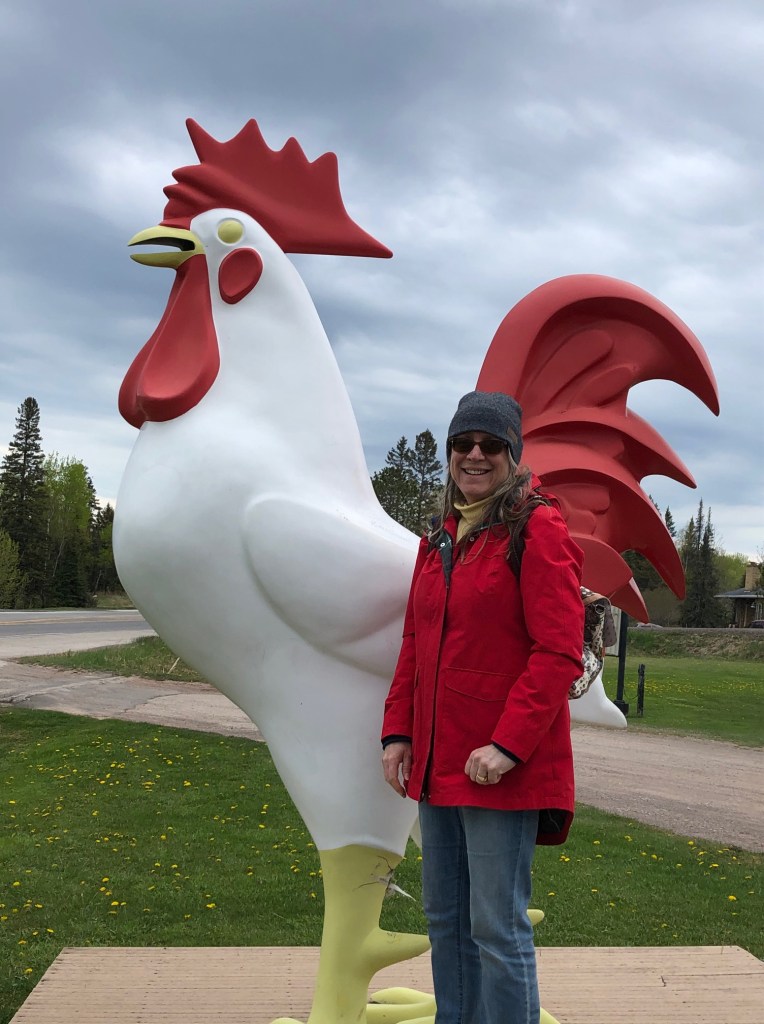
Before leaving Two Harbors, we stop at the rooster—think Foghorn Leghorn of Looney Tunes, but taller, eight feet tall. The big red-and-white rooster stands on a wooden platform. Clara poses with him for a picture and notices cracks in his legs. Like a retired football player in his 50s, the rooster’s old injuries are flaring up. I tell Clara the rooster’s story. In 2003, he was kidnapped from his perch and thrown off a bridge, dropping twenty-some feet before splashing into a creek, broken in pieces. But in the end, like a Looney Tunes character, he was put back together. Airline mechanics from Duluth performed cartoon magic and mended his fiberglass body. But time will un-heal old wounds and cracks appear where he was fused together. Neither of us understand the act of hate.

We take the Scenic Highway home because we need to stop at a candy shop and a smokehouse. Sweets and smoked fish are the desserts of our road trip. We wear our masks and wait our turn to enter the shops, which allow only four people at a time. Clara selects the candy to be shared with her brothers. At the smokehouse, I select the fish to be shared with her family and my husband. We’ve enjoyed our road trip and want to share a piece of it with our people: On our trip, we thought of you and brought something for you.

We’re near the outskirts of Duluth, near the end of our road trip, when Clara says, “Nana, this has been the best sleepover ever.” I agree with her. It has been the oasis of my weekend.

Corrine’s New Shoes

[In 2019, this short story won an honorable mention in the Indianhead Writers’ Contest in Northern Wisconsin. In June 2020, it was published as “Trinket” in Spring Thaw, a yearly journal published by Itasca Community College.]

Corrine stared at the tiny moccasins made of white, orange, brown, black, and turquoise beads. If they hadn’t been attached to a small beaded circle, she supposed she could’ve slipped them on the feet of her secondhand Barbie doll. Desire skulked in her brain. The tiny moccasins were displayed on the back counter in the classroom with other objects representing Native American culture, but she only wanted the moccasins. She bent over the bubbler for a drink of water, her right hand pushing the button and her left hand resting on the counter, dangerously close to the moccasins.

Mrs. Teasdale’s staccato voice interrupted her thoughts. Corrine returned to her desk, took out some unfinished work, and pretended to listen to her third-grade teacher. Her lungs stuttered as she tried to breathe. Her right hand held a pencil poised above a worksheet. Her left hand rested on the pocket of her dingy hand-me-down dress where she could feel the moccasins cocooned in its cotton folds.

Corrine shifted her head and looked at Nancy, the former owner of the moccasins. As Nancy moved her head from book to worksheet, her strawberry blond hair, cut in a sleek page boy and adorned with a bow, swayed. Shamed by Nancy’s hair, Corrine pushed back her pale red mop, trying to hide its uneven ends. She wanted to keep the moccasins.

Scotty walked up to Nancy, rested his hand on her back, and whispered in her ear. Nancy rose from her seat and strode to the back counter. Corrine bent over her worksheet and fought the urge to watch Nancy discover her moccasins were missing.

Corrine felt a draft as Nancy bolted by her, heading to Mrs. Teasdale’s desk. Corrine looked up and envied Nancy’s stylish dress accessorized with patent leather shoes, lacy anklets, and a sweater that didn’t look like an afterthought. Corrine tucked her feet as far under her chair as she could, hiding her baggy socks and shabby tennies. She didn’t think Nancy needed the darn moccasins.

Mrs. Teasdale moved to the front of the classroom and cleared her throat. Nancy stood next to her, a queen and her lady-in-waiting.

“Children,” Mrs. Teasdale began, “Nancy’s small beaded moccasins seem to be missing.”

Corrine tapped her fingers on the treasure in her pocket. There was no seeming about it.

Mrs. Teasdale rested her hand on Nancy’s shoulder. “Let’s all help her look for them.”

Corrine stood and joined the hunt. Eighteen third graders scurried about the room, looking under, over, around, behind, beneath, and between. Minutes passed.

“Children,” Mrs. Teasdale said, “please return to your seats.”

Eighteen third graders moseyed back to their seats, their eyes darting this way and that, each one still hoping to find Nancy’s moccasins. Corrine looked straight ahead on the way back to her seat.

“It appears Nancy’s trinket is gone,” Mrs. Teasdale said. “I don’t like to think one of you would’ve taken something that wasn’t yours. Nancy’s grandmother gave that to her.”

A sob escaped from Nancy, and tears trickled down her daintily-freckled face. Corrine shivered. She hadn’t anticipated Nancy would care about something so small when she had so much.

“I’m going to wait until 2:30,” Mrs. Teasdale said, “and if Nancy’s trinket isn’t back, I’m going to search desks and pockets.”

Corrine looked at the teacher who scanned the room, meeting each student’s eye. The teacher stared at her longer than anyone else. Corrine looked down. Her cheeks burned, highlighting the clumsy freckles splattered across her face.

“Get back to work, class,” Mrs. Teasdale said. Nancy picked up her pencil; it quivered in her hand. Corrine picked up her book and pretended to read. She worked on an exit plan.

At lunchtime Mrs. Teasdale lined up the students in the hall, watching them. She marched them to the lunchroom. Corrine saw her teacher whisper to the playground monitor, who turned her bird-like face and gawked at Corrine.

Sitting alone, Corrine ate her peanut butter sandwich and apple. No sense going hungry just because she was holding stolen goods. She didn’t know what kind of supper would be waiting that night. She watched Nancy open her Barbie lunch box. Nancy nibbled on her sandwich and put it back. She ate a section of her peeled orange and put it back. She picked up a package of Twinkies but put it back. Nancy was too upset to eat. Corrine considered asking her for the Twinkies but decided the moccasins were enough. She put her empty baggie and apple core inside her paper bag.

At recess Nancy didn’t play. She sat on the edge of a concrete planter. Girls from their class sat next to her or stood in front of her. Corrine stood behind some of the girls. It was important to appear sympathetic, but she kept turning to watch the boys play kickball. When the bell rang, Nancy rose and flanked by girls on each side, she walked into the school. Corrine tagged along.

When she entered the classroom, Nancy started to cry. Girls rushed to her side, but the teacher cut them short, “Children, take your seats.”

The drama amused Corrine.

“I hoped when we returned from lunch, Nancy’s trinket would be on the back counter,” Mrs. Teasdale said.

Hope in one hand and spit in the other and see which one fills up first,Corrine thought, modifying and censoring one of her father’s favorite sayings.

“How would one of you feel if someone took a present your grandmother gave you?” Mrs. Teasdale said. Her eyes bored down on Corrine.

Corrine wanted to ask when she was supposed to have put it back, but she gave Mrs. Teasdale her best I’m-listening-to-everything-you-say-because-you’re-such-a-wonderful-teacher look.

“Remember, if Nancy’s item isn’t back by 2:30, I’m going to search pockets and desks. Get your reading books out.”

Nancy read Charlotte’s Web. Her eyes were red from crying, but Corrine knew she wasn’t crying because the farmer wanted to butcher Wilbur.

Corrine read Charlie and the Chocolate Factory. Mike Teavee, the last of the spoiled, greedy children, was expelled from the factory. Only Charlie, kind and honest, was left. Mr. Wonka pronounced Charlie his new heir. How nicea whole candy factory! Her fingers traced the tiny moccasins in her pocket.

At two o’clock, Mrs. Teasdale announced it was time for afternoon recess. Desktops clattered as books were put away. The children, waiting to be dismissed, simmered in their seats. Corrine had decided.

She walked up to the teacher and whispered, “I’d like to stay in and look for Nancy’s trinket.” Corrine’s hands, interlaced, rested on her dress. She could feel the tiny moccasins against the inside of her wrist.

“Why, Corrine, that’s very nice of you,” Mrs. Teasdale said, arching an eyebrow.

Corrine’s face twitched.

“Okay, children, we’re going out for recess. But Corrine has offered to stay inside and look for Nancy’s moccasins.”

All of the children looked at Corrine. Scotty elbowed the boy next to him. They looked at one another and smirked.

Corrine glared at Mrs. Teasdale then looked at Nancy.

Lined up side by side, all of the children followed Mrs. Teasdale out of the room. Nancy was the last one in the girls’ line. She turned back, and her hair swirled like a square dancer’s skirt. She glanced at Corrine who stood in the center of the room. Scotty, who’d lined up next to Nancy, took hold of her hand as they left the classroom.

Corrine was alone. She turned around, surveying the room. On her second turn, she spotted the cabinet doors under the counter that once held the moccasins. The plumbing for the sink was inside those doors. She opened the cabinet and looked at the pipe running from the sink into the back wall. The scant half-inch gap between the pipe and the wall cinched it. She slid her hand into her pocket and pulled out Nancy’s trinket. Corrine had enjoyed owning the tiny moccasins. She looked at them one last time. Her Barbie would have to go barefoot.

She slipped them into the gap next to the pipe and closed the cabinet door.

After recess, when Mrs. Teasdale led her students back into the classroom, Corrine was standing in the center of the room.

“Did you find them?” Mrs. Teasdale asked.

“No,” Corrine answered. She crossed her arms over her chest. Her dress pockets, turned inside out, waved like two white flags.

An Electric Clock Outdoes Sliced Bread by a Country Mile

[I was inspired to write this account about my grandfather, George, after reading one of Chris Marcotte’s blogs at chrismarcottewrites. Chris writes about the history of the everyday lives of people, bringing their stories to life in a way that lets the reader connect to people in the past. She incorporates information from newspapers in her blog. After reading Chris’s article, “The Best Thing Since Sliced Bread,” I remembered both my grandpa’s dislike of store-bought bread and his admiration for an electric clock.]

Grandpa George would never have uttered the phrase “the best thing since sliced bread.” Detesting store-bought bread, he’d have thought it was a poor standard by which to measure some new technology that impressed him. I can imagine a conversation with a customer at his gas station going something like this:

George’s Standard Oil Station, circa 1930s. He owned and ran this station from 1928 until 1979.

Customer: Heard you and Olive bought one of those new color TVs. The best thing since sliced bread. Wouldn’t you say, George?

George: You’re setting the bar pretty low. Sliced bread isn’t a second best to anything.

Fortunately, Grandma Olive baked a good loaf of bread. Over George and Olive’s forty-five years of marriage, they had, at one time or another, one foster son, three children, George’s brother, Olive’s parents, their daughter and her children, and me living with them. Olive baked a lot of bread.

George’s first auto garage with gas pumps, circa 1920s

George, born in 1899, might’ve been old fashioned about his bread, but he welcomed other technology. In 1913, when George was fourteen, the first car arrived in his hometown. He’d learned blacksmithing, so he shod horses before he changed car tires. But, by 1920, George knew cars were his future. He and his cousin Frank embraced innovation and opened an auto garage with gas pumps, a business George owned and ran until 1979.

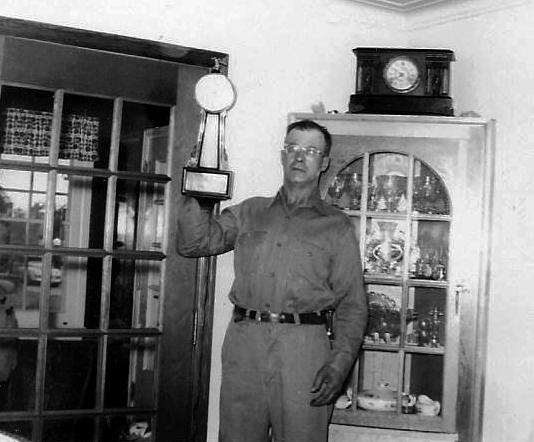
George appreciated smaller innovations too. In the early 1950s, a relative, who was dear to George, gave him an electric clock, the first one he ever had in his house. The clock hung on the wall in the living room where he watched his TV. He not only cherished the clock because of the giver, but he relied on it. He checked his pocket watch against the electric clock daily, believing it was more reliable than the mechanical clocks in his home.

George and the first electric clock in his home. Excited by this new technology, he had the moment preserved with a photograph.

Like most of us, George both praised and disparaged new advancements. He gave a thumbs up to cars, gas pumps, TV, electric clocks, a modern kitchen, washing machines, and planes (taking a trip to Italy in his 70s), but he gave a thumbs down to sliced bread. And he didn’t like store-bought desserts either, for which I’m grateful. During the three years I lived with my grandparents, I enjoyed scrumptious homemade cookies; divine chocolate cakes; pies baked with fresh fruit; light, heavenly angel food cake; and moss cake, a rich, nutty confection made with the egg yolks leftover from making the angel food cake.

Because of my grandparents’ influence, I make my own desserts. But I don’t bake bread. Sorry, Grandpa!

Art On!

Clara, my nine-year old granddaughter, has wanted to be an artist, then a scientist, then an artist who is also a scientist. Michael, my seven-year-old grandson, once stated he wanted to be a doctor.

Last week things changed. On Tuesday, Clara wanted to be a scientist. But on Wednesday, she decided to be a fashion designer, and Michael announced he wanted to be an artist.

I didn’t ask questions like, What’s your day job going to be? Or make statements like, I guess you’ll need to learn the phrase, Do you want fries with that?

Clara’s Art
Clara’s Art

Fashion design is a form of art, so Clara hasn’t strayed far. She loves to draw and create art using different media: colored pencils, paint, stickers, beads, sequins, sticks, leaves, fabric. (I’ll stop the list here, or I’ll exceed my word limit.) Michael loves art too and is becoming more experimental and playful.

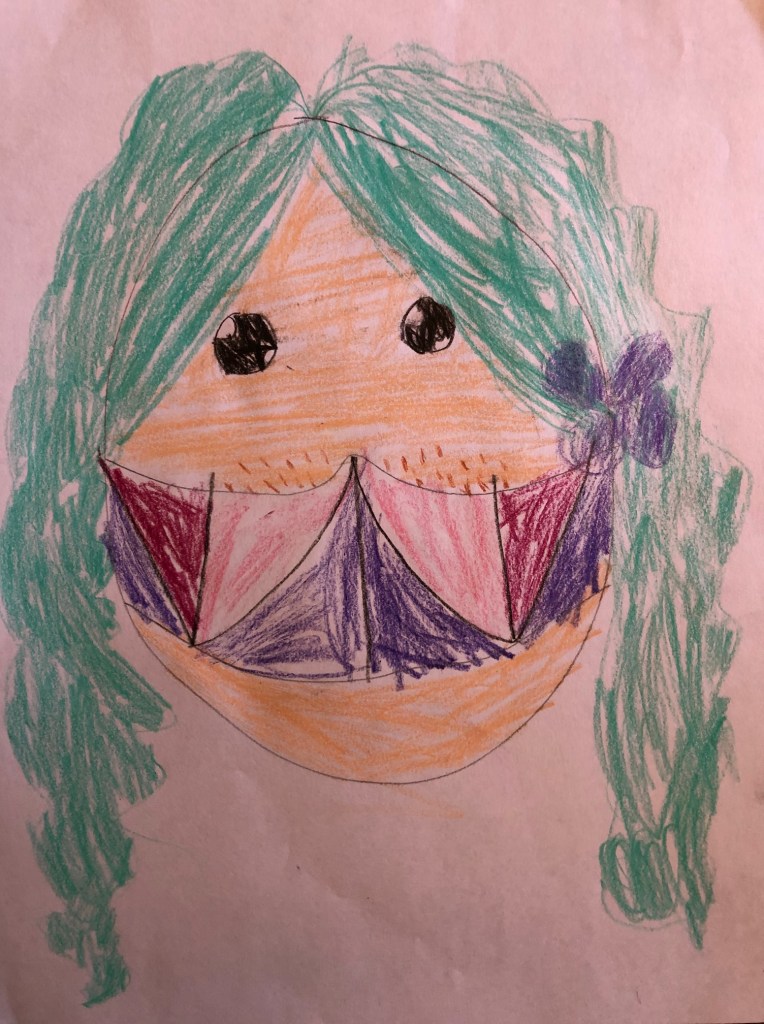
During Wednesday’s art-at-my-kitchen-table time, Clara drew portraits of people wearing masks. COVID is part of our lives, so I wasn’t surprised to see masks show up in her artwork.

Clara’s Art

“Look, Nana,” she said, holding up the first portrait.

“Very nice and colorful,” I said.

She drew another portrait of a person with a mask, then another.

“Look, at these, Nana.”

“Nice. I like the designs on the masks.”

“Thanks.” She wiggled in her seat and grinned. “I’m going to be a fashion designer and design masks and hats.”

“Your designs will turn masks and hats into art people can wear,” I said. She liked this idea.

Michael’s Art
Michael’s Art

She began drawing people wearing colorful hats but no masks, and said, “It’s easier to draw people wearing masks because drawing a mouth is hard.” I agreed with her, mouths are hard.

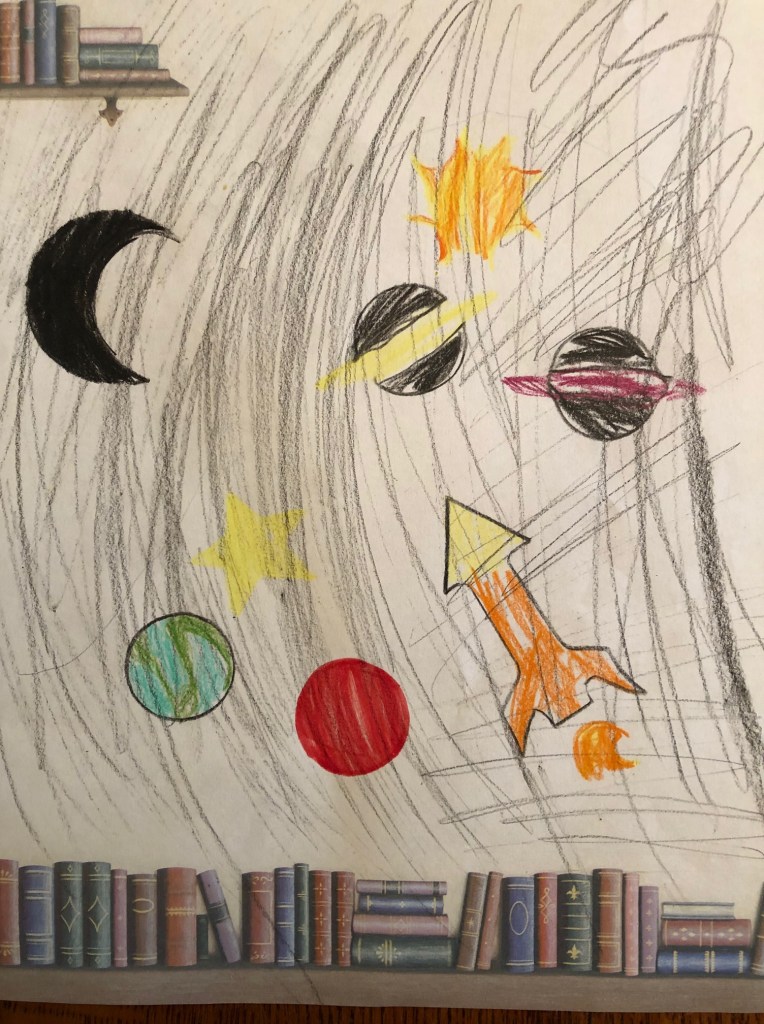
Michael drew one portrait, then used stencils to create an intergalactic scene and whimsical hodge-podge. Much of his artwork is scenic.

Michael’s Art

Evan, my four-year-old grandson, is into drawing beings that look like creatures. He’s discovered he likes colored pencils over crayons because his older siblings use them. He drew a doleful creature with a frazzled mouth, then left the table to play with toys.

Evan’s Art

I babysit my grandkids three days a week, and when they’re here, we make time for art. Whether it’s a drawing project or a project involving supplies and the hot glue gun, the grandkids enjoy creating.

Next week or next month, my grandkids may have new career choices, but we’ll still have art-at-my-kitchen-table time. Art develops imagination, spatial awareness, and problem-solving skills. But best of all, their faces are full of joy when they hold up their artwork and say, “Look at this, Nana.”

Art-on!