I’m reading Last Circle of Love because I met Lorna Landvik, for a second time, at an author’s book talk in April. Lorna is a kind, funny person, and I enjoy listening to her talk about life and writing. When I met her for the first time in 2019, I bought her book Your Oasis on Flame Lake, and I thoroughly enjoyed the characters and their stories. In April, I bought Last Circle of Love, believing I would like it just as much or even more. Turns out I like this book even better. It’s a heartfelt story with interesting and diverse characters who come to life and pull at my heart with their stories..
What is this book about?
The women who belong to the Naomi Circle at All Souls Lutheran have just attended a luncheon at the Prince of Peace. Everything about the Prince of Peace is larger, shinier, newer, more opulent, and richer. But what really bothers the women from All Souls is the glitzy, full-color, professional-looking recipe book the women at Prince of Peace will be selling. The Naomi Circle of women are discouraged because they need a good fundraising idea to help keep All Souls’ doors open.
Someone jokes that the Naomi members should write a book called the ABCs of Erotica. The idea for their book isn’t meant to be pornographic, but rather romantic. The women and men who write pages for the book write about loving gestures, kindness, understanding, and sharing that have brought them closer to their loved ones. Of course, the Naomi Circle of women worry that some church members may think the book will be pornographic, but Pastor Pete, relatively new to the church and more open-minded than the last pastor, gives support to the women to explore the idea.
Will the ABCs of Erotica be the fund-raising savior All Souls needs? Or will the idea divide the church members, causing some to join Prince of Peace Church? Will Pastor Pete be hailed as forward thinking or sent packing?
Why is this book important?
It’s a cozy story with important themes. Many of the main characters are in their sixties, seventies, and eighties, and Landvik portrays them as real people with hopes, dreams, desires, and goals — people who want to embrace life, just like they did when they were young. In Landvik’s story, old people are complicated and vibrant, still trying to figure out life and what’s next for them. They are interesting.
While Last Circle of Love is set in a small fictitious town in Minnesota, the story is filled with a diversity of people and themes about diversity, such as sexual orientation, ageism, and sexism. Landvik’s gentle tale counters intolerance, anger, and ignorance with themes of love, acceptance, open-mindedness, and forgiveness. She delivers an important message with a spoonful of sugar. But more importantly with her novel, she accomplishes what a good story should. Even though we are entertained by mostly upbeat characters and a light-hearted plot, the story makes us think about important issues.
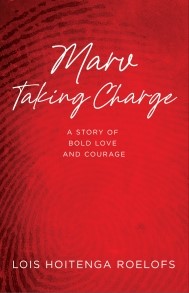
I follow Lois Roelofs’ blog: Write Along with Me, Blogging as a Retired Nurse. Lois is a wonderful writer, and I enjoy reading her blog. When I started following her blog, she was already a widow, having lost her husband, Marv Roelofs. I also knew she was writing a book because she would occasionally blog about the book’s progress. When her book was published in the spring of 2023, I wanted to read it because I knew it would be well written and because Marv’s story about how he chose to live with his terminal diagnosis is an important one. I’m over half way through Marv Taking Charge, and it is a well-written, informative, and touching story.
What is this book about?
In January 2018, while vacationing in Arizona, Marv receives a call from his pulmonologist, who tells him he has lung cancer, small cell, the very aggressive type. The doctor explains to Marv that he needs to start chemo right away. Marv answers, “I’m not interested in treatment,” then hands the phone to his wife, Lois, who is a nurse.
The doctor makes it clear to Lois that Marv’s cancer is terminal, but that he must start chemo right away in order to have a chance of more time. Marv doesn’t change his mind, and he and Lois continue their vacation in Arizona. When they return home, Marv is enrolled in hospice care. Then he and Lois set about living their lives. They visit family and friends, and they do the everyday activities they’ve always enjoyed. Marv has a lot of good days, but Lois also writes about the difficult times.
Why is this book important?
Many people, like Marv, will learn they have a terminal illness, and they will face decisions about how they want to live the rest of their lives. Currently, most terminally ill cancer patients are treated with chemo and radiation, not because treatment will provide a cure, but because it may extend their lives a few months. However, those extra months often come with a decreased quality of life because chemo and radiation are harsh treatments with potentially severe side effects. Marv chose quality of life over quantity, then he and Lois made the best of the days they had left together.
Cancer is talked about with words like fight and battle, and patients are described as courageous. However, Lois, agreeing with Atul Gwande, who wrote Being Mortal, says terminally ill patients should be asked what is important to them.
Marv’s answer to that question was to live out his days without the side effects of medical treatments that were not going to save his life.
[Lois Hoitenga Roelofs book Marv Taking Charge is available here.]
Robert’s Rules is J. F. Riordan’s third book in her award-winning North of the Tension Line series. In 2022, I read North of the Tension Line and The Audacity of Goats, the first two books in the series. [Click on blue titles to read my reviews.] The fourth book in the series, A Small Earnest Question, waits for me on my bookshelf. And Throwing Bears for George, the fifth book, is due to be released in April 2024.
Like a gourmet chocolate bar, which I eat square by square over the course of a week, I have rationed Riordan’s books, reading one then waiting several months before reading another one. Even though I’m pacing myself, I hope Riordan will write a sixth book.
I’m almost halfway through Robert’s Rules, and it’s as wonderful as the first two books. My favorite kind-hearted, charming characters (and a couple of not-so-favorite, mean-as-snapping-turtle characters) are back. Some characters from the previous books have expanded roles, and a new character, Oliver Robert, an accountant from Milwaukee, has come to Washington Island to be Fiona’s assistant. I wonder if Oliver’s going to be an asset or a liability.
Fiona, the newly elected town chairman, faces budget shortfalls at a time when the Island’s harbor needs dredging and the fire department needs money for equipment and staffing. Fire Chief Gil, concerned about safety, threatens to resign if his budget isn’t increased. In the middle of the Island’s financial woes, Fiona and her boyfriend, Pete, have a falling out.
Ben is bullied at school, but won’t tell anyone. Ben’s father, Pali believes he should move his family to the mainland so Ben can learn the ways of the world beyond Washington Island, even though they all love life on the Island. Ben’s bully, Caleb, is a deeply unhappy and angry child.
Caleb’s mother, Emily, the know-it-all, busy body interferes in everyone’s business. Jim, the DNR ranger, still carries a torch for Fiona. The diabolical Stella has gotten over her embarrassment after losing the election to Fiona and has begun a Twitter campaign of innuendo to sabotage Fiona. Roger still enjoys yoga and his coffeehouse Ground Zero, but he needs to find a way to discourage all the yoga tourists who come to practice at his coffeehouse.
And mysteriously woven throughout the stories of Riordan’s characters, is the chilling voice of a new person whose identity hasn’t been revealed yet. However, we learn in the prologue that the character is fascinated by fire.
So far Robert’s Rules has all the interesting characters, masterful storytelling, and beautiful prose found in Riordan’s first two books of the series.
[I’m forever grateful to Honest Dog Books of Bayfield, Wisconsin, for hosting J. F. Riordan on a Zoom presentation during COVID. And I’m forever thankful that in my need to be connected to writers during COVID, I tuned into Zoom talks to hear many fine authors talk about their amazing books, many of which I bought, read, and enjoyed!]
Swanson (l) and Nystrom (r). At age 94, after writing Ford Tramps, Swanson made a motor car trip to Alaska and toured the 49th state.
In 1924, Seegar Swanson and Elliott Nystrom, both twenty years old and friends since elementary school, decided to take a year off and tour the perimeter of the United States, making sure to visit the four corners of the country: Maine, Florida, California, and Washington. They saved money for their trip and bought a 1919 Model T Ford touring car for $125. They left Ashland, Wisconsin, in the late summer of 1924, and returned to their hometown in 1925. The trip took about a year because they worked at different jobs along the way. Also, Swanson points out, more than once, that the top speed of their Model T was 25 mph, if the roads were good.
Along the way Swanson and Nystrom kept a log of their experiences and expenses and took many photographs. Additionally, they wrote long letters home. After Swanson and Nystrom finished their journey, Swanson attended Northland College in Ashland. In 1936, he became the editor of the Superior Evening Telegram and later on he worked at the Duluth News-Tribune. After a long career in journalism, he retired at seventy-two. At the age of ninety, when he started writing Ford Tramps, he had his detailed resources and years of writing experience. He spent three years writing his book, and his hard work and dedication paid off because Ford Tramps is a well-told story that captures the mood of the country and its people in the mid-1920s and gives readers a glimpse into the daily lives of ordinary Americans and the places they lived.
Published in 1999, Ford Tramps is out of print, so if you want to buy a copy from Amazon, it will be used and it will cost between $56.26 and $154.63. Thriftbooks has one copy listed for $59.99. I paid under $20 per book when I bought two copies in 2000. I gave one to my father, and I kept the other.
My father read Ford Tramps right away and loved it. I cracked open my copy in March 2023. It’s amazing how fast twenty-three years can drive by. And if I hadn’t read a blog about autocamping in the 1920s written by Chris Marcotte, my copy of Ford Tramps would still be parked on my bookshelf.
I wish I’d read Ford Tramp years ago, when my father was still alive so we could’ve talked about the book and why we liked it. Even though we never had that conversation, I’m going to tell you why I think he enjoyed the book so much.
He liked it because Swanson’s descriptions of the 1919 Model T bring the car to life. The Model T that Swanson and Nystrom drove had three pedals on the floor and a lever by the door side of the driver’s seat that controlled the transmission, and it had a lever on the steering wheel that controlled the throttle. A complex coordination between feet and hands was needed to shift gears. Machines fascinated my father. He loved being a part of them, manipulating them, controlling them, understanding them, and pushing them to their limits. He drove cars and motorcycles, and he flew planes. Just as Swanson and Nystrom had to learn the personality of their Model T and what it could and couldn’t be asked to do, my father took pride in mastering his cars, motorcycles, and planes.
He liked the book because the Model T broke down on the road, and its tires often went flat. Swanson and Nystrom played nursemaid to the Model T, learning what they could fix themselves or rig up until they could afford a mechanic. My father, a savvy mechanic, would’ve reveled in the Model T’s challenges. Sure, when the car broke down, he would’ve sputtered and cursed. Then he would’ve put the Model T in its place and back on the road. He owned his own garage where I once heard a customer with an old sports car ask him, “What if you can’t get a part?” My father answered, “I’ll rig something up, and it’ll work.” That 1919 Model T would’ve been putty in my father’s hands.
He liked the book because he was in his 60s when he read it, but he could be young again, on a vicarious adventure from the comfort of his couch where his standard poodle and his greyhound curled up near him. In 1955, he was eighteen when he moved from a small unincorporated town in northern Wisconsin to the big city of Milwaukee, hoping to make his way in the world. My father never took a road trip like Swanson and Nystrom, but in a small way, he liked to travel and experience new places and meet new people. Swanson and Nystrom met many interesting and kind people while working odd jobs and autocamping. Swanson’s writing breathes life into these men and women, allowing readers to work beside them in an orchard picking crops or sit with them around a cookstove as they share stories and food with other autocampers.
My father liked the book because Swanson included many photographs, maps, log entries, expense accounts, and receipts. It was fun to see what food, lodging, camp fees, car repairs, and other necessities cost in the mid-1920s. Swanson and Nystrom also reported how much they were paid doing manual labor. My father, an avid photographer, took photos when he traveled. After he had his film developed, he would show you ten pictures of the same vista, then ten pictures of the same museum display, then ten pictures of the same man who took him out fishing on a charter boat. My father considered maps to be among the most useful items in his life. He used them when driving to someplace unfamiliar, and he used them to plan his flights from one airport to the next. As a pilot he kept a log of all his flights, and as a businessman he kept expense accounts and receipts.
My father liked the book because the Ford Tramps spent time in his beloved state of Arizona. He moved to Arizona when he was forty, and he thought his adopted state was amazing. Swanson and Nystrom marveled at the Petrified Forest, amazed that trees had turned to stone. The pair debated between seeing a bullfight in Mexico or seeing the Grand Canyon, with both of them favoring the bullfight. The Grand Canyon won out because in Mexico, bullfights were only held as part of major holiday celebrations, and it was too long a wait for the next holiday. Some things are meant to be. Swanson and Nystrom fell in love with the Grand Canyon, agreeing it was, as Nystrom remarked, “The greatest thing we’ve seen so far.” They stayed for five days. They hiked to the bottom of the canyon and swam in the Colorado River. They hiked along the rim in both directions, and they attended a Native American ceremony. One afternoon they took shelter in their Model T during one of the desert’s quick moving and furious storms accompanied by lightning that seemed to touch the ground and thunder that redoubled its intensity as it echoed off the canyon walls. My father never tired of watching desert storms roll through Tucson.
I’m at the point in the book, when Swanson and Nystrom have just crossed into California. Even in 1925, in an effort to contain harmful pests, California border patrol officials stopped cars to make sure people weren’t carrying fruit into the state. The Model T was searched from top to bottom because Swanson and Nystrom admitted to having a handful of oranges that they’d been given in Florida. Embarrassed, but having nothing else to hide, they were allowed to enter California. I have eighty-eight pages left to read, and Swanson and Nystrom are about to visit Yosemite Park. I’m sorry my journey with them will soon come to an end.
Someone suggested I sell my copy of Ford Tramps, pointing out my investment in the book had at least tripled. I’m not selling my copy, but if I did I could list it as “like new” because it’s only been read almost once, and I haven’t spilled any coffee on it. I wish I had my father’s copy of the book, but I wouldn’t sell his copy either. However, I would’ve been willing to share one of the copies with someone else. My father would’ve liked that, too.
I discovered a nice surprise under the jacket cover.
[Bloganuary is hosted by WordPress. A new topic is presented each day during January. I’m a day behind. And I missed some days, but I was writing other stuff.]
Yes, all of them, even the books I don’t remember.
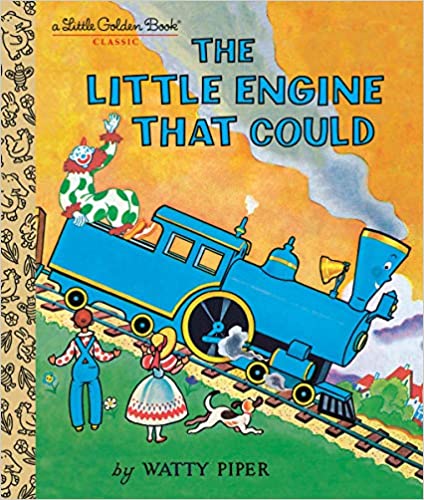
The first book I loved was “The Little Engine That Could.” It was my favorite bedtime story. My mother once tried to convince me to choose another story for her to read, but I became Little Blue Engine chugging away, steadfastly keeping the course up the mountain, refusing all other stories until my mother gave in and read it. I finally understood her point of view after I had children and had to read “Green Eggs and Ham” a bajillion trillion times.
Grandma Olive believed in books. She was a teacher and gave us books for birthdays and Christmas. She was also the organist and choir director at the Presbyterian Church, so the books usually had a religious theme. She lived eight hours away, and I think she suspected my parents were lackadaisical in the religious education of her grandchildren. She was right to be suspicious. Before every trip up north, my mother reminded us not to mention that we only went to church when we visited Grandma Olive. But I liked those children’s Bible stories too. On Sunday mornings while my parents slept in, my sisters and I created a circle of books by opening them, standing them on edge, and lining them up cover to cover. We climbed inside, pretending we were “Three Men in a Tub,” and recited the Mother Goose rhyme. Then because it was Sunday, I read Bible stories to my sisters, secretly hoping Grandma Olive could sense our piety.
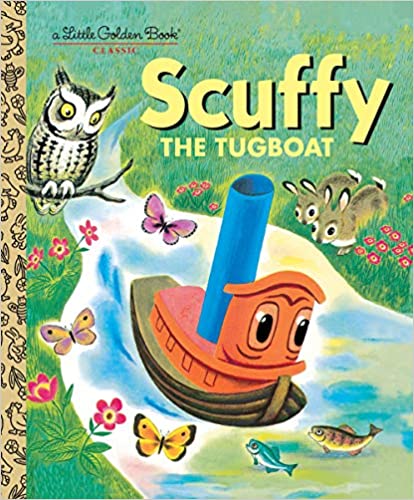
Nana Kitty believed in books. She had a set of encyclopedias from the 1950s on a petite bookshelf in her doll-sized living room. Those volumes contained the world, from Argentina to Yugoslavia, from Aardvark to Zebra, from Mercury to Pluto. I sat on her sofa and played alphabet roulette, reading about Queen Victoria one time and Canada another time. Nana also had a handful of Little Golden Books. My favorite was Scuffy the Tugboat. After Nana died, I ended up with some of the Little Golden books, including Scuffy, which I sometimes read to my grandchildren.
When I was in elementary school, my mother refused to buy me a pair of black patent leather shoes. I was a tomboy and she believed I would wreck them before I could outgrow them, so she considered them a waste of money. But my mother believed in books. Every time I came home from school with a book order form, which was two or three times a year, she let me order three or four books. She never told me they were a waste of money, even when money was tight. Each time my books arrived and the teacher gave me my stack held together with a rubber band, I smelled their newness then hugged them to my chest. I had wanted patent leather shoes, so I would fit in with the patent-leather-shoe girls. But my shoes were never going to make a difference. The books, however, were great friends who took me to new worlds.
In fourth grade I read biographies. The library at Pleasant View Elementary had a series of biographies. Eventually, I read them all–Marie Antionette, Catherine the Great, Alexander Graham Bell, Florence Nightingale, Edith Cavell, Jenny Lind, Marie Currie, and others whose names I can’t remember. While I wanted to sing like Jenny Lind, the person I most admired was Madam Marie Currie. She was determined to get an education despite living through political upheaval and at a time when women didn’t routinely attend college. Between the biographies, I read Alfred Hitchcock and the Three Investigators mysteries, and Nancy Drew mysteries.
On Christmas morning there were always some books and new pajamas under the tree. My third favorite part of Christmas day (after the unwrapping and eating) was to climb into bed wearing my new jammies and read my new book. When I was in seventh grade, my mom bought me a complete, unabridged, two-volume set of Sherlock Holmes. She knew I liked mysteries. During Christmas break, I sat in a stuffed armchair with a dictionary tucked beside me and Sir Authur Conan Doyle’s wily detective and his sidekick on my lap. At first, I needed to look up lots of words, but before long I could read Doyle’s stories with only an occasional turn to the dictionary. I was Little Blue Engine, chugging away, up the mountain of new words. I felt so proud that my mother bought something so grown-up for me.
I read through high school and college. During most of my twenties, when I read for fun, it had to be a book written by a British author before 1900. I’ve been a reader my whole life, fiction and nonfiction. I always have a book on my nightstand and a book on the end table. I often have a book in my purse, and in a pinch I have a nook app on my phone with some witty, heart-throbbing regency romances by Jennifer Tretheway, books that are so much fun they are worth a second read.
Once I learned to read, I never stopped. I have a lot of books on my to-be-read pile, but that doesn’t stop me from buying new ones. Will I ever get them all read? Well, “I think I can–I think I can–I think I can–I think I can.”
In her memoir Gravedigger’s Daughter, Debra Raye King writes about growing up in a rural farming community near Menomonie, Wisconsin. Her father, John Edward Torgerson, was both a farmer and the local gravedigger–jobs he inherited from his father. In a series of essays, King reminisces about her childhood, which was both normal and unusual. In the 1950s, small rural farms were more plentiful than today, and King’s essays will resonate with readers who grew up on farms or in rural communities. But a small community usually had only one gravedigger, and that part of King’s childhood was unusual.
In the book’s first essay, “Shoveling Eleven Tons by Hand,” King describes her father’s gravedigging duties and how she and her sister eventually assisted him. She skillfully weaves facts, reflections, and anecdotes together, and after reading her first essay, I was amazed by her father and how he approached his duties of gravedigging with dedication and kindness. The essay also teaches readers about a part of death that most of us never think about–the actual process of how the dead are buried in a cemetery. The themes of community, family, and hard work revealed in King’s first essay continue throughout her book.
I’m enjoying King’s book because her essays are heartfelt, because I am learning about a way of life that has mostly disappeared, and because King’s writing is a joy to read.
*************************
The novel Double Exposureby Jeannée Sacken is a sequel to her novel Behind the Lens. I’m reading Double Exposure because I enjoyed Behind the Lens, which is a well-written, fast-paced story with engaging, memorable characters, and captivating story arcs. I also appreciate the dedicated research Sacken did for Behind the Lens because I learned something about Afghanistan and its struggles. To read my review of Behind the Lens on Good Readsclick here. [There are no spoiler alerts.]
Annie Hawkins, a war photojournalist, is the main character in both novels. Double Exposure opens with Hawkins in Qatar waiting for a flight back to the United States. She longs to see her boyfriend U.S. Navy SEAL Finn Cerelli and her daughter Mel. However, her boss, Chris Cardona, demands to see her first when she arrives in Washington, D.C., then he informs her that she and their news organization are being sued by a rival news organization. Her ex-husband calls, concerned about their daughter Mel. Soon Annie will need to return to Afghanistan to cover the peace talks between the Afghani government and the Taliban, but she also hopes to find a young woman named Seema who disappeared in Afghanistan. And Annie has secrets she needs to keep from Cerelli. Author Sacken weaves all the action together with snappy dialogue, intriguing twists and turns, and superb storytelling. I started reading Double Exposure last night, and kept promising myself–just one more chapter and then I’ll go to sleep.
The first story in Chai’s collection is “Tomorrow in Shanghai.” I liked this story so much I read it twice. The main character in the story is a young doctor, who entered the medical profession with great expectations for his future. But like Pip in Dickens’s Great Expectations, the young doctor discovers youthful dreams and adult realities are often at odds.
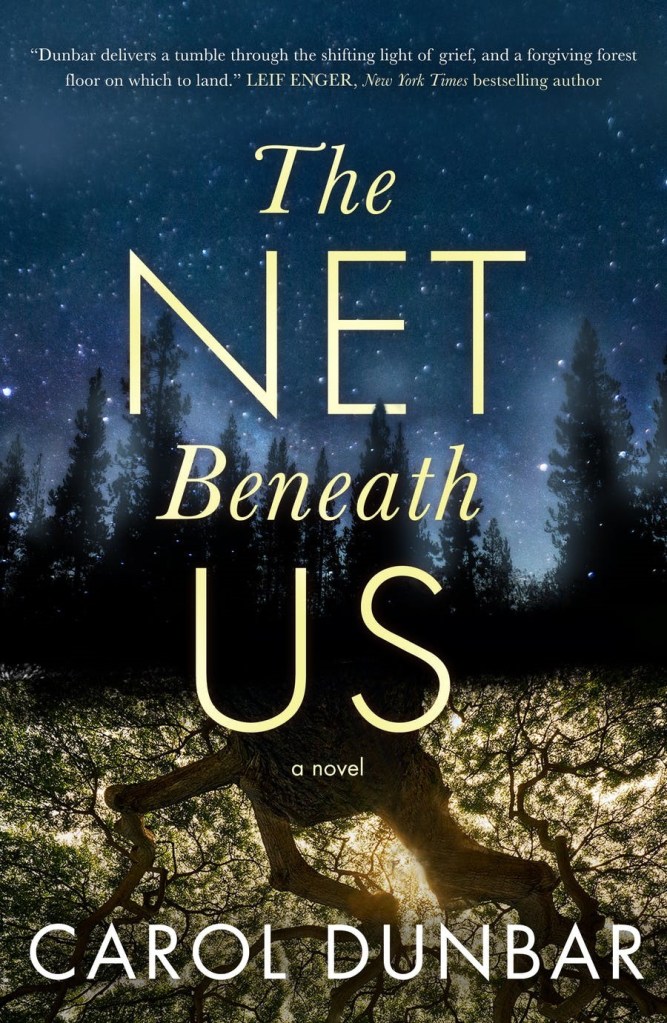
Carol Dunbar lives in northwest Wisconsin like I do. We live in separate towns, but they are close enough for me to be excited because an author near me has been published by a New York publisher. Also, in May 2022, Dunbar spoke at our local writers’ association. She was a warm-hearted and engaging speaker. After the meeting, I preordered her novel, The Net Beneath Us. And while you should never judge a book by its cover, the artwork on Dunbar’s book is stunning, and I have to admit that also influenced me.
What’s this book about?
Elsa lives with her husband, Silas Arnasson, and their two children, Hester, a first grader, and Finn, a toddler, in rural northern Wisconsin. They live in the basement of their future house, which they continue to build as time and money allow. Life in the woods is challenging. Weather and wildlife present difficulties as they build, haul water, and maintain a generator for electricity. But Elsa and Silas are partners, working together to achieve their dreams. They are happy and very much in love. Then everything changes.
Silas has a devastating logging accident. Elsa is determined to keep her family warm and safe during the approaching winter in a home without running water, central heat, or electricity, a home without Silas to help. Shrouded in grief, she isolates herself and her children from family and friends. She rebuffs help from Silas’s family, believing they already see her as incompetent and because they had envisioned another type of woman for Silas.
What makes this book memorable?
People experience loss uniquely, making it hard to understand each other’s grief. Family members overwhelmed by their own sorrow, struggle to comfort each other. Dunbar’s use of multiple points of view allows us to experience, firsthand, the heartache of Elsa, Hester, and Ethan and Luvera, Silas’s uncle and aunt. Additionally, Dunbar’s novel explores our need for self-acceptance and acceptance by others; and our wish to belong to a place, the land, a community.
Loss and grief are somber themes and make for heavy reading. But Dunbar’s use of beautiful imagery, sustained metaphor, and lyrical prose gives us hope as she guides us through a heartbreaking story, transporting us with her exquisite writing through darkness to a place of better understanding of both her characters and ourselves.
Sinclair Lewis said, “People read fiction for emotion—not information.” With The Net Beneath Us, Dunbar underscores the power of fiction as she draws us into an emotional story of loss, grief, forgiveness, and understanding, immersing us in a world of human nature that nonfiction cannot match. And, even though Dunbar’s story is fiction, it rings with truth.
Second, the title, Not the Camilla We Knew, captured my attention. Camilla grew up in Minnesota, and as a young woman she joined the Symbionese Liberation Army (SLA), an organization of domestic terrorists. Hanel’s book title promised to give me the rest of Camilla’s story. Camilla died in a shootout in Los Angeles in 1974. The SLA and the events before and after that shootout were widely reported in the news. People involved in tragic events are often vilified or exalted, but reality is often murkier.
Hanel doesn’t excuse Camilla’s behavior, but rather tries to understand why someone who grew up middle class with so many options available to them decided to join a domestic terrorist group. While Hanel’s book focuses on Camilla, I’m also learning more about the SLA. Hanel spent twenty years researching and writing this book. I’ve read almost half of the book, and I have to say that Hanel’s dedication pays off. The book is well-written and it’s a page-turner.
********************************************
I’m reading Shelby Van Pelt’s Remarkably Bright Creatures because I read a review about it onAngry Angel Books, a blog by Amanda Nissen. She raved about the book so enthusiastically that I had to check out a copy from the library. Nissen likes books “about women, especially older women,” and so do I. Older characters who are fully developed resonate with me, perhaps because I’m an older character. But also because older people are complete people, with all the thoughts, hopes, desires, and feelings of younger people. Often society wants to see older people as one-dimensional, as a stereotype. I’m about one-fourth into the book, and Van Pelt’s seventy-year-old character Tova, a widow, is a well-rounded, and I like her a lot.
But I was convinced that I absolutely had to read this book when Nissen described Marcellus, a remarkably bright octopus, who lives in the aquarium where Tova works. I find octopuses fascinating. Marcellus and Tova become friends. Readers meet Marcellus in short chapters, which are told from his point of view and interspersed among chapters told from the human point of view. His cantankerous voice is engaging and sarcastically witty as he describes his life in an aquarium, nudging readers to reflect upon how they interreact with nonhuman creatures.
Nissen’s review crackled with 1,000-watt-electric enthusiasm. Leaving no room for doubt, she discusses this book like one talks about a new love who is so perfect that there is nothing negative to be said. When someone touts a book or a movie in such glowing terms, there is always a chance that reality won’t match the hype. Nissen states that the book is “as bright and full of life as its cover.” And so far, I agree, wholeheartedly.
Last night Debra Raye King held a book launch for her memoir, Gravedigger’s Daughter: Growing Up Rural, at the Jim Dan Hill Library on the University of Wisconsin-Superior’s campus. King’s book was published by The WWA Press (Wisconsin Writers Association).
It’s the first book launch I have ever attended, and it was amazing. The space was cozy, warmly lit, and serene. A flickering fire rambled in the fireplace. Cookies and goodies, mostly baked by King, waited for attendees. The recipes for the cookies can be found at the back of King’s book. (At the end of the evening, King gave us baggies and invited us to take home leftover homemade cookies!)
King read from her memoir, and answered questions about her book asked by the host Mark Liebaert. King was a beautiful reader, and Liebaert was a gracious host. The audience and I laughed at the book’s touches of humor, and we nodded in empathy at the moments of poignancy.
Before I left the book launch, I bought a copy of King’s book and asked her to sign it for me. The WWA Press did an outstanding job with the book’s presentation. It feels substantial in my hands. The font type and size are easy on the eyes. It’s not a large-print book, but it’s not a tiny-print book either. Goldilocks would declare it just right.
Last night’s weather was cold, rainy, and windy, a perfect evening to be inside at King’s book launch enjoying snippets from a fine memoir while among fellow readers and writers. I’m looking forward to reading more of King’s memoir.
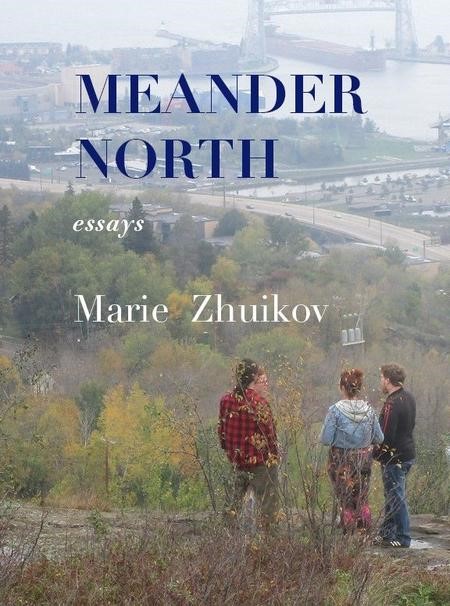
Marie Zhuikov’s newest book, Meander North, is a collection of essays, many from her blog Marie’s Meanderings, which she started writing in 2013. I look forward to each new post by Zhuikov, so when I had a chance to read Meander North, I was excited. Zhuikov selected some of her favorite blogs, then added essays, some of which have appeared in other publications.
Many of Zhuikov’s selections are about getting outdoors and enjoying nature. In her humorous essay “How X-C Ski Starvation Can Lead to Impaired Judgment,” she writes about one of her first cross-country skiing adventures of the season: “I . . . desperately needed to do something to break out of my winter slothfulness and raise my heart rate above seventy beats per minute.” Even though a mist turns into raindrops, Zhuikov slips on her skis and heads out on the icy trails. With caution and strategic moves, she completes her first cross-country ski of the season, and while she does, we hold our breath, admire her tenacity, and think about some of our own foolish escapades.
Zhuikov’s essays about her adventures are so enjoyable because they’re relatable. Her love of the outdoors and her ability to maneuver through nature shines through in her writing. But she is with us, inviting us along, never making us feel left behind. She makes us believe we can get out in nature and be adventurous too. That we can lower ourselves into a canoe or a whitewater raft, or that we can stand along a river and learn to fly fish.
Zhuikov’s essays connect with us because she is not afraid to let us peek at the moments when her life doesn’t go smoothly. Sometimes the outcomes are humorous, like in her story “Just Your Average Winter’s Day Walk and Squirrel Attack” about a walk with her wonderful eighty-pound dog, Buddy, that turns into a comedy of misadventures. Other times the outcomes are poignant, like in “An Evening Dog Walk” about a romance that didn’t work out. Occasionally, she shares heartbreak, like in “The Lake, It Is Said, Never Gives Up Her Dead.”
Zhuikov rounds out her collection of nature essays with an eclectic selection of entertaining and informative writings that cover a wide range of topics. Some cover Zhuikov’s adventures as a citizen of Duluth, such as, “Marie Versus the Post Office” and “My Neighborhood Rezoning Zombie Apocalypse Saga.” Other heart-warming essays like “I Saw Three Ships on Christmas Day” or “Kissing in the Coat Room in First Grade” are about her family or youth. She wraps up her book with a section titled Bookish Adventures where we get a taste of Zhuikov’s life as a writer and a reader, and where she introduces us to the wonderful poet Louis Jenkins.
Winter is coming so grab a copy of Marie Zhuikov’s Meander North, curl up in a cozy chair with a glass or mug filled with your favorite beverage, and start by reading “Cold as a Cage,” the first essay in her collection. And for those of you who live through winter every year, nod in agreement and laugh hopelessly as you read: “The cold defines our movements. Northern Minnesotans walk with shoulders hunched and hands in pockets, limiting our time outside to the bare minimum for the task at hand.” But know that you are a survivor because you are inside where it’s warm, ready to smile and laugh and shed a few tears as you join Zhuikov on her meanders through life.









 Writing Near the Lake