What I’m Reading This Week

Nonfiction: Gravedigger’s Daughter: Growing Up Rural by Debra Raye King [click title to read book review by Kathleen Waldvogel] To order King’s book: click here. Fiction: Double Exposure by Jeannée Sacken [click on title to visit author’s website] To order Sacken’s book: click here. Short Story Collection: Tomorrow in Shanghai by May-Lee Chai [click on title to visit author’s website]

**************************

In her memoir Gravedigger’s Daughter, Debra Raye King writes about growing up in a rural farming community near Menomonie, Wisconsin. Her father, John Edward Torgerson, was both a farmer and the local gravedigger–jobs he inherited from his father. In a series of essays, King reminisces about her childhood, which was both normal and unusual. In the 1950s, small rural farms were more plentiful than today, and King’s essays will resonate with readers who grew up on farms or in rural communities. But a small community usually had only one gravedigger, and that part of King’s childhood was unusual.

In the book’s first essay, “Shoveling Eleven Tons by Hand,” King describes her father’s gravedigging duties and how she and her sister eventually assisted him. She skillfully weaves facts, reflections, and anecdotes together, and after reading her first essay, I was amazed by her father and how he approached his duties of gravedigging with dedication and kindness. The essay also teaches readers about a part of death that most of us never think about–the actual process of how the dead are buried in a cemetery. The themes of community, family, and hard work revealed in King’s first essay continue throughout her book.

I’m enjoying King’s book because her essays are heartfelt, because I am learning about a way of life that has mostly disappeared, and because King’s writing is a joy to read.

*************************

The novel Double Exposure by Jeannée Sacken is a sequel to her novel Behind the Lens. I’m reading Double Exposure because I enjoyed Behind the Lens, which is a well-written, fast-paced story with engaging, memorable characters, and captivating story arcs. I also appreciate the dedicated research Sacken did for Behind the Lens because I learned something about Afghanistan and its struggles. To read my review of Behind the Lens on Good Reads click here. [There are no spoiler alerts.]

Annie Hawkins, a war photojournalist, is the main character in both novels. Double Exposure opens with Hawkins in Qatar waiting for a flight back to the United States. She longs to see her boyfriend U.S. Navy SEAL Finn Cerelli and her daughter Mel. However, her boss, Chris Cardona, demands to see her first when she arrives in Washington, D.C., then he informs her that she and their news organization are being sued by a rival news organization. Her ex-husband calls, concerned about their daughter Mel. Soon Annie will need to return to Afghanistan to cover the peace talks between the Afghani government and the Taliban, but she also hopes to find a young woman named Seema who disappeared in Afghanistan. And Annie has secrets she needs to keep from Cerelli. Author Sacken weaves all the action together with snappy dialogue, intriguing twists and turns, and superb storytelling. I started reading Double Exposure last night, and kept promising myself–just one more chapter and then I’ll go to sleep.

Both of Sacken’s book are available on audio: Behind the Lens and Double Exposure.

**************************

Tomorrow in Shanghai and Other Stories by May-Lee Chai was recommended by my daughter-in-law. Because we often love the same books, and because I write short stories, I asked to borrow the book.

The first story in Chai’s collection is “Tomorrow in Shanghai.” I liked this story so much I read it twice. The main character in the story is a young doctor, who entered the medical profession with great expectations for his future. But like Pip in Dickens’s Great Expectations, the young doctor discovers youthful dreams and adult realities are often at odds.
Book Review: The Net Beneath Us by Carol Dunbar

Why did I read this book?

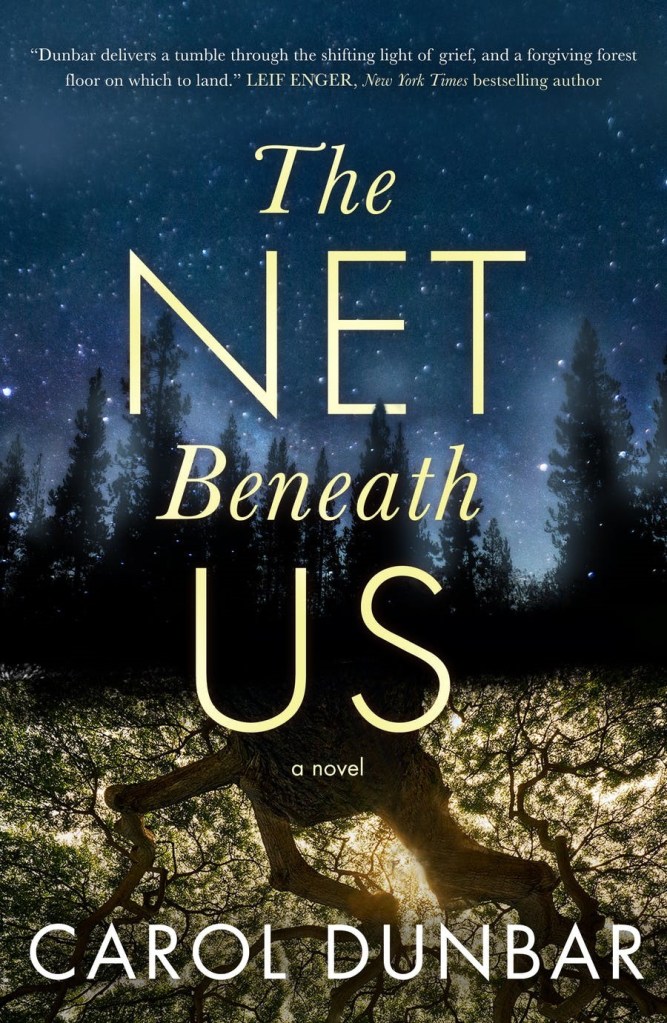
Carol Dunbar lives in northwest Wisconsin like I do. We live in separate towns, but they are close enough for me to be excited because an author near me has been published by a New York publisher. Also, in May 2022, Dunbar spoke at our local writers’ association. She was a warm-hearted and engaging speaker. After the meeting, I preordered her novel, The Net Beneath Us. And while you should never judge a book by its cover, the artwork on Dunbar’s book is stunning, and I have to admit that also influenced me.

What’s this book about?

Elsa lives with her husband, Silas Arnasson, and their two children, Hester, a first grader, and Finn, a toddler, in rural northern Wisconsin. They live in the basement of their future house, which they continue to build as time and money allow. Life in the woods is challenging. Weather and wildlife present difficulties as they build, haul water, and maintain a generator for electricity. But Elsa and Silas are partners, working together to achieve their dreams. They are happy and very much in love. Then everything changes.

Silas has a devastating logging accident. Elsa is determined to keep her family warm and safe during the approaching winter in a home without running water, central heat, or electricity, a home without Silas to help. Shrouded in grief, she isolates herself and her children from family and friends. She rebuffs help from Silas’s family, believing they already see her as incompetent and because they had envisioned another type of woman for Silas.

What makes this book memorable?

People experience loss uniquely, making it hard to understand each other’s grief. Family members overwhelmed by their own sorrow, struggle to comfort each other. Dunbar’s use of multiple points of view allows us to experience, firsthand, the heartache of Elsa, Hester, and Ethan and Luvera, Silas’s uncle and aunt. Additionally, Dunbar’s novel explores our need for self-acceptance and acceptance by others; and our wish to belong to a place, the land, a community.

Loss and grief are somber themes and make for heavy reading. But Dunbar’s use of beautiful imagery, sustained metaphor, and lyrical prose gives us hope as she guides us through a heartbreaking story, transporting us with her exquisite writing through darkness to a place of better understanding of both her characters and ourselves.

Sinclair Lewis said, “People read fiction for emotion—not information.” With The Net Beneath Us, Dunbar underscores the power of fiction as she draws us into an emotional story of loss, grief, forgiveness, and understanding, immersing us in a world of human nature that nonfiction cannot match. And, even though Dunbar’s story is fiction, it rings with truth.

What I’m Reading This Week

Nonfiction: Not the Camilla We Knew by Rachael Hanel & Fiction: Remarkably Bright Creatures by Shelby Van Pelt

***************************************

I’m reading Rachael Hanel’s Not the Camilla We Knew: One Woman’s Path from Small-Town America to the Symbionese Liberation Army for a couple of reasons. First, I very much like Hanel’s writing. I read her memoir We’ll Be the Last Ones to Let You Down: Memoir of a Gravedigger’s Daughter, and I enjoyed her voice, writing style, and her story-telling skills.

Second, the title, Not the Camilla We Knew, captured my attention. Camilla grew up in Minnesota, and as a young woman she joined the Symbionese Liberation Army (SLA), an organization of domestic terrorists. Hanel’s book title promised to give me the rest of Camilla’s story. Camilla died in a shootout in Los Angeles in 1974. The SLA and the events before and after that shootout were widely reported in the news. People involved in tragic events are often vilified or exalted, but reality is often murkier.

Hanel doesn’t excuse Camilla’s behavior, but rather tries to understand why someone who grew up middle class with so many options available to them decided to join a domestic terrorist group. While Hanel’s book focuses on Camilla, I’m also learning more about the SLA. Hanel spent twenty years researching and writing this book. I’ve read almost half of the book, and I have to say that Hanel’s dedication pays off. The book is well-written and it’s a page-turner.

********************************************

I’m reading Shelby Van Pelt’s Remarkably Bright Creatures because I read a review about it on Angry Angel Books, a blog by Amanda Nissen. She raved about the book so enthusiastically that I had to check out a copy from the library. Nissen likes books “about women, especially older women,” and so do I. Older characters who are fully developed resonate with me, perhaps because I’m an older character. But also because older people are complete people, with all the thoughts, hopes, desires, and feelings of younger people. Often society wants to see older people as one-dimensional, as a stereotype. I’m about one-fourth into the book, and Van Pelt’s seventy-year-old character Tova, a widow, is a well-rounded, and I like her a lot.

But I was convinced that I absolutely had to read this book when Nissen described Marcellus, a remarkably bright octopus, who lives in the aquarium where Tova works. I find octopuses fascinating. Marcellus and Tova become friends. Readers meet Marcellus in short chapters, which are told from his point of view and interspersed among chapters told from the human point of view. His cantankerous voice is engaging and sarcastically witty as he describes his life in an aquarium, nudging readers to reflect upon how they interreact with nonhuman creatures.

Nissen’s review crackled with 1,000-watt-electric enthusiasm. Leaving no room for doubt, she discusses this book like one talks about a new love who is so perfect that there is nothing negative to be said. When someone touts a book or a movie in such glowing terms, there is always a chance that reality won’t match the hype. Nissen states that the book is “as bright and full of life as its cover.” And so far, I agree, wholeheartedly.

Book Launch of Gravedigger’s Daughter: Growing Up Rural by Debra Raye King

Last night Debra Raye King held a book launch for her memoir, Gravedigger’s Daughter: Growing Up Rural, at the Jim Dan Hill Library on the University of Wisconsin-Superior’s campus. King’s book was published by The WWA Press (Wisconsin Writers Association).

It’s the first book launch I have ever attended, and it was amazing. The space was cozy, warmly lit, and serene. A flickering fire rambled in the fireplace. Cookies and goodies, mostly baked by King, waited for attendees. The recipes for the cookies can be found at the back of King’s book. (At the end of the evening, King gave us baggies and invited us to take home leftover homemade cookies!)

King read from her memoir, and answered questions about her book asked by the host Mark Liebaert. King was a beautiful reader, and Liebaert was a gracious host. The audience and I laughed at the book’s touches of humor, and we nodded in empathy at the moments of poignancy.

Before I left the book launch, I bought a copy of King’s book and asked her to sign it for me. The WWA Press did an outstanding job with the book’s presentation. It feels substantial in my hands. The font type and size are easy on the eyes. It’s not a large-print book, but it’s not a tiny-print book either. Goldilocks would declare it just right.

Last night’s weather was cold, rainy, and windy, a perfect evening to be inside at King’s book launch enjoying snippets from a fine memoir while among fellow readers and writers. I’m looking forward to reading more of King’s memoir.

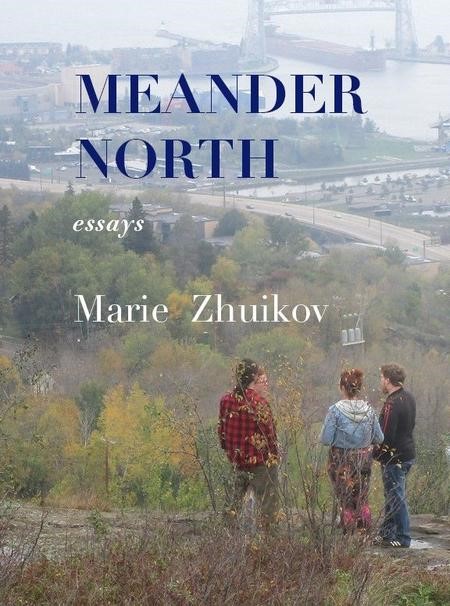
Book Review: Meander North by Marie Zhuikov

[Meander North can be preordered through Itasca Books. It’s currently available at Zenith Bookstore, and will be available in other bookstores November 21.]

Marie Zhuikov’s newest book, Meander North, is a collection of essays, many from her blog Marie’s Meanderings, which she started writing in 2013. I look forward to each new post by Zhuikov, so when I had a chance to read Meander North, I was excited. Zhuikov selected some of her favorite blogs, then added essays, some of which have appeared in other publications.

Many of Zhuikov’s selections are about getting outdoors and enjoying nature. In her humorous essay “How X-C Ski Starvation Can Lead to Impaired Judgment,” she writes about one of her first cross-country skiing adventures of the season: “I . . . desperately needed to do something to break out of my winter slothfulness and raise my heart rate above seventy beats per minute.” Even though a mist turns into raindrops, Zhuikov slips on her skis and heads out on the icy trails. With caution and strategic moves, she completes her first cross-country ski of the season, and while she does, we hold our breath, admire her tenacity, and think about some of our own foolish escapades.

Zhuikov’s essays about her adventures are so enjoyable because they’re relatable. Her love of the outdoors and her ability to maneuver through nature shines through in her writing. But she is with us, inviting us along, never making us feel left behind. She makes us believe we can get out in nature and be adventurous too. That we can lower ourselves into a canoe or a whitewater raft, or that we can stand along a river and learn to fly fish.

Zhuikov’s essays connect with us because she is not afraid to let us peek at the moments when her life doesn’t go smoothly. Sometimes the outcomes are humorous, like in her story “Just Your Average Winter’s Day Walk and Squirrel Attack” about a walk with her wonderful eighty-pound dog, Buddy, that turns into a comedy of misadventures. Other times the outcomes are poignant, like in “An Evening Dog Walk” about a romance that didn’t work out. Occasionally, she shares heartbreak, like in “The Lake, It Is Said, Never Gives Up Her Dead.”

Zhuikov rounds out her collection of nature essays with an eclectic selection of entertaining and informative writings that cover a wide range of topics. Some cover Zhuikov’s adventures as a citizen of Duluth, such as, “Marie Versus the Post Office” and “My Neighborhood Rezoning Zombie Apocalypse Saga.” Other heart-warming essays like “I Saw Three Ships on Christmas Day” or “Kissing in the Coat Room in First Grade” are about her family or youth. She wraps up her book with a section titled Bookish Adventures where we get a taste of Zhuikov’s life as a writer and a reader, and where she introduces us to the wonderful poet Louis Jenkins.

Winter is coming so grab a copy of Marie Zhuikov’s Meander North, curl up in a cozy chair with a glass or mug filled with your favorite beverage, and start by reading “Cold as a Cage,” the first essay in her collection. And for those of you who live through winter every year, nod in agreement and laugh hopelessly as you read: “The cold defines our movements. Northern Minnesotans walk with shoulders hunched and hands in pockets, limiting our time outside to the bare minimum for the task at hand.” But know that you are a survivor because you are inside where it’s warm, ready to smile and laugh and shed a few tears as you join Zhuikov on her meanders through life.

[Follow Marie Zhuikov’s blog at Marie’s Meanderings. Check out her author’s page and learn about her other books and writing. Attend the Meander North book launch at Zenith Bookstore on Thursday, November 17, 2022, at 7:00 pm CST. Preorder Meander North at Itasca Books.]

Book Review: Calling for a Blanket Dance by Oscar Hokeah

Why did I read this book?

While returning home from running errands, I listened to only ten minutes of Kerri Miller’s fifty-minute interview with Oscar Hokeah on Minnesota Public Radio, but that was long enough to be intrigued by Hokeah and his novel Calling for a Blanket Dance. When I arrived home, I ordered the book from my library through the inter-library loan program. Because a library book has a “use by date,” Hokeah’s novel landed on the pinnacle of my reading pile; and its rising to the top–like delicious cream–was richly deserved.

What is this book about?

The story focuses on Ever Geimausaddle, who is Native American and Mexican. Each chapter in the book is narrated by one of his relatives, and the last chapter is narrated by Ever. Through these family members, we watch Ever struggle as a child and an adult, and we learn about his extended family and their place in his life.

In the first chapter, Ever’s grandmother Lena Stoop introduces us to him when he is six months old. Ever and his parents, Everardo and Turtle, are returning to the United States from Mexico when they are stopped by three Mexican policemen who severely beat his father and rob his parents. Throughout the attack, Ever’s mother tries to keep him from waking. She doesn’t want him to witness the violence, but he wakes up and sees the brutality and rage.

Lena travels to a border town in Texas to pick up her daughter, son-in-law, and Ever, returning them to Oklahoma. Lena tells her daughter that she is concerned about what Ever saw. Even though he won’t remember the episode, their Native American culture teaches that babies and young children shouldn’t be exposed to violence: “They could be witched. Their spirit forever altered. A witching was almost incurable.” Lena’s daughter snaps at her mother, calling her superstitious, but then she falls silent because she, too, is worried about what her baby boy saw.

Ever’s father suffers permanent physical and emotional damage from the beating, but Ever’s mother, with the help of relatives, strives to keep her family intact. However, the memory of violence that Ever’s family experienced can’t seem to be conquered or at least forced to retreat.

What makes this book memorable?

Every time I had to put Hokeah’s novel down, I looked forward to the moment I could pick it up again. Through his masterful prose and skillful use of twelve different narrators, the reader comes to understand Ever and his family: their pain and disappointments, their hopes and dreams, their failures and successes, and their capacity for love and forgiveness.

Hokeah incorporates themes of poverty, inter-generational trauma, discrimination, marginalization, and redemption throughout the story the way an artist uses exquisite but understated brush strokes to make a painting come alive–strokes so subtle, yet so integral to the work of art, that without them, the picture would be flat and lifeless. Hokeah’s landscape of story, theme, and narration make Calling for a Blanket Dance a richly constructed novel, drawing readers in and holding them until the last page.

The Deep Valley Book Festival in Mankato, Minnesota, 2022

A Delicate Balancing Act by Kimber Fiebiger; downtown Mankato; made me think about the writer’s life

The Deep Valley Book Festival is set in Mankato, Minnesota, a charming town tucked in by rolling tree-covered hills and edged by the Minnesota and Blue Earth Rivers. This is the first book festival I’ve ever attended. My daughter-in-law and I drove down on Friday afternoon, a warm sunny day that premiered some stunning fall colors.

After we checked into the River Hills Hotel–a cozy and clean establishment with a friendly clerk–we headed to downtown Mankato for a walk then dinner. It was quiet for a Friday night, but I imagine if the Mankato Mavericks had been playing, the streets would’ve been skating with hockey fans. We had a good meal at the Pub 500. Our waitress was friendly and efficient. She carded my daughter-in-law, but she didn’t card me! Of course, that’s probably because I didn’t order a drink; otherwise, I’m sure she would have. I had a delicious fish taco.

We were back at the hotel by eight o’clock, doing what book festival attendees should be doing on Friday night–reading books. I read “The Victim,” a short story by P. D. James, recommended by my daughter-in-law. It was an engaging murder story. I handed my daughter-in-law a copy of the Wisconsin Writers Association Anthology 2022: Jade Ring and Youth Writing Contest and suggested she read the first-place fiction story “Notes to the New Facilitator of the Reminiscence Writing Group at Sunnyvale Retirement Community” (p. 22) by Nancy Jesse and the first-place nonfiction essay “Mormon Girl Hair and the Styrofoam Harem” (p. 6) by Adrianna McCollum. Both of these pieces of writing are top-notch, engaging, and excellently crafted, deserving of their first-place wins, and my daughter-in-law agreed.

After that we went to bed, each of us reading a book we had brought with us. I read Calling for a Blanket Dance by Oscar Hokeah, a wonderful novel that I’ve loved reading. You can listen to an interview with Oscar Hokeah on Minnesota Public Radio’s Talking Volumes.

On Saturday morning we arrived at the book festival just before nine o’clock, and we planned to stay until it ended at 4:30. We were motivated by the hourly drawings for books and the opportunity to hear author Curtis Sittenfeld talk about her writing.

We made sure we stopped at all the tables, sometimes briefly, other times lingering to listen to writers speak about their books, which included children’s and YA literature, fantasy, mystery, thriller, romance, historical fiction, memoir, nonfiction, and poetry.

A book festival is filled with writers, but they are there to sell their books. There are no writing classes. The local library had a table, and Content, a bookstore from Northfield, Minnesota, also had a table. I noticed two publishers who were selling books by authors they represented. I asked one publisher if they were a traditional publishing house–they weren’t. The representative of the company said they like an author to put up fifty percent of the cost of publishing his or her book. I didn’t ask the other publisher about their business model.

Authors work hard at a book festival. They sit or stand for hours and talk about their books to people who look, smile, and listen, but often leave without buying a book. I bought two children’s books, two novels, and a nonfiction book. My daughter-in-law bought some books too. We plan to exchange our books with each other.

We finished touring the festival around noon. We sat and each of us started reading a book we had purchased. I read Facets of Death by Michael Stanley, a fast-paced Detective Kubu story that captured my attention, a good thing because I won another Detective Kubu story, A Carrion Death in a drawing being held by the author. My daughter-in-law read Bingo Barge Murder by Jessie Chandler, which she enjoyed, saying it was humorous.

When reading made us hungry, we left to have lunch at Applebee’s, then went for a walk. But we soon returned to the book festival to check the small white board to see if we had won any books–we hadn’t.

The book festival was held at the WOW! Zone, an interesting place for a book festival. The WOW! Zone has a bowling alley, a game arcade, and food. It was noisy, but fortunately, most of the booksellers were tucked into the restaurant that had been converted into a makeshift venue, and so the noise wasn’t too bad. We wanted to read more because we had almost two hours to pass before Curtis Sittenfeld’s talk. Seating in the WOW! Zone was limited, so we ended up at a table in the bowling ally and read to the rumble of rolling bowling balls and clattering pins. But when I’m reading a good book, background noise fades away.

By three o’clock, I was tired and we had a four-hour drive home. But I had heard Curtis Sittenfeld speak on a Zoom talk and enjoyed listening to her, so I didn’t think about cutting out early. Sittenfeld began by saying that she has done hundreds of talks all over the country, but this was her first time giving a book talk in an arcade. The audience laughed with her because we understood. Most of us had spent the whole day or part of the day at a book festival held in an arcade. Sittenfeld was kind, charming, informative, and entertaining. The hour flew by.

With our bags of books, my daughter-in-law and I headed home. We had new reading material, and we were ready for the upcoming winter.

Books I bought:

Facets of Death by Michael Stanley because after reading a paragraph, I liked the writing, so I took a chance that the story would also be good.

Tuckerbean in the Kitchen by Jill Kalz because the book festival was the same day as my grandson’s birthday. He turned six, and I think a story about dogs cooking will appeal to him. Plus the illustrations by Benton Mahan are adorable.

Temple Times: Beauty Missing, Hair Hissing, Medusa Tells All by Rebecca Fjelland Davis because my granddaughter likes stories about strong girls and women. And because a friend recently told me that Medusa has received a bad rap, and this story helps set the record straight.

Eligible by Curtis Sittenfeld because she was there, and I wanted to have a book for her to sign. And because I’ve read American Wife by her and liked it, AND because Eligible is a modern retelling of Pride and Prejudice, which I love and have read three times. Plus I’ve seen three different movie versions of Austen’s enduring novel.

Not the Camilla We Knew: One Woman’s Path from Small-Town America to the Symbionese Army by Rachael Hanel because I’m interested in why a person joins a cause that is violent. And because I read Hanel’s memoir We’ll Be the Last Ones to Let You Down: Memoir of a Gravedigger’s Daughter, and it was beautifully written. I had to pre-order Not the Camilla We Knew because the book won’t be released until December 2022.

Book Review: The Audacity of Goats (Book Two) by J. F. Riordan

Why Did I Read This Book?

I read The Audacity of Goats because I read North of the Tension Line, the first book in J. F. Riordan’s series, and loved it. If you want to read my review of the first book, click here. If you think you might like to read the first book in Riordan’s series, you may want to stop reading this because some of the information will be spoilers for the first book.

What’s this book about?

Audacity, defined as boldness, daring, courage, bravery, and fearlessness. All the characteristics people need for every day life, like how to manage a long-distance romance, how to get along with a spouse, how to fit in, how to stand your ground, how to deal with unreasonable neighbors, how to win a local election, how to tell a lie if it’s for the greater good, how to let your child grow into adulthood, how to takedown a corrupt politician, how to master a difficult pose in yoga.

In addition to its share of fog and snow, Washington Island in Door County, Wisconsin, becomes shrouded in mystery. Blood-curdling screams shred the night. At first, Islanders who hear the shrieks worry someone is being hurt, but no bleeding bodies, alive or dead, are found. Some Islanders think it’s bored youth having fun, some think it’s ghosts, others think a crazed person is hiding on the Island. Curious but rather unfazed, the Islanders carry on. They’re more concerned about long winters and the upcoming local election.

Fiona Campbell reluctantly decides to run for town chairman against her conniving, nasty neighbor, Stella DeRosiers. Inhabitants who were born on the Island mostly admire Fiona but consider her an outsider. Conversely, Islanders detest Stella, but she’s one of them. Jim, the local DNR officer, is crazy about Fiona, but she’s in a relationship with Pete, whose work takes him to dangerous parts of the world.

Roger and Elizabeth return from their Italian honeymoon, and Roger worries about how to be a good husband. The Angel Joshua, advises Roger to join his yoga class, so he can get in touch with his feminine side and improve his relationship with Elizabeth. Never one to do things halfway, Roger embraces the whole downward-dog-savasana-namaste yoga scene.

Pali, full-time ferry captain and part-time poet, thinks his writing muse had departed. Not being able to write steeps him in moodiness. He contemplates giving up poetry so he can be a good husband, father, and captain, instead of a melancholy shadow in his own life.

Ten-year-old Ben, Pali and Nika’s son, has a secret he can’t share with adults because he knows they won’t understand. Ben has been taught that lying, breaking rules, and shirking one’s honor are wrong. But he’s facing circumstances that aren’t colored in black and white, so he bends his moral code.

What makes this book memorable?

Book Two is a second date that goes as well or better than an exciting first date. Riordan’s cast of memorable characters are back along with a few new ones, and their daily walks through the pages of life provide plenty of laughs, groans, gasps, and an occasional misty eye.

Riordan deftly portrays ten-year-old Ben’s coming-of-age dilemma. His predicament takes me back to my childhood and the struggle between the clarity youth and the murkiness of growing up. When Emily Martin, a new character, shows up on the page, I have fun rolling my eyes and thinking, “Oh, please, Emily, do you hear yourself?” right along with the Islanders.

The stakes for the characters in this book are small when compared to a thriller where the hero is striving to save the world, but Riordan’s use of structure and point of view create suspense around the ordinary, making The Audacity of Goats both a page turner and a meditation at the same time, all while making us smile and laugh.

What’s next?

I’ll read Book Three, Robert’s Rules of Order, followed by Book Four, A Small Earnest Question. I’m savoring these books, sipping them like a rare wine. When I finish them, I’ll miss Riordan’s captivating characters, finely woven stories, and lilting humor. However, I’m cheered because I recently learned that Book Five, Throwing Bears for George will be released on July 25, 2022.

Book Review: North of the Tension Line (Book One) by J. F. Riordan

Why did I read this book?

I listened to J. F. Riordan speak about her North of the Tension Line series via Zoom. A Small Ernest Question, the fourth book in the series, came out in August 2020, so like many authors who had books coming out during the pandemic lockdown, Riordan needed to promote her book in a new way. Instead of visiting bookstores to meet potential readers, she used Zoom to speak to them.

By the end of her talk, I had three good reasons for buying all four books in the series. One: She has a German Shepherd. I grew up with a German Shepherd—he was the smartest dog I have ever known. Two: Her stories are set in Door County, with much of the action occurring on Washington Island. When I was twelve, my father, who was a private pilot, flew our family to Washington Island for their annual Fly-In Fish Boil. And I love a good fish boil. Three: Someone in the Zoom audience said to Riordan, “You must love all this extra time to write during the lockdown.” Riordan replied, “It’s much harder to write.” She explained that being out in the world among people inspired her writing. I felt a kinship with her because I was having a hard time writing too. Her words comforted me. So, without dipping a big toe in the water to test it, I dove in and bought her books.

What is this book about?

In North of the Tension Line, Fiona Campbell, a freelance writer, has moved from Chicago to Ephraim, Wisconsin, on the Door County peninsula. Her best friend Elisabeth Wright owns an art gallery there and a lovable German Shepherd named Rocco. Roger Mason, a former physicist, owns the coffee shop in Ephraim. His lack of social finesse and his disinterest in fancy coffee drinks makes him an unlikely coffee shop owner. Elisabeth and Roger seem to like one another, but his inability to show romantic feelings makes him an unlikely partner. Fiona meets an interesting man at a wedding in Chicago, but their encounter is only a brief conversation. At least Fiona and Elisabeth have Rocco.

The women enjoy taking day trips with Rocco to Washington Island via the ferry. Fiona loves the Island but cannot imagine living there. Then she accepts a dare to spend the winter in a house that she buys on a whim. Winters are long and lonely after the tourists leave, but winter becomes the least of Fiona’s problems. Roger, worried she will be lonely, gives her a goat named Robert that is part Satan, part Einstein. Her neighbors on the Island mistakenly believe she is a hooker. A critter is living in the walls of her house. And Stella, her nearest neighbor, loathes her. But Fiona makes friends, takes care of her goat, writes articles, works on her home, and discovers the local DNR officer has feelings for her.

What makes this book memorable?

Riordan creates main characters who are charming, amusing, and intriguing. They hope and dream, taking small risks and big leaps of faith while life throws them small curves and the occasional hairpin turn. Riordan uses gentle humor, keen observation, and tightly woven story arcs to create a tale that captivates but never dips to the level of a soap opera. Her minor characters also delight. Pali, the ferryboat captain who is inspired by a ghost, writes poetry. Stella who is nasty to the insides of her bones, hates everyone. Piggy, a small dog, fiercely defends its stretch of road with a fierceness that would make Cujo shudder. Mike and Terry, regulars at Roger’s coffee shop, patiently bear witness to Roger’s shifts in behavior.

Riordan captures the flavor of small-town life. Everyone knows everyone, and people with quirks or infuriating habits cannot be avoided. People know what their neighbors are up to before the neighbors themselves even know. They know alliances will be strong and grudges will be nursed. And while they might tolerate an outsider, they will only humor a foolish outsider.

Who might like this book?

This book is about people, their individual stories, and how those stories intertwine with the stories of their friends and neighbors. If you like a book that pulls you down a gentle river with occasional rapids, a book that allows you to admire the unfolding scenery along the banks of the water without worrying about too many rough currents, climb into a canoe and travel through Riordan’s North of the Tension Line.

What’s next?

I’m currently reading The Audacity of Goats, the second book in Riordan’s series, and so far, I am loving the trip.

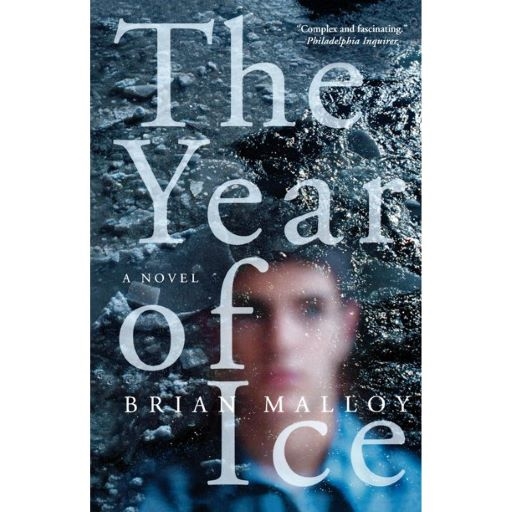
The Year of Ice by Brian Malloy: A Book Review

Why did I read this book?

I serve on the board of a local writing organization, and at the end of March, Brian Malloy was our featured author. I hosted the program, so I read The Year of Ice. I’m glad I volunteered to host because I loved Malloy’s book.

What is the book about?

The Year of Ice, published in 2002, is a coming-of-age story set in 1978. An arctic-like winter has descended on Minnesota’s Twin Cities where Kevin Doyle, a high school senior, is undecided about his future. He’s angry with his mother who died almost two years ago when her car slid off an ice-covered road and plunged into the Mississippi River. He and his father, Patrick, tiptoe around her death, but Kevin is his father’s protector. He foils widows and divorcées who show up at their door with casseroles and desserts for Patrick, who isn’t interested in dating. Then Kevin learns a secret about his parents’ marriage, and his threadbare relationship with his father unravels.

Kevin has his own secret. At 6’2” and 185 pounds, he’s good looking and muscular. Girls swoon over him, but he’s in love with Jon Thompson, a handsome classmate. Kevin can’t tell Jon how he feels; he can’t tell anyone he’s gay. He knows people like him, but they like him as the tall, handsome, charming Kevin, a straight young man with a sense of humor and a measure of kindness.

Kevin hides the fact he’s gay by embracing an “alpha dog” routine and kicking butt if any of his male peers challenge his alpha status. When Jon gets mouthy during a football game, Kevin slaps him on the side of the head, telling us, “[I]f I smack him, nobody will guess that I want to pick him up and kiss him really hard, right on the lips. And . . . he’s got to be reminded that I’m tougher than he is. Wolves do this all the time to keep order in the pack. I’m the alpha; he’s the beta.” Kevin attempts to keep order in his life, but everything is changing.

What is noteworthy about the story?

Malloy’s masterful use of present-tense, first-person narrative hooked me on the first page and held me until the end. I read the book in less than two days. Malloy creates a complex, engaging character who comes to life. Kevin reminds me of the teenagers I went to high school with—myself included. He’s moody and funny and a smart ass, and he hides his problems and feelings. He makes some mistakes, but I like him and empathize with him as he copes with his dysfunctional family, his unrequited love for Jon, and the girlfriend he doesn’t desire. Malloy’s supporting characters are unique and fully developed and, in addition to being part of Kevin’s world, have their own intriguing story arcs.

The Year of Ice won an Alex Award in 2003. Awarded by the American Library Association, this award is given every year to ten books that were written for adults but appeal to young adult audiences between twelve and eighteen years of age.

Why is this book important?

Malloy’s book is a classic coming of age story where the main character happens to be gay. Blatant discrimination and hateful behavior toward the LBGTQ community has increased the in last several years. Some people lobby to ban books like Malloy’s from school libraries, but the need to stand up for books like The Year of Ice is important. All young people need to see themselves in the world around them and to know that someone speaks to their experiences. It’s why coming of age stories are so important to us, often at any stage of our lives. Kevin Doyle shares his ups and downs and his hopes and disappointments with us, and we care about him. We want him to find his way, be true to who he is, and to have a good life.